❌

Reading view

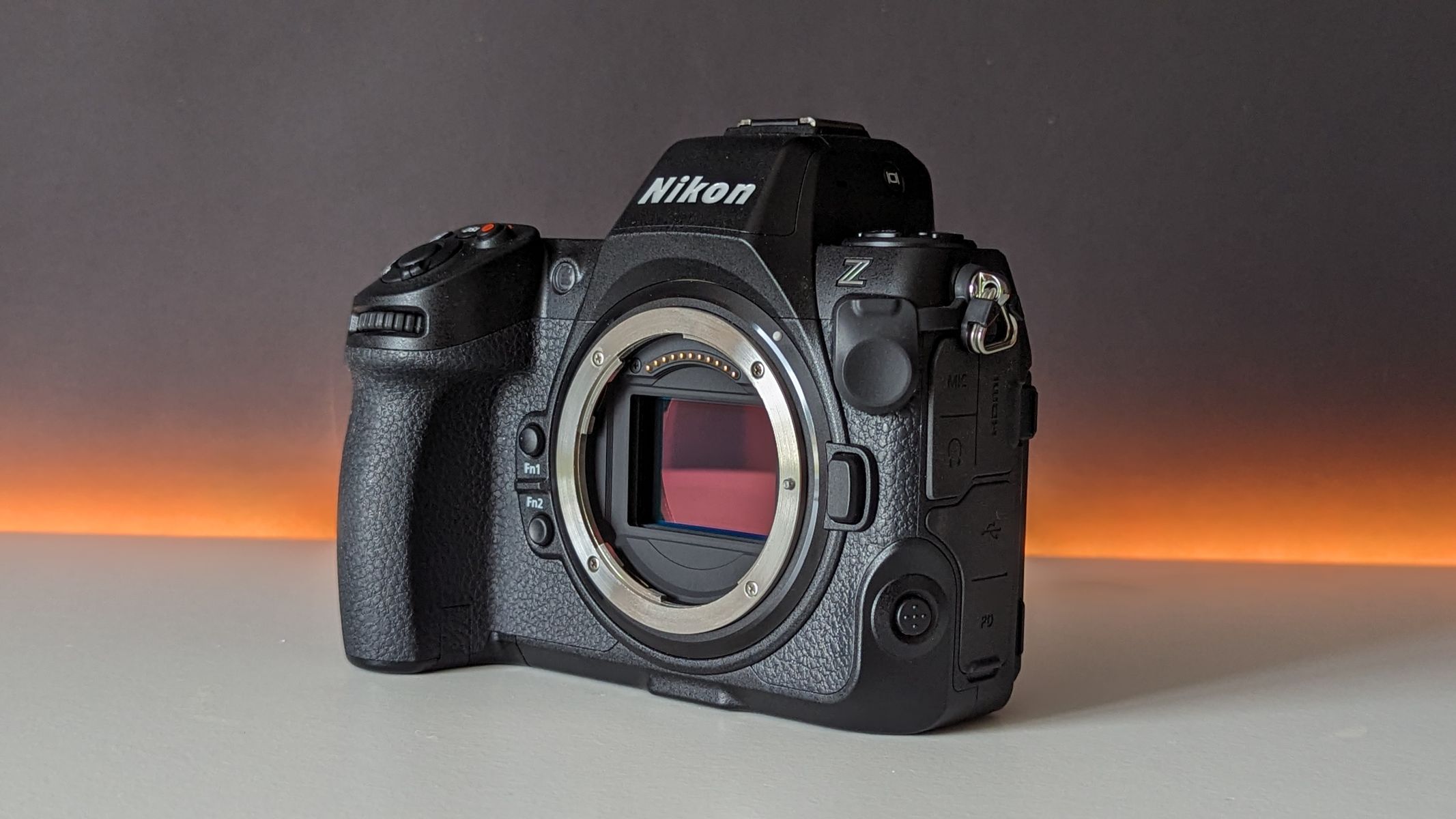
β€œSeeing this Nikon Z8 deal is painful β€” especially since I bought mine at full price!” Our Senior Manager took the hit so you don’t have to!

The Nikon Z8 is an exceptional camera, so much so that our Senior Manager, Jase, bought one recently for astrophotography. Unlucky for them, though, as they paid full price for it.

Since Jase's Nikon Z8 review, there have been several price drops during sales events like Amazon Prime Day and Black Friday, but we've yet to see it as cheap as Walmart's current price of $3,189.95. This is $80 less than Amazon's current listing price of $3,268, though we expect that to price match soon.

Pick up the Nikon Z8 for $3,189.95 at Walmart today β€” the cheapest we've seen online right now.
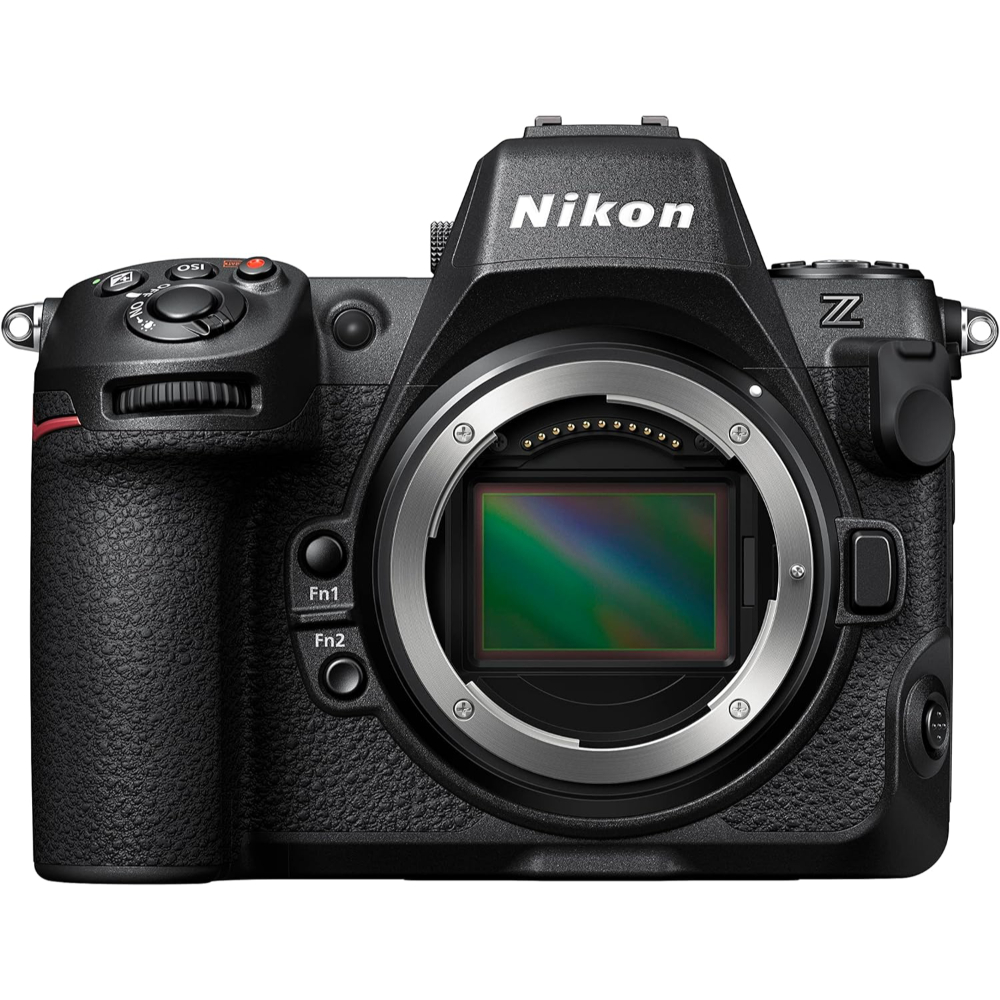
The Z8 is our choice as the best overall camera. There is nothing the Nikon Z8 can't do. It is especially great for astrophotographers and low-light shooters. This is the cheapest we've ever seen it.View Deal

We know, we know, this camera, even at the discounted rate, isn't cheap, but there's a reason we rave about it. The Nikon Z8 features in many of our 'best for' guides, including the best cameras for photo and video, where we rank it as best overall, the best cameras for astrophotography, and the best Nikon cameras. We can't remember a time when we've seen the price lower than $3,200.

In Jase's hands-on Nikon Z8 review, they awarded it 5/5 stars, praising both its specifications and real-world performance. A particularly impressive feature is the Starlight View mode, which enables autofocus detection down to -9EV. The best Jase had seen (and they have seen and tested a lot of amazing cameras over the years). There is a dedicated night vision mode for astrophotographers and an expanded ISO range up to 102,400.

Nikon Z8 on a white table
The night vision mode on the Z8 shows a dim and red display by default.Jase Parnell-Brookes
Nikon Z8 on a white table
The Z8 is 30% smaller than the Nikon Z9 from which it takes many inspiring features.Jase Parnell-Brookes
Nikon Z8 on a white table
Jase Parnell-Brookes
Nikon Z8 on a white table
Jase Parnell-Brookes
Nikon Z8 on a white table
Jase Parnell-Brookes
Nikon Z8 on a white table
Jase Parnell-Brookes

The Nikon Z8 has plenty of features that make it a fantastic choice for low-light photography and astrophotography, but those weren't the only things that impressed Jase during his review.

Nikon has long been known for getting its button layouts right, and the Z8 is no exception. It is so easy to adjust exposure settings on the fly, thanks to the command and sub-command dials, plus the ISO and exposure compensation buttons are positioned right next to the shutter release. It makes the camera incredibly intuitive to use and allows photographers to react quickly in changing conditions.

We've already touched on the Night Vision (Starlight View) mode, but it deserves another mention because it is genuinely useful rather than being a gimmick or a 'nice to have'. It even helps preserve your night vision by displaying menus and settings in red! Pair that with a red headlamp or flashlight and you're golden for not spoiling your stargazing experience.

Key features: Full-frame 45.7MP, 64-25,600 (expandable to 102,400), 8K 60p 12-bit, single SD UHS-II and single CFexpress/XQD card.

Product launched: May 2023

Price history: This camera started life on the market selling for around $4,300. Over time, it has dropped to a typical selling price of around $3,600, with special sale prices in the region of $ 3,400. The Walmart price of $3,189.95 is the cheapest we've seen.

Price comparison: Amazon: $3268 | Walmart: $3189 | B&HPhoto $3396

Space: β˜…β˜…β˜…β˜…β˜… | Livescience: β˜…β˜…β˜…β˜…Β½ | TechRadar: β˜…β˜…β˜…β˜…β˜…

Featured in guides: Best cameras, best cameras for astrophotography, best mirrorless cameras, best Nikon cameras.

βœ… Buy it if: You want one of the best mirrorless cameras on the market.

❌ Don't buy it if: You're a beginner. This is still an expensive, advanced camera that might be overkill and somewhat intimidating for new users.

Check out our other guides to the best telescopes, binoculars, cameras, star projectors, drones, lego and much more.

  •  

These anti-Prime deals are giving Amazon a good run for their money

Amazon Prime Day 2026 has just kicked off and we are seeing plenty of discounts across telescopes, binoculars and cameras. But what if you don't want to line the pockets of Jeff Bezos but still want a great deal? Fear not, for there are plenty of anti-Prime Day deals that either match Amazon's price or even better, blow it out of the water! Like this Walmart deal that gives you $74 off the Amazon price of the Fujinon Techno-Stabi 1640 image-stabilized binoculars!

Amazon has tried to commandeer the summer sales space since it started Prime Day in 2015, but other retailers always come out swinging and bring with them some of the best deals. Even if they are not cheaper than Amazon, rivals tend to at least match the price, so you can still save money with your morals intact.

Our Prime Day hub has all the best Amazon deals as well as those coming from Adorama, Best Buy and BH Photo and Video.

Best anti-Prime Day telescope deals

Save $100 on our best telescope for beginners. It has a 4-inch aperture and go-to technology for help finding your favorite night sky objects.

We gave it four stars in our full Celestron NexStar 4SE review.

Amazon price matchView Deal

Save $150 and grab an iconic NexStar 6SE with an observer's kit that includes two Plossl eyepieces, a 2x Barlow Lens/T-Adapter, three filters for different viewing conditions, a microfiber cleaning cloth and a foam-lined carry case.

Check out our full Celestron NexStar 6SE review.View Deal

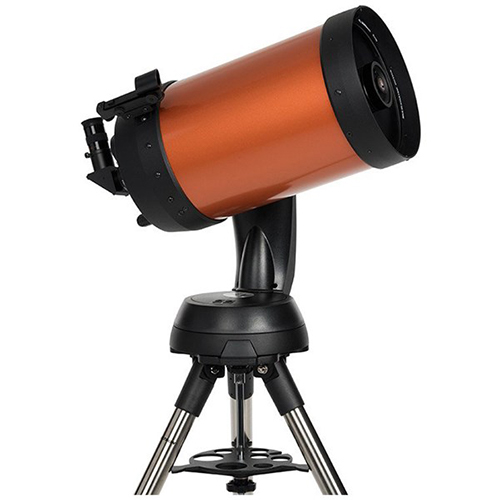
Save $200 on the best motorized telescope in our best telescopes guide. We rated it four and a half stars in our NexStar 8SE review.

It features an eight-inch aperture, a useful magnification of up to 180x, an easy-to-operate hand controller and stunning optics, perfect for almost any night sky object.

Amazon price matchView Deal

Save $126 on this huge Dobsonian telescope from Sky-Watcher with a 10-inch aperture, perfect for gathering the most light from faint deep-space objects like galaxies and nebulas.

We reviewed the Sky-Watcher 200P telescope and gave it four and a half stars. View Deal

Save $265 on this powerful refractor telescope with a 4.7-inch aperture and StarBright XLT coatings for maximizing light transmission.

Check out our full Celestron Omni XLT 120 review.

Amazon price matchView Deal

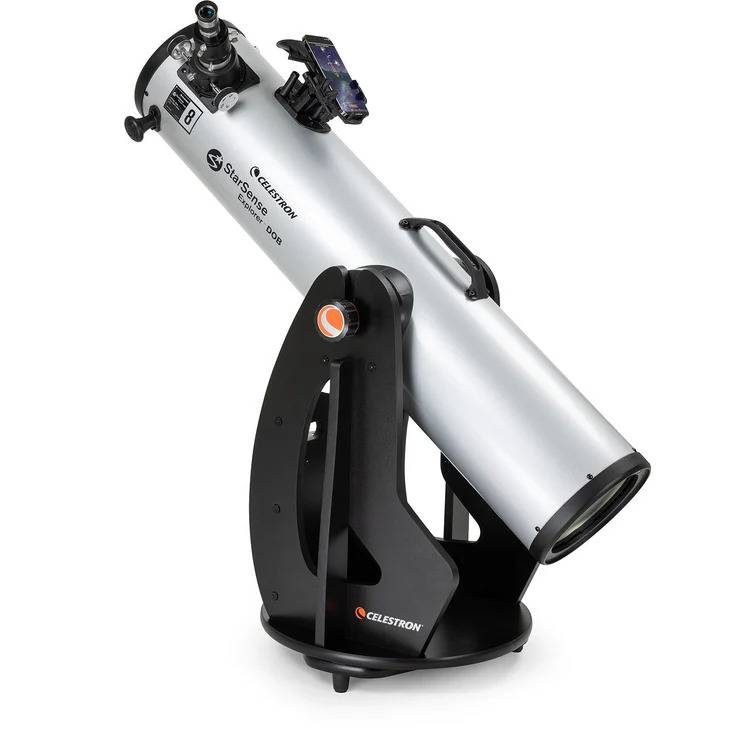
Save $264 on this 8-inch aperture Dobsonian from Celestron. It has StarSense technology to help you find your chosen night sky target.

Check out our full Celestron StarSense Explorer 8" Dobsonian review.View Deal

Save $85 on this premium solar set-up that includes the high-end Heliostar 76mm solar telescope and the SolarQuest mount that has powerful solar tracking capability.

This is great for solar imaging and getting an HD view of the upcoming total solar eclipse.View Deal

Best anti-Prime Day binocular deals

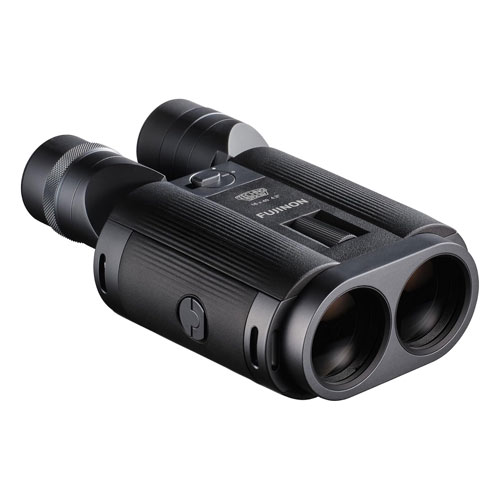
Save a huge $275 on the incredible Techno-Stabi TS-L 1640 image-stabilized binoculars. They contain Fujifilm's premium optics in a lightweight package with some of the strongest image stabilization on the market.

I gave them four and a half stars in my full Fujifilm Fujinon Techno-Stabi TS-L 1640 image stabilized binoculars review.View Deal

Save $100 on these Canon image-stabilized binoculars from Canon. Their 15x magnification, light-gathering 50mm objective lenses and judder-free views make them excellent for stargazing. View Deal

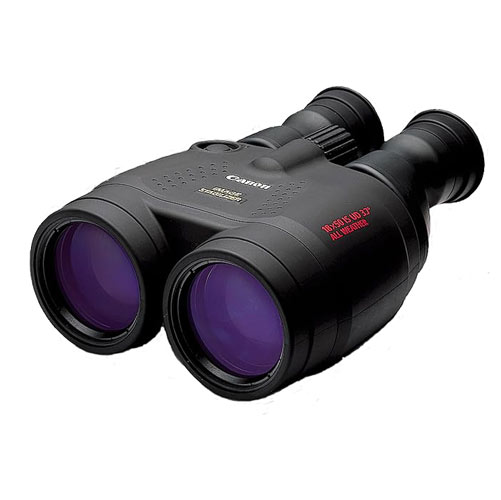
Save $100 on these great image-stabilized binoculars from Canon. They have a huge 18x magnification and big 50mm objective lenses so you can get very close to the stars.

Check out our full Canon 18x50 IS binocular review.View Deal

Best anti-Prime Day camera deals

Save over $200 on this workhorse camera, capable of 40MP stills and 8K video at up to 30p. It features a 5.76-million-dot viewfinder, a CFexpress card slot and advanced video output with Apple ProRes and raw video capability.

We think it's the best Fujifilm camera for professionals because of its powerful functionality and advanced features.View Deal

Save $929 on the latest hybrid A7 model from Sony. We reviewed the Sony A7R IV and gave it four and a half stars. This model has more advanced video capability and more autofocus points than the A7R IV.View Deal

Save over $1000 on this workhorse from Canon. It has a 45MP sensor, dual-pixel autofocus and 8K video capability.

Check out our full Canon EOS R5 Mark II review. View Deal

  •  

A 'new' star could finally appear in the night sky this week, thanks to a once-in-a-lifetime explosion

A once-in-a-lifetime stellar eruption could occur at any time, potentially causing a 'new star' to appear in the night sky. If it does, the star system T Coronae Borealis could suddenly brighten to rival Polaris, the North Star. Here's what you need to know about the "Blaze Star" T. Coronae Borealis (T CrB).

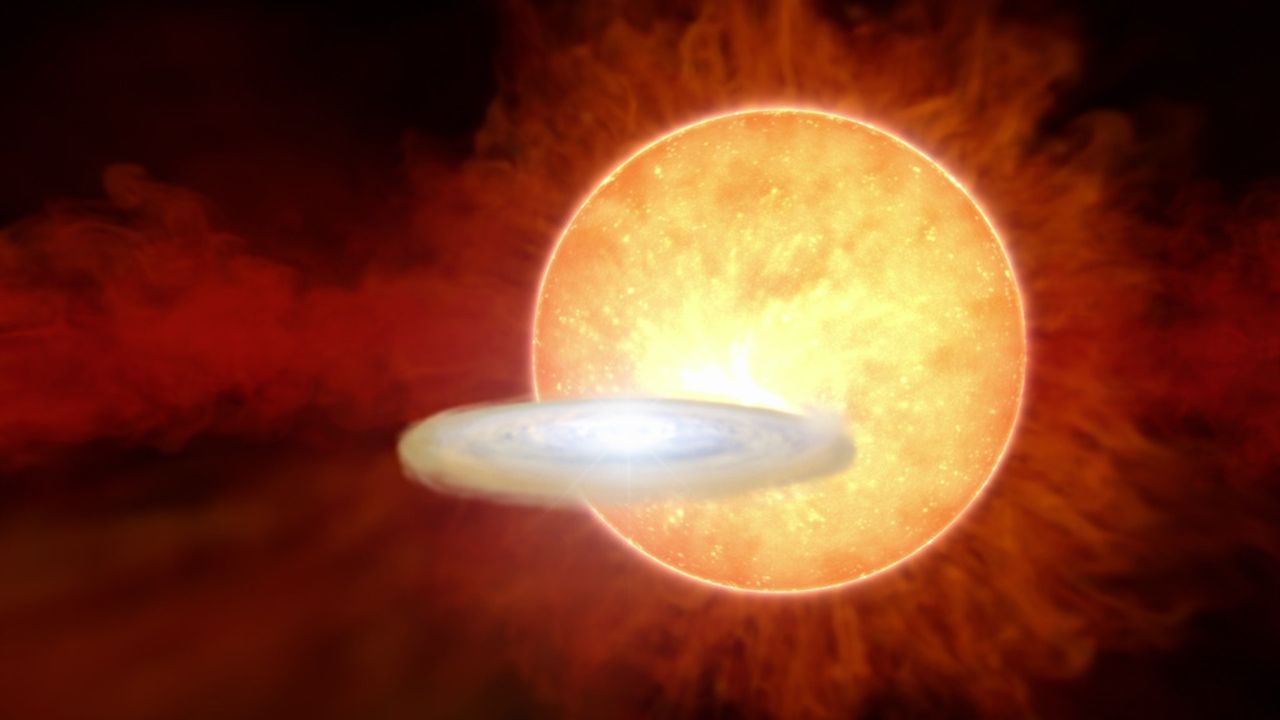
T CrB is a prime example of a recurring nova. This thermonuclear explosion erupts from the atmosphere of a white dwarf star roughly once every 80 years, when it reaches a point of critical mass, having stripped vast quantities of material from a co-orbiting red giant.

After each eruption, the white dwarf returns to vampirically feeding on its companion star, until ready to start the process anew. Recurring novas like T CrB are extremely rare, with only five known to exist within the entirety of the Milky Way, according to NASA.

When will T. Coronae Borealis erupt?

T CrB brightens roughly once every 80 years β€” an average based on eight centuries of historical observations. The most recent deluge of nova light reached Earth in 1946, prompting some astronomers to predict that the next brightening could occur as early as February 2024, based on an earlier dip in the system's light that echoed historical data.

It seems that T CrB had other ideas, however, and instead has remained stubbornly dim through numerous unsuccessful prediction attempts. Astronomers repeatedly attempted to fit subtle shifts in the brightness of T CrB to the few points of reliable historical data on offer, while accounting for fluctuations in the white dwarf's feeding rate.

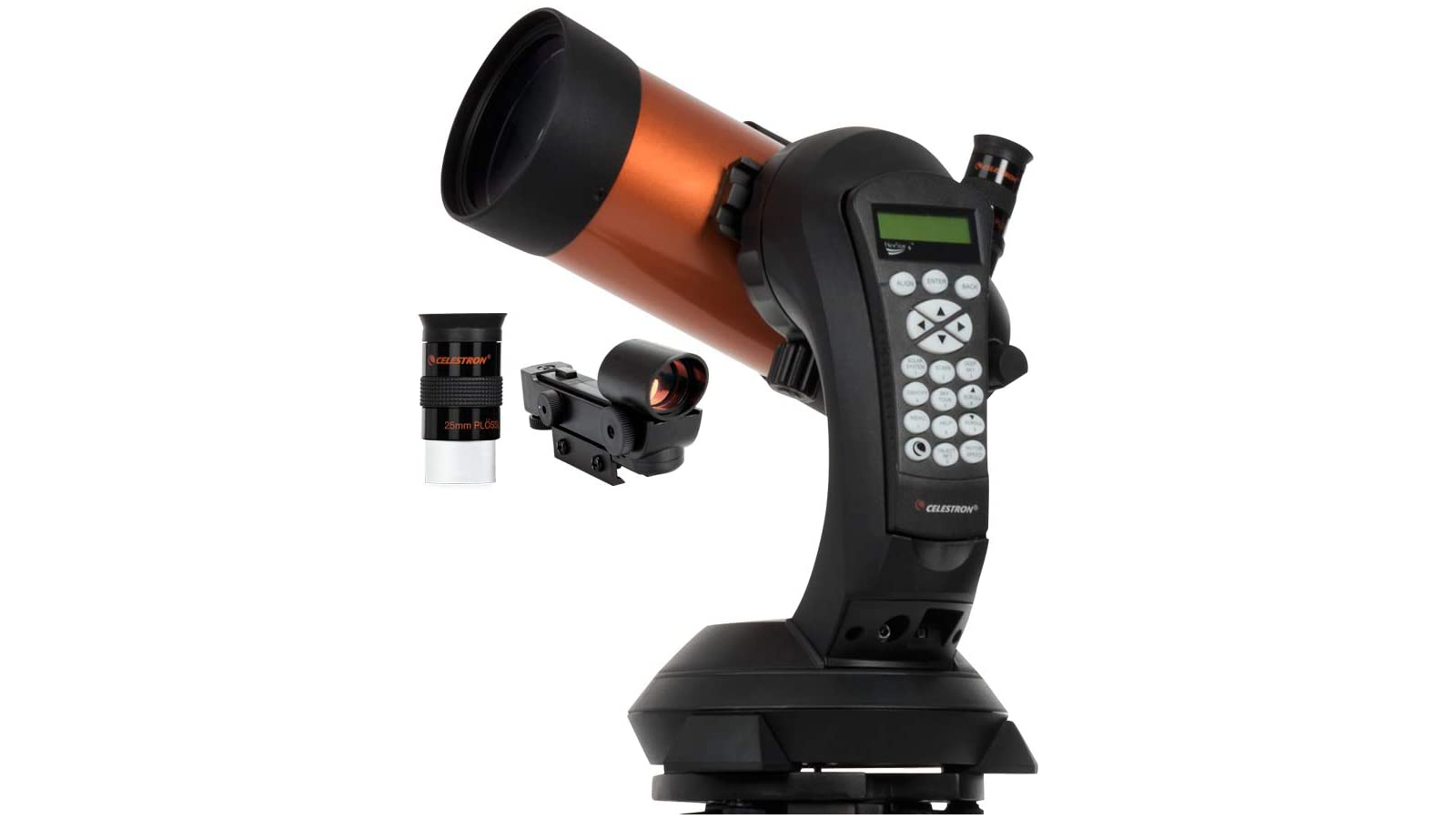
Celestron NexStar 4SE

Celestron NexStar 4SE Computerized Telescope

(Image credit: Amazon)

The Celestron NexStar 4SE is ideal for beginners wanting quality, reliable and quick views of the night sky. It's sturdily built, quick to set up and automatically locates night sky targets and provides crisp, clear views of them. For a more in-depth look at our Celestron NexStar 4SE review

"We know it has to happen," astrophysicist Elizabeth Hays, project scientist on NASA's Fermi gamma-ray space telescope, told Space.com in 2024. "We just can't pin it down to the month."

One paper authored by Jean Schneider of the Paris Observatory put forward a set of four potential dates for the brightening β€” the last of which falls on June 25, 2026 β€” based on the presence of a theoretical third body in the T CrB system. However, other astronomers were sceptical of the predictions, as no evidence of this phantom third body has been spotted in modern data.

What should I expect?

Each nova explosion triggers a dramatic surge in T CrB's apparent brightness, as radiation cast out in the cataclysmic event finally reaches us, having spent approximately 3,000 years racing through the near-perfect vacuum of space.

T CrB is usually far too dim to see with the naked eye, shining as it does with an average brightness, or magnitude, or just +10. Magnitude is the scale used by astronomers to track the apparent brightness of objects in the night sky. The lower the number, the brighter the object, with the human eye capable of spotting targets down to a magnitude of +6 from a dark sky location.

During a nova surge, T CrB can jump from +10 to a magnitude of +2, making it easily visible to the naked eye as it shines with a brilliance comparable to that of the North Star, Polaris.

Where can I find T. Coronae Borealis in the night sky?

T CrB shines close to the semicircle of stars of the lesser-known constellation Corona Borealis, also known as the Northern Crown, which can be found glowing brightly overhead between the constellations of Bootes and Hercules after sunset in early summer.

A starmap showing the location of Corona Borealis in the context of nearby constellations.

How to find Corona Borealis in the summer sky. (Image credit: Created by Anthony Wood in Canva)

You'll need a pair of 10x50 binoculars or a small telescope to find the Blaze Star before it brightens to naked eye visibility. First, locate the magnitude 4.28 star Epsilon Coronae Borealis, which is the second star in from the left of the semicircular formation, as viewed from the Northern Hemisphere.

Next, sweep your scope over the patch of sky one degree to the lower right of Epsilon Coronae Borealis β€” roughly the width of your little finger held at arm's length β€” to find the patch of sky containing T CrB.

A starmap showing the location of Corona Borealis in the context of nearby constellations.

Finding T. Coronae Borealis in the constellation Corona Borealis. (Image credit: Created by Anthony Wood in Canva)

How long will T CrB be visible for?

Once the Blaze Star erupts, its nova light should remain visible to the naked eye for a little under a week, according to NASA, though you'll be able to follow its progress for longer using a pair of binoculars! You can also keep an eye on T CrB's brightness via the American Association of Variable Star Observers (AAVSO) website, which allows you to plot a light curve for the distant star system based on recent member observations.

Be sure to check out our roundups of the best telescopes and binoculars for observing the night sky, to ensure that you're ready to make the most of T. Coronae Borealis' fleeting appearance before it disappears for another 80 years. Photographers may also want to peruse our picks of the top cameras and lenses for astrophotography, along with our guide to capturing the night sky.

Editor's Note: If you capture an image of T. Coronae Borealis and with Space.com's readers, then please send your photo(s), comments, and your name and location to spacephotos@space.com.

  •  

What telescope could cause our astrophotography expert to break their hard-and-fast rule about not traveling with a telescope? This one! Now even cheaper in this Prime Day telescope deal

Our astrophotography expert, Jamie Carter, has reviewed countless telescopes and optics equipment for us but always maintained a no travel rule when it comes to telescopes. All that changed when they reviewed the ZWO SeeStar S30 Pro, and this Prime Day, it's $35 cheaper.

Get the ZWO Seestar S30 Pro telescope on sale right now at Amazon for $664.

That's not to say the ZWO Seestar S30 Pro is just for deep space; it's a superb all-round smart telescope and we think the previous model, the ZWO Seestar S30, is one of the best telescopes and best smart telescopes.

But what made it just a game-changer for our expert was that, eschewing the bulk of normal telescopes, he could pack it into his camera bag as he explored New Brunswick's dark-sky corridor. He was absolutely stunned by the views of the Whirlpool Galaxy that popped up on his smartphone.

If you want to be similarly awed, snap up the ZWO Seestar S30 Pro and don't forget to check out the other Prime Day Deals on offer.

Save $35 on a telescope we rank as one of the best beginner telescopes and best smart telescopes. Not only will you get great views, it's super-portable with it. View Deal

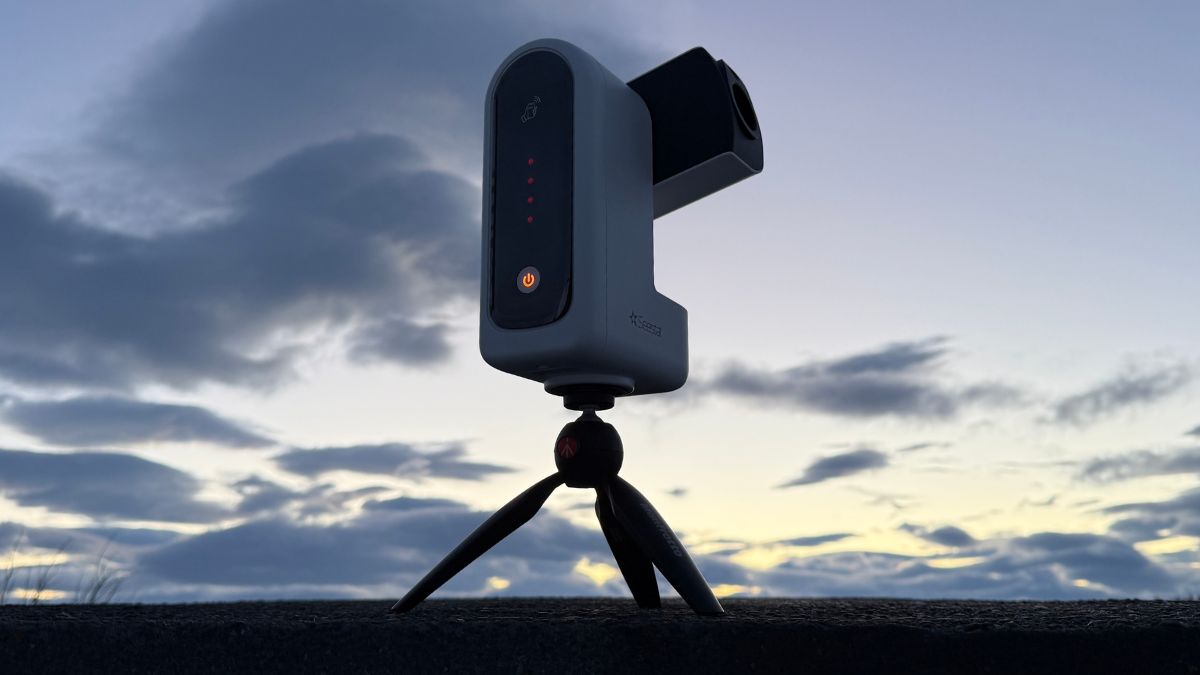
a seestar s30 pro against a partially cloudy twilight sky.

Jamie used the SeeStar S30 Pro when on location in New Brunswick. (Image credit: Jamie Carter)

The ZWO Seestar S30 is a superb smart telescope, featuring in our best beginner telescopes and best telescope guides, and now ZWO has taken things to the next level with the upgrade, the S30 Pro.

Our expert called the ZWO Seestar S30 Pro a life-changing device. Why? Because it's small enough to fit in a camera bag and yet, it's a impressive alternative to the best cameras for astrophotography.

Venturing into a dark sky zone, he captured some stunning images, including the Whirlpool Galaxy.

"In the smart telescope era, traveling light doesn't have to mean leaving a telescope behind," he remarked, now convert to smart scopes.

It captures 8.3MP / 4K images and side from the telescope itself, comes with a mini-tripod, shoulder strap and bag. You do operate it via a smartphone, and view images on its display, which may not be to everyone's taste.

But if the ZWO Seestar S30 Pro can convert Jamie, our expert astrophotographer, it can convert anyone.

Key features: 30 mm objectiver, 3.1" Γ— 5.5" Γ— 8.3" in., 3.6 lbs weight, battery powered, smartphone required.

Product launched: December 2025

Price history: This is the cheapest the ZWO Seestar S30 Pro has ever been.

Price comparison: Amazon: $664 | Seestar $699

Reviews consensus: Talking about their ZWO Seestar S30 Pro experience, our expert praised this smart telescope and our sister sites Livescience and T3 also sang its praises. The S30 Pro's Amazon reviews are just as positive, with no real criticisms.

Livescience: β˜…β˜…β˜…β˜… | T3: β˜…β˜…β˜…β˜…

Featured in guides: Best beginner telescopes, Best telescopes

βœ… Buy it if: You want a super-portable smart telescope that you can take to dark sky sites.

❌ Don't buy it if: You prefer to skywatch the old fashioned way or will only ever stargaze from one site.

Check out our other guides to the best telescopes, binoculars, cameras, star projectors, drones, lego and much more.

  •  

The Unistellar Odyssey Pro helped me feel in touch with the universe and it's now 15% off

Astrophotography can be confusing and when combining mirrorless cameras, astrocams and telescopes, there is a huge learning curve that can throw people a bit sideways if they are looking to get into it. The Unistellar Odyssey Pro was the first smart telescope that I used and it helped me on my astrophotography journey, allowing me to quickly and easily take awe-inspiring images of deep space objects like the Great Pegasus star cluster and a range of galaxies.

You can get the Unistellar Odyssey Pro smart telescope, on sale right now for $3,909 at Unistellar.

Alongside the usual go-to technology present in all of Unistellar's smart telescopes, the Odyssey and Odyssey Pro models also have autofocus to help even more when imaging the night sky. With Amazon Prime Day well underway and running until June 26, keep an eye on the best prices across all skywatching gear on our Prime Day hub, which tracks deals from all major retailers.

Save $690 on this beginner-friendly smart telescope that even works in light-polluted areas to observe and image over 5,000 night sky objects.

We gave it four and a half stars in our Unistellar Odyssey Pro review and we have used it since for continued night sky observation and astrophotography. It is easily operated via an intuitive smartphone app.View Deal

Save $390 on our best smart telescope for versatility, thanks to its small form factor and light weight compared to the rest of the Unistellar line-up. It has autofocus and doesn't require collimation, so it is the perfect smart telescope for a beginner.

It got four and a half stars in our Unistellar Odyssey review thanks to its great views of deep space objects and good color rendition on astrophotography shots. View Deal

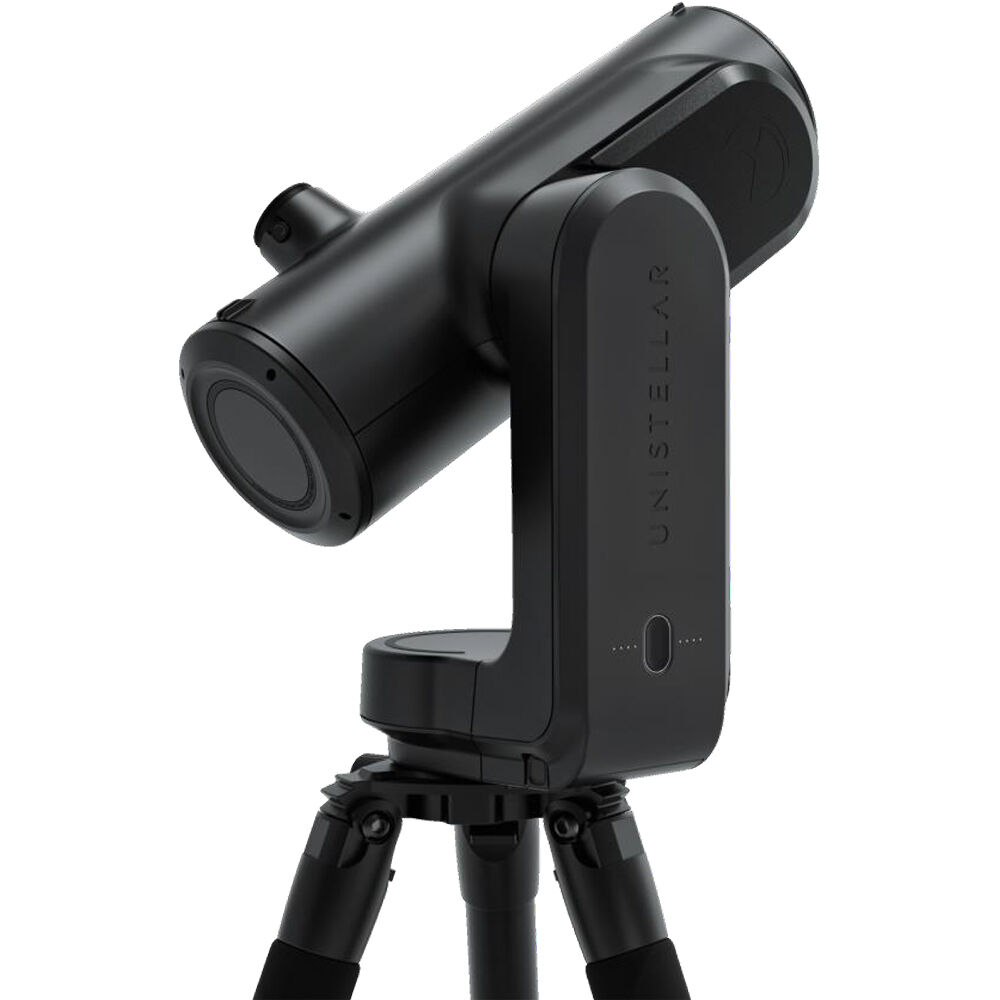
Unistellar Odyssey Pro smart telescope on a white background
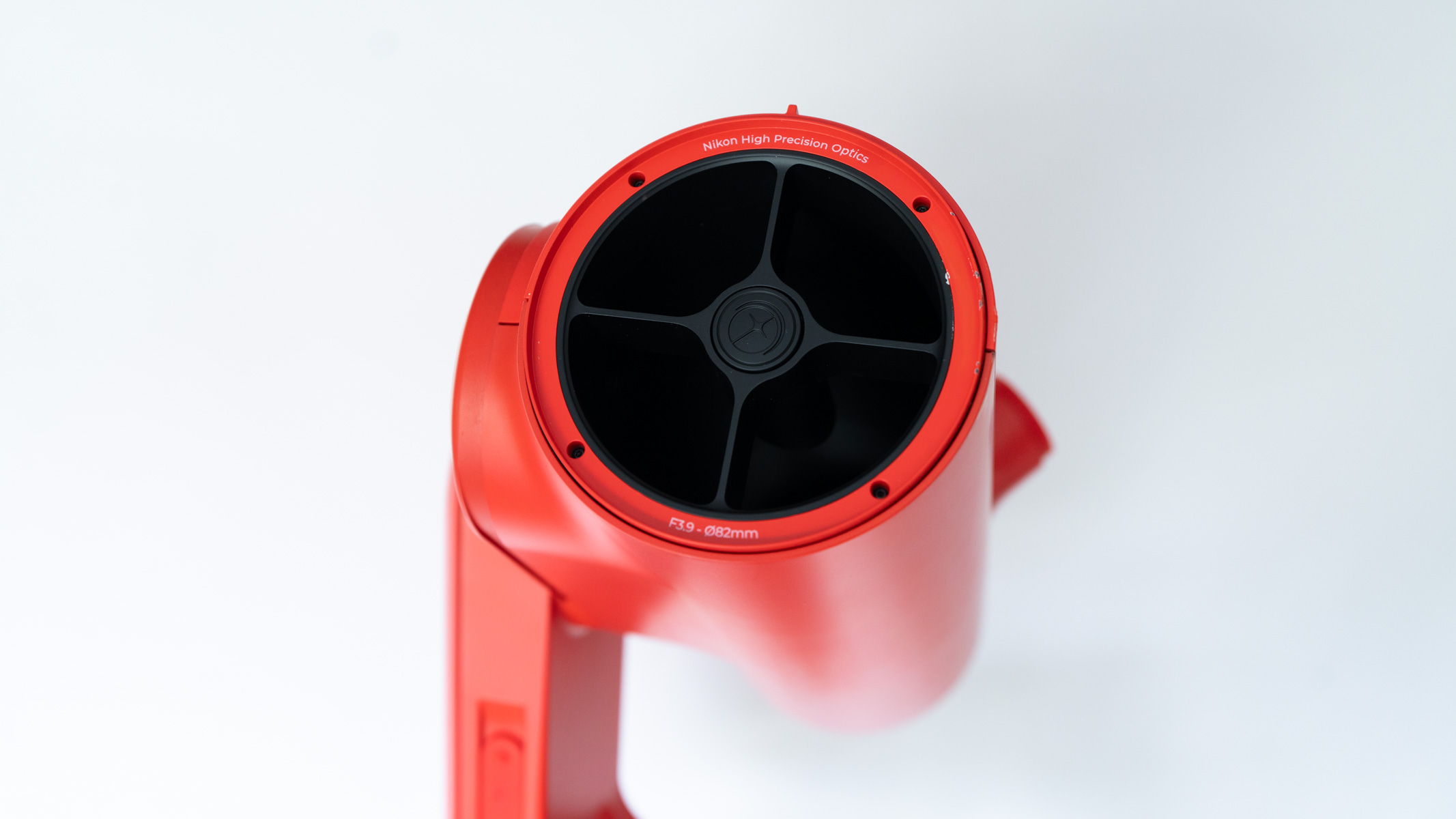
The Odyssey Pro features the same specs as the non-pro version apart from an upgraded 4.1MP sensor and Nikon-made eyepiece.Jase Parnell-Brookes
Unistellar Odyssey Pro smart telescope on a white background
A lens cap keeps the mirrors safe from dust when not in use. Jase Parnell-Brookes
Unistellar Odyssey Pro smart telescope on a white background
A USB-A and a USB-C port can be found on the side for charging and data transfer.Jase Parnell-Brookes
Unistellar Odyssey Pro smart telescope on a white background
The lithium-ion battery is removable.Jase Parnell-Brookes
Unistellar Odyssey Pro smart telescope on a white background
Traditional observers will like the Nikon-made eyepiece which shows the same view as on the smartphone.Jase Parnell-Brookes
Unistellar Odyssey Pro smart telescope on a white background
There is no focusing wheel on the Odyssey Pro and the telescope focuses on night sky objects automatically.Jase Parnell-Brookes
Unistellar Odyssey Pro smart telescope on a white background
The minimalist design features a single power button. Jase Parnell-Brookes
Unistellar Odyssey Pro smart telescope on a white background
The Unistellar Odyssey Pro has a three-inch aperture.Jase Parnell-Brookes
Unistellar Odyssey Pro smart telescope on a white background with solar filter attached
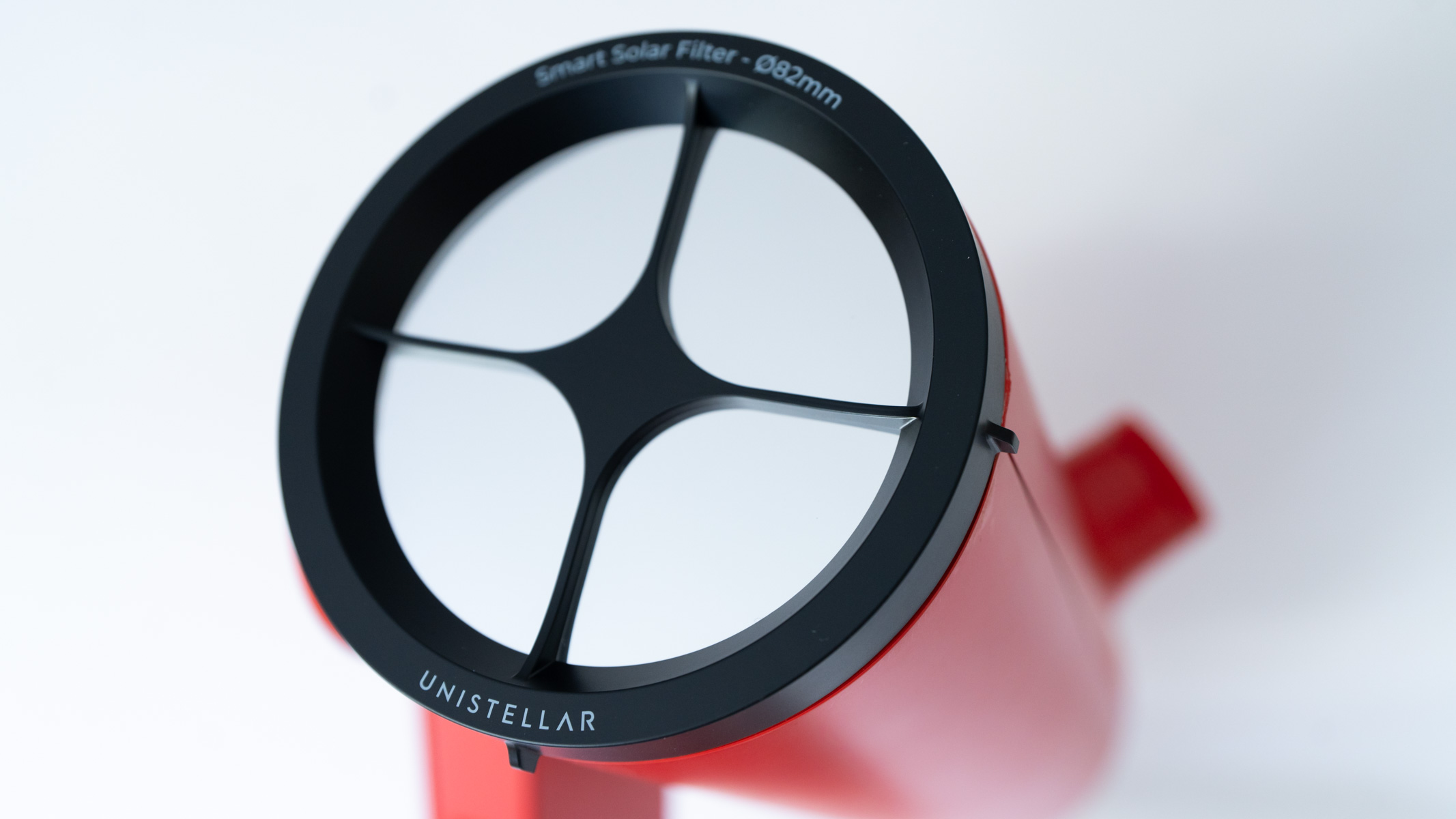
A Unistellar solar filter can be bought separately and used for solar imaging. Jase Parnell-Brookes
Astrophotograph taken with the Odyssey Pro
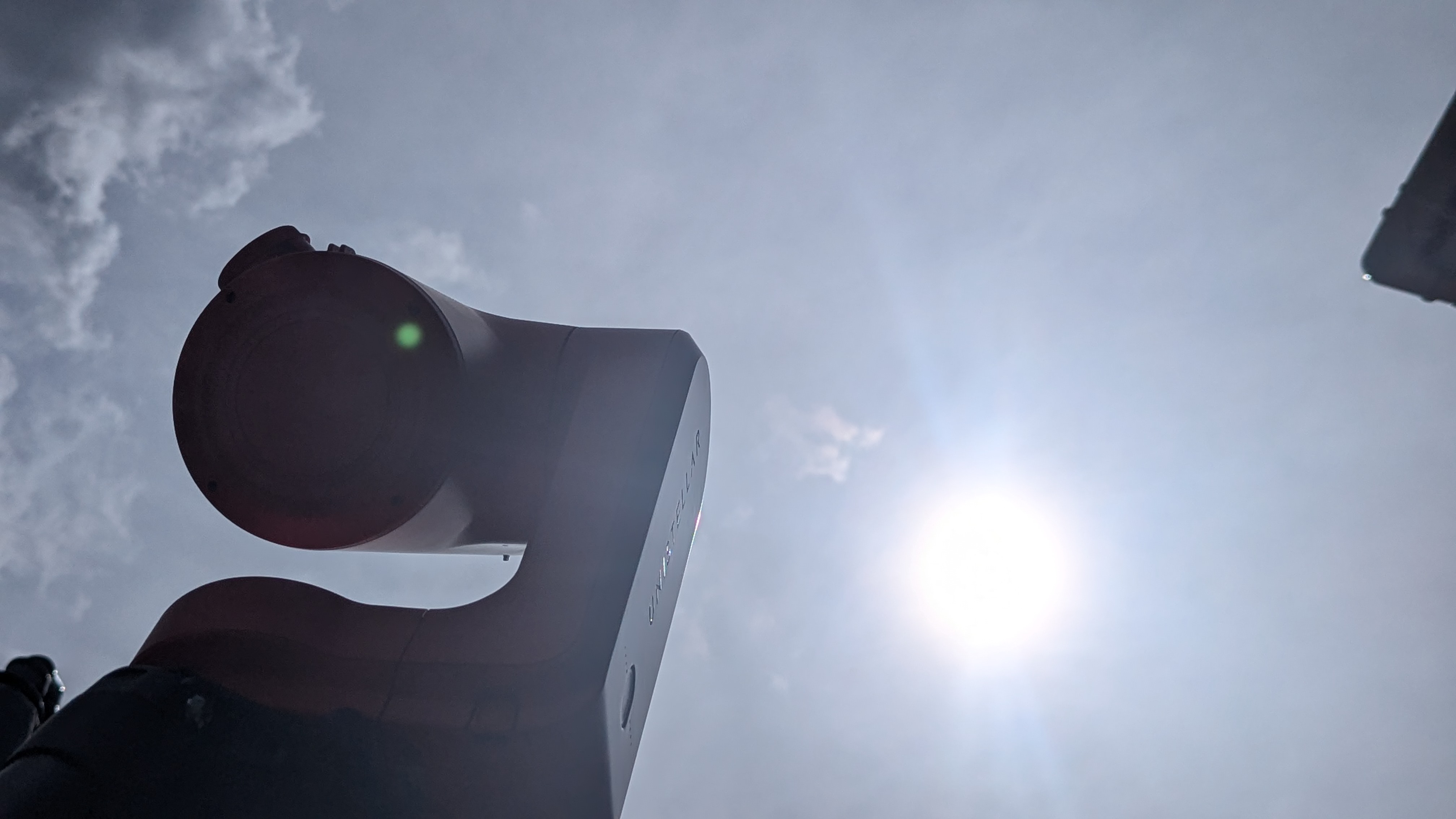
Daytime use of the Unistellar Odyssey Pro is possible with the Unistellar Odyssey Pro. Jase Parnell-Brookes
Astrophotograph taken with the Odyssey Pro
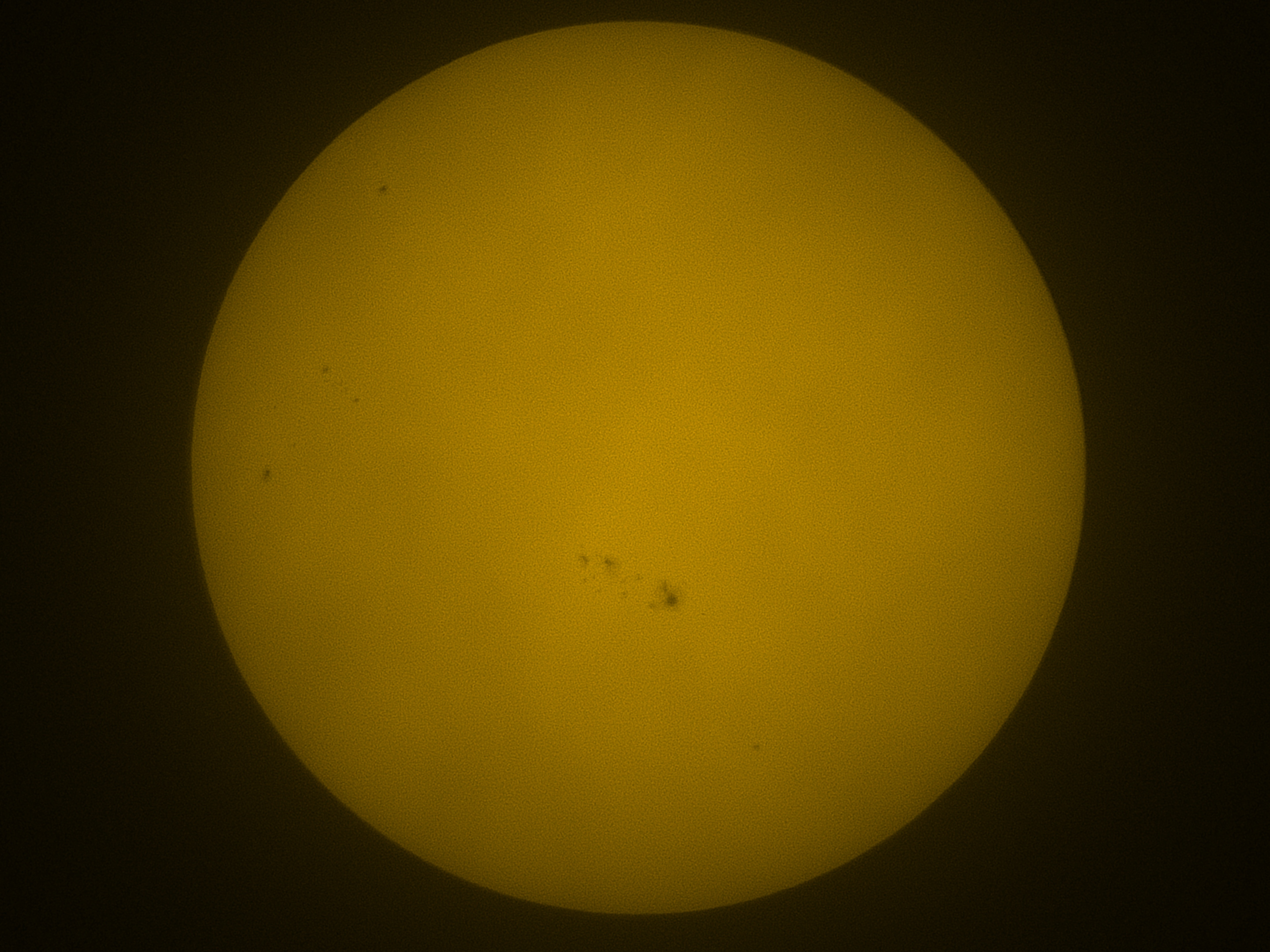
The solar disk as imaged by the Unistellar Odyssey Pro.Jase Parnell-Brookes
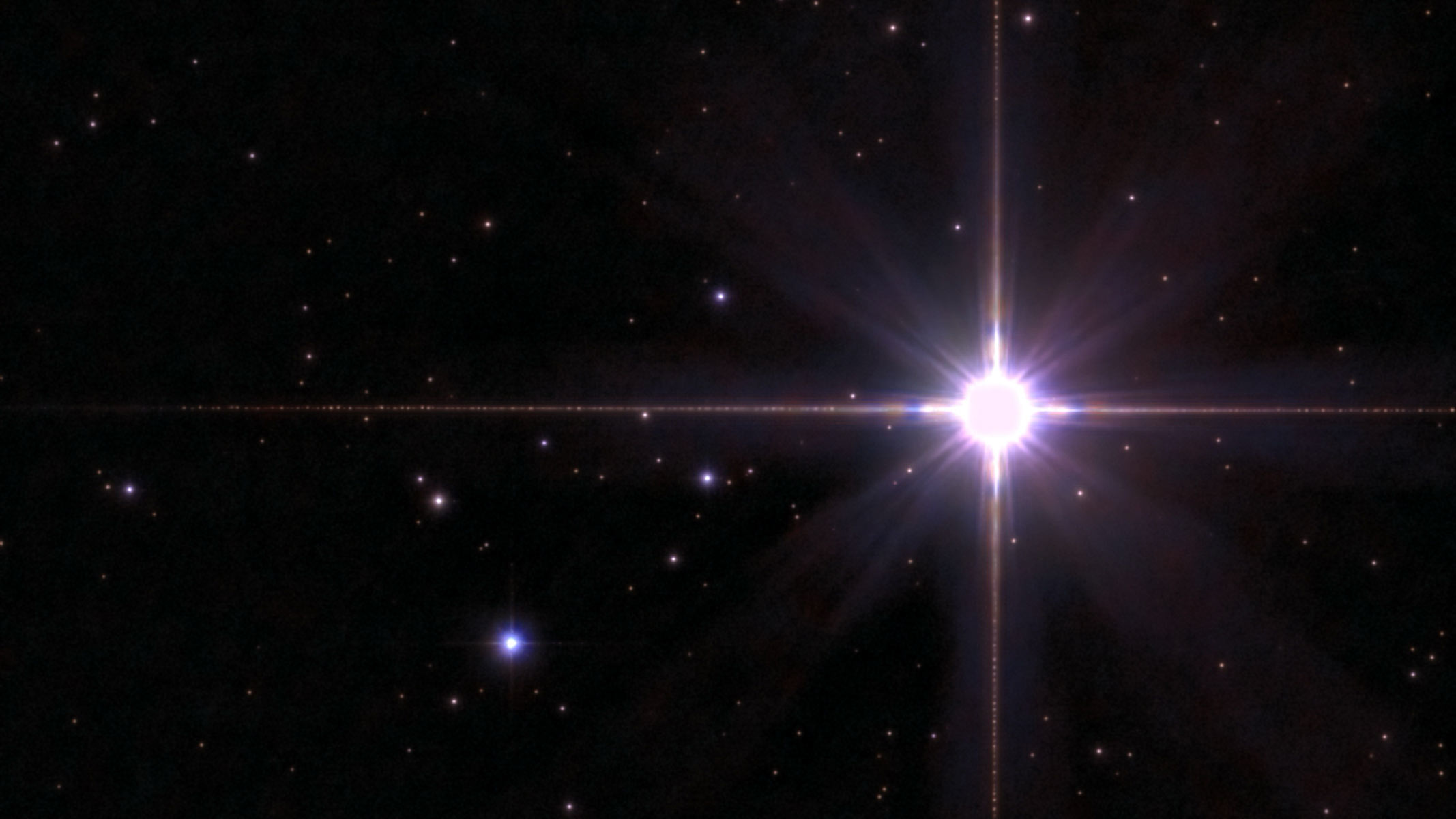
The star Arcturus shining in the starry night sky.
The star Arcturus as imaged by the Unistellar Odyssey Pro.Harry Bennett / Future
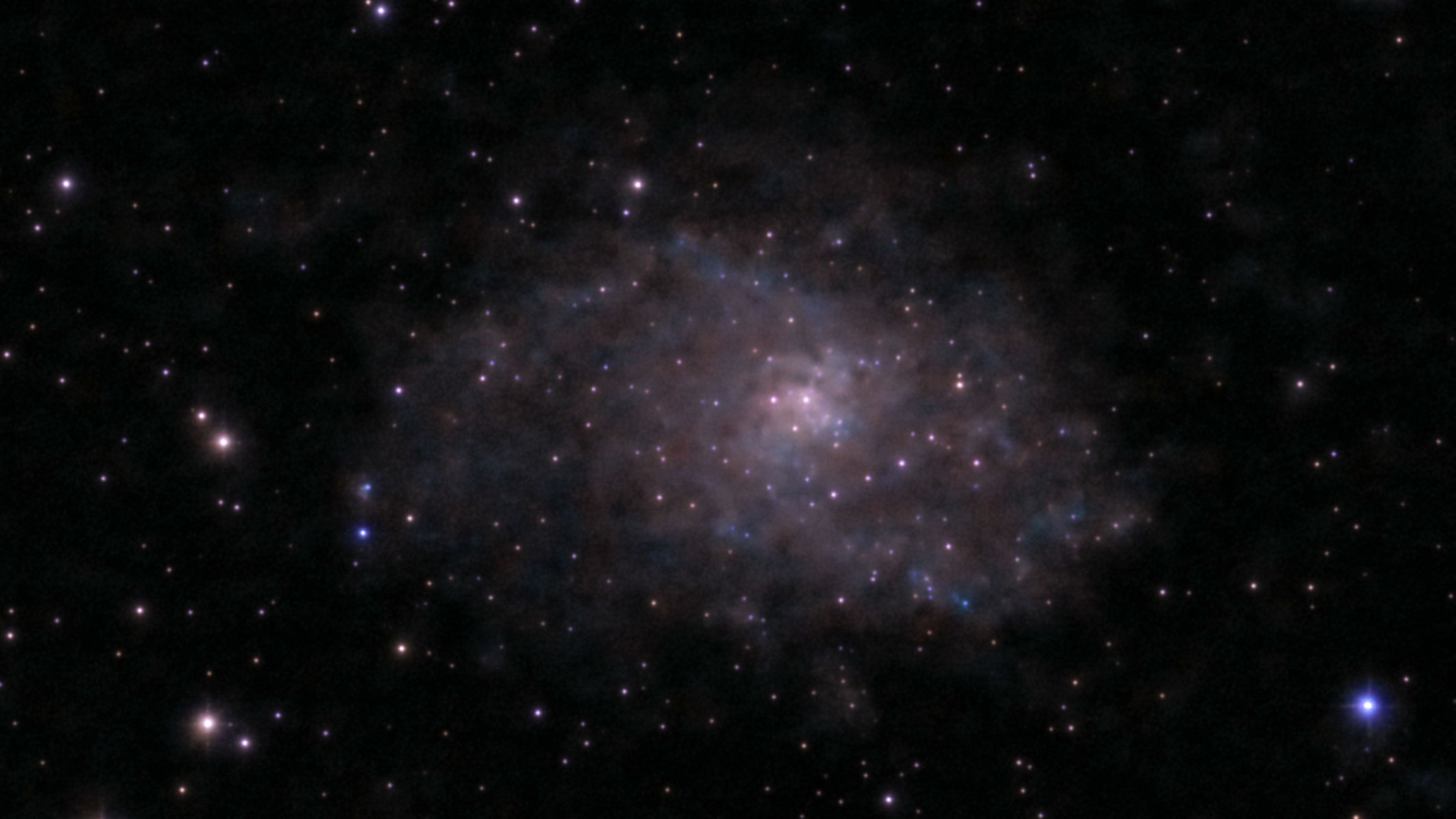
The Triangulum galaxy (M33) as imaged from a Unistellar Odyssey Pro.
The Triangulum galaxy (M33) as imaged by the Unistellar Odyssey Pro.Harry Bennett / Future
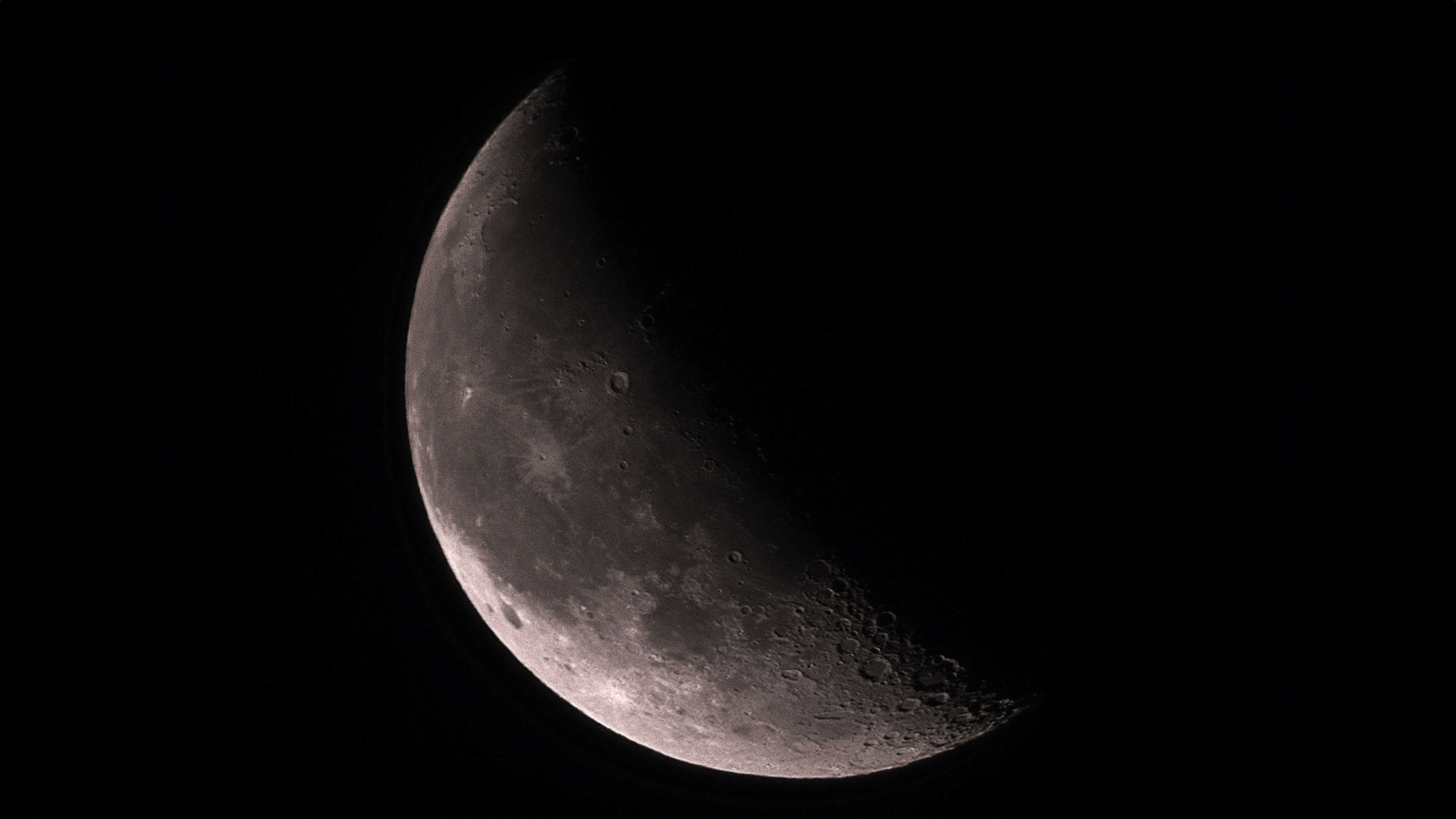
The crescent moon as imaged from a Unistellar Odyssey Pro.
The crescent moon as imaged by the Unistellar Odyssey Pro.Harry Bennett / Future
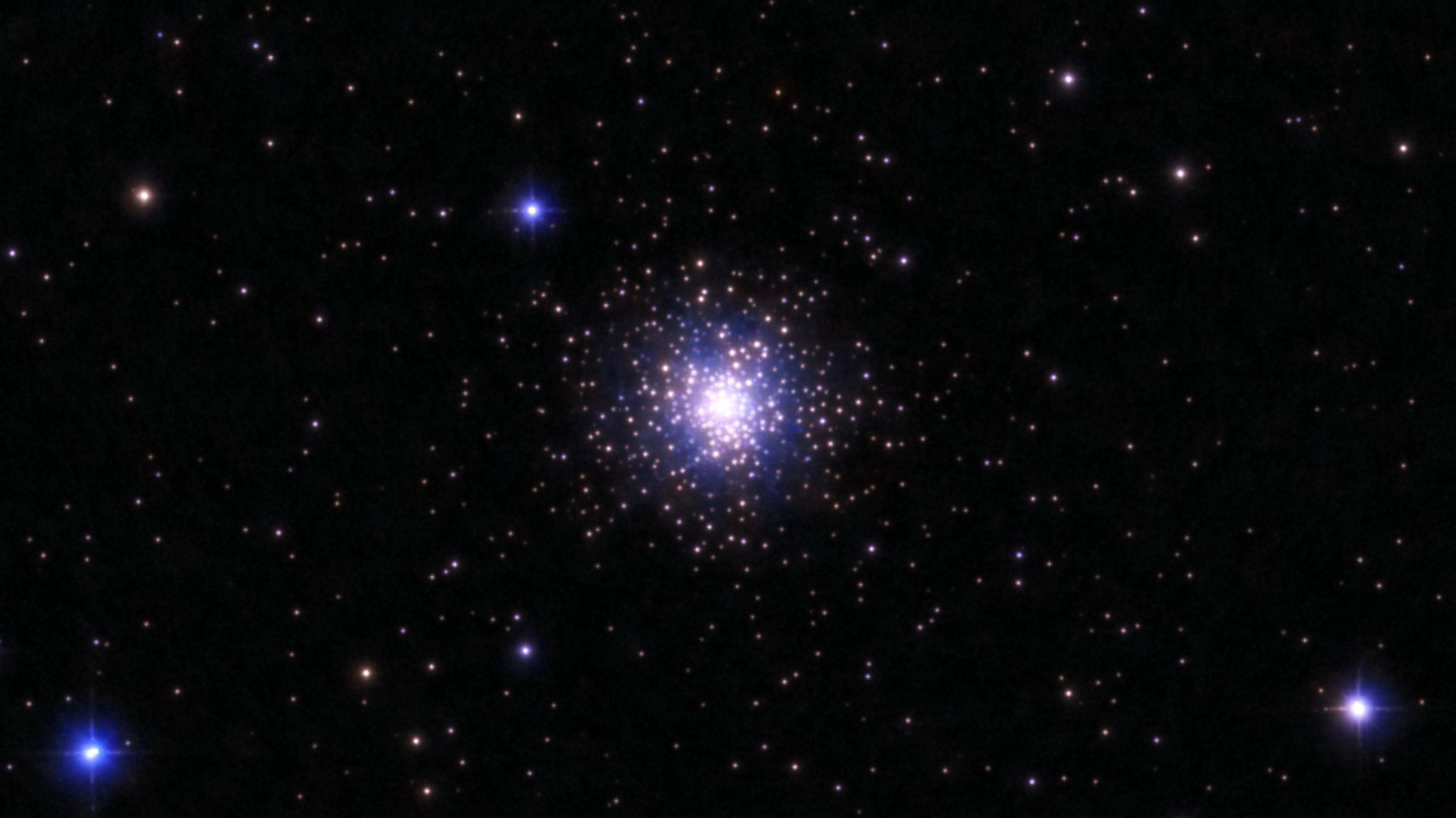
The Great Pegasus Globular Cluster (M15) as imaged from a Unistellar Odyssey Pro.
The Great Pegasus Globular Cluster (M15) as imaged by the Unistellar Odyssey Pro.Harry Bennett / Future

The Unistellar Odyssey Pro is great for beginners and it was the first smart telescope that I used, so I have a soft spot for it. To start using it, all I had to do was set it up on a clear night and link it to my phone, before allowing the telescope to orient itself and choosing a target to observe. After that, I selected 'enhanced vision' mode, which stacks four second exposures on top of each other to build a stronger and more detailed image, something that makes details in galaxies stand out.

It's definitely a model aimed at those who have very little experience with astronomy and astrophotography, as it not only finds your target, but it focuses on it, too. This is especially useful if you are not confident focusing on stars with a Bahtinov mask and getting them as sharp as possible.

I have hands-on experience with the Pro version, which has a built-in eyepiece with a digital display, but the rendered image is the same as what you can see on your smart device. In all honesty, if you aren't bothered about having a "traditional telescope experience," skip the Pro model and grab the regular Odyssey for $2,209 to save an extra $1,000. For a range of other telescope models, cameras and skywatching gear, check out our Prime Day hub, which tracks all of the best deals amongst this year's summer sales.

All of the Unistellar smart telescopes are great for assisted and easier stargazing, as they all have smooth go-to technology and astro capability. If you think that you may want more control over the focus in your astrophotography or if you want a higher resolution sensor, the eQuinox 2 and eVscope 2 are the company's pro lineup. With all of their models on sale for Father's Day, now is a good time to grab one. While there isn't as much darkness at the moment, they also all double up as solar telescopes with the purchase of a solar filter, something that may come in handy for the Aug. 12 total solar eclipse.

Key features: Newtonian reflector optical design, 5-hour battery life, 4.1 MP Sony sensor, 3.3-inch (85 mm) aperture, 12.6-inch (320 mm) focal length, weight 8.8 lbs (4 kg), fully motorized alt-azimuth mount, 64 GB storage, Nikon-made eyepiece, celestial database of over 5,000 objects.

Product launched: January 2024

Price history: The retail price for Unistellar Odyssey Pro is $4,599. Unistellar has a site wide 15% discount for Prime Day and has taken the price down to $3,909. It was discounted with 20% off for Black Friday last year, but this is the cheapest the price has dropped to since then.

Price comparison: Unistellar: $3,909 | Amazon: $3,909

Featured in guide: Best smart telescopes

Reviews consensus: We thought it gave us great views of the Ring Nebula and the Hercules globular cluster in our Odyssey Pro review. Other users praise the automation, portability and Nikon-made eyepiece for the Pro model. Some users wanted more battery life.

Space: β˜…β˜…β˜…β˜…Β½ | Digital Camera World: β˜…β˜…β˜…β˜…Β½

βœ… Buy it if: You want a quick set-up telescope that you can easily control with a smartphone app and get stargazing in seconds.

❌ Don't buy it if: You need manual controls or higher resolution. You may be better suited to the Unistellar eVscope 2, which is also on sale.

Check out our other guides to the best telescopes, binoculars, cameras, star projectors, drones, lego and much more.
  •  

This beginner-friendly travel telescope is the reason I turned into a skywatcher

When I was looking at taking my first steps into stargazing I wanted a telescope that was affordable and compact so I could pack it away when it was cloudy. I ended up starting my stargazing journey by buying the Celestron Travel Scope 70 and today, thanks to Amazon Prime Day, it's $40 off, making it just $81.

This portable, beginner-friendly Celestron Travel Scope 70 is $81 right now at Amazon.

Not only is this telescope the reason I got into stargazing but it has the pedigree of being from reputable telescope manufacturer Celestron, whose products appear in our best telescope guide and best binoculars guide. It's a breeze to use and super portable with it.

The moment I trained it on the moon and took in the stunning, detailed views of its craters, I was hooked. Now, thanks to Prime Day, you can save big on this fantastic, beginner-friendly scope.

Save $40 on this super-portable, beginner-friendly telescope that offers quality views and can be packed away into the provided backpack. It also boasts two eyepieces, enough to get you started on your stargazing journey. View Deal

Celestron Travel Scope 70 stock photo
The Celestron Travel Scope 70 packs neatly away into a small backpack, for easy storage. Amazon

It's fair to say that if I hadn't bought the Celestron Travel Scope 70, I wouldn't be into stargazing. I didn't want to spend a fortune or to tie up a room, so the Celestron Travel Scope 70 fit the bill. Several years later, I have a Skywatcher 200P Classic dominating my front room, so you can tell how that went.

So what makes the Celestron Travel Scope 70 such a great starter scope? It's an absolute breeze to use, easy to assemble and while the included 20mm and 10mm eyepieces are basic, they still give you excellent views of objects within our solar system.

And while it doesn't match up to the best deep space telescopes, the Celestron Travel Scope 70 offers respectable views of some deep space objects, light pollution aside. It also comes with a basic version of Celestron's own stargazing software.

Could the tripod be sturdier? Yes, but I personally had no problems with that; my only gripe was that it took a little while to master fine-tuning the scope. But at $80, this is a superb starter scope and an absolute steal.

Key features: 70mm aperture, fully coated optics, a carry bag, a collapsible, full-height tripod, 10mm and 20mm eyepieces, a finderscope and Celestron's Starry Night Software Basic Edition.

Price history: This scope has dipped to around $90 previously but this is the cheapest it's been all year.

Review consensus: This is a superb beginner-friendly scope, especially if you're short on space. I don't regret my purchase one bit and going by its Amazon reviews, most purchasers feel the same, with just a few wishing the tripod was a tad more stable.

βœ… Buy it if: You're after a beginner-friendly telescope that can be packed away, or are dipping your toes in skywatching.

❌ Don't buy it if: You're prepared to spend a lot more, and have the room to house a bigger scope. Take a look at our best telescopes guide for other options.

Check out our other guides to the best telescopes, binoculars, cameras, star projectors, drones, lego and much more.

  •  

Happy Summer Solstice! Today marks the longest day of the year for the Northern Hemisphere

The summer solstice has arrived, marking the start of astronomical summer and the longest day of 2026 in the northern hemisphere.

The summer solstice occurred at 4:24 a.m. EDT (0824 GMT) on June 21, as Earth's north pole reached its most extreme tilt towards the sun in its yearly orbit, bathing the northern hemisphere in its light.

As such, June 21 marks the start of astronomical summer, which is calculated based on the position of Earth relative to the sun, as opposed to meteorological summer, which is based on temperature and runs from the beginning of June through to the end of August.

How much sunlight will you get on the day of the summer solstice?

How much daylight you receive depends largely on your latitude. According to veteran meteorologist and Space.com columnist Joe Rao, it's all a question of latitude. "At the equator, the time from sunrise to sunset is about 12 hours. At temperate or mid-northern latitudes (approximately 40 degrees north) the length of daylight lasts about 15 hours," said Rao in an article for Space.com

The effect of Earth's tilt is even more pronounced 66.5 degrees north of the equator in the Arctic Circle, where the sun won't set below the horizon at all, heralding a full 24 hours of daylight, often called the midnight sun. You can discover exactly how much daylight you'll get on June 21 using Time and Date's sunrise and sunset tracker.

At the same time that the northern hemisphere experiences the summer solstice, Earth's south pole tilts 23.5 degrees away from the sun relative to the celestial equator, which gives the southern hemisphere its shortest day of the year during the winter solstice.

Want to know more? Then be sure to read our comprehensive guides to the summer and winter solstices to discover everything from the Latin meaning of their names, to what causes them and how they're celebrated around the world.

  •  

The most unpredictable meteor shower of the year peaks this week. Here's what to expect

Heads up, stargazers! The notoriously unpredictable June Bootid meteor shower is set to peak this week β€” and anything could happen.

While most annual meteor showers follow a fairly predictable script, the June Bootids have a habit of surprising astronomers. Most years, the shower produces only a few meteors per hour. Occasionally, however, it erupts into an unexpected display.

In 1998, skywatchers were treated to an outburst of up to 100 meteors per hour, while another burst in 2004 produced an estimated 20-50 meteors per hour, according to the Royal Museums Greenwich. Yet the shower remains notoriously difficult to predict. In 2010, astronomers anticipated another outburst, but fewer than 10 meteors per hour were reported.

What causes the Bootids?

The June Bootids occur when Earth passes through debris left behind by comet 7P/Pons-Winnecke, which orbits the sun approximately every six years. As fragments of this icy wanderer's trail enter Earth's atmosphere, they burn up and create bright streaks of light we call meteors, or shooting stars.

When is it?

The shower is active through late June, with the peak of the shower predicted for between June 20 and June 27, according to the American Meteor Society.

How can I see it?

Most years, the June Bootids put on a very modest show with just one or two meteors per hour. However, they have earned a reputation for the unexpected, which is why many skywatchers keep an eye on them despite their modest rates. You never really know what the June Bootids have in store.

graphic illustration BoΓΆtes in night sky June 27, 2023.

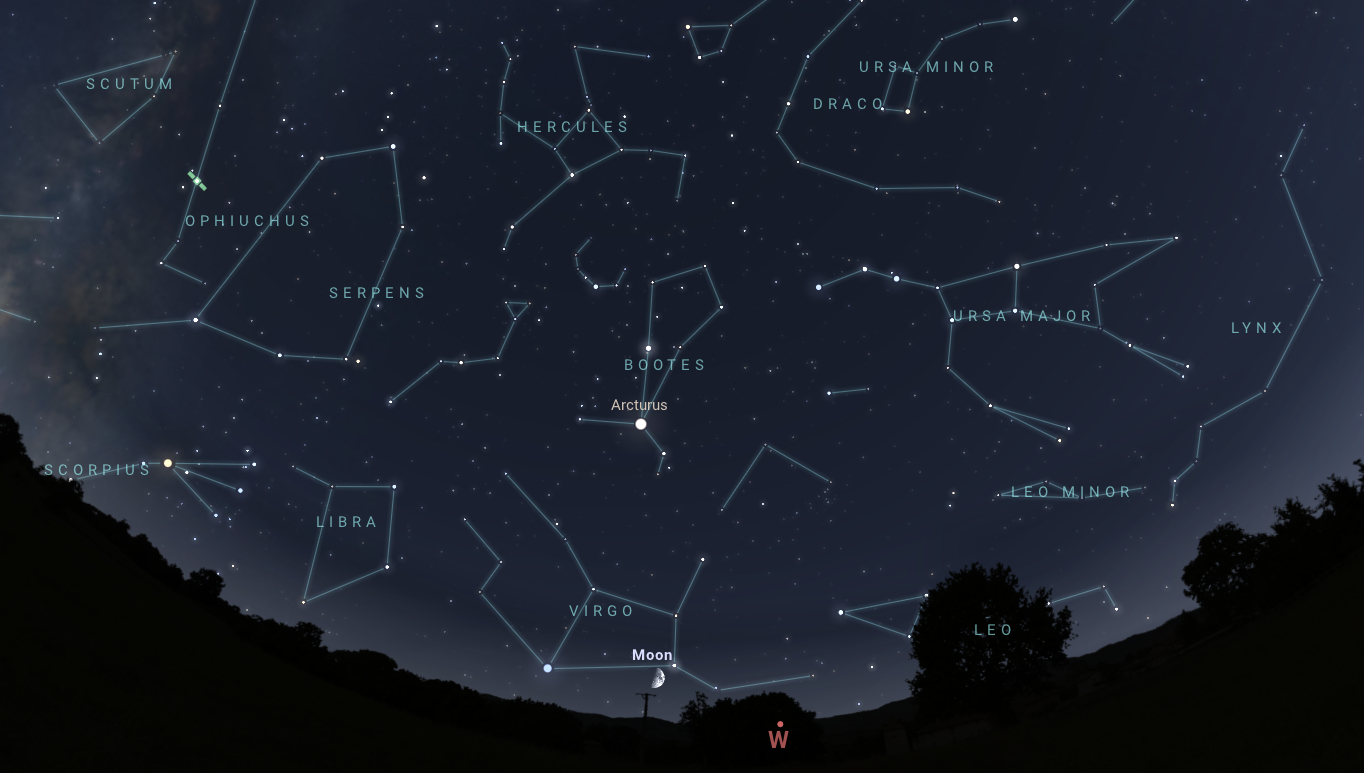
BoΓΆtes remains visible throughout the summer. (Image credit: StellariumWeb)
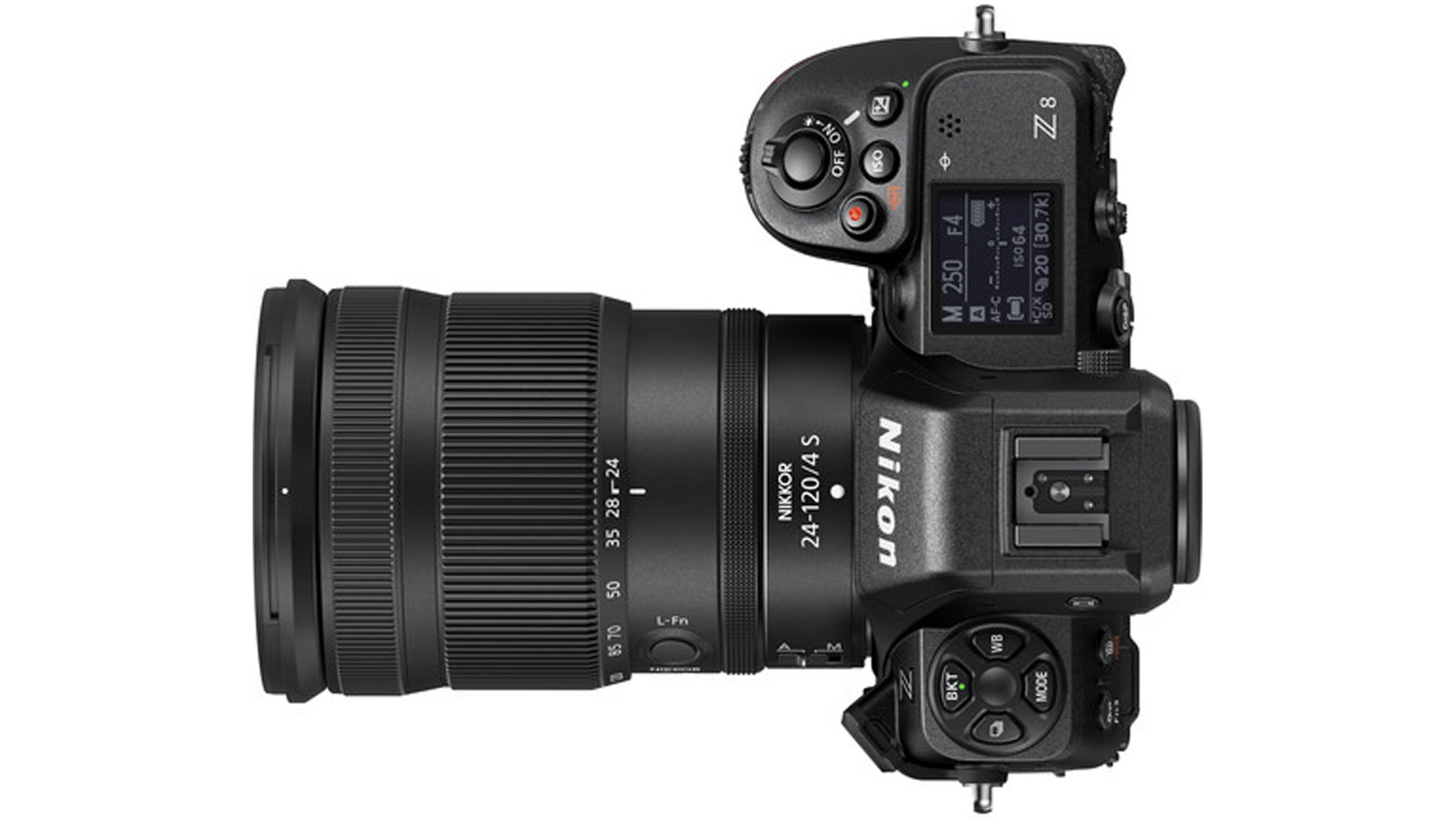
Camera Pick: Nikon Z8

Nikon Z8 and NIKKOR Z 24-120mm f4 S on a white background

(Image credit: Nikon)

If you're looking for a great camera to photograph meteors, we recommend the Sony A7R IV, which we've named the best mirrorless camera in our guide to the best cameras for astrophotography.

For the best chance of spotting a June Bootid, head to a dark location away from city lights if you can. The shower's radiant β€” the point from which the meteors appear to originate β€” lies in the constellation BoΓΆtes, which sits high in the western and southwestern sky during the evening for observers in the Northern Hemisphere.

While the radiant can help you identify June Bootids, you don't want to look directly at it. Instead, find a comfortable spot with a wide view of the sky and let your eyes adjust to the darkness for at least 20 minutes. Meteors are often easier to spot when you're scanning a broad area of sky.

  •  

Want to start stargazing? Here's why June is the perfect time for newcomers

Each November in the Northern Hemisphere, the astronomy world cranks up a gear. As Orion's Belt and the bright stars of winter appear in the east just after an early sunset, telescopes are added to Christmas lists. True darkness has arrived β€” long winter nights when stargazing sessions can go on for many hours. The blanket of stars has arrived.

I used to think beginners should start stargazing in winter. That's what astronomy books always imply: crisp, dark skies and brilliant stars, with the constellation Orion and its spectacular nebula dominating the heavens. My own book, A Stargazing Program for Beginners, outlines a month-by-month program to reveal all the night sky's biggest and most beautiful secrets in just one year β€” starting in January. Technically, it's all true. Winter skies are spectacular. But they're also cold enough to make most normal people give up after 15 minutes.

June is different. June is when the sky becomes readable. The nights are shorter, yes, and in the northern U.S., Canada and much of Europe, true darkness arrives very late near this weekend's solstice. But that softness is exactly what makes it approachable. You don't step into a black void filled with unfamiliar stars, shivering as you do so. You ease into it through lingering twilight, warm air, and a handful of large, obvious patterns that repeat night after night. Stargazing becomes a slow, easy, unrushed affair β€” and there's so much to see.

What's happening and when to look

Just as winter brings many hours of darkness that are hard to make use of β€” because of cold and clouds β€” summer brings the opposite problem. In June, you can stand outside in shirtsleeves, but only late at night. For example, in New York β€” at about 41 degrees north β€” sunset on the solstice is at 8:33 p.m. EDT, with astronomical night (defined as when the sun is 18 degrees below the horizon) between about 10 p.m. and 3:30 a.m. EDT. At 51 degrees north (much of Canada and the U.K.), astronomical night starts after midnight.

Wherever you are in the Northern Hemisphere, you can stargaze during the long twilight that begins about 45 minutes after sunset. With calmer weather compared to winter's haze and endless cloud systems, a clear sky is more likely β€” and so are camping trips under a dark sky.

There's another beginner advantage in summer that few mention: the learning curve is shorter. Summer constellations and asterisms rely more on large geometric patterns. You're not trying to memorize dozens of tiny stars, but instead you're learning shapes.

a car with lights on inside under a starry sky with milky way stretching across the center of the image.

The Milky Way is now visible during astronomical night. (Image credit: Justin Paget via Getty Images)

How and when I'm stargazing this month

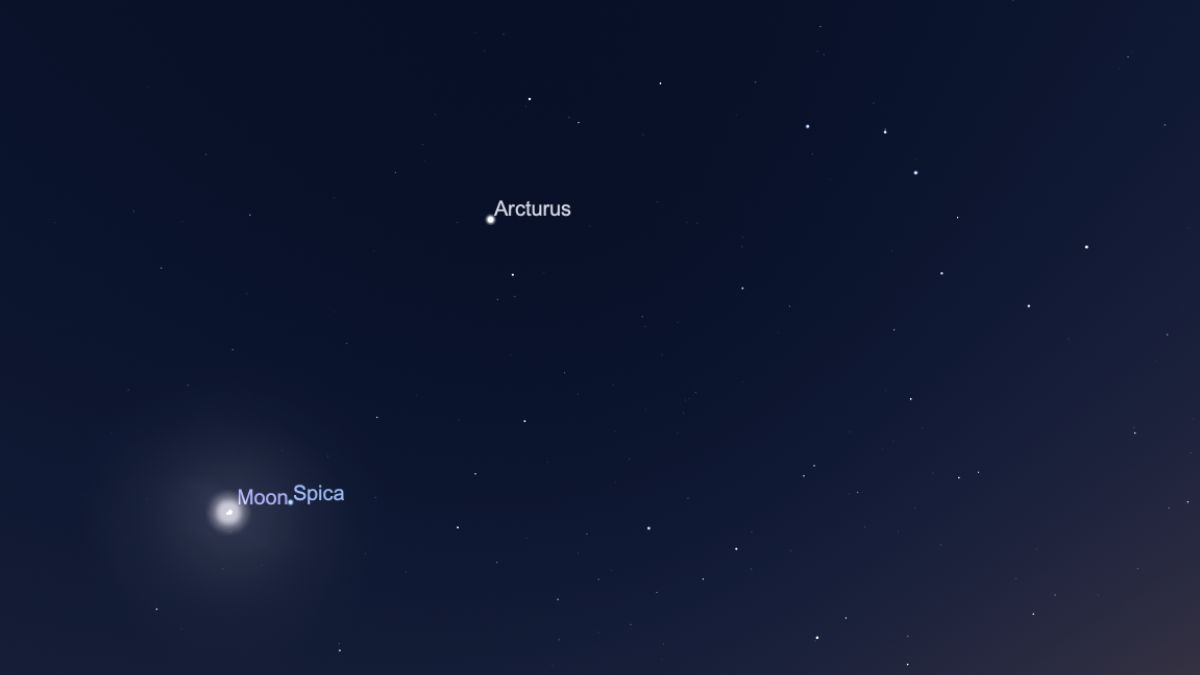
Step outside around 10:30 or 11 p.m., depending on your latitude and face north to find the Big Dipper β€” the large spoon-shaped pattern high in the sky. Then use the curve of its handle. Follow the arc outward, and you'll arrive at a bright orange star low in the western half of the sky: Arcturus, in the constellation BoΓΆtes. Arcturus comes from the ancient Greek word Arktouros, meaning "guardian of the bear." It's an ancient star-hop, but now we know the science: Arcturus is a red giant star and the fourth-brightest star in the night sky. It's about 37 light-years away from the solar system and, at seven billion years old, it's older than the sun.

night sky graphic showing the moon next to spica and arcturus to the upper right.

On June 23, use the Big Dipper to find Arcturus, then Spica and a waxing gibbous moon. (Image credit: Stellarium)

Even if you only find Arcturus, you've already learned a genuine navigation technique astronomers (and mariners) have used for generations. But there's more. Continue the same curve farther south, and you'll eventually reach Spica, a bluish star in the constellation Virgo. Its name means "ear of corn" because of its seasonal connection to agriculture and harvests. About 250 light-years distant, it's actually two massive young stars (12 million years old) orbiting each other.

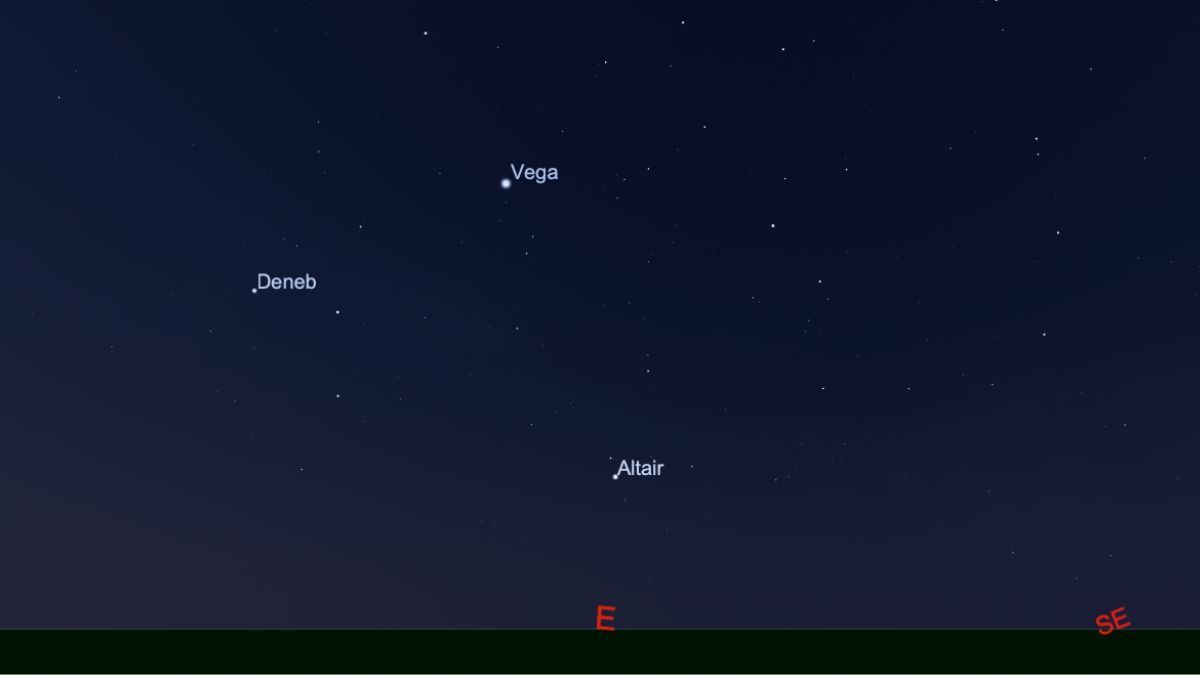
Now turn eastward, where three bright stars dominate the summer sky: Vega, Deneb and Altair. Together they form the Summer Triangle, probably the single best beginner landmark in the Northern Hemisphere's summer sky. Vega is the easiest starting point because it's so bright and highest in the sky. Deneb sits below, and Altair appears lower. Once you can identify those three stars consistently, you've unlocked an enormous amount of the summer sky. Recognizing the Summer Triangle gives you orientation, confidence and a mental map.

night sky graphic showing deneb left, vega top and altair bottom.

Look east for the three bright stars of the Summer Triangle. (Image credit: Stellarium)

Under darker rural skies, you may also begin noticing the Milky Way stretching behind Deneb and Altair later in the night. If you can't see it, you either need to stay outside a little longer (it takes 20 minutes away from any light β€” particularly the white light from a smartphone β€” to see it properly) or else the sky conditions are poor (which could include light pollution).

But even from cities, the bright and vast patterns of the summer night sky remain visible. Learn one new asterism or constellation each session β€” such as the faint outline of constellations like Virgo, Ophiuchus, Hercules and Corona Borealis β€” and repeat the process during your next stargazing session.

So lean into the solstice this week, do some real stargazing and build your confidence gradually while the geometry of Earth's tilt turns in your favor.

Stargazer's corner: June 19-25, 2026

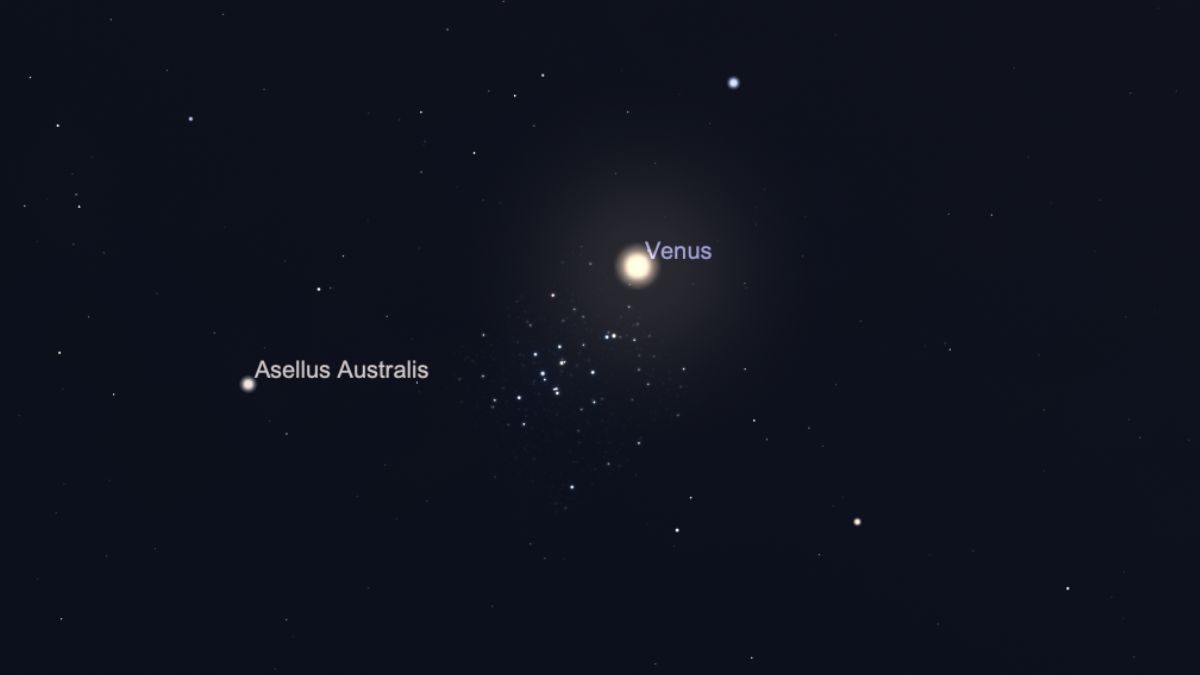
night sky graphic showing venus shining bright with the Pleiades.

June 19 sees Venus within the Pleiades, a rare occurrence. (Image credit: Stellarium)

The June solstice arrives this week, marking the longest days and shortest nights of the year in the Northern Hemisphere. Darkness is now at a premium, with extended twilight lingering well into the night and returning early in the morning, but the moon is back in the evening sky. On Friday, June 19, a 29%-illuminated waxing crescent moon will shine just to the left of Regulus, the brightest star in the constellation Leo. At the same moment, Venus will pass through the Beehive Cluster. It's the latter that you don't want to miss β€” it's a rare occurrence. On Tuesday, June 23, a 70%-illuminated waxing gibbous moon will shine next to Spica.

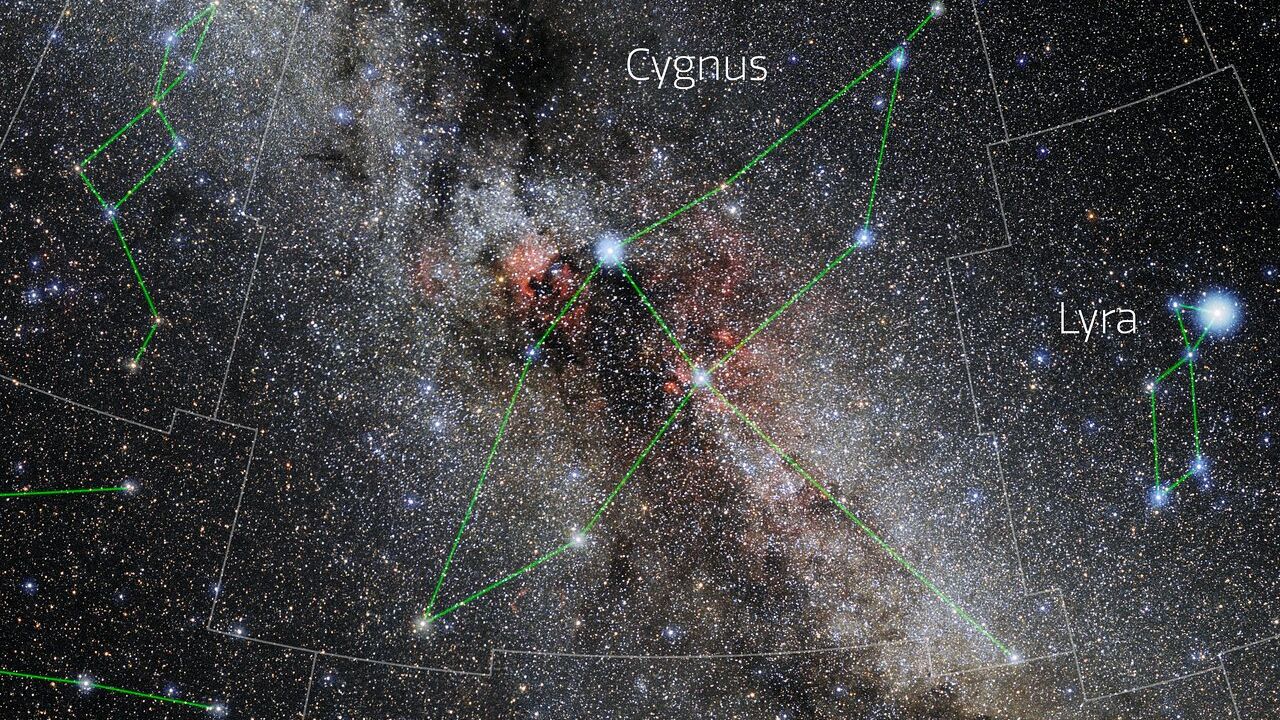
Constellation of the week: Cygnus

night sky map showing the location of cygnus constellation in the night sky.

Β The constellation Cygnus. (Image credit: E. Slawik/NOIRLab/NSF/AURA/M. Zamani)

Is it a swan? Is it a Christian cross? Depending on how you look at the constellation Cygnus, it can be either, but its official name relates to the long-necked bird in flight. Positioned across the Milky Way, its most obvious star is Deneb β€” one of the anchor stars of the Summer Triangle β€” which marks either the body of the swan or the top of the cross.

Even in less-than-perfect skies, the shape of Cygnus is clear, and in darker conditions, it sits within a dense star field that hints at structure within the Milky Way.

  •  

You can get my favorite image-stabilized binoculars for their cheapest ever price in this incredible anti-Prime Day deal

The Fujinon Techno-Stabi 1640 binoculars were the first image-stabilized (IS) binoculars I got my hands on and they are, quite literally, showstopping. Handheld stargazing actually became fun for me, instead of just getting annoyed at squiggly lines of light. Regardless of whether you are a seasoned binocular pro or a beginner, when you start upping the magnification, views start amplifying hand shake and make observation impossible. What is the point of spending loads on high quality optics if you can't even get a still picture? I truly believe that when it comes to non-telescope stargazing, image stabilization (IS) is one of the best things you can spend your money on.

Get the Fujinon Techno-Stabi TS-L 1640 image-stabilized binoculars, on sale right now for $1,125 at Walmart.

I'm not saying that image-stabilized binoculars aren't expensive. They are, but you would realistically never need to buy another pair of high-magnification binoculars again. I recommend the Fujinon Techno-Stabi 1640 binoculars at full price, so getting $275 off them at their lowest price really is a steal. For prices on other binoculars and other optics, check out our Prime Day hub for the best prices during the summer sales events.

Save a huge $275 on the incredible Techno-Stabi TS-L 1640 image-stabilized binoculars. They contain Fujifilm's premium optics in a lightweight package with some of the strongest image stabilization on the market.

I gave them four and a half stars in my full Fujifilm Fujinon Techno-Stabi TS-L 1640 image stabilized binoculars review.View Deal

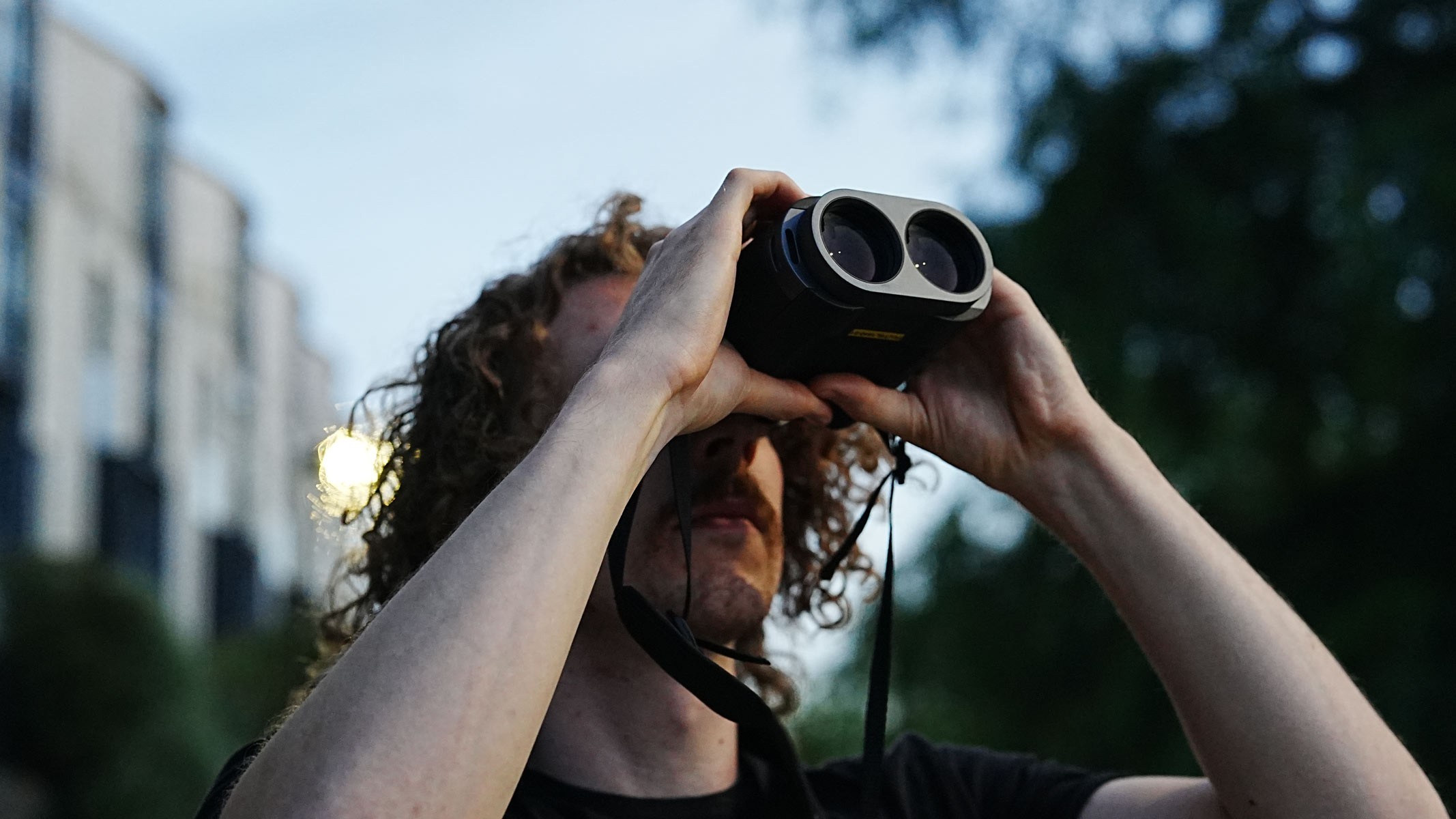
A man looking through the Fujifilm Techno-Stabi TS-L 1640 image-stabilized binoculars upwards with trees and buildings in the background.
These binoculars are perfect for sharp handheld observation of a range of night sky objects including stars, clusters and the moon. Harry Bennett / Future
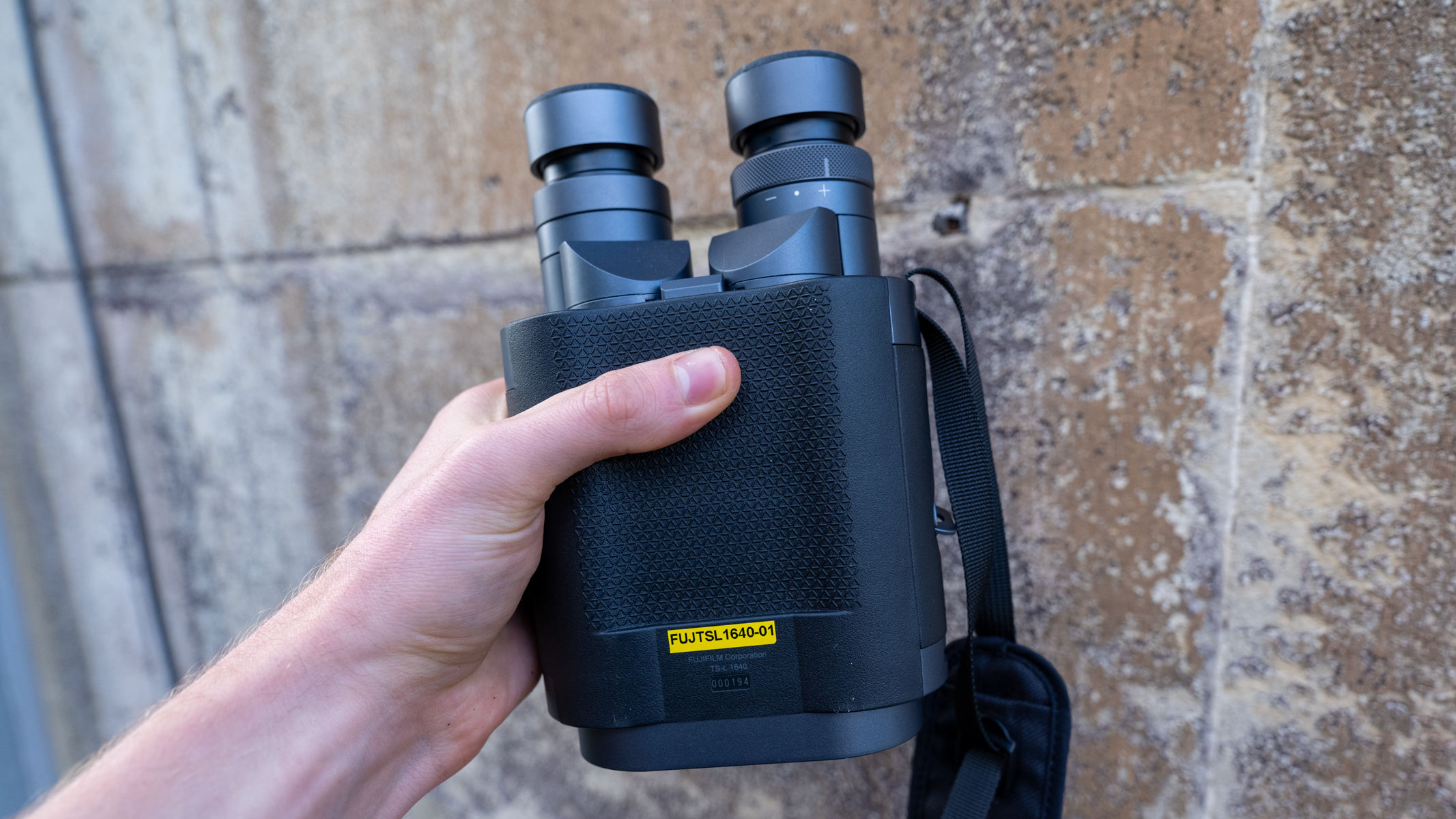
A hand holding the Fujifilm Techno-Stabi TS-L 1640 image-stabilized binoculars with a beige wall in the background.
The Techno-Stabi TS-L 1640 binoculars are great for holding in your hand and are highly portable. Harry Bennett / Future
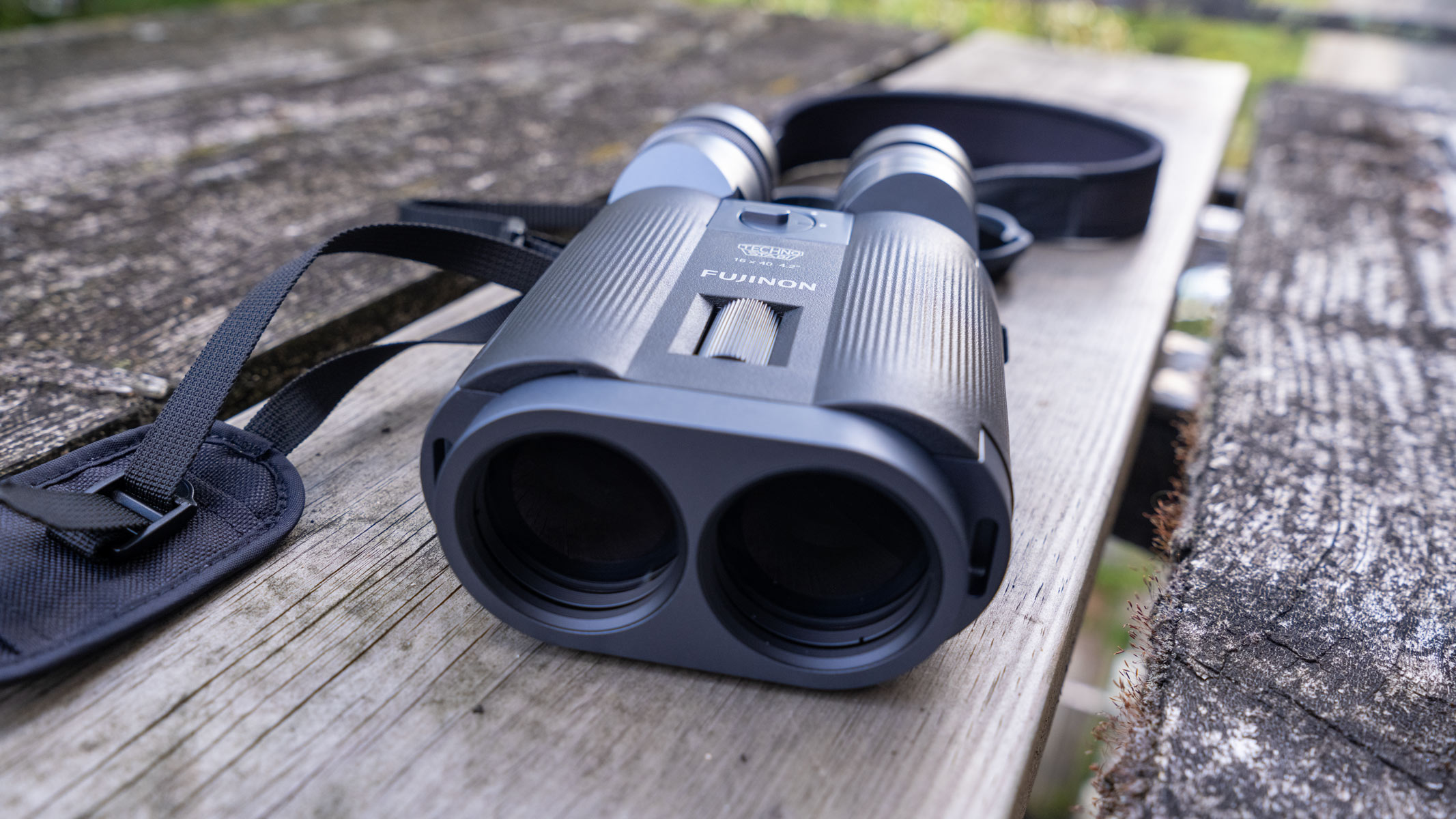
A head-on view of the lenses on the Fujifilm Techno-Stabi TS-L 1640 image-stabilized binoculars on some wooden planks.
They have a neat, streamlined design despite their high-end optics.Harry Bennett / Future
A close-up of the lenses on the Fujifilm Techno-Stabi TS-L 1640 image-stabilized binoculars with wooden planks in the background.
40mm objective lenses aren't the biggest but the image-stabilization more than makes up for it. Harry Bennett / Future
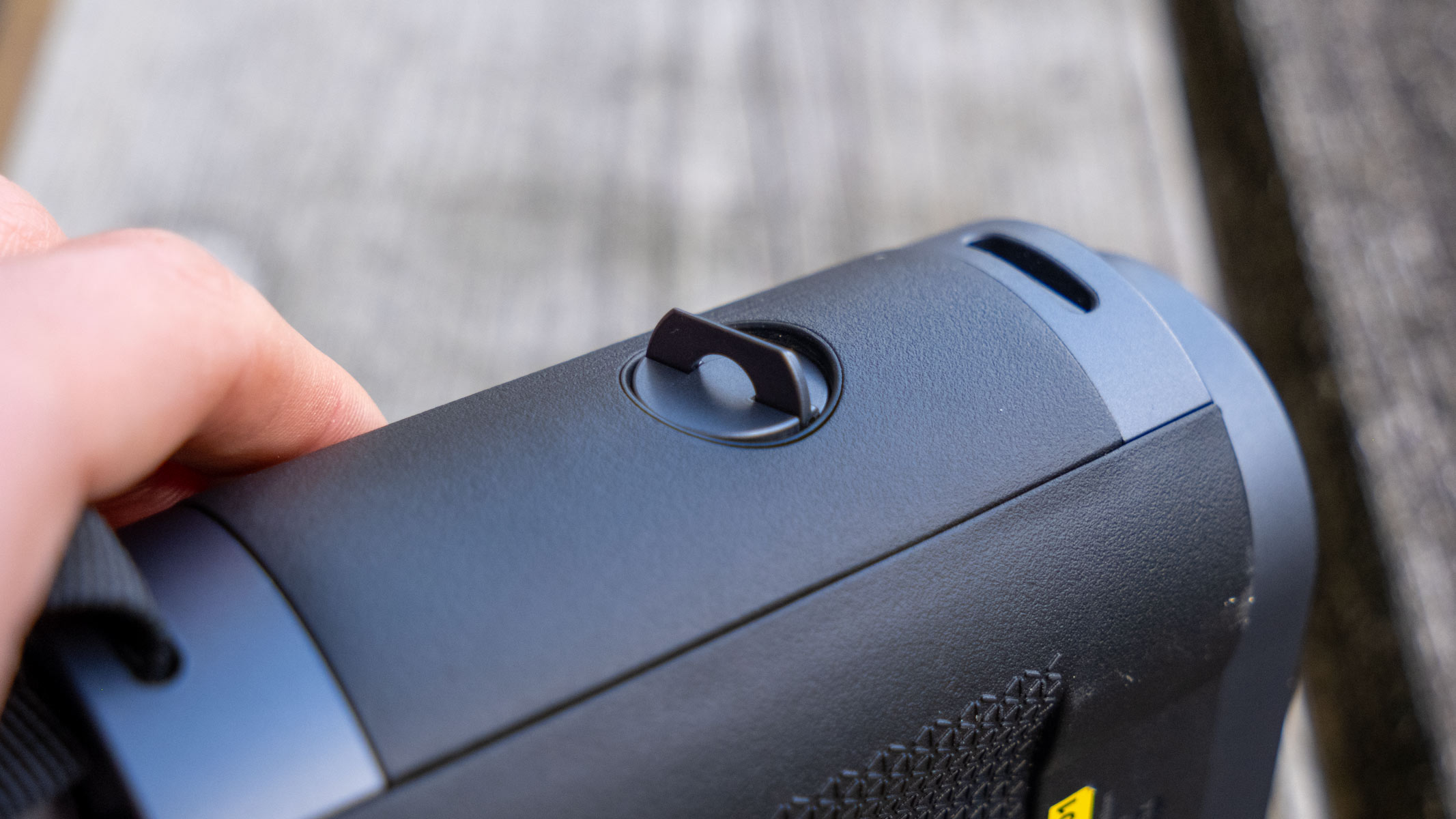
A close-up of the battery compartment on the Fujifilm Techno-Stabi TS-L 1640 image-stabilized binoculars with wooden slats in the background.
A special screw feature tightens and loosens the battery compartment.Harry Bennett / Future
A close-up of the eyecups and right diopter on the Fujifilm Techno-Stabi TS-L 1640 image-stabilized binoculars with wooden planks in the background.
The eyecups are easy to adjust for different levels of eye relief. Harry Bennett / Future
A close-up view looking into the eyecups of the Fujifilm Techno-Stabi TS-L 1640 image-stabilized binoculars with wooden planks in the background.
The eyecups have over 15mm of eye relief with three different height presets. Harry Bennett / Future
The lens cover attached to the Fujifilm Techno-Stabi TS-L 1640 image-stabilized binoculars on wooden plank.
The rubber lens cap keeps the objective lenses dust-free during travel.Harry Bennett / Future
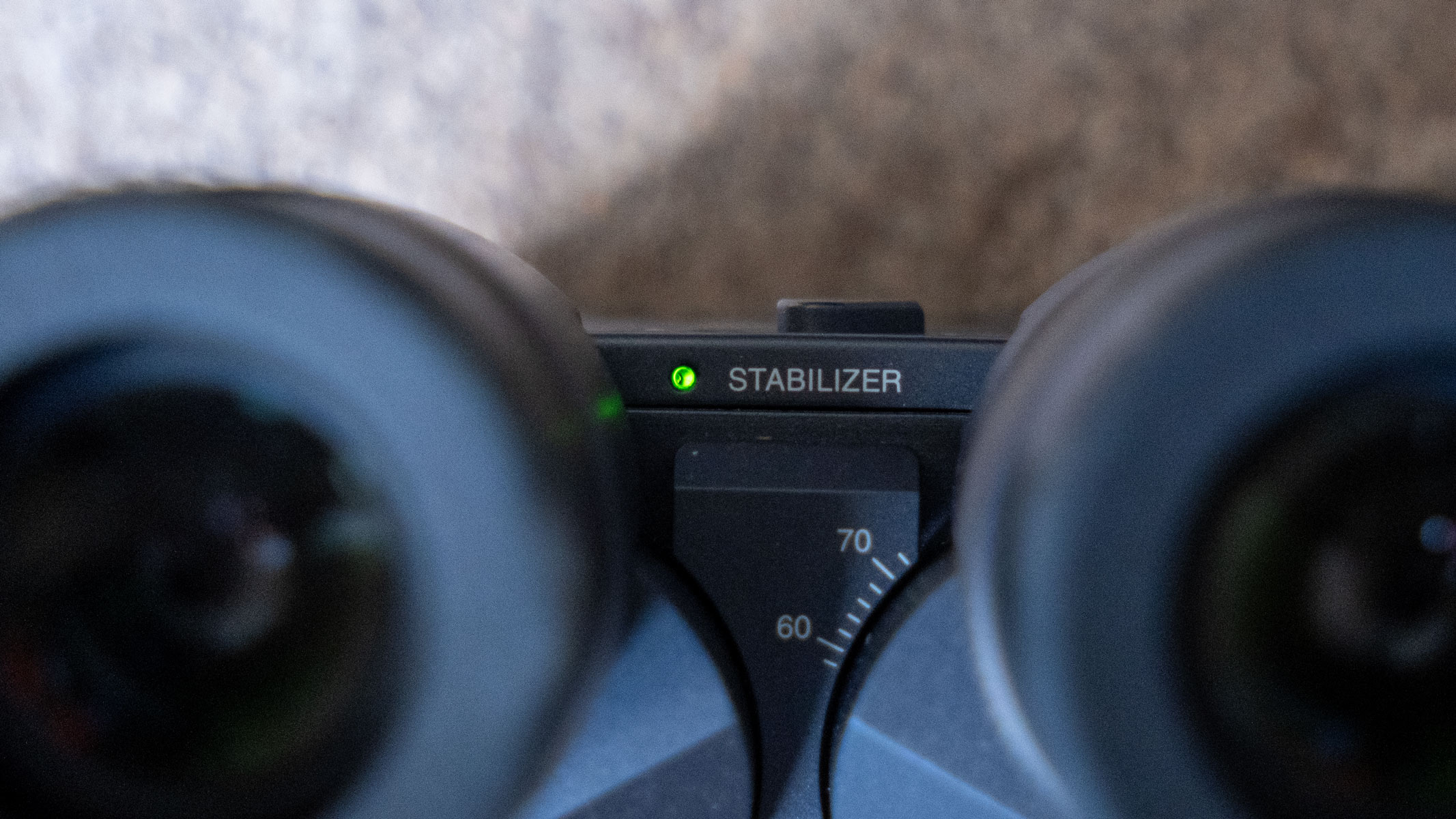
A close-up of the green image-stabilizer light with inter-pupillary distance markings on the Fujifilm Techno-Stabi TS-L 1640 image-stabilized binoculars.
A small green LED illuminates in between the eyecups when the image stabilization (IS) is active. Harry Bennett / Future
A birds-eye view of the Fujifilm Techno-Stabi TS-L 1640 image-stabilized binoculars on some wooden planks.
A roof prism design keeps the weight low at 1.9 lbs (856 g).Harry Bennett / Future
A Fujinon binoculars pouch on a wooden table with sunlight and shadow cast across it.
The binoculars come with a soft padded case for storage when travelling or storing for long periods. Harry Bennett / Future

The Fujinon Techno-Stabi TS-L 1640 image stabilized binoculars sit near the top of the binocular pyramid alongside the other best image stabilized binoculars thanks to their premium Fuji optics, lightweight build and powerful 3-degree image stabilization (IS). It is some of the strongest IS on the market, only being out ranked by other Fujifilm IS binoculars.

40mm objective lenses aren't the biggest for stargazing, where 50mm is the gold standard for low light, but you can't complain when observing star clusters at 16x magnification with zero shake. Even if you were using 16x50 binoculars without IS, that extra light-gathering ability would be useless when observing overhead without a tripod, the resulting view likely to be a mess of squiggly lights.

My favorite target with these was the Mirfak cluster in the constellation Perseus, which I could actually identify at this magnification thanks to the IS. It's amazing using them without the IS, then switching it on and watching the detail of the night sky emerge. They sit in a higher price bracket than regular models, but they really are some of the best optics you can buy for a heavy binocular user and now with over $250 off their asking price on Walmart, it's a great chance to save money on some exceptional technology. We are going to be seeing a lot of deals on binoculars, telescopes and cameras coming up to Amazon Prime Day. It starts on June 23, so make sure you check our Prime Day hub for all the best offers on skywatching gear and space gifts.

Key features: 16x magnification, 40mm objective lenses,+/- 3 degrees of image stabilization, multicoated extra-low dispersion (ED) glass, roof prism optical desing, 1.9 lbs (856 g) weight, 30-hour battery life.

Product launched: January 2025

Price history: This is the cheapest the Fujinon Techno-Stabi TS-L 1640 binoculars have been since May this year, when they dropped to 1150 on Amazon. This Walmart price currently beats Amazon's asking price.

Price comparison: Walmart: $1,125 | Amazon: $1,199 | Best Buy: $1,199

Reviews consensus: I rated the Fujinon Techno-Stabi TS-L 1640 binoculars four and half stars for their smooth image stabilization (IS) and lightweight design. Other reviews remark on the high price but argue that it is justified through the exceptional performance of these binoculars, with the difference made by IS like night and day.

Space: β˜…β˜…β˜…β˜…Β½

Featured in guides: Best binoculars, best image-stabilized binoculars

βœ… Buy them if: You want stock-still images of the night sky while using handheld binoculars.

❌ Don't buy them if: You want high definition images of deep-sky objects, whilst they can get you better views of them, a special deep space telescope or smart telescope will get you more detailed views of galaxies, star clusters and nebulas.

Check out our other guides to the best telescopes, binoculars, cameras, star projectors, drones, lego and much more.

  •  
❌