WASHINGTON — York Space Systems said June 24 that a satellite it built for the U.S. Space Force successfully demonstrated two-way tactical communications using ultra-high-frequency (UHF) links from low Earth […]
In a major structural shift designed to correct an unsustainable economic imbalance on the modern battlefield, the U.S. Army has formally launched its Low-Cost Interceptor (LCI) program. The defense initiative aims to end the practice of burning multimillion-dollar air defense assets to down inexpensive adversary drones that cost only a few thousand dollars.
Senior service officials announced a highly compressed procurement timeline for the program, establishing a firm target to execute the first live-fire capability demonstrations this autumn.
The launch follows months of strategic framework planning intended to quickly field scalable, affordable anti-drone solutions. Army Secretary Dan Driscoll clarified that these new budget-friendly interceptors are not meant to replace existing, high-end defensive networks.
Describing the service’s current premier air defense systems as “the Ferrari of a product,” Driscoll noted that while their capabilities are incredible, the Army urgently requires a mass-producible, low-cost alternative to supplement the fleet during prolonged, high-rate attrition conflicts.
Overhauling procurement
Rather than relying on traditional acquisition models—where a single prime contractor builds a highly proprietary weapon system from the ground up—the Army is breaking the LCI into independent structural subsegments.
Under this strategy, the service will source components from a wide pool of competing suppliers to reduce unit costs. Through its specialized xTech program, the Army plans to officially release a call for industrial white papers on July 6, 2026.
The upcoming solicitation will seek targeted technological solutions across four critical subsystem categories: rocket motors, advanced seekers, fire control and guidance tools, and an overarching weapons system integrator.
The chosen system integrator will be tasked with designing a flexible, open systems architecture that allows the Army to seamlessly hot-swap subcomponents as underlying commercial technologies mature.
Service officials indicated that if the submitted technologies show sufficient technical maturity, the xTech team may bypass lengthy prototyping phases and move selected vendors straight into full-rate production.
Resetting cost targets to combat inexpensive threat vectors
The fiscal parameters of the LCI program are explicitly shaped by the realities of modern asymmetric aerial threats, such as jet-engine-powered Shahed attack drones.
Military leaders have long warned that relying on premium, low-stock missiles to neutralize waves of mass-produced loitering munitions is financially unviable over extended campaigns. While the Army has declined to lock in a rigid price ceiling, leadership has established aggressive baseline cost targets.
Ideally, the service wants the final, all-up rounds to cost less than $1 million each. Furthermore, Driscoll previously indicated that the service’s ultimate target price point sits below $250,000 per individual interceptor.
Army leadership emphasizes that while the military will always expend whatever resources are necessary to defend American lives in an immediate combat theater, achieving a sub-million-dollar price point is absolutely vital to absorbing and repelling sustained drone swarms at a true theater-wide scale.
Securing intellectual property and empowering global allies
A foundational element of the LCI acquisition strategy is a strict emphasis on data and intellectual property (IP) sharing among participating contractors. Because the Army is assembling the final interceptor from separate components built by different firms, the service must secure the underlying IP rights.
Retaining these rights will allow the military to independently perform field repairs, reverse-engineer parts, and utilize 3D printing to accelerate maintenance in forward-deployed zones.
Furthermore, establishing clean IP boundaries will enable the Army to add the finished low-cost interceptors directly into its digital marketplace interface. The Pentagon already utilizes this marketplace framework to sell validated drones and counter-UAS platforms to allied nations.
By distributing these compatible, budget-friendly interceptors globally, the Army intends to build a unified defensive network in which international partners can seamlessly deploy identical, affordable munitions, even in austere theaters where standard American logistics are unavailable.
WASHINGTON — Boeing won a contract worth up to $2 billion to build two next-generation military communications satellites for the U.S. Space Force, prevailing over Lockheed Martin in a competition […]
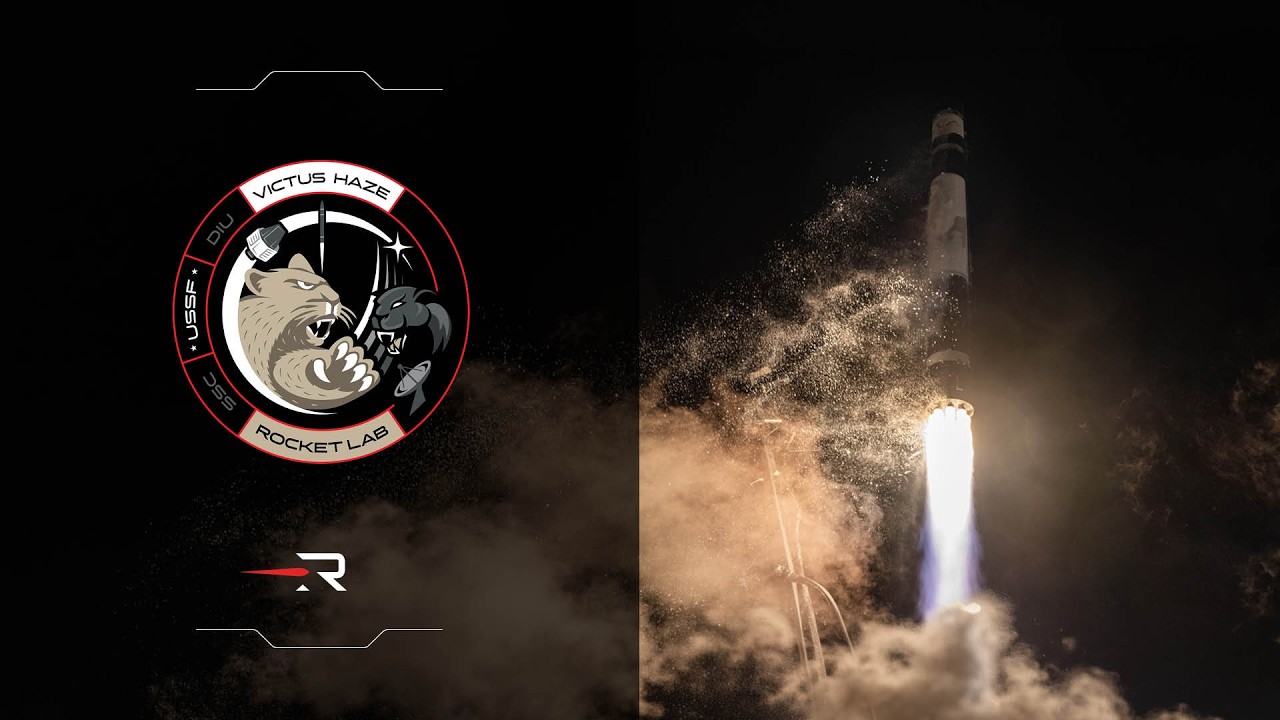
Rocket Lab has set a new benchmark for military responsive space operations after launching the U.S. Space Force’s VICTUS HAZE mission just 16 hours and 42 minutes after receiving a formal launch order. The turnaround beat the previous record by more than 10 hours and showed how quickly a defense spacecraft can move from standby to orbit.
The mission also introduced a different operating model for tactical space missions. Rocket Lab developed the spacecraft, carried out the launch, and now controls operations in orbit, giving the U.S. Space Force a single provider for the entire effort.
Faster launch timeline
Responsive space programs are designed to place satellites into orbit on short notice during a crisis. VICTUS HAZE tested that concept under demanding timelines and cleared several milestones well ahead of schedule.
Rocket Lab’s Guidance, Navigation and Control team needed only about four hours to finalize trajectories, update flight software and coordinate ground stations after receiving the launch notice.
The Space Force called, and we launched. From call up to lift-off in just 16 hours 42 minutes Rocket Lab has made history – the fastest response time ever for a @USSF_SSC Tactically Responsive Space mission. pic.twitter.com/yJyhFxbpT3
Electron lifted off from Launch Complex 1 in New Zealand and successfully deployed the company’s Pioneer spacecraft. Engineers completed spacecraft commissioning in 37 hours and 36 minutes, beating the program’s 72-hour requirement by more than 34 hours.
Spacecraft begins pursuit
The Pioneer spacecraft has already started Rendezvous and Proximity Operations in low Earth orbit. The mission simulates a scenario in which a maneuverable satellite rapidly approaches and inspects another spacecraft that is not cooperating.
Such missions could strengthen U.S. military space awareness during emergencies. A satellite launched on short notice can quickly pursue an object in orbit and provide military planners with near real-time intelligence about its movements and activities.
Rocket Lab founder and CEO Sir Peter Beck described the integrated approach as a major step forward for responsive space missions. “Our launch-plus-spacecraft integrated mission capability is transformative for responsive space,” Beck said. He added that having spacecraft ready for immediate deployment allows the United States and its allies to reinforce national security space operations far more quickly.
Single provider strategy
VICTUS HAZE is the first Tactical Responsive Space mission to rely on a single prime contractor for the entire effort. Rocket Lab developed the Pioneer spacecraft before carrying it into orbit on Electron. The company now directs the mission from the ground as the satellite performs its assigned operations.
According to U.S. Space Force Lt. Col. Lincoln Miller, the mission completes the program’s “crawl, walk, run” demonstration phase and shows teams can field sophisticated space capabilities within days instead of months. He said Rendezvous and Proximity Operations remain challenging under compressed timelines. Commissioning the spacecraft ahead of schedule and immediately starting orbital maneuvers demonstrates the ability to respond rapidly during a crisis.
Rocket Lab credits that speed to its vertically integrated manufacturing approach. The Pioneer spacecraft relies on key hardware and software produced inside the company instead of a network of outside suppliers. That level of control shortens development schedules and eliminates many procurement delays that slow traditional defense programs. As a result, a mission that would normally require years of planning moved from launch notification to orbit in less than 17 hours, establishing a new benchmark for rapid military space access.
When people think of strategic bombers, aircraft such as the B-52 Stratofortress, B-2 Spirit, or the new B-21 Raider usually dominate the conversation. They are among the most recognizable military aircraft ever built and form the backbone of America’s long-range strike capability.
Yet if “power” is measured by more traditional metrics such as speed, payload, engine output, and sheer size, another aircraft arguably deserves the crown. That aircraft is the Tupolev Tu-160, known to NATO as the Blackjack and nicknamed the “White Swan” in Russia.
First developed during the Cold War to counter American strategic bombers, the Tu-160 remains the largest and heaviest combat aircraft ever built, the fastest operational bomber in the world, and one of the most heavily armed aircraft ever placed into service.
Built for a different era of warfare
According to data published by the U.S. Army’s ODIN weapons database and official Russian specifications, the Tu-160 was designed around a philosophy very different from the stealth bombers that would later emerge in the United States.
Instead of avoiding enemy air defenses through low observability, Soviet engineers sought to create a bomber capable of outrunning threats, carrying massive payloads, and launching long-range weapons from stand-off distances.
The result was a giant variable-sweep-wing aircraft powered by four Kuznetsov NK-32 afterburning turbofan engines. Together, these engines generate roughly 220,000 pounds of thrust, making the Tu-160 one of the most powerful military aircraft ever constructed.
The aircraft can exceed Mach 2, or roughly 1,380 miles per hour, a speed no operational strategic bomber can match today. By comparison, the B-2 Spirit and B-52 Stratofortress are both subsonic aircraft, while the B-21 Raider is also believed to prioritize stealth over speed.
The Tu-160’s size is equally impressive. It has a maximum takeoff weight of approximately 275 tonnes and can carry up to 45 tonnes (99,000 pounds) of weapons internally. That exceeds the payload capacity of both the B-2 and B-21 and even surpasses the venerable B-52 in several mission configurations.
A flying missile arsenal
While images often show the White Swan carrying conventional bombs, its primary purpose is to serve as a long-range missile carrier. Modernized Tu-160M variants can deploy weapons such as the Kh-101 conventional cruise missile and the nuclear-capable Kh-102. These missiles have ranges measured in thousands of kilometers, allowing the aircraft to strike targets without entering heavily defended airspace.
This capability has become increasingly important in modern warfare. Rather than flying directly over enemy territory, strategic bombers can launch stand-off weapons from safer distances while remaining protected by friendly air defenses and fighter escorts.
In effect, the Tu-160 functions as a high-speed airborne missile truck capable of delivering large numbers of long-range precision weapons across intercontinental distances.
Why the B-2 and B-21 are still feared
If the Tu-160 dominates on paper, why are the US B-2 Spirit and B-21 Raider bombers more capable combat aircraft?
The answer lies in stealth. B-2 was designed to penetrate dense air-defense networks by minimizing its radar signature. Rather than outrunning enemy defenses, it attempts to avoid detection altogether. The B-21 takes that concept even further.
Although many details remain classified, the aircraft is widely believed to incorporate next-generation stealth materials, advanced networking capabilities, digital mission systems, and the ability to integrate with unmanned platforms.
In a modern conflict against advanced integrated air-defense systems, stealth can be more valuable than raw speed. A bomber that remains undetected may be able to strike targets that a larger, non-stealth aircraft would struggle to approach.
This is why comparing the Tu-160 directly to the B-21 can be misleading. The two aircraft were designed to solve different military problems.
So which bomber is actually the most powerful?
The answer depends entirely on how power is defined. If the discussion is about speed, payload, engine thrust, and physical size, the Tu-160 stands alone. No bomber currently in service flies faster, carries more weapons internally, or produces more thrust.
If survivability and the ability to penetrate advanced air defenses are the primary criteria, the advantage shifts toward stealth bombers such as the B-2 and B-21. More than three decades after entering service, the White Swan remains one of the most extraordinary aircraft ever built.
It may not be the most advanced bomber in the world, nor the most survivable, but it represents the peak of a design philosophy centered on speed and overwhelming firepower. For that reason, Russia’s Tu-160 still has a strong claim to being the most powerful bomber ever built.
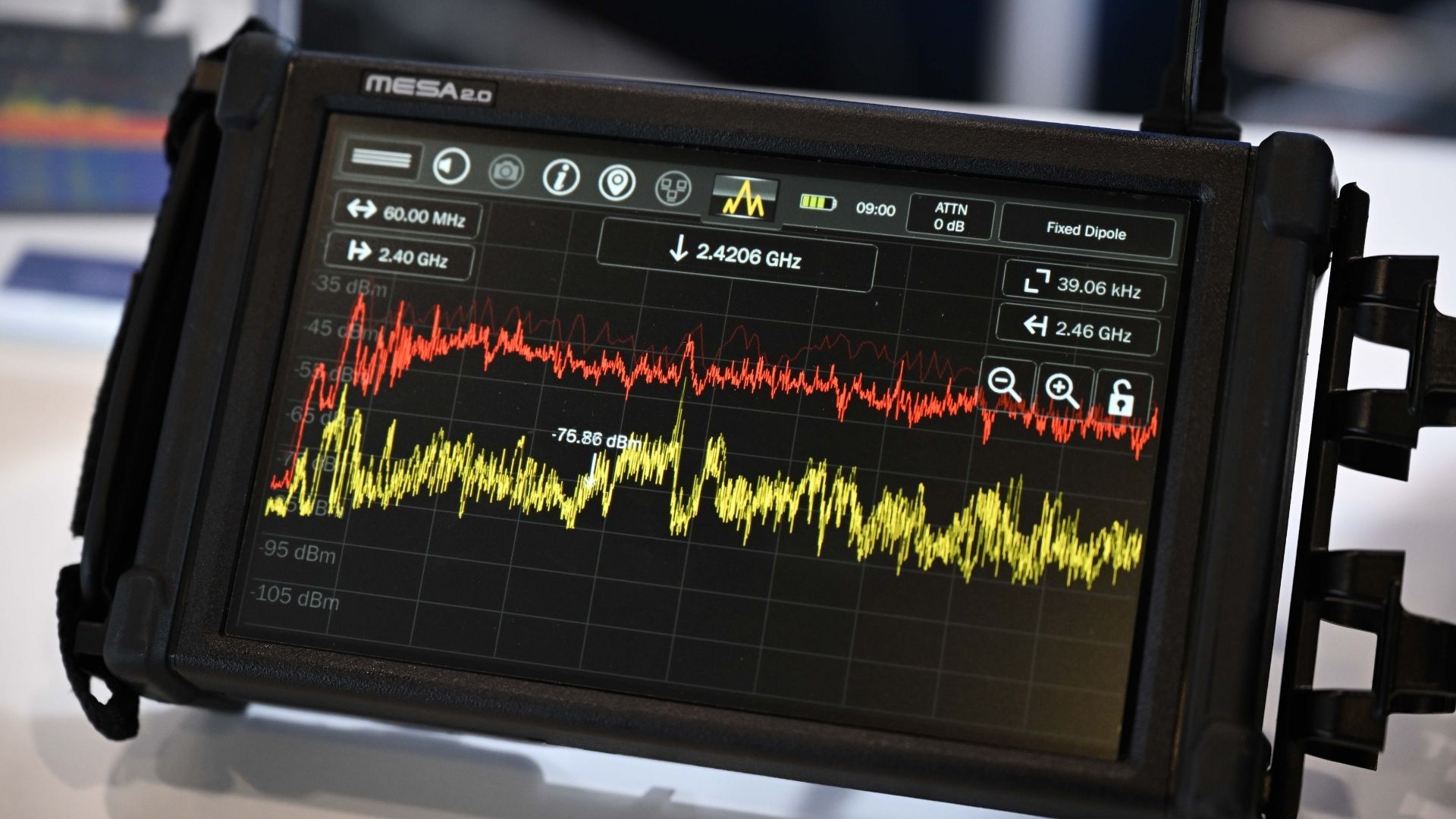
Australia-based technology company BrainChip has launched a new hardware platform designed to classify radio frequency (RF) signals in real time while operating on less than a watt of power, targeting defense and intelligence applications that require processing at the edge.
Called the Akida Communication Reference Platform, the system is built around the company’s Akida AKD1500 neuromorphic processor and is intended for defense contractors, government agencies, software-defined radio vendors and edge AI developers.
The platform performs RF signal classification directly on-device, eliminating the need for cloud connectivity or large computing hardware. BrainChip said the system is designed for environments where power availability, thermal constraints and size limitations make conventional GPU- or FPGA-based solutions difficult to deploy.
Potential applications include handheld signal intelligence systems, unmanned aerial vehicles, satellite communications terminals and other portable defense technologies.
AI tackles RF threats
According to BrainChip, the platform can identify more than 20 signal modulation types in real time while maintaining greater than 85% accuracy at a signal-to-noise ratio of 30 decibels.
Traditional digital signal processing systems typically rely on rule-based approaches that can struggle to identify new or intentionally modified signals. BrainChip says its neuromorphic AI approach allows the system to capture unknown waveforms and use them for future model retraining, enabling adaptation to emerging wireless threats.
The company argues that this flexibility addresses a key limitation of existing RF classification systems, which often require significant computational resources and can be difficult to update for changing operational conditions.
The platform is also designed to support battery-powered deployments where continuous operation is required without access to external infrastructure.
“BrainChip’s Akida Communication Reference Platform proves that real-time signal intelligence can be condensed into a portable battery powered solution to extend the range of deployment options,” said Sean Hehir, BrainChip’s CEO.
Built for edge deployment
The platform is available for evaluation and partner integration as a reference design kit. It supports integration with software-defined radio front ends such as the USRP B205mini and EPIQ Sidekiq.
A host system, including devices like the Raspberry Pi 5, can be used to manage data flow and application development. BrainChip said engineering teams can use the platform to prototype intelligence, surveillance and reconnaissance capabilities, as well as broader signal intelligence applications.
The launch expands the company’s portfolio of edge AI reference platforms beyond radar and sensor-fusion systems. BrainChip says the new offering demonstrates how neuromorphic computing can be applied to RF processing workloads that traditionally require larger and more power-hungry hardware.
The release comes as defense agencies and communications providers increasingly explore AI-powered spectrum monitoring tools capable of operating in remote and contested environments. By reducing power consumption and hardware requirements, such systems could enable RF awareness capabilities in smaller platforms that previously lacked sufficient computing resources.
As military and commercial users continue pushing AI capabilities closer to sensors and data sources, low-power processors capable of running advanced inference at the edge are becoming increasingly important for real-time decision-making in disconnected environments.
Mitchell Institute workshop participants found little consensus on where competition ends and conflict begins as China expands counterspace capabilities
The United States Army (the Army) has awarded Rune Technologies a $99 million Indefinite Delivery, Indefinite Quantity (IDIQ) contract for its proprietary TyrOS platform.
The IDIQ framework will run for five years, during which authorized Department of War (DoW) organizations can place orders for the software and associated services through the contract, up to a maximum cumulative value of $99 million.
“Established by the Army and available for broader DoW use, the vehicle enables Soldiers, Marines, Sailors, Airmen, Guardians, Commanders, Sustainers, acquisition professionals, and contracting teams to rapidly access and field-proven software solutions at the speed of operations,” Rune explains in an official press release.
This differs from “normal” military procurement in that it offers a potential rapid-adoption pathway for interested parties. For anyone even remotely familiar with military purchases (which can take many months to years), this could reduce procurement timelines from many months to just days.
But what is the big deal with the new software? Well, Rune’s TyrOS is akin to a mix of Amazon, Google Maps, inventory management, an artificial intelligence (AI) chatbot, and predictive analytics in one place. In this sense, it acts a bit like an AI-assisted logistics operating system.
Windows for war
Windows for war, if you like. “Logistics is the distribution layer of military power, and it has to move at the speed of the fight,” said David Tuttle, Co-Founder and CEO of Rune Technologies.
“This contract gives sustainment teams across the Army and joint force a single, repeatable way to deploy TyrOS and other Rune capabilities into their units, while reducing acquisition friction and accelerating capability delivery to the tactical edge,” he added.
The system not only tells users that an asset needs resupply but can also identify potential bottlenecks and recommend alternative courses of action.
So, the AI will go far beyond something simple like “fuel will run out here in X days.” It will help users find alternative sources, reroute convoys to assist, etc., before a crisis occurs.
Beyond predictive modeling, one of TyrOS’ strengths, Rune explains, is that it uses a native large language model (LLM) as part of its interface. So, instead of clicking through menus, a user can simply ask a question using natural language to get the answer they want.
Say they ask something like “show every artillery battalion that will be below 30% ammunition within the next 72 hours.” The AI converts that into database queries and produces an answer.
Proactive, not reactive
But it gets better than that. As Rune explains, its software features a specially designed AI agent called Saga. This sophisticated piece of software effectively acts as an automated AI logistician in the system.
To this end, it is able to autonomously detect issues and then generate recommendations for action. A human still approves the decision, but the planning work is largely automated.
Yet another innovation is something called “edge-first architecture.” Normally, AI systems rely heavily on cloud servers, which, in turn, rely on stable and reliable telecommunications.
But satellite link failures, network jamming, and physical severing of telecoms are something of an occupational hazard in war. Edge-first means the AI runs locally on military computers or servers.
So even if disconnected from headquarters, a brigade can still use the system. Not too shabby.
Franco-German defense giant Krauss-Maffei Wegmann and Nexter (KNDS) have unveiled a new main battle tank for European customers at the 2026 Eurosatory trade show.
KNDS, in case you are unaware, is a conglomeration of the companies behind the German Leopard 2 and French Leclerc main battle tanks (MBTs). Today, they are a “pan-European land defense company, uniting over 11,000 employees with a €4.4 billion in revenue and a backlog of €33.1 billion in 2025.”
The new tank, called the CAPINT (“Intermediate Capability”), is effectively a Leopard 2A8 hull with a futuristic unmanned turret, integration with robotic vehicles, and drones.
According to KNDS, this will be something of a stopgap for France’s planned Main Ground Combat System (MGCS), which is taking a long time to arrive. So, the idea goes, instead of waiting until 2040, this new tank should be deployable during the 2030s.
Its chassis, reportedly, offers the new tank proven mobility and armor, while also benefiting from the existing logistics chain and lower development risk. It also provides the tank with a 1,500 hp (1,119 kW) diesel engine, which is the same power class as current Western MBTs.
The power plant might also be supplemented with battery packs (to enhance the onboard energy storage) along with an associated electric drive train to reduce the infrared and acoustic signatures.
KNDS’ new toys for Europe
The most interesting part is the crewless turret. Unlike conventional MBT turrets, no crew sits inside the turret itself. Instead, it is remotely operated, allowing the crew to remain protected within the hull.
As no crew needs to be present, this enables the turret to be smaller and lighter. But this doesn’t mean the tank will be without serious firepower.
According to reports, the tank will come with a KNDS ASCALON 120 mm smoothbore gun with an autoloader. This makes it compatible with the current NATO standard ammunition stockpiles.
KNDS does note, however, that this can be upgraded to larger calibers in the future without the need to redesign the entire turret. The scalable design also gives KNDS room to introduce larger calibers in the future, should battlefield requirements change.
All fairly standard so far, but an interesting wrinkle in the design is plans to give it some drone buddies. Robotic vehicles and drones will fight alongside the tank, forming a manned-unmanned team. In this configuration, the tank will act as an armored command platform.
Few concrete details have been released, but this will likely include reconnaissance drones to scout ahead and counter-drone systems for protection. The counter drone systems are likely to employ a mix of hard kill and soft kill means. These might include active protection systems and tube-launched interceptor drones.
Next iteration of Leopard 2 A-RC 3.0 study
Separately, KNDS also presented a further development of its fully self-financed study on Leopard 2 A-RC 3.0. It features a remote-controlled turret and a three-man crew.
The concept revolves around an innovative, unmanned turret with its unique weapon mounting, this prevents the weapon from dipping into the vehicle, thus creating a possibility of freeing up space inside the hull.
The compact crew arrangement also reduces the armor protection volume, leading to weight reduction. This results in an improved power-to-weight ratio, which in-turn increases tactical mobility.
The Leopard 2 A-RC 3.0 can integrate different gun calibers from 120 mm, 130 mm, to 140 mm. It also incorporates an advanced secondary armament to counter the persistent threat of drone swarms.
Chinese defense supplier Harbin Xinguang Optic-Electronics Technology has unveiled a new man-portable. anti-drone laser weapon. Unveiled at the Defence Information Equipment and Technology Exhibition 2026 in Beijing, the miniaturized directed-energy weapon brings to life something once thought not possible.
The new system is part of the “Lijian” (roughly translated as “sharp swords”) range of lasers, which can allegedly shoot down drones at ranges up to 3,900 feet (1,200 meters). Being much smaller, this new portable version can’t quite reach those ranges, however.
Like its bigger brothers, the new system works by focusing a laser beam on a distant target, like a drone. The beam can then burn through wires, damage sensors and cameras, or overheat battery packs.
The theory is that once a critical part fails, the drone crashes. This capability is something many militaries are already rushing to develop, but the real breakthrough here is the unit’s size and weight.
According to reports, they are small enough for a single soldier to manipulate in the field. The Lijian II, for example, comes in at around 66 pounds (30 kg), with the Lijian III around 55 pounds (25 kg).
Man-portable laser power
To put that into perspective, that is roughly equivalent to carrying a machine gun plus ammunition and batteries. Still heavy, but much lighter than vehicle-mounted systems.
In the field, such systems would likely comprise a backpack that contains batteries and cooling systems. The soldier can then deploy the platform, which then tracks and targets drones visually or with optics.
All well and good, but lasers of this kind generally need a lot of power to actually work. While no technical details have been publicly released, laser weapons typically require between 20 and 50 kW.
They also require beefy cooling systems. This appears to have been solved, with reports being circulated that claim it can cool down in under 5 seconds. But again, how this was achieved has not been made public.
This all sounds impressive enough, but even futuristic weapons like lasers are not foolproof on the battlefield. They are, for example, highly susceptible to changes in weather like rain and fog, and other battlefield conditions like smoke, dust, etc.
Any of these can scatter the laser beam, subsequently dropping its effectiveness against a target. Lasers are also highly reliant on “line of sight” and must be able to see a target to hit it.
Gimmick or game-changer?
Any obstacles in the way, like buildings, hills, trees, etc, render them ineffective. There is also the issue that lasers must remain “locked” to a target for some time to be effective.
Ballistic weapons, like guns, deliver their full destructive potential on contact, while lasers need some time to do the damage. A fast-moving or maneuvering drone could, in theory, make this harder.
It is also not clear how such a small system could handle drone swarm attacks. Whatever the case may be, the new system could be an interesting evolution in anti-drone warfare.
If systems like this prove reliable, infantry units may eventually carry laser anti-drone weapons in the same way they carry machine guns or anti-tank missiles today.
The Spanish Navy has carried out a successful at-sea test of the Hornet Block 1 interceptor, a new system designed to counter the growing threat posed by unmanned aerial vehicles (UAVs) and drone swarms. The trial was conducted aboard the frigate F-81 Santa María and represents a significant step toward enhancing naval defenses against increasingly common low-cost aerial threats.
The demonstration involved launching a Hornet Block 1 interceptor from a containerized launcher temporarily installed on the vessel. Unlike conventional missile systems that often require extensive ship modifications, the Hornet concept is built around modular launch containers that can be integrated onto existing platforms with minimal changes. This flexibility could allow navies to rapidly expand their defensive capabilities without undertaking expensive modernization programs.
Optimized for the interception of subsonic drones
Developed by European defense technology firm Destinus, the Hornet Block 1 is optimized for the interception of subsonic drones and coordinated drone attacks. The system is intended to provide warships with a dedicated layer of protection against unmanned threats, reducing the need to employ high-value surface-to-air missiles against relatively inexpensive targets.
According to the company, the interceptor combines multiple guidance methods to ensure effectiveness in contested environments. During flight, it can utilize radar-based navigation and then transition to autonomous target engagement using a combination of onboard sensors. This design is intended to maintain operational effectiveness even in scenarios where satellite navigation signals are disrupted or unavailable.
Comparatively long engagement range
One of the Hornet Block 1’s key advantages is its comparatively long engagement range, reported to exceed 75 kilometers. The interceptor carries a small payload tailored for neutralizing drones and similar aerial targets while maintaining a compact and cost-effective design. Such characteristics make it particularly suitable for defending ships against massed UAV attacks.
The successful trial aboard the Santa María-class frigate is noteworthy because the class dates back several decades. Demonstrating the system on an older vessel suggests that similar ships could receive enhanced counter-drone capabilities without requiring major structural upgrades. This could be especially attractive for navies seeking affordable solutions to emerging threats.
Containerized interceptor
Interest in counter-drone systems has grown sharply in recent years as conflicts around the world have highlighted the effectiveness of UAVs in both surveillance and strike roles. Naval forces are increasingly looking for ways to defeat large numbers of drones without exhausting expensive missile inventories. Containerized interceptors such as the Hornet offer a potential answer by providing a lower-cost defensive option that can be deployed across a wide range of platforms.
Destinus is also working on a more advanced successor known as the Hornet Block 2. The future variant is expected to feature greater range, a larger payload, and expanded mission capabilities, including both air-defense and precision-strike roles. The company has indicated that advanced networking and artificial intelligence technologies may play a role in enabling coordinated operations between multiple interceptors.
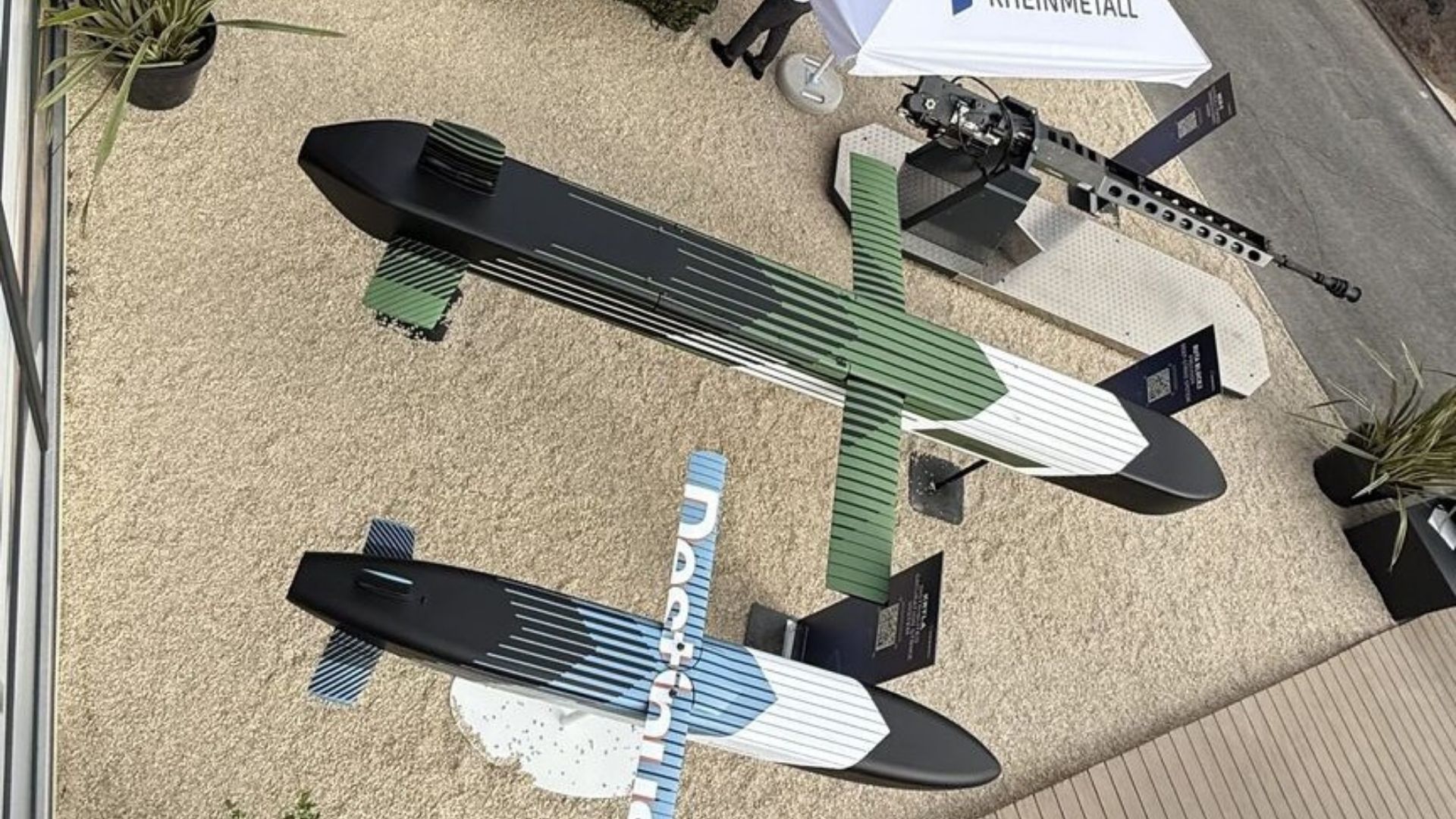
European defense technology company Destinus has manufactured its 1,000th T150 turbojet engine.
The engine powers the Ruta B1 and Ruta B2 cruise missile family. This milestone is enabled by the company`s vertically integrated approach to propulsion, which removes supply chain and geopolitical risks and strengthens Europe’s capability to produce cruise-class propulsion systems at an industrial scale.
The wider supply chain context
Destinus produces compact turbojet engines in a thrust class suited to expendable aerial platforms and autonomous systems. The market for such propulsion units has expanded rapidly alongside growing procurement of one-way attack drones and aerial target systems by NATO-aligned militaries. The company’s manufacturing base in Europe positions it to serve defense contractors seeking supply chains outside of U.S. or Asian sources, a consideration that has become increasingly relevant given export control regimes and industrial policy shifts across the continent.
The 1,000-unit figure is meaningful in manufacturing terms. Turbojet engines involve precision machining of turbine discs, combustion chambers, and compressor blades — components that demand tight tolerances and consistent metallurgical quality at elevated temperatures. Reaching four-digit production volume indicates that Destinus has moved beyond prototype or low-rate initial production into a process capable of repeatable, quality-controlled output.
Sidney Berndt, Destinus’ Chief Manufacturing Officer said, “Producing one engine is engineering. Producing a thousand is industrial capability.” .
“The T150 was built from scratch. The design, tooling, test infrastructure, supply chain and quality control were all developed and are owned by Destinus. What you see here is not a prototype line. It is a European production system that can sustain the production of thousands of missile systems per year.”
According to the company, the T150 production line is designed for continuous ramp-up, and is capable of sustaining the current and future output levels of Ruta cruise missile family.
The engine specifications
The T150 has a length of 530 mm and an outer diameter of 245 mm. It weighs 17.5 kg and produces a thrust of 15 kN. The engine features an all radial design for compactness, and can use Jet A-1, JP-8, diesel, and petrol fuels. It powers the Ruta Block 1 (B1) and Ruta Block 2 (B2) family of cruise missiles designed and developed by Destinus.
Ruta B1 has a range of 300+ km and can carry a payload of 150 kg where as Ruta B2 has a range of 700+ km and can carry a payload of 250 kg.
These missiles are capable of flying low-altitude terrain-following flight trajectories, and are designed for stand-off precision strike against hardened and high-value military targets. They incorporate an electro-optical and infra-red (EO/IR) terminal guidance and are capable of operating in GPS denied and contested electronic warfare environments.
The company is also working on a follow on T220 turbojet engine, for powering the Ruta Block 3 missile. It probably has a thrust rating of 22 kN. The Ruta Block 3 missile incorporates a low observable airframe, has a range of 2000 km, and can carry a 250 kg payload.
Europe’s defense industry is accelerating the development of a new long-range cruise missile capable of striking targets more than 2,000 kilometers (1,243 miles) away. At Eurosatory 2026 in Paris, the joint venture Rheinmetall Destinus Strike Systems announced plans to fast-track the introduction of the Ruta Block 3 missile while beginning production of two shorter-range systems, Kryla and Ruta Block 2.
The companies say the Ruta Block 3 is designed for strategic deep-strike missions against high-value and hardened targets. The missile will carry a warhead of up to 250 kilograms (551 pounds) and be launched from standard shipping containers, allowing deployment from land vehicles and maritime platforms. According to the joint venture, the system can be made ready to fire in about two minutes.
The program is being developed with NATO qualification in mind, a step that would make the missile available to NATO and European Union member states. The announcement comes as European countries continue to expand domestic defense manufacturing capabilities and reduce reliance on non-European suppliers.
The missile family is being developed through a partnership that combines Destinus’ missile technologies with Rheinmetall’s manufacturing and defense production expertise. The companies have already signed a term sheet and say a final shareholders’ agreement is close to completion.
Container launch, rapid strike
Ruta Block 3 is the most advanced missile in the joint venture’s roadmap, but production will begin with two existing systems. The first is Kryla, a compact cruise missile carrying a 50-kilogram warhead designed for saturation attacks. The missile can be launched from containers, giving existing artillery units access to cruise missile capabilities.
The second system, Ruta Block 2, carries a 551-pound warhead and is intended for attacks on hardened and high-value targets. Like Ruta Block 3, it launches from standard containers rather than dedicated missile launchers.
“Together we are advancing NATO qualification on an accelerated path, embedded in existing programmes for European defense ministries. This allows us to rapidly provide European armed forces with a ready-to-deploy, certified and fully European effector,” says Roman Köhne, Head of Division Weapon and Ammunition, Rheinmetall.
European supply chain focus
The joint venture says all three missiles will be produced through a fully European supply chain. To support that goal, Rheinmetall Destinus Strike Systems plans to establish a facility in Germany for final assembly, integration, and testing. Initial delivery readiness is targeted for 2026.
The companies also emphasize the flexibility offered by containerized launch systems, which can be transported through existing logistics networks and deployed across a wide range of platforms.
“We are firmly committed to launch from standard sea containers. This gives our customers maximum flexibility: our systems can be deployed across virtually any land and sea platform and through existing logistics chains – concealed and brought to firing readiness in the shortest time,” says Mikhail Kokorich, Founder and CEO of Destinus.
Under the partnership, Destinus will provide the missiles’ core technology while Rheinmetall will supply warheads and booster rocket motors, creating what the companies describe as a fully European deep-strike missile portfolio.
Phoenix Semiconductor has won a Phase II SBIR contract from the U.S. Defense Logistics Agency to develop drop-in replacements for obsolete microelectronic components used in defense systems.
Based in Austin, Texas, the company will design and validate four legacy chips facing supply shortages across military platforms. The program aims to maintain critical systems without requiring redesigns of existing hardware or software, addressing long-standing issues tied to discontinued semiconductors.
One of the key projects under the contract is the recreation of the Signetics 82S100 Bipolar Field-Programmable Logic Array, originally introduced in 1975 and discontinued in the late 1980s. The chip supports the Catapult Assisted Take-Off but Arrested Recovery system used to launch aircraft from Nimitz-class aircraft carriers.
Phoenix is working with Naval Air Systems Command on the project. The goal is to deliver a form-fit-function replacement that avoids expensive system-level changes, which can require extensive certification and shipyard time across fleets.
Keeping legacy systems alive
Defense platforms often remain in service for decades, while semiconductor lifecycles last only a fraction of that time. This mismatch has created a persistent obsolescence problem across the defense supply chain. The Department of Defense estimates redesign and replacement efforts can cost around $5 million over five years per instance, while broader diminishing manufacturing sources and material shortages mitigation costs exceed $2.4 billion annually.
Phoenix says its Phase I program demonstrated cycle-accurate replacement chips that were successfully tested in a live commercial system without requiring hardware or software changes. The company’s method focuses on producing form, fit, and function compatible components that can be directly inserted into existing systems, reducing downtime and eliminating the need for full requalification in critical defense applications.
Reviving retired defense chips
Ryan Hatcher, CEO and founder of Phoenix Semiconductor, said the award validates its approach. “This DLA SBIR Phase II award and our work with NAVAIR is a direct validation of what Phoenix has built — a faster, more cost-effective path to restoring access to mission-critical microelectronics that power the platforms our warfighters depend on. Working alongside our partners, we are proving that American ingenuity can solve one of the most pressing vulnerabilities in our defense industrial base — without multi-million-dollar redesigns and years of delay.”
Tackling defense obsolescence crisis
The program also aligns with the Defense Logistics Agency’s modernization and supply chain strategy and provisions in the FY2025 National Defense Authorization Act covering microelectronics obsolescence mitigation, supply chain risk management, and domestic manufacturing expansion.
Phoenix’s patent-pending approach does not require new silicon fabrication or original wafers. The company says its drop-in components are designed to match original form, fit, and function, allowing military systems to continue operating without redesigns while reducing cost and lead times for legacy part replacement.
By focusing on legacy component replication, the company aims to reduce dependency on fragile global supply chains and shorten repair timelines for aging defense systems. The approach could also support other industries that rely on long-life industrial hardware systems worldwide.
MDA Space is buying smallsat manufacturer Blue Canyon Technologies (BCT) for $620 million, giving the Canadian company greater access to the lucrative U.S. government market.
A Florida-based company has announced a series of major advancements in maritime and long-range detection capabilities utilizing its proprietary using its Base Molecular Resonance (BMR) technology platform.
BMRT’s Generation 2 platform offers unprecedented offshore and underwater detection results following the successful completion of a separate U.S. government-sponsored field study.
The company stated that the results mark the first operational deployment of BMRT’s Generation 2 platform in a true maritime environment and further reinforce the company’s position at the intersection of advanced physics, national security, and resonance-based detection technologies.
Long-range performance
“These results fundamentally alter how the world should think about shielding, distance, underwater concealment, and the movement of strategic materials,” said Robert “Bo” Short, co-founder and CEO of BMRT.
“The oceans have historically served as a sanctuary for concealment, transport, and strategic ambiguity. With this technology those assumptions collapse.”
Unlike previous demonstrations, which emphasized long-range performance in land-based settings as well as controlled tethered aerial scenarios, the Generation 2 maritime testing initiative was specifically designed to assess precision detection capabilities within a maritime operating environment. Rather than pursuing maximum standoff distances, the effort focused on validating target discrimination, environmental stability, and detection precision from mobile maritime platform, according to a press release.
Long-range detection event involving U-235
BMRT also publicly disclosed for the first time details surrounding a long-range detection event involving U-235.
During a demonstration attended by representatives from an elite U.S. Combatant Command, BMRT’s Generation 2 system reportedly detected U-235 from Stuart, Florida, across the Gulf of America to the South Texas Project Electric Generating Station near Bay City, Texas, a distance of approximately 970 miles, as per the release.
BMRT stated that it is now releasing portions of this information due to the continued maturation of the technology, the successful evolution into its Generation 2 architecture, and the increasing strategic importance of transparent discussions surrounding nuclear detection, maritime security, counter-proliferation, and strategic deterrence.
“We are entering an era where the movement of strategic materials can no longer remain hidden by distance, shielding, terrain, or water,” said Lee Duke, BMRT’s co-founder and president.
“The implications for global security, maritime monitoring, counter-proliferation operations, and nuclear transparency are profound.”
Operating from maritime vessels offshore, BMRT conducted a series of advanced detection exercises with the positive results.
From a maritime platform positioned approximately 1,500 feet offshore, the Gen 2 system successfully detected ten individual nitrocellulose-based propellant targets located inside a vehicle on land. While operating from a maritime vessel, the system successfully detected a single trace quantity of nitrocellulose-based propellant positioned on a floating object at an approximate distance of 270 feet.
From a maritime platform, the system detected two discrete nitrocellulose-based propellant targets positioned on a floating object at approximately 450 feet, demonstrating enhanced range performance with increased target mass.
In underwater trials, trace quantities of nitrocellulose-based propellant were submerged at depth to evaluate system performance through water. Despite the extremely low target mass, detection remained precise and stable, performing as though the water itself were effectively absent from the detection environment, according to BMRT.
Billions in private investment have created room for growth, but suppliers need predictable demand, says the head of Northrop Grumman’s solid rocket motor business
An aerospace and defense company has unveiled its new deep-reach intelligence, surveillance and reconnaissance (ISR) drone. Called RQ-70, the drone delivers ISR capabilities beyond the immediate tactical frontline.
Developed by AIRO Group Holdings, the RQ-70 drone is expected to enter full-scale production in January 2027.
“The RQ-70 is a direct response to what our customers have been asking for, with longer range, greater endurance, and the same operational reliability they have come to expect from the RQ-35,” said Joe Burns, AIRO CEO.
“Together, these platforms give allied defense forces a complete ISR toolkit, and give AIRO a stronger foundation to compete across a broader set of mission requirements.”
Longer-range ISR capability
The RQ-70 builds on the operational success of the RQ-35 Heidrun, which has been deployed by NATO member and allied forces, and directly addresses growing customer demand for longer-range ISR capability and extended mission endurance. Together, the two platforms establish AIRO as a multi-platform ISR provider equipped to serve a broad spectrum of mission requirements across allied defense forces. The introduction of the RQ-70 deepens AIRO’s presence in the defense drone market while expanding its customer base, according to a press release.
The company revealed that building on the RQ-35’s proven operational model, the RQ-70 supports standard hand launch and deep-stall landing, operates in GNSS-denied environments, and incorporates onboard AI to further advance AIRO’s AI roadmap. The platform also offers configuration flexibility, including standard, long-range, and VTOL-enabled options. In addition, the RQ-70 features a modular payload and software architecture that can be tailored to specific mission requirements, enabling it to serve as a standalone, full-service ISR drone for many NATO and allied defense customers.
Other key system capabilities include up to 8 hours of endurance for persistent surveillance and longer time on station; ISR operations beyond the front lines with an operational range of 62+ miles (100 km); resilience in GPS/GNSS-denied environments; deployment by a single operator with fully autonomous mission operation and recovery; and connectivity designed for digital battlefield integration, as per the release.
Drone can deliver long-range, persistent surveillance
“Modern conflicts have shown that success depends on a multitude of factors, such as how quickly intelligence can be collected, processed, and delivered to decision-makers,” said Dr. Chirinjeev Kathuria, AIRO Executive Chairman.
“The RQ-70 is designed to meet that challenge, delivering long-range, persistent surveillance that integrates seamlessly into connected battlefield environments to provide reliable intelligence when it matters most.”
The unveiling at Eurosatory gives customers, partners, and industry stakeholders their first chance to see the aircraft configuration firsthand, providing a clear sense of its scale, capabilities, and intended operational concept.
The launch further supports AIRO’s broader growth strategy, which includes expanding its defense manufacturing footprint in Europe and developing next-generation unmanned systems. With the addition of the RQ-70, AIRO aims to strengthen its position as a provider of scalable, AI-enabled ISR solutions capable of meeting evolving battlefield requirements.

 Login





 Rocket Lab has made history – the fastest response time ever for a