❌

Reading view

JBL Wave Buds a 19,99€: sconto del 67% sul prezzo di listino al Prime Day Amazon

Durerà sicuramente pochissimo l'offerta del Prime Day Amazon che ti permette di portare a casa JBL Wave Buds, ottimi auricolari Bluetooth con design in-ear, a 19,99€. Uno sconto del 67% sul prezzo di listino e comunque del 49% rispetto al prezzo offerto sulla piattaforma nell'ultimo mese. Completa rapidamente l'ordine per approfittarne finché c'è disponibilità. Spedizioni veloci e gratuite per abbonati Prime.

Un paio di auricolari entry-level, ma di ottima qualità e soprattutto firmati da un marchio che non ha bisogno di presentazioni. Buona l'autonomia energetica, ci sono diverse modalità di ascolto che ti permetteranno di non perdere il contatto con l'ambiente circostante mentre ti godi la musica che ami di più. Tramite l'applicazione per smartphone puoi personalizzare la tipologia del suono potenziando anche i bassi se lo desideri.

Decisamente, se il budget è contenuto non c'è da aspettare oltre e approfittare dell'ottima offerta Amazon del momento per portare a casa gli auricolari JBL Wave Buds a meno di 20€ in offerta con spedizioni veloci e senza costi supplementari per gli abbonati Prime. Completa ora il tuo ordine per assicurarteli perché l'offerta è limitata.


Top gamma a prezzo da medio gamma? Poco F8 Ultra, compralo al miglior prezzo da Aliexpress.com a 594 euro.

CLICCA QUI PER CONTINUARE A LEGGERE

  •  

Zoox’s purpose-built robotaxi is getting a refresh

Zoox robotaxi

Zoox, the autonomous vehicle company owned by Amazon, unveiled a new look for its boxy, bidirectional robotaxi, calling it the "next evolution" of the vehicle intended for mass production. The company is currently operating a free robotaxi service in San Francisco, Las Vegas, Austin, and Miami while it waits for the federal government to approve its request for an exemption from safety rules that require production vehicles to have traditional controls, like steering wheels and pedals.

While other robotaxi operators have typically relied on vehicles with familiar nameplates for their fleets, Zoox is unique in its embrace of a purpose-built …

Read the full story at The Verge.

  •  

Prime Day 2026, i 20 prodotti più venduti del secondo giorno

I 20 prodotti più venduti del secondo giorno di Prime Day 2026 raccontano bene cosa sta cercando davvero il pubblico Amazon in queste ore: non solo grandi sconti sui dispositivi più costosi, ma anche piccoli prodotti smart, accessori per la casa, smartwatch, notebook, monitor e robot aspirapolvere.

La classifica è interessante proprio perché mescola acquisti d’impulso da poco più di 10€ e prodotti premium da oltre 1.000€, segno che il Prime Day continua a essere una vetrina molto trasversale, dove si compra il modulo smart per automatizzare una luce e, magari nello stesso carrello mentale, si guarda anche uno smartphone top di gamma.

Il nome più curioso in cima alla selezione è il SONOFF Matter, un mini interruttore intelligente Wi-Fi proposto a 11,25€ e arrivato al minimo storico. È il classico prodotto che costa poco ma risolve problemi concreti: può servire per rendere smart una luce, un interruttore o un piccolo punto di controllo domestico, con supporto a Matter e compatibilità con Alexa e Google Home.


Top gamma a prezzo da medio gamma? Poco F8 Ultra, compralo al miglior prezzo da Aliexpress.com a 594 euro.

CLICCA QUI PER CONTINUARE A LEGGERE

  •  

Votre pelouse mérite mieux : le Prime Day fait chuter le prix de ce robot tondeuse (-29 %)

Le RoboUP Raccoon 2 SE démocratise un peu plus l’accès aux robots tondeuses intelligents. Destiné aux jardins jusqu’à 600 m², ce modèle séduit par son fonctionnement sans câble périphérique et sa navigation assistée par caméra. À l’occasion du Prime Day Amazon, il profite d’une remise...

  •  

-50 % en plein Prime Day : ce robot piscine risque de disparaître rapidement

Le robot piscine Dreame Z1 attire actuellement de nombreux regards sur Amazon, notamment grâce à une remise de 50 % qui fait passer son prix sous la barre des 500 €. Une offre qui risque de ne pas rester longtemps disponible. Sans fil, il prend en charge le nettoyage du fond, des parois et de la...

  •  

Roborock frappe fort pour les Prime Day : ce robot aspirateur laveur perd 200 € d’un coup

Les robots aspirateurs laveurs sont devenus de véritables alliés du quotidien pour garder une maison propre sans effort. Parmi les marques les plus réputées du secteur, Roborock s'est imposée grâce à des appareils performants, intelligents et particulièrement efficaces sur tous types de sols.

  •  

NGSO trade association launches without industry giant SpaceX

A composite image of 33 exposures captures reflective Starlink satellites, making them appear to streak over the sky of southern Brazil. Credit: NASA / Egon Filter

Amazon and several other non-geostationary satellite operators have formed a trade association to represent their fast-growing market, with SpaceX notably absent despite having by far the largest NGSO constellation.

The post NGSO trade association launches without industry giant SpaceX appeared first on SpaceNews.

  •  

Amazon lâche 50 € sur ce spa gonflable Bestway à l'occasion du Prime Day

Amazon frappe fort à l’occasion du Prime Day avec une baisse de prix notable sur le spa gonflable Bestway Lay-Z-Spa Milan AirJet Plus. Capable d’accueillir jusqu’à six personnes, ce modèle transforme facilement un coin de jardin ou une terrasse en espace de détente. Entre bulles relaxantes, eau...

  •  

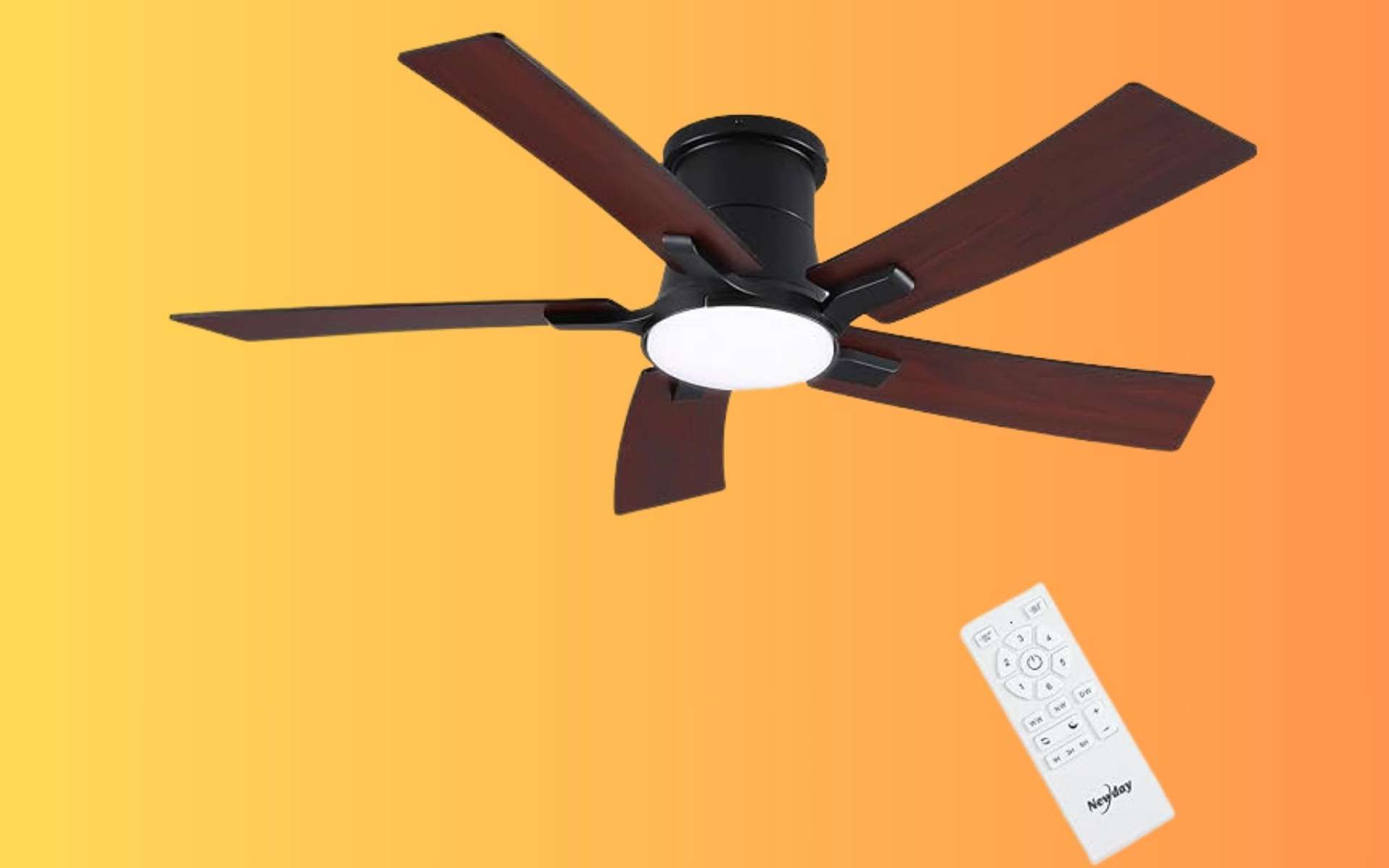
Le Prime Day fait tourner les têtes : ce ventilateur Newday passe sous les 125 €

Le mercure grimpe, les nuits deviennent plus longues et le coup d'envoi du Prime Day tombe à point nommé. Amazon baisse le prix du ventilateur de plafond Newday à 124,09 € au lieu de 138,69 €, une offre intéressante pour équiper son intérieur avant les prochains pics de chaleur. Ventilation...

  •  

Hollywood is bending the knee to OpenAI

Photo collage of Sam Altman in front of the OpenAI logo.

Netflix, A24, Focus Features, and Warner Bros.' Clockwork have all reportedly decided to pass on picking up Artificial - director Luca Guadagnino's new biographical drama about OpenAI cofounder / CEO Sam Altman - for distribution deals. And while Neon and Mubi are still said to be interested in the film, this situation makes it seem like Hollywood no longer has the courage to tell critical stories about Big Tech.

Postproduction on Artificial was nearly finished when Amazon MGM unexpectedly announced last week that it no longer plans to distribute the film. The news came as a surprise given how far along the movie was and reports that Amazon …

Read the full story at The Verge.

  •  

Amazon ouvre le bal du Prime Day avec ce ventilateur de plafond à moins de 90 €

Le Prime Day démarre fort et certains bons plans semblent avoir été calibrés pour affronter la vague de chaleur. Ce ventilateur de plafond Cecotec voit son prix passer sous la barre des 90 €, avec une réduction de 10 % qui tombe au moment où les températures s'emballent.

  •  

Amazon Prime Day 2026: As melhores ofertas em tecnologia para aproveitar até quinta-feira

De tablets a aspiradores, passando por auriculares e televisores OLED, a Amazon conta com centenas de milhares de promoções exclusivas para os membros Prime até ao dia 26 de junho. E, quem ainda não é membro, pode experimentar gratuitamente durante 30 dias.

The post Amazon Prime Day 2026: As melhores ofertas em tecnologia para aproveitar até quinta-feira appeared first on Tek Notícias.

  •  

Le thermomètre grimpe, Amazon baisse le prix de cette piscine gonflable pour le lancement du Prime Day

Le coup d'envoi du Prime Day est donné et les bons plans estivaux sont déjà dans le grand bain. Cette piscine autoportante Intex, plébiscitée par des dizaines de milliers d'acheteurs sur Amazon, profite d'un tarif particulièrement attractif. De quoi installer un espace de baignade à domicile...

  •  

Prime Day : Amazon frappe fort sur ce robot piscine parmi les meilleures ventes

Le Prime Day démarre fort avec une offre remarquée sur le robot piscine Aiper Scuba SE. Déjà bien installé parmi les meilleures ventes de sa catégorie sur Amazon, ce modèle sans fil profite d'une baisse de prix qui tombe à pic pour préparer la saison estivale et simplifier l'entretien du bassin.

  •  

Agrarian Economy Shapes Amazon Vector-Borne Disease Patterns

In the dense and biodiverse expanse of the Brazilian Amazon, the interplay between human activity and ecological systems has long shaped the epidemiology of vector-borne diseases. Recent research delves into how the agrarian economy and socioenvironmental contexts are critical determinants of disease co-occurrence patterns in this pivotal region. This investigation illuminates the complex network of factors influencing vector-borne illnesses, shedding light on how environmental modifications and economic activities intertwine to affect human health.

Vector-borne diseases, illnesses transmitted by organisms such as mosquitoes, ticks, and other arthropods, represent a significant burden in tropical regions worldwide. The Amazon Basin, renowned for its vast tropical rainforest and intricate ecosystems, harbors multiple pathogens that cause diseases like malaria, dengue, Chagas disease, and leishmaniasis. However, it has been increasingly evident that these diseases do not occur in isolation but rather exhibit notable patterns of co-occurrence that hinge on intertwined environmental and socioeconomic factors.

The study conducted by Barbosa, Lana, Dal’Asta, and colleagues offers a groundbreaking analysis by mapping disease co-occurrence in relation to various agrarian economic practices and socioenvironmental variables across the Brazilian Amazon. By integrating epidemiological data with land use, climatic, and demographic information, the researchers constructed a multifaceted framework to explore how agricultural modalities and human livelihood strategies modulate disease dynamics.

One of the most compelling insights emerging from this research is the pivotal role agrarian economies play in shaping vector habitats and human-vector interactions. Agricultural activities, ranging from subsistence farming to extensive cattle ranching, transform the landscape in ways that can either amplify or mitigate vector proliferation. For instance, deforestation and land clearing for agriculture often create breeding grounds for mosquitoes by generating stagnant water pools, while simultaneously disrupting natural predator populations that help control vector species.

Moreover, the socioeconomic context of rural communities—encompassing aspects such as housing quality, access to healthcare, education levels, and income—profoundly influences vulnerability to vector-borne diseases. Poor infrastructure and limited resources hinder effective disease prevention and treatment, escalating the risk of infection and complicating public health responses. The researchers underscore that social inequities intersect with environmental changes to intensify disease co-occurrence, reinforcing the notion that health outcomes in the Amazon cannot be disentangled from broader societal patterns.

Importantly, the co-occurrence of multiple vector-borne diseases in the same geographic and demographic spaces introduces unique challenges for surveillance, diagnosis, and management. Overlapping symptomatology and co-infection potential complicate clinical decision-making, while co-transmission by shared or distinct vector species demands integrated vector control strategies. The study’s nuanced approach highlights how tailored interventions must consider the local agrarian economies and socioenvironmental backdrops to effectively disrupt transmission cycles.

The analysis further integrates spatial-temporal modeling techniques to detect hotspots of disease co-occurrence. These mathematical and computational models, employing advanced geostatistical methods, reveal dynamic patterns aligning with seasonal changes, land-use shifts, and population movements. Such data-driven insights facilitate the prioritization of resources toward areas most susceptible to simultaneous outbreaks, providing a robust tool for public health planning.

Beyond pointing out correlations, the researchers propose mechanisms by which agrarian economies precipitate ecological alterations favoring vector adaptation. For example, cattle ranching often promotes water storage and drainage systems, which inadvertently become breeding sites for vector mosquitoes, while crop cultivation could affect microclimate conditions conducive to vector survival. These ecological cascades underscore the need for interdisciplinary research, combining epidemiology, ecology, economics, and social sciences.

The Brazilian Amazon, a hotspot of both biodiversity and infectious diseases, thus exemplifies the intricate feedback loops between human economic activity and ecosystem health. As the global climate shifts and land-use change accelerates, understanding the socioenvironmental determinants of disease distribution assumes critical importance. This research not only advances scientific comprehension but also has major policy implications—highlighting sustainable agricultural practices and socioeconomic improvements as dual levers to reduce the burden of vector-borne diseases.

The possibility of co-infections and their synergistic effects on morbidity is another hallmark finding. Patients living in agrarian settings characterized by poverty and environmental degradation often face exposure to multiple pathogens simultaneously. The immune system’s response to co-infection may alter disease severity and treatment outcomes, posing a public health conundrum that demands integrated diagnostic approaches and targeted therapies.

Encouragingly, the research paves the way for community-based participatory strategies that align disease control with livelihood enhancement. Recognizing local knowledge and integrating agricultural best practices with vector management can potentiate sustainable interventions. For example, modifying irrigation practices to minimize stagnant water or improving housing conditions can substantially reduce vector habitats while supporting agricultural productivity.

Sustainability emerges as a key theme, emphasizing that controlling vector-borne disease co-occurrence transcends medical interventions. Policies fostering economic diversification, education, and infrastructure development are integral to disrupting the pervasive cycles of infection. The researchers advocate for cross-sector collaboration encompassing health agencies, agricultural planners, environmental managers, and local stakeholders to forge resilient systems adaptable to evolving ecological and social landscapes.

As Brazil grapples with competing pressures of economic development and environmental conservation, this research underscores the necessity of nuanced approaches that balance agrarian growth with health. It reveals that unchecked agrarian expansion without attention to socioenvironmental variables could exacerbate disease risks, indicating a path toward integrated, eco-health oriented policy frameworks.

The study also calls attention to the potential impact of climate variability, which synergizes with agrarian and socioenvironmental factors to influence vector ecology. Changes in precipitation, temperature, and seasonality may alter the geographic range and population dynamics of vectors, further complicating disease control. This underscores the urgency for adaptive monitoring systems that incorporate climatic data to anticipate and mitigate emerging threats.

In conclusion, this pioneering research presents an intricate tapestry of how agrarian economies and socioenvironmental contexts shape vector-borne disease co-occurrence in the Brazilian Amazon. By weaving together ecological, economic, and social threads, it provides a powerful lens through which to understand and address infectious disease challenges in one of the world’s most complex biomes. The implications reach far beyond the Amazon, offering global lessons in navigating the nexus of agriculture, environment, and health in a rapidly changing world.

Subject of Research: Vector-borne disease co-occurrence influenced by agrarian economy and socioenvironmental contexts in the Brazilian Amazon

Article Title: Vector-borne disease co-occurrence is shaped by agrarian economy and socioenvironmental contexts in the Brazilian Amazon

Article References:
Barbosa, M., Lana, R.M., Dal’Asta, A.P. et al. Vector-borne disease co-occurrence is shaped by agrarian economy and socioenvironmental contexts in the Brazilian Amazon. Commun Earth Environ (2026). https://doi.org/10.1038/s43247-026-03619-4

Image Credits: AI Generated

  •  

What’s at stake for the environment in Colombia’s upcoming election?

Colombia’s first round of presidential elections on May 31 saw right-wing candidate Abelardo de la Espriella take the top spot with 43.7% of the vote, followed by left-wing candidate Iván Cepeda, with 40.9%. The future of the Colombian Amazon, the fossil fuel phaseout commitments made by current President Gustavo Petro and the rights of Indigenous peoples and other traditional communities are all at stake during the runoff on June 21. Colombia has committed to reducing greenhouse gas emissions by 51% by 2030 and has a legally binding net-zero target for 2050. Analysts at the Organization for Economic Co-operation and Development (OECD) say Petro’s government made some progress, but deep reductions in emissions are critical, in particular from deforestation and agriculture, as well as reforms to phase out fossil fuel subsidies. As a result, who Colombia elects next will have major implications for the country’s climate ambitions. When Petro took office in 2022, he made the fossil fuel phaseout and environmental protection central features of his government’s agenda. He promised to become a leader in the defense of life, which involved transforming the country’s relationship with nature and “Total Peace” (Paz Total) — his administration’s flagship peace policy aimed to end Colombia’s decades-long armed conflict. Petro opposed new oil and gas exploration contracts and has been vocal about environmental justice and the energy transition at the international level, including at the United Nations General Assembly, the World Economic Forum in Davos and the United Nations Climate Change Conferences (COPs). In April,…This article was originally published on Mongabay

  •  
❌