❌

Reading view

You can save £100 on Samsung’s Galaxy XR headset if you act fast — and have a PayPal account

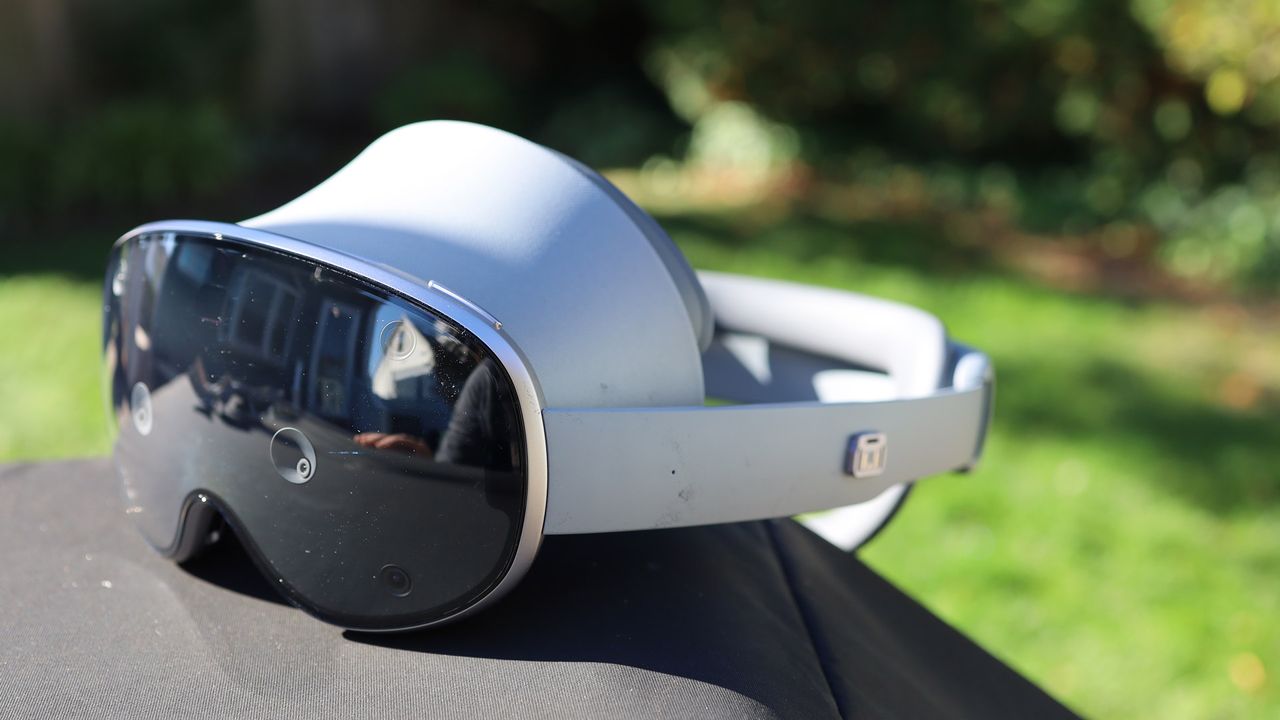
The Samsung Galaxy XR headset is now available for preorder ahead of its July 8 launch in the UK, and while you can’t pick it up at Amazon, that doesn’t mean you can't snag a Prime Day-like deal or two.

Best of all, you won’t need to be a Prime or other subscription service member; Samsung’s discounts are available to every shopper through its online store — you’ll just need to bundle a few things with your purchase, or sign up to PayPal (if you haven’t already) and check out using that as your payment method.

• Browse the full Amazon Prime Day sale

For that PayPal offer, you’ll get £100 off using the code PAYPALXR at Samsung's online store. That’s a serious saving off the £1,699 asking price, but you only have until July 7 to take advantage of this offer.

Plus, if you’re looking to upgrade your Samsung tech, or dive deeper into its ecosystem, it has deals that will save you 10% on Galaxy smartphones, a Galaxy Watch, and Galaxy Buds.

Today's best Samsung Galaxy XR deals

Code: PAYPALXR
If you buy the Samsung Galaxy XR headset using PayPal then you can save £100 with the code PAYPALXR. You only have until July 7 to use this deal, but if you’re strongly considering getting the Samsung Galaxy XR headset then it’s a hefty saving on the device for little to no effort (especially for folks with a PayPal account already).View Deal

Save 10% on Galaxy smartphones — August 4, 2026
Save 10% on Galaxy watches and buds — September 30, 2026
If you don’t want to simply buy a Galaxy XR headset, but also upgrade your whole Samsung setup, then this combo deal is for you, as you can save 10% on Galaxy gadgets. I currently use a Galaxy Watch 8 Classic, a pair of Galaxy Buds Pro 4, and a Galaxy S26 Ultra, and they are all superb, and this kind of discount only makes the tech even better.View Deal

Save 30% on a travel case & controllers — September 30, 2026
Lastly, much like the above tech offer you can also save big on an official travel case and Samsung controllers when they’re bought with the Galaxy XR headset.
The controllers will be required for some titles, though most games rely on hand tracking so I’m not convinced you need a pair straight away. A case, however, is a must-buy.
Whether it’s this one or an unofficial box, any VR headset is much easier to carry around with a case, and it helps keep the headset’s lenses from getting damaged by direct sunlight.
Besides a silicone facial interface (which this headset lacks), a case is the only accessory every VR headset user should own.View Deal

After spending a week with the Samsung Galaxy XR headset, Lance Ulanoff called it “an impressive multimodal AI spatial computer,” though Android XR and the overall experience didn’t hold a candle to visionOS and the Apple Vision Pro, especially the M5 version.

He also noted that, at launch, Gemini felt less deeply integrated as he had originally imagined, and the lack of precision with controls dulled the ‘wow’ factor.

At the same time, the Galaxy XR headset is half the price of the Vision Pro, so technical downgrades are to be expected, and as Google and Samsung iterate on the software, you could find the Samsung Galaxy XR headset seriously ups its game — especially as more apps get XR support.

It delivers some impressive OLED visuals despite costing less, and can integrate with the full G Suite of apps for some spatial productivity. So, if you want something that balances work and play, with great performance, at a more affordable price point, and don’t mind missing out on the Quest gaming library, you’ll struggle to find something better than Samsung’s XR machine.

More Prime Day deals in the UK

  •  

Holographic Breakthrough: This New Futuristic 3D Imaging System Overcomes a Longstanding Problem for Holographic Tech


A new 3D image projection system from researchers at the UCLA Samueli School of Engineering and the California NanoSystems Institute (CNSI) marks a major step toward overcoming a longstanding problem for holographic technology.

Professor Aydogan Ozcan led the work reported in a recent paper published in Light Science and Applications, which describes the team’s new snapshot 3D image projection system, solving one of the technology’s most daunting issues.

“These results establish the diffractive 3D display system as a compact and scalable framework for depth-resolved snapshot 3D image projection, with potential applications in holographic displays, AR/VR interfaces, and volumetric optical computing,” the authors write.

3D Image Challenges

While 3D films viewed wearing special glasses were popular a decade ago, this type of 3D image projection is something more akin to the holodeck on Star Trek, projecting sophisticated, real-time images. While advances have been made in bringing such technology to life, many obstacles remain to creating convincing three-dimensional projections.

The snapshot 3D image projection system described in the paper combines a digital encoder with a passive optical decoder and uses a deep learning algorithm that operates end-to-end to overcome one of holography’s greatest challenges. 

Interplane cross-talk is one of the main issues associated with 3D image projection. As 3D objects are sliced up and images projected at various depths, elements from one image can leak through to the image in front of it, destroying the illusion of a solid object existing in three-dimensional space. 

Improving Holographic Technology

In the new system, an image first enters the encoder, which uses a Fourier-based neural network to separate spatial and frequency features into a stack of images. It then analyzes the positions where the images will be projected to simultaneously generate a 3D visual. Then the images are decoded and projected onto structurally optimized surfaces, where the depth-dependent field programming occurs as the light propagates.

The deep learning algorithm, building on recent advances in combining machine learning and 3D projection, optically routes the image slice to its correct depth while adjusting for in-plane leakage.

Together, this system creates a compact, high-fidelity display in a single shot, combining closely spaced axial planes to create the illusion of a three-dimensional object from projected light. These improvements provide for a more natural depth perception and increase visual comfort for the viewer.

The Future of 3D Image Technology

Advancing 3D imaging technology is essential for a variety of emerging applications, including augmented reality, virtual reality, holography, and immersive visualization. The rapid degradation of image fidelity caused by light bleed has been one of the primary issues impeding progress in these fields.

So far, the researchers have demonstrated their multi-plane snapshot image projection with a model of volumetric scenes comprising 28 axial slices. They also constructed a simpler real-world prototype to validate the model, made of only two planes. Experiments with the prototype corroborated the model’s results, producing outputs that matched the simulated numbers and achieved a similar image quality. Additionally, when the team ran their prototype against a projection without a diffractive decoder, their device exhibited considerably superior performance.

Between the simulations and laboratory tests on a physical prototype, the team has demonstrated that their work is scalable yet compact, enabling a 3D display with high axial resolution. In their current form, the researchers see near-eye displays, microscopy, and volumetric optical computing as the primary use cases, but continued development could open possibilities for multi-perspective holography and energy-efficient 3D systems.

The paper, “Snapshot 3D Image Projection Using a Diffractive Decoder,” appeared in Light Science and Applications on June 10, 2026.

Ryan Whalen covers science and technology for The Debrief. He holds an MA in History and a Master of Library and Information Science with a certificate in Data Science. He can be contacted at ryan@thedebrief.org, and follow him on Twitter @mdntwvlf.

  •  

This Strange Crystal Bends Light Like Nothing Else in Nature

Guiding Light MoOCl2This record-breaking crystal can transform from mirror-like to glass-like, opening the door to tiny optical chips, AR displays, and smart contact lenses. Creating truly “invisible” wearable technology such as smart contact lenses and ultrathin augmented reality glasses will require a radical rethink of how optical devices are built. Instead of relying on conventional bulky components, [...]
  •  
❌