❌

Reading view

The great carbon capture con: behold the wasted billions Burnham could claw back | George Monbiot

There are far better ways to tackle climate breakdown, but successive governments have chosen to listen to the fossil fuel companies instead

The new prime minister will be looking for money? Well, here’s £21.7bn lying on the ground. The government could cancel its deranged, disastrous carbon capture and storage (CCS) programme at no cost to public welfare: in fact, it would greatly reduce the harm we will suffer.

Sorry, did I say £21.7bn? That’s the figure the government has been putting in its press releases for spending on this programme between now and 2050. But this covers only the first phase of the project. The climate experts Dr Andrew Boswell and Simon Oldridge worked through the data produced by the government’s Climate Change Committee, which was scattered across different spreadsheets, and discovered that the projected cost of the full CCS programme between now and 2050 is £264bn.

Continue reading...

© Illustration: Eleanor Shakespeare/The Guardian

© Illustration: Eleanor Shakespeare/The Guardian

© Illustration: Eleanor Shakespeare/The Guardian


  •  

Scotland could freeze datacentre projects in challenge to UK’s AI strategy

Scottish government to consider SNP national council motion for moratorium on all new datacentres

The Scottish government is about to consider a sweeping moratorium on building new datacentres, putting a key plank of the UK’s AI strategy at risk.

Last Sunday the Scottish National party (SNP)’s national council passed a motion to freeze all new datacentres in Scotland. That motion has been sent to the Scottish government to consider.

Continue reading...

© Photograph: Ken Jack/Getty Images

© Photograph: Ken Jack/Getty Images

© Photograph: Ken Jack/Getty Images

  •  

GB News co-owner ‘cashing in on climate chaos’ after leap in fossil fuel investments, critics say

Exclusive: Campaigners argue news channel’s attacks on climate action ‘work in financial interests’ of Sir Paul Marshall

The hedge fund run by the co-owner of GB News almost tripled its investments in fossil fuel companies in the first quarter of 2026 to $2.8bn (£2.1bn), the Guardian can reveal.

Critics have accused Sir Paul Marshall of “cashing in on climate chaos” and have claimed the news channel, which frequently attacks climate science and action, was “working in its owner’s financial interests”.

Continue reading...

© Photograph: Anna Gordon

© Photograph: Anna Gordon

© Photograph: Anna Gordon

  •  

‘It’s smoke and mirrors’: hope turns to fear in Scottish village chosen for AI datacentre

Suspicions grow in Lanarkshire that local people have been misled on supposed benefits of the huge development

The promise was that a Scottish community would be transformed by massive investment and empowered to chase “the jobs of the future”. Instead, local people in Lanarkshire fear they may have to sell their properties and lose green belt land because of the errors of a badly planned AI datacentre complex, even as those jobs and investments never arrive.

Late last year, representatives of Oakes Energy Services began to knock on doors in Newarthill, a village east of Glasgow. In letters reviewed by the Guardian, they invited residents to individual meetings. They told them about plans for a solar farm, say local people, and made offers: free solar panels, tree planting, or even cash for their properties.

Continue reading...

© Photograph: Murdo MacLeod/The Guardian

© Photograph: Murdo MacLeod/The Guardian

© Photograph: Murdo MacLeod/The Guardian

  •  

Revealed: landmark Scottish AI project has no prospect of meeting renewables promise

Exclusive: Government and developers privately acknowledged Lanarkshire datacentre site had power provision ‘issue’

A landmark AI development billed as delivering jobs and prosperity has misrepresented its plans to channel a nuclear reactor’s worth of power to a site in rural Scotland, a Guardian investigation has found.

When it was announced in January, the government promised that an £8.2bn AI datacentre complex in Lanarkshire – built by the US firm CoreWeave and the Scottish company DataVita – would be powered entirely from on-site renewables and built by 2030.

Continue reading...

© Composite: Guardian Design/Reuters

© Composite: Guardian Design/Reuters

© Composite: Guardian Design/Reuters

  •  

What are Britain’s AI growth zones and are the plans feasible or ‘complete bunk’?

Lanarkshire datacentre run by renewables and creating thousands of jobs not achievable by 2030, Guardian investigation finds

The Guardian has examined government plans to build Britain’s AI infrastructure for the future, finding some of these to be, in the words of one source, at best unclear and at worst “complete bunk”.

The plans in question are for AI growth zones, which are supposed to be regions where the government supports companies to build massive AI datacentre complexes, of 500MW or greater. These could be bigger than any now operating in the UK.

Continue reading...

© Photograph: Sergio Azenha/Alamy

© Photograph: Sergio Azenha/Alamy

© Photograph: Sergio Azenha/Alamy

  •  

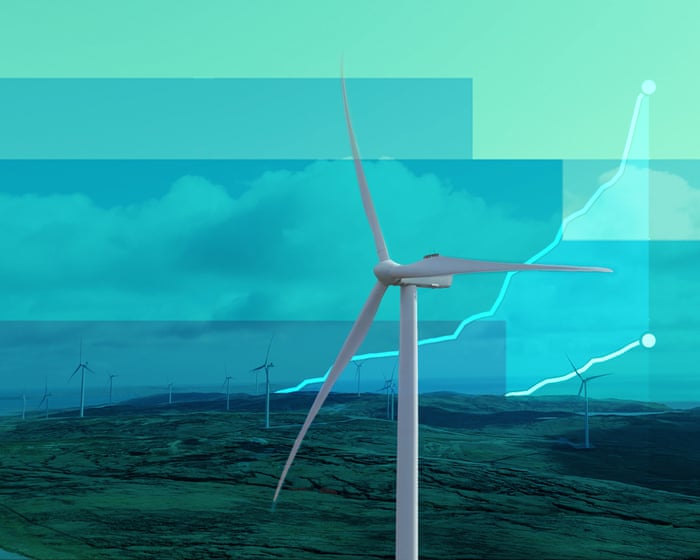
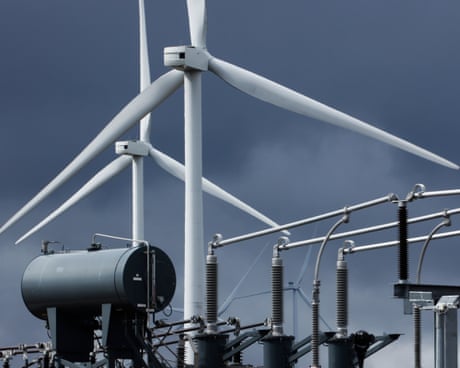
What’s holding back Britain’s green revolution? – a visual story

Labour has approved a wave of renewable energy projects, but turning plans into power remains slow. Why is that?

Labour has a race on its hands if it is to lock in its promise to achieve a virtually zero-carbon electricity system by 2030.

Britain’s next prime minister will have to move fast: the climate emergency is raging, high energy bills are driving up the cost of living and the reactionary right is threatening a fossil fuel push if it wins power.

Continue reading...

© Composite: Guardian design / SSE

© Composite: Guardian design / SSE

© Composite: Guardian design / SSE

  •  

We can live without AI, but can we live without clean water? | Letters

Readers respond to an article about Erin Brockovich’s battle against datacentres and voice their fears for the environment

What are the benefits obtained from AI’s massive use of electricity and water (‘We’re up against forces that have all the money in the world’: Erin Brockovich on her battle against AI datacentres, 29 June)? Analysis shows that the top four uses of AI are “therapy/companionship”, “technical assistance and troubleshooting”, “fun and nonsense”, and “fan fiction and storytelling”.

AI use for therapy, and due to loneliness, appears not to reduce loneliness. AI provides affirmation, but at the expense of reducing the social skills needed to interact in the real world. Teachers report that students’ use of AI reduces their capacity for critical thinking.

Continue reading...

© Photograph: Canadian Press/Shutterstock

© Photograph: Canadian Press/Shutterstock

© Photograph: Canadian Press/Shutterstock

  •  

ScottishPower owes me £1,000 in solar panel payments

For months I’ve been trying to receive my FIT payment, which should be more than £1,000

I moved into my new house 14 months ago, and soon afterwards applied to ScottishPower, with whom the solar panels are registered for a feed-in tariff (Fit), for transfer of ownership of the panels and the tariff.

After many emails back and forth, I got a response saying they had all the information required.

Continue reading...

© Photograph: Timon Schneider/Alamy

© Photograph: Timon Schneider/Alamy

© Photograph: Timon Schneider/Alamy

  •  

Populist and rightwing figures take aim at Ed Miliband and UK net zero policies at ‘anti-woke Davos’

Kemi Badenoch, who joined US anti-abortion activists and European far-right parties at ARC, described energy secretary as a ‘villain’

Britain’s net zero policies and the energy secretary, Ed Miliband, have come under fire at a conference of conservatives, rightwing populists and wealthy US backers linked to Donald Trump.

The energy policies pursued by the British government were described as a “tragic mistake” by Trump’s energy secretary, one of a number of officials from the US administration attending the event.

Continue reading...

© Photograph: Jordan Pettitt/PA

© Photograph: Jordan Pettitt/PA

© Photograph: Jordan Pettitt/PA

  •  

Clean economy brings jobs and growth, says Miliband as £100bn invested in green energy

Energy secretary hails £100bn milestone in this parliament and says it is ‘only the start of what we want to achieve’

Ed Miliband has hailed a boost to UK jobs and growth as government data reveals that private sector companies have pledged more than £100bn in investment into the green economy so far in this parliament.

Offshore wind, solar power and the electricity grid make up the bulk of the planned investment, most of it between 2024 and 2031, which will go to all regions of the UK and comes from a mixture of UK companies and overseas sources including the EU and Japan.

Continue reading...

© Photograph: Anadolu/Getty Images

© Photograph: Anadolu/Getty Images

© Photograph: Anadolu/Getty Images

  •  

Starmer has a strong green record – but a rightwing backlash weakened his plans

Prime minister was forced to row back on some policies despite strong support among voters for climate action

Keir Starmer has faced a problem no Labour government has needed to deal with before. His energy and climate policies – core to solving the cost of living crisis – have come under attack from opposition parties, which have made dismantling the agenda one of their top priorities, second only to immigration, in their pitch to voters.

This is new in British politics, where a cross-party consensus on the climate and environment has held at least since the days of Margaret Thatcher. She warned the UN of the climate crisis in 1988; David Cameron in 2006 urged voters to “vote blue, go green”; Theresa May enshrined in law the requirement to reach net zero greenhouse gas emissions by 2050; Boris Johnson championed the Cop26 UN climate summit in Glasgow in 2021; even Rishi Sunak only tried a partial rollback of green policies as a last desperate throw before calling an election.

Continue reading...

© Photograph: Mauro Pimentel/PA

© Photograph: Mauro Pimentel/PA

© Photograph: Mauro Pimentel/PA

  •  

From coal to cabernet: the wine seller using a flooded mine to cut heating bills

Lanchester Wines in north-east England uses heat from a disused coalmine to maintain wine temperatures and with 23,000 flooded mines in the UK, there’s huge potential for more businesses and homes to follow its lead

Shove them in a fridge, stash them in a cellar – this is how most people store their favourite bottles of wine. But if you have warehouses full of thousands of vintages, you have to think a little differently.

For the last eight winters, Lanchester Wines has used heat from a disused coalmine to maintain ideal storage temperatures at its facilities in the north-east of England, helping to prevent freezing or spoilage.

Continue reading...

© Photograph: Posed by models; The Good Brigade/Getty Images

© Photograph: Posed by models; The Good Brigade/Getty Images

© Photograph: Posed by models; The Good Brigade/Getty Images

  •  

Drax cleared after investigation into sourcing of wood pellets

Generator’s shares rise as regulator finds no evidence of misleading statements about fuel’s sustainability

The City watchdog has closed an investigation into the owner of the Drax power plant after an almost 10-month review into whether the company’s sustainability claims mislead shareholders.

The Financial Conduct Authority said it had “reviewed thousands of pages” of “complex material” relating to the company’s sourcing of wood pellets for the Drax power plant in Selby, North Yorkshire, but “did not find evidence that justified any further action”.

Continue reading...

© Photograph: Christopher Furlong/Getty Images

© Photograph: Christopher Furlong/Getty Images

© Photograph: Christopher Furlong/Getty Images

  •  

A question for Nigel Farage – why is your nationalist party so obsessed with destroying British jobs? | George Monbiot

The net zero economy is booming, so claims that prosperity depends on oil and gas are bunkum – unless you’re a Reform backer with fossil fuel interests, of course

Really? You want to destroy a million jobs? Vote Reform UK for mass unemployment: is that your pitch? Hammer these questions home whenever you meet a supporter of the party. Or, for that matter, a Conservative, as their party now takes an almost identical line.

The figures are stark. They were compiled not by Just Stop Oil or the Green party, but by that bastion of conservatism, the Confederation of British Industry. They show that the net zero economy now directly employs more than 300,000 full-time workers, while supporting the jobs of 1.1 million. The net zero sector is worth £100bn to the UK already, and is likely to grow by hundreds of billions more. The rest of the green economy directly employs a further 600,000.

Continue reading...

© Photograph: Tolga Akmen/EPA

© Photograph: Tolga Akmen/EPA

© Photograph: Tolga Akmen/EPA

  •  

More than half of clean energy schemes needed for Labour’s 2030 target offered grid connection

The 700 projects include wind and solar farms, battery storage, gas and hydro plans

More than half the renewable energy projects needed to meet the government’s clean power targets by 2030 are now able to plug into the electricity grid after years of delay, according to the system operator.

The National Energy System Operator (Neso) has offered more than 700 clean energy projects in Great Britain a grid connection date since the start of the year, after a two-year process to unblock a bottleneck that threatened to delay projects into the 2030s.

Continue reading...

© Photograph: Murdo MacLeod/The Guardian

© Photograph: Murdo MacLeod/The Guardian

© Photograph: Murdo MacLeod/The Guardian

  •  

Households could save £200 on energy bills in plan to break link between gas and electricity prices, says thinktank

Government plan to de-link gas and electricity prices aims to reduce bills for consumers after global surge in prices

Households in England, Scotland and Wales could save nearly £200 a year on their energy bills if the government stepped into the market to act as the sole buyer of electricity, according to a thinktank.

The research found that public procurement of electricity, meaning the government would become the “single buyer” of power before it is resold to consumers, could shave billions of pounds from electricity prices.

Continue reading...

© Photograph: Bloomberg/Getty Images

© Photograph: Bloomberg/Getty Images

© Photograph: Bloomberg/Getty Images

  •  

The Guardian view on the Aberdeen South byelection: the politics of energy take centre stage | Editorial

While Westminster’s attention is focused on Andy Burnham and Makerfield, another pivotal byelection is taking place in Scotland’s north-east

The coming byelection in Makerfield, from where Andy Burnham aspires to make rapid progress towards Downing Street, is perhaps the most consequential in British political history. But the decision by the Scottish National party’s former Westminster leader, Stephen Flynn, to relocate to Holyrood means that another pivotal contest is taking place more than 350 miles to the north. If Makerfield is a test case for Mr Burnham and Labour’s ability to see off Reform UK, Mr Flynn’s old constituency of Aberdeen South is on the frontline of the increasingly fraught politics of North Sea oil.


Labour, despite finishing second in the 2024 general election thanks largely to anti-Tory tactical voting, will not be expecting much this time round. The ramifications of Donald Trump’s reckless war in Iran have exposed Britain’s ongoing vulnerability to fossil-fuel-related energy shocks, highlighting the practical benefits of moving to a green economy. But the knock-on effects of the closure of the strait of Hormuz have also been a gift for the Scottish Conservatives and Reform, who are framing the byelection as a local referendum on reviving oil and gas production beyond Westminster-imposed limits.

Continue reading...

© Photograph: Iain Masterton/Alamy

© Photograph: Iain Masterton/Alamy

© Photograph: Iain Masterton/Alamy

  •  

Wes Streeting backs calls for national insurance cut and North Sea drilling

Labour leadership hopeful says NI reduction for firms could ‘incentivise’ hiring, particularly of younger people

Wes Streeting has backed calls for national insurance cuts for businesses, and for the government to drill for oil and gas in the North Sea.

The former health secretary and potential Labour leadership candidate told the Sunday Times there should be a “targeted reduction” of employers’ national insurance contribution as a way to “actively incentivise” hiring, particularly of young people.

Continue reading...

© Photograph: Thomas Krych/Zuma Press Wire/Rex/Shutterstock

© Photograph: Thomas Krych/Zuma Press Wire/Rex/Shutterstock

© Photograph: Thomas Krych/Zuma Press Wire/Rex/Shutterstock

  •  

Should I get air conditioning in the UK – and can it be green?

As summers become hotter, air conditioner sales are booming. If you’re looking to invest, here’s what to consider

When a heatwave struck the UK this week, Jon Connorton, a software developer, began monitoring temperatures inside his east Hampshire terrace house. With some rooms reaching close to 40C, it was time to deploy the air conditioner. “We just wheel it out in emergencies,” he said. “We were having trouble sleeping.”

Connorton and his wife have a portable air conditioner. These plug-in devices cool interior air by removing heat from it and blowing that heat outside, typically via a large hose slung from a window or door.

Continue reading...

© Photograph: LeoPatrizi/Getty Images

© Photograph: LeoPatrizi/Getty Images

© Photograph: LeoPatrizi/Getty Images

  •  
❌