❌

Reading view

Documenting Ireland’s vanishing boglands: ‘They hold millennia in their layers’

Photographer Shane Hynan explores the tension between the central role peat bogs play in Irish life and their wider environmental impact

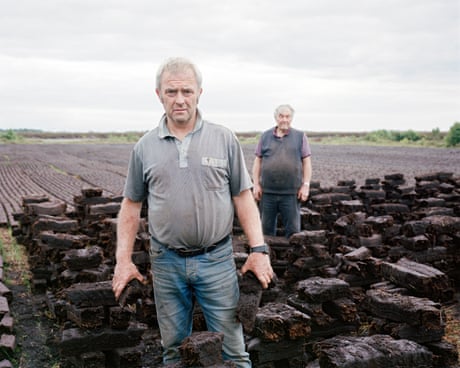
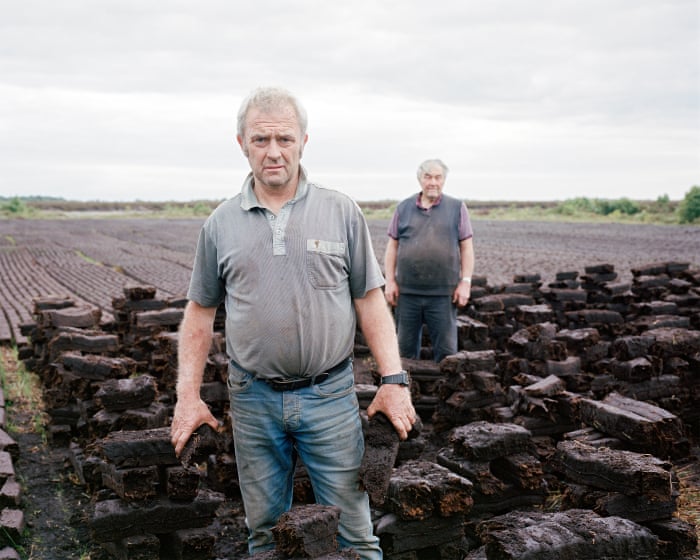
“You can read Ireland’s history in the boglands. They hold millennia in their layers,” says photographer Shane Hynan of his project, Beofhód (meaning Beneath in English).

The boglands, known as portachs in Irish, cover roughly 1.2m to 1.5m hectares or about 14% to 17% of the country’s total land area. The raised bogs of the Irish Midlands are made of peat that forms at a rate of 1mm a year (0.04in) in low-lying, poorly drained basins or former lakes. As the historical geographer Kevin Whelan observes in the Atlas of the Irish Rural Landscape, “the bog has been etched as deeply into the human as into the physical record in Ireland – to an extent unrivalled elsewhere.”

Eddie and Con footing turf for domestic use, Knockirr Bog, County Kildare, 2022.

Continue reading...

© Photograph: Shane Hynan
© Photograph: Shane Hynan
© Photograph: Shane Hynan

  •  

Energy Dept. Promises $17.5 Billion in Loans for Nuclear Power

The federal government wants to help utilities buy large components for up to 10 large nuclear reactors. It’s unclear which, if any, companies might participate.

© Kendrick Brinson for The New York Times

The Vogtle nuclear power plant in Georgia is the only one with AP1000 reactors in the U.S. They generate enough electricity to power 1 million homes, but they took 15 years to build and cost $35 billion, double the initial estimates.
  •  

Interior Department Moves to Relax Rules for Drilling on Public Lands

A pair of proposals from the Trump administration would lower costs and weaken requirements for fossil fuel companies that drill on federal property.

© Paul Ratje for The New York Times

One proposal would lower the cost of the bonds that fossil fuel companies must pay the Interior Department before they start drilling or mining on public lands.
  •  

‘Mega-consumers’ of food and energy cost environment $5.7tn a year, study finds

Top 10% generate climate and biodiversity damage bill that exceeds economies of most countries, say researchers

The environmental damage bill racked up by the highest-consuming 10% of the world’s population has reached up to $5.7tn a year – larger than the economy of every country except the US and China, a study has found.

Mega-consumers in this group are concentrated in the global north, accounting for more than half the population of the US and 40-45% of people in the EU.

Continue reading...

© Photograph: Francis R Malasig/EPA

© Photograph: Francis R Malasig/EPA

© Photograph: Francis R Malasig/EPA

  •  

Trump Administration to Pay $765 Million to Cancel 4 More Wind Projects

It’s the third such deal the Interior Department has struck to pay firms to abandon plans for offshore turbines, spending roughly $2.5 billion to get companies to abandon their wind projects.

© Joshua A. Bickel/Associated Press

The Trump administration has now struck deals energy developers totaling more than $2.5 billion to cancel offshore wind leases.
  •  

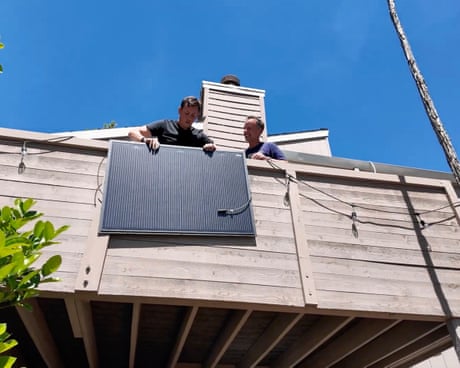
Retail giants join UK government drive to boost ‘plug-in’ balcony solar panels

Asda, Amazon and B&Q among retailers in talks to sell devices that feed into household sockets and can cut electricity bills by 30%

Bosses of some of Britain’s biggest retailers are discussing plans with the government to start selling plug-in solar panels as part of a drive to encourage more UK homes to generate their own electricity.

Executives from brands including Currys, B&Q and Amazon met Martin McCluskey, the minister for energy consumers, on Tuesday to discuss guidelines for selling “balcony solar panels” to the British public.

Continue reading...

© Photograph: Climate Central

© Photograph: Climate Central

© Photograph: Climate Central

  •  

Democrats Once Vowed to Stop Oil and Gas. Now They’re Not So Sure.

As the midterm elections approach, many leading Democrats are rethinking their approach to climate change.

© Anna Moneymaker/Getty Images

A talk on rising energy costs on Capitol Hill hosted by Democrats, from left, Sen. Martin Heinrich of New Mexico, Senate Minority Leader Chuck Schumer and Sen. Sheldon Whitehouse of Rhode Island, in March.
  •  

‘Electrify daily life’, urges Cop31 host

Third of world’s energy needs should come from electricity by 2035, says Murat Kurum, as priorities set out for this year’s UN climate summit

The world should aim to meet a third of its energy needs from electricity within a decade to cut greenhouse gas emissions, the host of the next UN climate summit has said.

While about a third of global electricity generation already comes from renewable sources, other energy-intensive sectors – chiefly transport, heating and industries – have lagged behind. Close to four-fifths of final energy still comes from fossil fuels, as a result.

Continue reading...

© Photograph: Images By Tang Ming Tung/Getty Images

© Photograph: Images By Tang Ming Tung/Getty Images

© Photograph: Images By Tang Ming Tung/Getty Images

  •  

Trump Announces $700 Million in Funds Meant to Boost Coal Industry

The president announced a total of $700 million in federal money to reinvigorate the domestic coal industry, which has been in decline for decades.

© Evelyn Hockstein/Reuters

Of the roughly $700 million in total funding, $425 million would be used to upgrade and extend the life of 13 coal plants that otherwise might have closed in the coming years.
  •  

I.R.A. Rebates for Appliance Swaps Could Be Phased Out

New guidance from the Energy Department would prevent people from receiving rebates after making such swaps.

© Bing Guan for The New York Times

The new guidance would also end rebates for the replacement of gas-powered dryers, heat pumps and water heaters.
  •  

Exclusive: Leaked documents show BHP’s climate backtrack - podcast

Nour Haydar speaks with Christopher Knaus about the BHP files – the cache of internal documents leaked to the Guardian and the ABC’s Four Corners – which show that the world’s biggest miner has war-gamed ways to massively delay decarbonisation

Additional audio in this episode was sourced by Financial Times Live

Read more:

Continue reading...

© Composite: Victoria Hart/Guardian

© Composite: Victoria Hart/Guardian

© Composite: Victoria Hart/Guardian

  •  

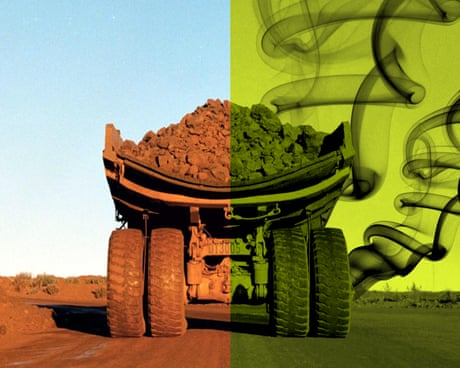
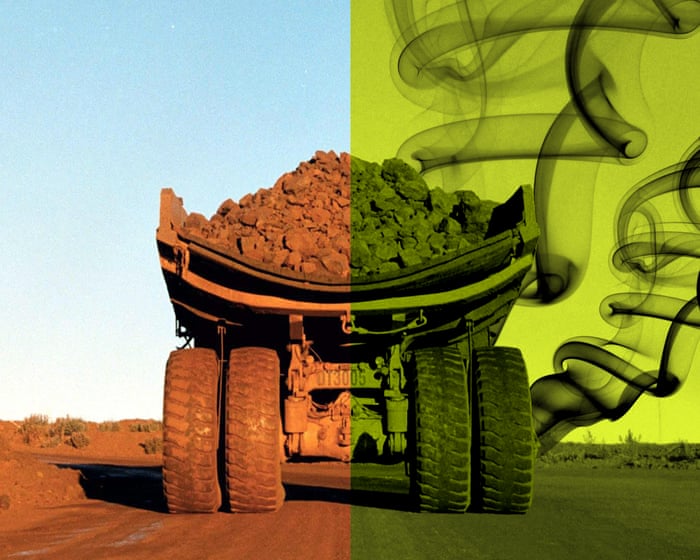
BHP defies its own climate strategy to spend hundreds of millions on polluting diesel trucks in Pilbara

Exclusive: Mining giant says technology is not yet advanced enough to run a fully electrified fleet but experts say it is hooked on federal fuel tax credits

BHP has continued to spend hundreds of millions of dollars buying diesel trucks in the Pilbara despite internal documents suggesting it would increase emissions and be “misaligned” with its decarbonisation goals.

The mining giant is Australia’s biggest consumer of diesel and trucks are its biggest single source of diesel emissions. Replacing the fleet with battery-electric trucks is considered a critical step in the multinational’s efforts to decarbonise.

Continue reading...

© Composite: Guardian

© Composite: Guardian

© Composite: Guardian

  •  

S.E.C. Proposes to Kill Climate Change Disclosure Rule

The regulation would have required all publicly traded companies to disclose whether they faced significant risks from climate change and its effects.

© Loren Elliott for The New York Times

An oil drilling site in Wyoming. The S.E.C. rule would have required companies to disclose their contributions to climate change and the risks they faced from a warming planet.
  •  
❌