 Login

The robotic penguin that makes endoscopy optional
Researchers at the TechMed Centre of the University of Twente have built a swallowable soft robot that samples stomach fluid

The elephant’s trunk is one of the animal world’s most formidable facial appendages; it is capable of tearing a tree limb from its base and, moments later, carefully lifting a single blade of grass.
Now, this combination of strength and precision is also helping to drive robotics research.
A boneless appendage that can both move heavy logs and peel fruit like a banana, the elephant’s trunk has long been studied by engineers seeking to understand how it can perform both powerful and delicate tasks effectively. Now, in a new study published in PNAS Nexus, researchers have identified the skin, rather than the underlying muscle, as a key factor in the versatility of this pachyderm appendage.
Lucia Beccai and colleagues at the Istituto Italiano di Tecnologia studied the trunk of an adult Asian elephant that died of natural causes at Zurich Zoo in 2020. They collected 35 samples from different regions of the trunk and analyzed them using biomechanical testing, histology, various imaging techniques, and computational modeling. The team’s analysis revealed a trunk that combines two very different mechanical strategies within a single structure.
The elephant trunk acts as a muscular hydrostat, similar to an octopus tentacle or the human tongue. With no bones and over 100,000 muscles, the trunk can stretch, compress, twist, and bend in any direction. The trunk achieves this flexibility through a combination of muscle power and specialized skin architecture. The study found that the trunk’s outer surface varies in structure depending on location and the types of forces it encounters.
The researchers identified clear differences between the upper and lower surfaces of the trunk, reflecting what scientists call functional anisotropy. The trunk’s upper surface serves as a tough, protective layer, which is over three times stiffer than the underside. In contrast, the trunk’s lower surface remains soft and flexible, allowing the elephant to grip objects with delicacy and precision.
The way elephants use their trunks reflects this structural difference. The upper surface faces the environment and absorbs impacts and abrasions. The underside is used for gripping objects. Its lower stiffness allows it to adapt to the shape of objects and hold them securely. The design of the elephant trunk may offer a solution to a persistent challenge that has stumped soft-robotics engineers in balancing protection and precision by assigning each function to a different layer of skin.
Another significant finding was made beneath the gripping surface. The researchers identified dome-shaped structures known as dermal papillae. Finite element modeling suggested that these structures act as subsurface mechanical lenses, concentrating mechanical stress in regions where sensory nerves are located.
This design could solve an additional problem in robotics: touch sensors are often fragile and require protective coatings that can reduce their sensitivity. The tissue in the elephant trunk appears to protect sensory structures while still allowing mechanical signals to reach them.
For Beccai’s group, which specializes in soft robotics, the possible design template represents a huge opportunity for their field. A robotic gripping device built on this idea would feature a stiff outer shell over a flexible inner layer, with structures underneath to direct pressure to protected sensors. This setup would keep sensitive electronics shielded while still allowing for mechanical feedback from touch.
This research adds to the growing scientific interest in the elephant trunk as a model for engineering. Another 2024 study in Communications Biology found that the trunk’s dermis is reinforced by tangled collagen fibers, creating skin armor thicker than an armadillo’s shell. Together, these studies show a structure optimized at every level, from the protein fibers in the dermis to the clear split between the upper and lower surfaces.
Today’s robotic hands still struggle to balance durability with sensitivity. The elephant trunk offers biological inspiration for this challenge, providing a model for future engineering designs.
Austin Burgess is a writer and researcher with a background in sales, marketing, and data analytics. He holds an MBA, a Bachelor of Science in Business Administration, and a data analytics certification. His work focuses on breaking scientific developments, with an emphasis on emerging biology, cognitive neuroscience, and archaeological discoveries.


Read more of this story at Slashdot.

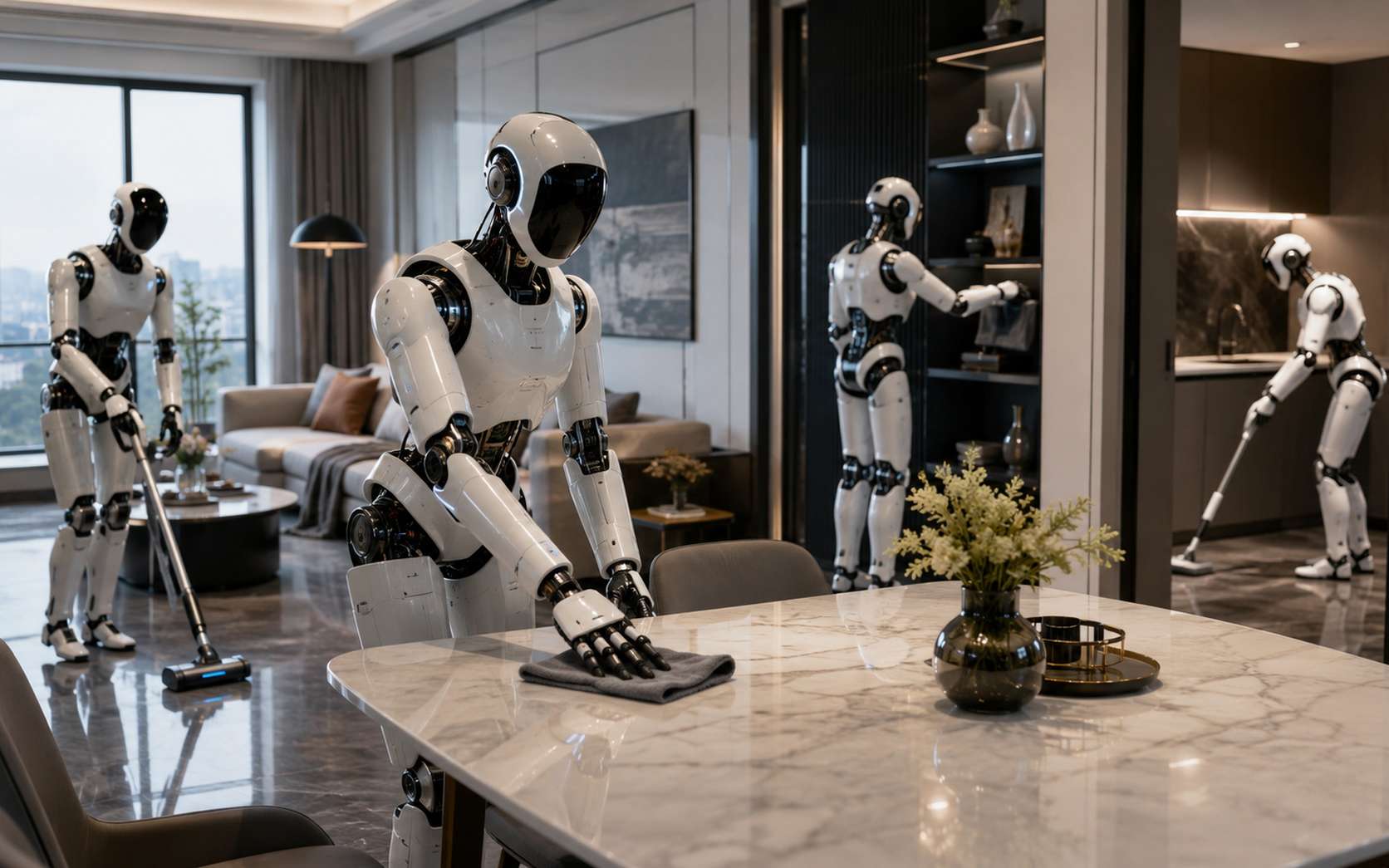

The next humanoid robot might not have a head. It might not have legs. It might even sit on a wheeled base and fold down like a deck chair. But, as Genesis AI puts it, "humanoid robots don't need to look human."
That explains the look of Eno, the new robot from the French startup backed by former Google CEO Eric Schmidt. Genesis says Eno is designed "around human capability" rather than human appearance and is intended as a fully "general-purpose" robot rather than a machine built around a single task, like folding laundry. One part is still very human though: its hands, which the company says are designed to "exactly match the form and fu …


Os cães-robot podem ser a próxima aposta das forças armadas em Taiwan para reforçar a vigilância e a defesa do território, juntando-se aos esforços de modernização militar face às crescentes tensões com Pequim.
The post Cães-robot podem entrar nos planos de Taiwan para missões de vigilância e defesa militar appeared first on Tek Notícias.

