❌

Reading view

Surface Collapse Reveals Mars Flood History at Osuga Valles

Flood-Related Surface Collapse at Osuga Valles, Mars: Unveiling the Dynamics of Martian Geomorphology

Recent research published in Communications Earth & Environment has spotlighted a remarkable phenomenon occurring on Mars — flood-related surface collapses in the Osuga Valles region. This discovery marks a transformative step in our understanding of Martian geomorphological activity, revealing dynamic processes previously undetected on the Red Planet. The comprehensive study led by Naor et al. deploys advanced remote sensing and modeling techniques to decipher the mechanisms behind these collapses, providing a fresh perspective on Mars’s hydrological past and present.

Osuga Valles, located in the northern hemisphere of Mars, has long intrigued planetary scientists due to its complex valley networks and evidence hinting at ancient water activity. The new findings reveal that these valleys are not merely relics of a bygone era but continue to undergo morphologic changes influenced by episodic flooding events. These floods, possibly triggered by subsurface ice melting or transient atmospheric phenomena, induce sudden collapses on the surface, reshaping the landscape at scales previously underestimated.

The investigation is centered around detailed analysis of high-resolution imagery combined with digital elevation models captured by Mars orbiters. These datasets allowed the researchers to identify distinct collapse features characterized by disrupted terrain, steep scarps, and chaotic blocky deposits. The spatial distribution and morphology indicate that these collapses originated from floodwaters undermining subsurface deposits, triggering a rapid failure of overlying strata.

What makes the Osuga Valles surface collapses particularly compelling is their implication for current Martian hydrology. The collapse events are believed to be linked to relatively recent flood episodes, suggesting the presence of liquid water or brines beneath the Martian surface. This challenges the longstanding notion of Mars as an entirely arid world and paves the way for hypotheses about transient hydrological cycles persisting in specific locales and under certain environmental conditions.

Moreover, the tectonic setting of the Osuga Valles region seems to facilitate these collapses. The valley system’s structural configuration, inclusive of fractures and faults, creates zones of mechanical weakness. When these structural features interface with floodwaters infiltrating subsurface layers, they act as conduits potentiating the collapse process. Thus, the interplay between geology and hydrology emerges as a critical driver of surface dynamics on Mars.

The authors also explore analogs from terrestrial environments—places where flooding induces surface collapse, such as in karst terrains or volcanic regions with subglacial lakes—to better interpret the Martian data. These Earth analogs provide a fertile framework for understanding how subsurface voids or weakened materials collapse under hydraulic pressure, refining our conceptual models applicable to Mars.

Advanced computational fluid dynamics simulations performed in the study reveal that the hydraulic pressures generated by transient floods are sufficient to disrupt sediment cohesion and trigger mass wasting events. The models incorporate variable sediment porosities, ice content, and fracture permeability, emphasizing how subtle changes in subsurface conditions can culminate in massive geomorphic transformations. This underscores the sensitivity of Martian surface processes to inundation events, even if these are limited in time and spatial extent.

In addition, the researchers analyzed mineralogical data from spectrometers aboard orbiters, detecting possible hydrated minerals and salts that corroborate the interaction between water and subsurface sediment. This mineralogical evidence supports the hypothesis of localized aqueous alteration driven by flood events, contributing to ongoing soil and sediment evolution in Osuga Valles.

The implications of these findings extend beyond geology and planetary science to astrobiology. The presence of liquid water, even transiently, opens up potential niches for microbial life or preserves biosignatures in subsurface refuges. Flood-related collapses could expose freshly altered materials, creating accessible targets for future rover missions endeavoring to seek signs of life or past habitability.

Technological advancements in orbital imaging and data analysis have thus unlocked a new era in Martian surface exploration. This study leverages these capabilities, illustrating how multidisciplinary approaches integrating geomorphology, hydrology, geochemistry, and computational modeling can unravel complex planetary phenomena. The Osuga Valles floods and collapses exemplify the dynamic and evolving nature of Mars, still shaped by aqueous forces despite its overall cold and dry climate.

Looking forward, these discoveries necessitate a revision in mission planning and surface hazard assessments. Understanding flood-related collapses aids in predicting surface stability and potential geomorphic hazards affecting landers or rovers. Moreover, unraveling the hydrologic cycles underlying these collapses could inform in situ resource utilization strategies, potentially enabling human exploration by identifying water reservoirs.

Furthermore, this research revitalizes the debate about Mars’s climatic variability and the possibility of episodic warming events facilitating surface liquid water. Such events might arise from volcanic outgassing, orbital shifts, or impact heating, temporarily altering atmospheric and subsurface conditions to create flood-triggering scenarios. Consequently, Osuga Valles may serve as a natural laboratory to study these transient climatic phenomena.

In summary, the study by Naor et al. dramatically expands our understanding of Martian surface processes by revealing active, flood-related collapses in Osuga Valles. By decoding the intricate linkages between subsurface hydrology, geological structure, and surface dynamics, it paints a picture of Mars as a planet where water still plays a crucial role in shaping landscapes. This breakthrough invites a new generation of explorations targeted at unraveling the mysteries of Mars’s watery past and its intermittent present.

The knowledge gained from these investigations not only transforms planetary science but also enriches comparative planetology, emphasizing how terrestrial analogs can illuminate extraterrestrial environments. As we decode Mars’s dynamic surface, the paradigm shifts from a static, desiccated world to one punctuated by active, fluid-driven geomorphology. The dynamic interplay between floods and collapses in Osuga Valles is a testament to this evolving narrative—a promise for thrilling discoveries yet to come.

Subject of Research: Flood-related surface collapses and geomorphologic processes on Mars, specifically in the Osuga Valles region.

Article Title: Flood-related surface collapse at Osuga Valles, Mars.

Article References:
Naor, R., Gulick, V.C., Spurling, R. et al. Flood-related surface collapse at Osuga Valles, Mars. Communications Earth & Environment (2026). https://doi.org/10.1038/s43247-026-03683-w

Image Credits: AI Generated

DOI: https://doi.org/10.1038/s43247-026-03683-w

Keywords: Mars geomorphology, flood-related collapse, Osuga Valles, Martian hydrology, subsurface water, geomorphic dynamics, remote sensing, planetary geology

  •  

Scientists find a new way to search for ancient life on Mars using ‘mirror’ molecules

Billions of years ago, Mars looked very different from the cold, dry world we see today. Scientists believe the Red Planet once had a warmer climate, liquid water and a thicker atmosphere. These conditions may have been suitable for simple forms of life. But did life ever actually exist on Mars? That remains one of […]

The post Scientists find a new way to search for ancient life on Mars using ‘mirror’ molecules appeared first on Knowridge Science Report.

  •  

Inside a Martian Meteorite, These Grains of an Unexpected Gemstone Hold Clues to a Hidden Past


A Martian meteorite fragment containing unexpected grains of mineral could hold clues to the Red Planet’s geological history, according to an international team of researchers.

Prior to the team’s new paper, which was published in Geochemical Perspectives Letters, the red mineral garnet had never been observed in any martian rock sample. Now, the meteorite discovery provides scientists with new clues to Mars‘ extreme past conditions, over its 4.5 billion-year history, which could include hidden magma sources or ancient impact events.

Garnet and Geology

Although the gemstone garnet can come in many colors, it is best known for its dark red varieties, which were historically popular in ancient Egypt, Rome, and Victorian England. Beyond its beauty, the rock is important for the record it keeps of its birth, providing Earth’s geologists with information on our planet’s tectonic forces, ore-forming processes, and the fluid-rock interactions of the crust and mantle.

Similarly, the small grains of garnet discovered in the meteorite sample contain important data for reconstructing the forces that forged the Red Planet long ago.

“The findings add a striking new dimension to our understanding of the geology of Mars and open an exciting new window into the evolution of our planetary neighbour,” said co-author Professor James Darling.

“This discovery is going to expand our knowledge of the geologic processes that are possible on this planet,” said lead author Tanya Kizovski, Assistant Professor of Earth Sciences, from Brock University in Canada. “This new garnet-bearing rock type could give us clues to how Mars has changed throughout its history and new insights into the ancient environments that could have formed the garnet and related minerals.”

Mars Meteorite NWA 8171

The garnet fragments were discovered in a tiny Martian meteorite sample held in the Royal Ontario Museum’s collection, designated NWA 8171, discovered in northwest Africa. Kizovski led the team in analyzing the sample’s mineral and chemical composition after identifying it as a unique piece within the collection.

“This little section of the meteorite looked really interesting, and the chemistry was a bit odd,” Kizovski said. “At first, we assumed it was a mineral called pyroxene, which is very common, but then we decided to take a second look.”

The international effort brought in researchers from Italy’s University di Trieste and the UK’s Open University, utilizing the Royal Ontario Museum’s laser equipment and the University of Portsmouth’s Electron Microscopy and Microanalysis Unit.

Having never been observed in any previous Martian sample, the researchers were surprised to identify garnet in the meteorite’s composition. From their analysis of the sample’s chemistry and mineralogy, the researchers began to consider how the unexpected garnet could have formed.

“Garnet is a classic example of a mineral often found in metamorphic rocks on Earth,” Kizovski said. “The process of metamorphism transforms igneous or sedimentary rocks into a new form through exposure to extreme heat, high pressure, or hot fluids.”

“On Mars, the heat and pressure needed to produce garnet through metamorphism could have come from the impact of a meteorite hitting the surface of Mars, magma rising up into the Martian crust, or both,” Kizovski continued.

Explaining Martian Garnet

While garnet provided geologists with some data about how it formed, this is not like the point of origin stamped on a manufactured good. It is possible that the garnet was deposited on Mars during an earlier meteorite impact, only to later travel through the solar system again, or that it was created by a heretofore unknown magma source on Mars.

Only further analysis of the garnet’s isotopic signatures will allow the researchers to determine whether the mineral formed on Mars or elsewhere. Unfortunately, to do so, the team would have to destroy a portion of this rare and precious sample, which measures only 0.8 by 0.5 millimeters to begin with.

“Measuring oxygen isotopes from the garnet-bearing rock type itself would help to confirm if it is Martian in origin or from an exotic meteorite impactor,” Kizovski said.

“Isotopes are a collection of atoms with equal numbers of protons and electrons, but different numbers of neutrons,” she added, “which was avoided thus far due to its rarity, as it may be the only garnet-bearing Martian rock we have for study.”

A few members of the team are continuing their study of the sample by comparing their findings to Martian data collected by rovers and orbital platforms. Further insights, they hope, may help them discover more about how the garnet could have formed, and what its presence means for the deeper history of the Red Planet.

The paper, “Expanding Mars’ Lithologic Diversity: Discovery of a Garnet-Bearing Clast in NWA 8171,” appeared in Geochemical Perspectives Letters on June 16, 2026.

Ryan Whalen covers science and technology for The Debrief. He holds an MA in History and a Master of Library and Information Science with a certificate in Data Science. He can be contacted at ryan@thedebrief.org, and follow him on Twitter @mdntwvlf.

  •  

New Mars rock discovery could reveal secrets of the red planet’s ancient past

Scientists have discovered a completely new type of rock from Mars and, for the first time, identified the mineral garnet in a Martian sample. The finding offers an exciting glimpse into the Red Planet’s distant past and could help researchers better understand how Mars evolved over the past 4.5 billion years. The discovery was made […]

The post New Mars rock discovery could reveal secrets of the red planet’s ancient past appeared first on Knowridge Science Report.

  •  

NASA Picks Eric Schmidt's Rocket Company For Mars Mission

NASA has selected Relativity Space to build and launch Aeolus, a 2028 Mars orbiter that would provide daily global measurements of dust, winds, and atmospheric temperatures to support future robotic and human missions. TechCrunch reports: The structure of the contract is akin to the deals that NASA made with SpaceX to fly cargo to the International Space Station, or Firefly Aerospace to put a lander on the Moon. The government agency handles the science, while the private company provides low-cost infrastructure. Aeolus, as the mission is dubbed, will contain four instruments to measure and image Mars from orbit, providing what NASA expects to be the first daily, global view of dust, winds, and temperature in its atmosphere. The agency said that data will make it safer for landers and, someday, astronauts, to visit the surface of the Red Planet. By pairing NASA's world-class instruments with commercial innovation and investment, we can deliver more science, more often, and reduce the time it takes to get essential data into the hands of researchers preparing for future human missions to Mars," NASA administrator Jared Isaacman said in statement. The mission is set to launch in 2028 -- a rapid pace that will require Relativity to design and build the spacecraft to carry the Aeolus instruments, and finish building the rocket that will carry it to space, all on a tight timeline. NASA did not disclose how much it is paying Relativity for the mission, and Relativity did not respond to questions from TechCrunch. Relativity was founded in 2015 by two former SpaceX and Blue Origin engineers, with the idea of using 3D printing to its maximum potential as a path to building a cheaper rocket. The company's first design, Terran-1, launched in March 2023 and failed mid-flight. Relativity doubled down by moving on to a larger design, dubbed the Terran R. Before Relativity could get it to the launch pad, the company ran into fundraising challenges, and Schmidt took a majority stake in the company in it last year, installing himself as CEO. He's been tight-lipped about the investment but has expressed interest in orbital data centers, and is thought to be using Relativity to launch a space telescope, Lazuili, financed by his family philanthropy, Schmidt Sciences.

Read more of this story at Slashdot.

  •  

NASA Testing Advanced Capabilities for Moon, Mars Rovers

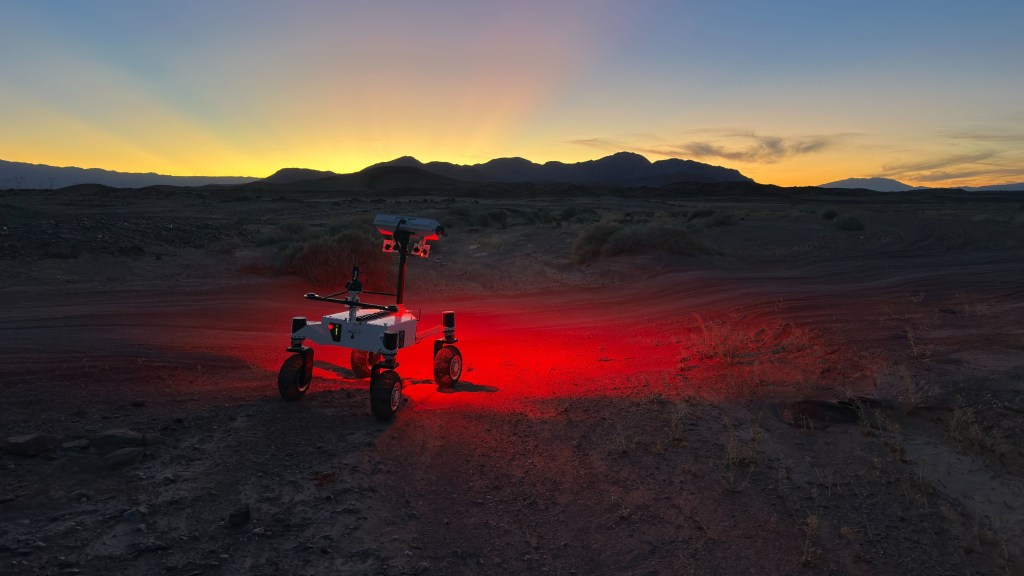
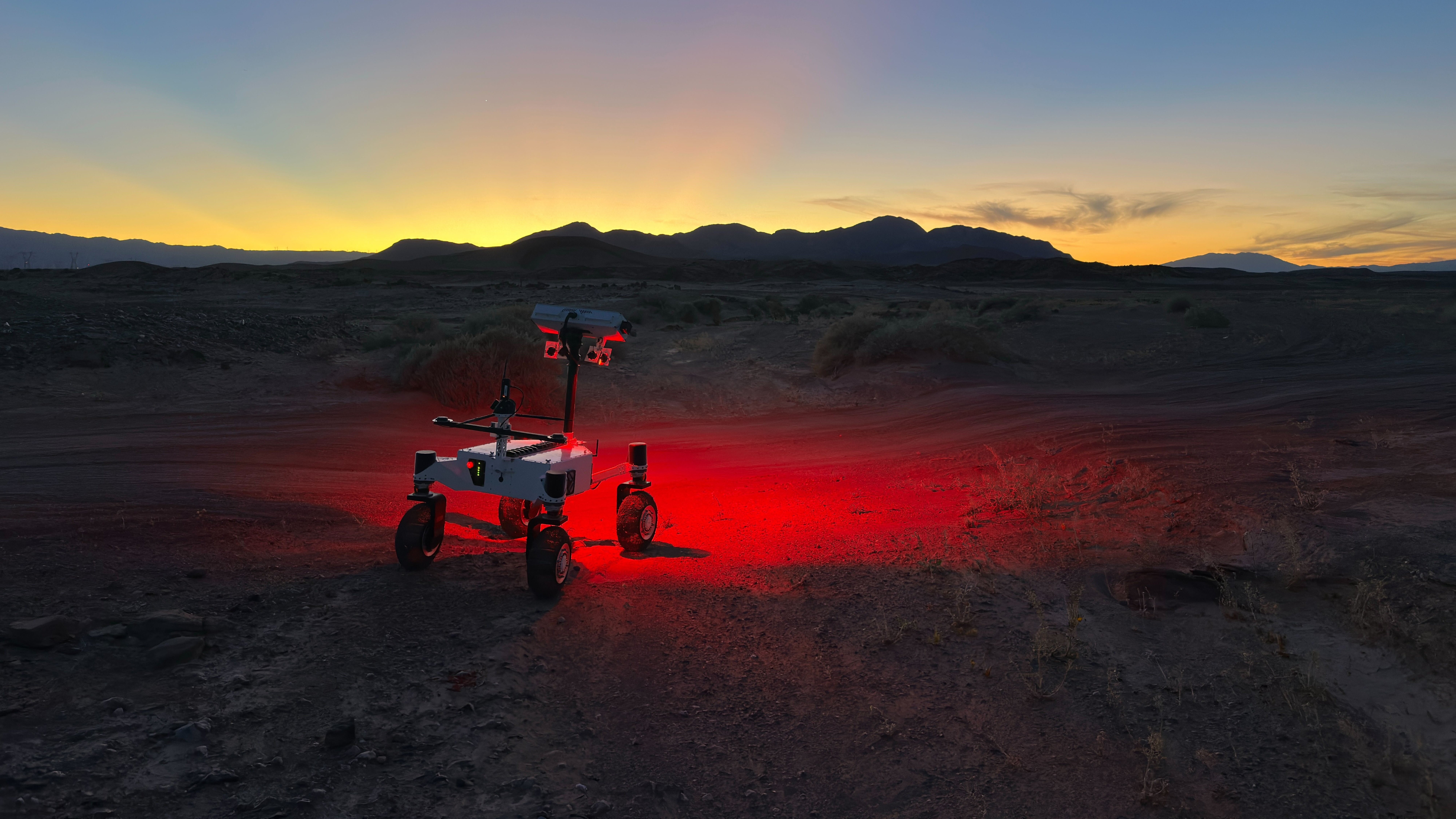
A white four-wheeled rover with a rectangular head on its mast projects a red glow onto a dark desert landscape. Pink and yellow hues indicate the sun has set behind a distant mountain range, while the top of the frame remains blue.
Developed at NASA’s Jet Propulsion Laboratory, ERNEST (Exploration Rover for Navigating Extreme Sloped Terrain) is used in a desert field test to help refine mobility hardware and autonomy software that could be used for a potential future long-range lunar rover mission.
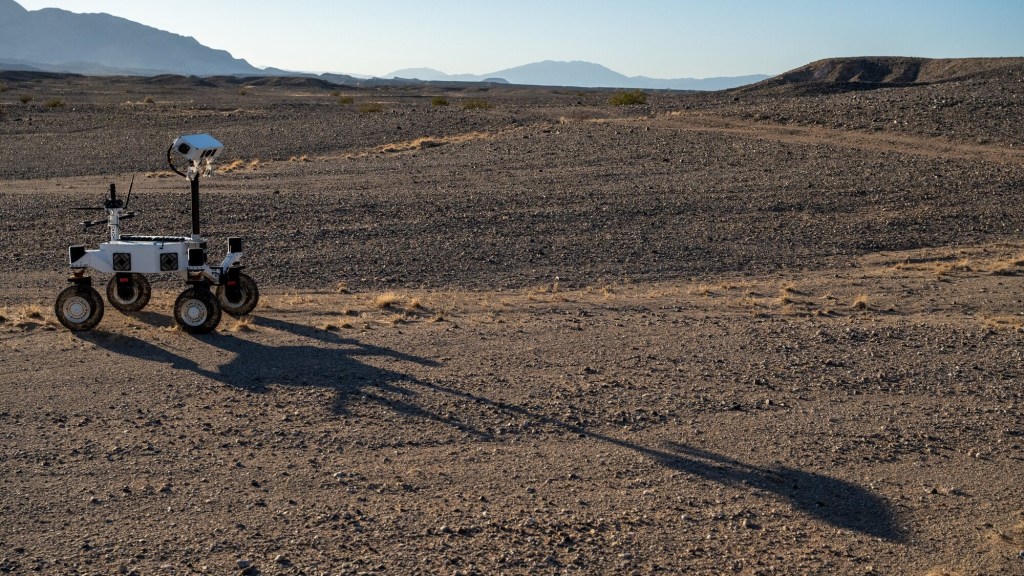
A white four-wheeled rover on the left side of the frame casts a long shadow across barren, brown ground toward the lower right. A few low, scrubby plants dot the desert landscape and mountains rise in the far distance under a pale blue sky.
During the field test, which took place in March 2026 in the Colorado Desert of Southern California, the JPL team deployed ERNEST at all times of the day — including dusk, dawn, and nighttime, when lighting conditions create long shadows like those seen on the Moon’s polar regions.

On a bleak stretch of the Colorado Desert in Southern California, a compact four-wheeled rover recently trundled about 16 miles (26 kilometers) with minimal intervention from the team of engineers trailing it. Called ERNEST (Exploration Rover for Navigating Extreme Sloped Terrain), this prototype is being used by NASA to advance both robotic autonomy and the ability to traverse challenging landscapes.

Developed at NASA’s Jet Propulsion Laboratory in Southern California, ERNEST is 4 feet (1.2 meters) long. Not only can it lift each of its mesh wheels to get past obstacles that would stymie Curiosity and Perseverance, NASA’s six-wheeled Mars rovers, but the prototype also has enhanced independent decision-making capabilities. These mobility and autonomy advances could be infused into future missions that will venture to previously inaccessible areas of the Red Planet or the Moon.

ERNEST serves as a testbed for a potential future lunar rover mission requiring high speeds and extreme distances. In a recent field test, the prototype traveled 16 miles over the course of 37 hours, going an order of magnitude above the top speed at which NASA’s current Mars rovers can navigate. Credit: NASA/JPL-Caltech

In the field, ERNEST served as a testbed for a potential future lunar mission requiring higher speeds and much greater mileage than can be accomplished by current rovers. This technology could be used to inform future designs for exploration efforts on the Moon and beyond.

“This testing is helping us refine the mobility hardware and autonomy software to navigate extreme distances across a wide range of terrain and lighting conditions anticipated on the Moon,” said Issa Nesnas, a principal technologist at JPL who led the recent testing as head of autonomy for a NASA mission concept for a potential future long-range lunar rover.

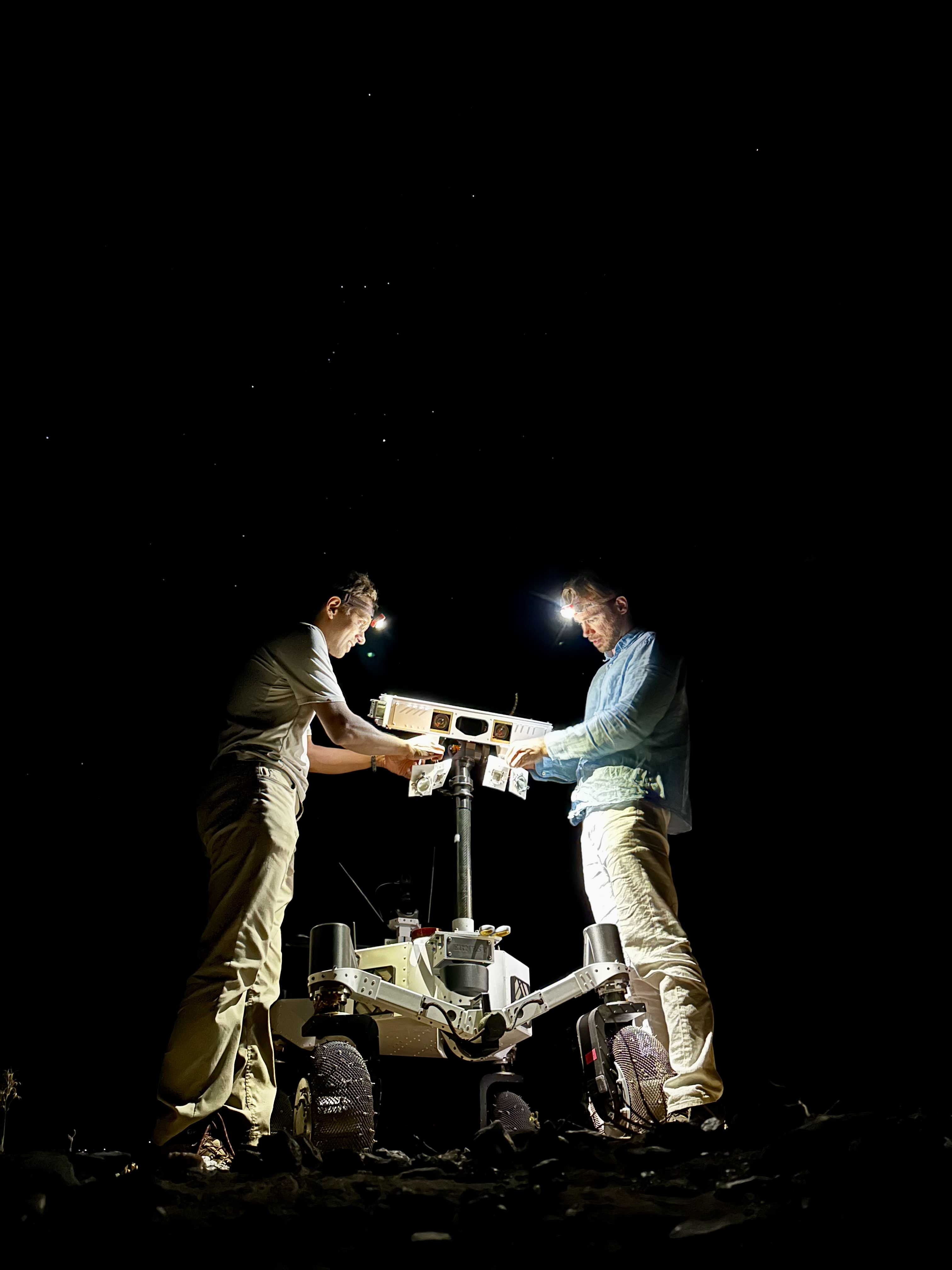
Against a pitch-black background sky in which a handful of white stars are visible, two men stand on either side of a 4.5-foot-tall white rover, which is lit up by the glow from their headlamps as they set up the illuminators on the robot’s mast.
Engineers from JPL set up illuminators after transporting ERNEST for a pre-sunrise test during a seven-day desert field campaign.
NASA/JPL-Caltech

Nesnas’ team is using ERNEST to demonstrate it is possible to build a rover that’s twice as big as the prototype and capable of a long-distance Moon mission. During the recent campaign, ERNEST traveled at speeds up to 0.6 mph (1 kph) over 37 hours of driving, across seven days of intermittent testing. That’s an order of magnitude above the top speed Perseverance and Curiosity can navigate.

“You could do a science road trip across the Moon — or Mars — with this vehicle,” said James Keane, a JPL planetary scientist working on lunar missions.

The initial goal of the team that developed ERNEST was mechanical: to design a relatively simple, low-cost rover that advances the trusted rocker-bogie suspension system featured on every Mars rover since NASA’s Sojourner. This passive system keeps relatively constant weight on all six wheels, thanks to pivot points and struts that enable each one to adapt to the changing surface.

The mobility and autonomy advances developed at JPL for the ERNEST prototype rover could be infused into future NASA missions to previously inaccessible areas of the Red Planet or the Moon. Credit: NASA/JPL-Caltech

On ERNEST, the active suspension lets the rover manage weight distribution among its wheels. Two powered joints in front articulate a gimbal that allows the rover to drive using different gaits like squirming, wheel-walking, and obstacle-climbing. With a clutch mechanism, it can switch between active and passive suspension, which is less terrain capable but more energy efficient. With four steerable wheels, it can drive in any direction, including sideways.

“We started by postulating that we could do better in designing a planetary surface robotic mobility system,” said Hari Nayar, a JPL principal technologist leading the ERNEST team. “While the rocker-bogie system has been very successful over the past 30 years, there’s been a lot of research in that time on mobility and understanding terrain interaction.”

Before arriving at today’s version of ERNEST, the team built two earlier prototypes, each about 2 feet (0.6 meters) long, to test 11 active suspension configurations. In a trailer filled with lunar regolith simulant, they ran experiments at different slope angles over several months before landing on a final design.

Then the team scaled up, including adding a rectangular head mounted on a 4.5-foot-tall (1.4-meter-tall) mast. The hardware was completed in September 2024, but the rover still needed a human operator to joystick it, sending commands to instruct the rover on how to move over obstacles.

In order to train the rover to think on its own, the ERNEST team turned to reinforcement learning, a type of artificial intelligence where the robot learns by interacting with its environment. The Dynamics and Real-Time Simulation Laboratory at JPL developed a high-fidelity virtual testing environment that replicates the rover’s behavior. The team fed the simulator data collected by engineers who documented the response of the actual rover hardware to a variety of terrain types. On a high-performance computing cluster, the team ran many simulations at once, sometimes completing thousands of hours of tests over a single weekend.

After months of virtual training, the ERNEST team was ready to see if the rover could use its new autonomous algorithms to figure out how to drive over terrain features that would halt a passive-suspension rover. They set up an obstacle course with sand ripples, rubble piles, steps, and steep slopes in JPL’s Mars Yard, an outdoor terrain proving ground. Then they watched as the rover maneuvered the terrain on its own. Since then, ERNEST has completed many such courses.

Nayar’s team is starting a new autonomy project which involves integrating the rover’s ability to determine when and how to use its active suspension with longer-range intelligent navigation. The goal is to enable ERNEST to plan an efficient path so that it can tackle surmountable obstacles and circumnavigate hazardous ones. These capabilities could contribute to potential future rover missions encountering formidable landscapes on Mars or more rugged areas of the Moon.

Work on ERNEST began in 2022 was initially supported by JPL internal research and development funds. It is currently funded by NASA’s Mars Exploration Program and the agency’s Exploration Science Strategy and Integration Office in its Science Mission Directorate at NASA Headquarters in Washington. Caltech in Pasadena, California, manages JPL for NASA.

Media Contacts

Karen Fox / Molly Wasser
NASA Headquarters, Washington
240-285-5155 / 240-419-1732
karen.c.fox@nasa.gov / molly.l.wasser@nasa.gov   

Melissa Pamer
Jet Propulsion Laboratory, Pasadena, Calif.
626-314-4928
melissa.pamer@jpl.nasa.gov

2026-040

The post NASA Testing Advanced Capabilities for Moon, Mars Rovers appeared first on NASA Science.

  •  

NASA Testing Advanced Capabilities for Moon, Mars Rovers

A white four-wheeled rover with a rectangular head on its mast projects a red glow onto a dark desert landscape. Pink and yellow hues indicate the sun has set behind a distant mountain range, while the top of the frame remains blue.
Developed at NASA’s Jet Propulsion Laboratory, ERNEST (Exploration Rover for Navigating Extreme Sloped Terrain) is used in a desert field test to help refine mobility hardware and autonomy software that could be used for a potential future long-range lunar rover mission.
A white four-wheeled rover on the left side of the frame casts a long shadow across barren, brown ground toward the lower right. A few low, scrubby plants dot the desert landscape and mountains rise in the far distance under a pale blue sky.
During the field test, which took place in March 2026 in the Colorado Desert of Southern California, the JPL team deployed ERNEST at all times of the day — including dusk, dawn, and nighttime, when lighting conditions create long shadows like those seen on the Moon’s polar regions.

On a bleak stretch of the Colorado Desert in Southern California, a compact four-wheeled rover recently trundled about 16 miles (26 kilometers) with minimal intervention from the team of engineers trailing it. Called ERNEST (Exploration Rover for Navigating Extreme Sloped Terrain), this prototype is being used by NASA to advance both robotic autonomy and the ability to traverse challenging landscapes.

Developed at NASA’s Jet Propulsion Laboratory in Southern California, ERNEST is 4 feet (1.2 meters) long. Not only can it lift each of its mesh wheels to get past obstacles that would stymie Curiosity and Perseverance, NASA’s six-wheeled Mars rovers, but the prototype also has enhanced independent decision-making capabilities. These mobility and autonomy advances could be infused into future missions that will venture to previously inaccessible areas of the Red Planet or the Moon.

ERNEST serves as a testbed for a potential future lunar rover mission requiring high speeds and extreme distances. In a recent field test, the prototype traveled 16 miles over the course of 37 hours, going an order of magnitude above the top speed at which NASA’s current Mars rovers can navigate. Credit: NASA/JPL-Caltech

In the field, ERNEST served as a testbed for a potential future lunar mission requiring higher speeds and much greater mileage than can be accomplished by current rovers. This technology could be used to inform future designs for exploration efforts on the Moon and beyond.

“This testing is helping us refine the mobility hardware and autonomy software to navigate extreme distances across a wide range of terrain and lighting conditions anticipated on the Moon,” said Issa Nesnas, a principal technologist at JPL who led the recent testing as head of autonomy for a NASA mission concept for a potential future long-range lunar rover.

Against a pitch-black background sky in which a handful of white stars are visible, two men stand on either side of a 4.5-foot-tall white rover, which is lit up by the glow from their headlamps as they set up the illuminators on the robot’s mast.
Engineers from JPL set up illuminators after transporting ERNEST for a pre-sunrise test during a seven-day desert field campaign.
NASA/JPL-Caltech

Nesnas’ team is using ERNEST to demonstrate it is possible to build a rover that’s twice as big as the prototype and capable of a long-distance Moon mission. During the recent campaign, ERNEST traveled at speeds up to 0.6 mph (1 kph) over 37 hours of driving, across seven days of intermittent testing. That’s an order of magnitude above the top speed Perseverance and Curiosity can navigate.

“You could do a science road trip across the Moon — or Mars — with this vehicle,” said James Keane, a JPL planetary scientist working on lunar missions.

The initial goal of the team that developed ERNEST was mechanical: to design a relatively simple, low-cost rover that advances the trusted rocker-bogie suspension system featured on every Mars rover since NASA’s Sojourner. This passive system keeps relatively constant weight on all six wheels, thanks to pivot points and struts that enable each one to adapt to the changing surface.

The mobility and autonomy advances developed at JPL for the ERNEST prototype rover could be infused into future NASA missions to previously inaccessible areas of the Red Planet or the Moon. Credit: NASA/JPL-Caltech

On ERNEST, the active suspension lets the rover manage weight distribution among its wheels. Two powered joints in front articulate a gimbal that allows the rover to drive using different gaits like squirming, wheel-walking, and obstacle-climbing. With a clutch mechanism, it can switch between active and passive suspension, which is less terrain capable but more energy efficient. With four steerable wheels, it can drive in any direction, including sideways.

“We started by postulating that we could do better in designing a planetary surface robotic mobility system,” said Hari Nayar, a JPL principal technologist leading the ERNEST team. “While the rocker-bogie system has been very successful over the past 30 years, there’s been a lot of research in that time on mobility and understanding terrain interaction.”

Before arriving at today’s version of ERNEST, the team built two earlier prototypes, each about 2 feet (0.6 meters) long, to test 11 active suspension configurations. In a trailer filled with lunar regolith simulant, they ran experiments at different slope angles over several months before landing on a final design.

Then the team scaled up, including adding a rectangular head mounted on a 4.5-foot-tall (1.4-meter-tall) mast. The hardware was completed in September 2024, but the rover still needed a human operator to joystick it, sending commands to instruct the rover on how to move over obstacles.

In order to train the rover to think on its own, the ERNEST team turned to reinforcement learning, a type of artificial intelligence where the robot learns by interacting with its environment. The Dynamics and Real-Time Simulation Laboratory at JPL developed a high-fidelity virtual testing environment that replicates the rover’s behavior. The team fed the simulator data collected by engineers who documented the response of the actual rover hardware to a variety of terrain types. On a high-performance computing cluster, the team ran many simulations at once, sometimes completing thousands of hours of tests over a single weekend.

After months of virtual training, the ERNEST team was ready to see if the rover could use its new autonomous algorithms to figure out how to drive over terrain features that would halt a passive-suspension rover. They set up an obstacle course with sand ripples, rubble piles, steps, and steep slopes in JPL’s Mars Yard, an outdoor terrain proving ground. Then they watched as the rover maneuvered the terrain on its own. Since then, ERNEST has completed many such courses.

Nayar’s team is starting a new autonomy project which involves integrating the rover’s ability to determine when and how to use its active suspension with longer-range intelligent navigation. The goal is to enable ERNEST to plan an efficient path so that it can tackle surmountable obstacles and circumnavigate hazardous ones. These capabilities could contribute to potential future rover missions encountering formidable landscapes on Mars or more rugged areas of the Moon.

Work on ERNEST began in 2022 was initially supported by JPL internal research and development funds. It is currently funded by NASA’s Mars Exploration Program and the agency’s Exploration Science Strategy and Integration Office in its Science Mission Directorate at NASA Headquarters in Washington. Caltech in Pasadena, California, manages JPL for NASA.

Media Contacts

Karen Fox / Molly Wasser
NASA Headquarters, Washington
240-285-5155 / 240-419-1732
karen.c.fox@nasa.gov / molly.l.wasser@nasa.gov   

Melissa Pamer
Jet Propulsion Laboratory, Pasadena, Calif.
626-314-4928
melissa.pamer@jpl.nasa.gov

2026-040

💾

Engineers from NASA’s Jet Propulsion Laboratory are field-testing advanced capabilities for potential future Moon and Mars rovers. In the Colorado Desert nea...
  •  

More than 30 giant dust devils spotted twisting through ancient Martian canyons

The European Space Agency (ESA) has captured remarkable new images of dozens of giant dust devils swirling across an ancient canyon system on Mars. The images show more than 30 active whirlwinds moving through Mamers Valles, a vast network of valleys and canyons that formed billions of years ago. Dust devils on Mars are similar […]

The post More than 30 giant dust devils spotted twisting through ancient Martian canyons appeared first on Knowridge Science Report.

  •  

NASA’s Curiosity Uncovers New Clues to Mars’ Potential of Supporting Ancient Life


NASA’s Curiosity rover and its mission to investigate whether Mars could have ever supported microbial life have taken one step closer to achieving its goal, with one of the most significant discoveries in the ongoing search for evidence of life on the Red Planet.

While exploring Gale Crater, NASA’s robotic rover uncovered a sample in 2020 and, using a chemical technique, determined that 21 carbon-based molecules were preserved in the clay-rich sedimentary rock. This also included seven that had never been identified on Mars before. 

While the discovery does not definitively point to life on the Red Planet, it does strengthen the case that Mars has the chemical conditions to support life. 

According to scientists, the most remarkable aspect of the discovery is not the molecules themselves, but their preservation

“The actual organic components they found are not strong evidence for life,” said Texas A&M University astrobiologist and geobiologist Dr. Michael Tice in a statement. Tice acknowledged that these compounds may also have evolved through abiotic processes, including formation in meteorites or other non-biological pathways.

“These organics were likely preserved in the rocks for a very long time, possibly billions of years, despite radiation and other harsh conditions on Mars,” Tice said.

“It blows my mind.”

Building Blocks of Life

Organic molecules are critical building blocks of life, but they can also form through non-biological processes, such as geological reactions or meteorite delivery. Similar preserved compounds on Earth help scientists study ancient environments, and their discovery on Mars provides new clues about the planet’s billion-year-old history.

“Studying how those compounds vary between different rocks can tell a story of how life and environments changed,” Tice recently said in a statement issued by Texas A&M. “Finding organics stored in similar ways on Mars tells us that there could be similar stories preserved there as well.”

The findings also suggest that Martian rocks may contain evidence from a time before life began, a record of sorts that Earth’s past geology has mostly erased.

“It is even possible that some Mars rocks will tell us about times when there was no life there,” he said, with organics formed instead through prebiotic chemistry or delivered from space. “We do not have an equivalent record of such a time preserved on Earth.”

The findings build on earlier research by Tice and his team that identified possible biosignatures in Mars rocks studied by NASA’s Perseverance rover. 

Tice suggests, “When we looked even closer, we saw things that are easy to explain with early Martian life but very difficult to explain with only geological processes.”

The rocks contained organic carbon and key elements connected to microbial energy sources, along with chemical patterns that may show redox reactions (processes often associated with life on Earth).

“With the right collection, we could find the next step in evidence for past life on Mars or learn about the kinds of processes that eventually led to life on our planet.”

Tice and his colleagues will continue their work exploring the Martian land. 

“I’m continuing to study the record of early Martian evolution as part of the PIXL instrument team on the Perseverance rover,” he said.

“In addition, I’m comparing how organisms affected some of the oldest sediments on Earth — now preserved in rocks in South Africa—with the potential biosignatures we discovered on Mars.”

Additional details about Tice and his team’s work can be found in a pair of papers, “Diverse organic molecules on Mars revealed by the first SAM TMAH experiment,” which appeared in Nature Communications, and “Redox-driven mineral and organic associations in Jezero Crater, Mars,” which was published in the journal Nature.

Chrissy Newton is a PR professional and founder of VOCAB Communications. She hosts the Rebelliously Curious podcast, which can be found on The Debrief’s YouTube Channel. Follow her on X: @ChrissyNewton and at chrissynewton.com.

  •  

NASA Announces Public-Private Partnership to Advance Mars Science

NASA Administrator Jared Isaacman stands in front of a large, cylindrical, gray spacecraft with a white Relativity logo on it and addresses hundreds of Relativity Space employees. A large American flag hangs from the ceiling.
NASA Administrator Jared Isaacman announces a public-private partnership to advance Mars science during an event at Relativity Space on June 17, 2026.
Credit: Relativity Space

NASA Wednesday announced a new public‑private partnership to advance Mars science by combining the agency’s scientific leadership with commercial innovation. Under this model, NASA will provide the Aeolus atmospheric‑science instrument payload suite, while Relativity Space supplies the spacecraft, rocket, and cruise operations necessary to deliver the instruments to Mars.

This partnership reflects NASA’s growing commitment to approaches that accelerate discovery, expand mission cadence, and strengthen the foundation for future human exploration. By leveraging commercial investment and development capacity, NASA can focus resources on high‑value science while enabling more frequent opportunities to gather critical data about Mars, data essential to safely navigating the Martian atmosphere and ultimately landing humans on the surface.

“Public-private partnerships like this are a force multiplier for science,” said NASA Administrator Jared Isaacman. “By pairing NASA’s world‑class instruments with commercial innovation and investment, we can deliver more science, more often, and reduce the time it takes to get essential data into the hands of researchers preparing for future human missions to Mars.”

Aeolus, scheduled to launch in 2028, is a NASA‑developed suite of four complementary instruments designed to provide the first integrated, daily, global view of Martian winds, temperatures, dust, and clouds. By improving models for dust, winds, temperature, and seasonal atmospheric behavior, Aeolus will generate the detailed environmental knowledge required to reduce risk for future crewed and uncrewed landings. These measurements will directly inform entry, descent, and landing systems and support safer, more predictable mission planning for astronauts.

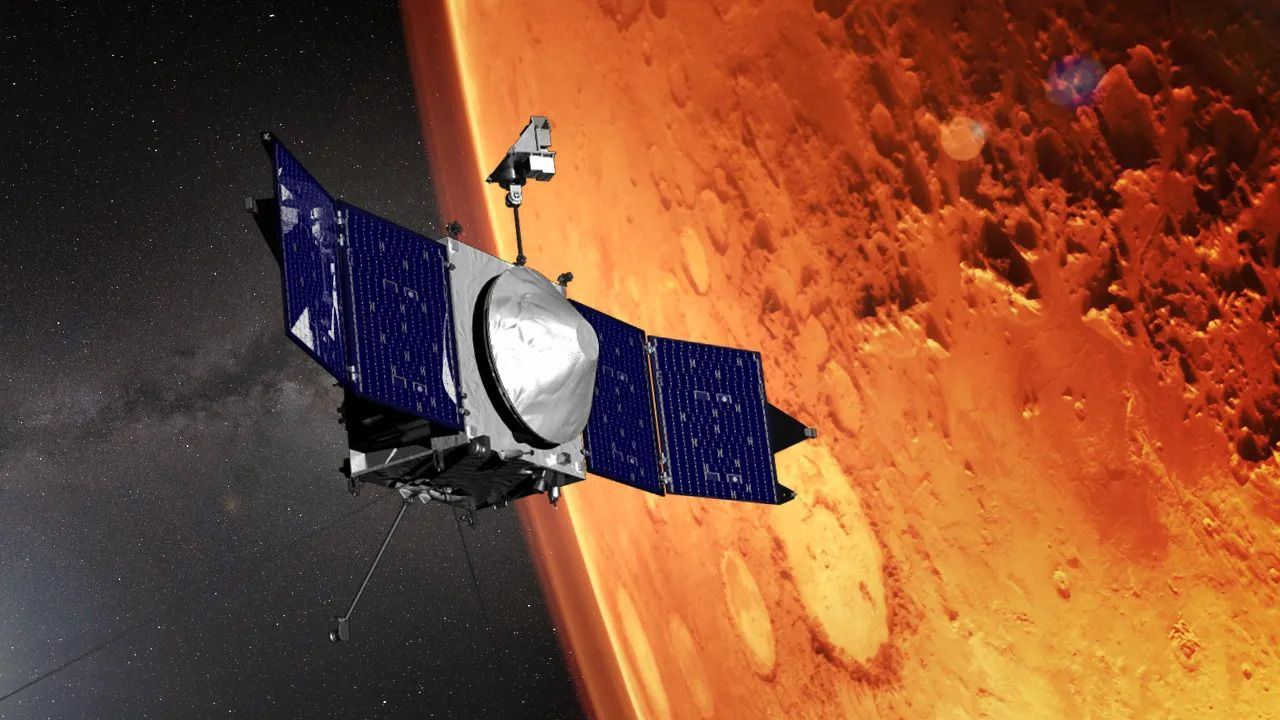
Aeolus builds on more than two decades of NASA missions that have studied the Martian atmosphere, including orbiters such as MAVEN (Mars Atmosphere and Volatile Evolution), the Mars Reconnaissance Orbiter, and Mars Odyssey, while taking the foundation laid by earlier missions even further, continuing NASA’s tradition of expanding the frontiers of Mars science. Researchers at NASA’s Ames Research Center in California’s Silicon Valley will design, build, and integrate the payload, while Relativity Space will manage spacecraft development and mission operations.

“As NASA’s Innovation Center of Excellence, Ames is committed to delivering the technologies, capabilities, and creative partnerships that enable the agency’s boldest missions,” said Dr. Eugene Tu, center director, NASA Ames. “Aeolus reflects how innovative collaboration accelerates science and strengthens the foundation needed for one day landing humans on Mars.”

The Aeolus payload suite includes four NASA‑built instruments:

  • Doppler Wind and Temperature Sounder (DWTS‑Ozone): Measures wind and temperature profiles from the surface up to approximately 37 miles (60 km). A collaboration with GATS.
  • Thermal Limb Sounder (TLS): Provides vertical temperature profiles and observations of dust and water‑ice clouds. A collaboration with Xiomas Technologies.
  • Surface Radiometric Sensor Package (SuRSeP): Measures surface energy balance, dust, and cloud properties.
  • Wide‑Field Context Camera (WFCC): Captures daily global images of atmospheric activity.

NASA will support operations of science instruments for at least one Martian year, while Relativity Space maintains the spacecraft. As part of the agreement, NASA will develop the data‑processing pipeline needed to transform raw measurements into high‑quality, ready‑to‑use data products for broad scientific use.

This effort is supported under NASA’s first six‑year reimbursable Space Act Agreement, providing a stable framework for sustained collaboration, predictable development, and mission continuity.

Learn more about Mars science at:

https://science.nasa.gov/mars

-end-

Camille Gallo / Cheryl Warner
Headquarters, Washington
202-358-1600
camille.m.gallo@nasa.gov / cheryl.m.warner@nasa.gov

Jeanne Neal
Ames Research Center, Silicon Valley
650-604-4789
jeanne.c.neal@nasa.gov

Share

Details

Last Updated
Jun 18, 2026
Editor
Jessica Taveau

The post NASA Announces Public-Private Partnership to Advance Mars Science appeared first on NASA Science.

  •  

NASA Announces Public-Private Partnership to Advance Mars Science

NASA Administrator Jared Isaacman stands in front of a large, cylindrical, gray spacecraft with a white Relativity logo on it and addresses hundreds of Relativity Space employees. A large American flag hangs from the ceiling.
NASA Administrator Jared Isaacman announces a public-private partnership to advance Mars science during an event at Relativity Space on June 17, 2026.
Credit: Relativity Space

NASA Wednesday announced a new public‑private partnership to advance Mars science by combining the agency’s scientific leadership with commercial innovation. Under this model, NASA will provide the Aeolus atmospheric‑science instrument payload suite, while Relativity Space supplies the spacecraft, rocket, and cruise operations necessary to deliver the instruments to Mars.

This partnership reflects NASA’s growing commitment to approaches that accelerate discovery, expand mission cadence, and strengthen the foundation for future human exploration. By leveraging commercial investment and development capacity, NASA can focus resources on high‑value science while enabling more frequent opportunities to gather critical data about Mars, data essential to safely navigating the Martian atmosphere and ultimately landing humans on the surface.

“Public-private partnerships like this are a force multiplier for science,” said NASA Administrator Jared Isaacman. “By pairing NASA’s world‑class instruments with commercial innovation and investment, we can deliver more science, more often, and reduce the time it takes to get essential data into the hands of researchers preparing for future human missions to Mars.”

Aeolus, scheduled to launch in 2028, is a NASA‑developed suite of four complementary instruments designed to provide the first integrated, daily, global view of Martian winds, temperatures, dust, and clouds. By improving models for dust, winds, temperature, and seasonal atmospheric behavior, Aeolus will generate the detailed environmental knowledge required to reduce risk for future crewed and uncrewed landings. These measurements will directly inform entry, descent, and landing systems and support safer, more predictable mission planning for astronauts.

Aeolus builds on more than two decades of NASA missions that have studied the Martian atmosphere, including orbiters such as MAVEN (Mars Atmosphere and Volatile Evolution), the Mars Reconnaissance Orbiter, and Mars Odyssey, while taking the foundation laid by earlier missions even further, continuing NASA’s tradition of expanding the frontiers of Mars science. Researchers at NASA’s Ames Research Center in California’s Silicon Valley will design, build, and integrate the payload, while Relativity Space will manage spacecraft development and mission operations.

“As NASA’s Innovation Center of Excellence, Ames is committed to delivering the technologies, capabilities, and creative partnerships that enable the agency’s boldest missions,” said Dr. Eugene Tu, center director, NASA Ames. “Aeolus reflects how innovative collaboration accelerates science and strengthens the foundation needed for one day landing humans on Mars.”

The Aeolus payload suite includes four NASA‑built instruments:

  • Doppler Wind and Temperature Sounder (DWTS‑Ozone): Measures wind and temperature profiles from the surface up to approximately 37 miles (60 km). A collaboration with GATS.
  • Thermal Limb Sounder (TLS): Provides vertical temperature profiles and observations of dust and water‑ice clouds. A collaboration with Xiomas Technologies.
  • Surface Radiometric Sensor Package (SuRSeP): Measures surface energy balance, dust, and cloud properties.
  • Wide‑Field Context Camera (WFCC): Captures daily global images of atmospheric activity.

NASA will support operations of science instruments for at least one Martian year, while Relativity Space maintains the spacecraft. As part of the agreement, NASA will develop the data‑processing pipeline needed to transform raw measurements into high‑quality, ready‑to‑use data products for broad scientific use.

This effort is supported under NASA’s first six‑year reimbursable Space Act Agreement, providing a stable framework for sustained collaboration, predictable development, and mission continuity.

Learn more about Mars science at:

https://science.nasa.gov/mars

-end-

Camille Gallo / Cheryl Warner
Headquarters, Washington
202-358-1600
camille.m.gallo@nasa.gov / cheryl.m.warner@nasa.gov

Jeanne Neal
Ames Research Center, Silicon Valley
650-604-4789
jeanne.c.neal@nasa.gov

Share

Details

Last Updated
Jun 18, 2026
Editor
Jessica Taveau
  •  

Discovery of Ferric Iron-Bearing Majorite Crystallization from Deep Magma Oceans on Earth and Mars

In the profound depths of rocky planets like Earth and Mars, the precise chemical states of mantle minerals play a foundational role in shaping planetary evolution. Among these chemical states, the oxidation state of iron profoundly influences mantle melting behaviors, volcanic gas compositions, and ultimately, the nature of a planet’s surface environment. While the elemental presence of iron in the mantle is well-known, the subtle balance between its ferrous (Fe²⁺) and ferric (Fe³⁺) forms remains a challenging frontier to unravel, particularly under the extreme pressures and temperatures encountered in planetary interiors.

The early stages of planetary formation are marked by the existence of a vast magma ocean—a molten silicate layer blanketing the young Earth and Mars. During this epoch, the oxidation state at which iron integrates into forming minerals dictates subsequent mantle properties and evolution. Accurately determining the Fe³⁺ content in minerals crystallized within this magma ocean stands as a critical step toward understanding the oxidation dynamics that influenced core-mantle differentiation and surface volatile release in nascent planets.

A mineral of prime relevance in this context is majorite, a high-pressure silicate phase stable at depths ranging roughly from 500 to 600 kilometers within Earth’s mantle and near the base of the Martian mantle. Its stability under simultaneously high-pressure and high-temperature conditions makes majorite a significant reservoir for iron deep within these planetary interiors. Therefore, quantifying the Fe³⁺ concentration hosted within majorite under early magma ocean conditions bears directly on models of mantle redox evolution and volatile mobility.

Researchers at Ehime University’s Geodynamics Research Center have pioneered the synthesis of Fe³⁺-rich majorite coexisting with molten silicate magma at pressures around 18 gigapascals and temperatures between 2150 and 2200 degrees Celsius. Utilizing a multi-anvil apparatus capable of reproducing these extreme conditions, the team closely simulated the environment of the early magma ocean. High-precision X-ray Absorption Near Edge Structure (XANES) spectroscopy was then employed at the renowned SPring-8 synchrotron facility to accurately assess the valence state of iron within the synthesized majorite crystals.

The findings reveal an unexpectedly high Fe³⁺ content in majorite crystallized from the magma ocean, second only to bridgmanite, Earth’s most abundant lower mantle mineral. This marked enrichment in ferric iron suggests that early mantle minerals could accommodate significant oxidation capacity, challenging earlier assumptions that high-pressure silicates predominantly contain iron in the ferrous state. The implication is that the early mantle harbored more oxidized iron species than previously anticipated, impacting mantle viscosity, melting relations, and the capacity to store volatile elements.

Importantly, as mantle solids ascend toward shallower depths, phase transitions or mineral decompositions can liberate excess Fe³⁺ that no longer fits within the crystal structures. This released ferric iron potentially contributes to the generation of oxidized magmas, influencing volcanic gas emissions and surface oxidation states. Such a mechanism presents a plausible link between deep mantle oxidation states and the chemical makeup of magmas erupted at the surface, offering fresh insights into the geological histories of both Earth and Mars.

The study’s revelations offer a new lens through which to interpret the evolution of mantle oxidation state gradients over geological time. Understanding how iron’s valence shifts across depth-dependent mineralogical boundaries and during mantle convection cycles will refine planetary differentiation models and volatile cycling frameworks. The presence of Fe³⁺-rich majorite highlights a previously underappreciated redox reservoir deep within planetary interiors.

These results not only enhance our appreciation of Earth’s early differentiated mantle but also extend to Mars, where recent seismic and geochemical data point to a similarly complex mantle composition. The redox state plays an outsize role in Martian volcanic outgassing and atmospheric evolution, making this research vital for reconstructing Mars’ geochemical past and assessing its potential habitability.

From a methodological standpoint, the study exemplifies the power of integrating high-pressure experimental petrology with cutting-edge synchrotron techniques. The ability to recreate extreme planetary interior conditions and directly probe valence states in situ offers a transformative approach to addressing longstanding questions about deep Earth and planetary chemistry.

Furthermore, the recognition that Fe³⁺ can be abundant in magma ocean-derived minerals necessitates revisiting thermodynamic and geochemical models of mantle melting and evolution. Oxidation state strongly influences melting temperatures and mantle rheology, thereby controlling convection patterns and surface tectonics. Such feedbacks are essential to comprehend in the broader context of planetary habitability and evolution.

Ultimately, these insights pave the way for multidisciplinary endeavors bridging mineral physics, planetary science, and geochemistry. They underscore the dynamic interplay between deep Earth processes and surface conditions, revealing how the smallest changes in iron’s electron configuration resonate across planetary systems.

This breakthrough in understanding iron’s complex behavior under extreme conditions promises to guide future explorations of terrestrial and extraterrestrial geology. It sets new constraints on the interior states of rocky planets and sharpens our vision of how early planetary environments were sculpted by subtle shifts deep within.

Subject of Research: High-pressure mineralogy and mantle oxidation states in terrestrial and Martian planets.

Article Title: (Not explicitly provided in the original content.)

News Publication Date: (Not indicated in the original content.)

Web References: http://dx.doi.org/10.1029/2025JB033231

References: Journal of Geophysical Research Solid Earth

Image Credits: Hideharu Kuwahara

Keywords:
– Fe³⁺ in mantle minerals
– Majorite synthesis under high pressure
– Magma ocean oxidation states
– Mantle redox evolution
– XANES spectroscopy at SPring-8
– High-pressure experimental petrology
– Earth and Mars mantle comparison
– Ferric iron incorporation in majorite
– Oxidized magma generation
– Planetary interior chemistry
– Lower mantle mineralogy
– Planetary differentiation processes

  •  

A tiny lab-made universe may help solve the mystery of time

Time seems like one of the most basic parts of everyday life. We use clocks to measure it, plan our days around it, and experience it as a steady flow from the past into the future. But according to some of the deepest theories in physics, time may not actually exist in the way we […]

The post A tiny lab-made universe may help solve the mystery of time appeared first on Knowridge Science Report.

  •  

Mars, Titan, océans de lave… les scientifiques révèlent à quoi ressembleraient leurs vagues

Pour la première fois, une équipe de chercheurs du MIT (Massachusetts Institute of Technology) a créé un outil de simulation qui permet de modéliser la formation et le comportement des vagues sur d'autres planètes du Système solaire, ainsi que sur certaines exoplanètes. 

  •  

NASA fails to reestablish contact, decommissions MAVEN

NASA has ended its attempts to reconnect with the Mars Atmosphere and Volatile EvolutioN (MAVEN) spacecraft and begun decommissioning the orbiter, closing the book on a mission that spent over a decade studying how Mars lost its atmosphere. At a June 3 media conference, NASA officials announced that an anomaly review board — which wasContinue reading "NASA fails to reestablish contact, decommissions MAVEN"

The post NASA fails to reestablish contact, decommissions MAVEN appeared first on Astronomy Magazine.

  •  

Courtside Seats on Mars

A photograph of an entire visible hemisphere of Mars.

When the third known object from the galactic space beyond our Sun barreled through the solar system last year, Earth was in a terrible spot to view its flyby. Thankfully, however, a spacecraft that was previously busy mapping Mars took advantage of much better positioning for a closer look.

Cheap Seats

Astronomers have now observed three interstellar objects as they’ve flown through the solar system: 1I/ʻOumuamua, which shocked astronomers in 2017; 2I/Borisov, which followed in 2019 and behaved almost identically to a solar system comet; and now 3I/ATLAS, which was found buzzing toward the Sun in July 2025. As soon as 3I/ATLAS was spotted, pretty much every telescope on the planet took a look. The data swiftly revealed much that intrigued astronomers: while 3I/ATLAS was behaving essentially like a standard comet, its chemistry was nothing like its solar system counterparts, and its coma and dust outflow were strangely shaped. Among other oddities, it seemed to counterintuitively have a dust tail that pointed toward the Sun.

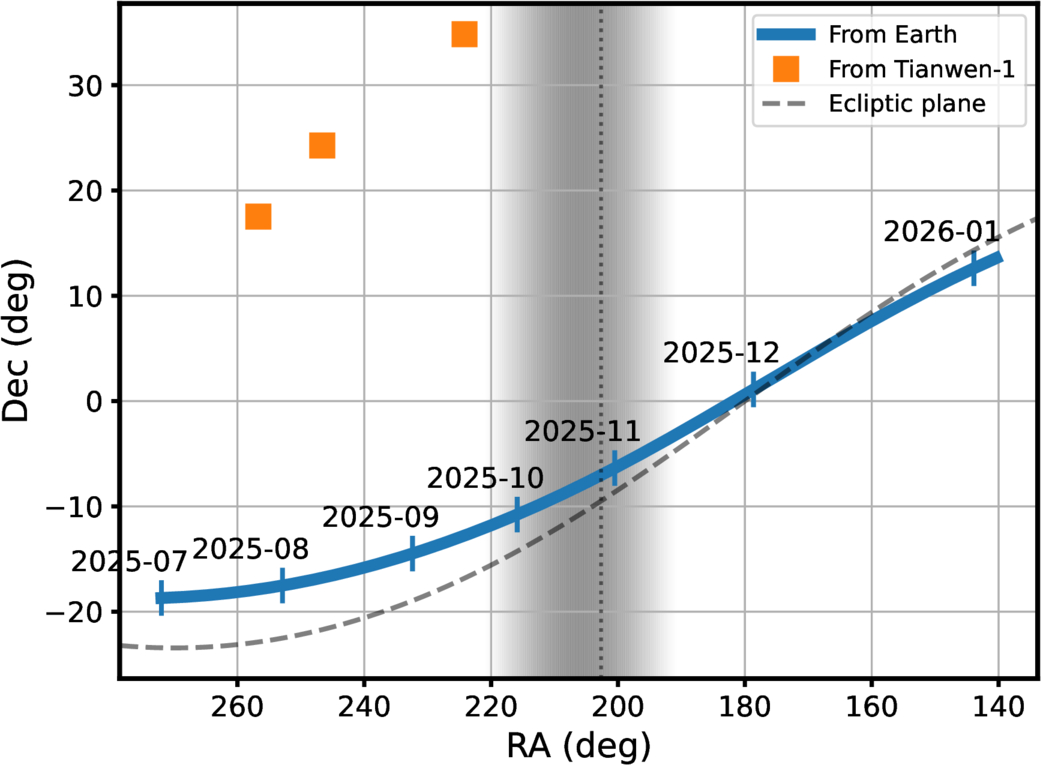
A plot showing that Earth-based observations could only get as best a 20-degree out-of-plane view, while Mars-based observations could get up to nearly 40.

3I/ATLAS’s path across the sky as seen from Earth versus the clearer line of sight from Mars. The shaded region represents the times where the comet was too close to the Sun for viewing. [Xin Ren et al. 2026]

Unfortunately for astronomers, 3I/ATLAS didn’t make it easy for them to study the shape of its coma. Thanks to a cosmic coincidence, the interstellar visitor was traveling almost perfectly within the plane of our solar system, and Earthbound observers were often limited to an edge-on view of its tail. Even worse, 3I/ATLAS looped around the back of the Sun from our perspective, meaning no one on the planet could observe the comet for a few weeks in the fall. This led a group of astronomers to consider their assets that are farther from home.

Better View from Mars

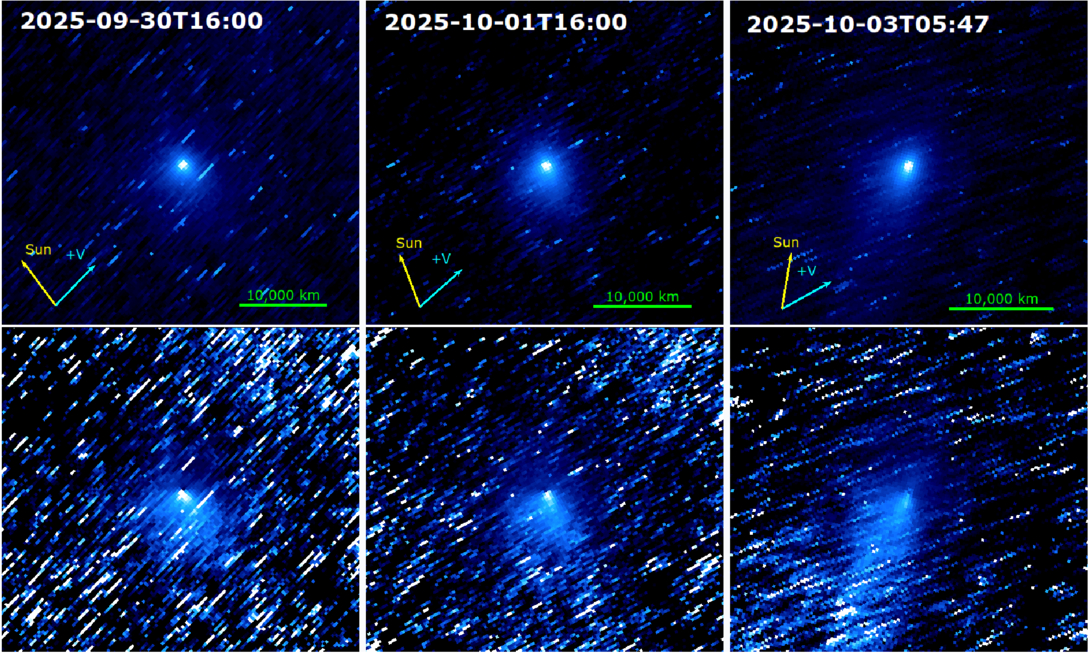
The Tianwen-1 spacecraft, which entered Martian orbit in early 2021 and has been diligently mapping the Red Planet ever since, has a high-resolution camera that’s normally pointed at the planet’s surface. By spinning the spacecraft around, a team of researchers led by Xin Ren (National Astronomical Observatories, Chinese Academy of Sciences) repurposed the camera to act as a small telescope when 3I/ATLAS flew by. In another cosmic coincidence, 3I/ATLAS happened to pass very near Mars last fall, and this close approach gave Tianwen-1 a great out-of-plane view of the coma. The orbiter managed to capture 57 images of 3I/ATLAS over three days last fall, representing China’s first-ever observations of an object from an asset in deep space.

Multi-panel photographs of a comet against a background of streaked stars.

Stacked images of 3I/ATLAS from the Tianwen-1 orbiter across three epochs; the tail’s apparent shape shifts as the viewing geometry changes. Click to enlarge. [Xin Ren et al. 2026]

The team took full advantage of the great view and leveraged the spacecraft’s unique perspective to extract some intriguing results. By tracking how the gentle pressure of sunlight nudged the escaping grains, the researchers found that the coma is dominated by surprisingly large dust. With an average size of hundreds of microns across, the dust is more like coarse sand than smoke, and they found that it ambles away from the comet at just 3–10 meters per second. All told, 3I/ATLAS was shedding dust at roughly 1,000 kilograms every second. The big grains may be a fingerprint of a cold, distant birthplace: models suggest such grains collect in the frigid outer reaches of planet-forming disks, hinting that 3I/ATLAS was forged far from its parent star before being flung into the dark.

As new surveys begin to turn up interstellar interlopers more often, this improvised observation makes a tidy point: the spacecraft already scattered across the solar system can double as a fleet of opportunistic comet-watchers, each offering a view we simply can’t get from home.

Citation

“Interstellar Object 3I/ATLAS Observed from Mars by China’s Tianwen-1 Spacecraft,” Xin Ren et al 2026 ApJL 1003 L10. doi:10.3847/2041-8213/ae61b3

The post Courtside Seats on Mars appeared first on AAS Nova.

  •  
❌