 Login

The robotic penguin that makes endoscopy optional
Researchers at the TechMed Centre of the University of Twente have built a swallowable soft robot that samples stomach fluid



A driver told Harris County investigators that his Tesla was on Autopilot before it left a residential road in Katy, Texas, crashed through the brick wall of a home, and killed a 76-year-old woman inside.
The crash happened around 8 p.m. Friday in the 21300 block of Rose Hollow Lane, according to the Harris County Precinct 5 Constable’s Office and the Harris County Sheriff’s Office.
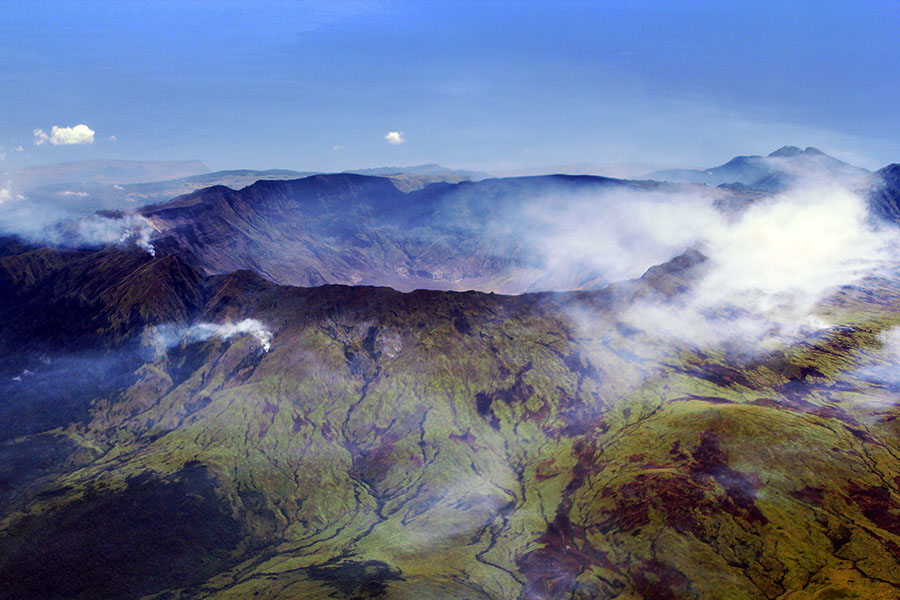
On the evening of 5 April 1815, the residents of Java and surrounding Indonesian islands heard what they believed were cannon shots in the distance. British colonial administrators dispatched troops to investigate, assuming a naval engagement was underway somewhere offshore. The sounds were heard as far away as Sumatra, more than 2,000 kilometres from their source, and continued intermittently for five days.
They were not cannon shots. They were the opening sounds of the largest volcanic eruption in modern human history.
On the evening of 10 April 1815, Mount Tambora on the small Indonesian island of Sumbawa entered its climactic phase. The volcano ejected approximately 160 cubic kilometres of pulverised rock, ash, and pumice into the atmosphere over the following 24 hours, sent a column of ash and sulphur dioxide approximately 43 kilometres into the stratosphere, and reduced its own mountain in height from approximately 4,300 metres to approximately 2,850 metres. The pyroclastic flows that descended the mountain’s flanks killed approximately 11,000 people in the surrounding region directly, in the first day of the event. The famines and disease that followed across the Indonesian archipelago over the next several months killed approximately 60,000 to 80,000 more.
The eruption was, by the available geological measurements, a Volcanic Explosivity Index 7 event, the highest VEI rating documented in modern human historical records since the eruption of Mount Samalas in Indonesia in 1257. The sulphur dioxide injected into the stratosphere spread around the planet over the following months, where it converted to sulphate aerosol and reflected solar radiation back into space. The consequences of that radiative shift, on the available climate evidence, were felt across every continent in the Northern Hemisphere over the subsequent two years.
A peer-reviewed climate model reconstruction of the Tambora eruption, published in 2017 in Nature Communications by John Fasullo and colleagues at the National Center for Atmospheric Research, established the basic physical pathway through which a single volcanic eruption on a small Indonesian island could disrupt the climate of the entire Northern Hemisphere. The eruption injected approximately 60 million tonnes of sulphur dioxide into the stratosphere, which is the upper layer of the atmosphere above approximately 10 kilometres altitude where there is no weather to wash particles back to the surface. The sulphur dioxide converted to sulphate aerosol over the following weeks and months, forming a thin reflective layer that spread around the planet on the prevailing stratospheric circulation.
The sulphate aerosol layer reflected approximately 6 watts per square metre of incoming solar radiation back into space at its peak, on the Fasullo team’s modelling. The result was a measurable cooling of the planet’s surface by approximately 0.4 to 0.7 degrees Celsius averaged across 1816, with substantially larger regional anomalies in the Northern Hemisphere where the cooling concentrated in the summer growing season. The cooling was not uniform. It was unusually severe in northeastern North America, in western and central Europe, and in scattered parts of Asia, where the combination of stratospheric aerosol cover and disrupted atmospheric circulation produced the coldest summer recorded in approximately two centuries.
The Fasullo team’s analysis also identified secondary effects in the ocean and the cryosphere. The sea surface in the North Atlantic cooled measurably, the Arctic sea ice extended further south than the modern average, and the changes in surface temperature gradients altered the prevailing wind patterns over Europe and North America. The 1816 climate disruption was, on the available evidence, not simply a cold year. It was a fundamental reorganisation of atmospheric and oceanic circulation that took approximately two years to dissipate.
The summer of 1816 was, in the lived experience of people in the affected regions, unlike anything they had ever encountered. In New England, frost fell every month of the year. Crops planted in the spring froze in June and again in July and again in August. The harvest of 1816 across northern New England was substantially less than half of normal, and in many communities was almost entirely lost. The price of wheat in the region more than doubled. The price of oats, used to feed horses on which all overland transport then depended, increased by approximately 800 per cent over the following winter.
In western and central Europe, the same pattern unfolded with similar severity. The 1816 harvest in France, Switzerland, the German states, and the United Kingdom failed across most major crops. Bread prices in some affected regions doubled within months. Riots over food broke out in Ireland, Wales, England, France, and Switzerland during the autumn and winter of 1816 and into 1817. The Swiss government declared a national emergency. The British government dispatched soldiers to suppress food riots in the manufacturing towns of the Midlands.
The death toll in Europe and North America during 1816 and 1817 from famine and the diseases that followed it was substantial but is difficult to determine precisely from the surviving records. Historical demographic studies have estimated approximately 100,000 to 200,000 excess deaths in Europe alone from famine, typhus, and other epidemic diseases in the two years following the eruption. The combined death toll from the direct eruption and the subsequent climate-driven famine and disease was, on the available estimates, well in excess of the 90,000 figure most commonly cited for the eruption itself.
In 1817, in the Bengal region of British India, an outbreak of a previously regional disease began to spread along trade routes in a pattern that had not been observed before. The disease was Vibrio cholerae infection, which had been endemic in the Ganges Delta for centuries without major geographic expansion. In 1817 and 1818, it spread for the first time outside South Asia, reaching Southeast Asia, the Middle East, East Africa, and southern Europe through maritime trade routes and pilgrim caravans. The first global cholera pandemic, which would kill millions of people across Asia, Europe, and the Americas over the following decades, had begun.
The causal connection between the Tambora climate disruption and the emergence of the first cholera pandemic is suggestive rather than definitively established. The peer-reviewed epidemiological evidence, however, points to several plausible pathways. The climate disruption in South Asia in 1816 and 1817 included anomalous monsoon patterns that altered the salinity and temperature of estuarine waters in the Ganges Delta where Vibrio cholerae lives in its environmental reservoir. The disruption may have produced a strain variant with enhanced epidemic potential, or may have altered human population movements and water supplies in ways that facilitated the disease’s geographic expansion. The precise mechanism is contested in the peer-reviewed literature, but the temporal coincidence between the Tambora climate disruption and the emergence of cholera as a global disease is striking enough that the connection is treated as plausible in the standard epidemiological histories.
In May 1816, a small group of British travellers arrived at the Villa Diodati on the shores of Lake Geneva in Switzerland. The group included the poet Percy Bysshe Shelley, his 18-year-old companion Mary Wollstonecraft Godwin, her stepsister Claire Clairmont, the poet Lord Byron, and Byron’s personal physician John Polidori. The plan had been to spend the summer of 1816 in the mountains, walking, sailing, and writing.
The summer at Lake Geneva did not unfold according to plan. The weather throughout June and July 1816 was, in Mary Godwin’s own description, “ungenial.” Cold rain fell for weeks at a time. Storms produced lightning across the lake almost nightly. The group was confined to the villa for days at a stretch by weather conditions that prevented outdoor activity of any kind. Lord Byron proposed, during one of these confinements, that each member of the group should write a ghost story to pass the time.
Mary Godwin, who would marry Percy Shelley later that year and become Mary Shelley, began work on a story about a scientist who reanimates dead tissue to create a living human being. The story expanded into a full novel over the following twelve months. Frankenstein, or The Modern Prometheus was published anonymously in 1818. Byron’s contribution to the same evening’s competition expanded into “Darkness,” one of the most haunting poems in the Romantic tradition, which begins with the line “I had a dream, which was not all a dream” and proceeds to describe a world in which the sun has been extinguished and the surviving humans are reduced to scavenging among the ruins. Polidori’s contribution became “The Vampyre,” the foundational text of modern vampire fiction.
The literary record of the summer of 1816, on the strongest available reading of the contemporary correspondence and diaries, was substantially shaped by the weather the visitors at the Villa Diodati were experiencing. The unending storms, the failed harvests, the death of livestock in nearby fields, and the visible distress of the local population would all have been part of the daily atmosphere in which Frankenstein, “Darkness,” and “The Vampyre” were composed. The works are not literal descriptions of the climate of 1816, but they were written by people inhabiting a world that had been visibly disrupted by something none of them yet understood.
A 2023 peer-reviewed study by Nick Wilson at the University of Otago and colleagues, published in Scientific Reports, examined the impact of the Tambora eruption on a global sample of 31 large populated islands. The team analysed contemporary climate records, historical demographic data, and modern climate model reconstructions to test the breadth of the eruption’s effects. The result was that 29 of the 29 islands with sufficient surviving data showed measurable weather and climate anomalies in the 1815 to 1817 period. The disruption was not regional. It was global, and it touched every populated region of the Northern Hemisphere for which records survive, with substantial measurable effects in parts of the Southern Hemisphere as well.
The Wilson team’s secondary purpose was to use the Tambora event as a case study for what a comparable future eruption might do to modern global civilisation. Their analysis suggests that island nations may have some long-term survival value during sun-blocking catastrophes of this kind, because the moderating influence of surrounding ocean reduces the severity of local cooling compared with continental interiors. The Fasullo 2017 modelling, however, suggested the opposite outcome for a future analogous eruption occurring under conditions of contemporary global warming. The increased ocean stratification produced by anthropogenic warming, on the Fasullo modelling, would amplify rather than dampen the surface cooling response to a major volcanic event.
Several methodological caveats apply to the literature described above.
The exact death toll of the Tambora eruption is genuinely uncertain. The 90,000 figure most commonly cited is the sum of approximately 11,000 direct pyroclastic-flow deaths and approximately 80,000 deaths from famine and disease across the Indonesian archipelago in the months following the eruption. The figure is based on incomplete colonial-era population estimates and may be substantially understated. Death tolls from the European and North American famine of 1816 and 1817 are also approximate and depend on assumptions about background mortality rates that vary across the affected regions.
The causal connection between the Tambora climate disruption and the first global cholera pandemic is plausible but not definitively established. Cholera could have emerged as a global pandemic for reasons unrelated to the volcanic climate disruption, and the temporal coincidence between the two events does not by itself prove a causal relationship. The peer-reviewed epidemiological literature treats the connection as suggestive rather than confirmed.
The literary record of the summer of 1816 at Lake Geneva is contemporaneous and well-documented, but the causal claim that Frankenstein would not have been written without the Tambora eruption is unprovable. Mary Shelley was a writer of extraordinary capability working in a Romantic literary tradition that had been engaging with themes of nature, reanimation, and human limits for decades before 1816. What can be said with confidence is that the specific conditions under which she began Frankenstein were produced by the Tambora climate disruption, and that the atmosphere of the novel reflects the atmosphere of the summer in which it was conceived.
Several things follow from the Tambora evidence that are worth saying clearly.
The first is that a single volcanic eruption on a small Indonesian island can, under the right conditions, disrupt the climate of the entire Northern Hemisphere for more than a year, kill substantially more than 100,000 people across multiple continents through cascading consequences, and reshape the political, economic, and literary history of the early nineteenth century. The Tambora event is not a hypothetical or a model. It is a documented historical case of how a relatively brief geological event can produce sustained global human consequences on a scale that the popular framing of volcanic eruptions does not typically include.
The second is that the population of the world in 1815 was approximately 1 billion people. The population of the world in 2026 is approximately 8.2 billion. The agricultural systems on which modern populations depend are, on most relevant measures, more efficient and more productive than those of the early nineteenth century. They are also more centralised, more dependent on global trade networks, and more vulnerable to simultaneous disruption in multiple regions than the agricultural systems of 1815. A Tambora-magnitude eruption occurring under modern conditions would, on the Fasullo 2017 modelling, produce a substantially larger surface cooling than the 1815 event produced, in part because of ocean stratification changes driven by anthropogenic warming.
The third is that VEI 7 eruptions occur, on the available geological record, approximately once every several hundred to one thousand years. The Samalas eruption of 1257 was VEI 7. The Tambora eruption of 1815 was VEI 7. The next VEI 7 eruption, on the available statistical evidence, is more likely than not to occur within the next several centuries. The geological systems involved are not predictable on human time scales, and the next event could occur tomorrow, or could occur in 800 years. What is clear from the peer-reviewed record is that the next event will produce consequences comparable to the 1815 Tambora eruption, on a planet substantially less prepared for them than the world of 1815 was.
The fourth, on the strongest current reading of approximately two centuries of geological, climatological, demographic, and literary evidence, is that the most consequential single event in the early nineteenth century may have been a geological one in a place that almost no one in Europe or North America had ever heard of, and the most enduring literary record of that event is a novel about a scientist who creates a living being out of dead matter and then cannot bring himself to recognise it as his own.
Mary Shelley was eighteen years old when she began writing Frankenstein.
The volcano had erupted the previous April.
The summer at Lake Geneva was the coldest in living memory, and nothing in the world that summer was behaving as anyone had expected it to.
The post The 1815 eruption of Mount Tambora in Indonesia, the largest documented volcanic eruption in human history, killed approximately 90,000 people directly and produced the year without a summer in 1816, a climate disruption that caused famine across the Northern Hemisphere, may have triggered the first global cholera pandemic, and produced the cold dark summer at Lake Geneva during which Mary Shelley wrote Frankenstein appeared first on Space Daily.

Lunar lander developer Astrobotic decided to sell to Voyager Technologies so it could quickly scale up to meet the projected demands of NASA’s lunar base initiative.
The post Astrobotic says sale to Voyager will allow it to scale up appeared first on SpaceNews.

Atlantic reporter Alex Reisner recently uncovered four datasets of music being used to train AI models and made them fully searchable for the public. Two of the sets are absolutely enormous at 12 million and 9 million tracks. The other two are much smaller, but still represent a significant amount of training data at over 100,000 songs each.
According to Reisner, the sets have been downloaded thousands of times and, while it's impossible to know exactly who has used them, Google and Stability have both confirmed they have in research papers. Some of the sources, like the Free Music Archive dataset, are free to stream for personal use but re …
 These fathers brood, carry, feed and defend their young at astonishing cost.
NASA is developing the next generation of surface exploration technology with its Exploration Rover for Navigating Extreme Sloped Terrain (ERNEST), designed with advanced mobility and autonomy capabilities to enable access to previously off-limits regions on the Moon and Mars.
In Southern California’s Colorado Desert, NASA’s ERNEST prototype is traversing rough patches of terrain as the design team at the Jet Propulsion Laboratory (JPL) continues to dial in the rover’s advanced mobility technology.
The four-wheeled, four-foot-long rover can readily handle landscapes that would be impassable for its six-wheeled predecessors, such as Curiosity and Perseverance.
ERNEST features mesh wheels for physically traversing difficult ground, as well as an intelligent decision-making system that determines the best route to its destination. As plans for humanity’s return to the lunar surface grow more ambitious, a rover capable of traveling longer distances at higher speeds will become a necessity. This is what ERNEST is accomplishing for NASA, already showing improvement over the performance of earlier rovers by an order of magnitude, as demonstrated in one test by traveling 16 miles in 37 hours.
The ERNEST prototype is less than half the size that the JPL team expects the final build to be. Since the project began in 2022, this is the third ERNEST prototype, with the other two being only two feet long and built primarily to test various suspension iterations over simulated lunar regolith packed at various slopes. They completed fabrication of the current prototype in September 2024 and operated it remotely via joystick control.
“You could do a science road trip across the Moon — or Mars — with this vehicle,” said James Keane, a JPL planetary scientist working on lunar missions.
ERNEST was a project that grew from relatively humble beginnings: initially, it sought only to replace current rovers with a simple, low-cost alternative by tweaking the rocker-boogie suspension already in use. The new active suspension developed for ERNEST allows it to balance weight among the four wheels rather than distributing it equally across all six wheels, as in the rocker-boogie system.
“We started by postulating that we could do better in designing a planetary surface robotic mobility system,” said Hari Nayar, a JPL principal technologist leading the ERNEST team. “While the rocker-bogie system has been very successful over the past 30 years, there’s been a lot of research in that time on mobility and understanding terrain interaction.”

Powered joints in front of the rover allow it to switch between squirming, wheel-walking, and obstacle-climbing gaits to adapt to changing surface conditions. For less challenging terrain, a clutch allows the system to switch to a more energy-efficient passive suspension, conserving power for longer journeys. Each wheel is articulated to allow movement in any direction, allowing the vehicle to move completely sideways.
These major mobility advances will be a boon to mission planners, who have struggled to reach hard-to-access areas on Mars and the Moon that were previously inaccessible with previous technology.
“This testing is helping us refine the mobility hardware and autonomy software to navigate extreme distances across a wide range of terrain and lighting conditions anticipated on the Moon,” said Issa Nesnas, a principal technologist at JPL.
To move beyond operator control to autonomous decision-making, the team used an artificial intelligence technique called reinforcement learning, in which a model learns through interactions with the environment.
A virtual testing environment, running multiple simultaneous instances for months, allowed the researchers to have the rover ready to meet its environmental challenges from its first real-world test. Conducted at JPL’s Mars Yard, the initial tests featured an obstacle course of steps, slopes, ripples, and rubble. From this, and in many subsequent tests, ERNEST proved successful in navigating a range of very difficult environments.
Further improvements to the rover’s autonomy are being pursued with an eye on intelligent long-distance travel, with the rover independently switching between suspension settings.
Ryan Whalen covers science and technology for The Debrief. He holds an MA in History and a Master of Library and Information Science with a certificate in Data Science. He can be contacted at ryan@thedebrief.org, and follow him on Twitter @mdntwvlf.
Have you ever considered buying a DNA kit for a family member as a special gift, such as Father’s Day? On the surface, it may seem like a good idea, as it allows loved ones or friends to peer into their past and family history; however, psychologists have recently warned against it, as it might have profound psychological implications.
In a new book titled The Psychology of Genealogy, Dr. Susan Moore, a retired Australian university researcher in social and developmental psychology, examines the complex emotions associated with DNA testing and uses real-life case studies to illustrate its psychological impact.
“Should you give DNA kits as gifts? It can be fun, [but] it can be risky,” Moore says in a statement.
Moore cautions that the psychological impact of DNA testing may be far greater than many people anticipate. These tests can reveal unexpected family secrets, uncover cases of misattributed paternity, disclose donor conception, and even link individuals to hundreds of previously unknown half-siblings or relatives they may not want to be connected with.
“Do first think carefully about how your intended recipient might cope with unexpected outcomes,” Moore says.
“Hobbyist family historians are uncovering joyful and inspiring stories of the past as well as sad and unsettling secrets of their ancestry,” Moore explains. “Records and DNA matches provide boosts, challenges, and even threats to one’s sense of self, and this is occurring at unprecedented levels.”
Unexpected DNA results can deeply impact a person’s sense of self and identity, along with family belonging and dynamics—a phenomenon psychologists call “identity disruption.” Moore’s book highlights cases involving revelations of misattributed parentage, late-discovered adoption, and donor conception uncovered through genetic testing, all of which caused more physical harm than good.
“At the personal level, these may be findings that cause you great distress, that destabilize your sense of who you are, that initially at least, you would have preferred not to know. Once known, however, they cannot be unknown,” says Moore.
DNA testing has also raised privacy concerns in recent years. A 2023 23andMe data breach exposed millions of users’ genetic information, while financial challenges that DNA companies have faced raise questions about what happens to genetic data if these companies fail.
Surprising statistics show that, presently, over 30 million people have tested their DNA through genealogical services like 23andMe and AncestryDNA.
Still, for many people, even with data breaches and larger companies buying up DNA data sets, it’s still enticing to buy, as their curiosity seems to outweigh the risks.
“How exciting it can be to discover the identity of an ancestor, solve a family mystery, prove or disprove family ‘legends’ or discover previously unknown living relatives,” Moore says.
“Indeed, genealogists regularly report elation and joy as they unearth lost relatives, discover the identity of a ‘missing’ ancestor, or otherwise break down ‘brick walls’ (genealogical puzzles that seem to resist solutions due to missing, inaccurate, or hard-to-access records).”
“Curiosity is a great motivator,” Moore adds.
Chrissy Newton is a PR professional and the founder of VOCAB Communications. She currently appears on The Discovery Channel and Max and hosts the Rebelliously Curious podcast, which can be found on YouTube and on all audio podcast streaming platforms. Follow her on X: @ChrissyNewton, Instagram: @BeingChrissyNewton, and chrissynewton.com. To contact Chrissy with a story, please email chrissy @ thedebrief.org.
James Webb Space Telescope (JWST) observations have revealed the colorful secret of the Pink Planet, the coldest object of its type ever directly observed.
A team of astronomers led by Northwestern University has revealed their findings in a recent paper published in The Astronomical Journal, finally describing the rose-colored haze covering the planetary-mass companion GJ504b, thanks to JWST data.
For over a decade, researchers have speculated that atmospheric salt clouds may create the pink planet’s strange hue, but this is the first concrete evidence for the hypothesis.
Since its discovery in 2013, GJ504b, commonly known as “The Pink Planet,” has been a bit of an astronomical mystery. Even the object’s description is imprecise: a “planetary-mass companion,” a nebulous category teetering between the size of a large planet and a brown dwarf, at roughly 25 times Jupiter’s mass. Residing 57 light-years from Earth, the object’s host star is similar to our Sun.
Faint due to extremely cold temperatures, astronomers cannot obtain clear enough observations with ground-based telescopes to perform spectroscopic analysis. However, from its vantage point beyond our atmosphere, the JWST’s advanced instruments have finally provided the necessary data to make sense of the object’s strange pink atmosphere.
The exoplanets most clearly observed are much hotter than our world, with temperatures between 1,000 and 2,000°F, creating a brilliance which can be seen across the gulf of space and through Earth’s atmosphere.
This giant planet is a mere 550°F, still hot by Earth standards, but far cooler than is normal for its type. According to the new study, GJ504b is an ancient world, some 2.5 to 4billion years old, with a slow cooling over time accounting for its decreased temperature.
In addition to providing the first evidence for The Pink Planet’s elusive salt clouds, the team’s research has broader implications for studying cold objects, laying the groundwork for future JWST observations of such faint glows, too dim for ground-based telescopes.
“The Pink Planet is the coldest companion ever discovered using ground-based instruments,” according to Aneesh Baburaj, the study’s lead author. “Many teams all around the world performed follow-up observations to study its light, but it was too faint for ground-based instruments. That made it a perfect target for JWST. When we finally obtained its spectrum, it immediately looked interesting. But once we started digging deeper into the data, we realized it was not like anything we have analyzed before.”
To accurately analyze the light, Baburaj’s team used an advanced data-processing technique to remove considerable glare from the Pink Planet’s host star, improving the quality of the JWST data. Breaking light into separate colors through spectroscopic analysis allows scientists to determine the elemental composition of exoplanet atmospheres using JWST data.
“In the past, other astronomers observed the companion for an entire night with some of the biggest telescopes in the world to obtain a spectrum,” Baburaj said. “And they could not see the object. With JWST, our entire observation took around two hours, and we were successful.”
The team discovered water vapor, methane, carbon dioxide, ammonia, and other molecules in the object’s atmosphere, but these results conflicted with existing atmospheric models, which only made sense if the object had an extremely unlikely combination of physical features. However, once the team added clouds to the model, the effect of their salty formations on the light made the JWST data much easier to explain.
“We ran simulations with clouds, and the results aligned with what we know about cold planets,” Baburaj said. “We tried three different types of clouds, and salt clouds fit best. When we accounted for salt clouds, it subdued the signature of molecules hidden deeper in the companion’s atmosphere. Then, the results became physically possible.”
In addition to the salty clues, the researchers discovered an abundance of heavy metals. These may have something to do with The Pink Planet’s origins, as it may have originally formed as a star instead of a planet, but astronomers remain uncertain. In any case, the work process developed here will be essential to future JWST investigation of cold objects.
“This is the first time we’ve found that salt clouds are critical to explaining the spectrum of an object,” Baburaj concluded. “It’s a good reminder to account for clouds in our models.”
The paper, “JWST-TST High Contrast: First Direct Spectroscopy of GJ504b Reveals Clouds and Possible Metal Enrichment,” appeared in The Astronomical Journal on June 18, 2026.
Ryan Whalen covers science and technology for The Debrief. He holds an MA in History and a Master of Library and Information Science with a certificate in Data Science. He can be contacted at ryan@thedebrief.org, and follow him on Twitter @mdntwvlf.
Does a thought-experiment about US ascendancy in the technology say as much about AI jitters as it does about the reality?
It’s 2031 and the US and China are about to tear Europe into pieces.
The US ploughed vast sums into datacentres and the EU did not. China built robots and Europe did not. American companies “restructured” their workflows around AI and fired people, while EU workers went on long lunch breaks and handed over administrative tasks to the AI model Claude.
Continue reading...
© Photograph: Hannibal Hanschke/EPA

© Photograph: Hannibal Hanschke/EPA

© Photograph: Hannibal Hanschke/EPA

Lanchester Wines in north-east England uses heat from a disused coalmine to maintain wine temperatures and with 23,000 flooded mines in the UK, there’s huge potential for more businesses and homes to follow its lead
Shove them in a fridge, stash them in a cellar – this is how most people store their favourite bottles of wine. But if you have warehouses full of thousands of vintages, you have to think a little differently.
For the last eight winters, Lanchester Wines has used heat from a disused coalmine to maintain ideal storage temperatures at its facilities in the north-east of England, helping to prevent freezing or spoilage.
Continue reading...
© Photograph: Posed by models; The Good Brigade/Getty Images

© Photograph: Posed by models; The Good Brigade/Getty Images

© Photograph: Posed by models; The Good Brigade/Getty Images
