
❌

Reading view

113-Million-Year-Old Pterosaur Fossil Reveals What Flying Reptiles Ate
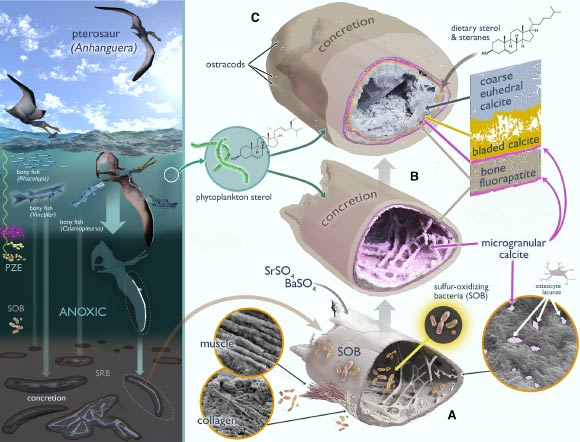
Grice et al. integrate organic geochemical analyses with high-resolution micro-mineral imaging of a three-dimensionally preserved Cretaceous pterosaur wing phalanx from Brazil to reveal steroid biomarkers and multi-stage mineralization pathways underlying its preservation. Image credit: Grice et al., doi: 10.1016/j.isci.2026.116199.

A 113-million-year-old pterosaur fossil from northeastern Brazil has yielded rare evidence of soft tissues, organic molecules and chemical traces of a diet heavy in fish and cephalopods such as squid or nautilus relatives.

The post 113-Million-Year-Old Pterosaur Fossil Reveals What Flying Reptiles Ate appeared first on Sci.News: Breaking Science News.
  •  

Earth’s First Land Animals May Never Have Been Amphibian-Like After All

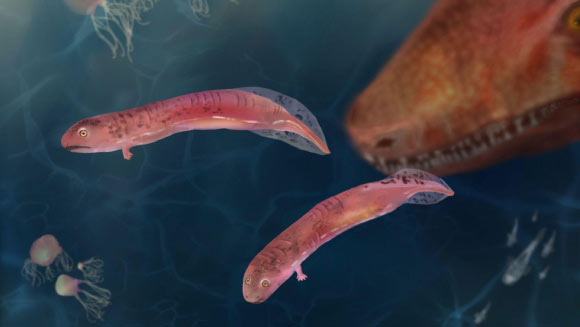
New fossil evidence suggests that embolomeres did not undergo a metamorphosis the way that modern amphibians do when growing up, which challenges a long-standing scientific belief that amphibians, reptiles, and mammals evolved from animals that had a tadpole stage. Image credit: Berit Godring.

Paleontologists from the Field Museum of Natural History have described the fossilized remains of baby embolomeres, crocodile-like predators that prowled ancient rivers and swamps between 350 and 280 million years ago.

The post Earth’s First Land Animals May Never Have Been Amphibian-Like After All appeared first on Sci.News: Breaking Science News.
  •  

125-Million-Year-Old Crocodile Relative Reveals Its True Colors

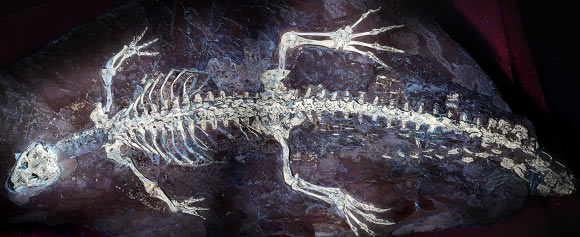
The holotype specimen of Montsecosuchus depereti. Image credit: Castillo-Visa et al., doi: 10.1093/zoolinnean/zlag076.

Exceptionally preserved skin of Montsecosuchus depereti, an extinct crocodylomorph no larger than a house cat that prowled the tropical wetlands of Early Cretaceous Spain, has allowed paleontologists to reconstruct details of its scales, sensory organs and even possible banded markings along its tail.

The post 125-Million-Year-Old Crocodile Relative Reveals Its True Colors appeared first on Sci.News: Breaking Science News.

  •  

New Duck-Billed Dinosaur Unearthed in Romania

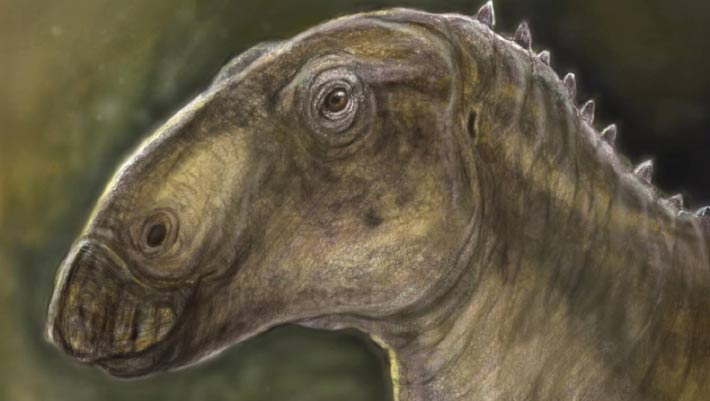
Kryptohadros kallaiae. Image credit: Tibor Pecsics.

An international team of paleontologists from Romania, Hungary and Italy has identified a new genus and species of herbivorous, duck-billed dinosaur from an incomplete skeleton unearthed in the HaΘ›eg Basin, a bowl-shaped depression in the Carpathians of present-day Romania.

The post New Duck-Billed Dinosaur Unearthed in Romania appeared first on Sci.News: Breaking Science News.
  •  

Fossils from Chinese Cave Fill Crucial Gap in History of Gigantopithecus blacki

An artist’s impression of a group of Gigantopithecus blacki within a forest in southern China. Image credit: Garcia / Joannes-Boyau, Southern Cross University.

Deep inside a limestone cave in southern China, paleontologists have uncovered an assemblage of thirteen fossilized teeth belonging to Gigantopithecus blacki, the largest primate species ever known to have lived.

The post Fossils from Chinese Cave Fill Crucial Gap in History of Gigantopithecus blacki appeared first on Sci.News: Breaking Science News.
  •  

New Marsupial Lineage Emerges from Australian Fossils

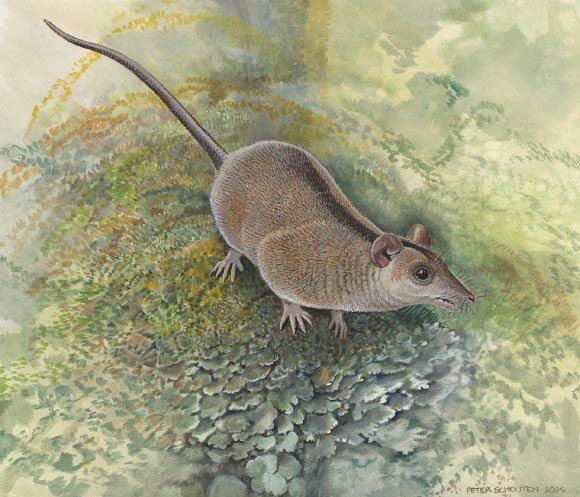
Reconstruction of Phantasmodon travouilloni in the Early Miocene rainforests of northwestern Queensland. Image credit: Peter Schouten.

Paleontologists have described a new genus and three new species of small, insect-eating marsupials from the Early Miocene deposits of the Riversleigh World Heritage Area in northwestern Queensland, one of Australia’s richest fossil sites.

The post New Marsupial Lineage Emerges from Australian Fossils appeared first on Sci.News: Breaking Science News.
  •  

New Species of Ancient Bear-Dog Identified in Spain

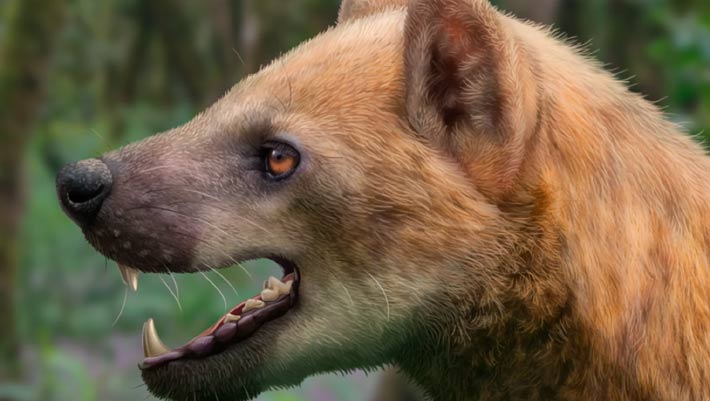
Paludocyon moyasolai. Image credit: JesΓΊs Gamarra.

Paleontologists have identified a previously unknown species of amphicyonid -- the extinct family of carnivorous mammals popularly known as bear-dogs -- from two specimens unearthed at a rich fossil site in the Vallès-Penedès Basin near Barcelona, Spain.

The post New Species of Ancient Bear-Dog Identified in Spain appeared first on Sci.News: Breaking Science News.
  •  

Fossil Discovery in Patagonia Reveals New Species of Horned Turtle

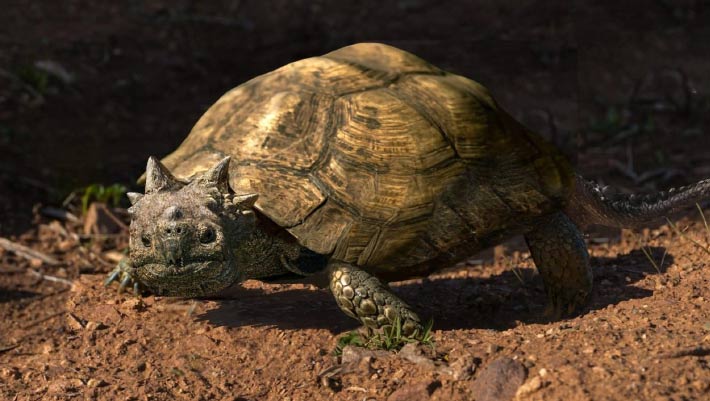
An artist’s impression of Patagoniaemys aeschyli. Image credit: Nawel Vazquez / Museo Argentino de Ciencias Naturales β€˜Bernardino Rivadavia’ / CONICET.

Paleontologists have identified a new species of meiolaniform turtle from northern Patagonia, Argentina, that lived during the Maastrichtian age, just before the asteroid-triggered mass extinction that wiped out all non-avian dinosaurs.

The post Fossil Discovery in Patagonia Reveals New Species of Horned Turtle appeared first on Sci.News: Breaking Science News.
  •  

Fish Fossils from Early Paleocene Fill 10-Million-Year Gap after Dinosaur Extinction

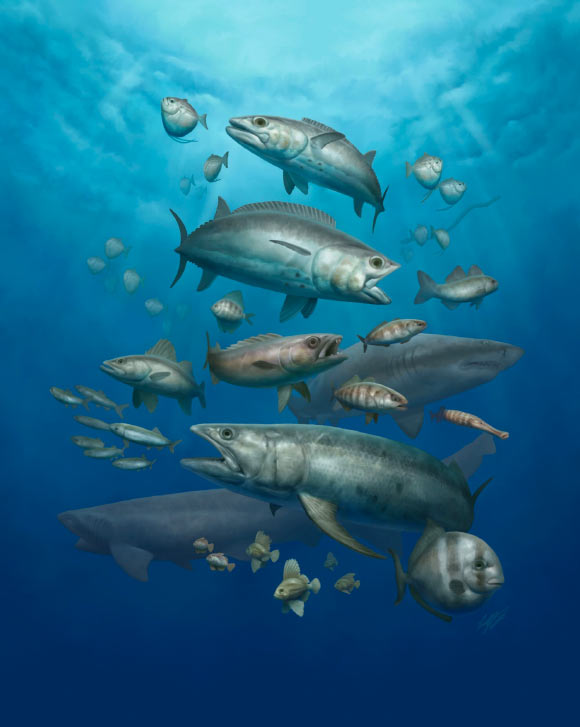
Marine fishes from the Early Paleocene site of Qreiya 3 in the Eastern Desert of Egypt. Image credit: Ian Baylatry.

Paleontologists have described an assemblage of marine fish fossils from the 62.2-million-year-old site of Qreiya 3 in the Eastern Desert of Egypt, providing a window into this transition.

The post Fish Fossils from Early Paleocene Fill 10-Million-Year Gap after Dinosaur Extinction appeared first on Sci.News: Breaking Science News.
  •  

Half-Ton Cattle Relatives Roamed Europe 4 Million Years Ago

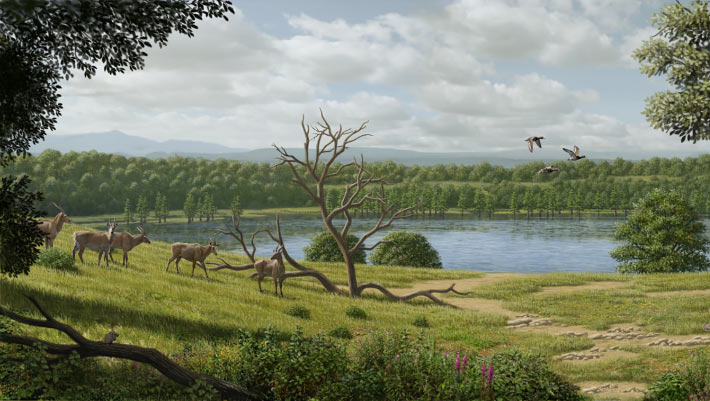
Paleoartistic reconstruction of the environment in the surrounding of Camp dels Ninots maar lake during the Early Pliocene. Image credit: Mauricio AntΓ³n.

Near-complete bovine skeletons unearthed the Early Pliocene site of Camp dels Ninots in northeastern Spain reveal that the ancestors of today’s buffalo and cattle were already growing to impressive sizes long before humans arrived on the continent.

The post Half-Ton Cattle Relatives Roamed Europe 4 Million Years Ago appeared first on Sci.News: Breaking Science News.
  •  

New Microraptorine Dinosaur Discovered in China

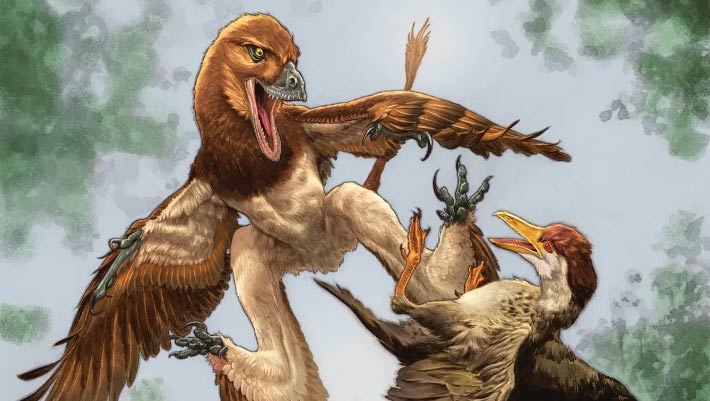
Jian changmaensis (left) attacks the early bird Gansus yumenensis (right) in what is now the Changma Basin of northwestern China approximately 120 million years ago. Image credit: Lewis LaRosa / JΓ£o Canola.

Jian changmaensis is the first non-avian dinosaur found at a paleontological site that has yielded more than 100 specimens of Early Cretaceous birds.

The post New Microraptorine Dinosaur Discovered in China appeared first on Sci.News: Breaking Science News.
  •  

Giant Scorpions Ruled Ancient Britain during Devonian Period

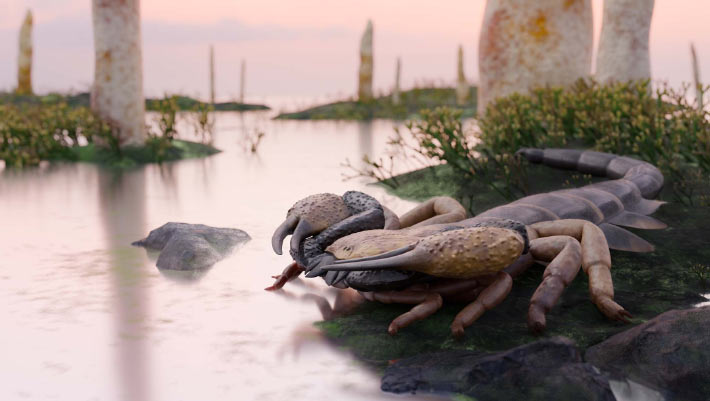
Praearcturus gigas. Image credit: Franz Anthony.

Paleontologists have confirmed that Praearcturus gigas, a creature that prowled shallow waters during the Devonian period, 415 million years ago, is the largest scorpion ever found.

The post Giant Scorpions Ruled Ancient Britain during Devonian Period appeared first on Sci.News: Breaking Science News.
  •  

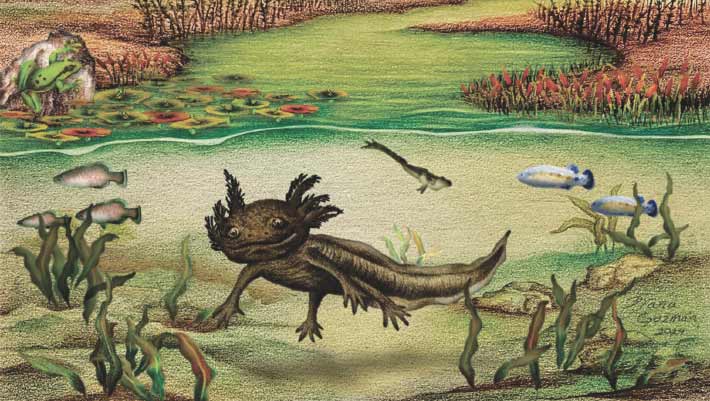
New Species of Fossil Axolotl Unearthed in Mexico

Reconstruction of the Santa MarΓ­a Amajac paleolake during the Late Pliocene; the paleobiodiveristy of the paleolake included microvertebrates such as the ambystomatid salamander Ambystoma quetzalcoatli, Paleocharacodon guzmanae and Goodea-like fishes, anurans and numerous species of terrestrial and aquatic plants such as Nymphaea sp., Scirpus sp., Typha sp. Image credit: Diana GuzmΓ‘n-Madrid.

Paleontologists have identified a new species of the axolotl genus Ambystoma from several fossilized specimens found deep in the rocky outcrops of the Mexican state of Hidalgo.

The post New Species of Fossil Axolotl Unearthed in Mexico appeared first on Sci.News: Breaking Science News.
  •  

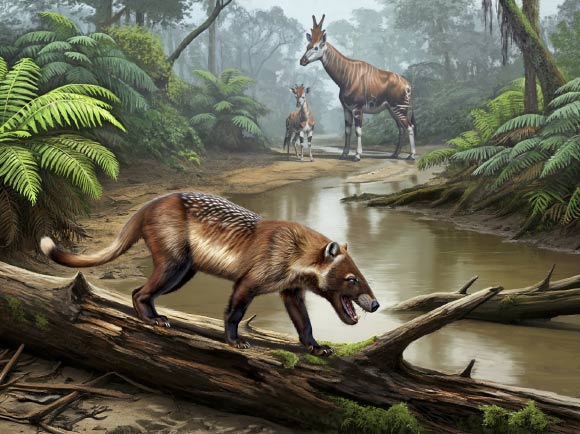
Paleontologists Identify New Hyaenodont Species in Pakistan

Metapterodon anari. Image credit: Steven Jasinski / SergeyAtrox1.

Paleontologists have recovered the fossilized remains of three hyaenodont species, including one previously unknown to science, from Miocene sediments in Pakistan.

The post Paleontologists Identify New Hyaenodont Species in Pakistan appeared first on Sci.News: Breaking Science News.
  •  

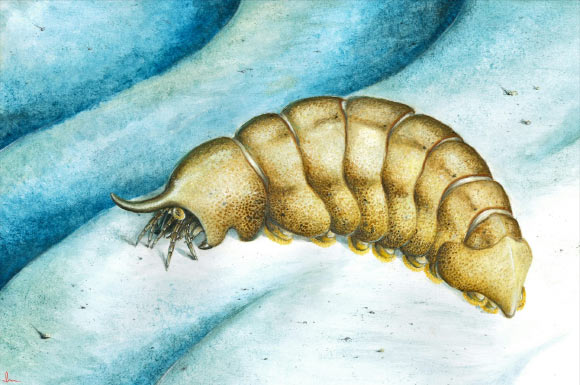
490-Million-Year-Old Arthropod Fossil Fills Puzzling Gap in Fossil Record

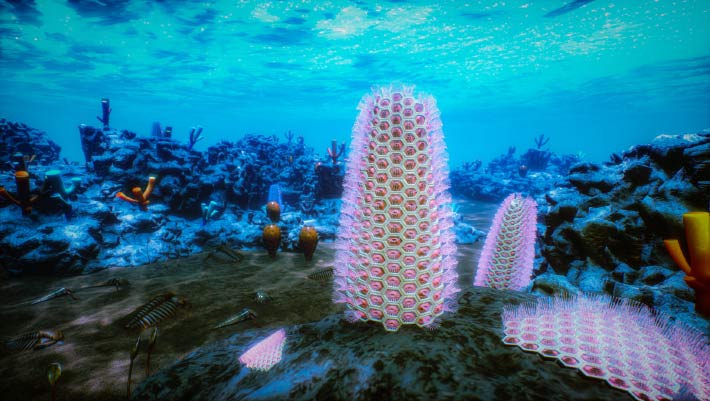
Life reconstruction of Magnicornaspis garwoodi. Image credit: Thomas Turner.

A new species of corcoraniid arthropod that lived during the Furongian epoch, between 497 and 487 million years ago, has been identified from an exceptionally preserved specimen found near QuΓ©bec, Canada.

The post 490-Million-Year-Old Arthropod Fossil Fills Puzzling Gap in Fossil Record appeared first on Sci.News: Breaking Science News.
  •  

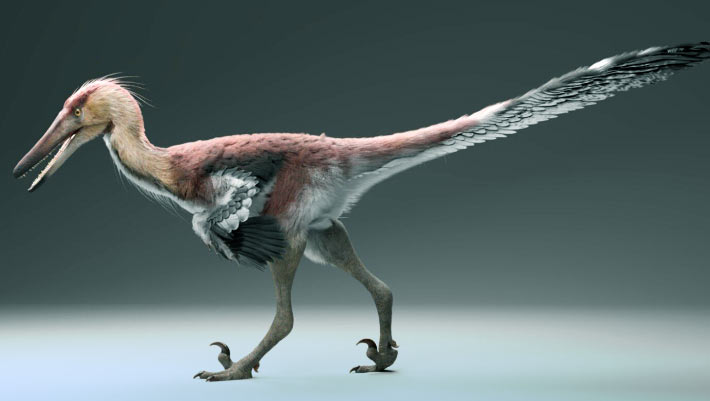
New Dinosaur Species from Argentina May Have Specialized in Catching Fish

Life reconstruction of Kank australis. Image credit: Gabriel DΓ­az YantΓ©n.

Paleontologists in Argentina have identified a previously unknown species of unenlagiid dinosaur that stalked freshwater wetlands during the Late Cretaceous epoch, adding to evidence that some dinosaurs specialized in catching fish.

The post New Dinosaur Species from Argentina May Have Specialized in Catching Fish appeared first on Sci.News: Breaking Science News.

  •  

Fungi Bloomed Twice around End-Cretaceous Mass Extinction

The end-Cretaceous mass extinction was marked by both the Chicxulub asteroid impact and the ongoing eruptions of the Deccan Traps volcanoes.

By studying fungal microfossils in 66-million-year-old rock samples from the Denver Basin in Colorado, Johns Hopkins University microbiologists have confirmed that the dinosaur-killing asteroid impact triggered a worldwide fungal takeover, and uncovered a second, previously unknown ecological crisis just before it.

The post Fungi Bloomed Twice around End-Cretaceous Mass Extinction appeared first on Sci.News: Breaking Science News.
  •  

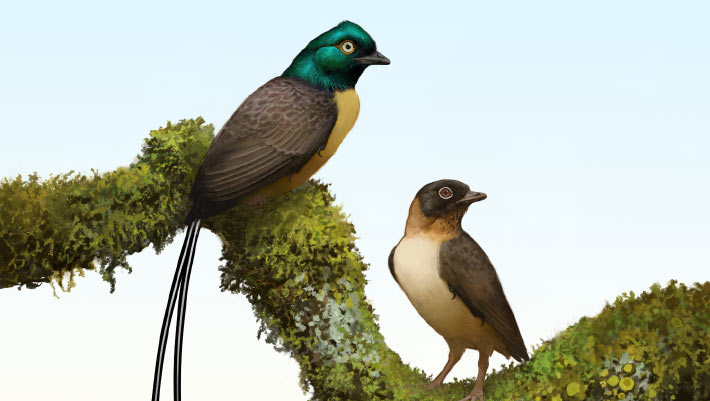
Cretaceous Bird from China Had Pair of Tail Feathers Twice as Long as Its Body

Plumadraco bankoorum is a new bohaiornithid enantiornithine bird with a pair of exceptionally long rectrices. Image credit: Ville Sinkkonen.

Named Plumadraco bankoorum, the newly-described species of enantiornithine bird lived in what is now northeastern China during the Cretaceous period, roughly 121 million years ago.

The post Cretaceous Bird from China Had Pair of Tail Feathers Twice as Long as Its Body appeared first on Sci.News: Breaking Science News.
  •  

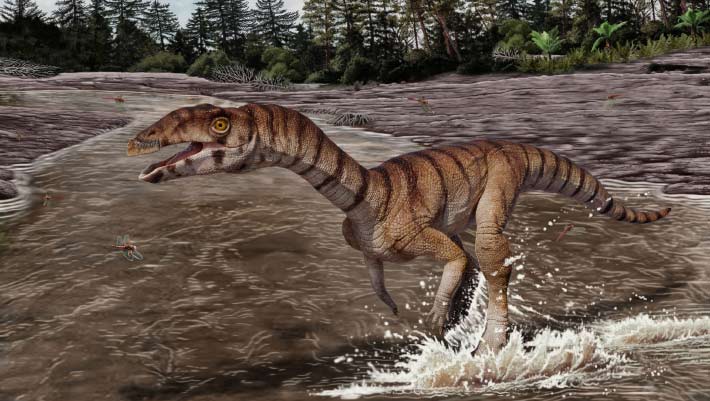
Toothless, Bipedal Crocodile Relative Lived in New Mexico 212 Million Years Ago

Labrujasuchus expectatus navigated the world on two legs with tiny arms and a toothless mouth tipped in a beak. Image credit: Jorge Gonzalez / NHMLAC Dinosaur Institute.

Paleontologists have described a new species of bipedal shuvosaurid archosaur from New Mexico, shedding light on a group of creatures that roamed North America during the Triassic period, more than 200 million years ago.

The post Toothless, Bipedal Crocodile Relative Lived in New Mexico 212 Million Years Ago appeared first on Sci.News: Breaking Science News.

  •  
❌