Millions of years ago, a massive star exploded somewhere far away in our galaxy. During this violent event, called a supernova, the dying star blasted huge amounts of matter into space. These materials included carbon, nitrogen and oxygen—the essential ingredients for life—as well as many other elements, some as heavy as iron. The explosion itself […]
Astronomers have discovered an unexpected surprise on the famous “Pink Planet,” a strange world known as GJ504b. Using the powerful James Webb Space Telescope (JWST), scientists found that the object is surrounded by salty clouds and has an atmosphere filled with unusual chemicals. GJ504b was first discovered in 2013. It orbits a sun-like star about […]
Welcome to Edition 8.46 of the Rocket Report! We don't mention Starship in the body of this week's report, so I'll give a brief update here. The next test flight of SpaceX's mega-rocket—Flight 13—could happen as soon as next month, according to Gwynne Shotwell, the company's president and chief operating officer, in a recent interview with CNBC. There's still a fair bit of work to do before Flight 13, so don't count on a launch next month just yet. What we do know, based on Shotwell's comments to CNBC, is the next Starship test flight will look a lot like the previous one last month, with a suborbital flight path and a splashdown of the ship in the Indian Ocean. SpaceX is holding off on an orbital flight until at least the following launch, Flight 14, after the ship was unable to complete a critical engine restart in space on the last flight.
As always, we welcome reader submissions. If you don't want to miss an issue, please subscribe using the box below (the form will not appear on AMP-enabled versions of the site). Each report will include information on small-, medium-, and heavy-lift rockets, as well as a quick look ahead at the next three launches on the calendar.
Isar test flight scrubbed again. Isar Aerospace still commands top position among a new generation of European rocket startups, but the company’s efforts to launch a critical test flight of its Spectrum rocket continue to encounter roadblocks, Ars reports. The latest delay came Monday, when Isar scrubbed a launch attempt after "detecting off nominal behavior in the vehicle’s fluid systems," according to a social media post. "The teams are analyzing the new data to isolate the root cause." Isar is flush with cash, having raised nearly $1 billion to date, but is still lacking in the critical currency of flight experience. The Spectrum rocket has flown just once to date, on a failed launch last year that lasted less than 30 seconds.
Welcome to Edition 8.46 of the Rocket Report! We don't mention Starship in the body of this week's report, so I'll give a brief update here. The next test flight of SpaceX's mega-rocket—Flight 13—could happen as soon as next month, according to Gwynne Shotwell, the company's president and chief operating officer, in a recent interview with CNBC. There's still a fair bit of work to go before Flight 13, so don't count on a launch next month just yet. What we do know, based on Shotwell's comments to CNBC, is the next Starship test flight will look a like like the previous one last month, with a suborbital flight path and a splashdown of the ship in the Indian Ocean. SpaceX is holding off on an orbital flight until at least the following launch, Flight 14, after the ship was unable to complete a critical engine restart in space on the last flight.
As always, we welcome reader submissions. If you don't want to miss an issue, please subscribe using the box below (the form will not appear on AMP-enabled versions of the site). Each report will include information on small-, medium-, and heavy-lift rockets, as well as a quick look ahead at the next three launches on the calendar.
Isar test flight scrubbed again. Isar Aerospace still commands top position among a new generation of European rocket startups, but the company’s efforts to launch a critical test flight of its Spectrum rocket continue to encounter roadblocks, Ars reports. The latest delay came Monday, when Isar scrubbed a launch attempt after "detecting off nominal behavior in the vehicle’s fluid systems," according to a social media post. "The teams are analyzing the new data to isolate the root cause." Isar is flush with cash, having raised nearly $1 billion to date, but is still lacking in the critical currently of flight experience. The Spectrum rocket has flown just once to date, on a failed launch last year that lasted less than 30 seconds.
Welcome to Edition 8.46 of the Rocket Report! We don't mention Starship in the body of this week's report, so I'll give a brief update here. The next test flight of SpaceX's mega-rocket—Flight 13—could happen as soon as next month, according to Gwynne Shotwell, the company's president and chief operating officer, in a recent interview with CNBC. There's still a fair bit of work to do before Flight 13, so don't count on a launch next month just yet. What we do know, based on Shotwell's comments to CNBC, is the next Starship test flight will look a lot like the previous one last month, with a suborbital flight path and a splashdown of the ship in the Indian Ocean. SpaceX is holding off on an orbital flight until at least the following launch, Flight 14, after the ship was unable to complete a critical engine restart in space on the last flight.
As always, we welcome reader submissions. If you don't want to miss an issue, please subscribe using the box below (the form will not appear on AMP-enabled versions of the site). Each report will include information on small-, medium-, and heavy-lift rockets, as well as a quick look ahead at the next three launches on the calendar.
Isar test flight scrubbed again. Isar Aerospace still commands top position among a new generation of European rocket startups, but the company’s efforts to launch a critical test flight of its Spectrum rocket continue to encounter roadblocks, Ars reports. The latest delay came Monday, when Isar scrubbed a launch attempt after "detecting off nominal behavior in the vehicle’s fluid systems," according to a social media post. "The teams are analyzing the new data to isolate the root cause." Isar is flush with cash, having raised nearly $1 billion to date, but is still lacking in the critical currency of flight experience. The Spectrum rocket has flown just once to date, on a failed launch last year that lasted less than 30 seconds.
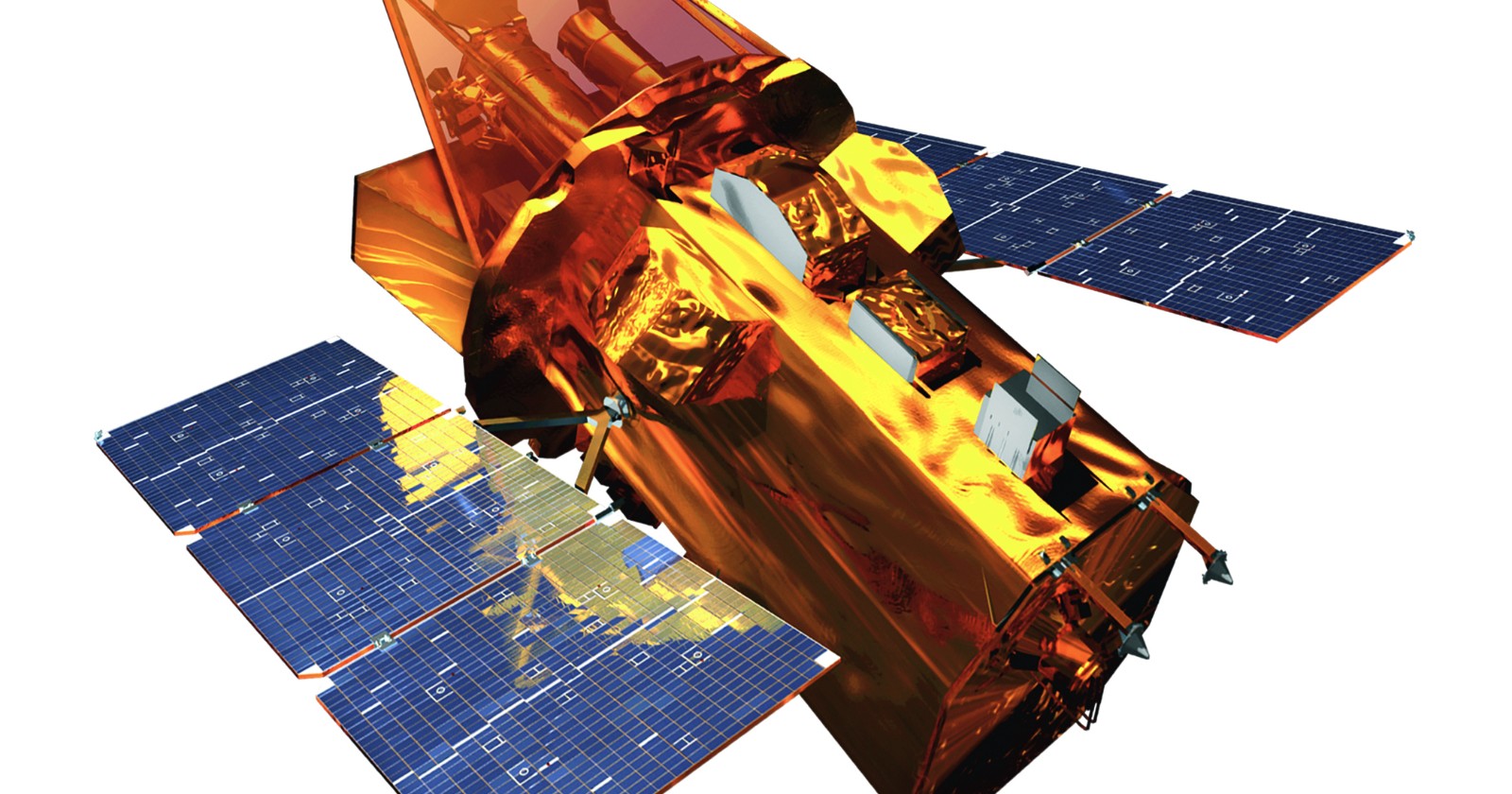
A robotic spacecraft built by a Flagstaff, Arizona, startup is preparing to chase down one of NASA’s space telescopes and boost it into a higher orbit. Katalyst Space Technologies’ craft, called LINK, is set to launch later this month aboard an air-launched Northrop Grumman Pegasus XL rocket from Kwajalein Atoll in the Marshall Islands, then rendezvous with NASA’s Neil Gehrels Swift Observatory and raise its altitude.
The target is a telescope that cannot save itself. After 21 years in orbit, Swift is sinking. The spacecraft carries no thrusters of its own, and its low Earth orbit has been decaying for years as it brushes against the top of the atmosphere. A recent stretch of heightened solar activity made the problem worse, puffing the atmosphere outward, thickening the drag, and pulling Swift down faster than NASA had planned for.
A telescope built to chase explosions
Swift launched in 2004 to study gamma-ray bursts, the most powerful explosions in the universe. NASA describes it as a kind of cosmic dispatcher: when a sudden, violent event flares somewhere in the sky, Swift pins down where it happened and alerts other observatories to swing around and look. Over two decades it has fed discoveries about exploding stars, flares from distant galaxies, comets, asteroids, and even high-energy lightning on Earth.
Goddard Space Flight Center in Greenbelt, Maryland, manages the mission, with partners that include Penn State, Los Alamos National Laboratory, the UK Space Agency, the University of Leicester, and the Italian Space Agency. Losing the telescope to an uncontrolled reentry would end all of that.
A race against the clock
Rather than let Swift fall, NASA decided to try something it had never done with a science satellite. In September 2025 the agency awarded Katalyst a $30 million contract, routed through its Small Business Innovation Research program, to mount a robotic boost on a compressed schedule. NASA framed the speed itself as the point, calling the effort a way to prove it can go from concept to implementation in under a year.
“This is a forward-leaning, risk-tolerant approach for NASA,” said Shawn Domagal-Goldman, the acting director of NASA’s Astrophysics Division at the time of the award, who noted that boosting Swift is both cheaper than building a replacement and a way to extend satellite servicing to “a new and broader class of spacecraft.” The clock is real: without a boost, NASA expects Swift to reenter the atmosphere in the fall of 2026, and for the rescue to have its best chance the telescope needs to stay above roughly 185 miles, about 300 kilometers. To buy time, controllers suspended Swift’s science observations and reoriented the spacecraft to cut its drag, a change the mission had never made before.
Why an air-launched rocket
The choice of a Pegasus XL is itself a consequence of the rush. Swift sits in an unusually low-inclination orbit of 20.6 degrees, which is hard to reach from U.S. launch pads, where most small rockets are confined to steeper angles. Pegasus solves that by skipping the pad entirely: Northrop Grumman’s modified L-1011 aircraft, named Stargazer, carries the rocket aloft and releases it in midair, letting it start its climb from tens of thousands of feet and from a location chosen to match Swift’s path.
A first, if it works
NASA has been careful about what it is claiming. By the agency’s own description, a successful boost would be the first time a commercial robotic spacecraft captures a government satellite that is uncrewed, or not originally designed to be serviced in space. That qualifier matters. Robotic servicing has been demonstrated before on craft fitted with docking targets or otherwise built to be approached; Swift was not. LINK, an 880-pound spacecraft that grips its target with three robotic arms, will have to dock with an observatory that was never built to cooperate with a visiting robot, over a maneuver NASA expects to unfold across several months.
It is also, for now, an attempt rather than a sure thing, and the schedule remains soft. NASA has described the launch as targeted for later in June while cautioning that shifting solar activity could still move the timing. Whether the boost works or not, it is a test of a capability NASA says it will need as satellites pile up in orbit and more of them, someday, may be worth saving rather than discarding.
The quote has a clean, precise quality that most observations about fear do not. Reid Wiseman posted it to Twitter in October 2014, a few days after completing the first spacewalk of Expedition 41 aboard the International Space Station: “While #spacewalking I realized something: I used to think I was scared of heights but now I know I was just scared of gravity.”
He was floating outside the station at roughly 400 kilometres above Earth, working with European Space Agency astronaut Alexander Gerst for six hours and thirteen minutes on cooling pump relocation and external robotics work. The spacewalk was conducted on 7 October 2014. At that altitude, with nothing below and the planet curving away at the edge of peripheral vision, Wiseman noticed the absence of something he had expected to find: the fear he thought he had.
The quote has resurfaced in the months around the Artemis II mission, for which Wiseman serves as commander. On 1 April 2026, he launched as part of the first crewed mission to the Moon since Gene Cernan commanded Apollo 17 in December 1972. The insight is more than a decade old. It reads differently now, from a trajectory that takes Wiseman and his crew past the Moon and back.
The distinction itself
The difference between fearing heights and fearing gravity sounds like wordplay until you hold it carefully. Both terms are commonly used to describe the same cluster of behaviour: the discomfort on balconies, the reluctance to stand near the edge of a cliff, the particular unease of a glass floor above a long drop. The behaviours are consistent. What Wiseman is questioning is the diagnosis.
A fear of heights, understood as a response to elevation and exposure, locates the problem in the altitude. But what most people are responding to in those situations is not the height in any abstract sense. It is the fall. It is gravity’s action on the body in the event of a slip. It is the trajectory the body would follow if the ledge gave way, and the irreversibility of what that trajectory leads to. The height is the setup. Gravity is the mechanism.
In microgravity, the mechanism has been removed. There is no directional pull toward a surface that recedes infinitely. There is no trajectory the body would follow if it lost contact with the station. An astronaut outside the ISS is not high in the sense that a person on a balcony is high, because the relationship between position and consequence that produces the fear of heights has been cancelled. Wiseman was in the most extreme version of elevation a human can occupy, and the thing he expected to feel was not there.
He worked backward from that absence to what it meant. The fear he had carried was not of heights. It was of gravity.
What reclassification does
This kind of revision is harder than it sounds. Most people who believe they fear heights have arranged something around that belief: the avoidance patterns, the decisions about which windows to stand near, the self-description offered when explaining a refusal. The label has become load-bearing. It organises behaviour.
What Wiseman found was that the label was describing a proxy rather than the cause. The altitude was consistently present when the fear appeared, so the altitude got named. But the consistent presence of altitude was itself a consistent presence of gravity’s consequences. The two variables had never been separated. Spacewalking separated them.
The implication is not that people who fear heights are wrong about their fear. The fear is real and the behaviour it produces is real. What shifts is the precision of the account. Someone who understands their discomfort as being about gravity’s consequences, rather than about altitude per se, has a different description of where the sensitivity lives. That description may or may not change anything practical about what they avoid. But it is more accurate, and accuracy in these matters has a certain value even when it is not immediately actionable.
Wiseman did not overcome a fear. He reclassified one. The distinction matters because overcoming implies confronting the same situation repeatedly until the response diminishes. Reclassification involves recognising that the situation you have been avoiding is not quite the thing you thought it was.
Twelve years and a lunar trajectory
Wiseman is 50 years old, a retired United States Navy captain and test pilot. As of April 2026, he is the commander of a mission carrying him further from Earth than any human since the Apollo programme. His crew includes NASA astronauts Christina Koch and Victor Glover and Canadian Space Agency astronaut Jeremy Hansen.
Artemis II is a circumlunar flyby, not a landing. The crew will loop around the Moon and return. The distances involved, the communication delays, the duration, make any analogy between this and an ISS spacewalk look quite small. The environment Wiseman occupied in 2014 was far more controlled than the one he entered in April 2026.
The 2014 insight does not become more or less true in this context. It is not predictive of how Wiseman or anyone else experiences the Artemis II mission specifically. But the Artemis II frame does something to the quote: it makes the scale of what he has learned to not be afraid of more visible. The man who discovered in 2014 that his fear was of gravity, not altitude, is now travelling to a distance at which Earth’s gravity is a much smaller presence.
There is a version of this story that treats it as an arc of overcoming, each mission more extreme than the last, the fear perpetually shrinking. That is not what Wiseman is describing. He is describing a single clarification, arrived at empirically, during six hours of work outside a space station. The rest followed from that, or did not.
The question the observation leaves open
Wiseman’s observation raises a question that has no clean answer: when we say we fear something, how often are we naming the right thing?
The fear of heights is a durable shorthand, but it collapses a set of variables that could in principle be separated. The height. The exposure. The lack of handholds. The awareness of what would happen if the body fell. The mental simulation of the fall itself. These are not identical. They would, if separated, suggest different things about where the sensitivity lives. Most people never encounter the conditions that would separate them. Wiseman did.
There is no general lesson here that applies predictably from person to person. What seems clear is that the precision of Wiseman’s account is a function of the specificity of the test. An environment that removed gravity as a variable allowed him to see that gravity was the variable that mattered. Ordinary environments, which almost always include gravity as a background constant, do not offer the same diagnostic clarity.
He has not said whether the reclassification changed anything else. He has said that he now knows which word to use.
A few months ago, I found myself deep in a conversation about Mars colonization timelines. The other person — a software engineer, genuinely enthusiastic, not naive about the engineering — was walking me through radiation shielding approaches, the habitability of lava tubes, the logistical case for SpaceX’s Starship architecture. It was fascinating. He clearly knew far more than I did about the technical specifics. But somewhere in the middle of it, a question started forming that I couldn’t quite place, until eventually I did: we hadn’t once asked whether any of this was a good idea.
We had been talking about how for an hour, and neither of us had said the word why.
That conversation has been sitting with me since. Not because the technical questions aren’t important — they’re genuinely hard, and the people working on them are doing serious work. But there is a gap between “this is technically possible” and “this is what we should do,” and that gap tends to close faster in the Mars discourse than it does almost anywhere else. The survival problem gets all the oxygen. The ethical one gets treated as settled — as if the answer to “should we go?” is obviously yes, and the only thing left to figure out is the radiation shielding.
I’m not a space scientist and I don’t have a strong stake in any particular answer here. What I do have is a persistent discomfort with how questions get framed — with the way the tractable problem has a tendency to absorb all the attention that the harder one deserves.
The question we’re not asking
The survival discourse is, in its way, extraordinary. Cosmic radiation at the Martian surface running at roughly six to seven chest X-rays per day under normal conditions — and significantly higher during transit and solar storm events. An atmosphere that amounts to about one percent of Earth’s. Temperatures swinging 70 degrees Celsius or more between day and night. The progressive bone density loss from low gravity that compounds across months into something that isn’t easily reversed. These are real problems, and the engineers working on them deserve the coverage they get. None of that is what I’m questioning.
What I’m questioning is the habit of treating “can we survive there?” as a proxy for “should we go?” — as though answering the first settles the second. It doesn’t. They are different questions that require different kinds of thinking, and we have, for the better part of a decade, let the excitement and tractability of the first crowd out serious engagement with the second.
The life question nobody wants to stop for
One of the more uncomfortable things I’ve come across in reading about this is the planetary protection question — specifically, the possibility that Mars might not be as empty as the colonization narrative tends to assume. The debate about whether Mars currently harbors microbial life, perhaps in briny subsurface water or in the recurring slope lineae that have been periodically interpreted as evidence of seasonal liquid water, remains genuinely open. No confirmed biology has been found. But “not yet confirmed” is not “not there,” and the question of what we would do if we found it — before or after we arrived — seems to get less serious treatment than it warrants.
NASA’s planetary protection guidelines exist precisely because this uncertainty is real. They were built around the concern that Earth microbes carried on spacecraft could contaminate Mars and compromise any future ability to find or study native life there — or vice versa. The protocols apply most strictly to robotic missions, which can be sterilized. They apply far less cleanly to humans, who exhale, shed skin cells, and carry an internal ecosystem of trillions of organisms that are not optional passengers. A crewed mission, by design, cannot be managed the same way a probe can.
What this means, if taken seriously, is that any crewed mission to Mars before we have higher confidence about the biological status of the planet carries a non-trivial risk of introducing an extinction event for whatever might be living there. Carl Sagan, who spent his career both advocating for space exploration and urging caution about it, made this point repeatedly — that introducing Earth organisms into a low-diversity Martian ecosystem, if one exists, could eliminate it entirely before we ever knew it was there. The argument has not aged out. If anything, growing scientific interest in Martian subsurface habitability has made it more pressing, not less.
We have spent years asking whether humans can survive on Mars. We have spent much less time asking what Mars might be surviving from, if we arrived.
The backup civilization argument and its hidden premises
The most common justification offered for Mars colonization at the level of civilizational stakes is the backup argument: a multi-planetary species is an insurance policy, and the cost of not going is existential risk to the entire human project. Stephen Hawking made this argument in his final years. Elon Musk has built it into the explicit ideological foundation of SpaceX’s long-term mission — a self-sustaining city on Mars as a hedge against collapse on Earth.
I find this argument more worth taking seriously than most critics give it credit for. The underlying concern about existential risk is real. The logic that a species concentrated on one planet is more vulnerable than one distributed across two is coherent. But the argument is doing more work than it usually admits, and some of its hidden premises deserve more scrutiny.
The most obvious one is timing. The existential threats most likely to end civilization on Earth in the foreseeable future — climate change, engineered pandemics, nuclear conflict, biodiversity collapse — are immediate relative to any realistic projection of a self-sustaining Martian colony. A genuinely self-sustaining Mars city, by most serious estimates, is generations away. The threats we are failing to address are not. If the backup civilization argument is meant to be taken literally as a response to existential risk, it would seem to require securing the primary civilization first — not as an alternative to Mars ambitions, but the sequencing matters considerably more than the discourse tends to acknowledge.
The governance question matters here too. The Mars colonization effort as it currently stands is being driven largely by the decisions of a very small number of extraordinarily wealthy individuals and their companies, operating mostly outside democratic institutions, international treaty frameworks, or any serious mechanism of public deliberation. The Outer Space Treaty of 1967 prohibits national sovereignty claims over celestial bodies, but it was not designed to address private colonization by corporations operating under whatever regulatory minimums they can find. The choices being made now — when to go, at what pace, under what protocols — will shape the terms of Mars activity for a very long time. The fact that those choices are being made by a small group of people with specific and concentrated interests seems like something a more serious public conversation would address.
What an honest accounting would require
I want to resist the easy conclusion here — the “we should never go” position that treats any Mars ambition as inherently reckless or hubristic. There are real arguments for human Mars exploration. The science alone — the geology of ancient riverbeds, the evidence of a once-warmer world, the complex chemistry of the regolith — has produced discoveries with no parallel in the history of planetary science, and there are legitimate cases that humans on the surface could accelerate that science in ways robots fundamentally cannot. I find the impulse to go, the sheer ambition of it, genuinely compelling on some level I can’t entirely defend rationally.
But I think we owe it to the question — and possibly to whatever might be living on that planet — to stop treating the survival problem as a substitute for the ethical one. An honest accounting would start with the life question: invest seriously in determining whether Mars is biologically empty before a crewed mission departs, and treat a positive finding as a real constraint on what comes next rather than a footnote to manage. It would include meaningful international deliberation about who gets to make these decisions, and why the current answer to that question is “the people with the most rockets.” It would take the backup civilization argument seriously enough to notice what it actually implies about sequencing and urgency on Earth.
The conversation I had a few months ago was a good one. The engineer was genuinely thoughtful, and I learned things I didn’t know. But I’ve been bothered, in the time since, by how naturally we both moved through the technical questions and how completely we both skipped the other kind. The “can we?” problem is captivating in a way the “should we?” problem never quite is. It has cleaner edges. It has milestones. It announces itself as progress.
The harder question doesn’t do any of that. It just sits there, waiting for the conversation to slow down enough to make room for it.
The European Space Agency (ESA) has captured remarkable new images of dozens of giant dust devils swirling across an ancient canyon system on Mars. The images show more than 30 active whirlwinds moving through Mamers Valles, a vast network of valleys and canyons that formed billions of years ago. Dust devils on Mars are similar […]
An experimental aircraft just achieved a “major milestone” that NASA officials say brings the future of quiet supersonic flight closer to being a reality.
The test flights involved the American space agency’s secretive X-59 aircraft, which reportedly reached speeds of 1.4 Mach—roughly 924 miles per hour—during a flight last Friday.
Reaching an altitude of 55,000 feet, the experimental aircraft’s speed and height during last week’s test flight met the conditions the agency says are required for future flights aiming to achieve supersonic flight without the noisy booms it usually generates.
In a statement, NASA said the aircraft’s tests are far from complete, although Friday’s test marks a significant milestone toward reaching its current mission goals.
“The X-59 still has months of performance testing ahead, but after those are complete, NASA’s Quesst mission will fly the aircraft over several U.S. communities to collect data on public perception of the quiet sonic thump it will make at supersonic speeds,” NASA’s statement on Friday read. “Those community overflights will include flights at Mach 1.4 and 55,000 feet.”
Another Milestone for NASA’s X-59
Last week’s test occurred within days of an earlier takeoff that sent the X-59 on its first successful supersonic flight, where the plane reached a top speed of Mach 1.1.
The earlier test also marked a leap forward for the Quesst mission, which is in the process of completing several crucial steps that are expanding the X-59’s capabilities.
Deployed for test flights at various speeds and at different altitudes, flight engineers are currently gauging the aircraft’s flight envelope by having it perform in a range of different flight conditions.
During its current test flights, NASA said the supersonic aircraft was accompanied by a NASA F-15 research aircraft, which still produces a sonic boom when it flies, unlike the X-59. NASA engineers plan to mount a shock-sensing probe on the accompanying aircraft during future flights, which the agency says will collect vital information about the shock waves the experimental aircraft produces.
The resulting experiments will help engineers measure the exact capabilities of the new aircraft and its supersonic performance.
Additional Prep for NASA’s Quesst Mission
Although designed to function as a “quiet” supersonic aircraft, the X-59 still produces audible signatures, which NASA likens more to being a soft “thump” than a sonic boom.
During its final testing phases, the X-59’s supersonic acoustic signature will also be measured.
If all goes according to plan, the supersonic aircraft will complete its full round of testing in the months ahead, marking a successful series of demonstrations that it meets all the requirements for quiet flight under a range of different altitudes and other flight conditions.
Ultimately, the technologies being innovated by this experimental plane will help to enable the first supersonic flight over land in decades, paving the way toward a new future of commercial flight faster than the speed of sound.
Micah Hanks is the Editor-in-Chief and Co-Founder of The Debrief. A longtime reporter on science, defense, and technology with a focus on space and astronomy, he can be reached atmicah@thedebrief.org. Follow him on X @MicahHanks, and at micahhanks.com.
It’s 2158, and you’re chugging away on your PhD in Planetary Volcanology from the University of Utopia Planitia on Mars. Graduate students still get paid a sub-living wage, so you’ve been stuck eating freeze-dried ramen for the past three years. You’ve completed studying Jupiter’s moon, Io, but now you have to leave the solar system […]
On July 20, 1969, roughly 20 minutes after the lunar module Eagle settled into the dust of the Sea of Tranquility, Buzz Aldrin reached into a small pouch in his personal preference kit, pulled out a thumb-sized plastic vial of wine and a wafer of bread from Webster Presbyterian Church near Houston, and took Communion. And almost no one on Earth heard him do it.
Mission Control had asked him to stay quiet.
The chalice that fit in a glove pocket
The kit was tiny. A plastic film container of wine. A wafer wrapped in cellophane. A miniature silver chalice barely larger than a thimble. A handwritten index card with a verse from the Gospel of John. Aldrin had carried all of it from a small Presbyterian congregation in Webster, Texas, the spiritual home of many of the Apollo astronauts, where he served as an elder, and he described every piece of it afterward in a first-person account for Guideposts.
Neil Armstrong watched without comment. Michael Collins was overhead in Columbia, on the far side of the radio link. The cabin was cramped, the checklist was crowded, and the two men had been awake for the better part of a day.
Why Houston went quiet
The silence on the loop was not accidental. NASA was, at that moment, defending itself against a lawsuit.
On Christmas Eve 1968, the crew of Apollo 8 — Frank Borman, Jim Lovell and Bill Anders — had read the opening verses of Genesis to a live television audience as they orbited the Moon. The broadcast drew a lawsuit from Madalyn Murray O’Hair, the founder of American Atheists, who had already successfully challenged school-sponsored Bible reading and prayer in the United States. O’Hair argued that NASA, a federal agency, had violated the Establishment Clause by allowing its employees to read scripture while on duty. She asked the courts to bar astronauts from religious observance in space.
The reading had also produced the opposite reaction at enormous volume. NASA’s mail rooms filled with letters defending the Genesis broadcast, and the agency found itself caught between a vocal legal challenge on one side and an organized letter-writing campaign on the other. By the summer of 1969 its communications staff had every reason to keep the next mission’s most religiously charged moment off the air.
The suit was pending when Apollo 11 left the pad. Deke Slayton, who ran flight crew operations, pulled Aldrin aside before launch. Slayton’s instruction was practical, and later recounted in detail: go ahead and have your Communion, but keep the comments general. Don’t put us back in court.
So when Aldrin keyed his microphone, what the world heard was a measured, ecumenical request rather than the Christopher Columbus–style planting-of-the-faith ceremony he had originally drafted. He invited listeners to pause for a few moments of silence and to contemplate the events of the past few hours and give thanks in their own way.
Then the loop went quiet. He ate the bread. He drank the wine. He read the verse from John on his own.
O’Hair’s case against NASA was dismissed by a federal court in December 1969, and the Supreme Court later declined to take it up, but its chilling effect on the agency’s communications policy long outlived it. Apollo 11’s most religiously charged moment was therefore conducted in radio silence rather than broadcast — a striking inversion of the Apollo 8 reading that had triggered the whole legal headache.
The wine that crept up the cup
The story of the lunar Communion only filtered into public awareness slowly. Aldrin himself first described it publicly in a 1970 essay for Guideposts magazine, and the details were later expanded in The Guardian’s reconstruction of the ceremony, which drew on Aldrin’s own writings and on the recollections of the Webster congregation. In Aldrin’s telling, the wine behaved strangely — in the one-sixth gravity of the Moon, it curled slowly up the inside of the cup rather than pouring. The Communion elements, he noted, were the first food and drink ever consumed on the lunar surface.
The verse on the card was John 15:5. “I am the vine, you are the branches,” it began, in Aldrin’s own handwriting, the rest of it pressed onto a three-by-five index card he had tucked into the kit on Earth. He read it silently, to himself, in a cabin no one outside could hear.
The chalice that came home
The silver chalice was returned to Webster Presbyterian Church, where it remains. Every July, on the Sunday closest to the anniversary of the landing, the congregation holds a service it calls Lunar Communion Sunday. They play a recording of Aldrin’s radio request. They use the same chalice.
The astronaut who was almost a missionary
Aldrin had originally envisioned something more theatrical. In drafts he later described, the lunar Communion was meant to be broadcast live, a moment of public witness in the tradition of explorers planting crosses on new shores. Slayton’s intervention turned it into something quieter and, in retrospect, stranger: a private sacrament conducted on a world where no sacrament had ever been performed, attended by exactly one celebrant and one silent observer, transmitted to Earth as dead air.
Aldrin himself has been ambivalent about the decision in the decades since. He has written that the Communion was deeply meaningful to him personally, his way of thanking God for the safe descent. He has also written that, looking back, he might not have chosen a Christian sacrament for a mission undertaken “in the name of all mankind.” The Catholic Register’s account of religious experiences among Apollo-era astronauts records that ambivalence at length — the recognition that the crew had been sent not just by the United States but by a planet, and that the planet contained more than one faith.
What survives
Listen to the Apollo 11 air-to-ground record from that part of the timeline and the gap is audible. Aldrin makes his general request. There is a pause. The flight director moves on. The world, leaning toward its televisions and radios, does not know that on the other end of the silence a man is eating a wafer and drinking a sip of wine that is rising slowly up the inside of a thimble-sized cup in a way no liquid had ever risen before.
It was never, strictly, a secret. The press had reported beforehand that Aldrin would carry Communion bread aboard; what NASA withheld was the live broadcast, not the fact. The core elements of the story — the bread, the wine, the chalice from Webster Presbyterian, the radio request, the silence — are confirmed across multiple independent accounts, including Aldrin’s own contemporaneous writings and the church records. The detail that catches people is almost always the wine. It did not pour. It crept.
Aldrin is 96 now. He watched the launch of Artemis II from his home in California on April 1, 2026, on television, with his daughter Jan beside him. Florida Today reported that the Aldrin Family Foundation shared two photographs of him in front of the TV screen as the Space Launch System rocket carried Reid Wiseman, Christina Koch, Victor Glover and Jeremy Hansen on a 10-day flight around the Moon — the first crewed lunar mission since 1972. He is the last surviving member of the Apollo 11 crew.
Aldrin took the sacrament before he stepped out, before Armstrong’s famous descent down the ladder, before the boot print and the flag and the phone call from Richard Nixon. The first human act on the surface of another world, after the engines shut down and the dust settled, was a man eating a wafer of bread that had ridden 240,000 miles in a plastic pouch.
The pouch survives. The chalice survives. The handwritten card survives. The recording of the silence survives. Webster Presbyterian Church will hold its Lunar Communion service again this July, with the same chalice on the same altar, replaying the same audio of a man on the Moon asking the world to give thanks in its own way while NASA — wary of a pending lawsuit — quietly closed the channel and let him eat his bread alone.
Astronomers have made a major breakthrough by directly detecting the gas that fueled star formation in some of the universe’s earliest galaxies. The discovery offers a new way to understand how the first galaxies formed and evolved shortly after the Big Bang. The universe began with the Big Bang about 13.8 billion years ago. Over […]
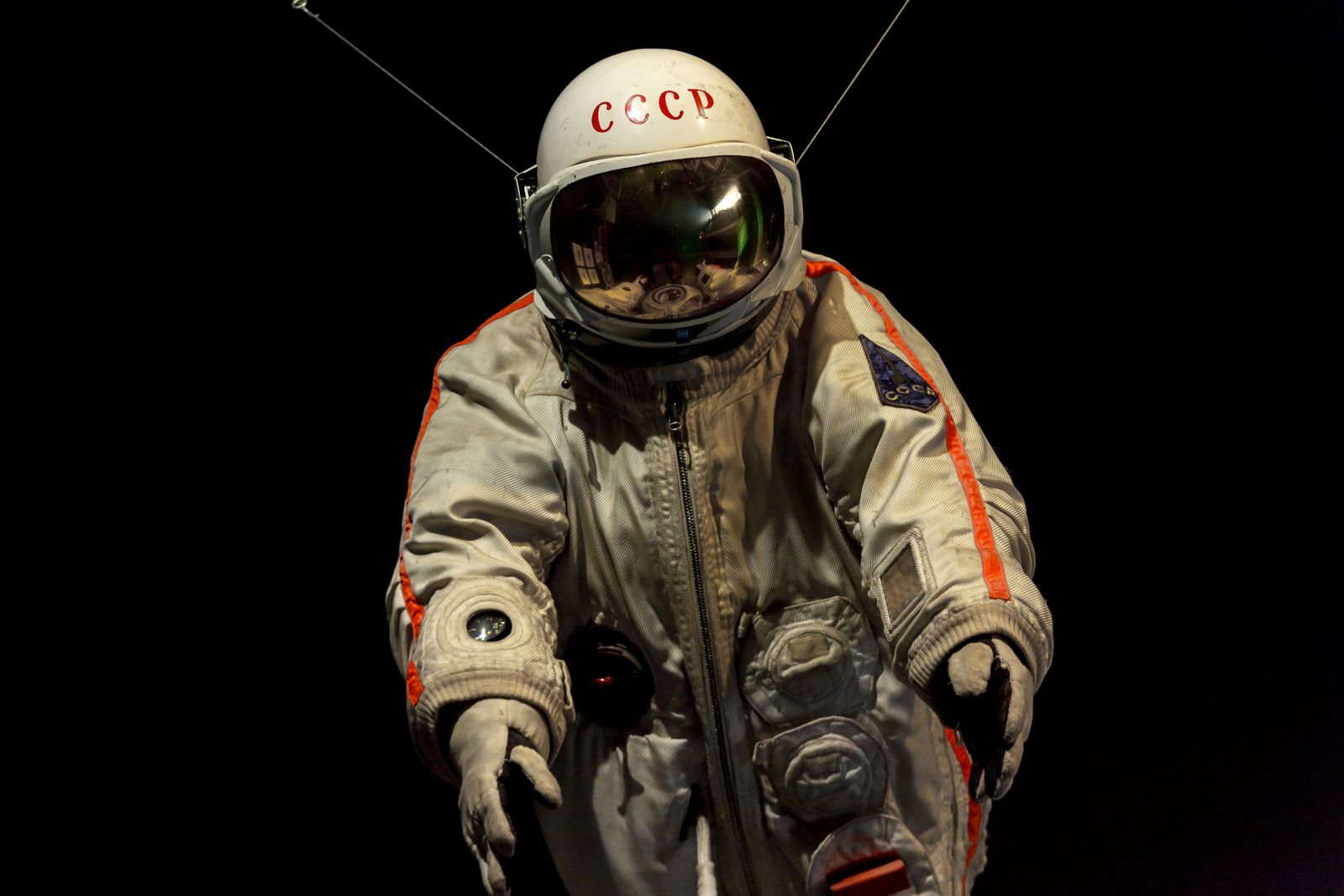
On the morning of January 16, 1966, readers of Pravda opened the state newspaper to find a name they had never seen in print before: Sergei Pavlovich Korolev. Below it ran an obituary, and a photograph of a broad-faced, heavy-jawed man in a dark suit covered in medals. He had died two days earlier, on January 14, on an operating table at a Moscow hospital, age 59. For nearly a decade, the man who had launched Sputnik, who had put Yuri Gagarin into orbit, who had aimed probes at the Moon and Venus and Mars, had been referred to in Soviet communiqués only as Glavny Konstruktor — the Chief Designer. The world learned who he was after he was already in a coffin.
The secrecy had been deliberate. The Kremlin worried about Western assassination. It also disapproved, officially, of what it called the cult of personalities. So the architect of every Soviet space first remained an unnamed bureaucratic title, even as Khrushchev waved his rockets at the world.
The man behind the title
Korolev was born on January 12, 1907, in Zhitomir, in what is now Ukraine. He trained under the aircraft designer Andrei Tupolev in Moscow, qualified as a pilot, and by 1933 had launched the first liquid-fuelled rocket in the USSR, according to a Guardian profile drawing on James Harford’s biography.
Then, in 1938, secret service agents arrested him as a spy. He was beaten. He confessed, under torture, to crimes of treason and sabotage he had not committed, and was sentenced to ten years’ hard labour at Kolyma, the most notorious of the Gulag camps.
He lost all his teeth there. His jaw was broken. He may have suffered a heart attack. He survived months at the gold mine before being transferred to a prison design bureau in Moscow, where he spent the rest of the war building aircraft and rockets from behind bars.
From Kolyma to the R-7
In 1945, the Red Army made him a colonel and sent him to Germany. The Soviets had seized stores of V-2 components from the Nazis, and they needed someone who could understand them. Wernher von Braun and most of his team had already defected to the Americans with several complete rockets — a head start that would shape the entire Cold War in space.
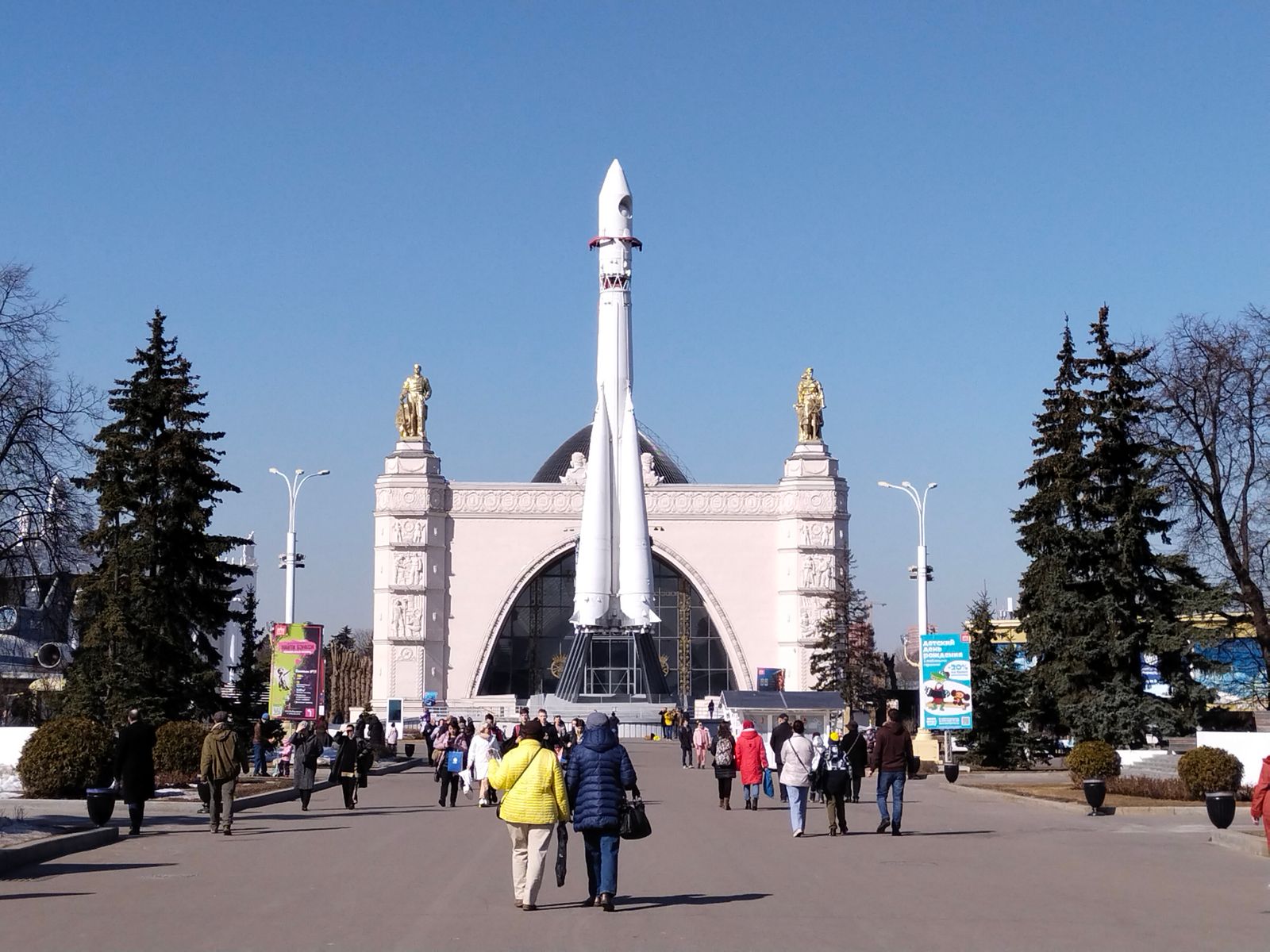
Korolev studied what was left. He slept a few hours a night. He shouted at engineers and forgave them an hour later. In 1957, he launched the Soviet R-7, the world’s first intercontinental ballistic missile, on a flight from Baikonur to the Kamchatka peninsula. He had beaten the United States to an operational ICBM.
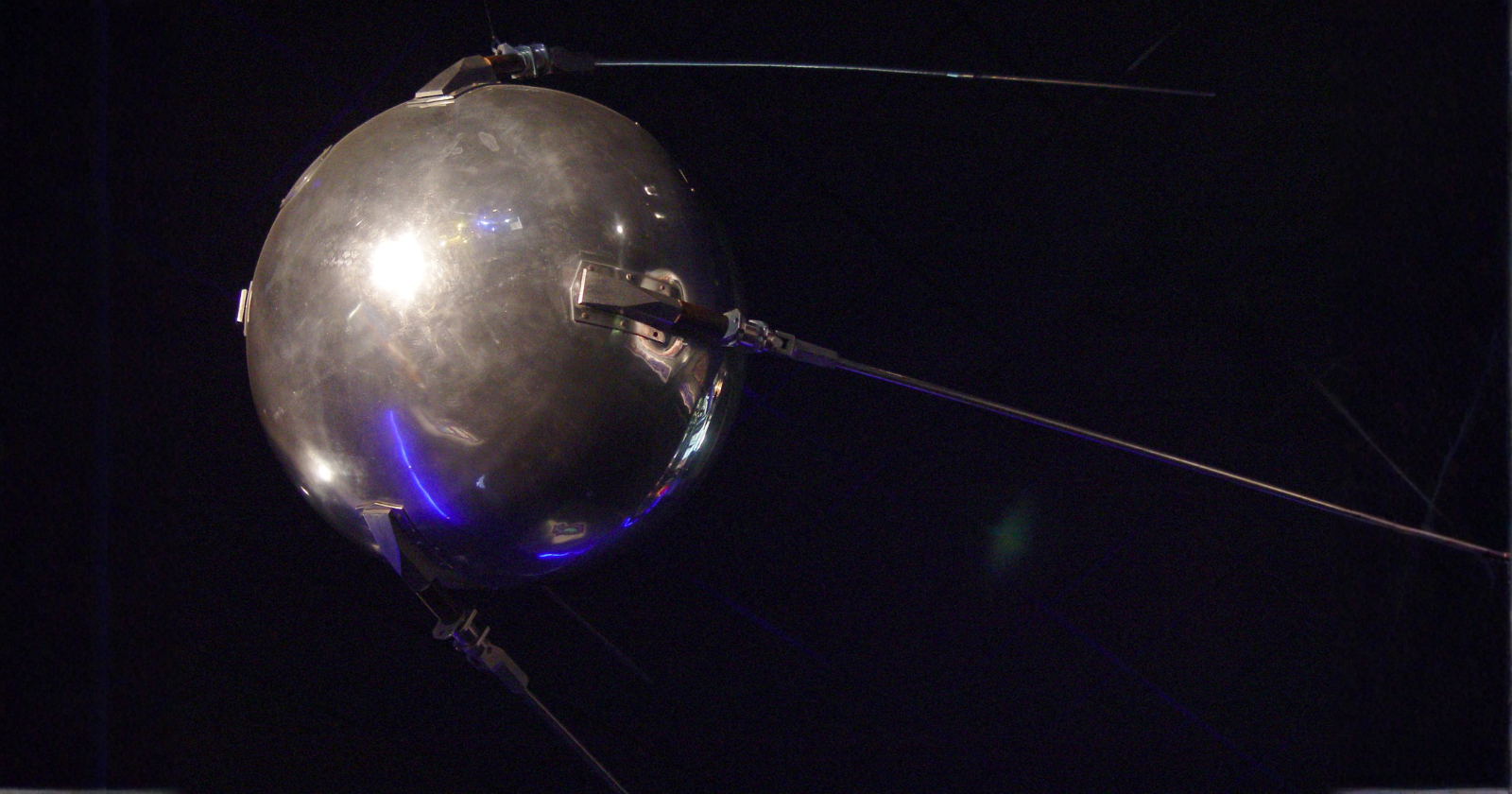
Weeks later, on October 4, 1957, a modified R-7 placed Sputnik 1 in orbit. Korolev had insisted on the satellite being audible — the engineers bolted on transmitters loud enough that ham radio operators around the world could pick up the beep on cheap shortwave receivers, a deliberate choice we’ve written about in the story of Sputnik’s transmitter. The point was for ordinary people to hear it. They did.
The team that built Sputnik, as NPR documented on the satellite’s 50th anniversary, did not fully grasp what they had done. The political shockwave in Washington was larger than anything they had planned for. The Chief Designer kept working.
A name held back on purpose
What followed was the most concentrated run of firsts in the history of spaceflight, all directed by a man whose existence was a state secret. Korolev’s bureau put the first dog in orbit, the first woman, the first multi-person crew. It directed the first spacewalk. It built the first Soviet spy satellite and the first Soviet communications satellite. It flew probes at the Moon, Venus, and Mars — all on a budget that Western analysts would later describe as a shoestring.
Each triumph was announced in the name of Soviet science, the Soviet people, the Soviet system. The man responsible was referred to, when referred to at all, as the Chief Designer. As National Review noted in a 2016 retrospective, the achievement was considered to belong to the collective.
The Kremlin had practical reasons too. A named chief designer was a target. He could be approached by Western intelligence. He could be assassinated. He could be poached. Anonymity was protection, even if it cost him every form of public recognition a scientist could earn.
The morning of April 12, 1961
On the dawn of April 12, 1961, at Baikonur, a peasant farmer’s son named Yuri Gagarin rose on a 20-storey rocket into low Earth orbit. The capsule was small. The pilot was one of the few selected cosmonauts who actually fit inside it.
One orbit. One hundred and eight minutes. Gagarin shouted Poyekhali! — let’s go — and a few minutes later was looking down at clouds and oceans no human eye had ever seen from that altitude. From orbit he radioed back what he saw — the Earth, the clouds, the curve of the horizon — and called the view beautiful.
Gagarin became an instant global celebrity. He toured capitals around the world. The Soviet system had its perfect ambassador, a short, smiling peasant’s son who could disarm hostile crowds in any capital.
Korolev, meanwhile, watched it all from behind the curtain. The cosmonaut he affectionately called his little eagle was a household name on six continents. The man who had designed the rocket, selected the pilot, and directed the mission was, officially, no one.
A body that wouldn’t hold
Five years of relentless work followed Gagarin’s flight. Korolev was already a damaged man — Kolyma had left him with a broken jaw, missing teeth, a weak heart, and what colleagues described as periodic bouts of exhaustion he refused to treat. He slept little. He lived frugally. He carried the entire human spaceflight program in his head and his shouted directives.
In January 1966, he checked into a Moscow hospital for what was meant to be routine surgery. During the procedure, complications arose. Korolev, whose jaw had been broken in the Gulag, could not be properly intubated. His weakened heart failed on the table. He died on January 14, 1966, at the age of 59.
The Politburo decided, this time, that the man should be named.
The Pravda of January 16 carried the announcement. The text identified Sergei Pavlovich Korolev as the academician who had led the design of Sputnik, of Vostok, of Voskhod, of the lunar and planetary probes. His photograph appeared above the fold. For most Soviet citizens, and for everyone outside the USSR, it was the first time they had ever seen his face or read his name in connection with the program.
His ashes were interred in the Kremlin wall, the highest honour the Soviet state could give. He received, in death, the public identity the system had denied him in life. Cosmonauts who had trained under him for years were finally permitted to acknowledge, on the record, who had run their program.
Wernher von Braun, his American counterpart, would learn the name along with the rest of the world. The two men had been racing each other for nearly two decades without von Braun knowing who he was racing.
What the anonymity cost
Some historians argue the secrecy may have cost the Soviet Union the Moon. Korolev had been working on the N-1, a massive lunar rocket meant to carry cosmonauts to the surface, when he died. His successor, Vasily Mishin, was a capable engineer but lacked Korolev’s authority with the political leadership and the rival design bureaus. The N-1 failed in all four of its test launches between 1969 and 1972, each time spectacularly. The program was quietly cancelled.
By then, Armstrong and Aldrin had already walked on the Moon, atop a Saturn V designed by a publicly celebrated Wernher von Braun, who had spent the 1960s on the cover of magazines and as a fixture on American television. Whether a named, internationally lionised Korolev could have held the Soviet lunar program together is one of the great counterfactuals of the space age.
Gagarin, the face the system had built up to the world, did not outlive his mentor by long. He died on March 27, 1968, in a MiG-15 training crash near the village of Novosyolovo, age 34. He had been grounded from spaceflight after the Soyuz 1 disaster killed his friend Vladimir Komarov in 1967 — the state had decided it could not risk its biggest legend. The legend of Gagarin, as Space Daily has reported on the cosmonaut’s enduring grip on Russian memory, only grew after his death.
Both men ended up in the Kremlin wall, urns of ashes set into the brick on Red Square. The peasant’s son who had become the most photographed man in the world, and the engineer whose first photograph in any newspaper was the one printed with his obituary. They lie within a few metres of each other.
The story of how the Soviet system organised its space program — secrets, hidden designers, named cosmonauts, suppressed parachute details, invented Gagarin quotes about not seeing God in orbit — has been the subject of decades of declassification and revision, including museum exhibitions that brought Soviet space artefacts to Western audiences for the first time. Pieces of Korolev’s machines now sit behind glass in cities he was never allowed to visit while alive.
His name today is on a city — Korolyov, just outside Moscow, home to the mission control centre that still flies Russian crews to the International Space Station. It is on craters, on streets, on schools. The Chief Designer has, in the end, become one of the most recognised names in Russian science.
He has been dead for sixty years. He spent fewer than nine of his 59 years as a publicly named man, and all of those nine years he was in prison, in a design bureau, or in a Kolyma mine. The face on the front page of Pravda on January 16, 1966, belonged to someone the world had been watching for a decade without knowing it. The beeps from Sputnik. The voice from Vostok. The probes drifting toward Venus. All of it had a single signature on it, and the signature was a job title.
The world finally learned the name on a winter morning in Moscow, and by then the man it belonged to was already cooling in a hospital room.
In a groundbreaking advancement at the intersection of materials science and advanced manufacturing, researchers Sabroj, Guo, Durygin, and their colleagues have unveiled a comprehensive study that delves deep into the electrical and thermal intricacies of zirconium nitride (ZrN) during flash sintering. Published in npj Advanced Manufacturing in 2026, this combined experimental and numerical investigation sheds new light on the fundamental mechanisms that govern flash sintering processes for this technologically important ceramic. The implications of this research extend far beyond academic interest, promising transformative impacts in industries ranging from electronics to aerospace.
Flash sintering, a revolutionary technique that employs rapid heating under an applied electric field to densify ceramic materials in seconds, has become a focal point in the quest for energy-efficient and time-saving manufacturing methods. Yet, despite its promise, many of the phenomena that occur during flash sintering at the micro- and macroscopic levels remain enigmatic. This study specifically aims to elucidate how zirconium nitride, a refractory ceramic known for exceptional hardness and conductivity, behaves under such extreme, electrically driven conditions.
At the heart of the investigation lies a meticulous synergy between hands-on experimental methodologies and sophisticated numerical modeling. The authors implemented controlled flash sintering experiments whereby ZrN samples were subjected to progressively escalated electric fields, while real-time electrical conductivity and thermal responses were recorded with precision. These experiments provided vital empirical data that exposed nonlinear electrical behavior and transient thermal effects occurring during the rapid sintering process.
Complementing these empirical insights, the team developed a comprehensive numerical model that solved coupled electrical-thermal equations, simulating the interaction between Joule heating and microstructural changes inside the material. This model incorporated temperature-dependent material properties and accounted for the intricate feedback loop where electrical conductivity influences heating rate, which in turn alters conductivity — a hallmark of flash sintering phenomena. This integrated approach allowed the researchers not only to validate their experimental observations but also to predict behaviors outside the range of laboratory testing.
One of the major revelations from this study is the identification of critical thresholds for electrical field intensity and current density that trigger the flash event in ZrN. Below these thresholds, the material shows steady-state electrical conduction with moderate temperature rise. However, upon crossing these critical points, the system experiences an abrupt surge in electrical conductivity concomitant with a rapid increase in internal temperature, effectively accelerating densification in a matter of seconds. This nonlinear transition underscores the delicate balance of electric power input and thermal dissipation necessary to control flash sintering processes.
The thermal behavior of ZrN during flash sintering further reveals compelling dynamics. The researchers observed that thermal gradients within the sample evolve swiftly, generating hotspots that facilitate localized sintering and grain growth. Their numerical simulations illustrated that these thermal nonuniformities are influenced significantly by sample geometry, electrode configuration, and external cooling conditions, emphasizing the multifaceted nature of thermal management in practical manufacturing scenarios.
Moreover, this research goes beyond phenomenology to explore the microstructural consequences of electrical and thermal interactions. Post-sintering analysis indicated that flash sintering induces refined microstructures with enhanced density and improved grain boundary characteristics compared to conventional sintering techniques. Such modifications are critical for tailoring mechanical strength and electrical conductivity, further enhancing ZrN’s suitability for demanding applications.
The study’s findings provide invaluable benchmarks for optimizing flash sintering parameters, enabling manufacturers to fine-tune voltage, current, and heating rates for specific material and product requirements. This unlocks the potential for rapid prototyping and mass production of high-performance ceramic components with reduced energy consumption and environmental footprint. As zirconium nitride is widely applied in wear-resistant coatings, electrical contacts, and cutting tools, the implications are industry-transforming.
Beyond zirconium nitride, the methodological framework established by this study offers a blueprint for investigating other electrically conductive ceramics and composite materials. The marriage of experimental rigor and computational foresight paves the way for a new era of precision-controlled sintering processes. Researchers and engineers can now simulate “what-if” scenarios, preemptively addressing manufacturing challenges and expediting the development cycle for advanced ceramic materials.
The implications for energy efficiency within advanced manufacturing are profound. Traditional sintering methods often require prolonged exposure to high temperatures, consuming vast amounts of energy. Flash sintering, particularly when grounded in an in-depth understanding as provided here, drastically reduces energy and time requirements without compromising material integrity. Such advancements align perfectly with global efforts to reduce industrial energy consumption and carbon emissions.
Electrification of manufacturing processes, as exemplified by flash sintering of ZrN, encapsulates the future trajectory of smart factories and Industry 4.0 paradigms. Integration of real-time monitoring, feedback loops, and simulation-driven control mechanisms as demonstrated in this research can enable autonomous and adaptive manufacturing systems capable of achieving unparalleled precision and efficiency.
This study stands as a testament to interdisciplinary collaboration, blending expertise in ceramic science, electrical engineering, thermal physics, and computational modeling. The researchers navigated complex challenges to build a holistic understanding of flash sintering’s electrical-thermal interplay. Their work lays a cornerstone for continued innovation, inspiring future studies to explore related materials and applications.
In sum, Sabroj, Guo, Durygin, and colleagues have significantly advanced the fundamental science of flash sintering, illuminating the nuanced electrical and thermal behaviors of zirconium nitride. Their integrative approach not only demystifies key mechanisms but also delivers practical insights vital for industrial implementation. As advanced manufacturing strives for smarter, faster, and more sustainable techniques, this research exemplifies how deep scientific inquiry fuels technological leaps — a shining beacon for the next generation of materials engineering.
Subject of Research: Electrical and thermal behaviors of zirconium nitride during flash sintering.
Article Title: Combined experimental and numerical study to understand electrical and thermal behaviors of ZrN flash sintering.
Article References:
Sabroj, R.B., Guo, Z., Durygin, A. et al. Combined experimental and numerical study to understand electrical and thermal behaviors of ZrN flash sintering. npj Adv. Manuf. (2026). https://doi.org/10.1038/s44334-026-00097-6
Tiny traces of material from a giant cosmic explosion are still falling to Earth more than 100 million years after the event occurred, according to a new international study published in Nature Astronomy. The evidence comes from an unusual source: a slow-growing chunk of ferromanganese crust collected from the floor of the Pacific Ocean. Hidden […]
On the morning of May 5, 1961, Alan Shepard lay strapped on his back inside a capsule the size of a phone booth, breathing pure oxygen through a sealed pressure suit, waiting for a Redstone rocket beneath him to stop misbehaving. The countdown had already slipped past three hours. His bladder was full. The hatch was bolted shut. Mission control kept telling him to hold. Eventually, according to National Geographic’s reconstruction of the morning, Shepard told the engineers he was going to urinate inside the suit, and they let him.
The voltage sensors strapped to his chest and legs went briefly haywire. The cotton long johns beneath the silver pressure layer soaked through. The oxygen flow dried him out before liftoff. Fifteen minutes later he was the first American in space.
The episode is funny in the retelling and it almost always gets told as comedy. The serious part is what it exposed: nobody at NASA in the spring of 1961 had thought seriously about what a human body does over a four-hour hold inside a sealed suit wired to live electronics.
A 15-minute flight, a four-hour wait
Freedom 7’s mission was meant to be brief. Suborbital. Up and down. The capsule reached an altitude of 116.5 miles before splashing into the Atlantic, as Astronomy magazine’s day-in-history account records. Total flight time: about fifteen minutes.
The launch prep was a different story. Shepard had been awake since the early hours of the morning. He ate breakfast, suited up, and was sealed inside Freedom 7 in the pre-dawn dark, with the hatch bolted shut roughly two hours before the scheduled 7:20 a.m. launch. That window opened and closed without a liftoff.
Weather rolled in. A small inverter on the booster started acting up. An IBM 7090 computer at Goddard wanted to be checked. Each issue cost twenty minutes, then forty, then an hour. By the time the candle was finally lit at 9:34 a.m., Shepard had been horizontal in the capsule for more than four hours.
The plan was that he wouldn’t need to
There was no urine collection device inside the Mercury suit because the mission, as designed, did not require one. Fifteen minutes is shorter than most car commutes. The Mercury planners assumed the astronaut would empty his bladder before suit-up and be fine until splashdown.
What they did not plan for was the hold.
Shepard asked over the comm loop if he could get out and use the bathroom. The answer came back from the capsule communicator: no. Unstrapping him, opening the hatch, walking him down the gantry, suiting him back up, and resealing Freedom 7 would have cost hours and risked the whole mission. The Soviets had already put Yuri Gagarin in orbit on April 12, just three and a half weeks earlier. Every hour the U.S. delayed was another hour the rest of the world spent watching the Soviet Union look like the future.
Shepard pressed the question. According to the Smithsonian National Air and Space Museum’s account of the flight, no provision had been made for him to relieve himself, and the launch team eventually told him to go in the suit. The flight surgeons worried about the medical telemetry shorting out. The electrical engineers worried about the wires.
What the sensors actually did
The Mercury biomedical harness was not subtle. Shepard had electrodes on his chest reading heart rate, a respirometer at his face mask, and thermistors reading skin temperature at several locations including his lower torso and thighs. The wiring ran through the suit and into a connector at his waist that fed the capsule’s telemetry system.
When the urine pooled, the readings spiked. Heart-rate channels jumped. Skin-temperature numbers swung. The biomedical team at the Cape watched the trace and, briefly, lost confidence in what they were looking at.
The pure oxygen environment inside the suit then did what it does in a closed, ventilated space. It evaporated the moisture. By the time the engines lit, Shepard was uncomfortable but dry, and the sensors had settled back into something readable.
Forty-five million Americans watched the launch on live television, as the WDBJ7 anniversary recap notes. None of them knew. Shepard’s now-famous instruction to the launch team was broadcast in the clear. The other parts of that conversation were not.
The plumbing question, redesigned slowly
The popular telling of this story claims NASA redesigned every subsequent flight’s plumbing from scratch the next week. That overstates what actually happened. The fixes came in stages, and they were never as elegant as the rocket they were attached to.
Gus Grissom’s Liberty Bell 7 flight in July 1961 was the next Mercury launch and it, too, was suborbital and short. Grissom flew without a true urine collection device. By the time John Glenn was preparing to orbit the Earth in early 1962 — a flight that would last several hours — the problem could no longer be ignored. NASA engineers fitted Glenn’s suit with a modified condom catheter draining into a rubber collection bag strapped to his thigh. The design was crude. It leaked. Glenn used it anyway.
By the Gemini program, the urine collection assembly had become a standard suit component, with a one-way valve and a dump line that vented overboard. By Apollo, astronauts had dedicated devices for both liquid and solid waste, the latter being a now-infamous adhesive bag system that nobody on the lunar missions remembered fondly.
The through-line is that Shepard’s four-hour hold made the engineers stop assuming the human body would behave for the duration of the mission. Every long-duration assumption that followed — fluid management, electrolyte balance, the cooling garments under Apollo suits, the way modern spacewalk suits handle waste — traces back to the moment somebody at the Cape realized a flight surgeon’s planning chart did not survive contact with a real bladder on a real launch pad.
The pilot they nearly didn’t fly
The other thing the Shepard story exposes is how close the United States came to not flying him at all. NASA had originally planned a crewed Mercury launch in March 1961. A test flight with the chimpanzee Ham had revealed booster problems that Wernher von Braun insisted be fixed before a human was strapped on top.
That decision pushed the first crewed Mercury launch from March to May. In the gap, on April 12, Yuri Gagarin orbited the Earth. The Soviets had won the race to put a human in space, and they would have won it by a wider margin if von Braun had been less cautious.
Shepard was furious about the delay. He had been told privately in January that he was the choice for the first flight, beating out John Glenn and Gus Grissom. He spent the next several months training for a flight that kept slipping, watching Gagarin take the prize he had been promised.
When NASA finally announced his selection publicly days before the launch, Shepard was the most rehearsed astronaut in the program. He had run the fifteen-minute profile in the simulator more than a hundred times. He had not rehearsed the four-hour wait.
What carries down through the family
In December 2021, Shepard’s daughter Laura Shepard Churchley flew to the edge of space herself, on a Blue Origin New Shepard mission named for him. The launch experienced weather delays — delays of the same flavor, if not the same scale, as the ones that left her father stranded on the pad in 1961.
Her flight lasted about ten minutes. She wore a flight suit with modern moisture-wicking layers and the kind of plumbing options her father had been denied. She did not need them. The wait on the pad was short.
Why this story survives
There are more important facts about Alan Shepard’s flight. Freedom 7 proved that the Redstone-Mercury stack could put a human into ballistic flight and bring him home alive. It gave President Kennedy the political cover to commit, three weeks later, to a crewed lunar landing before the decade was out. It set the trajectory of American spaceflight for the next eight years and arguably the next sixty.
The plumbing story survives because it is the part of the morning that nobody planned. The trajectory was calculated to the second. The heat shield was tested to specifications. The retro-rockets were timed against tables. The bladder was not on anyone’s checklist.
That is what holds matter for. They are when the assumptions in the planning documents meet the body of the person inside the suit. Every long-duration mission since — Skylab, Mir, the ISS, the planned transit to Mars — is built on the recognition that a human inside a sealed system will, given enough time, do something the system was not designed for.
The archival footage from the launch shows Freedom 7 climbing on a pale exhaust plume against a Florida sky. The capsule looks impossibly small. The crowd on the beach looks impossibly close. The man inside is dry, just barely, and about to spend fifteen minutes earning the rest of the program’s future.
He landed in the Atlantic 302 miles downrange, was hoisted out of Freedom 7 by a helicopter from the carrier USS Lake Champlain, and reportedly asked for a glass of water.
John McFall lost his right leg in a motorcycle accident at 19, won a Paralympic bronze medal in Beijing, became an orthopaedic surgeon, and may now become the first person with a physical disability to live and work in orbit.
The proposed flight is not just a symbolic first. If it happens, McFall’s body and prosthesis will become instruments in a medical experiment that six decades of crewed spaceflight have barely begun to design.
The UK Space Agency has signed a memorandum of understanding with the California company Vast that could send McFall to Haven-1, the company’s planned commercial space station. The UK government says the agreement would have the UK Space Agency support Vast in seeking sponsorship to fund McFall’s flight, with Haven-1 scheduled for launch as early as 2027.
McFall could also fly on a private mission to the International Space Station with Vast. Either way, the science is unusually direct: what happens when a body that has already adapted to limb loss enters an environment where every body must relearn fluid balance, movement, heat transfer and load?
McFall was selected for the European Space Agency’s 2022 astronaut reserve and its Fly! feasibility study, which was created to understand and reduce barriers to spaceflight for astronauts with physical disabilities. ESA’s own profile notes that he was selected in November 2022 and took part in the Fly! study after the amputation of his right leg at age 19.
A physiological experiment with a sample size of one
Almost everything known about the human body in microgravity comes from people who passed astronaut medical selection under able-bodied assumptions. McFall’s possible flight puts pressure on that history.
Kirsty Lindsay, a physiotherapist and physiologist who works in spaceflight research, framed the question in an analysis published in The Conversation: what happens to a body that already moves, balances and bears load differently when gravity is removed?
The honest answer is that no one knows yet. That uncertainty is not a weakness in the story. It is the point of the mission.
Writer Arthur C. Clarke imagined an amputee commanding a space station decades before the first human spaceflight. McFall’s mission would turn that old fiction into measurements taken from a real body in orbit.
The fluid-shift problem
On Earth, gravity helps pull fluids toward the legs. In orbit, that vertical gradient disappears, and body fluids shift toward the chest and head.
That headward movement is one of the suspects in spaceflight-associated neuro-ocular syndrome, or SANS, a cluster of eye and vision changes seen in some astronauts after long-duration missions. NASA-linked summaries of SANS describe optic-disc edema, globe flattening, choroidal folds and hyperopic shifts in long-duration astronauts, while noting that the exact cause is still unresolved.
McFall has less lower-limb tissue for fluid to occupy. His fluid shift, and any knock-on effect on vision, may not match the patterns measured in crewmates with two intact lower limbs.
One person cannot settle the science. But one carefully monitored flight can give researchers a first real datapoint where there is now mostly inference.
A spine already under uneven load
Microgravity changes the spine because the usual axial load of standing and walking disappears. Astronauts can experience back pain in flight, and the relationship between spinal unloading, intervertebral discs and postflight reloading remains a live medical concern.
Research on intervertebral-disc damage and spaceflight has described herniated discs after missions and raised the possibility that astronauts may face increased risk when reloaded by re-entry, landing and gravity. The evidence is not simple, because many astronauts also have histories of high-G aviation exposure, but the risk is serious enough to shape medical monitoring.
Lower-limb amputees often move with asymmetry through the pelvis and trunk. Reviews of amputee gait describe spinal, pelvic and hip movement asymmetries, and clinical work has long connected those adaptations with back-pain concerns.
That makes McFall’s spine medically interesting before launch. The key question is not whether his body is fragile. It is how a body already adapted to uneven loading responds when loading disappears, then returns suddenly during landing.
Heat, sockets and the engineering of the body
Temperature regulation is another open question. In microgravity, buoyancy-driven convection is reduced, so warm air does not rise around the body in the ordinary terrestrial way.
That matters because thermoregulation is partly environmental. Airflow, clothing, body shape and equipment all influence how heat moves away from skin.
Then there is the prosthesis itself. A socket is not a generic attachment. It is an intimate piece of engineering, fitted to a residual limb whose volume can change with activity, fluid balance, heat and time.
Prosthetic-socket research has repeatedly treated fit as a central problem, because pressure, shear and small volume changes at the residual-limb interface can determine whether a limb is usable for hours or painful within minutes. McFall’s socket in orbit will be a biomedical instrument as much as a mobility device.
The UK government says the proposed mission would study human physiology, musculoskeletal adaptation, prosthetics in microgravity, and movement and balance in space. Those findings could feed back into lighter, more adaptable prosthetic designs on Earth.
Certification was an engineering problem, not just a medical one
Much of the work to clear McFall has been mechanical rather than philosophical. Engineers and flight surgeons had to ask whether his prosthesis, seat interface, emergency procedures and body mechanics could work during launch, docking, emergency escape and landing.
ESA selected McFall in 2022 for the astronaut reserve and Fly! study. The UK government says he later became the first person with a physical disability to be medically cleared for a long-duration mission.
That clearance does not mean the proposed Haven-1 flight is guaranteed. It means the old assumption that a lower-limb amputation automatically blocks an astronaut from long-duration orbital work has been tested and did not hold.
Space Daily has previously reported on McFall’s medical clearance and on parallel work testing prosthetic mobility in zero gravity.
What a sample of one can actually prove
A two-week flight by one astronaut will not produce statistically powerful conclusions about amputees in microgravity. It will produce something earlier and more basic: a baseline.
The fluid-shift data, spinal imaging, thermal readings, socket-fit logs and movement recordings would become the first entries in a dataset that does not yet exist.
Future missions could build on that baseline. Groups such as AstroAccess have already run parabolic research flights with disabled crews, and commercial stations may give researchers more chances to test bodies that were historically excluded from astronaut selection.
The Vast agreement was formally announced by the UK government as a partnership in which the UK Space Agency would help Vast seek sponsorship for McFall’s mission. Crew would travel aboard SpaceX’s Crew Dragon capsule on a Falcon 9 rocket.
SpaceNews has reported that the UK is treating the Vast partnership as a way to re-establish a sovereign human-spaceflight presence without building a full national human-spaceflight program. The science and the geopolitics are moving together.
McFall has been careful about the way the mission is described. He has said he wants to do the job well, not be treated as a stunt, and that he is happy to be a pioneer only if the work has value for space exploration and for people on Earth.
Tim Peake, the last British ESA astronaut to live aboard the International Space Station, called the agreement a landmark moment for inclusive human spaceflight. That framing is true, but it understates the harder scientific point.
For more than sixty years, space medicine has studied the orbital body through a narrow physiological template. If McFall flies, the next measurement will not begin with that template. It will begin with a residual limb, a socket, a spine under different history, and a body answering questions spaceflight medicine never had to ask.
A team of astronomers has found strong evidence that a star similar to our sun may have eaten one of its own planets. The star, known as TOI-5882, is located about 1,300 light-years from Earth. Researchers discovered that it contains an unusually high amount of lithium, a chemical element that may reveal a dramatic event […]

 Login