Dos selecciones, cero puntos, un boleto a la vida. Ecuador vs Curazao arranca a las 18:00 del centro de México (20:00 ET) este sábado en Kansas City, y el que pierde queda casi fuera. Aquí tienes dónde ver Ecuador vs Curazao en vivo y gratis, estés donde estés.
Researchers have uncovered a critical mechanism behind battery failure in solid-state batteries, offering new insights that could help unlock safer, longer-lasting energy storage technologies. Every time a smartphone is charged or an electric vehicle is plugged in, billions of lithium ions move through a battery to store energy. Future devices could perform far better with [...]
This week OpenAI announced a 750-task test to to measure "whether AI systems can support realistic life science research tasks, not just answer biology questions."
But while OpenAI's top-performing GPT-Rosalind model led the rankings, Slashdot reader BrianFagioli notes that "it achieved a pass rate of just 36.1 percent, failing nearly two-thirds of benchmark tasks." Nerds.xyz points out that means "the best-performing model failed nearly two-thirds of the benchmark's tasks."
The benchmark also revealed a familiar weakness. AI systems generally perform better when everything is presented as text. Once they are forced to work with supporting documents, figures, or complex datasets, performance drops noticeably. GPT-Rosalind's pass rate fell from 45.1 percent on text-only tasks to 28.1 percent on tasks involving artifacts or URLs.
To be fair, the benchmark is not intended to suggest AI is useless in research. Quite the opposite. OpenAI found that models are becoming increasingly capable of scientific communication, evidence synthesis, and translating research findings into practical explanations. Those are valuable skills, particularly for researchers drowning in information. But LifeSciBench serves as a useful reminder that today's AI systems are still far from autonomous scientists. They can help. They can assist. They can sometimes provide surprisingly useful insights. What they cannot reliably do, however, is replace the expertise, judgment, and skepticism that real scientific research requires.
Nearly half of American patients diagnosed with kidney failure face a significant hurdle that remains largely unnoticed: the daunting path from referral for kidney transplantation to actually being listed as a transplant candidate. A groundbreaking national study spearheaded by researchers from NYU Langone Health reveals that only about 19 percent of these patients complete the rigorous evaluation process required to join the kidney transplant waitlist. Alarmingly, nearly 48 percent never even commence this critical phase, underscoring a systemic challenge within transplant medicine that urgently warrants comprehensive attention.
Kidney transplantation is widely regarded as the optimal treatment for end-stage renal disease, significantly enhancing both survival rates and quality of life over long-term dialysis. Despite extensive research focusing on outcomes and management once patients are waitlisted or transplanted, the early stages—particularly the transition from referral to evaluation—have remained remarkably underexplored. The new study addresses this knowledge gap by meticulously analyzing data that track patient progression (or dropout) through each sequential step: referral, evaluation, waitlisting, and transplantation.
Leveraging the formidable Epic Cosmos database, which aggregates over 300 million electronic health records from more than 1,850 medical institutions—including over a third of all U.S. transplant centers—the research team was able to follow 720,348 adult patients referred for kidney transplantation between 2014 and 2025. By applying advanced statistical modeling, the researchers dissected how variables such as demographic factors, socioeconomic status, geographic location, and medical complexities influence patient trajectories through the transplant pipeline.
One of the study’s most compelling revelations is the multifaceted nature of barriers patients face long before they arrive on the transplant waitlist. Particularly vulnerable are unmarried individuals, those categorized with severe obesity, and patients residing in rural areas. These groups demonstrated disproportionately lower rates of starting and completing the transplant evaluation. The researchers suggest that limited social support, compounded by logistical challenges in accessing transplant centers mostly concentrated in urban settings, profoundly affects these disparities.
Language barriers and poverty add further layers of complexity. Older patients, Spanish speakers, and economically disadvantaged populations exhibited reduced odds of progressing beyond referral. The evaluation process itself, demanding repeated visits for comprehensive testing—including hematologic assays, radiologic imaging like chest X-rays, and oncologic screenings—can extend over months. This prolonged and intricate schedule poses significant strain on patients, particularly those simultaneously managing frequent dialysis treatments.
Institutional factors also shape patient outcomes. Smaller transplant centers, often with constrained resources and fewer transplant slots, tend to adopt more conservative patient selection criteria. This resource scarcity may lead to heightened risk aversion, amplifying the likelihood that individuals are filtered out early in the process. In contrast, larger centers with expansive infrastructure appear better suited to support patients through the complex evaluation stages, enhancing access equity.
Beyond healthcare infrastructure, psychosocial elements emerge as crucial determinants. The study highlights the importance of marital status and social support networks, which facilitate navigating the exhaustive appointment schedule and the psychological burden of chronic illness management. Candidates lacking robust social backings are more susceptible to discontinuing the transplant workup, emphasizing that transplant candidacy extends beyond physiological suitability to encompass holistic patient contexts.
The authors underscore that the transplant evaluation pathway remains one of the most intricate and strenuous journeys in medical care, entailing multifaceted specialist consultations, laboratory testing, and patient education. Each phase demands adequate patient understanding, resource availability, and logistical feasibility, accentuating the necessity for patient-centered strategies to democratize access.
Conor Donnelly, MD, the study’s lead author and PhD candidate at NYU Grossman School of Medicine, reflects on the striking influence of non-medical factors, stating the interplay of geography, healthcare center characteristics, and social environment decisively shapes transplant waitlisting outcomes. He advocates for system-level reforms targeting these upstream barriers to broaden equitable transplant access.
Allan B. Massie, PhD, co-senior author, emphasizes the potential impact of tailored educational efforts and patient navigation services to demystify and streamline the evaluation process. By reducing administrative burden and fostering comprehensible pathways, health systems can meaningfully increase the number of patients transitioning from referral to active waitlisting.
Similarly, Michal A. Mankowski, PhD, co-senior author and assistant professor of surgery, notes this study paves the way for probing analogous barriers in other organ transplant domains, each characterized by distinct logistical and clinical considerations. Expanding this research is vital for holistic transplant equity improvements.
The research, published June 20, 2026, in the Journal of the American Society of Nephrology and presented at the American Transplant Congress, marks the most extensive analysis to date of the attrition points in the kidney transplant continuum. These insights hold profound implications for policy frameworks, patient advocacy, and healthcare delivery models.
Addressing the entrenched social and systemic impediments to kidney transplantation demands coordinated efforts involving healthcare providers, payers, policymakers, and community stakeholders. Streamlining referral and evaluation protocols, augmenting support services, and ensuring resource availability at smaller centers—particularly in underserved regions—stand as imperatives.
NYU Langone Health’s funding and multidisciplinary team underscore the critical priority of tackling kidney transplant disparities with data-driven precision and commitment, aspiring to ensure that the lifesaving promise of transplantation reaches every eligible patient without undue delay or discrimination.
Subject of Research: People Article Title: Evaluating Barriers to Kidney Transplantation in the United States News Publication Date: 20-Jun-2026 Keywords: Organ transplantation, Renal failure, Nephropathies, Health care delivery, Health disparity, Health equity
La llamada “pared de fuego” detectada por las Voyager no es una muralla literal ni un descubrimiento recién ocurrido. Es una forma llamativa de describir la heliopausa, la frontera donde la burbuja creada por el Sol se encuentra con el medio interestelar. Sus temperaturas pueden alcanzar decenas de miles de kelvin, pero el plasma es tan tenue que las sondas pudieron cruzarlo sin quemarse.
A Santa Monica Studio anunciou God of War: Laufey de surpresa. O jogo no estilo hack and slash acompanhará Faye, esposa falecida de Kratos e mãe de Atreus, enquanto desbrava um local conhecido como Everywhen, um pós-vida onde diferentes mitologias se chocam.
O jogo recebeu um generoso trailer de jogabilidade de pouco mais de 20 minutos. Embora ainda não tenhamos uma data de lançamento confirmada, o jornalista da Bloomberg, Jason Schreier, sugeriu que God of War: Laufey pode chegar em 2027:
"Só para constar, eu não daria muita importância ao fato de God of War: Laufey não ter uma data ou previsão de lançamento. Ao contrário de muitos outros grandes anúncios, este não está a anos de distância".
- Entre no Canal do WhatsApp do Canaltech e fique por dentro das últimas notícias sobre tecnologia, lançamentos, dicas e tutoriais incríveis. -
Na narrativa, o título protagonizado por Faye começa durante o início do reboot God of War (2018) e deve se estender até os eventos de Ragnarök.
Para se preparar, o Canaltech trouxe esta lista de jogos que podem entrar no seu backlog antes do lançamento de God of War: Laufey. Obviamente, se você não jogou nenhum God of War da saga nórdica ou a trilogia original, recomendamos fortemente jogá-los antes do novo game da franquia. Vale notar que a lista está em uma ordem aleatória.
O que torna um jogo parecido com God of War?
A saga nórdica de God of War foi muito bem-sucedida ao levar Kratos para um jogo de ação em terceira pessoa com uma pegada mais cinematográfica e narrativa. No entanto, as raízes da série remontam aos anos 2000, quando o espartano estreou no PlayStation 2 como um dos hack and slash mais influentes de todos os tempos.
Não há tantos jogos parecidos com God of War, pelo menos não em um nível de produção AAA. O que temos são games que exploram a mitologia ou mecânicas de combate características da série da Sony. Nesses casos, há um leque muito maior de opções para quem quer fazer um esquenta antes do lançamento de God of War: Laufey.
A ideia é reunir jogos com pelo menos um pilar da franquia protagonizada por Kratos: combate físico, escala épica, progressão, narrativa cinematográfica, mitologia ou chefes marcantes.
8. Darksiders
Darksiders é uma excelente opção para quem busca combates frenéticos e brutais no estilo hack and slash clássico. Quem curte armas mais robustas e chefes gigantes vai adorar essa recomendação. Embora haja certa resistência nas comparações entre God of War e a franquia criada pela Vigil Games, dificilmente os fãs que gostaram de um não curtirão o outro.
Darksiders III seguiu um caminho mais soulslike (Divulgação/THQ Nordic)
As remasterizações dos dois primeiros jogos da franquia, bem como Darksiders 3, podem ser facilmente encontrados em plataformas atuais e entram em promoção com frequência, garantindo uma boa acessibilidade.
Sequência de Dante's Inferno nunca viu a luz do dia (Divulgação/Electronic Arts)
Se o PlayStation 3 tinha God of War III ao seu dispor, donos dos consoles de sétima geração da Microsoft podiam aproveitar Dante's Inferno. O game, baseado na Divina Comédia, de Dante Alighieri, nos coloca na pele de um guerreiro das Cruzadas morto no campo de batalha, que precisa resgatar sua amada das mãos de Lúcifer.
Dante's Inferno se assemelha muito ao God of War clássico e divide com o jogo da Santa Monica a atmosfera e os inimigos grotescos, Quick Time Events, câmera em terceira pessoa, seções de plataforma, puzzles e, claro, um hack and slash visceral.
6. Devil May Cry 5
Para quem quer um combate mais parecido com os jogos mais recentes de God of War, Devil May Cry 5 é uma excelente pedida. Obviamente, há um abismo de distância entre os dois jogos nos quesitos história, narrativa, temática e estilo, mas eles acabam se encontrando em certos aspectos do combate.
Devil May Cry 5tem mais de sete anos (Divulgação/Capcom)
Devil May Cry 5 carrega um gameplay focado em combos e estilo. A diferença no combate está principalmente no 'peso'. Enquanto GoW é um pouco mais pesado e menos técnico, o hack and slash da Capcom é bem mais veloz e complexo. Curiosamente, God of War: Laufey parece herdar um pouco desse combate mais estilizado e veloz.
5. Black Myth: Wukong
Para quem gosta de explorar mitologias nos games, Black Myth: Wukong dá uma aula no assunto ao trazer lendas chinesas. O RPG de ação é uma adaptação de Jornada ao Oeste, história que inspirou diversas obras, como Dragon Ball.
Black Myth: Wukong puxou indústria de games da China para outro patamar (Divulgação/GameScience)
Black Myth: Wukong possui uma dificuldade mais elevada do que a de God of War, mas bebe bastante da água disponibilizada pela Santa Monica, como animações e um sistema de equipamentos bem parecidos com o que foi visto na saga nórdica de Kratos.
4. Bayonetta
Bayonetta assumes uma face mais excêntrica e exagerada de God of War, mas tem uma ação estilizada e combates hack and slash muito bem-vindos para os fãs da franquia da Sony, em especial da trilogia grega.
Sequências de Bayonetta seguiram como exclusivas de sistemas da Nintendo (Divulgação/Platinum Games, Nintendo)
O jogo da Platinum Games traz diversos elementos familiares, como chefes gigantes, combos e combate veloz. Para quem tem uma ligação maior com a história de Kratos, Atreus e companhia, o foco de Bayonetta não é na narrativa.
3. Hellblade: Senua's Sacrifice
A duologia Hellblade vai um pouco na contramão de outras sugestões. Em vez de trazer um combate próximo ao da franquia God of War, a Ninja Theory trouxe ao mundo um jogo com uma narrativa mais densa e menos expositiva. No primeiro jogo, há algumas seções de combate um pouco mais parecidas com God of War, embora com um leque menor de golpes e habilidades.
Primeiro jogo de Hellblade tinha uma ênfase um pouco maior em combate (Divulgação/Microsoft)
Assim como na IP da Santa Monica, Hellblade explora as mitologias nórdica e celta, com histórias e lendas muito bem conhecidas pelos fãs de Kratos. A mecânica principal do jogo são as fúrias, vozes que acompanham o quadro de psicose da protagonista Senua. Embora as semelhanças sejam bem limitadas aqui, Hellblade: Senua's Sacrifice oferece batalhas contra deuses como Sutr e Valravn, ainda que o final divida opiniões.
2. Hellblade II: Senua's Saga
O segundo jogo, Hellblade II: Senua's Saga, adota ainda mais o nível cinematográfico e narrativo e abre mão de parte do combate visto no em Senua's Sacrifice. A apresentação gráfica é indiscutivelmente uma das melhores da geração, apesar da direção que a Ninja Theory seguiu ser bem questionável para alguns.
Hellblade II: Senua's Saga é para fãs de aventuras ultra-lineares e cinematográficas (Divulgação/Microsoft)
Um terceiro jogo intitulado Senua chega em 2027 para PlayStation 5, assim como God of War: Laufey. Na nova entrada, a desenvolvedora irá adotar um foco maior na exploração e no combate, algo muito pedido pelos fãs e que deve aproximar as experiências de Senua e Kratos.
1. Ghost of Tsushima
Outro first-party da Sony que pode ser uma excelente pedida para quem quer se preparar para God of War: Laufey é Ghost of Tsushima. Muitos fãs do jogo da Sucker Punch recomendam o game para quem gostou de God of War.
Ghost of Tsushima foi um dos últimos grandes exclusivos do PlayStation 4 (Divulgação/Sony)
Esse é o tipo de jogo que entrega uma experiência mais narrativa e de aventura, um verdadeiro padrão para os últimos jogos single-player da Sony. Não há uma relação direta entre God of War e Ghost of Tsushima, com exceção do sentimento de aventura épica com o selo de qualidade PlayStation. Além dos gráficos de alto nível, o jogo ambientado em Tsushima do ano de 1274 apresenta um combate corpo a corpo um tanto visceral.
Melhor forma de aproveitar jogos parecidos com God of War
Para quem gostou de God of War (2018) ou Ragnarök, recomendamos começar fortemente por Devil May Cry 5 ou Hellblade: Senua's Sacrifice. Embora distantes do conjunto da obra da Santa Monica, esses dois jogos agradarão tanto a quem curtiu o combate de Kratos e quer explorar algo mais técnico e rápido quanto a quem amou o aprofundamento na mitologia nórdica e quer experienciá-la de uma maneira bem diferente.
Já para quem está em busca de algo mais próximo aos clássicos, é bem provável que Darksiders, Bayonetta ou Dante's Inferno ressoem mais com você. No fim das contas, o importante é aproveitar jogos excelentes que carreguem alguns dos vários pilares de God of War e se preparar para a aventura de Faye em Everywhen.
Jogos parecidos com God of War não são tão parecidos assim?
Como dito no início, jogos mais recentes de God of War têm poucos concorrentes AAA nos dias de hoje. Apesar dos jogos listados acima parecerem distantes das obras da Santa Monica Studio, é possível que muitos que não os experimentaram sintam um gostinho dos títulos estrelados por Kratos.
Transforme seu celular em um controle de videogame da Netflix e jogue direto na TV ou no computador sem gastar nada. Neste vídeo, mostramos como conectar o smartphone aos jogos compatíveis da plataforma usando apenas um QR Code. Uma função pouco conhecida que pode deixar a jogatina muito mais divertida com amigos e família.
Gunung Padang, en Indonesia, es un sitio megalítico real, antiguo y fascinante. Pero la hipótesis de que escondía una pirámide construida hace 25.000 años no resistió el escrutinio científico. La revista Archaeological Prospection terminó retractando el estudio que impulsó la polémica, al considerar que las dataciones usadas no estaban vinculadas de forma fiable con actividad humana.
Long-time Slashdot reader smooth wombat writes: Alan Turing, one of the more famous people who worked at Bletchley Park to decipher the German Enigma coding machine, was also working on a separate project. His private papers, known as the Bayley papers for his assistant Donald Bayley who held onto the papers until his death in 2020, reveal Turning had produced a working model of a portable voice encryption device. He even demonstrated it by using a Winston Churchill speech recording. "Weighing just 39 kg, including its power pack," Jack Copeland wrote in an article for IEEE Spectrum, "Delilah would be at home in a truck, a trench, or a large backpack."
More from Popular Mechanics:
Turingâ(TM)s work at Bletchley Park actually informed the Delilah experimentation he was doing at Hanslope Park, and not just because he used Red Forms, the Army-issue sheets Hanslope staffers were meant to use to alert Bletchley staffers to enemy signals, as his personal scrap paper for Delilah experiments. He drew inspiration from one of the German cipher machines they had decoded at Bletchley; not the famed Enigma machine, but rather the SZ42. While the former relied on Morse Code, the latter utilized a 5-bit telegraph code, which Copeland notes âoewas a forerunner of ASCII and Unicode and is still used by some ham radio operators.â The SZ42 produced an obscuring key of telegraph characters, with an identical key produced to both the sender and receiver. If it could be done for text, Turing reasoned it could be done for sound as well...
[T]he reason Delilah fell to the wayside of history isnâ(TM)t because it was a failure, but rather because it simply wasnâ(TM)t needed anymore. By the time Turing had built and demonstrated his device, the war was over. What good was a portable voice encryptor if you had no major enemies trying to intercept your calls, the government reasoned. So funding for the project stopped, and Turingâ(TM)s two-year experiment ended with a whimper. Turingâ(TM)s time as an electrical engineer at Hanslope Park became a footnote in his story, if even that.
A Bird Rise quer ajudar a transformar a rotina matinal numa experiência mais calma, com gravações reais de pássaros de diversas espécies e de diferentes partes do mundo.
El supuesto hallazgo de la Santa María frente a Haití reactivó uno de los grandes misterios de la arqueología subacuática: dónde terminó la nave insignia de Cristóbal Colón tras encallar en 1492. Barry Clifford defendió que había localizado sus restos, pero un informe de la UNESCO concluyó que el pecio pertenecía a una época mucho más reciente.
Chinese researchers created a digital twin optical computing framework allowing AI training, optimization, and validation before deployment on hardware.
Foi em 8 de março de 2014 que um Boeing 777-200ER decolou de Kuala Lumpur, na Malásia, rumo a Pequim, sob operação da Malaysia da Airlines. Cerca de 38 minutos após a decolagem, a aeronave fez contato com o controle de tráfego aéreo enquanto sobrevoava o mar do sul da China. Na sequência, o avião saiu da rota planejada e desapareceu dos radares.
O voo MH370 desapareceu dos radares civis 38 minutos após a decolagem, logo após a última mensagem do capitão Zaharie Ahmad Shah: "Boa noite, Malaysian três sete zero" — quando o comandante entrou em contato, o avião sobrevoava o espaço aéreo do Vietnã.
Com 239 pessoas de diversas nacionalidadess a bordo, a aeronave desviou drasticamente de sua rota original. Segundo dados de radares militares, o avião saiu da rota na direção do nordeste da Malásia, e depois seguiu na direção da ilha de Sumatra, na Indonésia. Na sequência, fez uma manobra para a direção sul e o contato foi perdido.
- Entre no Canal do WhatsApp do Canaltech e fique por dentro das últimas notícias sobre tecnologia, lançamentos, dicas e tutoriais incríveis. -
Buscas pelo voo da Malaysia Airlines
Já fazem mais de 12 anos do desaparecimento do voo MH370 da Malaysia Airlines. Mesmo após tanto tempo, este mistério da aviação comercial moderna ainda segue em aberto — tanto que foi iniciada uma nova busca pelos destroços da aeronave em dezembro de 2025.
Rota da aeronave e área onde as buscas foram realizadas (Andrew Heneen/Creative Commons Attribution 3.0)
Até o momento, mais de 30 fragmentos isolados foram encontrados no litoral da África e de algumas ilhas no oceano Índico, confirmados como parte da aeronave; mesmo assim, o "corpo" do avião e as caixas-pretas permanecem ocultos.
Para os investigadores, encontrar o local do impacto é a única forma de encerrar as especulações. Um relatório de quase 500 páginas sobre o incidente indica que os controles do avião foram acionados de forma proposital para tirá-lo de sua rota, mas ainda não foi possível determinar o responsável.
Como o local da provável queda ainda não foi identificado, há quem insista em teorias da conspiração que vão de queda do avião controlada remotamente a abduções de seres extraterrestres.
Alguns especialistas da aviação acreditam que a explicação é que, de fato, um piloto experiente teria desviado o avião da rota. Por outro lado, a equipe de investigação declarou que não encontrou nada suspeito na história, treinamento e saúde mental do capitão e copiloto da aeronave. Se você considera essa história um grande mistério, talvez queira entender também a ocasião na qual NASA e EUA derrubaram um avião. Mas por quê?
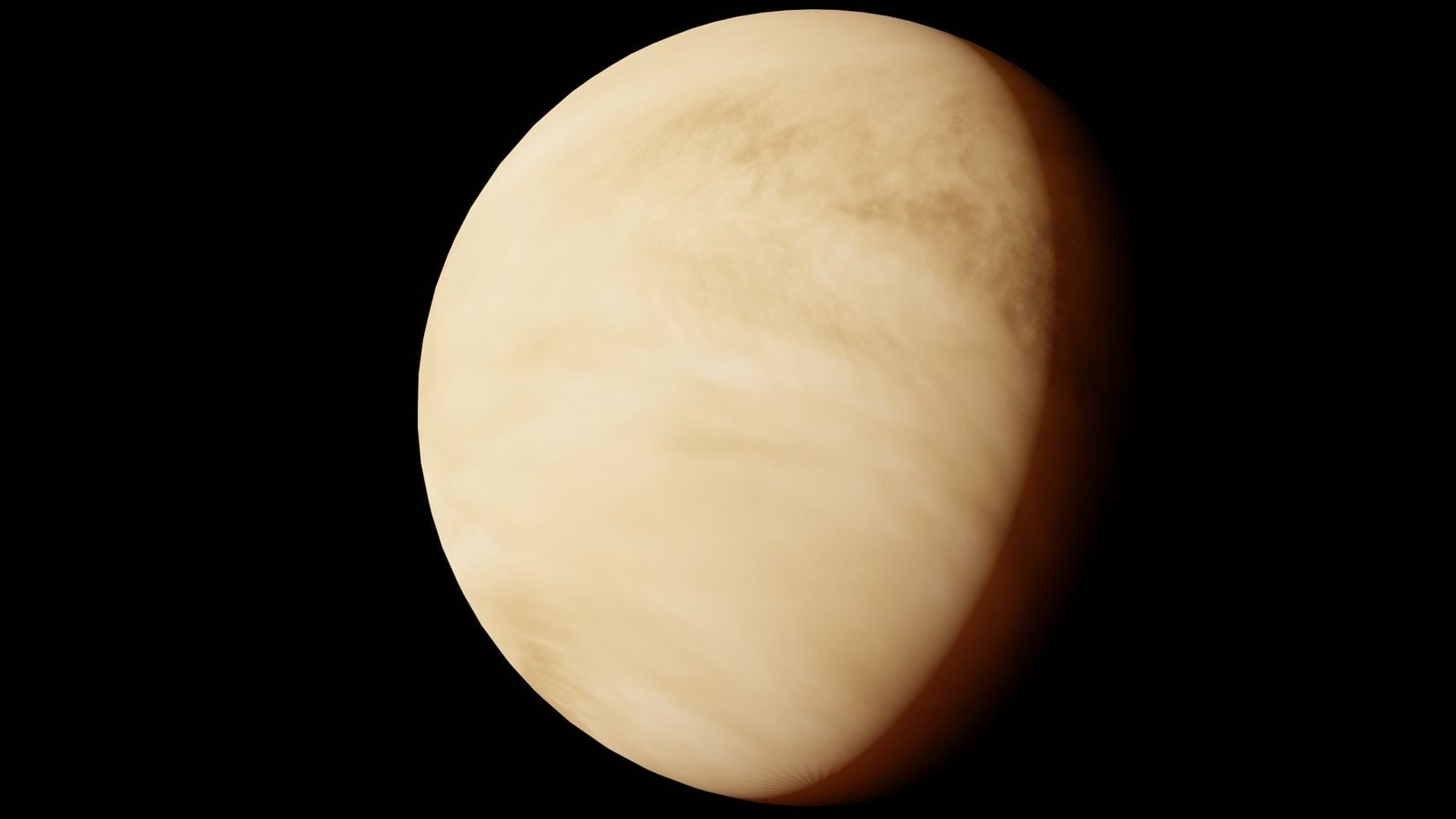
Venus keeps the strangest clock and calendar in the solar system. It takes about 243 Earth days to turn once on its axis, and only about 225 Earth days to travel all the way around the Sun. On Venus, in other words, the day is longer than the year. The planet finishes a lap of the Sun before it has finished a single rotation.
It gets stranger from there, and the figures are worth pulling apart, because two different “days” are hiding in this story.
Two kinds of day
The 243-day figure is the time Venus takes to spin once relative to the distant stars, what astronomers call a sidereal rotation. It is the true turn of the planet on its axis.
But a day in the everyday sense is the gap between one sunrise and the next, and on Venus that is a different and shorter span: about 117 Earth days. The two numbers disagree because Venus is moving around the Sun while it spins, and its spin is unusually slow, so the Sun’s position in the sky is set by a tug-of-war between the planet’s rotation and its orbit rather than by rotation alone. The result, according to NASA’s figures, is a solar day of roughly 117 Earth days. Sunrise to sunrise takes nearly four Earth months.
Rising in the west
There is one more oddity, and it is the one most people have heard. On Venus the Sun comes up in the west and goes down in the east, the reverse of what it does here.
This is because Venus rotates backwards. Nearly every planet, Earth included, spins in the same direction it orbits, which is why our Sun rises in the east. Venus turns the other way, a motion called retrograde rotation, effectively almost upside down compared with its neighbours, its axis tipped close to 180 degrees. It is also the slowest-spinning planet in the solar system, which is part of why its day runs so long. From the surface, the Sun’s daily path would run the opposite way across the sky.
Why it spins like this is not settled. The leading ideas involve either a colossal ancient impact that flipped or reversed the planet, or the slow grinding action of solar tides on its massive atmosphere over billions of years. Both remain hypotheses.
What you would actually see
Here the romantic image needs a caveat, because nobody on Venus would watch a crisp sun lift over a western horizon.
The planet is wrapped in a dense atmosphere of carbon dioxide topped with thick clouds of sulphuric acid, and almost no direct sunlight reaches the ground as a clear beam. A surface observer, if one could survive the 460-degree heat and crushing pressure, would experience a slow, dim brightening and fading of a uniformly glowing sky over those 117 days, rather than a disc rising at a point on the horizon. The direction of the Sun would be a smear of light, not a sunrise you could photograph.
That does not change the underlying mechanics. The Sun’s light still tracks east to west across that murky sky, just without a sharp Sun to mark it.
A planet out of step
Put together, Venus runs on a schedule that breaks every habit Earth has taught us. The day outlasts the year. The Sun, such as it is, rises in the wrong place. And the time from one dim dawn to the next is counted in months, not hours.
None of these are quirks of measurement or rounding. They follow directly from a planet that turns slowly, backwards, beneath a sky that never clears, which is a fair summary of how thoroughly Venus refuses to behave like home.

 Login






 We've never seen anything like this.