❌

Reading view

Over ten workdays, researchers sent employees on 15-minute lunchtime walks through a park, and afternoons changed — sharper concentration, less fatigue, with much of the lift carried by how genuinely people enjoyed the walk.

Most lunch breaks are not really breaks. A sandwich at the desk, the screen never quite off, an eye on the next message. The afternoon arrives already flat, and you spend it pushing a boulder that did not feel this heavy at ten in the morning. I suspect a lot of us know that particular afternoon flatness without ever connecting it to how we spent the forty minutes before it.

A small Finnish study made me think about that connection more carefully.

I am not a psychologist or any kind of clinician, so take this as one curious reader’s reading of one piece of research, not advice about what your body or your workday should do. What follows is a single intervention study with a modest number of people, and the findings are from a particular group, not settled laws about everyone.

What the study actually did

Organizational psychologist Marjaana Sianoja and colleagues asked Finnish knowledge workers to do something simple during their lunch breaks. One group took a slow 15-minute park walk; a comparison group did 15 minutes of relaxation exercises. They kept it up for 10 consecutive working days, and reported on their afternoon concentration, strain, and fatigue along the way. The park walk group had 51 people, the relaxation group 46.

The headline finding is the kind you might expect. The authors reported that “park walks at lunchtime were related to better concentration and less fatigue in the afternoon through enjoyment.” Fifteen minutes among trees, and the afternoon went a little better.

The part that surprised me

The interesting word in that finding is the last one. Through enjoyment.

That reorders things in my head. We tend to treat the activity as the active ingredient, as if a walk is a pill you swallow whether or not you taste it. The study suggests the enjoyment is doing a lot of the quiet work, and the walk is mostly a reliable way to produce some.

A separate line of research points the same direction. In an experience-sampling study, John Trougakos and colleagues found that the restorative value of a lunch break depends heavily on how freely it was chosen.

Why the distinction matters to me

This is where it stops being abstract. My weekday afternoons run from two different cafés, with a walk between blocks. When a sub-task is done, I pack up and move to the second café, and the walk in between is the seam. I did not start doing this for any measured productivity reason. I do it because moving lets the last task drain out of my head before the next one starts, and switching the room seems to switch something in me too.

What I notice is that I look forward to that walk. It is not a chore I have inserted to be virtuous. If someone scheduled it for me, made it mandatory, told me to log it, I think it would quietly stop working. The mechanism in the study and the reason my own version holds up seem to be the same one: the walk is the vehicle, the wanting-to-do-it is the engine.

The honest limits, and what I take from it

It is worth keeping the size of all this in proportion. Research from the same program found that lunch break activities did increase restoration and reduce fatigue, but the authors were candid that the effects seem weak, short-lived, and dependent on the season. Fifteen minutes in a park is probably not going to fix a job that grinds you down, and it was never going to.

What I take from it is smaller and more usable than a fix. Protect the break, and make it one you genuinely want. For me the strongest version of this has nothing to do with work at all: when I am home in Ireland, I walk alone with no music or podcast, and it is the closest thing I have to a practice. I tried meditation and it never stuck. The quiet walk, and solo golf, are my equivalent, and I think the reason they last is the same reason the study points at. I am not enduring them. I like them.

A break taken and a break enjoyed are not the same break. You can do all fifteen minutes, hit every step, and come back no lighter than you left. The walk gets the credit, but perhaps the enjoyment is what is actually carrying the load.

If  flat afternoons are part of something heavier than a dull lunch break, the kind of fatigue that does not lift, a good counsellor or therapist is worth more than any walk or any artic

The post Over ten workdays, researchers sent employees on 15-minute lunchtime walks through a park, and afternoons changed — sharper concentration, less fatigue, with much of the lift carried by how genuinely people enjoyed the walk. appeared first on Space Daily.

  •  

In 1974, psychologists found men were more likely to mistake fear for attraction after crossing a high, swaying suspension bridge

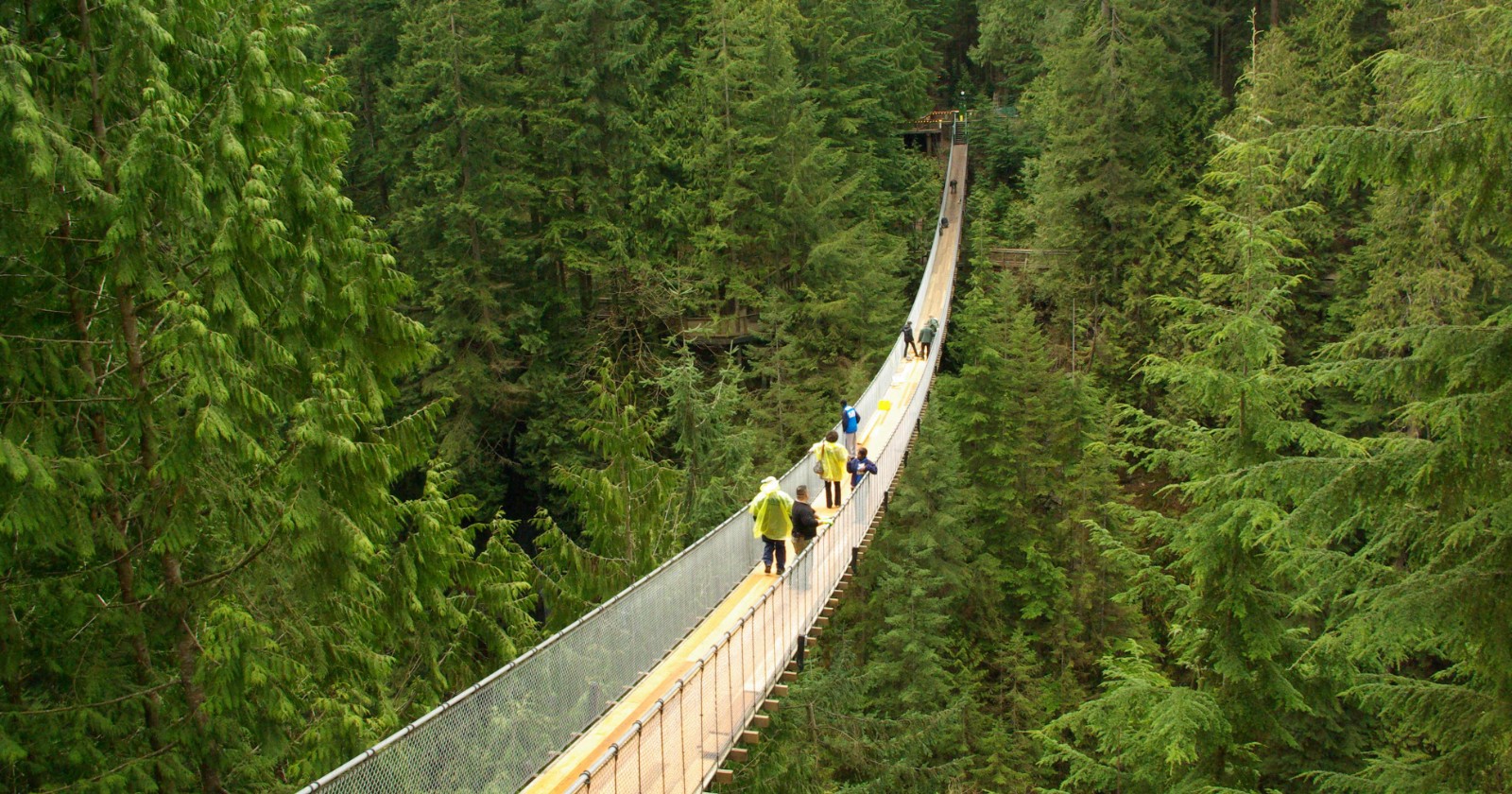
A long wood-and-cable suspension bridge stretching across a forested canyon, with small figures crossing it.

In 1974 two psychologists sent an attractive young woman to stand at the end of a bridge and stop men walking across. She asked each one to fill out a short questionnaire, then tore the corner off a sheet of paper, wrote down her name and phone number, and said he could call if he wanted to talk more about the study. The only thing that changed was which bridge the men had just crossed.

On a high, swaying footbridge, nine of the eighteen men who took her number later called. On a low, solid bridge nearby, only two of sixteen did. The men who had just been frightened were far more likely to phone a stranger, and Donald Dutton and Arthur Aron argued the reason was that they had felt their hearts pounding and read it, wrongly, as attraction.

Two bridges over the same river

The study ran over the Capilano River in North Vancouver, British Columbia. The frightening bridge was the Capilano Canyon Suspension Bridge, a five-foot-wide walkway of wooden boards strung from wire cables and stretched 450 feet across the canyon. It tilted and wobbled underfoot, its handrails were low cable, and it hung about 230 feet above rocks and shallow rapids. Roughly four in ten people crossing it gripped the rail and inched along.

The calm bridge sat upriver: a heavy cedar structure, wider and firmer, only about ten feet above a small stream, with high handrails and no sway. When the researchers later asked a separate group of men how frightened they felt crossing each one, the suspension-bridge group rated their own fear at 65 on a 100-point scale. The men on the solid bridge rated theirs at 3.

So the two groups began in very different physical states. One had a body still humming with adrenaline. The other did not. Everything that came after was designed to see whether that difference leaked into how the men responded to a woman.

What the interviewer measured

The interviewer told the men she was studying how scenery affects creativity, then asked each to write a short, dramatic story about an ambiguous picture of a woman. The stories were scored from one to five for sexual content by raters who did not know which bridge each man had been on. Men from the suspension bridge wrote stories with noticeably more sexual imagery, averaging 2.47 against 1.41 for the solid bridge.

The phone number was the second, blunter measure. The researchers reasoned that curiosity about the study should be about equal across both groups, so a difference in who actually called back would reflect a difference in interest in the woman herself. That is where the gap was widest: half the men from the suspension bridge called, against roughly one in eight from the solid bridge.

One detail mattered to the interpretation. When a male interviewer ran the same routine, the effect vanished. Men leaving the scary bridge wrote no racier stories and were no more likely to call him back. The arousal only seemed to redirect toward someone the men might plausibly be attracted to.

The check the authors built for themselves

A skeptic could object that the two bridges drew different kinds of people. The suspension bridge is a tourist attraction, so its visitors might be bolder, more out-of-town, or simply in a different mood than someone strolling a quiet park. Dutton and Aron raised that objection themselves, and ran a second version to answer it.

This time they kept only suspension-bridge visitors, comparing men stopped right after crossing with men from the same crowd approached at least ten minutes later, once their nerves had settled. The freshly rattled men again wrote more sexual stories and called more often: thirteen of twenty, against seven of twenty-three for those who had cooled down.

A third study moved indoors, where the researchers could control more. Eighty male university students were told they would receive an electric shock, some led to expect a strong jolt and some a mild one. A woman they believed was another participant sat nearby. Men braced for the painful shock reported more attraction to her and again produced more sexual imagery. Crucially, the boost came from anticipating their own shock, not from worrying about hers, which argued against the idea that they were simply moved by a woman in distress.

How much can two bridges really tell us?

The studies are vivid, but they are small and old, and the famous bridge experiment carries the usual hazards of research done in the wild. The groups were not randomly assigned; they sorted themselves by which bridge they chose to cross. The phone-call measure rested on a few dozen men, the kind of sample where a handful of decisions swings the result. And the whole design worked in one narrow direction only: a female interviewer and unaccompanied young men. It says nothing about anyone outside that setup.

The interpretation is also more contested than the tidy version suggests. Dutton and Aron leaned on the idea, drawn from earlier work by Stanley Schachter, that the body produces a wash of generic arousal and the mind looks around for a label to pin on it. On a swaying bridge, the nearest available label is the woman. But the authors themselves listed other readings of their data. Perhaps fear did not get relabeled as desire so much as loosen the brakes on feelings that were already there. Perhaps the link between fear and attraction is its own phenomenon rather than a special case of some grand rule about arousal. They could not rule those out, and which of those mechanisms is at work, if any, is not something a single field study could settle.

What survives is narrower than the headline but still striking: under the right conditions, a body stirred up by one cause can color a judgment about something else entirely. The bridge did not manufacture attraction out of nothing. It seems to have nudged men who were already inclined to notice a woman into noticing her a little more, and into reading their own pounding hearts as a reason.

That is the quiet, unsettling part of the finding. We tend to trust the feeling in our chest as a verdict about whoever is standing in front of us. Sometimes it is only a verdict about how high up we are.

The post In 1974, psychologists found men were more likely to mistake fear for attraction after crossing a high, swaying suspension bridge appeared first on Space Daily.

  •  

People who assembled a plain IKEA box would pay 63 percent more for it than people handed the same box already built, an overvaluation of their own labor that researchers named the IKEA effect

In a 2012 study, researchers handed some people a plain black storage box still in its flat-pack and let others inspect the same box already assembled. Then they asked everyone to name a price they would actually pay to keep it. The people who had built the box themselves bid an average of 78 cents. The people handed the finished box bid 48 cents. Same box, same parts, but the builders wanted it 63 percent more.

Michael Norton, Daniel Mochon and Dan Ariely called this the IKEA effect, after the Swedish furniture company whose products famously arrive with some assembly required. The short version of their finding is that labor leads to love: when people put their own effort into making something, they value the result more highly than anyone else does, sometimes absurdly so.

The origami people valued like a pro’s

The boxes showed the effect existed. A second experiment showed how large it could get. This time people folded an origami frog or crane from a single sheet of paper, with only an instruction diagram to guide them. Afterward they bid on their own creation, while a separate group of bystanders bid on those same paper frogs and cranes.

The builders valued their origami at about 23 cents. The bystanders, looking at the same lopsided results, would pay about 5 cents, treating them as close to worthless crumpled paper. The makers priced their work nearly five times higher than the market did.

The stranger comparison came next. The researchers had experienced origami folders make clean, well-crafted versions, and asked another group to bid on those. Outsiders valued the expert work at about 27 cents. The amateurs valued their own fumbling attempts at 23 cents. In their own eyes, in other words, their handiwork was worth almost as much as a professional’s, a gap so small it was not statistically meaningful.

To check that the builders were not simply overbidding to avoid losing something they had made, the researchers asked another set of folders to guess what the average student would pay for their creation. Those guesses came back about as high as their own bids. The makers did not just want to keep their origami. They genuinely seemed to believe other people would see the value too.

Effort only counts when the work is finished

If sheer effort were the whole story, then any labor should raise the price. The researchers found it did not. What mattered was completing the task.

In one experiment people built small Lego models, around a dozen pieces shaped like a helicopter, a bird, a dog or a duck. As expected, builders valued their own model more than an identical one built by a partner, bidding about twice as much for it. But a third group built a model and then took it apart again. For them the premium collapsed. Undoing the work erased the love, even though Lego is designed to be rebuilt in minutes and they could have reassembled it easily.

A final experiment made the same point from the other side. Some people assembled an IKEA box completely, while others were stopped two steps short of finishing. The finishers bid $1.46 for their box. Those left with an almost-complete box, all the pieces in hand, bid 59 cents, less than half as much. The boost came from crossing the finish line, not from the minutes of effort alone. And it held whether or not people described themselves as the do-it-yourself type.

Why a wobbly box feels more valuable

The researchers tested a few obvious explanations and set them aside. The premium was not simply about owning the thing, since the people who built and then dismantled a Lego model had handled and possessed it just as long as the builders, yet valued it less. It was not about customization either, because a standard IKEA box offers nothing to personalize.

What is left, they argued, is a mix of two older ideas. One is effort justification, the long-studied tendency to value what we have sweated over. The other is a sense of competence: finishing a task, even a trivial one, gives a small jolt of having shaped the world, and the finished object becomes proof of it. A crooked origami frog is not really worth 23 cents. But it is evidence that you made something, and that evidence feels valuable.

The authors trace the same instinct outside the lab. They open with the story of 1950s instant cake mixes, which reportedly sold poorly until manufacturers required cooks to add a fresh egg, restoring a little real labor to the box. They note the story probably had several causes, not one. But it rhymes with their results, as do the businesses that charge people to stuff their own teddy bears or harvest their own dinner on a farm.

What four small studies can and cannot show

The IKEA effect is real in these experiments, but it is worth being precise about their size. These were lab studies with modest numbers of mostly student participants, and the stakes were tiny. The products were boxes, paper frogs and Lego sets, and the prices ranged from a few cents to under two dollars. The researchers measured willingness to pay through bidding games, which approximate real purchasing but are not the same as walking into a store.

The authors are careful about reach. They flag that they used small-ticket items and that whether the effect holds for expensive purchases, a renovated kitchen or a self-built deck, was not something their data could answer. They suggest it might, pointing to homeowners who price their handmade brick walkway far above what any buyer will pay for it, but that is a reasonable guess, not a result.

The mechanism, too, is an argument rather than a settled fact. Effort justification and a feeling of competence fit the pattern, and the researchers ruled out a couple of rivals, but they say plainly that more work is needed to know exactly why building something makes us prize it. What the studies pin down is the pattern itself, and its limit: the glow comes only when the work succeeds. Effort that ends in a half-built box or a model torn back to pieces buys nothing.

That limit may be the most human part. We do not fall for our labor simply because it cost us something. We fall for it when it produces a thing we can hold up and call finished, however lopsided it turns out to be.

The post People who assembled a plain IKEA box would pay 63 percent more for it than people handed the same box already built, an overvaluation of their own labor that researchers named the IKEA effect appeared first on Space Daily.

  •  

We tend to blame burnout on simply doing too much, but some researchers argue it grows from six quieter mismatches — workload, control, reward, community, fairness and values — between a person and the job

For years I believed burnout was a simple equation. Too many hours in, not enough rest out, and eventually you hit the wall. It is a tidy theory, and in my experience mostly wrong.

The worst stretch I have ever had was not in finance. It came later, when I was running my own businesses, an online school. I felt hollowed out and a bit hopeless. I want to be honest about that: I was never formally diagnosed with anything, so I am not claiming a clinical label. But the feeling was real, and it did not track neatly with how busy I was. Some of my busiest weeks felt fine, while some of my lighter ones were unbearable.

Quick note before we go further. I am not a psychologist or a doctor, and nothing here is treatment advice. This is one writer reading the research and reflecting on it. The work I am leaning on is from a particular research team and describes patterns across groups of people, not a rule that fits every reader or every job.

Research helped me make sense of my own experience. Psychologists Christina Maslach and Michael Leiter argue that burnout has as much to do with job conditions as with personal factors, and that when there is a mismatch between a person and their job, the risk of burnout goes up. Their framework, sometimes called the areas of worklife model, points to six areas where fit can break down: workload, control, reward, community, fairness and values.

Here is what each one looks like up close.

1. Workload

This is the one we all reach for first, and it does matter. But the problem is rarely volume on its own. It is overload without recovery, or the wrong kind of demand arriving with too few resources to meet it.

Maslach and Leiter describe work overload as when “the job demands are too many, the hours are too long, and the resources to handle them are too few.”

Notice the third part. Two hard weeks with a good team and a clear finish line can feel energising, while two easy weeks with no support and no end in sight can flatten you.

2. Control

Having work to do is one thing; having no real say over how it gets done is another, and it may be the heavier load. Maslach and Leiter suggest a lack of control “is often a more serious issue for workers than workload per se.”

Their case for why is simple. “With the capacity to participate in decisions or to make choices, people can adjust” — without that capacity, even a reasonable workload starts to grind.

3. Reward

Reward is money, yes, but it is also recognition, the sense that the effort registered with someone. When you pour yourself into work and it disappears into a void, something quietly corrodes.

When I managed an adult language school, I learned you cannot manufacture engagement with perks or pep talks. The pizza Fridays and the motivational emails landed flat when the underlying work and the person did not fit.

Engagement showed up when people felt their effort actually counted for something, and no amount of catering could fake that.

4. Community

Work is a social place, and when the social fabric frays, it shows. Chronic conflict, isolation, a manager who plays favorites, a team that has stopped trusting each other.

Maslach and Leiter are blunt about one corrosive ingredient, writing that “Disrespectful behavior has no benefits at work.” A good community carries you through a brutal stretch; a poisoned one makes an easy job feel heavy.

5. Fairness

Fairness is the area people often cannot name but feel acutely. Decisions get made behind closed doors, or promotions follow politics rather than work, or two people end up held to different standards on the same behaviour.

The sting is not so much the unfair outcome itself as what it signals about whether you are seen and valued at all. Once you start reading the workplace as rigged, almost everything else gets harder to swallow.

6. Values

This is the gap between what you believe matters and what the job actually asks of you, day after day. It is the quietest of the six and, for me, the decisive one.

I left finance because the shape of the job was the problem, not the hours. No amount of yoga, kale or ten thousand daily steps was going to change that shape.

That was right for me and might well be a bad call for someone else. Plenty of people thrive in exactly the work I walked away from. The values mismatch is personal by definition, about the fit between this person and this job, not a verdict on the job itself.

Burnout as a fit problem

What changed for me was the reframe. Maslach and Leiter describe burnout not as a personal failing or a stamina deficit, but as a mismatch between the job and the person. And the mismatches stack. As Maslach put it in a 2018 talk, “The more the mismatches you have, the more likely we are to see a risk of burnout down the road, a year later, or two years later.”

Keep in mind that this is one influential model rather than the final word on burnout, but it is a useful lens.

The practical value of the six areas is that they give you something more precise to ask than “am I doing too much?” You can ask which one is actually off. Is it the workload, or is it that nobody noticed the workload? Is it the hours, or is it that the hours go toward something you no longer believe in? Naming the specific mismatch is more useful than the blanket prescription to do less, because doing less solves nothing for a values gap or a fairness problem.

If any of this is landing closer to home than it is interesting, talking to a qualified therapist or counsellor is worth far more than any article. There is no prize for white-knuckling through it alone.

The post We tend to blame burnout on simply doing too much, but some researchers argue it grows from six quieter mismatches — workload, control, reward, community, fairness and values — between a person and the job appeared first on Space Daily.

  •  

We keep asking whether humans can survive on Mars and skipping the more important question of whether we should go at all

A few months ago, I found myself deep in a conversation about Mars colonization timelines. The other person — a software engineer, genuinely enthusiastic, not naive about the engineering — was walking me through radiation shielding approaches, the habitability of lava tubes, the logistical case for SpaceX’s Starship architecture. It was fascinating. He clearly knew far more than I did about the technical specifics. But somewhere in the middle of it, a question started forming that I couldn’t quite place, until eventually I did: we hadn’t once asked whether any of this was a good idea.

We had been talking about how for an hour, and neither of us had said the word why.

That conversation has been sitting with me since. Not because the technical questions aren’t important — they’re genuinely hard, and the people working on them are doing serious work. But there is a gap between “this is technically possible” and “this is what we should do,” and that gap tends to close faster in the Mars discourse than it does almost anywhere else. The survival problem gets all the oxygen. The ethical one gets treated as settled — as if the answer to “should we go?” is obviously yes, and the only thing left to figure out is the radiation shielding.

I’m not a space scientist and I don’t have a strong stake in any particular answer here. What I do have is a persistent discomfort with how questions get framed — with the way the tractable problem has a tendency to absorb all the attention that the harder one deserves.

The question we’re not asking

The survival discourse is, in its way, extraordinary. Cosmic radiation at the Martian surface running at roughly six to seven chest X-rays per day under normal conditions — and significantly higher during transit and solar storm events. An atmosphere that amounts to about one percent of Earth’s. Temperatures swinging 70 degrees Celsius or more between day and night. The progressive bone density loss from low gravity that compounds across months into something that isn’t easily reversed. These are real problems, and the engineers working on them deserve the coverage they get. None of that is what I’m questioning.

What I’m questioning is the habit of treating “can we survive there?” as a proxy for “should we go?” — as though answering the first settles the second. It doesn’t. They are different questions that require different kinds of thinking, and we have, for the better part of a decade, let the excitement and tractability of the first crowd out serious engagement with the second.

The life question nobody wants to stop for

One of the more uncomfortable things I’ve come across in reading about this is the planetary protection question — specifically, the possibility that Mars might not be as empty as the colonization narrative tends to assume. The debate about whether Mars currently harbors microbial life, perhaps in briny subsurface water or in the recurring slope lineae that have been periodically interpreted as evidence of seasonal liquid water, remains genuinely open. No confirmed biology has been found. But “not yet confirmed” is not “not there,” and the question of what we would do if we found it — before or after we arrived — seems to get less serious treatment than it warrants.

NASA’s planetary protection guidelines exist precisely because this uncertainty is real. They were built around the concern that Earth microbes carried on spacecraft could contaminate Mars and compromise any future ability to find or study native life there — or vice versa. The protocols apply most strictly to robotic missions, which can be sterilized. They apply far less cleanly to humans, who exhale, shed skin cells, and carry an internal ecosystem of trillions of organisms that are not optional passengers. A crewed mission, by design, cannot be managed the same way a probe can.

What this means, if taken seriously, is that any crewed mission to Mars before we have higher confidence about the biological status of the planet carries a non-trivial risk of introducing an extinction event for whatever might be living there. Carl Sagan, who spent his career both advocating for space exploration and urging caution about it, made this point repeatedly — that introducing Earth organisms into a low-diversity Martian ecosystem, if one exists, could eliminate it entirely before we ever knew it was there. The argument has not aged out. If anything, growing scientific interest in Martian subsurface habitability has made it more pressing, not less.

We have spent years asking whether humans can survive on Mars. We have spent much less time asking what Mars might be surviving from, if we arrived.

The backup civilization argument and its hidden premises

The most common justification offered for Mars colonization at the level of civilizational stakes is the backup argument: a multi-planetary species is an insurance policy, and the cost of not going is existential risk to the entire human project. Stephen Hawking made this argument in his final years. Elon Musk has built it into the explicit ideological foundation of SpaceX’s long-term mission — a self-sustaining city on Mars as a hedge against collapse on Earth.

I find this argument more worth taking seriously than most critics give it credit for. The underlying concern about existential risk is real. The logic that a species concentrated on one planet is more vulnerable than one distributed across two is coherent. But the argument is doing more work than it usually admits, and some of its hidden premises deserve more scrutiny.

The most obvious one is timing. The existential threats most likely to end civilization on Earth in the foreseeable future — climate change, engineered pandemics, nuclear conflict, biodiversity collapse — are immediate relative to any realistic projection of a self-sustaining Martian colony. A genuinely self-sustaining Mars city, by most serious estimates, is generations away. The threats we are failing to address are not. If the backup civilization argument is meant to be taken literally as a response to existential risk, it would seem to require securing the primary civilization first — not as an alternative to Mars ambitions, but the sequencing matters considerably more than the discourse tends to acknowledge.

The governance question matters here too. The Mars colonization effort as it currently stands is being driven largely by the decisions of a very small number of extraordinarily wealthy individuals and their companies, operating mostly outside democratic institutions, international treaty frameworks, or any serious mechanism of public deliberation. The Outer Space Treaty of 1967 prohibits national sovereignty claims over celestial bodies, but it was not designed to address private colonization by corporations operating under whatever regulatory minimums they can find. The choices being made now — when to go, at what pace, under what protocols — will shape the terms of Mars activity for a very long time. The fact that those choices are being made by a small group of people with specific and concentrated interests seems like something a more serious public conversation would address.

What an honest accounting would require

I want to resist the easy conclusion here — the “we should never go” position that treats any Mars ambition as inherently reckless or hubristic. There are real arguments for human Mars exploration. The science alone — the geology of ancient riverbeds, the evidence of a once-warmer world, the complex chemistry of the regolith — has produced discoveries with no parallel in the history of planetary science, and there are legitimate cases that humans on the surface could accelerate that science in ways robots fundamentally cannot. I find the impulse to go, the sheer ambition of it, genuinely compelling on some level I can’t entirely defend rationally.

But I think we owe it to the question — and possibly to whatever might be living on that planet — to stop treating the survival problem as a substitute for the ethical one. An honest accounting would start with the life question: invest seriously in determining whether Mars is biologically empty before a crewed mission departs, and treat a positive finding as a real constraint on what comes next rather than a footnote to manage. It would include meaningful international deliberation about who gets to make these decisions, and why the current answer to that question is “the people with the most rockets.” It would take the backup civilization argument seriously enough to notice what it actually implies about sequencing and urgency on Earth.

The conversation I had a few months ago was a good one. The engineer was genuinely thoughtful, and I learned things I didn’t know. But I’ve been bothered, in the time since, by how naturally we both moved through the technical questions and how completely we both skipped the other kind. The “can we?” problem is captivating in a way the “should we?” problem never quite is. It has cleaner edges. It has milestones. It announces itself as progress.

The harder question doesn’t do any of that. It just sits there, waiting for the conversation to slow down enough to make room for it.

The post We keep asking whether humans can survive on Mars and skipping the more important question of whether we should go at all appeared first on Space Daily.

  •  

One of the biggest factors in whether a stranger finds you attractive may not be your face, your body, or your clothing — research suggests it is whether you appear to be enjoying yourself in the moment they first see you, with a smile substantially modifying how attractive you appear in the brief seconds when first impressions form

The face you walked into the room with this morning was being read, by every person who looked at you, in approximately one hundred milliseconds — about a tenth of a second, faster than any conscious thought. The reading was not primarily about the features that took your DNA twenty years to assemble. The bones of your face, the colour of your eyes, the shape of your jaw, the symmetry of your features — these all contributed to the judgement, but they were not, on the available evidence, the only ingredients of it. A substantial part of how attractive any individual stranger perceived you to be, in the brief moment before they had any other information about you, was almost certainly whether you appeared to be having a good time. A genuine smile, animated expression, and the visible signs of a person enjoying being where they are produce, in the moment of first impression, attractiveness boosts that can rival what carefully selected clothing, makeup, or grooming can plausibly achieve.

According to a 2014 paper by Jessika Golle, Fred Mast, and Janek Lobmaier published in Cognition and Emotion titled “Something to smile about: The interrelationship between attractiveness and emotional expression”, the social effect of smiling on stranger-rated attractiveness has been replicated across enough independent studies and across enough cultural contexts to be considered one of the more robust findings in social psychology. Smiling faces are rated more attractive than neutral faces of the same person, across both sexes, across multiple age ranges, and across essentially every population that has been examined. The neuroimaging literature has identified the underlying mechanism: when human observers see a smiling face, the medial orbitofrontal cortex — a region of the brain involved in reward processing and the assignment of positive value to stimuli — shows a substantially stronger response than when the same observer sees a neutral face. The smiling face is, in a literal sense, registering in the observer’s brain as more rewarding to look at.

What kind of smile actually works

The specific type of smile matters substantially. As reported by a peer-reviewed PMC review of smile research and the broader perception literature, the most extensively studied distinction in the smile literature is between what researchers call Duchenne smiles and non-Duchenne smiles. The Duchenne smile, named after the 19th-century French neurologist Guillaume Duchenne who first characterised it, activates two distinct sets of facial muscles: the zygomatic major, which pulls up the corners of the mouth, and the orbicularis oculi, which creates the small crinkles around the outer corners of the eyes. Both muscle activations occur involuntarily when a person is genuinely amused or pleased. The non-Duchenne smile activates only the mouth corners and is the kind of polite, social smile produced on demand for photographs or to acknowledge a casual greeting.

The two types of smile are perceived very differently by observers, even though most people cannot articulate exactly what the difference is when they see one. Duchenne smiles register as genuine, warm, trustworthy, and substantially more attractive. Non-Duchenne smiles register as polite at best, performative or insincere at worst, and produce far smaller boosts to attractiveness ratings. The discrimination is automatic and is operating in the observer’s brain at the level of unconscious pattern recognition rather than conscious analysis. This is the underlying reason why the standard advice to “smile more in photos” often produces mediocre results in practice: the smiles are non-Duchenne. The viewer’s brain registers the difference even when the viewer cannot consciously identify what is wrong with the expression.

Why the effect is so large

Per a 2023 study in Evolutionary Human Sciences examining how smiling expressions interact with facial features in attractiveness judgements, the magnitude of the smiling-on-attractiveness effect is large enough to substantially affect outcomes in real-world social contexts. Across studies, happy facial expressions consistently produce the highest attractiveness ratings of any expression tested; angry expressions produce the lowest. The effect appears in both sexes but is particularly pronounced for ratings of female faces, where smiling can shift attractiveness ratings by amounts comparable to the difference between an averagely-rated face and a substantially above-average face. Even male facial masculinity — which interacts in complex ways with attractiveness preferences — is moderated by smiling: smiling reduces the avoidance response some women show toward strongly masculinised male faces.

The evolutionary and social explanation for this effect is, in the relevant literature, fairly direct. A smile is one of the few human expressions that is broadly cross-cultural — recognised across nearly every population that has been tested — and that consistently signals friendliness, low threat, willingness to engage, and positive emotional state. For an observer making rapid social judgements about whether to approach a stranger, the smile is a substantial piece of information: it indicates that the encounter is likely to go well, that the person on the other side is in a positive frame of mind, and that initial overtures will probably be reciprocated. The attractiveness boost is, in this account, the observer’s brain doing what brains do — bundling the information about the smile into a single quick-summary judgement about whether this stranger is worth engaging with. The summary judgement, in shorthand, comes back as “attractive.”

What the framework does not claim

Intellectual honesty requires noting the limits of the smiling-as-attractiveness effect. The research does not show that smiling can substitute for every other physical or social factor in attractiveness ratings. As covered by a 2025 review at All About Psychology on the broader smile-attractiveness literature, static physical features — facial structure, body shape, height, age, grooming — still contribute substantially to first-impression attractiveness ratings, and the smile effect is best understood as a substantial modifier of these underlying factors rather than as a replacement for them. A smiling face is more attractive than the same face not smiling. A smiling person is generally more approachable than a neutral one. Whether the smiling person is, in absolute terms, more attractive than a non-smiling person with substantially different underlying physical features is a question the research does not consistently answer.

What the research does support is a more specific and more practically useful claim. For any given person, in any given moment, the version of that person who appears to be genuinely enjoying themselves is going to be perceived as more attractive than the same person looking flat, distracted, or unhappy. The variable that each individual has the most direct control over, in the seconds before a first impression forms, is not their face or their body — those are mostly fixed at the moment of the encounter. The variable that is actually within their control is their expression, their visible emotional state, the degree to which they appear genuinely engaged with what is happening around them. The research consistently suggests that this variable, despite being the one most readily modifiable, is one of the larger factors that the observer’s brain weights when assigning the first-impression attractiveness rating. Looking like a person who is glad to be where they are turns out to be, by every available measure, a substantial part of what other people are responding to when they form their first impression of you.

The post One of the biggest factors in whether a stranger finds you attractive may not be your face, your body, or your clothing — research suggests it is whether you appear to be enjoying yourself in the moment they first see you, with a smile substantially modifying how attractive you appear in the brief seconds when first impressions form appeared first on Space Daily.

  •  

The face you see in the mirror every morning is not the face other people see — when researchers show people two photos of themselves, most prefer the mirror-flipped version, while their friends and partners shown the same pair consistently pick the unflipped one, meaning the face you have grown to recognize as your own is essentially the reverse of the one the world has been seeing all along

The face you saw in the mirror this morning was not the face anyone else saw when they looked at you over breakfast. The two are related but not identical. Most human faces are slightly asymmetric — the eyes are at slightly different heights, the smile pulls more strongly on one side than the other, the hair parts on one side, freckles sit in specific positions that do not perfectly mirror across the vertical axis. When you look in a mirror, you see one version of your face, with left and right reversed relative to what other people see. When other people look at you, they see the opposite. You have, over the course of your life, become deeply familiar with one of these two versions. They have become familiar with the other. Neither version is wrong. Both are, however, surprisingly different from each other in ways that affect how each party perceives the same underlying face.

According to a 1977 paper by Theodore Mita, Marshall Dermer, and Jeffrey Knight published in the Journal of Personality and Social Psychology, the experimental setup that established this phenomenon was straightforward. The researchers took a frontal photograph of each of 37 women — undergraduate psychology students at the University of Wisconsin-Milwaukee — and printed each photograph twice: once as a true image (showing the face as a camera or another person would see it), and once as a mirror-flipped image (showing the face as the subject herself would see it in a bathroom mirror). The subjects were then shown the two versions side by side and asked which they preferred. The same pairs were shown to the subjects’ friends and lovers, who were asked the same question. The results, in both Study 1 and a subsequent Study 2, were striking and consistent. The subjects themselves preferred the mirror-flipped version of their own face. Their friends and lovers preferred the true version.

Why this happens

The mechanism underlying the effect is one of the better-established findings in social psychology: the mere-exposure effect, first proposed by the University of Michigan psychologist Robert Zajonc in 1968. As described in Gizmodo’s coverage of the mere-exposure mechanism behind the mirror preference, the mere-exposure effect is the phenomenon by which repeated exposure to a stimulus increases a person’s preference for that stimulus. The more often you encounter something, the more comfortable you become with it, and the more positively you evaluate it on subsequent encounters. The effect operates across an enormous range of contexts. People develop preferences for songs they have heard repeatedly, for faces they have seen frequently in public, for words that appear often in their reading, for foods they have eaten before. It does not require any explicit reasoning or evaluation; it works at the level of automatic familiarity processing.

The mirror-image preference is a particularly clean demonstration of the effect because the two stimuli being compared — the true image and the mirror image of the same person’s face — are objectively almost identical. The asymmetries are small. The lighting is the same. The expression is the same. The only difference is which side of the face is on which side of the photograph. The subject has, over the course of her life, spent many thousands of hours looking at one specific version. Her friends and lovers have spent many thousands of hours looking at the opposite version. When the two parties are then asked which version “looks more like” the person in question, or which version is more attractive, each party prefers the version they have been seeing all along. Neither is wrong. Each is simply applying the mere-exposure effect to the version of the face they have the most experience with.

What this implies about self-perception

Per the Mita et al. paper’s broader theoretical discussion, the finding has implications that extend well beyond the specific experimental setup. The general principle is that the version of yourself that you have internalised as canonical — the face you recognise as belonging to you, the face you adjust before going out, the face whose minor blemishes and asymmetries you have catalogued in detail — is a version that essentially nobody else has ever seen. Every photograph anyone else has ever taken of you. Every memory anyone else has formed of your face. Every impression you have made on a stranger across a room. All of these have been based on the opposite version of the face from the one you have been carrying around in your own head.

This is the underlying psychological mechanism behind the common experience of looking at a photograph of yourself and finding it subtly wrong. The face in the photograph is the true image — the version other people have been seeing all along — but it does not match the mirror image you have spent your life looking at. The mismatch produces the small but real sense of discomfort that most people experience when seeing themselves in photographs, particularly photographs they did not pose for and in which they had no opportunity to adjust their expression before the shutter clicked. The photographs are not unflattering. The photographs are accurate. Your face is mirroring back at you, several centimetres off from where you expected it to be.

The selfie problem

The modern environment has complicated the picture in ways that the Mita team could not have anticipated in 1977. As covered by Goody Feed’s analysis of how mirror-image preferences apply to selfie photography, most smartphone cameras now display selfies in the front-facing camera as a mirror image of the user — because that is what the user is accustomed to seeing — and then save the resulting photograph in one of two ways, depending on the phone model and the specific app being used. Some phones save the mirror-flipped version (the version the user saw in the viewfinder). Others save the true version (the version other people would see). The user is, accordingly, receiving inconsistent feedback about which version of their face is “really” them. A selfie that looked fine in the camera viewfinder may appear subtly wrong when reviewed afterwards, because the photo has been flipped to the true orientation. The same selfie viewed by a friend may look slightly strange to the user but entirely normal to the friend, who has been seeing that orientation of the face all along.

The broader implication, beyond the specific case of selfies, is that nearly every modern human is now navigating a world in which both versions of their own face are routinely available — the mirror version every morning in the bathroom, the true version in every photograph, video, and reflective non-mirror surface. The two versions are different enough that the brain registers the discrepancy. The version each person has learned to recognise as their own is, by all available evidence, the one that other people have not seen, except in the rare case of looking at the person directly while standing on the opposite side of a mirror. Everyone else has been seeing the other one. Your face, the one in your head, is essentially the reverse of the one the world has been looking at for as long as you have had it.

The post The face you see in the mirror every morning is not the face other people see — when researchers show people two photos of themselves, most prefer the mirror-flipped version, while their friends and partners shown the same pair consistently pick the unflipped one, meaning the face you have grown to recognize as your own is essentially the reverse of the one the world has been seeing all along appeared first on Space Daily.

  •  

Czech speleologists exploring a cave system in southern Albania in 2021 discovered the largest underground thermal lake ever found on Earth — a 138-metre-long body of warm water sitting 127 metres beneath the surface at the bottom of a 100-metre vertical abyss — large enough to fill more than three Olympic swimming pools, in complete darkness, that no human being had ever seen before

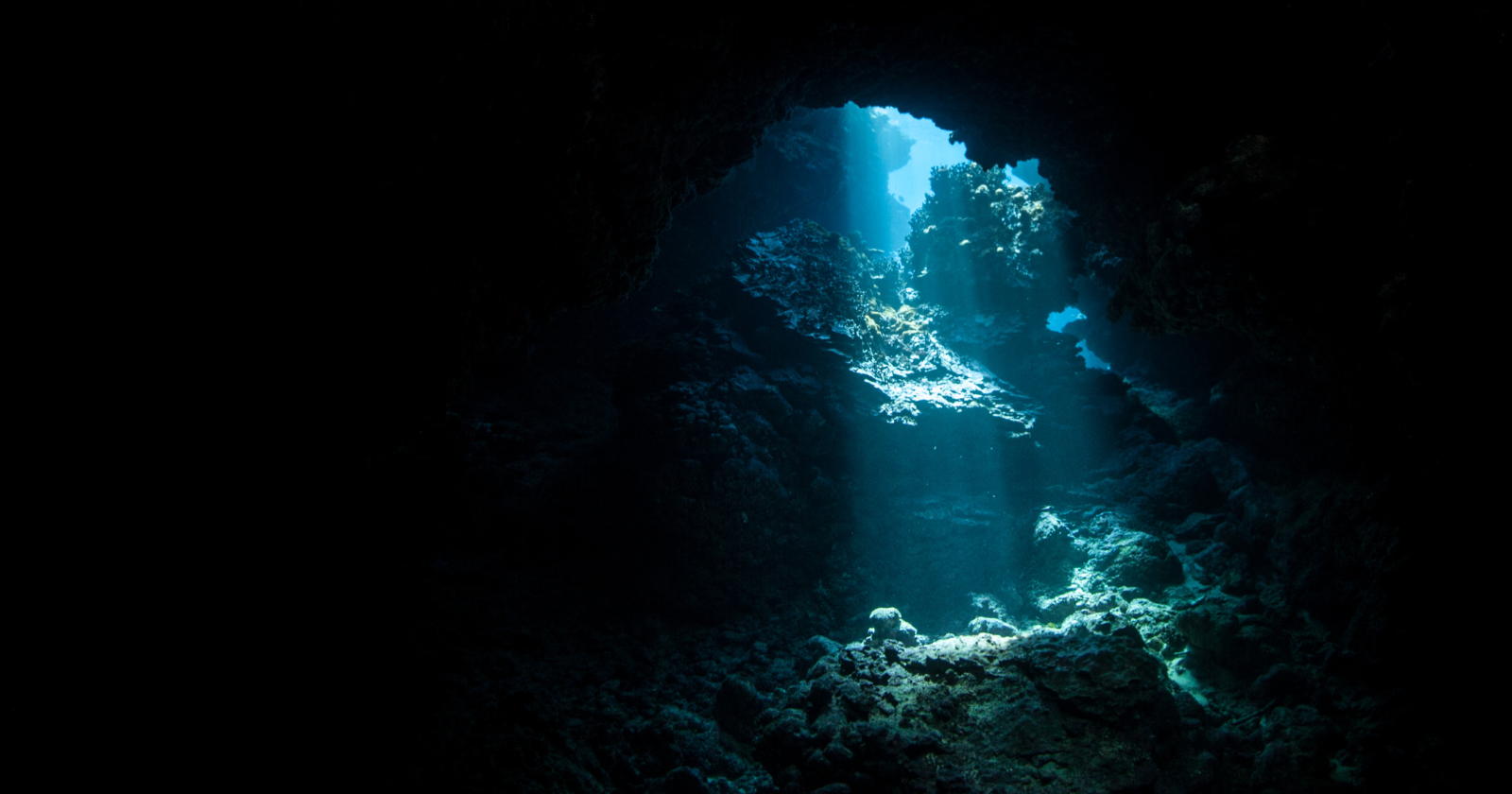
Somewhere beneath a mountain in southern Albania, in a region called Vromoner near the small town of Leskovik on the Greek border, a body of warm mineral water has been sitting in complete darkness for an indeterminate but very long time, with no human aware of its existence, no light reaching its surface, and no possibility of being entered by anyone except via a hundred-metre vertical drop through a limestone shaft. In 2021, a team of Czech speleologists became the first humans to make that drop. They were led by Marek Audy, a veteran Czech cave explorer who had spent several years investigating the underground hydrology of the Albanian-Greek mountain borderlands. The team had been tracking high-temperature springs and tall columns of steam that emerged from cracks in the surface limestone — the visible exhaust of a hidden hot-water system that had to be coming from somewhere below. Following the steam back to its source, the speleologists located a vertical shaft they later named Atmos, approximately a hundred metres deep, leading downward into a previously unmapped cavern. At the bottom of the shaft, in the darkness, was a thermal lake.

According to Radio Prague International’s coverage of the discovery and subsequent confirmation, the 2021 initial exploration produced a preliminary map of the cave system, drawn with the equipment the team had on hand at the time, that strongly suggested the underground lake was extraordinarily large. The team needed more precise instruments to confirm this. Mapping the full dimensions of a body of water in complete darkness, at the bottom of a hundred-metre vertical shaft, with limited working space and toxic hydrogen-sulphide air, required a mobile LIDAR scanner — a piece of equipment that the team did not own and could not initially afford. The Czech Neuron Foundation, a scientific funding organisation supported by private benefactors, provided approximately one million Czech crowns to purchase the necessary equipment. The expedition returned to the cave system in late 2024 with the LIDAR scanner and a team of 18 researchers. The measurements they took confirmed the lake’s full dimensions: 138.3 metres long, 42 metres wide, with a perimeter of 345 metres and a total volume of approximately 8,335 cubic metres of hot mineral water.

How big the lake actually is

The numbers translate into more intuitive comparisons that the team has used in subsequent communications. As reported by Euronews Albania’s coverage of the announcement, the lake’s volume is equivalent to approximately 3.5 Olympic-sized swimming pools. The cavern containing the lake is approximately three times the size of the main hall of the National Theatre in Prague. The previous record-holder for the world’s largest underground thermal lake was substantially smaller; the Lake Neuron measurements nearly double the previous record. The cavern is large enough that the LIDAR scanner had to be moved to multiple positions to capture the full geometry, and parts of the lake remain partially unexplored — the team plans to return with sonar equipment to measure the underwater portion of the cavern, which extends below the visible waterline and whose depth is not yet known.

The water itself is the unusual feature of the find. The lake is saturated with hydrogen sulphide — the gas responsible for the distinctive rotten-egg smell that hangs in the air throughout the cavern and that is toxic at high concentrations. The hydrogen sulphide, on contact with the atmosphere at the lake’s surface, oxidises into sulphuric acid. This is also why the cavern that contains the lake exists at all. Most caves in karst topography are formed by carbonic acid — slightly acidic rainwater dissolving limestone over millions of years. The Albanian cavern was formed by a fundamentally different process: sulphuric acid, generated by the oxidising hydrogen sulphide rising from the lake, has been gradually dissolving the limestone into soft gypsum from below. The technical term is sulphuric acid speleogenesis. It produces caves that are larger, more chemically active, and substantially more dangerous to explore than the carbonic-acid caves that dominate most karst regions.

What was down there before anyone got there

The lake is, in essential terms, an ecosystem operating in complete darkness, fuelled by chemistry rather than sunlight, sealed off from the surface biosphere for an unknown but presumably substantial period of time. As described in the Jerusalem Post’s coverage of the confirmed measurements, the researchers expect the lake to host extremophile microorganisms — bacteria and archaea adapted to high temperatures, no light, and high concentrations of hydrogen sulphide and dissolved minerals. Communities of this kind have been documented in other thermal and sulphurous cave systems, where they form the base of food webs that are entirely independent of photosynthesis, drawing their energy instead from chemical reactions between dissolved minerals and the surrounding water. Whether the Lake Neuron community contains microbial species new to science is a question the research team plans to investigate in subsequent expeditions.

The broader scientific significance of the find runs in several directions. The cave hydrology is connected, at some unknown depth, to the surface springs that originally led the speleologists to look for a hidden source. Mapping the connection between the underground lake and the surface water system will substantially improve hydrologists’ understanding of how groundwater moves through the karst terrain of the western Balkans. The presence of a previously unknown body of thermal water of this size raises questions about how many other comparable underground lakes might exist beneath similar mountain ranges around the world, where the geological conditions for sulphuric-acid speleogenesis are present but no surface evidence has yet been investigated. The Czech team’s discovery is, in technical terms, a sample of one — but it is a sample of one that is unusually large and that suggests the broader population may be larger than has previously been recognised.

The exploration itself

The story is also, separately, a story about contemporary speleology — a science that retains an unusually high proportion of physical risk and discovery for an activity that takes place in the 21st century. As covered by Monitor Magazine’s coverage of the team’s broader work, descending a hundred-metre vertical shaft in a karst cave system, breathing air contaminated with hydrogen sulphide, with no possibility of rescue if anything goes wrong, is not work that most scientific fields require their practitioners to do. The Czech speleological tradition, which has been mapping the underground of central and south-eastern Europe for several generations, sits at the intersection of mountaineering, scientific exploration, and a particular kind of physical patience that the broader scientific establishment has largely outgrown. Marek Audy and his team’s discovery of Lake Neuron is, by every available measure, the most significant single find of their careers. It is also a reminder that the planet still contains substantial unmapped territory, sitting in complete darkness beneath mountains that humans have lived alongside for thousands of years, waiting for someone to find a vertical shaft and decide to go down it.

The post Czech speleologists exploring a cave system in southern Albania in 2021 discovered the largest underground thermal lake ever found on Earth — a 138-metre-long body of warm water sitting 127 metres beneath the surface at the bottom of a 100-metre vertical abyss — large enough to fill more than three Olympic swimming pools, in complete darkness, that no human being had ever seen before appeared first on Space Daily.
  •  

A brain-computer interface has, for the first time, restored fluent everyday speech to a person who had lost it — a man with ALS who had not spoken aloud in years until a small implant from the BrainGate clinical trial began translating his attempts to speak directly into computer-synthesised words, in a result researchers reported in June 2026

Casey Harrell can now talk for twelve hours at a stretch. Two years ago, he could not talk at all. The ALS he was diagnosed with several years earlier had progressively destroyed the motor neurons controlling the muscles of his face and throat, leaving him with the symptoms doctors call dysarthria and, eventually, anarthria — the inability to speak intelligibly even with substantial effort. Harrell still knew what he wanted to say. The neural commands his brain was sending toward the muscles of his lips, tongue, jaw, and larynx were intact. The muscles themselves no longer responded. What the BrainGate clinical trial team at UC Davis did, in a July 2023 surgery that took several hours, was implant four small arrays of microelectrodes into the left precentral gyrus of Harrell’s brain — the region of the speech motor cortex that ordinarily sends those commands to those muscles. The arrays contain 256 electrodes between them. The electrodes record the firing patterns of individual neurons in real time. Machine-learning software running on a nearby computer translates the patterns into the words that Harrell, despite no longer being able to produce them with his mouth, is still trying to say.

According to UC Davis Health’s June 2026 announcement of the latest results, the system now operates at approximately 99 percent accuracy across a working vocabulary of 125,000 words — essentially every word an English-speaking adult would ordinarily need. Harrell’s average speaking rate via the device is approximately 56 words per minute, comparable to slow natural conversation. He has used the system at home, without researchers present, for more than 3,800 hours over a 400-day continuous-use period — averaging roughly five hours of daily use, with maximum single sessions of approximately twelve hours. He has produced more than 183,000 sentences and approximately two million words. His synthesised voice is modelled on recordings of his own pre-ALS voice. When he first heard it during the early trial phase, his own comment was: “It feels a lot like me.”

What changed between 2024 and 2026

The BrainGate team’s first publication on Harrell’s case, in the New England Journal of Medicine in August 2024, established that the basic approach worked — that brain activity recorded from the speech motor cortex could be decoded into fluent speech with high accuracy, in a setting with researchers present and a constrained working session. The June 2026 paper documents something fundamentally different: the same patient continuing to use the same system, but now in an independent home setting, operated by his own care team rather than by researchers, for thousands of hours over multiple years. As reported by ScienceAlert’s coverage of the latest results, this transition — from a proof-of-concept demonstration in a research lab to a sustained, independent communication tool used as part of daily life — is the genuinely novel achievement that the BrainGate team is reporting.

David Brandman, the UC Davis neurosurgeon who implanted the device and co-led the research, framed the shift directly: “For years, BCIs have been proof-of-concept devices that lived in highly controlled research labs. This work shows that we may have crossed a threshold, by empowering a person with paralysis to speak on his own terms.” The practical difference is substantial. A device that requires researchers to be physically present every time it is used can demonstrate scientific feasibility but cannot become part of a person’s actual life. A device that the patient’s regular home care team can connect every morning and disconnect every evening, with no specialist intervention required, can. Harrell has been doing the latter for two years.

What the system actually does

The fundamental insight underlying the BrainGate speech BCI is that the brain continues to send speech commands even after the muscles can no longer execute them. When Harrell attempts to speak, the neurons in his speech motor cortex fire in patterns that are essentially identical to the patterns they would have produced if he could still move his speech muscles normally. The implanted microelectrodes record those firing patterns from approximately 256 individual neurons. The decoding software, trained on Harrell’s specific neural signatures during initial calibration sessions, identifies which phonemes he is trying to produce and assembles them into words. Per The Next Web’s analysis of the BRAND platform that powers the decoding, the system uses a custom machine-learning architecture optimised for real-time speech reconstruction, with continuous adaptation to changes in the neural signal over time.

One of the more remarkable aspects of the system is its inclusion of a deliberate “privacy mode,” in which Harrell can disable data recording when he does not want his neural activity captured or used to train future versions of the decoder. The feature exists because the technology raises real concerns about the boundary between intended speech and unspoken thought. Brain-computer interfaces, by their nature, record neural activity that the user may not have chosen to externalise. The BrainGate team has been careful to design the system so that the user controls what gets recorded and what does not.

What this means for the broader field

The Harrell case is part of a broader convergence in the BCI field that has been gathering pace over the past several years. As covered by a Clinical Trials Arena analysis of the BCI clinical trial landscape, the BrainGate consortium — which has been running clinical trials of brain-computer interfaces since the early 2000s, and now spans Brown University, Massachusetts General Hospital, the VA, and UC Davis — is one of several parallel efforts working on the same general problem. Elon Musk’s Neuralink, Synchron, Paradromics, and the UCSF and Stanford BCI groups have all produced demonstrations of varying scope and ambition. The BrainGate Harrell case is, at present, the most extensively documented sustained-use BCI result in the published literature, but it sits within a broader trajectory in which the basic technology is moving from research curiosity to clinical reality.

For the approximately 30,000 Americans currently living with ALS, the practical implications of the Harrell case are limited in the short term. The technology remains experimental, requires invasive surgery, and is not yet commercially available outside the clinical trial setting. Scaling the approach to a second patient, a tenth patient, a hundredth patient will require substantial work on hardware durability, surgical standardisation, software adaptation across individual neural signatures, regulatory approval, and the long list of practical and economic questions that any new medical device must answer before becoming generally available. None of these are insurmountable. None of them are immediate. Harrell himself is now able to communicate, work, and participate in family and social life in ways that were not available to him two years ago. The question of how soon the same becomes true for other ALS patients, for stroke survivors with severe communication impairment, for people with locked-in syndrome, and for the broader population of patients with severe paralysis is now a question of engineering, manufacturing, and policy rather than of fundamental scientific possibility. The threshold the BrainGate team is now claiming to have crossed, in Brandman’s framing, is the one between proof-of-concept and tool. Whether the rest of the field follows, and how quickly, will define the next decade of BCI research.

The post A brain-computer interface has, for the first time, restored fluent everyday speech to a person who had lost it — a man with ALS who had not spoken aloud in years until a small implant from the BrainGate clinical trial began translating his attempts to speak directly into computer-synthesised words, in a result researchers reported in June 2026 appeared first on Space Daily.

  •  

Almost every encrypted secret being protected today — banking records, classified government cables — is expected to become readable within the next decade once quantum computers arrive, and intelligence agencies are already stockpiling that data, in a strategy called “harvest now, decrypt later”

Somewhere in a windowless data centre, in a country that may or may not be your own, a server is quietly storing a copy of every encrypted email you have ever sent, every banking transaction you have ever made, every encrypted message you have ever exchanged with a doctor or a lawyer or a lover — and is waiting, patiently, for the technology to arrive that will eventually let someone read all of it. The technology is quantum computing. The waiting period is, by most current estimates, somewhere between five and twenty years. The strategy is called “harvest now, decrypt later,” and it is now the explicit, publicly acknowledged practice of the signals intelligence agencies of every major industrial country, several non-state actors, and an unknown number of organised criminal groups. The encryption that currently secures essentially every digital communication on the planet — diplomatic cables, financial records, medical files, military communications, corporate intellectual property — was designed under the assumption that breaking it would take longer than the lifetime of the universe. It will, in fact, take however long it takes the quantum computing industry to build a machine with enough qubits. That timeline is no longer measured in cosmic units.

According to a detailed cryptographic analysis of the harvest-now-decrypt-later threat published in 2026, the US National Security Agency issued an unambiguous public assessment in August 2021: “Adversaries may be collecting encrypted data now, waiting for the day when quantum computers can decrypt it.” The UK’s National Cyber Security Centre made a similar statement in its 2023 Annual Review, noting that state actors are conducting data theft campaigns “for exploitation in years to come.” The Five Eyes intelligence-sharing alliance — comprising the US, UK, Canada, Australia, and New Zealand — has issued coordinated joint advisories on the same threat. The Cyber Threat Alliance released a report in February 2026 titled “Approaching Quantum Dawn,” documenting that the harvesting is now occurring at industrial scale and that the storage costs are entirely tractable for state-level actors operating on 10-to-20-year time horizons.

What is actually being attacked

The cryptographic vulnerability that quantum computers will expose is not, technically, all encryption. It is specifically the encryption that secures the initial exchange of keys between two parties who want to communicate securely — what cryptographers call asymmetric or public-key cryptography. The two dominant standards are RSA (named after Rivest, Shamir, and Adleman, the three MIT cryptographers who developed it in 1977) and ECC (Elliptic Curve Cryptography). Both depend, for their security, on mathematical problems that are easy to set up but extraordinarily hard to reverse — specifically, factoring very large numbers into their prime components (for RSA) and solving discrete logarithm problems on elliptic curves (for ECC). Classical computers would require approximately the lifetime of the universe, or longer, to solve these problems at the key sizes currently in commercial use.

As reported in a 2025 Federal Reserve Board paper examining post-quantum cryptography risks, Shor’s algorithm — a quantum algorithm developed by the mathematician Peter Shor in 1994 — would, on a sufficiently powerful quantum computer, solve both problems in hours rather than billions of years. The bulk encryption that actually protects the contents of messages, once the keys are exchanged, uses symmetric encryption (typically AES-256) that is substantially more quantum-resistant. Symmetric encryption is weakened by quantum computers but not broken in the same catastrophic way. The asymmetric key-exchange step is the choke point. Once a quantum computer can break the RSA or ECC key exchange that secured a TLS session in 2024, the entire contents of that session — captured and stored by an adversary at the time — can be decrypted retroactively.

What gets stored, and why

The practical implication is that any encrypted communication transmitted today, intercepted today, and stored today becomes readable when the threshold quantum computer exists. The damage from this is structural rather than fixable. As documented in the broader literature on harvest-now-decrypt-later attacks, you cannot patch a data breach that occurred five years ago. You cannot recall a diplomatic cable that an adversary intercepted in 2024 and stored in a data warehouse. You cannot retroactively encrypt the medical records, financial transactions, intellectual property, military communications, or industrial control system data that has already been captured. The damage is done at the moment of interception. The decryption is just the moment when the damage becomes legible.

This is why the harvesting is, by all available evidence, already extensive. State-level signals intelligence agencies have been bulk-collecting internet traffic for over a decade. The marginal cost of storing additional petabytes of encrypted data is small at state scale. The patience required — waiting 10 or 15 years for the decryption capability to mature — is structural rather than burdensome for actors operating on geopolitical time horizons. The Citi Institute’s January 2026 quantum threat report estimated that the cumulative cost of the eventual decryption events could reach into the trillions of dollars across the global economy, depending on what data turns out to have been harvested and how it is used.

The countermove

The defensive response is called post-quantum cryptography — the development and deployment of new encryption methods that are designed to be resistant to quantum attack. The US National Institute of Standards and Technology has been running a multi-year competition to identify the most promising algorithms, and finalised the first set of standards in 2024. The leading new key-exchange standard, CRYSTALS-Kyber, is based on mathematical problems involving lattices in high-dimensional spaces — problems that, by current understanding, are hard for both classical and quantum computers. Several major technology companies have already begun deploying post-quantum cryptography. Apple deployed it for iMessage in February 2024. Signal added it. Google has rolled it out across Chrome.

As covered in a March 2026 EnQuanta analysis of the NSA’s commercial migration deadlines, the US federal government has set transition deadlines that require all national-security systems to migrate to post-quantum cryptography by 2027, with the full commercial transition expected by 2033. The European Union has set similar timelines. The UK, Australia, Canada, Japan, and most other major industrial democracies are in the process of doing the same. The scale of the migration is substantial — essentially every digital system that uses RSA or ECC for key exchange will need to be updated — but the work is underway. The challenge is that the harvest-now-decrypt-later attack is not symmetric with the defence: even if every system in the world migrates to post-quantum cryptography tomorrow, the data that has already been collected in the past decade, encrypted with the now-vulnerable algorithms, will still become readable when the threshold quantum computer arrives. The migration protects future communications. It does not protect past ones.

The threshold itself remains uncertain. The most optimistic forecasts among cryptographers and quantum-computing researchers place the cryptographically relevant quantum computer somewhere in the 2030s. The most pessimistic place it in the 2040s. A May 2025 paper by Craig Gidney of Google Quantum AI substantially pulled the timeline forward by demonstrating that the qubit requirement for breaking RSA-2048 had dropped from his own 2019 estimate of approximately 20 million qubits to fewer than 1 million — a 95 percent reduction in hardware demand, driven by improvements in error correction and approximate modular arithmetic rather than by any new physics. The intelligence agencies that are already harvesting the encrypted traffic are not waiting to find out which forecast turns out to be correct. They are storing the data now and trusting that the decryption capability will arrive within the operational lifetime of whatever it is the data turns out to be relevant to. The cost of being wrong about the timing — by harvesting more data than they end up being able to decrypt — is small. The cost of being right and having no harvested data to decrypt is much larger. The arithmetic, from a signals-intelligence perspective, is straightforward. The encryption that protects the species’ digital life is on a deadline. The countdown started years ago.

The post Almost every encrypted secret being protected today — banking records, classified government cables — is expected to become readable within the next decade once quantum computers arrive, and intelligence agencies are already stockpiling that data, in a strategy called “harvest now, decrypt later” appeared first on Space Daily.

  •  

A seismic wave from Japan’s 2011 magnitude-9 earthquake travelled nearly 2,900 kilometres down to Earth’s core, bounced back to the surface 13 minutes later, and shifted the entire country eastward by roughly six millimetres at the same instant — in the first observation of its kind ever recorded

For 15 years after the 2011 Tohoku-Oki earthquake — among the most thoroughly instrumented natural disasters in history — a small anomaly in the GPS data sat unresolved in the archives. Approximately 15 minutes after the magnitude-9 main shock struck off the coast of northeastern Honshu, GPS stations distributed across the entirety of Japan registered a tiny but unambiguous step-like displacement to the east, of approximately five to six millimetres, occurring nearly simultaneously across the country. The shift was far too small to be felt by anyone, far too small to cause damage, and far too late to be attributable to the main rupture itself. It did not correspond to any known aftershock. It was reported in subsequent compilations of Tohoku data but was, for over a decade, an unexplained signal sitting in the corner of a vast dataset that researchers had not yet figured out how to interpret. On 18 June 2026, a team led by Sunyoung Park, an assistant professor of geophysical sciences at the University of Chicago, published a paper in Science proposing what they argue is the correct explanation. The shift, they conclude, was caused by a seismic wave that had travelled from the earthquake’s epicentre straight down through the Earth’s mantle, bounced off the outer core, returned to the surface, and arrived at Japan’s tectonic plate boundaries with enough residual energy to push the entire country a few millimetres eastward.

According to the University of Chicago’s announcement of the finding, the specific wave responsible is what seismologists call an ScS wave — a shear wave that travels downward from the earthquake’s source, reflects off the core-mantle boundary at approximately 2,890 kilometres depth, and returns to the surface as a shear wave. The reflection occurs because shear waves cannot propagate through liquids, and the Earth’s outer core is liquid iron and nickel. The wave bounces off the boundary the way a billiard ball bounces off a cushion. The round-trip travel time, for a wave originating at the depth of the Tohoku rupture, is approximately 13 minutes. When the wave returned to Japan, it arrived essentially simultaneously across the entire country — and it was strong enough, in the Park team’s interpretation, to trigger small additional slip on the already-stressed megathrust interfaces along Japan’s tectonic plate boundaries. The slip event itself, though only a few millimetres in displacement, released energy equivalent to approximately a magnitude-7.5 earthquake.

Why this had never been seen before

Seismologists have long known that large earthquakes generate seismic waves that travel throughout the planet’s interior and reflect off various internal boundaries. ScS waves, in particular, have been catalogued and studied for decades as a routine feature of the seismic record. What had not previously been observed was an ScS wave arriving back at the surface with enough energy to cause measurable, permanent ground displacement. As reported by Scientific American’s coverage of the Park study, the central reason is that ScS waves typically dissipate substantially during their long round-trip through the mantle — the deeper they travel, the more energy they lose to attenuation, and by the time they return to the surface, they are usually too weak to produce any detectable mechanical effect. The Tohoku event was different. The magnitude-9 main shock generated an ScS wave with a peak-to-peak amplitude exceeding one centimetre at Japan’s surface stations — a far stronger reflected wave than any previously recorded. The combination of unusually high amplitude and the synchronised arrival across a country already sitting on heavily stressed plate boundaries produced, in Park’s interpretation, the conditions for the wave to actually trigger small slip events along those boundaries.

The Park team spent substantial time ruling out alternative explanations before settling on the ScS-triggering interpretation. The possibility that the main shock had simply continued releasing energy for longer than thought could not account for a uniform shift across the entire country; the energy from the main rupture should have produced displacement concentrated near the epicentre and falling off with distance. The possibility of a submarine landslide triggered by the main shock could not explain the synchronised timing or the country-wide extent. The possibility of an unrecognised aftershock did not match any seismic record. Each alternative explanation could account for some features of the signal but not all of them. The ScS-triggered slip interpretation, in contrast, predicts exactly the geographic pattern, the synchronised timing, and the relationship to the main shock that the GPS data actually show.

What this means for seismic hazard

Per Science News’s coverage of the implications, the Park finding has substantive implications for how seismologists model the propagation of effects from large earthquakes. The traditional picture has held that the danger from a major earthquake is concentrated in the immediate vicinity of the rupture and in the aftershock sequence that follows. The new finding suggests that the influence of the largest earthquakes may extend much further, and through much deeper geological pathways, than this picture accommodates. A wave that travels 5,800 kilometres round-trip through the Earth’s interior, bounces off the core, returns to the surface, and triggers additional fault slip on the far side of the planet is operating on a different scale and through a different mechanism than the surface-wave aftershock pattern that has dominated seismic hazard modelling for the past century.

Park’s own framing of the finding, quoted in the University of Chicago announcement, is direct: “It’s striking because this is both an unprecedented length and area for a seismic event, and it is a previously unrecognised source of seismic hazard.” The practical implication is that the Tohoku event may have been triggering small slip events not only across Japan but potentially across other plate boundaries around the Pacific Rim that were exposed to the same returning ScS wave. Whether this kind of triggering will turn out to be a feature of all sufficiently large earthquakes, or whether it was specific to the unusual configuration of the Tohoku event, will require examination of GPS data from other recent magnitude-9 earthquakes — the 2004 Sumatra-Andaman event, the 1960 Valdivia event in Chile, the 1964 Alaska event, and the 2010 Chile event — to see whether comparable signals are detectable in the available data.

The deeper picture

As described in the abstract of the Park, Kanamori, and Rivera paper in Science, the finding fits within a longer scientific tradition of using large earthquakes as natural experiments on the structure of the Earth’s interior. Seismic waves from major events are, in practical terms, the only tool humans have for directly probing the structure of the planet beneath the relatively shallow depths accessible to drilling. The deepest hole ever drilled — the Kola Superdeep Borehole on Russia’s Kola Peninsula — reached approximately 12 kilometres before the heat and pressure exceeded the capacity of the drilling equipment. The Earth’s mantle begins at approximately 35 kilometres depth and continues to 2,890 kilometres. The outer core extends from there to 5,150 kilometres. The inner core sits beneath that, all the way to the planet’s centre at 6,371 kilometres. None of these layers has ever been directly sampled. Everything humans know about the structure of the planet beneath the upper crust has been inferred from seismic waves — their travel times, their reflections, their refractions, their changes in velocity as they pass through different layers — generated by earthquakes and recorded at the surface.

The 2011 Tohoku event, in retrospect, generated the largest and most thoroughly instrumented seismic dataset of any earthquake in human history. The five to six millimetres of country-wide eastward shift that nobody initially knew how to explain has now, 15 years later, been identified as the surface fingerprint of a wave that travelled deep enough to touch the boundary of the molten outer core and return. It is, in a substantive sense, the first time the species has directly witnessed the seismic interior of the planet reaching back up to nudge the surface. The signal is small. The implications are not.

The post A seismic wave from Japan’s 2011 magnitude-9 earthquake travelled nearly 2,900 kilometres down to Earth’s core, bounced back to the surface 13 minutes later, and shifted the entire country eastward by roughly six millimetres at the same instant — in the first observation of its kind ever recorded appeared first on Space Daily.

  •  

The dust in your home is not just dirt — it is a mixture of skin, fabric, pollen, soil, insects, microbes, smoke, and microscopic plastic, turning an ordinary windowsill into a quiet archive of what has entered the room

Look at a windowsill after a week without cleaning and you are looking at a material document. The grey film gathering there is not simply grime from outside. It is a composite, built layer by layer from everything that moves through the space: the people who live in it, the air that passes through, the products used, the seasons outside. Analysed carefully, household dust can be read almost like a log. Researchers have learned to do exactly that.

We are writers, not chemists or environmental scientists. What follows is a reading of several years of research into what dust is, not guidance on what to do about it.

What the mixture contains

House dust is usually described first in terms of skin. The figure most commonly cited is that humans shed something in the order of millions of skin cells per day — one widely cited estimate puts it at 500 million, with the outer layer renewing roughly every two to four weeks. Some of that settles. But the claim, still circulating widely, that household dust is mostly dead skin has been questioned by researchers who point out that skin cells account for a meaningful portion of the organic fraction, not the whole of the dust itself. The rest is a longer list.

Clothing and textiles contribute substantially. As fabric moves and wears, it releases fibres, and in homes with synthetic materials that means microscopic strands of polyester, nylon, acrylic and other polymers shed into the air and settle. Outdoor soil arrives on shoe soles and through ventilation. Pollen enters on clothing, on pets, through open windows; research published in Building and Environment found that indoor pollen loads track outdoor seasonal patterns closely, meaning the species composition of the dust in any given room shifts across the year. Insect fragments, particularly from dust mites and cockroaches, are present in most samples. Smoke particles, whether from cooking, candles, or outdoor air pollution tracked inside, add to the mix. Fungal spores, drawn in from outside, contribute to the biological fraction.

Then there is the microbial layer, which has attracted significant attention as sequencing technology has improved. A 2016 paper in PLOS One characterised the bacterial and fungal communities in indoor dust across a range of homes, finding that bacteria in indoor environments are largely derived from the inhabitants themselves, with genera including Staphylococcus, Streptococcus, Corynebacterium, and Lactobacillus dominating the profile. Fungi, by contrast, arrive mostly from outdoors, their community composition shifting with outdoor vegetation and season. The result is a microbial record that reflects both who lives in the space and what surrounds it.

The outdoor world inside

Around two-thirds of the material in household dust is estimated to originate outside, though this varies significantly by study, region, and building type. It is tracked in on shoes, carried in on air currents, attached to clothing, or brought in on pets. The remaining third is generated internally: by the bodies present, by the materials in the room, by whatever is cooked, burned, or sprayed. The ratio shifts in tightly sealed buildings and in homes with poor ventilation.

This outdoor contribution means dust is not simply a domestic record. It is also a local environmental one. Homes near high-traffic roads tend to carry higher loads of combustion particles and certain metals. Homes near agricultural land can carry pesticide residues. Seasonal pollen patterns are legible in indoor samples. In this sense the windowsill is not sealed off from the street outside; it is continuously receiving it.

The chemical accumulation

Dust also accumulates what is harder to see: the chemical load from consumer products in the home. Environmental chemist Miriam L. Diamond of the University of Toronto has described dust as holding a “long memory” of the contaminants introduced to a house. Flame retardants migrate off the foam in furniture and off electronics. Phthalates leach from vinyl flooring. Fragrance compounds shed from personal care products attach to airborne particles before settling. These compounds continue to accumulate in dust over time, and because homes are tightly sealed environments, the accumulation is persistent. Diamond has noted that dust from older homes can still carry traces of DDT and PCBs, banned in many countries for decades.

A 2016 analysis published in Environmental Science & Technology by Susanna D. Mitro of George Washington University and colleagues — including Robin E. Dodson of the Silent Spring Institute and Veena Singla of the Natural Resources Defense Council — reviewed more than two dozen dust studies covering 45 compounds. They found that ten compounds appear in 90 percent or more of US household dust samples, including phthalate plasticisers, flame retardants, and phenol preservatives from cosmetics. These are findings from that particular dataset, not universal claims about all households or all exposures. The health picture is genuinely uncertain: researchers have established that dust is a source of exposure to these substances, but determining the extent of any health risk requires more work, and for many of the compounds present, no clear safety thresholds have been set.

Microplastics have been found in indoor dust samples from across the world. A 2024 review in Indoor and Built Environment noted that synthetic textiles are among the primary sources, with polyester and polypropylene fibres dominant in most samples. The concentration varies by household, and the long-term health picture from microplastic inhalation and ingestion is still being established.

What the archive tells us

P. Lee Ferguson, an environmental chemist at Duke University, has described the chemical compounds measurable in household dust as covering only “the few to a hundred compounds that we know are in dust,” against a backdrop of tens of thousands to over a million compounds currently in commercial use. The full chemical archive in any given room is, in that sense, largely unread. Researchers using newer nontargeted mass spectrometry approaches are beginning to identify compounds that were not previously expected: surfactants from cleaning products, azo dyes from textiles, traces of dog flea treatments, and in some samples, cocaine. That last compound appears as a data point about what circulates in the built environment, not as moral commentary. It is a data point about what circulates in the built environment.

The more interesting point, in our reading of this body of work, is what the archive implies about ordinary domestic space. A room that appears clean is still accumulating. The material record builds whether or not anyone is paying attention to it. What settles on a windowsill over a week reflects the people inside, the objects they use, the plants flowering outside, the roads nearby, the products manufactured with compounds that were assumed to stay where they were put.

Dust is not usually studied for its own sake. Researchers study it because it is an unusually honest record of what surrounds us. It does not preserve memory in the way we think of memory. It preserves material presence: what arrived, what shed, what accumulated. Every ordinary surface is doing this, quietly, all the time.

The post The dust in your home is not just dirt — it is a mixture of skin, fabric, pollen, soil, insects, microbes, smoke, and microscopic plastic, turning an ordinary windowsill into a quiet archive of what has entered the room appeared first on Space Daily.
  •  

Thought of the day from Carl Jung: “Who looks outside, dreams; who looks inside, awakes”

I am not a psychologist or a therapist, and what follows is one writer reading Jung and a bit of modern research, not advice.

For most of my twenties I looked outside. There was a script, the one a lot of us absorb without noticing, where by thirty you are supposed to have the markers. Money, the right lifestyle, the proof that you have arrived.

I chased a fair bit of it.

I got the motorbike I had told myself I wanted for years, for instance. And the unglamorous truth: within a few months the bike was just my bike. The wanting did most of the work, and the having did almost none.

For me, this is the half of Jung’s line about dreaming. Looking outside, you are forever projecting the good feeling onto the next thing, and the next thing keeps arriving and going flat.

The modern research rhymes with this in a way I find hard to ignore. In a 1993 study, Tim Kasser and Richard Ryan found that people who placed relatively high importance on financial success relative to goals like self-acceptance and community tended to report lower wellbeing. A later meta-analysis by Helga Dittmar and colleagues pulled decades of this work together and found a strong focus on money and possessions sitting alongside lower personal wellbeing.

None of that proves the new bike made me unhappy. It didn’t. But the wanting-then-flattening cycle is real, and I had lived it before I read a single study about it.

Looking inside, and what Jung actually meant

The line itself is older and gentler than the self-help version of it suggests. Jung wrote it in a letter dated 22 October 1916, to a patient. It appears on page 33 of the first volume of his collected letters. In the passage Jung tells her that her vision will only clear when she can look into her own heart, and that as long as she keeps projecting her psychology onto other people she will never reach peace with herself.

That is the part I think people miss. The inward turn here is not navel-gazing. It is the opposite. It is pulling back the projections you have flung onto the world and the people in it, and seeing more clearly because of it. Waking, in Jung’s sense, is just looking at what is actually there instead of the dream you laid over the top of it.

The pivot Jung named in the middle of a life

Jung had a bigger frame around all this, the idea he called individuation. Put simply, he thought a life has two movements. The first half is outward: you build an ego, a career, a place in the world. The second half turns inward, toward wholeness and meaning. The Jungian analyst Murray Stein describes it this way: “The first half of life is dedicated to ego development; the second half of life is aimed at integration of the whole psyche to the degree possible in a given human life.” In his account the first-half personality is roughly in place by the mid-thirties, before the inward turn begins. Stein is careful to add that full individuation is never quite reached, and it is worth holding onto that. Keep in mind also, that this is a Jungian framework, a way of making sense of a life, not a settled law of human development.

I bring it up because I seem to be living the pivot in real time, and it has caught me off guard. I am thirty-five. I used to be allergic to stability. Now I genuinely want a quiet, ordinary life. I want to be back into my fitness. I have a leather workbench I never get to enough. Mostly I want less, not more, which is not the wanting I grew up with at all. I am not claiming any of this as expertise. I am just a generalist who read some Jung and felt seen.

What the inward turn looks like in an unglamorous week

The honest version of looking inside is not dramatic. It is not a retreat in the mountains. For me it is wanting less, an ordinary week with nothing to photograph, a walk with no podcast in my ears. I am not a meditator. These are my quieter equivalents, and most of them are small enough to sound like nothing.

One thing I want to be straight about: the inward look can surface things that are heavier than an article like this is built for. Jung’s letter was, after all, written to a grieving woman in treatment, not to someone tidying up their hobbies.

If turning inward stirs up grief, or a low that won’t lift, a qualified counsellor or therapist is worth more than any line of philosophy, mine or Jung’s.

The post Thought of the day from Carl Jung: “Who looks outside, dreams; who looks inside, awakes” appeared first on Space Daily.

  •  

Researchers found that people who often share meals with others tend to report greater wellbeing, a link about as strong as income or having a job

Most days I leave my place around 1pm and go to lunch, usually alone. It is the seam in my working day, the bit between the morning at my desk and the afternoon spent moving between coffee shops.

For a long time I thought of it as unremarkable. Fuel, a break, nothing worth noticing. So I was a little thrown to read that this small thing, how you sit down to eat, can affect your wellbeing to a similar extent as your income or whether you have a job.

I am not a psychologist or a researcher, and what follows is one curious reader’s take on the findings, not advice about your life. The studies here are patterns across large groups of people, not rules about you, and the headline relationship is correlational, which matters more than it sounds.

The team who created the World Happiness Report 2025 using  noted that, “Sharing meals proves to be an exceptionally strong indicator of subjective wellbeing – on par with income and unemployment.”

What stuck with me is that it is the meal specifically, not just time around other humans. You can sit beside someone on a train for an hour and arrive a stranger. A meal is different. There is a shape to it, a beginning and an end, a reason to stay put and face each other for a while. The report found the largest jump in how people rated their lives sat between those who ate every meal alone and those who shared even one. Not the difference between one and seven. The difference between zero and one.

That detail reframes the whole thing for me. The bar is not some idealised long table of friends and candles. It is one meal, with one other person, where you are both actually there. 

The shared meal is easy to lose without ever deciding to lose it. The companion study, drawing on the American Time Use Survey, found Americans dining alone more and more, up by more than half since 2003, with younger people leading the trend. By 2023 roughly one in four Americans reported eating all of the previous day’s meals on their own. Kaats, one of the co-authors, said of the rise, “It’s just surprising to me that this increase would be so clear and so severe.”

I recognise the slide. My lunch out is a real fixture, but going out alone is not the same as eating with someone, and most days I eat alone. There is also the simple matter of having people to share a meal with in the first place. When I first moved to Vietnam there was a big group every week. Five years in, the number of friends I would actually sit down to eat with had shrunk to about five. The mobile expat life does that. People rotate out, and the table gets quieter without any single moment you could point to and call the change. The shared meal does not get cancelled. It just stops happening.

I do not want to turn this into something to optimise between calls. That would miss the point entirely. What I am taking is smaller and duller and probably more useful for being so. Eat lunch away from the screen. Eat it with another person when I can, and not always the same one. Treat the seam in the day as something worth protecting rather than the bit to compress when the morning runs long.

None of this needs a system. It needs me to text someone the night before. That is about the size of it.

If anything in this article feels distressing, a good counsellor will do more for you than anything I can write here. 

The post Researchers found that people who often share meals with others tend to report greater wellbeing, a link about as strong as income or having a job appeared first on Space Daily.

  •  

The ideal amount of leisure time might be less than you think; research suggests somewhere around two to five hours a day

Picture the version of your life where the work just stops. No inbox, no calendar, no one waiting on you for anything. Days that are yours from the moment you wake. Most of us carry some version of that fantasy around, and the assumption baked into it is simple: more free time would make us happier.

But is that actually true?

I am a curious generalist, not a psychologist, and what follows is reading and reflection on one study, not advice. The research here is observational at its core, drawn from particular groups of people at particular times, so it describes patterns across a population rather than rules for your specific life.

What the numbers actually say

In 2021, three researchers, Marissa Sharif at Wharton along with Cassie Mogilner Holmes and Hal Hershfield at UCLA Anderson, went looking for an answer in a lot of data. Their paper in the Journal of Personality and Social Psychology drew on survey responses from 35,375 Americans, pulled from two large datasets, plus their own experiments.

What they found was not a straight line up. Well-being rose as people got more daily free time, but it leveled off after about two hours and started to decline after five. Plot it and you get an inverted U: a curve that climbs, flattens, then sags. The sweet spot sits somewhere in that two-to-five-hour band.

So the answer to the desert-island fantasy is more complicated than the fantasy wants it to be. As Mogilner Holmes put it, “To that initial question, shall we quit everything and go live on a desert island, the answer is no. We would not be any happier.”

Why the floor exists

The bottom end of the curve is the easy one to understand, because most of us have lived it. When the day is crammed and there is no slack in it, the small pleasures stop landing. You eat lunch standing up. You answer one more message instead of stepping outside. The researchers found that a dearth of discretionary hours in a day “results in greater stress and lower subjective well-being,” as Sharif described it.

This is the well-supported end of the finding. Too little time hurts, and the fix is modest. Two hours a day is roughly where the time-stress starts to ease, which is a long way short of quitting your job and moving to a beach.

Why the ceiling exists

The top end is the more surprising part, and it is where the study gets careful. Sharif’s own framing is that “while too little time is bad, having more time is not always better.” Note the “not always.” The drop at the high end was not the hours themselves doing the damage.

What the research suggests is doing the damage is something quieter. Past a certain point, Sharif argued, “a moderate amount of discretionary time leads people to be better off or happier compared to having a large amount of free time. And that’s because with a large amount of free time, people feel this lacking sense of productivity and purpose.”

The high-end drop was not fixed, though. When people spent the extra hours with others, or in ways they found meaningful, the dip softened. Mogilner Holmes offered the broad version of why: “We, as humans, don’t like to be idle.” Most people tend not to sit well with empty hours that have nothing pointing through them.

What I would actually do with a five-hour day

I tried the thought experiment on myself, honestly, and the result was instructive. If you handed me five free hours a day, I could fill some of them without thinking. Golf, for one. Time outdoors. The leatherwork I keep meaning to get back to and never quite reach.

But after that the answer goes blank, and the blank is the part that interested me. I genuinely do not know what I would do if I stopped working. Play golf, I guess. I like a week off for the golf as much as anyone, but I can feel how more than that starts to work against me rather than for me. I can see how people drift into feeling purposeless when the structure falls away. The curve the researchers drew is not abstract to me; it is the shape of my own honest answer.

The number that matters isn’t the hours

Perhaps the reframe worth carrying out of all this is that the figure doing the work here is not really the count of free hours. It is what fills them. Sharif’s plainest line on the whole thing is that “the way people spend their discretionary time matters a lot.”

The blankness in my own answer told me more than the parts I could fill. It says something about how thoroughly work has colonized the shape of an ordinary day, to the point where a few of us would struggle to recognize a day without it. That is not a tragedy. But it is worth noticing, because the fantasy of endless free time quietly assumes we would know what to do with it, and I am not sure I would.

For me, the more useful thing is not the two-to-five-hour band, tidy as it is. It is that I have some homework to do on the blank hours, long before I ever get handed them.

If this question lands heavier than it is interesting, if the idea of a day without work opens onto something closer to dread than relief, that is worth taking to a good therapist rather than sitting with alone.

The post The ideal amount of leisure time might be less than you think; research suggests somewhere around two to five hours a day appeared first on Space Daily.

  •  

A self-taught Russian amateur astronomer named Filipp Romanov has been finding asteroids that NASA-funded sky-surveys missed — including a near-Earth asteroid he spotted in February 2026 before any of the professional systems noticed it — working from a village on Russia’s Sea of Japan coast, and naming each new asteroid he finds after one of his great-grandparents

The discovery happened on a Sunday evening. On 15 February 2026, Filipp Romanov was at his laptop in his grandparents’ old house in Yuzhno-Morskoy, a coastal village near Nakhodka in the Primorsky Krai region of Far Eastern Russia, reviewing images he had requested through a remote-access programme from the 2-metre Liverpool Telescope at the Roque de los Muchachos Observatory on La Palma in the Canary Islands. He had originally requested the observations to confirm the position of a known main-belt asteroid — a routine bit of astrometry that helps refine the orbits of catalogued objects. What he noticed in the images was something else. A second faint object, far smaller than the target, was moving across the field at approximately 18 arcseconds per minute. The motion was fast enough to suggest the object was close to Earth — much closer than a main-belt asteroid would be — and faint enough, at magnitude +20, to have escaped detection by the large automated sky surveys that have, over the past decade, increasingly come to dominate the discovery of small solar-system bodies.

According to Universe Today’s coverage of the discovery, Romanov made astrometric measurements of the object and submitted them to the Minor Planet Center’s NEO Confirmation Page under the temporary designation RFD0284. A few hours later, the McDonald Observatory in Texas — alerted by the submission — tracked the asteroid and confirmed its trajectory. The object, now formally designated 2026 CQ3, was classified as a member of the Amor group of near-Earth asteroids, on a trajectory that approaches Earth’s orbit from outside but does not cross it. Initial orbit calculations indicated that 2026 CQ3 had passed approximately 8 million kilometres from Earth on 13 February 2026 — about 20 times the distance to the Moon, close in astronomical terms but well outside the range that would pose any impact risk. The asteroid measured between 15 and 50 metres in diameter, in the same size class as the Chelyabinsk meteor of 2013, but in this case on a trajectory that took it past Earth rather than into the atmosphere.

How an amateur outpaces the sky surveys

The phrase “amateur astronomer” carries, for most people, an image of someone with a small telescope in a backyard observing the planets through the eyepiece. The actual practice of advanced amateur astronomy in the 2020s is substantially different from that image. Romanov, like a growing number of contemporary amateurs working at the frontier of small-object discovery, does not primarily use a telescope he owns or has built himself. He uses time on professional-class telescopes around the world — accessed through paid remote-observation programmes such as the Liverpool Telescope’s amateur access scheme and the iTelescope.net network of robotic instruments in Utah, Chile, Australia, and Spain. His workflow involves calculating the celestial coordinates he wants to image, requesting a sequence of exposures (typically 15 frames of 60 seconds each for asteroid-search work), waiting for the images to come back over the internet, and then examining them carefully for any objects that have moved between frames.

As reported by a 2025 Universe Today interview with Romanov about his earlier discoveries, the competitive niche for contemporary amateurs in the era of Pan-STARRS, ATLAS, and the Vera C. Rubin Observatory is finding objects in the gaps that the large automated surveys leave open. The professional surveys cover enormous fractions of the sky every night, but they cannot cover everything continuously, and there are always patches of sky — particularly those recently covered or under unfavourable conditions for the major facilities — where a careful amateur with good timing and patience can find something the surveys have missed. Romanov consults the Minor Planet Center’s Sky Coverage Plots database to identify these gaps, requests observations of promising regions, and works through the resulting images by eye to find moving objects. The methodology is labour-intensive and produces, by professional-survey standards, a small number of discoveries. But the discoveries it does produce are real — and 2026 CQ3 is now the second near-Earth asteroid Romanov has personally identified, after his first such find (2024 QS) two years earlier.

The names

The aspect of Romanov’s work that has attracted the most popular attention, beyond the discoveries themselves, is what he has done with the naming rights that come with formal discovery credit. The International Astronomical Union grants the discoverer of a new minor planet the privilege of proposing its permanent name, subject to IAU approval. Romanov has used this privilege, repeatedly, to honour his four great-grandparents — none of whom were public figures, none of whom were astronomers, and none of whom would otherwise have any chance of being remembered by anyone beyond their immediate descendants for more than another generation or two.

Per EarthSky’s coverage of the IAU naming approvals, the four great-grandparents now have asteroids carrying their names. Asteroid 623826 Alekseyvarkin commemorates Aleksey Makarovich Varkin (1923-1986), who was wounded rescuing horses during World War II and raised three children after his pregnant wife was killed in a bus accident in 1962. Asteroid 623827 Nikandrilyich commemorates Nikandr Ilyich Romanov (1916-1999), a Chuvash man who studied at veterinary and military schools, worked as a foreman after military service, and kept bees as a hobby. Asteroid 679999 Mariyavarkina commemorates Mariya Maksimovna Varkina (1922-1962), Aleksey’s wife, who died in the bus accident at age 40. Asteroid 679996 Mariyafilippovna commemorates Mariya Filippovna Romanova (1919-1979), who worked as a secretary-typist and clerk in Chuguyevka and received a Veteran of Labour medal. None of these names existed in the historical record at any scale beyond family memory before Romanov proposed them. They now exist in the IAU minor planet catalogue, attached to specific orbital objects, in a permanent form that will outlast any human institution likely to remember the four people the names commemorate.

What this means for the future of the field

As Romanov himself has argued in a 2022 paper he self-published on arXiv on the contribution of the modern amateur astronomer to the science of astronomy, the era of significant amateur contribution to observational astronomy is not over. It has, instead, migrated to the internet. The 2026 CQ3 discovery is one data point in a substantially larger pattern in which amateur astronomers around the world — working from home computers, using remote-access time on professional telescopes, consulting open databases of survey coverage, and submitting their findings to the same Minor Planet Center that handles professional submissions — continue to produce real scientific discoveries at the margins of the field that the large automated surveys have come to dominate. Romanov’s current discovery tally includes 82 variable stars, 10 planetary nebula candidates, several supernovae and novae in nearby galaxies, four possible binary stars, and an expanding collection of asteroids. The work is being done at a kitchen table in a small village in Far Eastern Russia, by a 27-year-old without a university degree, using telescopes that physically sit thousands of kilometres away on volcanic peaks in the Canary Islands and the high deserts of the American West. The combination is the modern shape of what an amateur astronomer can be.

The post A self-taught Russian amateur astronomer named Filipp Romanov has been finding asteroids that NASA-funded sky-surveys missed — including a near-Earth asteroid he spotted in February 2026 before any of the professional systems noticed it — working from a village on Russia’s Sea of Japan coast, and naming each new asteroid he finds after one of his great-grandparents appeared first on Space Daily.

  •  

A 43,000-year-old stone roughly the size of a potato, found in a rock shelter in central Spain, was confirmed in 2025 to bear a single red-ochre fingerprint in its centre — placed deliberately by a Neanderthal so that the rest of the stone resembled a face — making it one of the oldest known examples of human-like abstract thinking in the prehistoric record, by a species many people still imagine as incapable of art

The story of the stone begins, like many archaeological stories, with a moment of mild astonishment at the bottom of an excavation trench. The team from Complutense University of Madrid had been working at the San Lázaro rock-shelter for several seasons, recovering the usual inventory of Middle Paleolithic finds — stone tools, animal bones, the residues of fires. In July 2022, an excavator brushed away the soil from what looked initially like another worked pebble and uncovered, instead, a granite cobble approximately 20 centimetres long, with three natural depressions in its surface arranged in an unusual configuration. Two small, symmetrical indentations sat above a larger irregular one. In the centre of the configuration, almost exactly where a human nose would sit if the depressions were eye sockets and a mouth, there was a small red dot. The lead archaeologist, David Álvarez-Alonso, described the immediate reaction of the team in a 2025 commentary: “We were all thinking the same thing and looking at each other because of its shape. We were all thinking, ‘This looks like a face.'”

According to a December 2025 commentary by Álvarez-Alonso and colleagues in The Conversation describing their investigation, the team spent the following three years subjecting the stone to a sequence of analyses designed to determine, as rigorously as possible, whether the red dot represented something more than coincidence. The first question was whether the dot was actually ochre — a pigment made from iron-oxide-rich clay that has been used by humans and their relatives for hundreds of thousands of years — or whether it was some natural staining of the granite by mineral decomposition. X-ray fluorescence analysis and scanning electron microscopy confirmed that the dot was externally applied ochre, not a natural feature of the stone. Granite, additionally, does not absorb pigment the way porous rock does. Someone had to have held the stone, picked up the pigment, and pressed it into place.

How the fingerprint was found

The second question was how the ochre had been applied. The team brought in the Spanish General Commissary of Scientific Police — the country’s forensic identification unit — to examine the dot with the kind of multispectral imaging technology that is normally used to recover fingerprints from modern crime scenes. As reported by Science News’s coverage of the analysis, the multispectral imaging examined the surface of the dot under multiple wavelengths of light. What it revealed, invisible to the naked eye, was a clearly defined human fingerprint embedded in the ochre — ridge endings, bifurcations, and ridge spacing of approximately 0.48 millimetres, consistent with an adult human fingertip. Thirteen distinct identifying features were eventually catalogued. Comparison with fingerprint databases suggested the print most likely came from an adult male, although the analysis cannot definitively rule out other possibilities. The pigment had been applied with the tip of a finger.

The combination of analyses meant that the team could now characterise the find with substantial precision. A Neanderthal man, approximately 43,000 years ago, in what is now central Spain, had picked up a granite cobble from the nearby Eresma River, carried it back to a rock shelter, examined it carefully enough to notice that its three natural indentations resembled the features of a face, dipped a finger into a supply of red ochre, and pressed a single dot of pigment into the centre of the stone where a nose would have completed the resemblance. The stone showed no wear from use as a tool. No other ochre-marked objects were found in the immediate area. This was, on the available evidence, a one-off act with no functional purpose — a piece of behaviour explicable only as an aesthetic or symbolic gesture by a member of a species that has, for most of the past century of paleoanthropological research, been popularly imagined as incapable of either.

What the find means in context

Per Smithsonian Magazine’s coverage of the discovery, the research team interpreted the find as evidence of Neanderthal pareidolia — the cognitive phenomenon by which humans perceive faces, animals, or other familiar shapes in essentially random visual stimuli. Pareidolia is a feature of the human visual system that emerges in early childhood and remains active throughout life; it is why people see faces in clouds, in the patterns of wood grain, in the random configurations of rocks and shadows. The Neanderthal who selected the San Lázaro stone, in this interpretation, had experienced the same cognitive phenomenon, recognised that the natural indentations of the stone resembled a face, and reinforced the resemblance by adding the missing feature. The mental act involved is fundamentally the same as the mental act of any modern human who has ever noticed that a particular rock looks like a person — and then, in a substantially more elaborate gesture, has done something about it.

Statistical analysis using Monte Carlo simulations indicated that there was approximately a 0.31 percent probability that the red dot’s alignment with the indentations occurred by chance. The interpretation is not universal: some scholars in the broader paleoanthropology community remain cautious about labelling the find as “symbolic art” in the full sense, and the question of how much of what looks like deliberate symbolic action in archaeological assemblages is genuinely symbolic versus the product of other explanations is one of the more contested debates in the field. But the San Lázaro stone sits within a slowly accumulating body of evidence — including cave paintings at La Pasiega, Maltravieso, and Ardales (dated to approximately 65,000 years ago, though the dating itself remains contested), stalagmite structures at Bruniquel Cave in France (approximately 176,000 years ago), and decorative use of eagle talons at sites in Croatia — that has progressively shifted the scholarly picture of Neanderthal cognitive capacity away from the older image of a brutish, art-incapable species and toward an image of a population that shared substantial cognitive features with anatomically modern humans.

The fingerprint as signature

As documented by Live Science’s coverage of the broader significance, the San Lázaro fingerprint is the oldest known human fingerprint of any species — older than any fingerprint left by Homo sapiens, older than any fingerprint left by any other hominin. It is also direct, physical evidence of an individual’s bodily contact with a symbolic object, of a kind that is exceedingly rare in the prehistoric record. Most Paleolithic art is anonymous: we have the cave paintings, the carved figurines, the worked beads, but we very rarely have any trace of the specific person who made them. The Neanderthal who pressed his finger into the ochre on the San Lázaro stone has left, by accident, the closest thing to a personal signature that survives from anywhere in his species’ approximately 400,000-year tenure on Earth. The fingerprint identifies an individual whose existence is otherwise lost — the specific person who, on a specific day approximately 43,000 years ago, in central Spain, looked at a stone, recognised what it looked like, and made a gesture about it that is still legible 43 millennia later.

Neanderthals went extinct approximately 40,000 years ago, roughly 3,000 years after the San Lázaro stone was set down in its rock shelter. The species had occupied Europe and western Asia for several hundred thousand years before being replaced, through some combination of competition, interbreeding, and environmental change, by the anatomically modern humans who had arrived from Africa. The popular image of Neanderthals as cognitively inferior to modern humans is, by the available archaeological evidence, increasingly difficult to sustain. The fingerprint embedded in the red ochre on a face-shaped stone in central Spain is one more data point in the broader picture: a species that, by the time of its extinction, was making aesthetic gestures essentially indistinguishable from the ones modern humans would later make in their own art, in their own caves, on their own carefully selected stones. The man who made the mark left no name. He left a fingerprint.

The post A 43,000-year-old stone roughly the size of a potato, found in a rock shelter in central Spain, was confirmed in 2025 to bear a single red-ochre fingerprint in its centre — placed deliberately by a Neanderthal so that the rest of the stone resembled a face — making it one of the oldest known examples of human-like abstract thinking in the prehistoric record, by a species many people still imagine as incapable of art appeared first on Space Daily.

  •  

Researchers tracked football fans and found they tended to overestimate how long the result would affect their mood, though prompting them to consider other upcoming events softened the forecast

You hear the buzzer. Your team has won, and you are already living a little way into the future, certain this feeling will carry you through tomorrow and the day after. The win has set the weather for the week, and you can feel the glow of it stretching out ahead like a long warm afternoon.

Sound familiar?

I grew up around sport. Hurling, Gaelic football, rugby as a kid, and golf still, most weekends I can manage it. So I know that feeling from the inside, the way a result can seem, in the moment, like it genuinely matters to the shape of the days to come. What I did not know, until I started reading the psychology on this, is how badly we tend to misjudge how long that glow actually lasts.

I am a curious reader of this stuff, not a psychologist. What follows is one study and what I have taken from it, not advice about your own mind. The finding here comes from a particular group of people at a particular time, so treat it as a clue about how forecasting works, not a rule about you.

The clearest demonstration I have found is a 2000 study of American college football fans by Timothy Wilson, Thalia Wheatley, and colleagues, published in the Journal of Personality and Social Psychology.  Fans made their predictions first, in some cases forecasting how happy they would be after a win, and researchers then checked what their happiness actually did.

The gap between the two is what the study was after. As Wilson and Gilbert later put it in their review of this work, “college sports fans overestimated how happy they would be the day after their favorite team won a football game.” The fans predicted they would be above baseline right after the game and on each of the next days, but their level of happiness was no different just the day after the game.

The name the authors gave the mechanism is focalism. The idea is simple enough that I felt slightly caught out reading it. When we imagine one future event, we zoom in on it and quietly forget everything else that will also be filling those days. Wilson and Gilbert describe how “people tend to think of their lives in a vacuum, focusing on that occurrence alone.” The philosopher Wladyslaw Tatarkiewicz put the same thought more plainly decades earlier, in a line the authors quote: “In anticipating a coming event we have it alone in mind, and make no provision for other occurrences.”

The Sunday after the win still has the dishes in it, a deadline you forgot about, a friend who texts with their own bad news, the small ordinary traffic of being alive. None of it disappears because your team scored. The authors argue that “by neglecting to consider how much these other events will capture their attention and influence their emotions, people overestimate the impact of the focal event.” The win does not stop mattering; it simply has to share the day with everything else, and it loses that contest faster than we expect.

The part that stuck with me most is this. The researchers found a way to soften the error, and it was almost embarrassingly low-tech. Before some fans made their forecasts, they were asked to fill in a kind of prospective diary, estimating how many hours they would spend on a handful of ordinary upcoming activities: going to class, eating, studying, seeing friends. No lecture, no warning, just a nudge to picture the rest of the week. As Wilson and Gilbert report, “people in the diary condition predicted that the game would impact their happiness significantly less than did people in the control condition.”

The diary trick is one of the rare psychological tweaks that costs nothing and asks for no willpower. We don’t need to talk ourselves out of caring about the game — only to remember that Monday exists alongside it.

The more I sit with it, the less this feels like a story about football. We do the same with the holiday we are sure will fix everything, the promotion, the move, the argument we are dreading. Anticipated highs rarely lift us as long as we plan for them to, and anticipated lows often do not flatten us as long as we fear they will.

I am not sure there is a clean lesson in this. The small move I have taken from it is to try to let the rest of the week or month into the picture before I decide how a single thing is going to make me feel.

The post Researchers tracked football fans and found they tended to overestimate how long the result would affect their mood, though prompting them to consider other upcoming events softened the forecast appeared first on Space Daily.

  •  

By the early 2030s, the United States is projected to have more adults over 65 than children under 18 for the first time in the country’s history — a demographic milestone the Census Bureau now expects to arrive around 2034 — and within the lifetime of most people reading this, the median American is likely to be approaching the median resident of Japan today

The American population pyramid is changing shape in real time, and the rate of change is accelerating. The country has always been, demographically, a relatively young society — substantially younger than most of Europe, dramatically younger than Japan, and shaped throughout its history by waves of younger immigrants and high birth rates that kept the population pyramid wide at the bottom. That configuration is now ending. The 78 million baby boomers, born between 1946 and 1964, are aging through the older brackets of the population in a single demographic wave that will not be replaced by an equivalent generation of children behind them. The youngest boomers will reach 65 in 2029. By 2030, every member of the boomer generation will be 65 or older. By 2034, on the most recent Census Bureau projections, the population of Americans aged 65 and older will, for the first time in the nation’s history, exceed the population of Americans under 18.

According to the U.S. Census Bureau’s official announcement of the 2017 National Population Projections, Jonathan Vespa, the Census Bureau demographer who led the projection work, characterised the milestone directly: “The aging of baby boomers means that within just a couple decades, older people are projected to outnumber children for the first time in U.S. history. By 2034, there will be 77.0 million people 65 years and older compared to 76.5 million under the age of 18.” The Bureau’s updated estimates have refined the crossover year slightly — earlier projections had placed it in 2035, while the current best estimate places it in 2034 — but the basic milestone is the same. Within approximately the next decade, the United States will become, in a measurable demographic sense, an old country.

The arithmetic of the crossover

Per the Census Bureau’s June 2025 release of the Vintage 2024 Population Estimates, the gap between the two populations is now closing faster than at any previous point in American demographic history. In 2020, the 65-and-older population numbered approximately 55.8 million, while the under-18 population was approximately 73.1 million — a gap of just over 20 million favouring children. By 2024, the gap had narrowed to under 12 million. The 65-and-older population had risen to 61.2 million, growing at 3.1 percent in a single year, while the under-18 population had declined by 0.2 percent to 73.1 million. The pattern is now well-established: over the four-year period from 2020 to 2024, the 65-and-older population grew by 13.0 percent, while the under-18 population declined by 1.7 percent. Working-age adults grew by just 1.4 percent over the same period.

The two trends are not symmetric. The 65-and-older population is being driven upward by two compounding forces: the boomer cohort moving sequentially into older age brackets, and the continued slow extension of life expectancy at older ages. Both forces are likely to continue operating through at least the early 2040s, with the 85-and-older population projected to grow approximately 200 percent by 2060 — from approximately 6 million today to approximately 19 million. The under-18 population is being held down by sustained sub-replacement fertility rates (currently 1.6 children per woman in the U.S., below the 2.1 needed for population replacement), combined with declining birth cohorts year over year. Without a substantial increase in either fertility or immigration, the gap between the two populations will continue closing through 2034 and then reverse.

What “older country” actually looks like

The United States is not the first developed country to experience this transition. Japan crossed the equivalent demographic threshold in the 1990s and now has approximately 28 percent of its population aged 65 or older — substantially older than the U.S. at 18 percent. Italy is at 23 percent. Germany is at 22 percent. The U.S. is now beginning the same transition that these countries have been navigating for the past two to three decades, with the corresponding challenges to social security systems, healthcare infrastructure, labour markets, and intergenerational political dynamics. The current median age of an American is approximately 39 years; the current median age of a Japanese resident is approximately 49.5 years — the oldest of any major country. The U.S. is unlikely to reach Japan’s current median age within the next two decades, but the trajectory is in that direction. Under the Census Bureau’s projections, the U.S. median age will reach approximately 44 by 2060 — older than the U.S. has ever been, though still substantially younger than Japan is today.

As documented in the Census Bureau’s 2020 Demographic Turning Points for the United States publication, the structural implications of the transition are substantial. The ratio of working-age adults to those aged 65 and older will shift from approximately 3.5 working-age adults per retiree in 2020 to approximately 2.5 by 2060. The implications for Social Security and Medicare funding, which depend on payroll taxes from current workers to fund benefits for current retirees, are direct. The U.S. will also become, beginning approximately in 2030, a country in which net international migration overtakes natural increase (births minus deaths) as the primary driver of population growth — another demographic first for the United States, and one that will substantially shape the politics of immigration policy for the rest of the century.

What has already happened

Per Population Education’s analysis of the 2020 Census results, the largest single demographic change in the United States between 2010 and 2020 was the 27 percent expansion of the population aged 55 and older — a rate of growth dramatically faster than any other age group. The under-18 population, by contrast, actually declined by 1.4 percent over the same decade. This is the configuration that produces an old country: not a single dramatic event, but a slow, accumulating divergence between the growth rates of the older and younger populations that, over decades, produces a population pyramid radically different from the one the country has always had. As of 2024, eleven U.S. states — Maine, Vermont, New Hampshire, Florida, West Virginia, and several others — already have more adults over 65 than children under 18. Nearly half of all U.S. counties (approximately 1,500 of 3,100) have already crossed the same threshold. The national milestone in 2034 will be, in effect, the moment when the rest of the country catches up to where these states and counties already are.

The transition itself is not bad or good. It is a structural fact that will reshape essentially every institution designed for a younger demographic configuration — schools, family policy, pension systems, healthcare infrastructure, the housing market, the political coalitions that have organised around generational interests, the labour markets that depend on younger workers, and the cultural assumptions of a country that has, until now, always thought of itself as relatively young. The crossover year of 2034 is not the destination but the marker. The destination is a configuration of American life in which the median citizen is substantially older than the median citizen has ever been, in a country whose institutional design was built around a demographic configuration that, by every available indication, is now ending.

The post By the early 2030s, the United States is projected to have more adults over 65 than children under 18 for the first time in the country’s history — a demographic milestone the Census Bureau now expects to arrive around 2034 — and within the lifetime of most people reading this, the median American is likely to be approaching the median resident of Japan today appeared first on Space Daily.

  •  

Charles Darwin argued that the roots of human morality were not separate from animal life, and the surprise is what that does to civilization — manners, conscience, and restraint become not the opposite of instinct, but instinct complicated by memory, language, and the judgment of others

The objection Darwin knew would be hardest to answer was not about bones or fossils. It was about conscience. As long as the moral sense could be held apart from animal life, the distance between human beings and other creatures remained intact. Rev. Leonard Jenyns made exactly this argument in a letter to Darwin in January 1860, writing that he could not bring himself to accept that “man’s reasoning faculties and above all his moral sense could ever have been obtained from irrational progenitors, by mere natural selection.” Take the moral sense out of nature and you preserve, as Jenyns put it, “the Divine Image that forms the insurmountable distinction between man and brutes.”

Darwin’s response, worked out across Chapters 3 and 5 of The Descent of Man (1871), was not to deny that the moral sense was special. It was to explain where it came from without appealing to anything outside the natural world. The argument is more specific, and stranger, than it is usually remembered.

The hypothesis Darwin actually made

Darwin’s central claim was a conjecture he stated plainly near the opening of Chapter 4: “any animal whatever, endowed with well-marked social instincts, the parental and filial affections being here included, would inevitably acquire a moral sense or conscience, as soon as its intellectual powers had become as well, or nearly as well developed, as in man.”

This is worth reading carefully. Darwin was not saying that morality evolved because it was useful to individuals. He was not saying that conscience is simply clever self-interest. He was saying that if you take social instincts, which already exist in many species, and combine them with sufficient intelligence, memory, and language, something like a conscience is the outcome. Not a chosen outcome. An inevitable one.

The social instincts Darwin had in mind were real biological tendencies: propensities to take pleasure in the company of others, to feel something like sympathy with them, and to perform services for them. These tendencies, he argued, are persistent. They do not disappear when they are overridden. Other impulses, hunger, desire, self-preservation, can suppress social instincts in a given moment, but the social instincts persist as a background disposition, always present, always able to reassert themselves once the pressing impulse has passed.

Where memory enters the argument

The mechanism Darwin proposed for the emergence of conscience depends on memory. An animal with strong social instincts but no memory of its past actions cannot experience the conflict between what it did and what its social nature would have preferred. It acts, it satisfies an appetite, and it moves on. The social instinct, frustrated but not forgotten, leaves no trace.

Add memory, and the calculation changes entirely. After an act that violated social instinct, that persistent social feeling reasserts itself in memory and produces a disagreeable feeling that Darwin described with precision: “He will then feel remorse, repentance, regret, or shame.” This is conscience, in his account. Not a divine faculty. Not a special human endowment. It is the collision, remembered, between what was done and what the social nature would have preferred. “Conscience looks backwards,” he wrote, “and serves as a guide for the future.”

Memory alone is not enough. Darwin added language as the mechanism by which communities build explicit shared norms, what he called “public opinion” as to how members should act for the common benefit. These norms are conventional, not instinctive. Their content varies across cultures and times. But their binding force, Darwin argued, depends on something that is instinctive: sympathy. “Our regard for the approbation and disapprobation of our fellows depends on sympathy, which forms an essential part of the social instinct, and is indeed its foundation-stone.”

The consequence of how we understand civilisation

If this argument is substantially right, a particular way of thinking about manners, conscience, and moral restraint becomes harder to hold. The traditional view treats these things as the victory of something higher over something lower: reason over appetite, culture over nature, the civilised over the animal. Darwin’s account does not work that way. Manners are not the suppression of instinct. They are one set of instincts, the social ones, as they have been elaborated and made explicit through memory, language, and the accumulated judgments of people living together.

Restraint is not the opposite of instinct. It is what instinct looks like after it has been complicated by the awareness that others are watching and will remember.

This is unsettling in a specific way. It means that the moral progress of a society cannot be understood as a movement away from biology toward something purely rational or conventional. It means that the social instincts, those old biological tendencies toward sympathy and mutual regard, are doing continuous work underneath the surface of any functioning moral culture. When those instincts weaken, when the conditions that maintain sympathy erode, there is no backup system of pure reason to fill the gap.

What Darwin acknowledged the argument could not do

Darwin was a careful enough thinker to register the difficulty his own account ran into. He wanted to say that the social instincts, including sympathy, were themselves products of natural selection. But natural selection works on individuals, and sympathy is a propensity that benefits others, sometimes at the individual’s expense. He gestures toward what would later be called group selection, the idea that tribes with more cooperative members outcompete those without, and toward something close to kin selection. He did not resolve it. The mechanisms that actually account for the evolution of altruistic behaviour were worked out in the twentieth century by W. D. Hamilton and Robert Trivers, building on foundations Darwin laid.

There is a further limitation worth naming. Darwin’s account of conscience as social-instinct-plus-memory is a psychological and evolutionary account. It describes how the moral sense likely arose and what it is composed of. It does not, by itself, tell us what we ought to do. Darwin was explicit about this. He was more cautious than Herbert Spencer and others who tried to derive ethical prescriptions directly from evolutionary facts. What evolution explains is the origin of our moral faculties, including their biases, their reach, their limitations. It is not a replacement for moral reasoning.

The reading that travels farthest

What we keep coming back to in Darwin’s account is how little of it requires the human animal to be exceptional in the ways that traditional moral philosophy assumed. The components he identifies, social instinct, memory, language, the sensitivity to others’ approval and disapproval, are not inventions unique to our species. They are elaborations, remarkable ones, of tendencies that appear in recognisable forms across many social animals.

This does not diminish the moral achievements of human cultures. It relocates them. What seems to belong to a separate, higher domain turns out to be built from materials that were already present, already working, long before anything we would call civilisation. The notebooks Darwin kept in 1838, more than thirty years before The Descent of Man was published, already contain the essential idea, written in his characteristic shorthand: “Society could not go on except for the moral sense, any more as a hive of Bees without their instincts.”

The comparison to bees was not meant as a reduction. It was meant as an observation about what holds any social life together. The moral sense, in Darwin’s reading, is not a ceiling above our animal nature. It is something that grew from within it, shaped by the fact that we live together, remember our actions, care what others think of us, and inherit the social tendencies of creatures far older than ourselves.

The post Charles Darwin argued that the roots of human morality were not separate from animal life, and the surprise is what that does to civilization — manners, conscience, and restraint become not the opposite of instinct, but instinct complicated by memory, language, and the judgment of others appeared first on Space Daily.

  •  
❌