❌

Reading view

Beyond DNA: Scientists Discover Inheritance That Breaks the Rules of Genetics

Genetic Information DNA MethylationScientists found that some inherited traits can bypass the traditional rules of genetics, revealing a surprising new layer of inheritance beyond DNA. For more than a century, Gregor Mendel’s laws of inheritance have served as the foundation of genetics. But new research suggests that inheritance can be more complicated than the DNA sequences passed from [...]
  •  

A Surprising Discovery Challenges What Scientists Thought DNA Methylation Was For

DNA Genetics Breakthrough ConceptDNA carries the instructions for life, but additional molecular systems help determine how those instructions are used. New research in a sea anemone reveals an unexpected role for one of these systems. DNA is often described as the blueprint of life, but a blueprint is only useful if someone knows how to read it. Across [...]
  •  

This New DNA Test Solves Rare Disease Mysteries That Standard Genetics Misses

Blood DNA Forming Inside Test TubeA new long-read DNA test improves rare disease diagnosis, replaces multiple existing tests, and could become the preferred global standard for genetic diagnostics. A new DNA test is providing a far more detailed view of the genome than current standard diagnostic methods, helping doctors identify rare genetic disorders more often. The test can replace up [...]
  •  

Hunter-gatherers in Siberia died of a plague outbreak 5,500 years ago

Plague swept through groups of hunter-gatherers in southeastern Siberia 5,500 years ago, leaving dozens dead in its wake—with DNA from Yersinia pestis bacteria still trapped inside their teeth.

University of Oxford ancient DNA researcher Ruairidh Macleod and his colleagues recently sequenced the telltale bacterial DNA in teeth from plague victims at four ancient cemeteries in the area around Russia’s Lake Baikal. The tragedy that befell these communities is now the earliest known plague outbreak, courtesy of the oldest strain of Y. pestis ever sequenced.

Unearthing a new backstory for the plague

Until recently, scientists who study the evolution of diseases have held two fairly solid ideas about the origins of plague, the disease caused by Yersinia pestis bacteria. It's a scourge so awful that it has gone down in history as not just a plague but the plague. The first idea is that the earliest strains didn't have the right genetic traits to be really lethal. And the second is that the plague first began menacing humans when the first farmers settled in densely packed towns alongside rats and domestic animals.

Read full article

Comments

© Kevin WIlson

  •  

Researchers Capture the First Atomic-Level Images of a Critical Human DNA Repair Enzyme

SMUG1 and APE1Researchers have captured the first atomic-level views of human SMUG1, a key enzyme involved in repairing damaged DNA. Every cell in your body is constantly battling damage to its DNA. Now, scientists have captured the first atomic level images of a key human repair enzyme in action, revealing how cells identify and remove some of [...]
  •  

DNA Breakthrough: Silver Nanoparticles Cut and Join DNA Segments with Incredible Efficiency


A new ultra-efficient DNA splicing method developed by a Japanese research team using silver nanoparticles offers a dramatic improvement to how scientists stitch genetic blueprints together, with implications for future developments in genetics.

In animal models for drug research, crop breeding, and disease treatment, scientists cut and recombine DNA segments, traditionally relying on “sticky ends,” the overhanging bits left at the ends of the sequences to create a stable join.

Now, researchers at Japan’s Nagoya University and Gifu University have announced a much more precise silver nanoparticle-based solution for DNA cutting and joining in a recent paper published in Nucleic Acids Research, enabling incredible precision.

DNA Splicing Challenges

The sticky ends required in traditional splicing techniques come with significant drawbacks. In these methods, restriction enzymes cut DNA, which is then reattached using T4 DNA ligase. Unfortunately, restriction enzymes lack precision, often producing sticky ends that are not long enough to create an optimal join.

Professor Hiroshi Abe and Assistant Professor Masahito Inagaki at Nagoya University, in collaboration with Professor Natsuhisa Oka at Gifu University, led the effort to improve the efficiency of DNA splicing. The team focused on cutting DNA segments using chemical reactions rather than the restriction enzymes typically employed, drawing inspiration from decades-old research.

Between 1990 and 1992, researchers reported successfully cutting 3′-thiol-modified DNA at specific locations using silver ions.

“Although it had been known for a long time, it was never put to practical use, and we recognized that it could be the key to our goal of creating sticky ends of any length and sequence at any position we choose,” Hiroshi told The Debrief.

Rethinking Old Work

However, this method was impractical because nonspecific binding of silver ions resulted in only a 14% recovery rate.’ The researchers’ breakthrough came from substituting silver nanoparticles for silver ions, aiming to improve DNA recovery by removing them via centrifugation after the reaction was over.

“The turning point was to turn this problem of ‘how to remove the silver’ to our advantage,” Hiroshi explained. “We reasoned that if the silver were in the form of nanoparticles, it could be removed easily by centrifugation after the reaction, greatly improving recovery.”

Another problem quickly arose, as cleaving efficiency required temperatures and durations that were hazardous to the DNA itself. At 70°C, the DNA achieved only 50% efficiency, whereas it took 2 hours at 95°C to reach something approaching 100% efficiency.

Polyethylene glycol (PEG), a water-soluble polymer, provided the solution the researchers required. Coating the silver nanoparticles with PEG increased efficiency at a mere 37°C for two hours, from 36% to 92%. 

“In the end, we optimized the conditions to a practical level and, under ambient temperatures, achieved PEG-modified cleaving efficiency above 91% at 50°C within just one to two hours,” Inagaki said.

A Powerful DNA Editing Breakthrough

The new silver nanoparticle technique improves DNA assembly efficiency by two to five times. Crucially, their work is not theoretical: the team successfully introduced a DNA fragment into live cells, confirming expression of a green fluorescent protein gene.

“We have shown that two DNA fragments can be joined. Now, we need to confirm whether multiple fragments can be joined at the same time—a key step for building genome-scale DNA,” Ingaki said.

The researchers will continue to pursue this new splicing method, both to explore its potential for advanced applications and to consider bringing the technique into routine use.

“To make it a routine, everyday tool, the remaining tasks are to verify reproducibility across a wide range of sequences, to scale up to longer DNA, and to develop standardized, kit-format protocols that anyone can follow,” Hiroshi said. “We see these as engineering and optimization challenges rather than fundamental barriers, and we believe they can be overcome.”

“Our next goal is to extend this technique to longer DNA and, ultimately, to genome-scale DNA assembly,” Hiroshi concluded. “Specifically, we plan to apply it to the construction of mRNA libraries and the synthesis of long-chain DNA encoding therapeutic proteins, while also working on automation and standardization, so that it can grow into a foundational technology actually used in the fields of synthetic biology and nucleic acid medicine.”

The paper, “Silver Nanoparticle Induced Site-Specific Strand Cleavage of Chemically Modified Oligonucleotides for Long-Chain DNA Assembly,” appeared in Nucleic Acids Research on June 10, 2026.

Ryan Whalen covers science and technology for The Debrief. He holds an MA in History and a Master of Library and Information Science with a certificate in Data Science. He can be contacted at ryan@thedebrief.org, and follow him on Twitter @mdntwvlf.

  •  

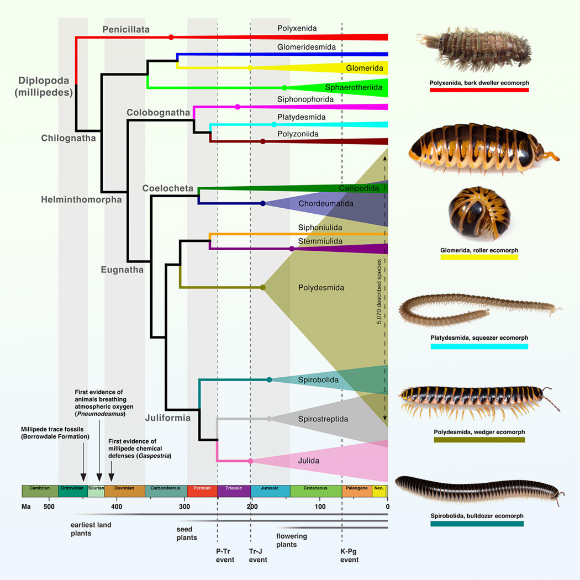
Entomologists Reconstruct Evolutionary History of Millipedes

To date, 14,232 millipede species have been described, with at least as many still awaiting discovery. Image credit: Vasquez-Valverde et al., doi: 10.1016/j.cub.2026.05.035.

Two elusive groups of millipedes, Siphoniulida and Siphonocryptida, were the last missing pieces in the evolutionary history of Earth’s oldest land animals, according to a team of entomologists led by Virginia Tech.

The post Entomologists Reconstruct Evolutionary History of Millipedes appeared first on Sci.News: Breaking Science News.

  •  

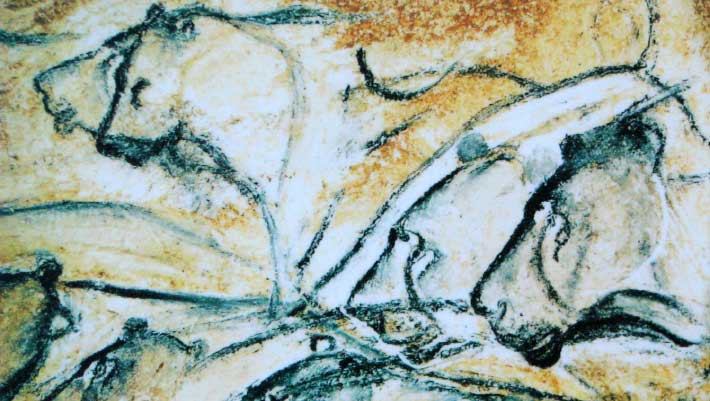
Study: Cave Lions were Distinct Species that Occasionally Bred with Ancestors of Today’s Lions

Cave lions painted in the Chauvet Cave, France.

The extinct Eurasian cave lion (Panthera spelaea) and today’s African and Asian lions (Panthera leo) belong to separate evolutionary lineages that diverged roughly 1.7 million years ago -- far earlier than previously thought, according to an analysis of 12 cave lion genomes spanning more than 100,000 years.

The post Study: Cave Lions were Distinct Species that Occasionally Bred with Ancestors of Today’s Lions appeared first on Sci.News: Breaking Science News.

  •  
  •  

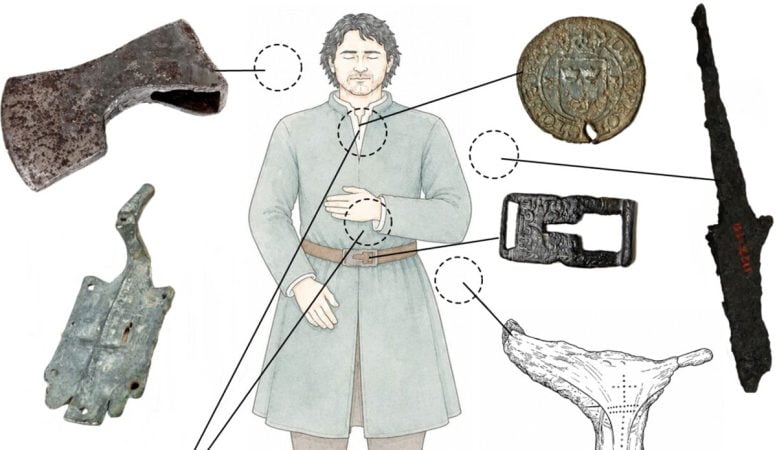
Scientists Uncover Surprising Secrets of a Mysterious Man Buried in Finland 400 Years Ago

Historical Sámi BurialA multidisciplinary study has uncovered new details about a centuries-old burial in northern Finland, revealing genetic links to Sámi populations and evidence of a remarkably mobile life. A new study by the University of Turku and its partners has revealed new details about a man buried near Lake Kitka in Kuusamo, Finland, around the turn [...]
  •  

Cancer’s “Undruggable” Protein Has a Dangerous New Superpower

Malignant Cancer CellCancer’s most notorious growth protein may also be helping tumors survive chemotherapy. A protein already known for fueling cancer growth may have another troubling ability: helping damaged tumor cells repair their DNA and survive treatments designed to destroy them. Researchers at Oregon Health & Science University (OHSU) report that MYC, a protein that is overactive [...]
  •  

Tiny Genetic Change Turns Female Mice Into Males, Scientists Discover

X Chromosome DNA StrandA new study reveals that an extremely small change in a non-coding region of DNA can dramatically alter how sex develops in mice. How much can a single letter of DNA matter? According to new research from Bar-Ilan University, one misplaced genetic “letter” can completely change the course of sexual development. In a study published [...]
  •  

Scientists Discover Rogue Gene That Could Unlock New Cancer Treatments

DNA Mutation Cancer Genetics Disease BioengineeringA gene normally responsible for repairing DNA may have a darker side when produced in excess. Cancer treatment is increasingly moving beyond where a tumor forms and focusing instead on the genetic flaws that drive it. Now, researchers at Penn State College of Medicine have identified an unexpected DNA repair gene that could help expand [...]
  •  

Un nuovo studio condotto dal team di Elena Rostova ha rivelato che la melat…

Un nuovo studio condotto dal team di Elena Rostova ha rivelato che la melatonina svolge un ruolo cruciale nella protezione del DNA dei lavoratori notturni, storicamente soggetti a lesioni genetiche da stress ossidativo. La sostanza penetra nella membrana nucleare e attiva complessi enzimatici responsabili della riparazione cellulare, riducendo drasticamente la rottura dei filamenti del DNA. La scoperta dimostra che la melatonina non regola solo il sonno, ma agisce come un vero e proprio scudo epigenetico per l'organismo.
  •  

When Food Runs Short, This Single-Celled Organism Turns into Giant Cannibal to Survive

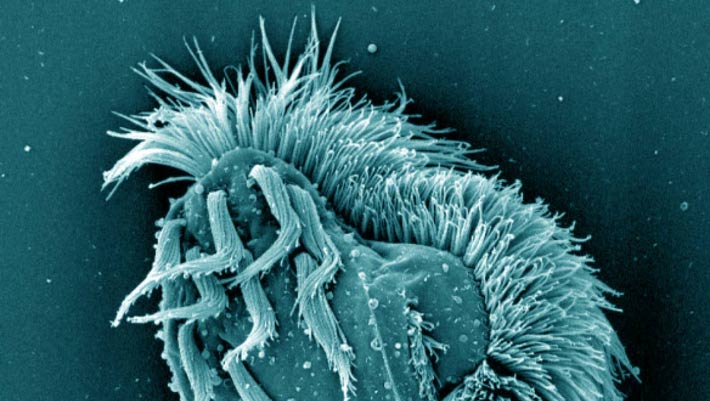
Euplotes gigatrox. Image credit: Ben Larson & Samuel Lord.

Euplotes gigatrox, a new species of ciliate collected from a seawater filtration system on the Caribbean Island of Curaçao, can transform into a cannibalistic ‘supergiant,’ raising new questions about the complexity of life at the microscopic scale.

The post When Food Runs Short, This Single-Celled Organism Turns into Giant Cannibal to Survive appeared first on Sci.News: Breaking Science News.

  •  

Origin of Life | Coded Information from Space?

Satan's rebellion has led humanity to believe in false origins of life, such as abiogenesis and panspermia, instead of a divine Creator. I critique the scientific community's efforts to explain life without acknowledging supernatural creation, asserting the biblical viewpoint that true life and intelligence can only stem from God.

  •  

DNA sequencing method lifts ‘veil’ from genome black box

Researchers from the University of Cambridge have created a new DNA sequencing method called Chem-map, which can detect where and how small molecule drugs interact with the targeted genome. The method enables researchers to conduct in situ mapping of small molecule-genome interactions with unprecedented precision. Chem-map was used in the study to determine the direct […]

The post DNA sequencing method lifts ‘veil’ from genome black box appeared first on Science Bulletin.

  •  
❌