Just as last week was ending, the US government forced Anthropic to pull its two newest models, Fable 5 and Mythos 5, citing national security concerns after Amazon researchers allegedly found a way to bypass Fable 5’s guardrails. Cybersecurity researchers have since signed an open letter calling the move dangerous, and Anthropic itself noted the same jailbreaks exist in other models. So is […]
An anonymous reader quotes a report from Wired: The Trump administration's move to impose export controls on Anthropic's most powerful AI technology followed a spat over the company granting South Korean telecom giant SK Telecom access to its Claude Mythos model, according to people familiar with the matter. US officials were concerned about what they alleged were SK Telecom's ties to China, those people said. Those concerns appear to have compounded when Amazon later flagged vulnerabilities to the White House it identified in Fable 5, a highly safeguarded version of Mythos that Anthropic released to the public on June 9. The Amazon researchers claimed that it was possible to circumvent some of Fable 5's guardrails and access Mythos' formidable cybercapabilities, though Anthropic and outside cybersecurity experts have argued these risks are not unique to Claude.
The confluence of events is what ultimately led the White House to determine that it could not trust Anthropic to safeguard its most advanced AI technology, according to a person close to the administration. On Friday, the Trump administration ordered Anthropic to revoke access to Mythos and Fable 5 for all foreign nationals, including immigrants inside the US. Rather than gate access to its technology based on nationality, a process that would be difficult to implement while also preserving privacy, Anthropic decided it was better to disable access to the models entirely. The White House and Anthropic still remain at odds after days of negotiations about bringing Claude Mythos and Fable 5 back online. SK Telecom was one of roughly 150 organizations granted early access to Anthropic's vulnerability-detection model Claude Mythos through Project Glasswing, notes Wired. The White House later asked Anthropic to revoke the company's access, reportedly amid concerns about alleged China ties, and Anthropic immediately complied. There was, however, no mention of the telecom in the government's formal demand to restrict Mythos and Fable 5 to U.S. nationals.
SK Telecom told a Korean newspaper that the "anonymous insider's remarks in foreign media lack verified facts, and our company has no ties to China."
Humanoid robots able to perform tasks from grape harvesting to welcoming visitors were front and center at France's Vivatech trade fair this week, with European firms looking to fill niches beyond what dominant Chinese giants can offer.
Researchers have developed a new artificial intelligence (AI) system that can predict robberies and other crimes more accurately than several existing methods. By studying where crimes happen, when they occur and broader social patterns, the system achieved an accuracy rate of 86.3% when forecasting robberies in several U.S. cities. Predicting crime is extremely challenging because […]
More than 1.5 billion people around the world are expected to watch the 2026 FIFA World Cup finals. With so many fans carefully watching every pass, tackle and goal, referees are under enormous pressure to make the right decisions. To help them, FIFA is using advanced artificial intelligence and computer vision technology to improve the […]
Luca Guadagnino's film about OpenAI CEO Sam Altman, Artificial, has reportedly been dropped by Amazon MGM.
The film, which stars Andrew Garfield and covers the rollercoaster five days in 2023 spanning Altman's termination and reinstatement as CEO, had been in the works for about a year. The cast also includes A Complete Unknown actress Monica Barbaro as OpenAI CTO Mira Murati, Ike Barinholtz as Elon Musk, and Anora's Yura Borisov as OpenAI chief scientist Ilya Sutskever.
In a statement to Deadline, the studio said it believes the movie "will be better served if it were released by a different studio and is working closely with the filmmak …
Artificial intelligence is already changing the way people search for information, translate languages, and communicate. Now, researchers believe the same technology could also help doctors detect heart disease. Heart disease affects hundreds of millions of people around the world and remains one of the leading causes of death. According to global estimates, nearly 18 million […]
As AI shifts from output-generating large language models (LLMs) to armies of agents taking actions on their own, there is a growing threat that failures could affect system reliability.
Temporal, a Bellevue, WA firm founded in 2019, hopes to solve that problem by stabilizing AI and long-running computing processes through “durable execution,” a technology that reliably resurrects failed computing processes on other hosts. If a machine crashes in the middle of agentic AI transactions, the company resurrects the function on a different host so it can continue exactly where it left off. Temporal says its durable execution process comes with a 100% durability guarantee.
The company was solving these kinds of distributed-systems problems long before the generative AI (genAI) rush, and today it powers infrastructure from Coinbase to Airbnb to OpenAI.
For IT decision-makers, Temporal’s offerings promise to bring reliability to AI operations — especially in regulated industries. Co-founder Samar Abbas spoke recently with Computerworld about his company’s technology, AI reliability, execution and what IT leaders need to keep in mind when evaluating and deploying agentic AI.
How did Temporal come to be a backbone powering AI system? “OpenAI recently announced we power many of their products underneath the cover — that’s where Temporal comes in.
“A couple of years ago, as LLMs got smarter, use cases were about generating outputs. Now, the industry is moving into agentic solutions, where AI isn’t just generating outputs, it’s taking actions. The longer these systems run, the more tools they invoke and the more value they create.
“They’re evolving into a whole army of agents coordinating to get complex tasks done. This starts to look like distributed systems. We become that execution authority, the reliability backbone for those agentic systems to get their tasks done from A to Z.”
What is Temporal doing in the backend to keep them stable? “It’s a new paradigm for building applications, we call that durable execution. If you write a function and a failure happens, you lose all of your state. When a machine crashes, we maintain the state. We seamlessly resurrect that function on a different host and continue executing exactly where it left off, without you as a developer writing a single line of code.
“It’s not just a cache, it’s an operating system guaranteeing execution in the presence of failure. We provide 100% durability guarantees behind it. People can use it for mission-critical use cases like transcribing doctor conversations, where even losing one [word] has big implications.”
Did this challenge exist before AI? “My co-founder and I have been at it pretty much our entire careers, spanning almost three decades. We’ve been solving this problem of distributed systems, at Amazon, Microsoft and then Uber, before starting Temporal. We are definitely pre-AI.
“As more workloads move to cloud and become distributed, it introduces this class of failures. This is the fifth time I’m building this system. I built simple workflow, then [a] durable task framework at Azure, then Cadence at Uber, now Temporal. The company is roughly seven years old, but the code base is over 10 years old, because we started at Uber and it’s been running in production ever since.”
And now you tackle that same problem at AI scale? “The funny thing is, especially with AI, that same problem is now at such a massive scale, it’s gone on steroids, with agentic systems coming online and doing real work. We’ve been powering every Coinbase transaction, every Snap story, every Airbnb booking, every Yum Brands order — KFC, Pizza Hut, Taco Bell.
“A couple of years ago, it looked like we’d over-invested in the scale and reliability of the platform. Then AI showed up in such a big way that now I’m asking the team: how do we scale another 10x, 100x, even 1000x? These agents are hitting the market in a way we couldn’t have imagined.”
Can you give a concrete example of that 100% guarantee? “When you’re moving money — debit or credit — imagine a failure happens after you’ve debited an account. Temporal guarantees execution of the entire function from start to finish, in the presence of all sorts of failures. At the end of the day, we’re in the business of selling reliability.
“Developers today spend 80% of their time building resiliency into their systems by working with low-level primitives like queues, databases, retry mechanisms and durable timers, and stitching them together. What we provide eliminates that. And that reliability is exactly what’s becoming critical as enterprises move agents into production.”
Why should CIOs and other IT leaders care about AI reliability? “These agents are now real, no longer prototypes or [proofs of concept]. They’re doing meaningful work in those organizations. Reliability and durability weren’t on the radar for CIOs 12 months ago. Now, it’s the blocker. Especially in regulated industries, if a transaction gets left in the middle, it has real regulatory concerns.
“That’s what’s holding them back from transitioning into the AI stage. It comes up in pretty much every conversation, in the first 10 minutes I’m talking to a CIO.”
CW: Where do the hardest problems sit today? “Security, governance, identity, authorization, authentication. This is where majority of the problems exist, and the ecosystem is so immature. Even things like MCP, I see organizations struggling to implement MCPs to build these agents. This is an area ripe for innovation and a lot of work, including here at Temporal.”
What skills should developers and CIOs build for the AI age? “The biggest skill now is that developers need to be more product focused. Product-minded engineers are the ones who will thrive, because the whole software development flow, writing code by hand, debugging by hand, testing it, is going to look completely different. The job of an engineer is now building the system that builds the system.
“Two things are happening in this AI world. First, a lot more engineers are coming into the fold, because companies like Replit or Lovable are making software development approachable for people who haven’t been professionally trained. Second, there’s going to be a lot more applications written than ever before. The problem space is shifting toward how we run all those applications safely and reliably, with all the guardrails. That’s where the industry is headed.”
Five months after returning to OpenAI, Barret Zoph - the company's head of enterprise AI sales - has departed, The Verge has learned.
Zoph returned to OpenAI in mid-January after a stint as co-founder and CTO of Thinking Machines Lab, the competing AI company founded by former OpenAI CTO Mira Murati. Shortly after Zoph returned to OpenAI, the company said he would lead its push into enterprise - a significant role at OpenAI, since in recent months it had vowed to stop chasing so-called "side quests" and focus on key revenue drivers like enterprise and coding ahead of its planned IPO.
OpenAI confirmed to The Verge that Zoph will be depart …
Artificial intelligence is increasingly being used to see and understand the world around us. From facial recognition on smartphones to self-driving cars and humanoid robots, computer vision has become one of the most important technologies in modern AI. Now, researchers from the Korea Advanced Institute of Science and Technology (KAIST), working with scientists from the […]
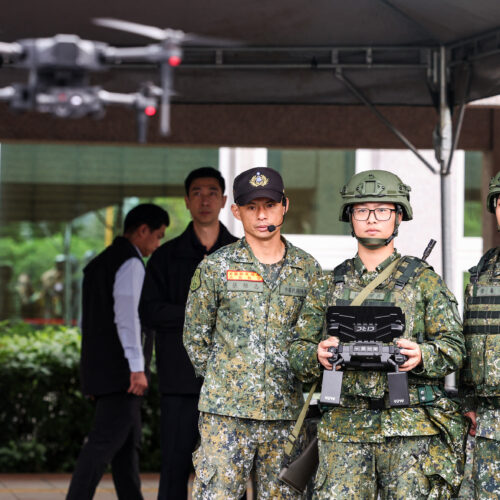
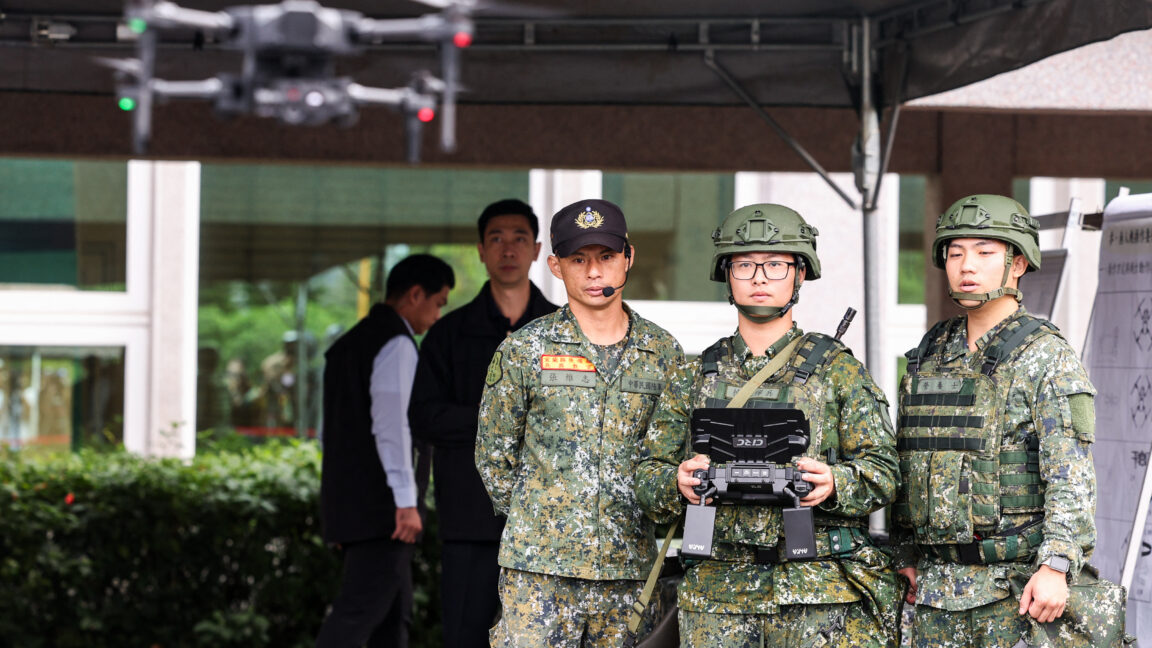
Taiwan’s existence as a self-governing democracy may depend heavily on having enough military drones to discourage any attempted invasion by China’s military. As the Taiwanese government aims to boost domestic production of military drones and Taiwanese citizens sign up for drone flight training, Taiwanese companies are forming international partnerships to sell more drones to the US military and other overseas buyers.
Taiwan’s Ministry of National Defense proposed a special budget that would spend $6.6 billion over six years on buying drones made in Taiwan, according to the Central News Agency that represents the national news service of Taiwan. Presented on June 18, the budget proposal would allow the government to buy more than 208,000 coastal attack drones, along with more than 1,400 coastal reconnaissance drones and 1,320 uncrewed surface vessels, between 2026 and 2031.
That would be a significant boost to the Taiwanese military arsenal that currently includes just 5,000 US-made attack drones and domestically produced drones, according to Resilience Media. During military exercises in early June, Taiwanese soldiers fired Altius-600 loitering munition drones—made by a subsidiary of the US military technology company Anduril Industries—from towed flatbed launchers to strike offshore targets, according to USNI News. In another exercise earlier this year, Taiwanese Marines used Taiwan-made drones to similarly strike targets at sea.
 Login