Un fósil de los Pirineos acaba de revelar cómo era la piel de un pariente de los cocodrilos hace 125 millones de años. La luz ultravioleta mostró escamas, tejidos blandos y hasta un posible patrón de color en la cola


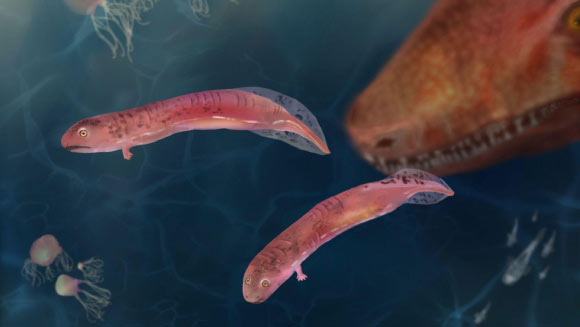
Paleontologists from the Field Museum of Natural History have described the fossilized remains of baby embolomeres, crocodile-like predators that prowled ancient rivers and swamps between 350 and 280 million years ago.
The post Earth’s First Land Animals May Never Have Been Amphibian-Like After All appeared first on Sci.News: Breaking Science News.
In early 2024, a baffling outbreak of H5N1 avian influenza emerged among dairy cattle in the Texas Panhandle, presenting a new and unexpected clinical manifestation of the virus. Unlike the typical respiratory illness caused by H5N1 in other mammals, affected cows exhibited severe necrotizing mastitis, an inflammatory condition predominantly targeting the mammary glands. This atypical tissue tropism challenged existing paradigms and delayed the accurate diagnosis, as initial veterinary investigations focused mainly on bacterial pathogens common to mastitis. The revelation that H5N1 was the etiological agent marked a critical moment in understanding how influenza viruses can adapt to novel hosts and tissues.
The study, recently published in Science Advances by researchers at the University of Pittsburgh School of Public Health, provides pioneering mechanistic insights into this unusual manifestation. The research team, led by Dr. Suresh Kuchipudi, elucidated the molecular basis for the H5N1 virus’s propensity to infect bovine mammary tissue rather than respiratory organs. This phenomenon, now observed in over 100 avian and mammalian species globally, underscores the remarkable plasticity of the H5N1 virus and its ability to exploit unique receptor architectures in different host species.
Traditionally, H5N1 and related influenza viruses target sialic acid glycan receptors present in the respiratory tract, facilitating viral entry primarily via respiratory epithelial cells. However, in bovines, the absence of clinical respiratory disease despite the presence of these glycans suggested a more nuanced receptor interaction paradigm. Kuchipudi’s group hypothesized that not just the presence but the precise molecular subtype and distribution of influenza receptors could dictate tissue tropism. Their investigation focused on delineating the receptor landscape across bovine tissues using cutting-edge glycomic methods combined with binding assays and ultra-high-resolution microscopy.
The team employed glycomics—a comprehensive approach to cataloging glycan structures—collaborating with expert Dr. Lauren E. Pepi from Harvard Medical School. They identified that among various glycan receptors, only a particular subclass known as N-linked sialic acid receptors demonstrated a high affinity for the H5N1 virus. Crucially, these receptors were found to be prevalent and densely expressed in the mammary epithelial cells of the udder but conspicuously scarce in bovine airway tissues. This spatial receptor distribution offers a molecular explanation for the virus’s unusual targeting of the mammary gland, enabling productive viral replication and resulting clinical mastitis.
The discovery sheds light on the critical role of receptor architecture in species-specific influenza virus infection. Prior reports indicated the presence of flu-related glycans in bovine respiratory tissues, but those receptors did not support significant viral binding or replication. The differential receptor expression patterns in respiratory versus mammary tissues effectively reprogrammed the virus’s tissue tropism. This specialization allows H5N1 to hijack the bovine mammary environment as a niche, explaining why infected cattle shed the virus in milk rather than displaying respiratory symptoms.
Beyond animal health, this finding carries important public health implications. The intense viral shedding into milk poses a risk to farm workers exposed to raw milk and raises concerns regarding zoonotic transmission routes. Dr. Kuchipudi points out that while pasteurization effectively neutralizes the virus, the common practice of feeding raw milk to domestic pets, notably cats, can facilitate cross-species transmission. Indeed, previous studies documented feline fatalities linked to H5N1 infection. This highlights the hidden dangers of viral reservoirs in dairy cattle and underscores the need for enhanced surveillance and biosecurity protocols within agricultural settings.
Methodologically, the study stands out for its innovative multimodal approach. The integration of high-precision receptor mapping with functional binding experiments allowed researchers to move beyond conventional histochemical staining. This enabled a granular understanding of the receptor types mediating viral entry, paving the way for predictive models of viral host and tissue susceptibility. By decoding the receptor landscape at this molecular scale, the research team demonstrated an unprecedented ability to identify viral tropism determinants, which could serve as early warning indicators for emergent influenza strains.
Looking forward, these insights form the foundation for a new paradigm in influenza research and surveillance. Scientists can now preemptively screen various animal species—not just for the presence of virus-compatible receptors but for specific tissue vulnerabilities within those hosts. This capability is transformative for anticipating how H5N1 and related viruses might manifest clinically, whether through respiratory symptoms, mastitis-like conditions, or neurological involvement, as previously seen in felines. Such proactive screening could revolutionize public health responses, affording precious time to deploy targeted interventions and prevent widespread outbreaks.
The implications of receptor-based viral tropism extend beyond livestock to potential future zoonoses affecting humans. Understanding the molecular basis of host adaptation provides critical clues into viral evolution and spillover risk. This knowledge also informs vaccine development and therapeutic strategies by highlighting tissue-specific pathways of viral entry and replication. As zoonotic influenza viruses continue to adapt, harnessing receptor glycomics will be vital for staying ahead of viral evolution and protecting both animal and human health.
The study was a collaborative effort involving multiple institutions and experts, including contributors from Pennsylvania State University, Harvard University, and North Dakota State University. Their combined expertise spanned infectious diseases, glycomics, virology, and veterinary medicine, enabling a comprehensive and multidisciplinary approach. Supported by the U.S. Department of Agriculture’s National Institute of Food and Agriculture and Pitt Public Health, this research exemplifies how fundamental science can directly inform and improve agricultural biosecurity and zoonotic disease preparedness.
Ultimately, this investigation marks a significant milestone in understanding influenza virus host adaptation. By revealing the receptor basis for the bovine-specific tissue tropism of H5N1, the study not only clarifies an enigmatic veterinary health issue but also establishes a versatile scientific framework for future viral threat assessment. As influenza viruses continue to evolve in complex ecological contexts, such mechanistic insights will be indispensable tools to foresee their next unexpected moves and mitigate their impact on global health.
Subject of Research: Animals
Article Title: Receptor Basis of Unusual Tissue Tropism of Avian Influenza H5N1 Clade 2.3.4.4b Virus in Cattle
News Publication Date: 19-Jun-2026
Web References: https://doi.org/10.1126/sciadv.aea2068
Image Credits: Department of Infectious Diseases and Microbiology, School of Public Health, University of Pittsburgh
Keywords: Avian influenza, Glycomics, Public health, Viruses

Jio Platforms, which owns India’s largest telco, is looking to lease broadband capacity from satellite constellations to jumpstart its own sovereign LEO network in the country.
The post India’s Jio lays out sovereign LEO constellation plan ahead of IPO appeared first on SpaceNews.


Read more of this story at Slashdot.
Relativity Space, the rocket company led by former Google executive Eric Schmidt, was picked to launch NASA's Aeolus payload to Mars in 2028, as reported earlier by TechCrunch. Under a new public-private partnership, Relativity Space will provide the "spacecraft, rocket, and cruise operations" to fly Aeolus to Mars, where the payload will "provide the first integrated, daily, global view of Martian winds, temperatures, dust, and clouds."
The Aeolus payload will have four instruments on board for studying the Martian atmosphere, which NASA says will "directly inform entry, descent, and landing systems and support safer, more predictable mis …

In the continually evolving field of anesthesiology, recent research spearheaded by Liu, Shi, Hu, and colleagues has unveiled compelling evidence that challenges and potentially reshapes traditional approaches to anesthesia in older adults undergoing surgery for hip fractures. Their retrospective study, published in BMC Geriatrics in 2026, meticulously examines the efficacy and safety profile of unilateral epidural anesthesia specifically tailored for geriatric patients with hip fractures—a demographic notoriously susceptible to complications during and after surgery.
Hip fractures in the elderly represent a significant clinical challenge worldwide, characterized by high morbidity and mortality rates. Managing pain effectively while minimizing systemic side effects from anesthesia remains a crucial concern for anesthesiologists and surgeons alike. Traditional modalities often involve bilateral epidural or general anesthesia; however, these methods can carry notable risks, including hemodynamic instability and prolonged motor blockade. This study shifts the spotlight onto unilateral epidural anesthesia, a targeted anesthetic technique designed to provide localized nerve blockade on the operative side only.
Unilateral epidural anesthesia distinguishes itself by confining the anesthetic effect predominantly to the surgical side, thereby reducing sympathetic nervous system disruption contralaterally. This precision results in better hemodynamic stability, which is particularly advantageous in older patients frequently burdened by cardiovascular comorbidities. The retrospective analysis conducted by Liu et al. rigorously evaluates patient outcomes, highlighting that unilateral epidural anesthesia may significantly diminish perioperative complications without sacrificing analgesic efficacy.
The study’s methodology encompasses a comprehensive evaluation of clinical records, encompassing various parameters including hemodynamic changes, pain scores, motor function recovery, and incidences of postoperative delirium—a common and serious complication in the elderly. Quantitative data reveal that patients receiving unilateral epidural anesthesia experienced a more stable intraoperative blood pressure profile and reduced incidence of postoperative cognitive dysfunction, underscoring the approach’s beneficial role beyond pain control alone.
Technically, the procedure involves the careful placement of an epidural catheter at thoracolumbar levels corresponding to the surgical site, followed by administration of low-concentration local anesthetics. This approach fosters segmental blockade, sparing contralateral nerve roots and thereby encouraging earlier mobilization and reduced nursing care needs post-surgery. The pharmacodynamics of this anesthetic technique emphasize minimizing systemic absorption and maximizing localized action, which collectively contribute to the observed safety profile.
Another compelling aspect underscored in the research is the opioid-sparing effect of unilateral epidural anesthesia. Opioid analgesics, although effective, carry risks of respiratory depression, constipation, and delirium—ailments especially precarious for the elderly. By reducing opioid requirements, unilateral epidural anesthesia could potentially curtail these adverse effects, enhancing postoperative recovery trajectories and overall patient satisfaction.
Moreover, Liu and colleagues discuss the implications of unilateral epidural anesthesia on resource utilization within healthcare settings. The technique’s association with fewer hemodynamic disturbances reduces the need for advanced cardiovascular monitoring intraoperatively and in the intensive care environment. This efficiency gain could translate into shorter hospital stays and decreased healthcare expenditure, a critical consideration in systems strained by aging populations.
The retrospective nature of the study, while inherently limiting causal inferences, nonetheless offers a robust foundation for future prospective randomized trials. Such investigations could further illuminate the mechanistic underpinnings responsible for the favorable outcomes observed and refine patient selection criteria to optimize individualized anesthesia care in orthogeriatrics.
Technical challenges associated with unilateral epidural anesthesia are not overlooked. Precise catheter placement requires skilled practitioners well-versed in fluoroscopic or ultrasound-guided techniques to ensure unilateral spread and minimize inadvertent bilateral blockade. The study underscores the necessity for comprehensive training and corroborative imaging to maximize the procedure’s efficacy and safety.
From a physiological standpoint, the selective sympathetic blockade innate to unilateral epidural anesthesia not only stabilizes hemodynamics but also mitigates neuroinflammatory cascades triggered by surgical trauma. Emerging evidence suggests that blunting this inflammatory response could reduce the risk of postoperative cognitive decline, an area ripe for further interdisciplinary research bridging anesthesia, neurology, and geriatrics.
Complementary to these clinical insights, the study also revisits pharmacological considerations. The choice of local anesthetics, concentration gradients, and adjuvants such as clonidine or dexmedetomidine are deliberated, emphasizing the balance between achieving adequate sensory blockade and preserving motor function. This pharmacological fine-tuning is pivotal for enabling early postoperative mobilization—a key determinant of successful rehabilitation in elderly hip fracture patients.
Patient-centric outcomes encapsulated in the study extend beyond clinical parameters to patient-reported pain and satisfaction scores. The positive feedback corroborates that unilateral epidural anesthesia not only suits physiological and logistical needs but also aligns with patient comfort and quality of life goals, reinforcing its clinical appeal.
Given the growing incidence of hip fractures globally, driven principally by demographic shifts toward older age groups, the implications of this study are profound. It advocates for a paradigm shift in orthopedic anesthesia, promoting a minimally disruptive approach aligned with geriatric physiology and tailored to reduce perioperative risk, thus potentially setting a new standard of care.
The findings of Liu et al. resonate particularly in the context of value-based healthcare, where interventions delivering superior outcomes with cost-effectiveness are paramount. The integration of unilateral epidural anesthesia into clinical pathways could redefine perioperative protocols for vulnerable populations, fostering enhanced recovery and reduced healthcare burden.
In conclusion, this pivotal retrospective study paves the way for enhanced anesthetic strategies that prioritize safety without compromising efficacy. The promise of unilateral epidural anesthesia for older adults with hip fractures represents not just an incremental advance but a stride toward precision medicine in anesthesiology. Continued research and clinical adoption stand poised to transform surgical care paradigms, ultimately improving the lives of millions of elderly patients worldwide.
Subject of Research: The application and outcomes of unilateral epidural anesthesia in elderly patients undergoing hip fracture surgery.
Article Title: A retrospective study on the application of unilateral epidural anesthesia in older patients with hip fracture.
Article References:
Liu, P., Shi, X., Hu, J. et al. A retrospective study on the application of unilateral epidural anesthesia in older patients with hip fracture. BMC Geriatr (2026). https://doi.org/10.1186/s12877-026-07859-z
Image Credits: AI Generated

À medida que a tecnologia de Inteligência Artificial ganha escala, surgem novas preocupações. Joana Linhas defende que o desafio está na capacidade de parar para pensar como queremos construir o futuro.
The post A inovação não pode crescer mais depressa do que a responsabilidade appeared first on Tek Notícias.


Com a aquisição de uma participação maioritária na portuguesa Smartmove, a Webook entra no mercado europeu com o objetivo de transformar Lisboa num centro estratégico para as suas operações.
The post Tecnológica saudita compra Smartmove e prepara expansão europeia a partir de Lisboa appeared first on Tek Notícias.