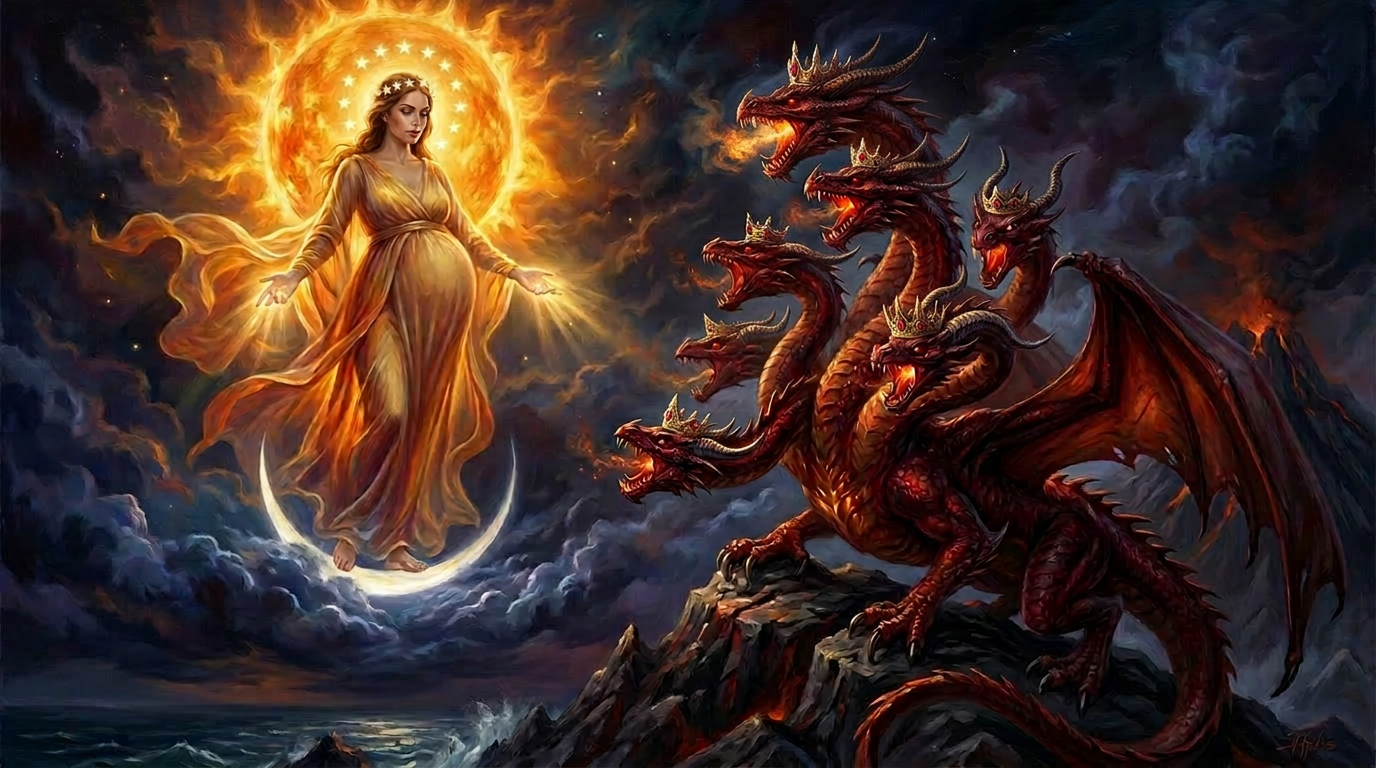
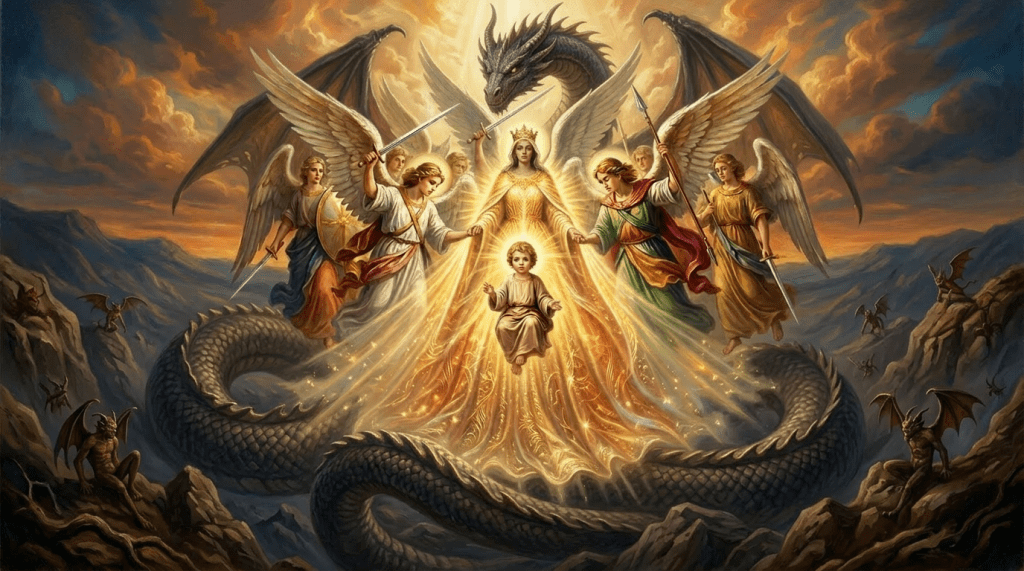
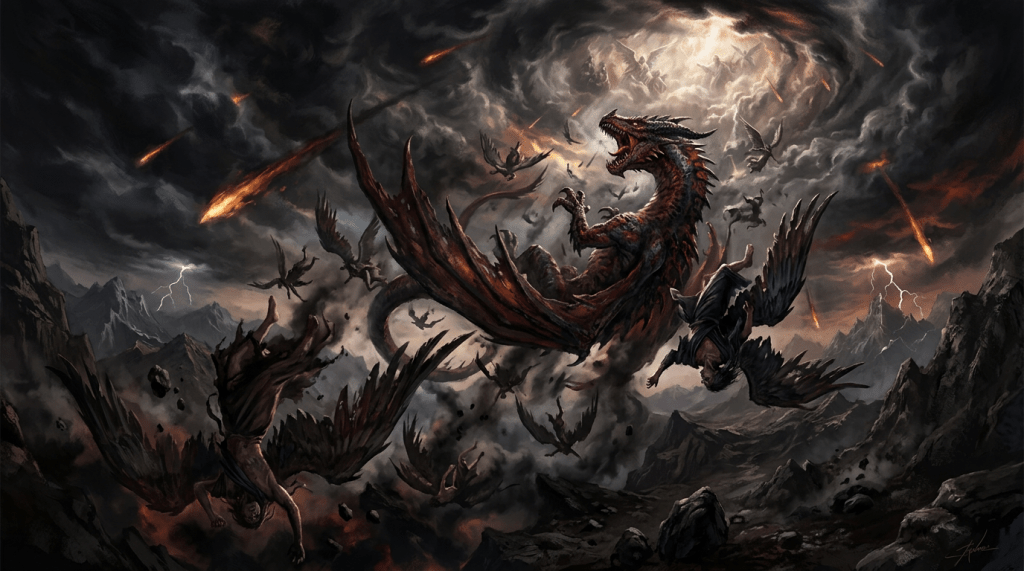
Heaven is at war and Satan is trying to destroy the true followers of Jesus Christ. Here I explore the idea that UFOs are real manifestations of angelic forces, both malevolent and benevolent, as seen in visions in the Bible. They are the ones currently engaged in battle.
For more than a century, musicians have maintained that the way a pianist touches a key influences the sound that emerges. Many scientists, however, have argued that after the hammer strikes the string, the instrument itself determines the outcome, making the pianist’s touch irrelevant.
A research team led by Dr. Shinichi Furuya of the NeuroPiano Institute and Sony Computer Science Laboratories developed a custom sensor system called HackKey. This system can record the movement of all 88 piano keys at 1,000 frames per second, with a spatial precision of 0.01 millimeters. The team invited 20 internationally recognized pianists to play notes while intentionally aiming for contrasting timbres, such as bright versus dark and light versus heavy. Listeners were able to distinguish among the different timbres, even individuals with no experience playing the piano.
The Movements Behind the Sound
The researchers identified a series of micro-movements beneath each keystroke. These movements are so subtle that they are almost impossible to see, but precise enough for listeners to perceive differences in sound.
Small changes in how quickly a key accelerates, slight overlaps between notes, and variations in the speed of initial contact with the key all influenced how listeners described the resulting sound. When each of these factors was adjusted individually, the perceived timbre changed. Adjusting a single movement feature was enough to reliably change how listeners perceived timbre. The results show that touch has a direct effect on sound, independent of factors such as volume or tempo.
The study describes these micro-movements as a motor skill developed through years of advanced training. The researchers call the emerging science of mapping movement to musical experience “dynaformics.”
A Debate as Old as the Modern Piano
The debate over whether touch can alter piano timbre dates back to at least the early 1900s, when music educators began discussing what distinguishes one performer’s sound from another. The piano’s mechanical action appeared to support the skeptics, since the hammer, once released, moves independently before striking the string and is not directly contacted by the pianist’s finger.
As a result of this mechanical process, many acousticians concluded that any reported differences in tone were psychological, influenced by context, volume, or timing rather than by touch. Musicians maintained their position but did not have the scientific tools to prove it.
To settle this debate, Furuya’s team developed a custom biometric contact-sensing system called HackKey, capable of recording the movement of all 88 piano keys at 1,000 frames per second with sub-millimeter precision. The system captured in-depth piano movement data that previous technology could not. For the first time, researchers could observe the specific actions of elite pianists and relate those movements to listeners’ descriptions of sound.
What It Means Beyond the Concert Hall
Piano teachers have often used general phrases like “play warmer” or “use a softer touch” because the specific movements that create certain sound qualities were not well understood. This study now offers a guide to those movements.
Future training tools may allow students to see precisely what their fingers are doing when a note is played successfully or not. Instead of relying on a teacher’s metaphor, students could compare their own keystrokes to a standard and work to improve their technique. The researchers suggest that this approach could make expressive technique easier to teach and visualize, especially for students who find it difficult to translate verbal instructions into physical actions.
The research may also apply to rehabilitation, robotics, and human-computer interaction. Discovering that small differences in movement can shape auditory perception offers new insight into how the brain links movement and sensory experience. Some researchers are exploring whether systems based on expressive musical movement could help patients recover dexterity and coordination after injury.
Most scientific research on music has focused on elements that are easier to measure, like pitch, loudness, and rhythm. Timbre, or the quality or “color” of a sound that makes one instrument or voice different from another, has been harder to measure. This study offers a new way to understand the mechanics behind this concept. The findings suggest that some of the most expressive parts of music come from movements too small to see, developed through years of practice.
Austin Burgess is a writer and researcher with a background in sales, marketing, and data analytics. He holds an MBA, a Bachelor of Science in Business Administration, and a data analytics certification. His work focuses on breaking scientific developments, with an emphasis on emerging biology, cognitive neuroscience, and archaeological discoveries.
The search for a ninth planet in our solar system could reach a turning point as soon as this year, according to a planetary scientist involved in the hunt for a mysterious object believed to be lurking in the outer reaches of the Solar System.
For the past decade, astronomers around the world have been searching for evidence of another resident in our planetary neighborhood. As far back as 2016, there were already hints that something might be out there, given the odd orbits of distant objects like Sedna, discovered in 2003.
Now, two astronomers—California Institute of Technology (Caltech) researchers Konstantin Batygin, a professor of planetary science, and his colleague, Dr. Michael E. Brown—believe there is a high probability that the confirmation of a ninth planet in our solar system could be on the horizon.
Batygin and Brown’s findings suggest Planet Nine may have a mass roughly 5 to 10 times that of Earth and orbit, on average, about 20 times farther from the Sun than Neptune, which circles the Sun at an average distance of 2.8 billion miles. If it exists, the distant world would take between 10,000 and 20,000 years to complete a single orbit around the Sun.
“This would be a real ninth planet,” says Brown, the Richard and Barbara Rosenberg Professor of Planetary Astronomy, in a 2016 statement. “There have only been two true planets discovered since ancient times, and this would be a third. It’s a pretty substantial chunk of our solar system that’s still out there to be found, which is pretty exciting.”
Evidence for Planet Nine comes from a small group of distant Kuiper Belt objects whose highly elongated orbits appear clustered in the same direction and share similar orbital tilts relative to the plane of the known planets.
Researchers argue that this type of alignment is unlikely to occur by chance. Alternative explanations involving the Kuiper Belt itself have also been explored, but models suggest the belt would require far more mass than has been observed to produce the effect.
Brown’s excitement shines through: “It’s almost like having six hands on a clock all moving at different rates, and when you happen to look up, they’re all in exactly the same place,” he says, adding that the odds of having that happen are something close to one in 100.
Computer simulations suggest that a large, unseen planet in the outer Solar System could maintain these orbital alignments through its gravitational influence. The models also demonstrate how mean-motion resonances could keep the distant objects in stable orbits while preventing collisions with the proposed planet.
The hypothesis may also explain the unusual trajectories of objects such as Sedna and 2012 VP113, whose highly elongated orbits do not bring them close to Neptune.
Konstantin Batygin, astronomer and Professor of Planetary Sciences at Caltech.
Japanese Scientists Find More Evidence
In July, additional data relevant to the Planet Nine debate emerged with the discovery of a newly identified object nicknamed “Ammonite,” found by Japanese astronomers using the Subaru Telescope on Maunakea, Hawaii. The object is only the fourth known sednoid, joining a rare class of distant celestial bodies with unusual orbits beyond Pluto.
“The fact that Ammonite’s current orbit does not align with those of the other three sednoids lowers the likelihood of the Planet Nine hypothesis,” said Dr. Yukun Huang of the National Astronomical Observatory of Japan, who conducted simulations of Ammonite’s orbit in a July interview with The Debrief.
“It is possible that a planet once existed in the Solar System but was later ejected, causing the unusual orbits we see today,” says Huang.
How Planet Nine Could be Found This Year
Astronomy is often a science of probabilities and competing hypotheses, but Planet Nine presents a relatively rare case where new observations may soon provide a clear answer. The Vera C. Rubin Observatory in Chile recently began scientific operations and could provide the data needed to confirm—or rule out—the existence of Planet Nine.
Perched atop a mountain in Chile, the NSF–DOE Vera C. Rubin Observatory observes the night sky in extraordinary detail. Equipped with the largest digital camera ever built for astronomy, it will repeatedly survey the sky over ten years, producing an unprecedented time-lapse record of the Universe.
In a recent podcast interview, Batygin told The Debrief how his and Brown’s theory could soon be tested.
“The Planet Nine hypothesis is kind of readily refutable, right? I find that to be quite important,” says Batygin. “There’s a new telescope that came online called the Vera Rubin Observatory, and as it collects data this year, we will, I think, know one way or another whether Planet Nine is really out there or not.”
Batygin says Rubin’s greatest strengths are its survey efficiency and extensive sky coverage. By repeatedly imaging vast portions of the sky, Rubin is uniquely suited to detecting a faint, distant, and slowly moving object like Planet Nine.
“If Rubin detects an object at hundreds of astronomical units from the Sun, and its orbit is consistent with the predicted Planet Nine parameter space, that would essentially be it,” Batygin explained, in terms of what kind of observation would provide a definitive answer regarding Planet Nine’s existence.
“At that distance, anything visible to Rubin would have to be very large, so a direct detection would be the decisive confirmation,” he added, although suggesting that “whenever you find some interesting pattern in the data, the first thing you have to ask is, ‘will it hold up to additional scrutiny from [some] fresh kind of unbiased data?”
He points to this summer being a turning point in his research: “We will get that new batch of discoveries basically starting this summer, starting summer twenty twenty-six. It will be a direct test of all lines of evidence that we have for the existence of Planet Nine.”
“ You can imagine Vera Rubin comes online, looks at the sky for a few months, finds an object that it can see that is far away, that is hundreds of astronomical units away, meaning hundreds of times the distance between the Earth and the Sun, as far away from the Sun as the Earth,” adds Batygin. “That’s Planet Nine. Like, that’s direct confirmation, right? Then you close the book and move on to the more interesting question of like characterization.”
Batygin suggests it would solidify many of the lines of evidence for Planet Nine, even if his team does not discover the object itself. “Nevertheless, that would lend support to its existence because, if the solar system is structured in this way, then something must be sculpting that structure.”
Although he has devoted years to the Planet Nine hypothesis, Batygin says he remains open to the possibility that the planet does not exist and believes the data must ultimately determine the outcome.
“It would definitely suck,” Batygin told The Debrief of this possibility, though noting that scientists have to “go where the data takes you, right?”
Planet Nine and Nibiru, “The Destroyer” Sumerian Folklore
Over the decades, the Planet Nine hypothesis has inevitably drawn comparisons to “Nibiru,” a supposed hidden world popularized in modern pseudoscientific interpretations of ancient Mesopotamian texts.
The idea gained widespread attention through the writings of Zecharia Sitchin, who argued that ancient Sumerian records described a rogue planet that periodically enters the inner Solar System and causes catastrophic events on Earth. However, mainstream historians and archaeologists reject these interpretations, noting that ancient Mesopotamian flood traditions, including the story of Utnapishtim in the Epic of Gilgamesh, do not identify Nibiru as the cause of a global catastrophe.
When asked on the podcast whether Planet Nine could pose any threat to Earth, Batygin dismissed the idea.
“The important thing to understand about Planet Nine is that if you’re worried about Planet Nine’s gravity destroying things, I would encourage you to revisit the inverse square law of gravity, right?
He explains that gravity increases with mass and falls off as the distance between objects squared, and that Planet Nine is estimated to be five Earth masses, and at a distance of 500-600 astronomical units away. By comparison, Jupiter is 300 Earth masses and only around four astronomical units away.
“So if you’re worried about Planet Nine, you should really, really worry about Jupiter,” Batygin says. “I mean, this is one of the intriguing, frankly humbling things about learning celestial mechanics and understanding how the solar system works at a large scale,” Batygin added.
How Planet Nine Could Change Astronomy and CULTURE
The confirmation of Planet Nine would be one of the most significant astronomical discoveries of the century, reshaping our understanding of the Solar System and its formation. Textbooks, educational materials, and scientific models would need updating to account for a previously unknown major planet residing far beyond Pluto. More importantly, its discovery could reveal new insights into how planetary systems form and evolve.
Batygin also thinks the influence of such a discovery also might impact science in ways we haven’t yet considered.
“Until we really take a look, we don’t know what kind of awesome and exciting information we’ll discover. This has been true along the way in all planetary exploration. We have been surprised time and time again,” says Batygin.
Batygin also surmises that astronomers “will discover interesting constraints about the birth environment of the Sun itself by studying Planet Nine.”
An exciting future may indeed lie ahead if Planet Nine is soon discovered. Astronomers could eventually determine whether it is a gas giant, an icy world, or something entirely unexpected. Future observations may even reveal details about its atmosphere and composition.
When Voyager 1 and Voyager 2 returned the first close-up images of the outer planets, it marked one of humanity’s greatest scientific achievements. For the first time, people saw distant worlds in remarkable detail rather than as tiny points of light in the night sky.
Now, in 2026, humanity may once again stand on the brink of a major planetary discovery, thanks to the Vera C. Rubin Observatory.
Fundamentally, confirmation of a ninth planet would not only be a cosmic discovery: it would also offer a reflection of humanity, and a reminder of how much remains unknown, even within our own cosmic backyard.
Chrissy Newton is a PR professional and the founder of VOCAB Communications. She currently appears on The Discovery Channel and Max and hosts the Rebelliously Curious podcast, which can be found on YouTube and on all audio podcast streaming platforms. Follow her on X: @ChrissyNewton, Instagram: @BeingChrissyNewton, and chrissynewton.com. To contact Chrissy with a story, please email chrissy @ thedebrief.org.
Euplotes gigatrox, a new species of ciliate collected from a seawater filtration system on the Caribbean Island of Curaçao, can transform into a cannibalistic ‘supergiant,’ raising new questions about the complexity of life at the microscopic scale.
The Apostle Paul emphasizes that salvation is based on faith in Jesus Christ, not ethnicity or lineage. Only a remnant of Israel will be saved, as true identity comes from spiritual connection rather than genetic heritage. Believers, regardless of their origins, form the true Israel, unified in Christ’s grace.
President Donald Trump portrayed himself on his own Truth Social platform as Jesus Christ, but as both a warmonger and a healer of the sick. In reality he is antichrist. Perhaps he was possessed of Lucifer on March 19th as expected by some Jewish rabbis as their Messiah.
Israeli Rabbi Baruch Rosenblum has just declared that the Jewish Messiah will be announced Thursday March 19th — the first day of Nissan on the Jewish calendar. PM Netanyahu agrees that he will be coming as a military leader to wipe out Amalek (Iran) but that it won't be this Thursday.
The debate around Covenant Theology, replacement theology, and dispensationalism has intensified online. Covenant Theology posits one unified people of God through Christ, unlike dispensationalism, which promotes two distinct groups. The true church is seen as the fulfillment of God's promises, integrating both Jews and Gentiles into one faith community under Christ.
In 2023, extremist members of the Israeli Knesset attempted to ban teaching Christianity and proposed severe penalties for offenders, which failed due to pressure from American evangelical Christians. Recently, a preliminary bill was passed to criminalize praying to Christ at the Western Wall, highlighting rising tensions between Israeli laws and Christian beliefs.
The rescue mission of Christ culminated in His crucifixion and resurrection, establishing the New Covenant based on grace. I critique Christian-Zionist Robert Stearns for undermining Jesus' messianic significance, emphasizing that salvation is exclusively through Christ. I also contrast the Old Covenant's requirements with the grace of the New Covenant.
Christian Zionists, particularly from the U.S., support Israel's nation-building despite the rejection of Jesus Christ by the vast majority of Jews. Israel today are not God's chosen people. The true believers in Christ are, irrespective of ethnicity, nationality or race.
Modern Christian-Zionism is a distortion of the true gospel. Its proponents are the Judaizers of our time. Salvation is solely through faith in Christ alone. To subordinate the cross to an antichrist earthly political project is equivalent to the works of the flesh required by the Judaizers in Paul's time.
Christians should not celebrate Hanukkah because it is an antichrist temple worship festival. Jesus Christ replaced the old temple worship, making it obsolete. True worship must focus on Jesus, the cornerstone, rather than returning to the rituals of Judaism, which detracts from his final sacrifice for all.
A detailed response to Dr. Tim Orr highlighting the critical necessity of understanding Israel through Scripture rather than the commentators. It emphasizes that Israel's true identity lies in Christ, not in spurious interpretations from Scofield's Reference Bible. All scriptural promises are fulfilled in Christ.
The biblical creation narrative is foundational to understanding reality. It highlights the role of God as the creator and sustainer of both physical laws and spiritual renewal through Jesus Christ.
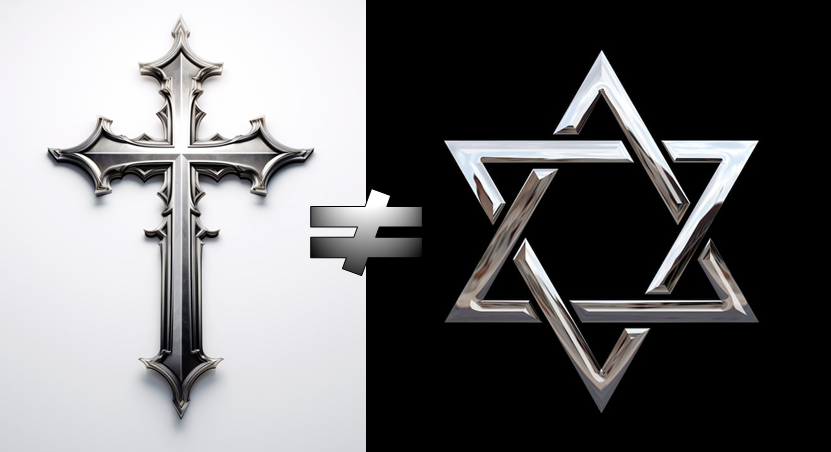
Some say that the Christian faith is the continuation of Judaism. But the divide between the two faiths is as a chasm so wide that you can't see the other side. Religious Jews do not even worship the same God as Christ's followers do.
The Jewish state flew 1,070 US Evangelical Christian-Zionist pastors to Israel for a massive propaganda event, to train them to present Israel as God's chosen people in its new information front. They are being trained to become “Ambassadors for Israel”.
The Christian Zionist belief that "all Israel will be saved" due to their ethnic status is challenged. According to the scriptures, those saved are chosen by Jesus Christ. True salvation includes both Jews and Gentiles united in faith, which emphasizes God's covenant and grace over tribal identity.
I will never stop proclaiming Christ as King no matter what laws are passed to silence this fundamental truth. None of the false Satanic gods can offer you eternal life! They all offer only deception, lies!
The Friday the 13th surprise unprovoked attack of the US and Israel on Iran may have woken the sleeping giants around the world. But it certainly exposed US President Donald Trump who is now acting like the AntiChrist.

 Login