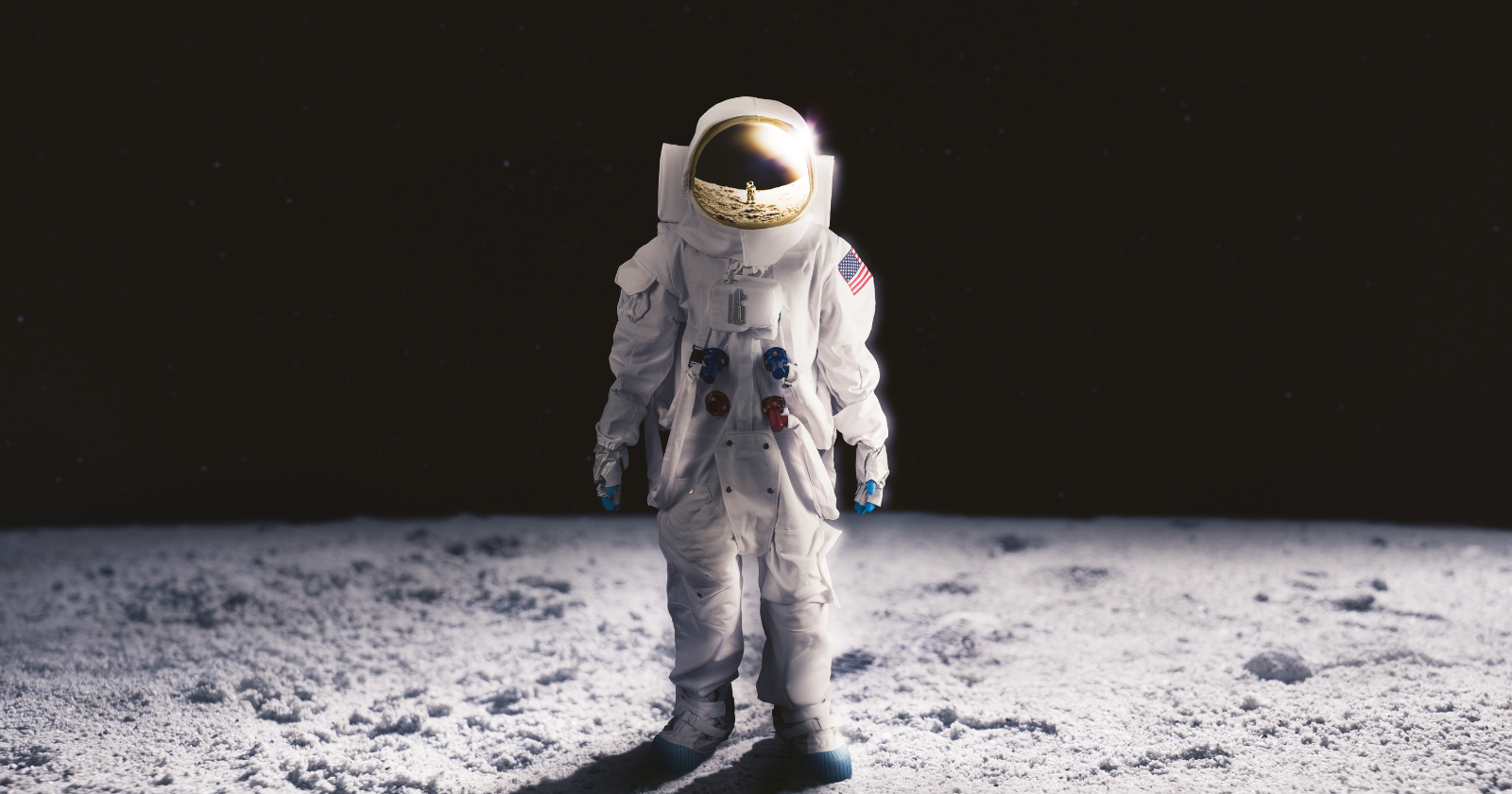
Among the range of proposed alternatives, one potential candidate involves what are called solar light sails, a theoretical propulsion system that relies on pressure generated from solar radiation against a large surface to move a spacecraft.
Such concepts have been proposed since the 1980s, some of which combine the idea of using sunlight as a power source with the implementation of lasers, which could propel such futuristic starships to speeds our best current technologies cannot attain.
However, not all spacecraft propulsion experts are necessarily sold on the idea of solar light sails just yet. According to new findings detailed in a paper by researchers Jiaze Li and Chao Shen of the Harbin Institute of Technology in China, this novel form of propulsion may have a few hurdles to cross before it can attain the near-light-speeds many experts had hoped for.
A Tale of Three Forces
According to Shen and Li’s recent research, a key problem arises once a solar light sail spacecraft begins nearing the speed of light: drag forces resulting from the very source of energy used to propel the devices could place significant limitations on their maximum attainable speeds.
A combination of different forces can be expected to occur as sunlight strikes a light sail, the authors say, which includes incident light, specular reflection, and diffuse scattering.
Incident light describes the physical momentum generated by light energy in the form of photons as they strike the sail, whereas specular reflection describes the momentum produced as photons reflect off the sail. Finally, diffuse scattering is a separate form of momentum generated by photons, which, rather than bouncing away upon impact, is actually absorbed by the sail, the energy from which is thereafter released in random directions.
New Limitations on Solar Light Sails
Based on these primary forces, the authors identify that once a light sail begins reaching relativistic speeds, it also becomes subjected to intense Doppler effect—the phenomenon that occurs as changes in the frequency of waves result as their source and an object or observer’s distance changes in relation to it.
In the case of solar light sails, the more the frequency of light waves striking the sail decreases, the less the amount of thrust generated by the three forces the paper identifies. In simpler terms, the faster a solar light sail spacecraft attempts to travel, the harder it becomes for it to accelerate.
Relativistic Light Aberration
At approximately 75% of the speed of light, the researchers say that an additional hindrance emerges, as what physicists call relativistic light aberration takes over. This phenomenon, first described by Einstein more than a century ago, involves relativistic corrections of light sources for observers who move at velocities approaching light speed.
In the case of our prospective future solar light sailors, this would mean that the weakest of the three forces impacting the sail (diffuse scattering) would begin to impose an active drag once the sail reaches approximately three-quarters of light speed. While the overall force of lasers helping to propel the light sail would remain positive at this stage in the system’s acceleration, the authors note an inevitable decline in efficiency.
The authors do concede that while their paper examines the radiative dynamics of solar light sail propulsion, it does not account for other factors that may include drag resulting from encounters with materials like gases, dust, or other physical sources (i.e., non-radiative sources), which could also impact overall speeds.
Additional factors worthy of consideration, but which the authors do not directly address in their paper, include the melting point of any materials used for solar light sail propulsion, which could be heated to extreme temperatures due to combined exposure to solar radiation, laser energy, and friction from movement.
Fundamentally, the team reports that their paper “provides a rigorous and in-depth theoretical foundation for lightsail dynamics,” which illustrates that while this future propulsion concept has its merits, we may still be far from seeing its realization for practical space travel.
By outlining the factors that contribute to constraints on light sail propulsion, Li and Shen aim to improve our overall understanding of this prospective future technology, thereby helping engineers to realize its potential for use in space exploration at some point in the future.
Micah Hanks is the Editor-in-Chief and Co-Founder of The Debrief. A longtime reporter on science, defense, and technology with a focus on space and astronomy, he can be reached atmicah@thedebrief.org. Follow him on X @MicahHanks, and at micahhanks.com.
The last human being to walk on the Moon stepped off the lunar surface at 5:40 AM Coordinated Universal Time on 14 December 1972. His name was Eugene Cernan. He was the commander of Apollo 17. As he climbed the ladder back into the lunar module, he said, “We leave as we came and, God willing, as we shall return, with peace and hope for all mankind.” In the 53 years since that moment, no human being has set foot on the Moon. The Apollo programme produced six successful crewed landings between 1969 and 1972, deposited 12 American astronauts on the lunar surface, and accumulated a cumulative total of approximately 80 hours of human presence on the Moon before being terminated for budgetary and political reasons. The return that Cernan invoked turned out to take substantially longer than anyone in 1972 expected.
According to Aerospace Global News’s coverage of NASA’s revised Artemis programme in early 2026, the agency has restructured its lunar return strategy substantially over the past several years. The Artemis programme, originally announced in 2017 and formally launched in 2019, set out to return humans to the Moon by the mid-2020s. The schedule has slipped repeatedly. Artemis I, an uncrewed test flight around the Moon, succeeded in November 2022. Artemis II, the first crewed mission of the programme, successfully sent four astronauts on a 10-day flyby of the Moon in April 2026 — the first crewed lunar mission since Apollo 17 in 1972, with NASA astronauts Reid Wiseman, Victor Glover, and Christina Koch and Canadian Space Agency astronaut Jeremy Hansen launching from Kennedy Space Center on 1 April and splashing down in the Pacific Ocean off the coast of California on 10 April after travelling approximately 695,000 miles and breaking the human distance-from-Earth record set by Apollo 13 in 1970. Artemis III, which was originally planned to be the first crewed lunar landing since Apollo, has been restructured into a 2027 rendezvous and docking test in low-Earth orbit. The first actual crewed lunar landing of the Artemis era will now be Artemis IV, scheduled for 2028 — subject to further delays that have been a recurring feature of the programme since its inception.
Why Artemis is not just Apollo redux
The structural difference between Apollo and Artemis is that Apollo was designed to win a race. Artemis is designed to stay. Apollo’s six successful lunar landings deposited 12 American astronauts on the lunar surface, who collectively logged approximately 80 hours of moonwalks across roughly 300 hours of total surface presence, spread across six missions over three and a half years, with individual missions lasting between 21 hours and 75 hours on the surface. The Apollo astronauts collected rocks, deployed scientific instruments, drove a lunar rover on the later missions, and returned home. Once the Cold War political imperative had been satisfied and the immediate scientific goals had been met, the programme was cancelled, the Saturn V rockets stopped being built, and the institutional capacity to send humans to the Moon was allowed to atrophy.
The Artemis programme is structured around a different objective. NASA’s stated long-term goal is what the agency calls “sustained human presence” at the lunar south pole — meaning multiple missions per year, progressively longer surface stays, a lunar habitat module, infrastructure for refuelling and resupply, and eventually a permanent base from which scientific and exploration activities can be conducted on a continuous basis. The Artemis landing site is specifically the south polar region of the Moon, which is scientifically and strategically valuable because permanently shadowed craters in the area contain substantial deposits of water ice. Water ice can be split into hydrogen and oxygen, which can be used as breathable air, drinking water, and rocket propellant. A lunar base with access to water ice can, in principle, sustain itself far more cheaply than a base that must have all its supplies launched from Earth.
The new mission architecture
Per BBC Sky at Night Magazine’s analysis of the Artemis III restructuring, the central technical challenge that has driven the schedule changes is the development of the commercial lunar landers. NASA has contracted with SpaceX (which is developing a lunar variant of Starship) and Blue Origin (which is developing the Blue Moon lander) to provide the actual surface-landing capability. Both vehicles are still under active development. SpaceX’s Starship must demonstrate several critical technologies before it can be used for a crewed lunar landing — including cryogenic fuel transfer in orbit, autonomous docking with the Orion crew capsule, and at least one successful uncrewed landing on the lunar surface. The cumulative technical demands have pushed the realistic timeline for the first crewed Artemis landing well beyond the original 2024 target, and the restructured Artemis III rendezvous-and-docking test in 2027 is intended to demonstrate the orbital procedures that the eventual landing mission will require.
The geopolitical context has also shifted substantially since the Artemis programme began. China’s space programme has announced a target of landing its own astronauts on the Moon by 2030 — the first crewed lunar landing in Chinese history, and a milestone that would substantially close the gap with the United States in space capability. China is also developing the International Lunar Research Station (ILRS) in partnership with Russia and several other countries, with completion targeted for the 2030s. The lunar south pole, with its water ice and its strategic value as a base for further exploration, is the destination for both programmes. The competing timelines mean that the next decade of lunar activity will involve at least two distinct national efforts converging on the same small region of the Moon.
What “sustained presence” actually means
As reported by World Today News’s coverage of the Artemis timeline and goals, the path from a single Artemis IV landing in 2028 to genuine sustained human presence on the Moon involves a long sequence of additional missions, infrastructure deployments, and technological developments that NASA’s current programme has scheduled into the 2030s. The agency’s planning documents anticipate progressively longer crewed surface stays, the deployment of habitat modules that can support multi-month occupancy, lunar surface mobility systems for exploring beyond the immediate landing area, in-situ resource utilisation systems that can extract and process water ice into usable resources, and eventually a permanent lunar outpost from which continuous human occupation becomes possible.
Whether the species will actually achieve sustained lunar presence in the 2030s remains genuinely uncertain. The Artemis programme has slipped repeatedly. The development of the commercial landers continues to be technically demanding. The political and budgetary support for the programme has fluctuated across administrations. China’s competing programme adds geopolitical pressure that may accelerate or complicate the US timeline depending on how the relationship between the two space programmes develops. What is no longer uncertain is the basic strategic direction: the leading human space programmes are now committed, at least in principle, to making the Moon a place where humans live rather than a place where they briefly visit. If that commitment holds, the next decade will produce the first sustained off-world human presence in the history of the species — a transition that would be, in civilisational terms, at least as significant as the first lunar landing itself was in 1969. The first Moon landing required getting there. This one requires staying.
On March 1, 1982, a Soviet probe the size of a small car settled onto a basalt plain on Venus, opened its camera covers, and began taking photographs while the atmosphere outside tried to crush it. The surface temperature was about 465 degrees Celsius — hot enough to melt lead, zinc and tin. The atmospheric pressure was roughly 92 times what a person feels at sea level on Earth, the equivalent of standing under almost a kilometre of seawater. Venera 13 was engineered to last around half an hour in those conditions. It lasted 127 minutes, scraped a soil sample, ran a chemical analysis on it, and beamed home the first colour photographs ever taken from the surface of another planet.
The images are not pretty in the way Mars panoramas are pretty. They show a flat, rocky landscape under a sky stained the colour of weak tea. A corner of the lander juts into the frame. A discarded lens cap sits on the ground beside a soil sampling arm. The rocks look like slabs of broken pavement.
They are also among the most extraordinary pictures in the history of spaceflight.
A probe built like a deep-sea bathysphere
To understand what Venera 13 did, start with the environment it had to survive. The Venusian surface sits under a carbon-dioxide atmosphere so thick it behaves almost like a fluid. Pressure at the ground is around 9.2 megapascals — comparable to the pressure at roughly 900 metres underwater. The temperature stays around 465 degrees Celsius day and night, with almost no seasonal variation, because the atmosphere holds heat the way an iron skillet does.
Soviet engineers at the Lavochkin design bureau approached the problem the way naval architects approach a submarine. The Venera 13 lander was a titanium pressure vessel, roughly spherical, wrapped in thermal insulation and topped with a heat shield. Inside the sphere, the electronics sat in a sealed compartment pre-chilled before atmospheric entry. The idea was simple: build a thermos flask strong enough to take the pressure, fill it with cold instruments, and race the heat.
The race was always going to be lost. The only question was how long the probe could keep working before its insides reached the temperature of its outside.
The descent
Venera 13 launched in 1981 on a Proton rocket from Baikonur. It cruised for four months and reached Venus on March 1, 1982. The lander separated from the carrier bus, plunged into the upper atmosphere at around 11 kilometres per second, and slowed through a sequence of aerobraking, parachutes and finally a disc-shaped aerodynamic brake that turned the dense lower atmosphere into a kind of friction landing pad.
It touched down in the southern hemisphere at 7.5 degrees south, 303 degrees east, just east of an elevated region called Phoebe Regio. Within seconds, pyrotechnic charges blew the lens caps off the cameras. One cap landed in the field of view, and there it sits in the photographs, a tiny piece of Soviet metallurgy resting on Venusian basalt.
The camera was a scanning photometer, not a frame camera. It swept side to side, building a panorama line by line, the way an old fax machine built a page. Each full sweep took several minutes. Over the course of the mission, Venera 13 returned two colour panoramas and several black-and-white ones, transmitted in real time through the carrier bus as it flew overhead on its way past Venus.
The first colour photographs from another world
The cameras carried red, green and blue filters mounted on a rotating wheel. Each filter swept across the scene in turn, and engineers on the ground reconstructed the colour image by combining the three passes. The result was a panorama that ran from one edge of the lander out to the horizon and back, showing the sampling arm, the lens cap, and the rocks beyond.
The sky in the images is yellow-orange because the thick atmosphere filters out blue wavelengths long before light reaches the ground. The rocks themselves are mostly basaltic, with hints of weathering. The horizon is close — only a few hundred metres away — because the dense air refracts light in ways that compress the visible distance.
Those original images have been mistaken many times. As Tech Times has documented, high-resolution “colourised” versions that circulate on social media are usually modern reinterpretations, not the raw frames. The actual Venera transmissions were low-resolution scans, grainy and limited by the bandwidth a small spacecraft could push through the atmosphere of another planet in 1982. The wonder is not their fidelity. The wonder is that they exist at all.
The soil scoop that should not have worked
Cameras were only part of the payload. Venera 13 also carried a drill arm designed to grind into the surface, lift a soil sample through a small airlock, and feed it into a chamber inside the pressure vessel for X-ray fluorescence analysis. The drill had to work at 465 degrees, under 92 atmospheres, on a surface no engineer had ever touched.
It worked. The sample was collected and analysed within minutes of landing. The results showed a composition consistent with basalt, similar to volcanic rocks found in some terrestrial rift zones. It was the first direct chemical reading of the soil of another planet.
The drill mechanism alone is a small monument to Soviet engineering. A motor that has to survive the pressure of the deep ocean while glowing at the temperature of a pizza oven, then drive a bit into hardened rock, then retract the sample through a sealed valve without letting the outside atmosphere flood in — every step is a potential failure point. None of them failed.
Why 127 minutes
Mission planners had budgeted for around half an hour of surface operations. The probe ran for nearly four times that. Why?
Part of the answer is that the pre-cooling worked better than expected. The interior of the pressure vessel was chilled before entry, and the thermal insulation slowed the heat soak. Part of the answer is that the lander happened to settle in a slightly cooler microenvironment — surface temperatures on Venus vary by a few degrees with elevation, and the area near Phoebe Regio sits a little above the mean radius of the planet.
The rest was margin. Soviet engineers, having lost earlier Venera probes to the heat, had over-built the thermal protection of the 13 and 14 series. They expected most of their margin to be eaten by unknowns. On Venera 13, the unknowns turned out to be merciful, and the margin became extra science.
The companion probe Venera 14 landed a few days later, in 1982, in a region hundreds of kilometres away. It survived for 57 minutes — still nearly double its design life, but less than half of what its sister achieved. Same engineering, different luck.
The long road from Venera 7
Venera 13 did not appear out of nowhere. It was the end of a decade-long arc of Soviet attempts on Venus, each one learning from the wreckage of the last. Earlier missions had gradually pushed the boundaries — Venera 7 became the first spacecraft to transmit from the surface of another planet in 1970, sending temperature data after a hard landing.
Venera 8 followed and improved on that achievement. Venera 9 and 10 returned the first black-and-white images from the Venusian surface in 1975, though stuck lens caps cost each probe half its planned panorama. Venera 11 and 12 landed safely but failed to image anything at all because lens caps on both probes refused to separate.
By the time Venera 13 was being built, the lens-cap problem had become institutional folklore. Engineers reworked the pyrotechnic releases, tested them in chambers that simulated the Venusian atmosphere, and built in redundancy. On Venera 13, the caps came off cleanly. One of them, photographed at the foot of the soil sampling arm, has become one of the more poetic objects in the history of robotic exploration: a piece of debris from another planet, captured by the spacecraft that dropped it.
What the images actually showed
Beyond the lens cap, the photographs revealed a surface that geologists could read. The rocks at the Venera 13 site appear in slabs — thin, layered, fractured — suggesting either rapid cooling of a basaltic lava flow or chemical weathering by the dense atmosphere. The soil between the slabs looks fine-grained, almost like dark sand. No dunes are visible. No obvious craters. No water-cut features, because liquid water cannot exist on the Venusian surface at any pressure.
Leonid Ksanfomality, a senior researcher at the Russian Academy of Sciences who had worked on the Venera programme, later argued that subtle shapes in the panoramas might be biological — a claim covered with appropriate scepticism by outlets including Sci-News. The mainstream interpretation is that the shapes are artefacts of the scanning camera, the low resolution, and the human tendency to find faces in clouds. But the fact that anyone could even pose the question — using photographs from the surface of Venus, taken in 1982 — is itself a measure of what Venera 13 made possible.
The chemical results were more substantive. The X-ray fluorescence spectrometer found high potassium content, consistent with alkaline basalts, and the data fed directly into the geological maps later refined by NASA’s Magellan radar mission in the 1990s.
What hellish heat does to electronics
Surviving Venus is not a problem anyone has fully solved since. Silicon-based electronics begin to fail above about 250 degrees Celsius. Lithium batteries cannot hold charge. Lubricants vaporise. Solder melts. Every consumer-grade component that makes modern spacecraft cheap and capable would last seconds on the Venusian surface.
NASA’s Glenn Research Center has spent years developing silicon-carbide electronics that can run at Venus surface temperatures without insulation, with prototype circuits demonstrated running for weeks at 500 degrees Celsius in test chambers. The European Space Agency’s Venus Express orbiter, which flew from 2006 to 2014, used infrared instruments to see through the cloud deck down to the surface without ever having to land on it. The European approach is telling: study Venus from above, where the engineering is merely difficult, rather than from below, where it is brutal.
The upcoming American DAVINCI mission, scheduled for the early 2030s, will send a descent probe back through the Venusian atmosphere — but its science is concentrated on the descent itself, not the surface landing. Even with four decades of electronics progress, no one is yet planning to beat Venera 13’s 127 minutes by an order of magnitude.
The country that built it
Nine years after Venera 13 landed, the Soviet Union ceased to exist. The Lavochkin bureau survived the transition, and the Russian space programme inherited the Venera files, but no successor mission to the Venusian surface has ever flown. The last attempt, Vega 1 and 2 in 1985, dropped balloons and landers as part of a Halley’s Comet flyby and represented the final flowering of the Venera lineage.
The same institutional momentum that produced Venera 13 also produced the automated Buran shuttle that landed itself in a Baikonur blizzard in 1988, a different expression of the Soviet preference for letting machines handle the parts of spaceflight that humans cannot. Venera 13 was the same idea applied to a place where no human could ever go: send the robot, build it tougher than it needs to be, accept that you will never get it back.
What is still down there
Venera 13 is still on Venus. The lander never moved after it touched down. The cameras stopped scanning. The radio fell silent. But the titanium pressure vessel, the dish of the heat shield, the discarded lens cap, the small circular impression where the drill bit into the soil — all of it remains, slowly being cooked at 465 degrees in an atmosphere of carbon dioxide and traces of sulphuric acid.
The corrosion rate is slow. Sulphuric acid attacks titanium only weakly at those temperatures, and the dense atmosphere protects the surface from the kind of micrometeorite weathering that pits the Moon. Estimates suggest the lander’s main structure could remain recognisable for thousands of years, possibly longer. The colour photographs it took were transmitted in real time and stored on tape reels in Moscow, but the camera that recorded them is still sitting on the ground, pointed at the same patch of basalt, waiting in the dark orange light for nothing in particular.
It has been there for forty-four years. Today, somewhere in the southern hemisphere just east of Phoebe Regio, in the heat and the pressure and the silence, a small piece of the Soviet Union is still on Venus, and a lens cap it dropped on a Monday afternoon in March 1982 is still resting on the ground beside it.

 Login