❌

Reading view

White storks: why introducing non-native species in rewilding projects can be a good idea
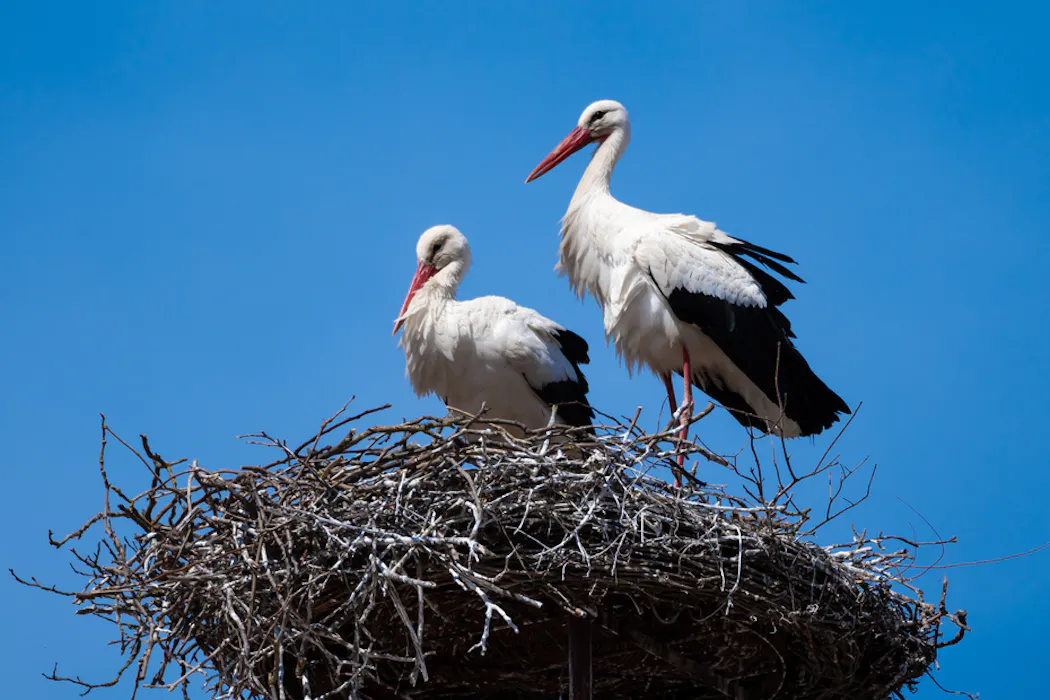
A pair of white storks. grafxart/Shutterstock

White storks (Ciconia ciconia) are a majestic bird with a two-metre wingspan and an enormous circular nest.

The recent release of these stunning birds at multiple sites in England, with more releases planned and a public consultation under way has kicked off a debate about whether non-native birds should be part of rewilding projects.

The government advising body Natural England says it does not consider white storks to be native birds. But some experts disagree and say it is a native species and was hunted into extinction in the 1400s.

What is a native species?

In the UK, native species are those which have been present throughout the last 12,000 years. This includes migratory species which breed in or visit the UK. It also includes species which have been eradicated by humans but reintroduced.

In England, a licence is needed to introduce any species which is not ordinarily resident, or a regular visitor, to England. This is partly because these species could become invasive, a term used when a species cause substantial environmental or socioeconomic harm.

But even when species are not native, they can have value for rewilding projects. The white stork’s biggest contribution to rewilding is likely to be their ability to inspire the public interest in nature. Storks in Europe are so popular that there are special stork villages which are managed for tourism, and people can see these iconic species up close.

White storks were reintroduced in Sussex as part of a rewilding project and are now breeding.

White storks are definitely regular visitors to England, and rare but present in the subfossil record (the last 4000 years). This status as a regular visitor means they fall somewhere between a native and non-native species – they are not considered a priority for introduction, but no license is required for their release.

Introduced non-native species can cause problems. A good example is Japanese knotweed (Reynoutria japonica), brought to the UK by the Victorians as an ornamental plant. It rapidly spreads and causes damage to the structure of buildings and essential services such as water and drainage pipes. Controlling it now costs the UK £247 million each year.

Introduced species are also a major conservation challenge, such as the damage to seabird populations by invasive cats, rats and other animals feeding on their eggs and chicks. If a rewilding project introduces a non-native species, it could become invasive and cause serious disruption to native species already in the landscape.

But evaluating the impact of adding new species to the landscape is important even when a species is considered native. The Scottish beaver trial was conducted to evaluate the impact of introducing beavers (Castor fiber) from Norway in 2008. Eighteen years later, beavers are a key part of many rewilding projects, from London to large estates in Scotland.

What can white storks add?

White storks are charismatic species which are viewed positively by most people, and this could increase engagement with nature. In Poland, tourists travel hundreds of kilometers to visit white storks, making them valuable for rewilding projects which use tourism to raise funds.

Non-native species are also introduced as “ecological analogues” which means they provide the same ecological function as extinct species. The steppe bison (Bison priscus) which roamed the UK in the Pleistocene period were mixed feeders, which means they ate a combination of grasses, leaves and the woody parts of plants. By feeding on a variety of plants and plant parts, mixed feeders like bison can encourage a patchwork of habitats in a landscape. The native steppe bison is extinct in the UK, but projects like Kent Wildlife Trust’s Wilder Blean project have introduced the related, but non-native, European bison (Bison bonasus) to provide these functions.

Adapting to warming climate

Better adaptation to future climates is another reason to include non-native species in rewilding projects. As the UK’s climate changes, species are moving from places where they are considered native to new areas which suit them better. The southern small white butterfly (Pieris mannii) has spread northwards in Europe and was first seen in the UK in 2025. This small butterfly has successfully made the journey over the ocean, but other species may require human help to move to new areas with more suitable climates.

As an island nation with many locally extinct species, the introduction of species has formed a key part of UK conservation, including rewilding projects. It does matter whether a species is native or not. Although both could benefit rewilding projects, non-native species carry greater risks to local environments and have higher regulatory requirements.

The white stork’s status as a regular visitor could allow them to sidestep the regulatory requirements for non-native species, though impact on the environment should also be considered.

But as their nests can attract birds such as swallows and martins, introducing white storks could have broader benefits to the landscape.

The Conversation

Sarah Papworth does not work for, consult, own shares in or receive funding from any company or organisation that would benefit from this article, and has disclosed no relevant affiliations beyond their academic appointment.
  •  

Birds masturbate, and that’s perfectly normal

mycteria/Shutterstock

For captive animals, engaging in natural behaviour is a pillar of the animal welfare framework. But when it comes to sex, one important behaviour has been largely ignored, and sometimes even punished: masturbation.

Solo sex is surprisingly common across the animal kingdom. It is well documented in primates. Tortoises are surprisingly vocal during their solo lovemaking endeavours, if not very graceful. Camels masturbate by rubbing their penises in the sand and porcupines make inventive use of all sorts of objects.

Our new study could change how other scientists view masturbation in birds and improve their welfare.

Masturbation also seems to be common in birds. A quick internet search brings up an abundance of video clips on social media and dedicated posts on bird-keeping forums, largely from worried or bemused hobbyist bird keepers.

It has often been treated as an abnormal problem behaviour in captive birds (particularly parrots). Folklore husbandry has assumed it is the undesirable outcome of stress, bad health or poor environment. Bird keepers often therefore discourage masturbation via punishment or veterinary interventions such as diet or care changes and, sometimes, even drugs and surgery. Despite the welfare implications, masturbation in birds had been largely unexplored by the scientific community.

We set out to change that, by investigating the distribution and evolutionary history of masturbation in birds for the first time. We studied 120 species of bird across 22 major groups, gathering data from the scattered scientific literature, online reports and community forums, and surveys of bird experts.

Colourful parrot ducks behind wing.
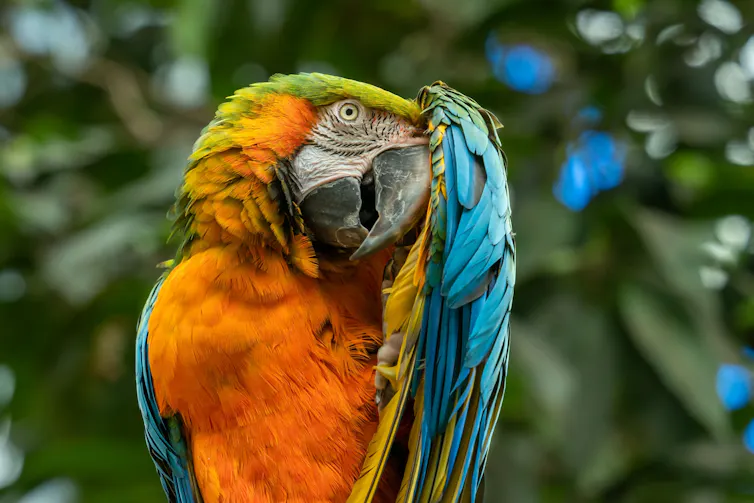
There’s no need to shame parrots for solo sex. Wirestock Creators/Shutterstock

Our study found that masturbation is widespread across birds with a strong evolutionary history, meaning that it’s an ancient trait probably similar in closely related species. Although we found more records of masturbation in male birds, it occurs in both sexes and across all age groups.

Solo sex also seems to be linked to species that mate with multiple partners, supporting the idea that it might help to increase reproductive success when there is a high degree of competition over fertilisation. For instance, in males it may flush out old sperm to leave newer (better condition) sperm for mating. In females it may increase sexual arousal to help with sneak mating with males other than their partner.

Wild behaviour

Crucially, we discovered that masturbation is actually less common in captivity than the wild, and more common in birds reared by their own parents than by humans. What this tells us is that masturbation in birds is neither an unnatural behaviour, nor a consequence of captivity. Given this finding, it is important that birds are not prevented from masturbation. Of course, as with any behaviour, there may be extreme cases where chronic masturbation could indicate underlying health or husbandry issues.

Avian self-pleasure is usually a rather inelegant affair, in which a bird rubs their cloaca (a shared orifice for both excretion and reproduction) against an object, like a branch, twig or toy. This is often accompanied by a lot of flapping and self-satisfied vocalisation.

One potential reason for the lack of scientific studies exploring avian masturbation may be because the cloaca is thought to have fewer nerve clusters, and therefore lower sensitivity, than our own genitals.

Clearly however, birds are getting some satisfaction from masturbation, so perhaps there is more to a bird’s sensations during sex than has previously been recognised. Further exploration of this could have important implications for both welfare and captive breeding programmes. While sexual pleasure may not be exactly the same experience as for mammals, it is wildly premature to dismiss the idea that birds also feel pleasure.

The Conversation

The authors do not work for, consult, own shares in or receive funding from any company or organisation that would benefit from this article, and have disclosed no relevant affiliations beyond their academic appointment.

  •  

Beyond Anglo-Saxons, Celts and Vikings: DNA uncovers a dynamic history of migration to Britain

Each of us tells a story about who we are, often tracing our identity back through an imagined line of ancestors. Though identity is fundamentally cultural, we tend to anchor it in biology – in the idea of a stable genetic inheritance passed down through generations.

Population genomics has exposed a history far more complex, dynamic and intertwined than we might wish to imagine. Even in a place such as Britain, long imagined as an island of deep and uninterrupted heritage, genetic data suggest a history marked by intense migration, mixture and cultural reinvention.

Two new studies have reinforced this picture, by analysing DNA from the skeletal remains of British individuals who lived during Roman and medieval times.

Prehistoric Britain witnessed periodic major migrations interspersed with smaller and more regular movements of peoples across what was then a contiguous landscape.

After about 6100BC, rising sea levels isolated Britain from mainland Europe, helping to promote later historical narratives of a population relatively isolated.

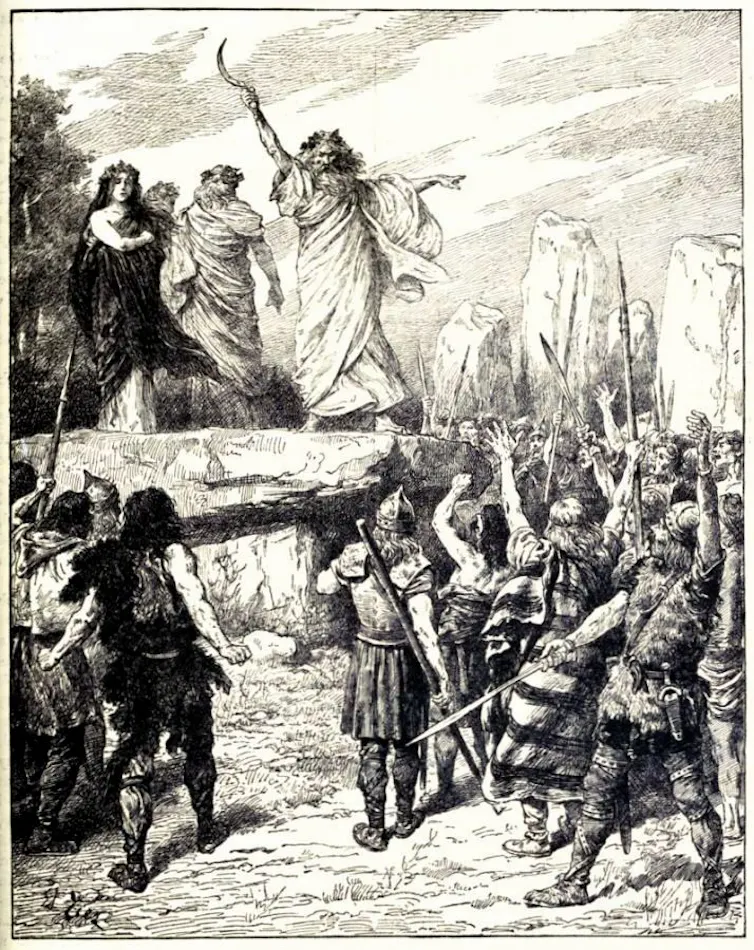
Yet even early observers recognised otherwise. Writing in the first century AD, the Roman historian Tacitus noted the diversity of Britain’s tribes, suggesting their origins lay in Germany, Gaul and Iberia.

Druids incite the Britons to oppose the landing of the Romans.
Druids incite the Britons to oppose the landing of the Romans. Edouard Zier

Such conclusions were drawn from physical, cultural and linguistic observations. Now it is testable, thanks to rapid advances in population genomics and ancient DNA sequencing, allowing direct ancestry reconstruction across demographic and political changes.

A major recent study by Marina Silva, from the Francis Crick Institute in London, and colleagues analysed more than 1,000 ancient genomes from across Britain during the first millennium AD.

The pre-print, which has not yet been published in a journal, asks one simple question: could the main historical events of Britain – the Roman occupation, Anglo-Saxon migration, the Viking Age and the Norman conquest – be detected in the genetic data of the populations that lived through these eras?

The answer was complicated. The Roman period, for all its political and cultural upheaval, left surprisingly little mark on the genetic structure of the wider population. About 80% of the individuals who lived during Roman times in Britain cluster almost exactly with those of the immediately preceding Iron Age, arguing for genetic continuity and no replacement. Even in urban centres where occupying Roman elites were most prevalent, the broader population retained overwhelmingly local ancestry.

In contrast, the early medieval period, from around 410AD (when Roman rule collapsed) to 1066AD, saw a substantial influx of new ancestry from across the North Sea. The researchers were able to detect this influx by comparing the British samples with genetic data from populations in other parts of north-west Europe. Continental ancestry associated with Anglo-Saxon migration appears in more than 70% of of the burials in southern “Anglo-Saxon” Britain.

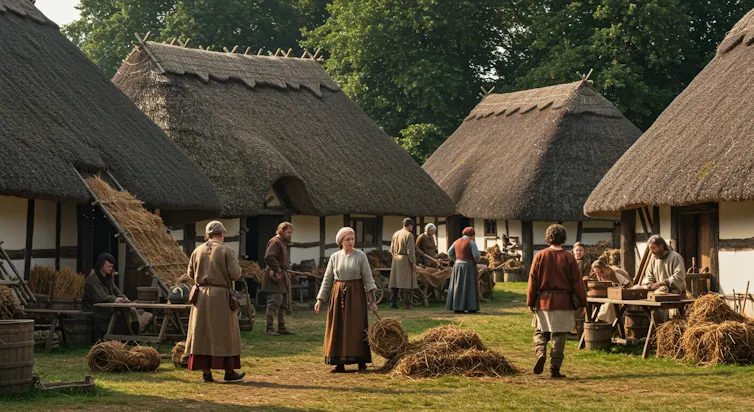
The early medieval period saw a substantial influx of new ancestry from across the North Sea
The early medieval period saw a substantial influx of new ancestry from across the North Sea. Shutterstock AI

Thus, migration was not just cultural but demographic on a scale sufficient to leave its imprint on the shape of population structure.

Yet even this transformation cannot be generalised. From about 700AD to 1000AD, further waves of continental influence appear in Britain, with the arrival of settlers from central Europe (seemingly from France and the Rhineland) and, to a lesser extent, the south of Europe. However, the Viking Age leaves a more uneven and regionally variable genetic signal than its historical prominence might suggest.

While a Scandinavian component is clearly present in northern and eastern regions, it is rarely of a magnitude comparable to that found in early medieval migrations. Most surprisingly, the Norman conquest of 1066 appears to have been largely an elite process, leaving little detectable trace in the genomes of the common population.

Genome-wide ancestry profiles straddle the date of the conquest, with no hint of abrupt population replacement. Despite all its drama, the conquest seems, at the level of population genetics, to have involved elite replacement by relatively few individuals.

A second pre-print study provides a closer view of what this looked like on the ground. Focusing on a rural cemetery at Priory Orchard in Surrey, Flavio De Angelis, from Arizona State University in Tempe, and colleagues examined individuals buried across the centuries before and after the Norman conquest.

Again, the results are surprising: rather than any clear genetic break after 1066, both pre- and post-conquest burials fall within the same cluster, showing shared ancestry and no evidence for demographic turnover. The continuity is not just qualitative, but visible in the statistical similarity of ancestry components across generations.

Instead, the community reflects a much longer history of interaction across the North Sea world. Its ancestry includes Anglo-Saxon-associated components, significant Scandinavian input dating to the Viking period, and smaller continental contributions.

Crucially, these elements are already present before the Norman arrival and persist afterward. The Norman conquest, in genetic terms, is barely visible. What looks, on historical timelines, like a moment of dramatic rupture appears, at the level of the common individual, as a continuation. Genes tell the story of populations and detect localised impacts of migration, but they do not map neatly onto geopolitics.

Taken together, these studies point to a crucial distinction. Cultural and political change does not necessarily equate to demographic change. Britain’s history is neither one of uninterrupted continuity nor of repeated population replacement, but something more complex: long-term mixture punctuated by events that reshape institutions more than populations.

Some migrations – such as those of the early medieval period – left deep and measurable genetic legacies. Others, despite their prominence in historical narratives, left only faint traces. The discrepancy is striking: the scale of genetic change does not map neatly onto the scale of historical attention.

Cardiff castle was built by the Normans on top of a Roman fort. meunierd / Shutterstock

Modern genetic data reinforce this picture. Contemporary populations across the British Isles do not form a single, uniform group. Instead, they cluster into overlapping but distinct lineages reflecting different regional histories and varying degrees of past migration.

These patterns echo the ancient record, but they did not affect all regions equally. Wales and Ireland retain stronger continuity with earlier populations, while England shows clearer evidence of ancestry linked to early medieval migration from northern Europe. Scotland occupies an intermediate position, reflecting both long-term continuity and later Scandinavian influence.

Importantly, these differences are matters of degree, not kind. All populations of the British Isles share deep common ancestry overlaid by layers of migration whose effects vary regionally. The structure we see today is the product of these layered histories, not the survival of isolated or “pure” populations.

What emerges is not a story of rooted, bounded identities, but of continual connection. British identity – like all identities – has been assembled over millennia through movement, interaction and adaptation.

Modern genomes do not simply tell us who we are; they preserve how we got here. History does not make migration exceptional – it reveals it as the norm.

The Conversation

Jay Silverstein does not work for, consult, own shares in or receive funding from any company or organisation that would benefit from this article, and has disclosed no relevant affiliations beyond their academic appointment.

  •  

Heatwaves are destroying the sex lives of bees – new research

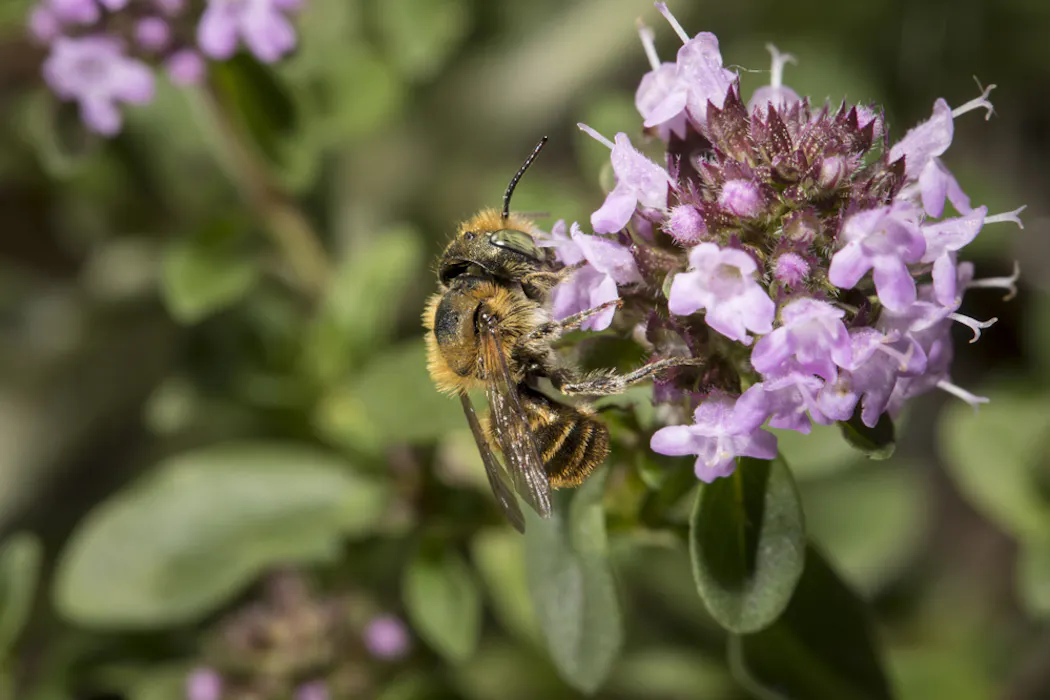
A bee seeking pollen. Bildagentur Zoonar GmbH/Shutterstock

There is not yet much research on the effects of heatwaves on bees. What little there is focuses on super extremes of weather that would kill an adult bee.

However, my new research with colleagues shows that UK populations of solitary bees may be much more sensitive than previously thought to the kinds of extreme weather we are now seeing regularly.

To find out what happens to bees during hot weather, my team recreated the three-day UK heatwave of July 2022. We subjected a group of developing larvae of red mason bees to three days where temperatures peaked daily at 40°C.

Red mason bees are common solitary bees found in UK gardens, and are important pollinators of apples and other fruits. At the same time, a control group experienced normal July temperatures for Hull, where the study was conducted, peaking daily at about 25°C.

After that, we treated both groups identically and allowed them to spin their cocoons and hibernate as normal. Nine months later, all the bees emerged fine, so it appeared initially that the heatwave had had no effect.

But this was before we dissected the bees to look at their reproductive health.

Staggeringly, in males from the heatwave group, sperm activity had dropped by half compared with the control group, and sperm counts by one third. In females, there was a 15% reduction in both the size and the number of developing eggs.

The heatwave had wrecked their fertility, especially in males.

Reduction of sperm motility in bees during heatwave

Graph showing a 50% reduction in sperm motility in the heatwave group compared to the control group.
The heatwave reduced sperm motility by half. Jamie Smith/Journal of Thermal Biology, CC BY

These numbers are shocking because they suggest solitary bee populations are much more sensitive to weather extremes than we thought, and that this should be factored into calculations of the broader effects of climate change. While bees did not die outright, their fertility was severely affected.

This means that a heatwave one year could lead to a drastic drop in the number of bees the following year, and therefore less efficient pollination for key crops like apples, cherries and oilseed rape.

This would leave commercial fruit growers even more reliant on temporarily renting honeybee hives, commonly called “hire-a-hive” schemes, to combat pollination deficits. This is at a time when research increasingly shows that wild bees, whose services come for free, are better pollinators than honeybees.

What else happens in heatwaves?

In honeybees and bumblebees, living together as a group is the key to withstanding weather extremes. With their social hives, honeybees can flexibly respond to periods of heavy rainfall and strong winds by rapidly reallocating the tasks that worker bees perform – switching from nest maintenance to foraging, for example.

Honeybees and bumblebees are also able to respond to temperature changes. They maintain their nests within strict temperature limits, with some workers switching to becoming living radiators when temperatures drop, buzzing their wing muscles to produce heat that keeps the brood at the ideal growing temperature.

Bumblebee nests begin with a single queen hibernating over winter and then working alone to build up her brood. New research is revealing secrets of their resilience: for example, hibernating bumblebee queens can survive underwater for up to a week when their nest is flooded.

However, honeybees and bumblebees are not most bees.


Read more: Queen bumblebees can breathe underwater — for days. We discovered how


Unlike honeybees and bumblebees, most bees are solitary, which means they don’t have social nestmates to help them when times get tough – they work entirely on their own. Nests of these solitary bees are at the mercy of the elements, so solitary bees are much more vulnerable to climate change than social bees.

Female red mason bee adding pollen to her nest. The sealed cells behind her are completed with eggs, and the larvae will hatch out and eat the pollen
Female red mason bee adding pollen to her nest. The sealed cells behind her are completed with eggs, and the larvae will hatch out and eat the pollen. James Gilbert, CC BY

Of course, heatwaves are not the only threats to bees. They have an array of other nightmares to cope with, including pesticides, diseases, nutritional stress and loss of habitat.

The priority now is to investigate how bees affected by heatwaves also cope with these other problems. Our lab heads up a government-funded study looking at how climate change affects the nutritional needs of growing wild bees, and how parent bees respond to these needs.

Excitingly, we are beginning to see patterns indicating that growing bees require different balances of nutrients when they are reared at different temperatures. We are now testing whether bee mothers are sensitive to these requirements, and can adjust the pollen they gather to compensate.

Extreme hot weather is becoming more prevalent, even in cooler countries. These studies show that severe weather, while not necessarily killing bees outright, has the ability to seriously damage the bee population – with long-term consequences for pollination as well as the human food chain.

The Conversation

James Gilbert currently receives funding from UKRI (BBSRC) and the study mentioned in this article, on which James is a coauthor, was funded by UKRI (NERC).

  •  
❌