❌

Reading view

Tech bosses urge G7 to back US-led AI group

Anthropic CEO Dario Amodei and Google DeepMind’s Demis Hassabis reportedly lobbied for a US-led coalition to shape global AI rules, as Anthropic remained locked in negotiations with the Trump administration over export controls on its newest models.

CNBC reported that during a closed-door lunch at the G7 Summit attended by President Donald Trump and other world leaders, Amodei called for international cooperation to cover structured access to frontier models, a chip and critical components trade framework which excludes China and coordinated responses to AI risks in cybersecurity, bioterrorism and intelligence.

OpenAI CEO Sam Altman also called for a formal international forum to establish globally accepted testing standards, provide impartial analysis of AI capabilities and risks, and serve as a venue for cooperation among nations, according to an OpenAI briefing.

The outlet reported Canadian Prime Minister Mark Carney agreed the US could lead such a coalition, according to people familiar with the discussions.

In addition to Trump, Treasury Secretary Scott Bessent, Commerce Secretary Howard Lutnik and Secretary of State Marco Rubio were also in attendance.

Anthropic ban
The backdrop of the AI discussions was the export controls imposed by the Trump administration on Anthropic’s Fable 5 and Mythos 5 models, which went into effect on 12 June after the government cited national security concerns.

News sites have reported Anthropic is currently in negotiations with the Trump administration over the directive.

Financial Times (FT) reported the US decision alarmed European governments and Silicon Valley alike, while raising concerns even allied nations could be cut off from cutting-edge AI.

French President Emmanuel Macron stated the Anthropic dispute clarified what was at stake, warning if the US could “from one day to the next turn off the switch” it would ultimately damage the multitrillion-dollar US companies leading the global AI race.

Macron called for stronger AI regulation and a platform for democratic cooperation to establish common standards. Indian Prime Minister Narendra Modi stated democratic nations needed access to frontier models to protect critical infrastructure, according to people familiar with the discussions.

The post Tech bosses urge G7 to back US-led AI group appeared first on Mobile World Live.

  •  

US-EU AI cooperation in focus at G7 Summit

European Commission (EC) President Ursula von der Leyen (pictured) called for closer US-European Union (EU) cooperation on AI at the G7 Summit currently being held in France, arguing both sides have a shared interest in accelerating adoption and ensuring powerful models are introduced safely.

In a post on X following a roundtable with partner countries and AI business executives, von der Leyen stated AI is “developing exponentially” and described it as “the most important technology of our time”. She said the technology “comes with immense potential, but also risks for free, democratic societies”, adding Europe and the US should work together because they “represent 70% of the world market”.

According to Reuters, von der Leyen framed AI safety as a shared interest, stating: “We use each other’s trusted technology, and our financial systems are interconnected. “It is in our mutual interest that our citizens and companies can safely use the best AI models,” she added.

New models
The remarks follow a US government order issued earlier this week directing Anthropic to suspend access to its most advanced AI models, Fable 5 and Mythos 5, for foreign nationals over national security concerns.

Although the Trump administration’s letter targeted foreign nationals, Anthropic said compliance would have required verifying the nationality of every user. It therefore shut both models down entirely for all customers.

In an AI sovereignty push earlier this week, French Prime Minister Sebastien Lecornu argued: “We cannot rely on the goodwill of certain partners who, as we have seen in recent days, are capable of cutting off access to the Anthropic model.”

On the issue, von der Leyen said at the summit “the key question of today is how to introduce new models safely,” calling for G7 countries to exchange information and cooperate through independent entities evaluating models before market release.

She also highlighted adoption as a competitive priority, stating Europe and the US are “at par in terms of AI adoption” but that the bloc wants “our own AI future, not in isolation – that is very important – but together with our trusted partners”.

The post US-EU AI cooperation in focus at G7 Summit appeared first on Mobile World Live.

  •  

Look Up and Skynopy partner on automated satellite collision avoidance service

Space surveillance venture Look Up plans to use Skynopy’s ground station network to help automate its proposed low Earth orbit collision avoidance service, the French startups announced June 17.

The post Look Up and Skynopy partner on automated satellite collision avoidance service appeared first on SpaceNews.

  •  

Orange accelerates French start-up growth

Orange stepped up ambitions to drive commercial growth for French start-ups, using the annual VivaTech event in Paris to outline a three-pronged strategy focused on procurement, distribution and enterprise integration.

Orange stated it will buy directly from French start-ups where their technology fits its operational and business needs, use its commercial network to connect companies with public and private-sector buyers and integrate select technology into Orange Business’ enterprise catalogue.

The operator said it aims to boost digital sovereignty by tackling long-standing barriers faced by young French companies, including lengthy contracting processes, limited access to large corporate customers, a lack of commercial references and the complexity of scaling technology at pace.

Separately, Orange Ventures, the group’s investment arm, added it would boost funding for start-ups working in AI, cloud, cybersecurity, health and defence as part of a wider digital trust push.

Orange pointed to several companies it has already worked with under the plan, citing successful partnerships with cybersecurity specialist Anozr Way, circular economy player Circular Place, agentic AI developer H Company and process optimisation firm Kerys.

The initiative forms part of the operator’s partnership with French Tech Mission 2030, a government-backed programme that aims to support the country’s start-ups seeking to move beyond pilots and into commercial deployment.

Orange CEO Christel Heydemann (pictured) said France needs start-ups “capable of reaching industrial scale, sustaining their solutions and rapidly winning their markets,” adding Orange aims to use its “purchasing volume”, “commercial strength” and “integration expertise” to help them grow.

Julie Huguet, director of the French Tech Mission, added “access to customers, trusted relays and smoother sales cycles” were “essential” for start-up growth. She said the partnership with Orange could “generate tangible commercial opportunities for our scale-ups and help bring out the future European technology leaders”.

The post Orange accelerates French start-up growth appeared first on Mobile World Live.

  •  

New Duck-Billed Dinosaur Unearthed in Romania

Kryptohadros kallaiae. Image credit: Tibor Pecsics.

An international team of paleontologists from Romania, Hungary and Italy has identified a new genus and species of herbivorous, duck-billed dinosaur from an incomplete skeleton unearthed in the Hațeg Basin, a bowl-shaped depression in the Carpathians of present-day Romania.

The post New Duck-Billed Dinosaur Unearthed in Romania appeared first on Sci.News: Breaking Science News.

  •  

Enhanced Mobility Insights: Key Takeaways from the MOVEO General Assembly

In a significant milestone for the advancement of intelligent transport systems, representatives from fifteen partner institutions converged in the Swiss city of Winterthur for the General Assembly of the MOVEO project. Spanning two days in early June and hosted collaboratively by the Zurich University of Applied Sciences (ZHAW) alongside the City of Winterthur, this high-level meeting marked a pivotal moment to assess the multifaceted progress achieved in this ambitious European Union-backed initiative. The assembly provided a platform for experts specializing in transport infrastructure, digitalization, and inclusivity to engage in comprehensive dialogues surrounding the integration of cutting-edge technologies across diverse transport environments.

MOVEO stands at the intersection of innovation and real-world application, targeting critical challenges faced by modern transport systems. Over the course of the assembly, attendees delved deeply into advancements across the project’s core technical domains. One focal area involved the enhancement of inspection and monitoring systems designed to surveil transport infrastructure dynamically and track traffic flows in real time. By deploying sophisticated sensors and analytic devices, the project aims to generate actionable data streams that can preemptively identify structural stresses or anomalies, ultimately elevating maintenance efficiency and passenger safety.

Another crucial theme that permeated discussions was the development of intelligent door-to-door mobility solutions catering to both passenger transit and goods logistics. These smart mobility frameworks integrate multimodal transport options, leveraging data-driven route optimization and seamless transfer protocols to facilitate efficient, sustainable travel. The capacity of such systems to adapt dynamically to user needs and traffic conditions represents a paradigm shift from traditional static schedules to responsive, user-centric mobility networks.

In tandem with technological innovation, a significant portion of the dialogue addressed the pursuit of inclusivity and accessibility within transport services and infrastructure. Realizing transport environments that accommodate the full spectrum of user abilities demands rigorous design principles and thoughtful integration of assistive technologies. MOVEO’s commitment to these objectives manifests in both hardware adaptations and software interfaces, ensuring equitable access and enhancing user experience for disabled individuals, elderly passengers, and other traditionally underserved demographics.

Central to MOVEO’s methodology is the concept of a ‘digital twin’—a sophisticated virtual replica of physical assets and operational scenarios. This digital twin platform supports the project’s demonstration sites by enabling detailed simulation, predictive modeling, and real-time monitoring in a highly scalable and flexible manner. The ability to virtually recreate and experiment within these models accelerates technology validation cycles and informs better decision-making, reducing costs and mitigating risks associated with physical trial-and-error processes.

Highlighting the project’s real-world applicability, the partners provided updates on progress across five geographically and climatically diverse demonstration sites. Two are situated in eastern Switzerland, reflecting alpine and temperate conditions, while the others span the historic landscape of Ravenna, Italy; the complex hydrological system of France’s Seine basin; and the strategic maritime hub of Klaipėda port in Lithuania. Each site serves as a living laboratory where varying infrastructure types and life cycle stages are addressed, allowing the consortium to benchmark technologies against multifaceted operational contexts.

During the assembly, a notable field visit to the Leonie-Moser bridge in Winterthur offered tangible insight into the ongoing integration of MOVEO innovations. This upcoming bridge, slated for completion in September 2026, will link the districts of Oberwinterthur and Grüze, facilitating pedestrian and bus transit. Importantly, it forms a key node for sensor installations dedicated to monitoring passenger flows, particularly as commuters transfer between train and bus services. The instrumentation strategy exemplifies how real-time data acquisition enables nuanced understanding of multimodal transport interactions on critical infrastructure.

José Solís Hernández, project coordinator and an expert engineer from Spain’s CEMOSA, underscored the rapid progress being made in technological implementations. Reflecting on the trajectory thus far, Hernández emphasized the consortium’s focus on concluding key installation phases by the upcoming October deadline. This timeline aligns with preparatory activities for the next formal project review, during which minimum viable products (MVPs) must be finalized, demonstrating functional readiness and alignment with strategic objectives.

MOVEO’s expansive consortium harnesses expertise from nine European nations, uniting a comprehensive value chain that spans the entirety of transport and digitalization disciplines. The collective includes specialists in critical areas such as structural inspection, advanced monitoring techniques, logistics optimization, user mobility dynamics, and social inclusiveness. Engaging end-users alongside transport infrastructure managers ensures that developed solutions remain relevant, practical, and attuned to operational realities.

The innovative research underpinning MOVEO crystallizes around five core pillars. Firstly, infrastructure assessment and redesign leverages analytical tools to evaluate existing assets, proposing modifications that enhance resilience and adaptability. Secondly, inspection and monitoring integrate sensor networks and diagnostic technologies to maintain operational integrity. The third pillar, digitalized mobility, focuses on user-centered, data-driven solutions that redefine transit experiences. Smart logistics form the fourth pillar, addressing the efficient movement of goods with a sustainability lens. Finally, inclusiveness and accessibility aim to democratize mobility services, ensuring no user is left behind regardless of physical or cognitive barriers.

Backed by nearly five million euros in funding through the European Union’s Horizon Europe framework, MOVEO is positioned for a 42-month research phase culminating in October 2028. This substantial financial support reflects the high strategic importance assigned to the project, especially amidst rising pressures to modernize transport infrastructure in alignment with environmental, economic, and social objectives. The collaborative approach fosters cross-border innovation, ensuring outcomes deliver broad-reaching impacts for European mobility systems and beyond.

Ultimately, MOVEO exemplifies how integrative, interdisciplinary research can be effectively mobilized to tackle the complexities of future transport demand. By bridging digital technology with physical infrastructure and emphasizing user inclusivity, the project charts a course toward a smarter, safer, and more sustainable mobility ecosystem. As installations near completion and the demonstrator sites become fully operational, MOVEO’s innovations promise to inform policy, guide industry practices, and elevate standards across the entire European transportation landscape.

Subject of Research: Transport infrastructure monitoring, digitalized mobility, and inclusive transport solutions in Europe.

Article Title: (Not provided)

News Publication Date: (Not provided)

Web References: https://mediasvc.eurekalert.org/Api/v1/Multimedia/27a1c0f0-d8a7-487e-97b3-ebce96f60ef7/Rendition/low-res/Content/Public

References: (Not provided)

Image Credits: European Science Communication Institute gGmbH

Keywords: MOVEO project, transport infrastructure, digital twin, sensor monitoring, multimodal mobility, smart logistics, transport inclusiveness, European Union Horizon Europe, infrastructure assessment, pedestrian flow monitoring

  •  

Swiss decision to not contribute to Copernicus tests program’s value model

View of the Fagradalsfjall volcano on Iceland's Reykjanes Peninsula, acquired by the Copernicus Sentinel-2 satellite less than 10 hours after its eruption began on Feb. 8, 2024, with the lava flow and smoke plume clearly visible near the city of Grindavík. Credit: European Union, Copernicus Sentinel-2 imagery.

MILAN — Switzerland’s decision not to participate in the European Union’s Copernicus Earth observation program during the 2028–2034 funding cycle has revived a broader debate over the value of contributing […]

The post Swiss decision to not contribute to Copernicus tests program’s value model appeared first on SpaceNews.

  •  

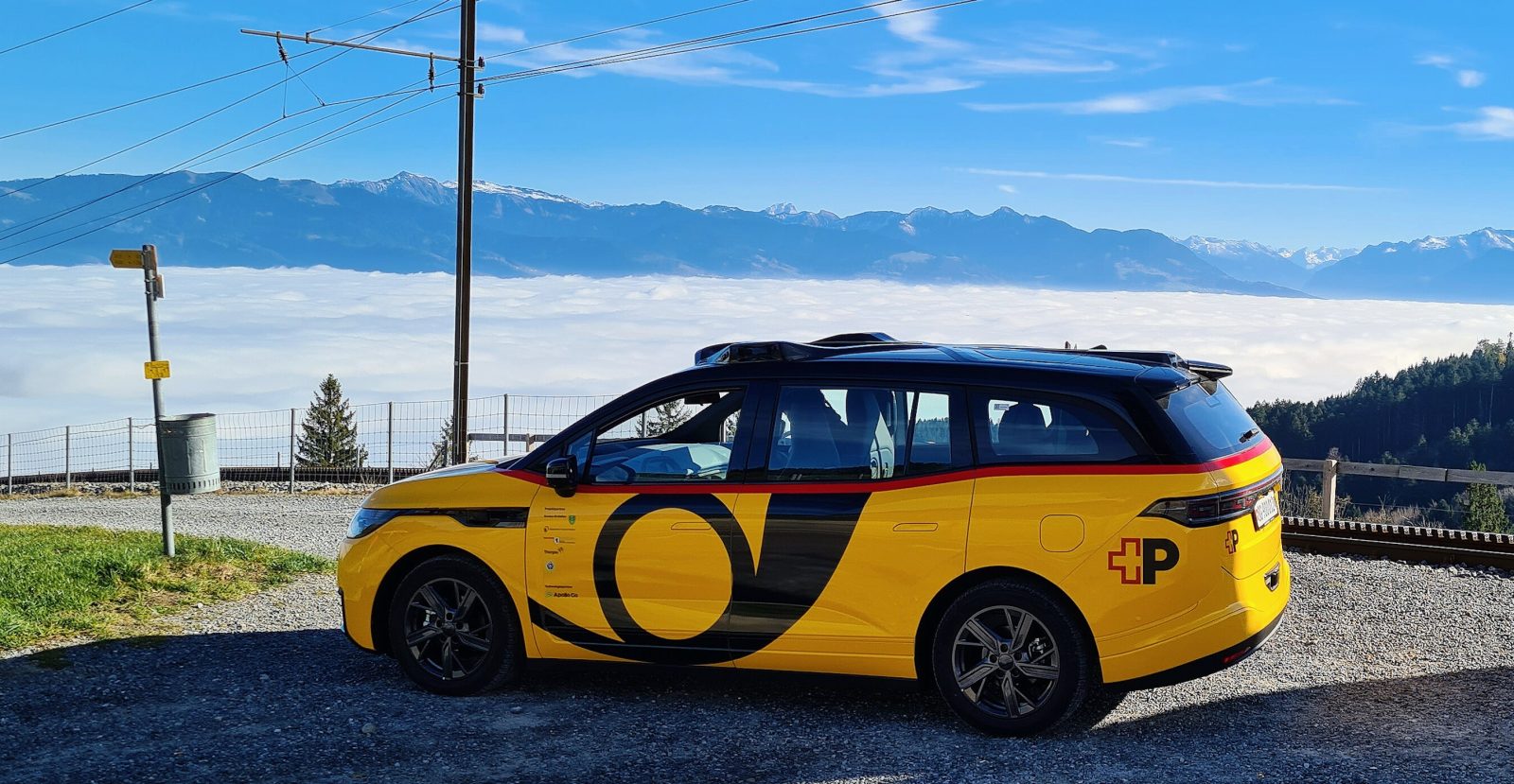
Baidu Apollo Go wins Level 4 robotaxi approval in Switzerland as AmiGo

Baidu’s Apollo Go has received a Level 4 autonomous driving permit in Switzerland for AmiGo, a robotaxi service it is running with Swiss Post’s PostBus, putting the Chinese tech giant ahead of Waymo and Tesla in deploying driverless vehicles into European public transport.

The Federal Roads Office (FEDRO) special permit covers an 80 km² service area across three eastern cantons, and Baidu says the project is on track to become the largest planned automated public transport operation of its kind in Europe.

  •  

France ends Palantir AI deal in sovereign push

The French government outlined a major sovereign AI push, declaring its intelligence agency would stop working with US company Palantir in favour of a local alternative alongside a pledge to invest €655 million in the technology through to 2030.

Prime Minister Sebastien Lecornu announced the plans in a video on X as the country advances its sovereign technology ambitions and a desire to reduce dependence on US offerings.

The debate around sovereignty continues to heat up: the US recently hit the brakes on a couple of Anthropic models due to national security concerns.

Prime Minister Lecornu pointed to the issue in announcing the decision to cut ties with Palantir, stating “France must have its own tools”.

“We cannot rely on the goodwill of certain partners who, as we have seen in recent days, are capable of cutting off access to the Anthropic model.”

Intelligence agency DGSI is to replace Palantir’s data tools with an alternative made by privately-controlled French company ChapsVision.

Palantir had worked with the agency for around a decade and announced a three-year renewal in December 2025.

Concerns have been raised about Palantir due to ambitions in Europe to reduce the amount of sensitive data processed by US-based companies.  

The company was co-founded by billionaire Peter Thiel, who has strong links to the US government.

Revolution
The prime minister said the €655 million investment would go towards infrastructure, computing capacity, research, business and industrial sectors.

As part of the plans, the government aims to provide all civil servants with a conversational assistant from domestic company Mistral AI, in addition to a public health assistant by the end of the year.

“We can undergo this revolution. Or we can lead it. France has chosen. It will rise to the challenge of this revolution and intends to claim its full place in it,” Prime Minister Lecornu said.

The post France ends Palantir AI deal in sovereign push appeared first on Mobile World Live.

  •  

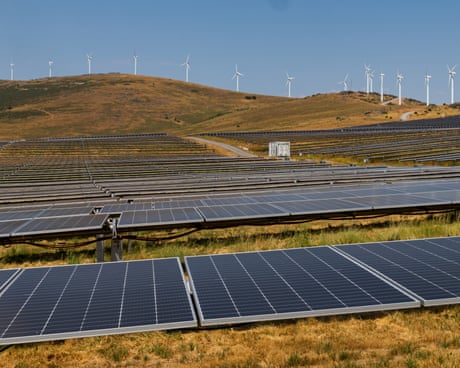
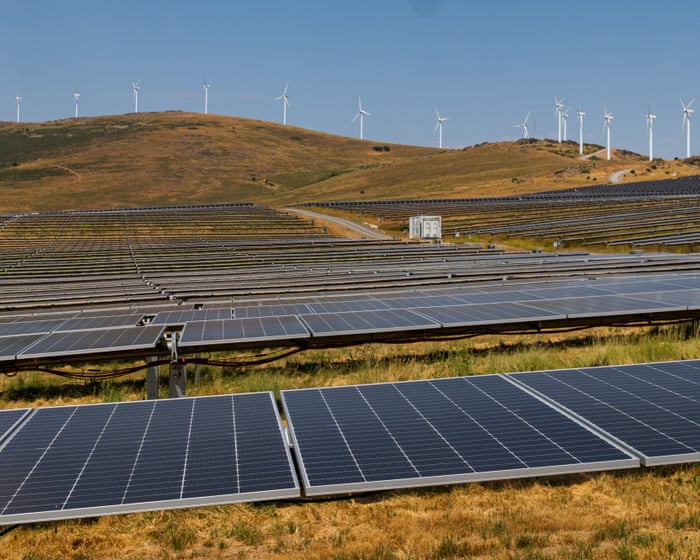
Spanish households save €10 a month thanks to renewables expansion, report finds

Thinktank says decoupling electricity from gas prices has also helped shield Spain from hikes caused by Iran war

Spanish households save €10 a month on electricity bills because of wind turbines and solar panels installed in the last five years, a report has found.

Typical energy bills would be 19% more expensive if electricity costs were still as tightly coupled to gas prices as in 2021, according to Ember, a climate thinktank. It found Spain’s “strategic” expansion of renewables since Russia invaded Ukraine in 2022 has shielded Spanish households from the latest rises in fossil fuel prices caused by the Iran war.

Continue reading...

© Photograph: Bloomberg/Getty Images

© Photograph: Bloomberg/Getty Images

© Photograph: Bloomberg/Getty Images

  •  

Tesla presented misleading ‘Full Self-Driving’ safety data to European regulators

Tesla presented self-published and inflated “Full Self-Driving” safety statistics directly to government regulators in Sweden and the Netherlands as it lobbied for European approval, according to correspondence obtained by Reuters through public records requests.

The data includes a claim that FSD could have “saved 32,000 lives” — a figure that independent researchers say is based on the absurd assumption that every vehicle in the U.S., including freight trucks and motorcycles, would be replaced by an FSD-enabled Tesla.

  •  

UK plots under-16 social media ban

The UK government laid out plans to ban people under 16 years of age from social media and impose wider restrictions on gaming and live-streaming platforms in a landmark intervention to protect children online.

The measures would cover social media platforms including Snapchat, TikTok, Instagram, YouTube, Facebook and X, but exclude messaging services such as WhatsApp and Signal. UK Prime Minister Keir Starmer said the move would “give kids their childhood back”, adding it represents “a line in the sand” as “tech giants had their chance and failed”.

The government is also considering overnight curfews and breaks in infinite scrolling for under-18s. It explained restrictions on some functions would remain on by default even for 16 and 17-year-old users, to avoid a “cliff-edge at 16”.

In addition, the government is seeking restrictions on a wider range of online services viewed as higher risk for children, including live-streaming and communication with adult strangers through gaming websites. AI services designed to simulate intimate relationships with users would face a minimum age limit of 18, with similar functions also set to become age-restricted across wider AI chatbots.

The proposal will be brought to Parliament by the end of the year, with measures due to come into force in spring 2027.

The announcement follows a consultation earlier this year that drew more than 116,000 responses. Nine in 10 parents backed a social media ban for under-16s, while two-thirds of young people agreed children younger than 16 should be barred from using at least some platforms.

Technology secretary Liz Kendall said the government was “taking power away from the tech giants and putting it back in parents’ hands”.

Punitive measure
The government explained it plans to use “the same model for a social media ban as Australia”, which became the first country in the world to outright ban platforms for under-16s last year. However, it added it will also “learn the lessons from Australia’s experience” by introducing strict age verification measures that will prove tougher to bypass. UK watchdog Ofcom will be tasked with researching effective age assurance measures, with Kendall adding the government would ensure the regulator has the funding needed to take on additional responsibility.

Megan Jenkins, research analyst at Assembly Research, said the speed of the UK’s decision makes it “highly questionable”, adding the government appeared to have chosen “what feels like a punitive measure for children” rather than making social media platforms “safer by design”.

Meanwhile, safety technology company Privately SA’s CEO Deepak Tewari warned that while stronger online protections are necessary, age checks must avoid creating “a surveillance infrastructure for children”.

“If age assurance is to become part of online safety policy, the industry must put its money where its mouth is: prove that age checks can be effective, proportionate and genuinely privacy-preserving,” he argued.

The post UK plots under-16 social media ban appeared first on Mobile World Live.

  •  

UK operators back SA 5G at Ericsson showcase

Senior figures from UK operators Virgin Media O2 and VodafoneThree voiced confidence premium network offerings based on standalone (SA) 5G could become a solid revenue source, during sessions at a circus-themed Ericsson event.

The vendor’s tech showcase was held in central London in a building which also houses the UK’s National Centre for Circus Arts, with performers appearing in the breaks of the main programme.

It brought together operators, enterprises, partners and representatives from UK authorities to discuss the benefits of cutting-edge 5G technology and progress of network rollouts. It acted as a follow-up to a music-themed event in 2025.

Juggling networks
VodafoneThree CNO and network director Andrea Dona (pictured, below) highlighted early progress integrating assets previously held by the Vodafone and 3 UK brands following a merger just over a year ago.

Man in a suit with his hands open

Describing the deal as “a really important one for the country,” the network guru reiterated an argument frequently voiced while the deal was going through the approvals process: it would boost network investment by the combined entity and rivals.

Highlighting a “really fast start” in the process of merging the two networks and employing respective spectrum assets, he added recent benchmark statistics showed peers “have not stood still, they’ve also invested. Everyone feels the pressure to do more and give the UK a better network”.

“There’s still a lot of work to do but I think in some areas we are ahead [of target],” Dona added. “The scene is set for an amazing journey”.

VodafoneThree describes its ambition with SA 5G as to build the “UK’s first nationwide AI-ready network”.

Dona explained the connection to AI was due to SA 5G’s bandwidth and latency being able to support compatible applications, as well as the benefits the technology can bring to the network architecture itself including use in and on the RAN.

“The network we’re building is going to be an exceptional network,” he asserted, pointing to the benefits of slicing in stadia as an example.

“If you want a privileged lane to do your upload and you’re willing to pay,” then you can, he said, adding operators can monetise the network through “quality on demand” offers.

“We need to ensure in a situation with congestion, when a resource is not readily available, we can make it available if you pay for additional quality, additional performance and additional services”.

Selling premium versions of services “happens in every industry”, he said.

Singing in harmony
During a separate session, Virgin Media O2 director of strategy, transformation and planning Anita Tadayon (pictured, below) said she also believes there is an appetite for services based on network slicing on SA 5G, but called for an industry-wide effort to get the message across on what the technology can do.

Woman in a suit sat on a stage

“Articulating the benefits of slicing for a customer is really important and collectively, as an industry, we have to do that together. We’ve got to sing from the same hymn sheet,” she noted, adding if there’s value “then the customer will pay”.

Speaking broadly on SA 5G, she highlighted a strong push on rolling out the technology at VMO2.

Its network now covers 700 towns and cities, and Tadayon explained the technology benefits all customers whether they have a compatible handset or not.

“I know we talk about monetisation, but look at what it also does for our customers.”

“Absolutely, there’s new innovation and use cases, but it also delivers all of our customers a benefit on coverage, capacity, speed, everything”.

Away from the latest iteration of 5G, she highlighted the operator’s work in providing direct-to-device satellite connectivity to users in remote areas through a deal with Starlink and a push to introduce greater autonomy in its network.

The post UK operators back SA 5G at Ericsson showcase appeared first on Mobile World Live.

  •  

Mistral eyes €3B funding round

Mistral AI is reportedly in early talks to raise around €3 billion, in a move which could value the French start-up at roughly €20 billion.

Sources told Bloomberg the terms of the proposed raise may still change, and the valuation could also move higher depending on investor demand.

The rumoured round would strengthen Mistral AI’s position as Europe’s main AI challenger by providing the company with more capital as AI players face rising costs for computing power, infrastructure and talent across the globe.

It would also mark a sharp jump from the €11.7 billion valuation Mistral AI secured in September 2025 when Dutch chipmaker ASML became the largest shareholder in the start-up with an 11% stake after leading a €1.7 billion Series C funding round.

The start-up has positioned itself as a sovereign alternative to US and Chinese AI players, targeting European governments and companies with plans to build out cloud computing facilities in France and Sweden.

Mistral AI recently also moved to target industrial customers including Airbus and BMW for services covering engineering and manufacturing.

The French player acquired Austrian start-up Emmi AI last month as part of efforts to expand its services to industrial customers in Europe.

However, the company still trails larger rivals as its models and chatbot have still not matched the adoption of offerings from US players OpenAI and Anthropic, as well as Chinese competitors.

Last month, Anthropic raised $65 billion in a funding round valuing it at $965 billion, eclipsing OpenAI’s $852 billion valuation following its latest funding round in March.

The post Mistral eyes €3B funding round appeared first on Mobile World Live.

  •  

GSMA reveals growing EU mobile GDP contribution

The GSMA cautioned European regulations must be aligned to enable the infrastructure investments needed for the mobile industry to maintain steady growth in an already substantial contribution to GDP.

In a statement promoting the release of GSMA Intelligence’s latest regional Mobile Economy report issued ahead of the pending presidency of the European Union (EU) by the Republic of Ireland, the association reiterated concerns over network quality, 5G penetration and a gap in the funding required.

GSMA director general Vivek Badrinath noted the decisions taken during the six-month presidency and beyond “will ultimately determine how well we bolster the foundational role mobile technologies play in modern society”.

Improved mobile capabilities would also help determine “how well-equipped Europe’s digital ecosystem is to grow and compete with leading global markets”, he said.

GSMA Intelligence’s research indicates the mobile sector contributed €1.2 trillion to the EU’s GDP in 2025, up from €1 trillion in 2024.

It forecast the sum could reach €1.6 trillion in 2030, 8.2% of overall GDP compared with 6.1% in 2025.

The industry accounted for 1.3 million direct and 1.1 million indirect jobs at end-2025.

But the GSMA reiterated 5G accounted for 43% of mobile connections at end-2025 and highlighted a potential €270 billion shortfall in future funding needs.

Backing
Politicians and lobbyists said they recognise the importance of mobile connectivity to the Republic of Ireland and Europe as a whole.

The nation’s Minister for Culture, Communications and Sport Patrick O’Donovan said creating conditions which “allow Europe’s digital ecosystem to truly thrive is a high agenda item” during its EU presidency.

He highlighted the importance of getting politicians and industry players together to “ensure opportunities are not missed to drive European competitiveness and growth”.

Nicola Cooke, director of lobby group Ibec’s Telecommunications Industry Ireland, noted the sector is at “an important crossroads” due to pending digital networks and cybersecurity legislation, and vowed to step up efforts to advance investment “in this vital national infrastructure”.

The post GSMA reveals growing EU mobile GDP contribution appeared first on Mobile World Live.

  •  

Telecom Italia banks €1B refund on 1998 licence fee

Telecom Italia (TIM) received a €1 billion payment from the Italian state, refunding a charge from the late 90s the operator has been battling through the courts for years to get back.

The operator paid just over €500 million in a licence fee in 1998 and has been contesting that payment for over 20 years. The final sum awarded to the operator comprises the original amount with inflation and interest added.

In December 2025, the country’s Court of Cassation finally ended a long-running legal row, ratifying a decision made in 2024 to award the sum.

Telecom Italia noted the payment had been flagged in its accounts last year and will “have a net positive impact on the financial position for the current financial year”.

The payment draws a line under what has been a lengthy battle for the operator to get a refund on a fee paid in the wake of the Italian telecoms market being opened-up.

In a statement made in 2024 on the issue, TIM argued courts in Europe had “intervened on this issue on several occasions” with a court in Rome eventually ruling in its favour.

The post Telecom Italia banks €1B refund on 1998 licence fee appeared first on Mobile World Live.

  •  

New Species of Ancient Bear-Dog Identified in Spain

Paludocyon moyasolai. Image credit: Jesús Gamarra.

Paleontologists have identified a previously unknown species of amphicyonid -- the extinct family of carnivorous mammals popularly known as bear-dogs -- from two specimens unearthed at a rich fossil site in the Vallès-Penedès Basin near Barcelona, Spain.

The post New Species of Ancient Bear-Dog Identified in Spain appeared first on Sci.News: Breaking Science News.

  •  
❌