❌

Reading view

US greenlights floating wind that could slash turbine installation time by 50%

The US has just approved a new floating offshore wind system, which is designed to support safer and more efficient installation and operation of floating offshore wind turbines (FOWT).

The American Bureau of Shipping (ABS) awarded a Product Design Assessment (PDA) to Scotland’s industrial equipment supplier Encomara for its Squid system on June 17. The quick-connect solution combines mooring and electrical cable protection for FOWTs.

As per the organization, the approval follows an earlier Approval in Principle (AIP) and represents a more advanced level of technical review and design verification. ABS said it completed a detailed assessment of the technology against class and industry requirements for floating offshore wind applications.

“ABS is proud to support Encomara in bringing that approach to this sector, and this assessment reflects the technical depth behind it,” Rob Langford, ABS Vice President of Global Offshore, said.

The Squid system

Floating wind systems are expected to play a major role in expanding renewable energy generation. They can be deployed in deeper waters where fixed-bottom turbines are not practical.

This would increase the amount of usable marine space, as well as unlock access to stronger and more abundant wind resources. Still, installation and maintenance operations remain complex and costly. As a result, this has left developers looking for technologies that can simplify offshore deployment.

SQUID is a universal, pre-installed mooring and power cable interface.
Credit: Encomara

To tackle the issue, Encomara adapted the Squid system from the Disconnectable Turret Buoy (DTB). The technology has been used for years in floating oil and gas production. It is made from conventional offshore components that already have high technology readiness levels.

The Squid technology is built to protect moorings and interarray cables during turbine installation and off-station periods. It relies on procedures already well understood across the offshore industry.

What’s more, its disconnectable design can support repair scenarios throughout the unit’s entire service life. This helps reduce risks when temporary disconnection is required.

A proven technology

The company estimated that the Squid could increase floating turbine installation rates by 42 percent per season and raise energy yield during project ramp-up by 27 percent. It also projected a 2.5 percent lifetime increase in energy output.

This, according to Ian Donald, Encomara Managing Director, is equivalent to 3.3 terawatt-hours (TWh) of additional electricity generation for a 1.2-gigawatt (GW) floating wind development.

Donald pointed out that receiving a PDA from ABS marks a pivotal step in Squid’s qualification journey. “We’ll be conducting further inshore wet testing in Ardersier in the coming months, representing the next steps toward Technology Readiness Level assessment and commercial adoption,” he continued.
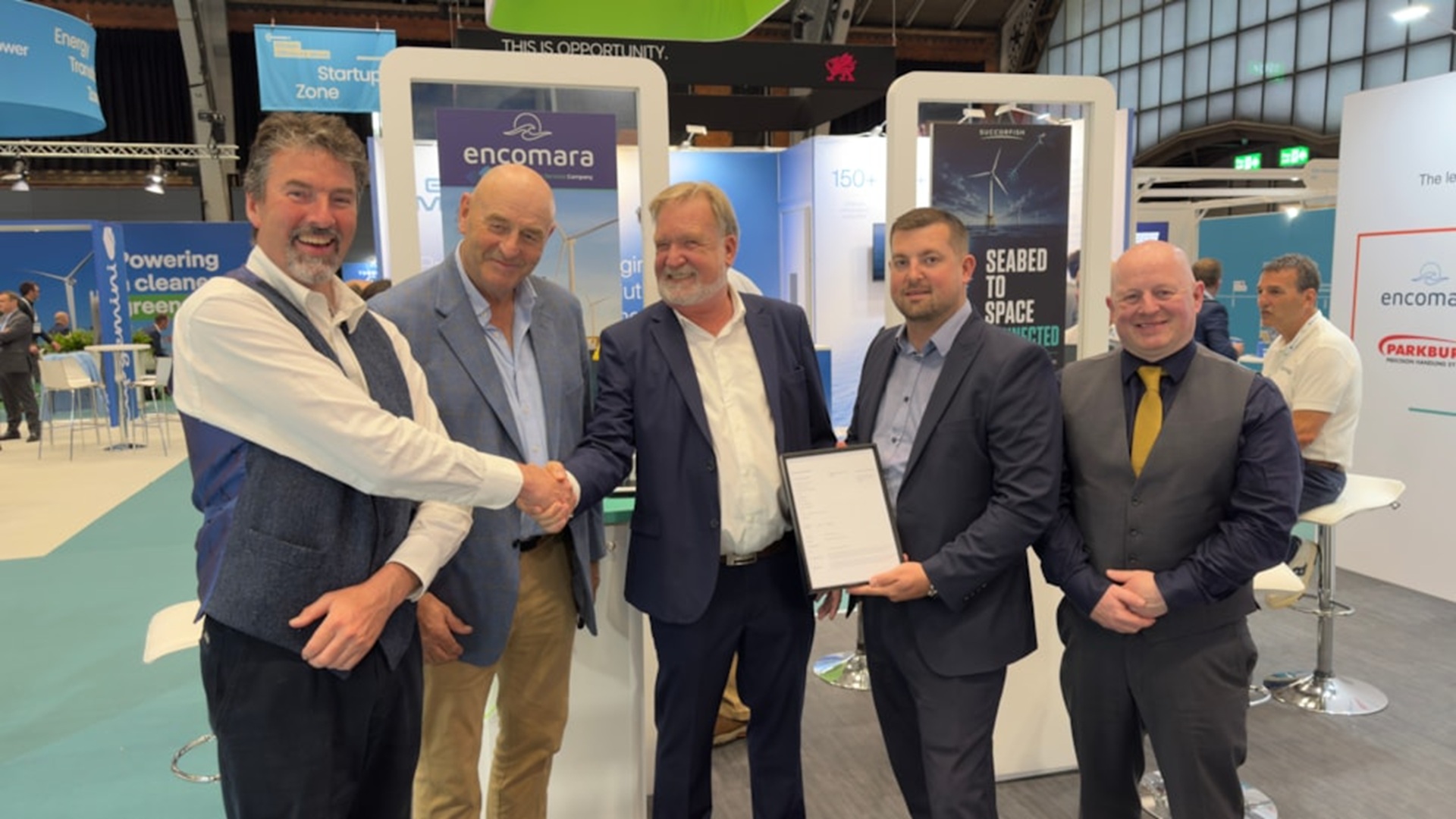
ABS issued a PDA to Encomara for the Squid system.
Credit: ABS

Encomara plans to carry out onshore demonstrations at AES’s Huntly site in July.
In August, the company will move on to inshore wet trials and demonstrations for customers.

Studies backed by Scottish Enterprise and industry developers suggest the Squid system could slash installation times by up to 50 percent. It could also potentially deliver savings of USD 1.35 billion (GBP 1 billion) per gigawatt of floating wind capacity.

“Floating wind developers need proven, bankable solutions, and this is exactly what Encomara is delivering,” Donald concluded in a press release.

  •  

Mobile small reactors on ships: UK firm explores floating nuclear power plants

Core Power has initiated a research project to analyze the viability of mounting small modular reactors onto ocean vessels.The enterprise is examining how to install the mPower reactor design, developed by BWX Technologies, into ship-constructed vessels known as floating nuclear power plants. 

“We’re building, integrating and deploying ship-based nuclear energy systems that deliver reliable power where industry and nations need it most,” said Mikal Bøe, CEO of Core Power. “We are focused on commercial delivery, from vessels and infrastructure to kilowatts consumed and industries powered.”

This evaluation focuses on mapping out the legal compliance requirements, the physical engineering adjustments, and the financial structures needed to make these mobile energy stations functional. 

By moving the assembly process out of standard construction fields and entirely into industrialized ship docks, the participating organizations aim to stabilize production schedules and sidestep the delays typically associated with land-based civil infrastructure.

“This assessment of the mPower technology is a significant step in our strategy to accelerate the design of our fully modular floating nuclear power plants,” added Bøe.

Shift in energy delivery methods

Traditional electrical grids face growing pressure as power consumption rises faster than the construction of new utility facilities. Developing standard land-based atomic plants often requires navigating lengthy local zoning laws, extensive environmental reviews, and complex site preparation schedules. 

Marine-assembled energy units are being considered as an alternative method to bypass these regional bottlenecks. Once constructed, these self-contained power vessels can be towed across waterways to moor near coastal cities, industrial zones, or remote territories experiencing severe energy deficits.

The scope of this current research phase encompasses several foundational stages of project development. Engineers are establishing protocols for baseline data sharing and creating a unified concept of operations. 

The teams will also detail specific marine architecture demands and execute an extensive financial evaluation to confirm whether the cost per kilowatt justifies continued development.

“Electric power demand is rapidly outstripping supply. Markets that need reliable electricity cannot wait for conventional infrastructure timelines,” concluded Bøe.

“The United States has the nuclear expertise, the industrial base and the maritime heritage to lead this market. CORE POWER’s role is to combine those strengths and accelerate the path from technology to product.”

Technical specifications of the reactor

The selected reactor mechanism, designated as a Generation III+ integral pressurized water system, was engineered to supply two distinct forms of utility. A single unit is capable of generating 195 megawatts of electrical power for standard grid distribution.

The core outputs 575 megawatts of thermal energy, which can be diverted for specialized industrial processes like heavy manufacturing or water desalination.

Under the current arrangement, Core Power is financing the initial exploratory work. The business is applying its existing background in maritime logistics, vessel assembly, and nautical systems integration to adapt the technology for aquatic environments. BWX Technologies is contributing to the core reactor blueprint itself.

The data gathered during this preliminary investigation will decide whether the firms progress to detailed engineering layouts, formal applications with maritime and atomic regulatory bodies, or the establishment of joint corporate entities to oversee physical production.

  •  

Bill Gates’ nuclear firm begins design assessment process in UK for 345 MW Natrium reactor

A Washington-based nuclear energy company has achieved a key milestone for the UK deployment. TerraPower has begun the formal commencement of the UK regulatory review for its Natrium plant, and the launch of its subsidiary, TerraPower UK Ltd.

These regulatory and commercial activities mark the company’s most significant steps to date toward deploying a fleet of Natrium reactors in the United Kingdom, according to the company.

Generic Design Assessment (GDA) process begins

“TerraPower is entering the UK market with a long-term commitment to supporting the nation’s clean energy future and establishing ourselves as a serious and reliable deployment partner,” said Chris Levesque, President and CEO of TerraPower.

“Starting Step 1 of the GDA process and establishing TerraPower UK mark major advances in our mission to bring the Natrium technology to Britain. These milestones demonstrate TerraPower’s dedication to working alongside the UK to deploy safe, clean and reliable nuclear energy for decades to come.”

TerraPower has now begun Step 1 of the Generic Design Assessment (GDA) process. The company submitted its GDA application in October 2025, its first international regulatory filing for the Natrium technology and received formal acceptance by the Department for Energy Security and Net Zero in February 2026. The start of Step 1 of the GDA process marks a significant step toward Natrium advanced reactor deployment in the UK, supporting Britian’s ambition to accelerate innovative, sustainable and next-generation energy solutions, according to a press release.

‘Delivering a golden age of nuclear’

“TerraPower’s decision to establish a UK presence is an important vote of confidence in the UK as a leading destination for nuclear projects and investment,” said Lord Vallance, Minister for Science, Innovation, Research and Nuclear.

“We are delivering a golden age of nuclear and recognise the role advanced nuclear technology could play, providing clean, reliable power and strengthening our energy security.”

Natrium technology is first mover in advanced reactor sector

The company revealed that the Natrium technology is the first mover in the advanced reactor sector and is well positioned to support rapidly increasing energy demand. The Natrium plant design features a 345 MW sodium-cooled fast reactor with a patented molten salt-based energy storage system.

The storage technology can boost the system’s output to 500 MW of power when needed as it is designed to keep base output steady, ensuring constant reliability, and can quickly ramp up when demand peaks—it is the only advanced reactor design with this unique feature.

“Confirming arrangements is an important enabling step for ONR to engage with and assess TerraPower’s Natrium design,” said Diego Fernandez Lisbona, ONR’s Head of Regulation for the TerraPower Natrium GDA and Advanced Nuclear Technologies.

“Interactions in 2025, through our framework for Early Engagement, have provided early design familiarity and we will continue to engage closely with TerraPower and broader stakeholders as GDA progresses.”

TerraPower has been successfully working through the regulatory requirements in the United States, where the first Natrium plant is being constructed. This includes the recent construction approval by the U.S. Nuclear Regulatory Commission to begin building the plant. The UK’s GDA process will expand on the company’s experience and efforts in the U.S. and will allow TerraPower to establish deployment timelines for Natrium sites in the country, as per the release.

“We welcome TerraPower’s entry into the UK’s Generic Design Assessment (GDA) process,” said Yeliz Marshall, NRW’s Radioactivity and Industry Policy Senior Specialist Advisor.

“It provides a valuable route to embed environmental protection early in the Natrium design and address key risks ahead of any future deployment. This GDA also creates scope to benefit from closer international regulatory working under the UK–U.S. Atlantic Partnership for Advanced Nuclear Energy.”


  •  

‘Mega-consumers’ of food and energy cost environment $5.7tn a year, study finds

Top 10% generate climate and biodiversity damage bill that exceeds economies of most countries, say researchers

The environmental damage bill racked up by the highest-consuming 10% of the world’s population has reached up to $5.7tn a year – larger than the economy of every country except the US and China, a study has found.

Mega-consumers in this group are concentrated in the global north, accounting for more than half the population of the US and 40-45% of people in the EU.

Continue reading...

© Photograph: Francis R Malasig/EPA

© Photograph: Francis R Malasig/EPA

© Photograph: Francis R Malasig/EPA

  •  

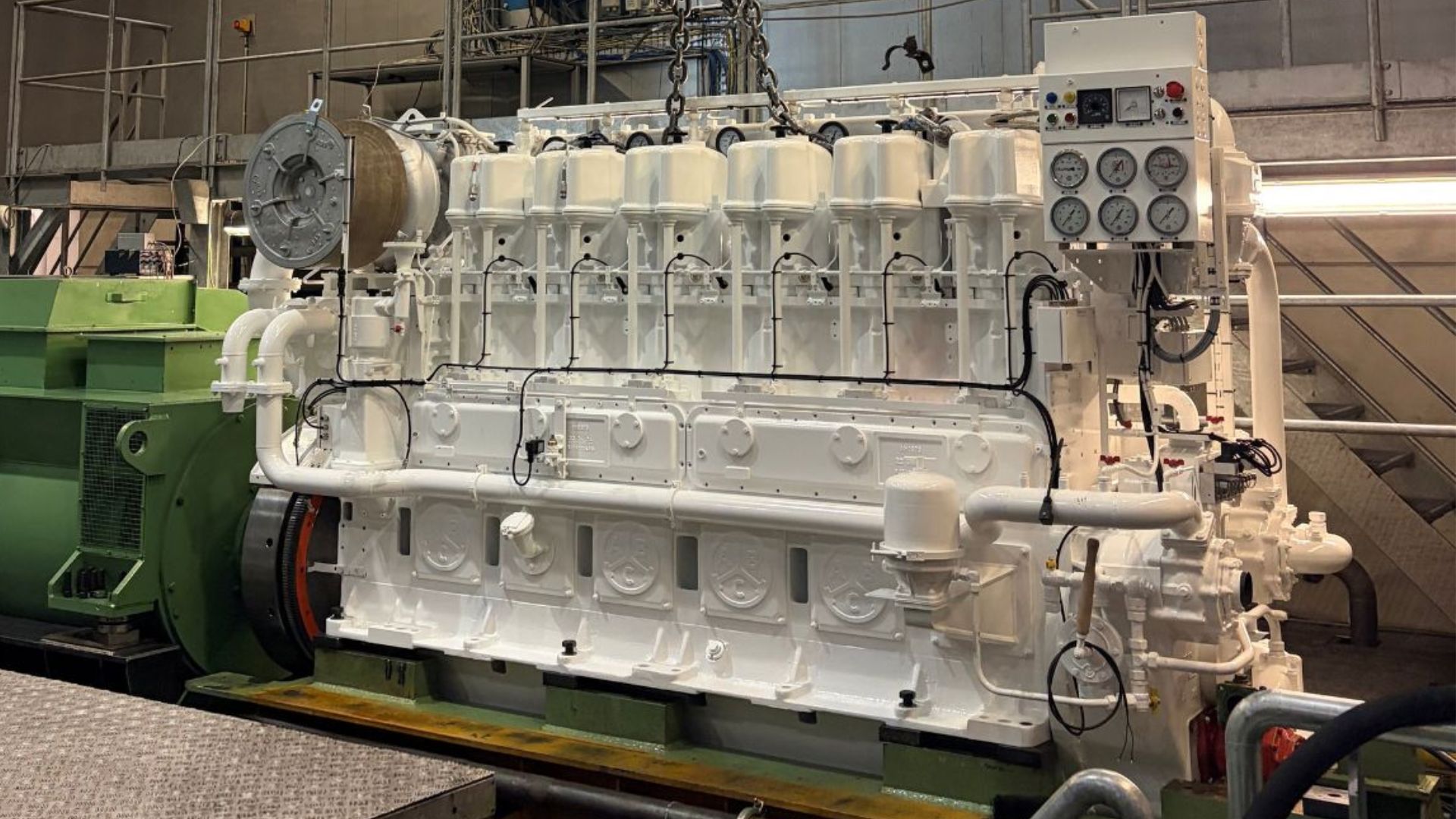
World’s first 100% hydrogen-fuelled marine engine delivering 2670kW power gets class approval

Lloyd’s Register has granted a Type Approval Certificate for a marine engine that runs entirely on hydrogen fuel using a spark-ignition system. The classification society issued this specific certification to BeHydro after concluding that the machinery complies with all regulatory standards regarding operational performance, safety parameters, and mechanical reliability. 

“For shipowners and operators, independent certification is essential in building confidence that emerging fuel technologies can meet the industry’s expectations for safety, reliability and operational performance,” said Claudene Sharp-Patel, Global Technical Director, Lloyd’s Register.

This mechanical design operates exclusively on a hydrogen and eliminates the need for conventional pilot fossil fuels during operation. By removing the need for a secondary fuel source, the architecture reduces the total number of subsystems required on board a vessel. 

The configuration stops the generation of carbon compounds during the combustion process, presenting a clear mechanical option for fleet operators seeking alternatives to carbon-heavy propulsion plants.

To serve as a practical alternative

According to Lloyd’s Register representatives, the issuance of the official certificate indicates that internal combustion machinery using hydrogen fuel has advanced to a stage where it can serve as a practical alternative in industrial shipping. 

For maritime companies and vessel operators, receiving a third-party validation of this nature serves as a necessary benchmark to confirm that the mechanical systems will perform according to technical expectations during routine service.

The certified machinery line covers a power spectrum ranging from a minimum of 900 kilowatts to a maximum of 2670 kilowatts. This capacity allows the units to be deployed across multiple maritime segments, functioning either as the primary propulsion unit or configured alongside an electrical generator to provide auxiliary onboard power.

Management at ABC Engines stated that the formal certification validates the technological framework of the hardware line for shipowners globally. Beyond standard maritime environments, the engineering parameters make the power units adaptable for alternative industrial uses. 

Operational integration for sustainability

The mechanical systems are built to tolerate small amounts of impurities inside the incoming hydrogen gas stream, meaning they can be integrated into heavy stationary power generation facilities or land-based railway transport networks.

The combustion cycle of these units does not produce standard maritime pollutants, completely preventing the release of carbon dioxide, nitrogen oxides, sulfur oxides, or particulate soot into the atmosphere. The resulting exhaust gas consists solely of water vapor mixed with regular atmospheric air.

The manufacturing process for these power plants does not require the use of rare or highly limited mineral resources. The supply chain excludes materials such as lithium, zinc, cobalt, platinum, and various rare-earth elements. This material selection avoids the environmental damage associated with mining operations for rare minerals. 

The mechanical design relies on traditional engineering principles to extend the operational lifespan of the components, which simplifies the regular maintenance procedures carried out by crew members. Consequently, the reduced maintenance complexity lowers the long-term operational expenditures and reduces the total downtime for vessel owners.

  •  

US: 150 year-old abandoned coal mine turned into solar farm to power Illinois homes

A former coal mining site in central Illinois is now being used for renewable energy. Nexamp and TurningPoint Energy have finished two community solar projects in Woodford County, turning land that once produced coal into a solar power facility that provides electricity to local customers and businesses.

The site near Minonk was once part of the Colchester Coal Seam mining region, active from the late 1800s to the mid-1900s. Now, it has almost 17,000 solar panels that can generate 9.8 megawatts of electricity, enough for hundreds of subscribers and to add clean power to the local grid.

These projects are the first time Nexamp and TurningPoint Energy have worked together in Illinois. They are also the first Illinois Shines community solar projects in Woodford County.

Reclaimed mining land finds a new purpose

The solar panels were installed on a former coal mine that is considered a brownfield under Illinois Shines, the state’s solar incentive program. This certification encourages developers to use land that has already been disturbed, rather than farmland or untouched areas.

TurningPoint Energy handled project development, while Nexamp was responsible for construction and now owns and operates the facilities.

The solar farms together cover about 40 acres and send electricity straight into Commonwealth Edison’s network. Nexamp says all the solar panels were made in the United States, which supports local clean energy supply chains and brings new economic value to land that used to be tied to fossil fuels.

Ribbon cutting ceremony of two new community solar projects in Minonk, Illinois. Image credit: Nexamp

Advanced software helps manage solar generation

The Minonk projects also bring new grid management technology to the area. They are among the first projects on ComEd’s system to use Distributed Energy Resource Management Systems (DERMS).

This software enables utilities to monitor and manage energy resources, such as solar panels, in real time. As more renewable energy connects to the grid, it becomes harder for utilities to balance supply and demand. DERMS helps by providing better control and visibility into how energy flows.

Using this technology, the projects show that renewable energy can help keep the grid reliable and help utilities prepare for more clean energy in the future.

Hundreds of households already enrolled

Many people in the community have signed up. The projects are almost full, with over 650 customers already enrolled.

One of the solar farms provides power to about 450 homes. The other serves around 200 low-income households, making community solar more accessible and helping these families save on electricity costs.

Community solar is different from rooftop solar because customers can join a shared project and get credits on their utility bills without having to install anything at home. This makes solar power available to renters, apartment dwellers, and homeowners whose roofs are not suitable for solar panels.

Major institutions strengthen project economics

Big organizations are also helping make the projects successful. Rush University Medical Center and the College of DuPage have joined as customers and together use about 40 percent of the projects’ electricity.

Their involvement creates steady demand, supporting the community solar model and helping bring renewable energy to more people.

“This is exactly the kind of project we aspire to deliver with our partners and our customers,” said Nexamp CEO Zaid Ashai. “By turning a former coal mine into a pair of community solar farms, we are helping hundreds of subscribers reduce their energy costs today while strengthening their energy security for the long term.”

“By pairing that affordability with US-manufactured equipment and advanced grid tools like DERMS, these Minonk projects not only put clean power within reach for households and institutions; they also show how community solar can make the grid smarter, more resilient, and better prepared for Illinois’ clean energy future.”

  •  

Drax cleared after investigation into sourcing of wood pellets

Generator’s shares rise as regulator finds no evidence of misleading statements about fuel’s sustainability

The City watchdog has closed an investigation into the owner of the Drax power plant after an almost 10-month review into whether the company’s sustainability claims mislead shareholders.

The Financial Conduct Authority said it had “reviewed thousands of pages” of “complex material” relating to the company’s sourcing of wood pellets for the Drax power plant in Selby, North Yorkshire, but “did not find evidence that justified any further action”.

Continue reading...

© Photograph: Christopher Furlong/Getty Images

© Photograph: Christopher Furlong/Getty Images

© Photograph: Christopher Furlong/Getty Images

  •  

Scientists Say a New Universe Could Form Inside a Dying Star

Inside GravastarA new study suggests that the collapse of a massive star could spark the creation of a tiny expanding universe rather than a black hole. The resulting object, called a gravastar, would avoid the singularity and event horizon that make black holes so puzzling. Massive stars produce light and heat through nuclear fusion in their [...]
  •  

Will Wes Streeting Really Ditch Ed Miliband’s Net Zero Targets?

Labour leadership hopeful Wes Streeting has said Labour should ditch Ed Miliband's Net Zero targets. Or has he? It's as clear as mud, says Ben Pile, with promises of yet more 'green growth' cakeism.

The post Will Wes Streeting Really Ditch Ed Miliband’s Net Zero Targets? appeared first on The Daily Sceptic.

  •  

China’s firm sets world record with 29.2%-efficient perovskite-silicon tandem solar panel

Chinese solar manufacturer Trina Solar has unveiled a commercial-scale perovskite-silicon tandem solar panel that has set a new global benchmark for efficiency and power output, according to a report.

The newly developed module achieved a conversion efficiency of 29.2 percent and a power output of 907 watts, making it one of the most powerful solar panels ever produced for commercial applications. The achievement highlights the rapid progress being made in perovskite-based photovoltaic technology, which many experts consider the next major evolution in solar energy.

Record-setting module uses advanced tandem design

Traditional solar panels rely primarily on silicon cells to convert sunlight into electricity. While silicon technology has improved steadily over the years, it is approaching its practical efficiency limits. Perovskite materials offer a promising alternative because they can absorb different parts of the solar spectrum more effectively. By combining a perovskite layer with a silicon cell in a tandem structure, manufacturers can capture more sunlight and generate significantly more electricity from the same panel area.

The record-setting module uses an advanced tandem design that integrates a perovskite top cell with a silicon bottom cell. This configuration enables higher energy conversion rates than conventional silicon-only panels. Independent testing confirmed the panel’s performance, demonstrating that the technology is moving beyond laboratory experiments and toward large-scale commercial deployment.

Significant milestone in the global race for solar innovation

China’s latest achievement also represents a significant milestone in the global race for solar innovation. The breakthrough allows the country to reclaim a leading position in solar efficiency after strong competition from manufacturers in other regions. It further strengthens China’s role as the world’s largest producer of solar equipment and a major driver of renewable energy development.

Beyond higher efficiency, perovskite technology offers the potential for lower manufacturing costs. The materials can be produced using simpler processes and require less energy-intensive manufacturing compared to traditional silicon cells. If commercial production can be scaled successfully, the technology could reduce the cost of solar electricity while increasing energy output.

However, challenges remain before perovskite solar panels become mainstream. One of the industry’s biggest concerns is long-term durability. While silicon panels can operate efficiently for decades, perovskite materials are more sensitive to environmental factors such as heat, moisture, and ultraviolet radiation. Researchers and manufacturers are therefore focused on improving stability and ensuring that the new generation of panels can withstand real-world operating conditions over extended periods.

Despite these hurdles, the latest efficiency record demonstrates how quickly the technology is advancing. Industry analysts believe that tandem solar cells combining silicon and perovskite materials could become a key component of future renewable energy systems, helping countries generate more power from limited space while accelerating the transition to clean energy.

Trina’s solar cell isn’t just any solar cell. Its record was achieved using a perovskite-on-silicon tandem design, which stacks two different solar materials on top of each other to capture a broader range of sunlight. The perovskite layer absorbs higher-energy wavelengths while the silicon layer captures light that would otherwise pass through, allowing the cell to convert more of the sun’s energy into electricity, reported Oil Price.


  •  

New artificial photosynthesis system makes solar fuel without batteries

Researchers in Japan have developed a new artificial photosynthesis system that can produce solar fuel more reliably under changing sunlight conditions without using batteries. The team from Osaka Metropolitan University says the technology could make solar fuel systems simpler, cheaper, and more practical for everyday use. Artificial photosynthesis is inspired by the process that plants […]

The post New artificial photosynthesis system makes solar fuel without batteries appeared first on Knowridge Science Report.

  •  

New US project targets high-density electricity from Cold War-era nuclear waste

Morgan State University and its partners have secured a $3.37 million contract from the Defense Advanced Research Projects Agency (DARPA) to develop a new class of nuclear-powered energy systems that could operate for decades without refueling.

The project, known as SYMPHONEE, aims to convert energy released by radioactive decay directly into electricity. Researchers believe the technology could provide reliable power for applications where batteries and conventional power systems struggle, including space missions, underwater infrastructure, remote sensors, and military platforms.

Morgan State leads the effort alongside Northrop Grumman, Pacific Northwest National Laboratory (PNNL), Project Omega, Applied Research Associates (ARA), and Widetronix. The work falls under DARPA’s Rads to Watts program, which seeks to advance compact power systems with higher energy output and longer lifespans.

Turning waste into power

At the heart of the project is a radiovoltaic device that uses radioisotopes such as Strontium-90 to generate electricity. Unlike traditional batteries, these systems draw energy from radioactive decay and can continue operating for years with minimal maintenance.

The team plans to combine advanced semiconductor materials with beta-emitting isotopes to improve both performance and durability. Researchers also intend to use isotopes recovered from recycled nuclear fuel and legacy nuclear waste streams. Professor Michael Spencer, the project’s technical lead at Morgan State University, said the team is working to expand the limits of radiovoltaic technology.

“Our team is pushing the boundaries of radiovoltaic technology,” Spencer said. “By integrating advanced materials, device engineering, and nuclear science, we are laying the foundation for a new generation of persistent power systems.” The researchers will conduct much of the device development and testing at PNNL, where they aim to improve radiation tolerance while maintaining efficiency.

Focus on power density

DARPA’s program focuses heavily on power density, a key measure that determines how much electrical power a system can generate relative to its weight. Higher power density could make radiovoltaic systems more practical for missions where size, weight, and maintenance requirements remain critical constraints.

Early modeling suggests the technology could meet or exceed program targets for both specific power and energy density. If successful, the systems could unlock new capabilities for long-duration operations in remote and harsh environments. Project Omega CEO Stafford Sheehan said the effort could transform materials once considered waste into valuable energy resources.

“Our mission is to turn what has historically been treated as waste into a strategic energy asset,” Sheehan said. He added that the technology could reduce the need for frequent battery replacement in critical systems.

Defense and space potential

Northrop Grumman will contribute expertise in microelectronics, radiation effects, modeling, and system survivability. The company plans to use advanced computing tools to accelerate design work and evaluate performance under demanding conditions. According to Northrop Grumman, the technology could support future defense systems that require dependable power in locations where traditional energy sources cannot operate effectively.

The SYMPHONEE project reflects growing interest in compact nuclear energy technologies that can deliver continuous power over extended periods. If the team achieves its goals, the program could help establish a new generation of long-life energy systems for defense, aerospace, and industrial applications.

  •  

Nuclear waste could be turned into advanced reactor fuel with US firms’ new deal

Advanced nuclear technology firm Oklo and TRISO nuclear fuel producer Standard Nuclear have finalized a memorandum of understanding to work together on fuel recycling, advanced manufacturing, and utilizing excess US plutonium.

This commercial agreement provides Oklo with its initial third-party buyer pathway for materials processed at its upcoming Tennessee facility. It follows an announcement by the US Department of Energy that selected both companies among five enterprises to enter advanced negotiations for the federal Surplus Plutonium Utilization Program.

The non-binding agreement outlines a framework for the companies to evaluate technical and commercial details. Under the material offtake portion of the agreement, Standard Nuclear will review specifications and delivery timelines for reprocessed uranium and uranium-transuranic streams.

These materials will originate from Oklo’s planned recycling plant in Oak Ridge and will serve as raw inputs for Standard Nuclear’s production of TRISO fuel, which is a specialized fuel type designed for high-temperature advanced reactors.

Supply chain integration

“The collaboration would focus on the supply of reprocessed uranium (RepU) and uranium-transuranic material (U/TRU) streams from used nuclear fuel, which could serve as feedstock for TRISO fuel manufacturing,” said Oklo in a press release.

The second major component of the agreement focuses on managing federal weapons-grade material. The two companies plan to coordinate on licensing requirements, specialized packaging, facilities, and secure transportation networks. 

This logistical framework is intended to safely convert surplus domestic plutonium into usable fuel for next-generation commercial reactors, providing consistent clean electricity to the power grid.

Jacob DeWitte, co-founder and chief executive officer of Oklo, stated that his company focuses on converting used nuclear material into functional fuel supplies to help build the domestic supply chains required for deploying advanced reactors. 

“This partnership represents a compelling pathway to source feedstock materials for our TRISO fuel manufacturing and radioisotope power systems and is an important step in strengthening domestic fuel feedstock supply sources,” added Kurt Terrani, chief executive officer of Standard Nuclear. 

Addressing domestic nuclear waste

The commercial effort addresses a significant domestic inventory challenge, as the United States currently stores approximately 100,000 metric tons of used nuclear fuel from traditional commercial reactors. 

Rather than leaving these stockpiles in long-term storage, the collaboration attempts to extract remaining energy resources from the waste.

Oklo is currently designing a fast test reactor named Pluto that runs specifically on plutonium. The goal of the Pluto project is to prove that surplus military plutonium can function as an interim fuel source for commercial electricity generation instead of remaining a permanent disposal issue.

At the same time, Standard Nuclear operates as an independent, reactor-agnostic fuel developer, meaning its TRISO fuel can be utilized across various third-party reactor designs for both terrestrial power grids and space exploration systems. 

The company also builds radioisotope power systems, which are compact electricity generators used by defense agencies and aerospace programs. These systems will rely directly on the specific isotopes recovered during the recycling processes managed by Oklo.

  •  

Trump Administration to Pay $765 Million to Cancel 4 More Wind Projects

It’s the third such deal the Interior Department has struck to pay firms to abandon plans for offshore turbines, spending roughly $2.5 billion to get companies to abandon their wind projects.

© Joshua A. Bickel/Associated Press

The Trump administration has now struck deals energy developers totaling more than $2.5 billion to cancel offshore wind leases.
  •  

Hadron patents integral pressurized-water reactor to fit Halo systems in one vessel

Hadron Energy has cleared an early milestone in its effort to commercialize small-scale nuclear power in the United States. The advanced nuclear technology company announced that the U.S. Patent and Trademark Office has published its first patent application, placing the engineering framework behind its Halo Micro-Modular Reactor into the public domain.

The patent publication marks the company’s first major intellectual property filing and provides a detailed look at the reactor design Hadron plans to advance through the U.S. licensing process. The application, published on May 7, outlines the technology behind the Halo reactor, a compact nuclear system designed to deliver 10 megawatts of electricity.

Company founder and CEO Samuel Gibson, Chief Nuclear Officer Ross Ridenoure, Christopher R. Neal, and Andrew M. Ward are listed as inventors on the application.

Integrated reactor design

The application details an integral pressurized-water reactor, a compact design that houses key nuclear systems within a single pressure vessel rather than across multiple structures.

Traditional nuclear plants typically rely on large external pipes to connect these systems. Hadron’s approach removes much of that complexity by housing them within one unit.

According to the application, the design could simplify transportation, installation, and maintenance. It also removes the large external coolant piping associated with conventional reactors.

The patent describes reactor configurations capable of producing between 6 and 60 megawatts of thermal energy. Electrical output ranges from 2 to 20 megawatts. Hadron’s flagship Halo configuration targets 10 megawatts of electricity generation.

Built for transportation

The application also focuses heavily on manufacturability and deployment. Engineers designed the reactor vessel in sections connected through circumferential flanges. This approach allows the company to assemble and test the reactor before shipping it to a project site.

Hadron says the design supports transportation by conventional road networks and even certain air transport systems. The company views transportability as a key advantage for remote locations and industrial customers that require reliable power.

The reactor uses Low-Enriched Uranium Plus fuel. Hadron selected the fuel to support multi-year operating cycles while leveraging existing domestic fuel supply infrastructure.

The filing also outlines passive safety features intended to keep the reactor core cooled for extended periods without alternating-current power under design-basis conditions.

Licensing push continues

The patent publication arrives as Hadron advances regulatory work with the U.S. Nuclear Regulatory Commission. Recently, NRC staff accepted the company’s Quality Assurance Program Description. Hadron also submitted its Principal Design Criteria white paper to regulators, another step in the licensing process.

Gibson said the patent publication establishes the technical foundation of the Halo reactor and begins what the company expects to become a broader intellectual property portfolio. He added that the filing reflects years of engineering work and supports Hadron’s long-term commercialization strategy.

Hadron intends to market Halo as a transportable source of carbon-free electricity for sites that lack reliable grid access. The company ultimately hopes to become the first developer to bring a licensed light-water microreactor to market in the United States.

While significant regulatory hurdles remain, the newly published patent offers the clearest public view yet of the technology Hadron plans to use in pursuit of that goal.

  •  
  •  

US company gets approval to build the world’s first fusion power plant in Washington

US-based fusion energy company Helion has received the regulatory clearances to build the world’s first fusion energy power plant. The company has received a Radioactive Materials License (RML) and a Radioactive Air Emissions License (RAEL) from the Washington Department of Health (DOH), clearing the way to begin construction of the generator building at the power plant site. 

As the world looks for newer ways to meet it energy demands without emitting carbon, fusion energy seems to be the most likely option. Using the chemical reaction that occurs on the Sun, fusion energy can potentially generate large amounts of energy from simpler atoms like hydrogen and its isotopes. 

Unlike its counterpart, nuclear fission, fusion energy does not produce large amounts of radioactive waste that need to be stored safely. Moreover, unlike renewables like wind and solar, fusion energy plants can work on demand, meeting energy requirements as they arise, without the investments required in energy storage too. 

Commercializing nuclear fusion

For all its benefits, nuclear fusion is still not a commercially available technology because the fusion reactors have not been able to generate more energy than they consume. Washington-state-based Helion Energy, though, is confident that it can achieve this fairly soon. 

While it has not yet published any peer-reviewed papers demonstrating how its fusion reactor works, the company is proceeding to build a fusion reactor that it will deploy commercially. It also has an agreement in place with Microsoft to supply 50 MW of power to a data center from its fusion reactor by 2028. 

The facility dubbed Orion is under construction in Malaga, Washington state and recently became the first such facility in the world to secure regulatory licenses to construct the nuclear plant. So far, the assembly and office building of the plant were completed but the recent grant of licenses from the DOH allows Helion to begin constructing the reactor as well. 

Why is NRC not involved? 

As a nuclear energy company, Helion should ideally be seeking approval from the US Nuclear Regulatory Commission (NRC). However, the NRC regulates nuclear fusion under the byproduct material framework, putting it in the same category for approvals as particle accelerators and hospitals, instead of nuclear reactors. 

This is not just a distinction made by the NRC but one also ratified by the US Congress in the ADVANCE Act of 2024, and it shows that nuclear fusion has a very different safety profile from fission and hence its path to deployment is also different. 

The issuance of the RML and RAEL licenses by the Washington DOH is a major milestone for Helion as it confirms that it has facilities, personnel, and safety programs that meet the safety standards for a fusion facility at the Malaga site. 

“We are extremely proud to be granted these licenses from the Washington DOH, making us the first company in the world with the regulatory approvals in place for fusion power plant operations,” said David Kirtley, CEO of Helion Energy, in a press release shared with Interesting Engineering.

“We have a long history of working with the DOH to license our previous fusion activities. Today’s announcement represents the rigor of that work and opens the door for practical, commercial, safe fusion power.”

In addition to the approvals needed to build its reactor, Helion has also secured a transmission interconnection agreement with Chelan County Public Utility District that will enable energy generated from its fusion power plant to be supplied to the grid, a global first as well. 

The question now is whether Helion will be able to meet its deadline to power Microsoft’s data center by 2028 from its fusion power plant.

  •  

£900,000 – The Price of An A-rated Energy Performance Certificate

A well-heeled homeowner has spent nearly £1 million converting his home so that it could achieve an Energy Performance Certificate with an ‘A’ rating – and demonstrated just how unaffordable Net Zero is.

The post £900,000 – The Price of An A-rated Energy Performance Certificate appeared first on The Daily Sceptic.

  •  

UK’s new nuclear control room simulator mimics multiple reactor types safely

Lancaster University has officially unveiled a first-of-its-kind nuclear facility control room simulator, featuring a highly adaptable design that can mimic several distinct reactor types. 

“The pioneering simulator will support the nation’s clean energy goals and help enhance the country’s future nuclear safety,” said the university in a press release.

The facility functions as a training platform to prepare personnel for the domestic clean energy sector and to test safety protocols. Because the layout and internal computing architecture can be altered, operators can model multiple power generation technologies rather than relying on a single static layout.

Multi-reactor simulations

The physical setup features a three-sided wrap-around visual display and audio-visual recording tools. Instructors use these cameras and microphones to review how students handle complex scenarios and provide performance feedback. The physical desks and chairs can be moved into different positions to replicate the unique control room spaces found at real power utilities.

“It has also been designed so that furniture can be reconfigured to represent different control room layouts,” noted the researchers.

The system runs industrial software codes produced by specialized companies, including Westinghouse, GSE Solutions, Tokamak Energy, and Norway’s Institute for Energy Technology. These configurations allow the machinery to mimic the operation of Pressurized Water Reactors, which currently make up the majority of international nuclear plants.

The software can also be used to simulate Small Modular Reactors, smaller units designed for flexible grid deployment, and tokamak fusion systems, which use magnetic fields to contain high-temperature plasma.

“This high-fidelity simulator will enable us to create simulations of scenarios where nuclear facilities are cyber attacked, providing valuable in-depth learning experiences for our cyber security students, some of which may become future cyber security professionals protecting our critical national infrastructure,” concluded Professor Paul Smith, Principal Investigator of the initiative

Practical training for safety behavior

The facility supports several academic areas simultaneously to address shortages in technical workforces. Although Lancaster University offers the only single-honors undergraduate degree in Nuclear Engineering in the United Kingdom, this project also relies heavily on the institution’s existing cybersecurity infrastructure. 

The university holds official accreditation as an Academic Center of Excellence in Cyber Security Research and Education from the National Cyber Security Center.

During practical exercises, instructors can inject simulated malware or network intrusions into the control software. Students must identify these digital anomalies, establish defenses, and maintain regular plant operations under active threat conditions. This training aims to prepare graduates to protect real national infrastructure from network breaches.

Beyond engineering and computer science, the university’s Psychology Department uses the simulator to study human performance. Researchers examine how teams analyze data, communicate, and make decisions during unexpected technical failures or emergency alarms. 

This behavioral data is used to improve safety guidelines for industrial settings where human error carries high risks. The new facility, built on the university campus next to the existing Data Immersion Suite, consolidates the institution’s digital modeling assets.

  •  
❌