❌

Reading view

OnePlus Pad 3 Pro ufficiale: le specifiche parlano chiaro, è il più potente visto finora

OnePlus Pad 3 Pro è un tablet che fa della potenza il suo marchio di fabbrica: presentato da poco in Cina, è senza dubbio il modello più avanzato visto finora.

CARATTERISTICHE E PREZZI DI ONEPLUS PAD 3 PRO

Il display è da 13,2 pollici, per cui OnePlus Pad 3 Pro punta su dimensioni importanti ma anche su una risoluzione di 3.392 x 2.400 pixel. Abbiamo un display LCD e la frequenza d'aggiornamento, in base all'utilizzo, può cambiare da 30 fino a 144 Hz. La luminosità raggiunge in scioltezza i 1.000 nit, mentre la copertura cromatica DCI-P3 tocca quota 98%.

La batteria poi non è affatto da sottovalutare, ma nonostante questo OnePlus Pad 3 Pro mantiene il suo spessore fermo ai 5,94 millimetri e con un peso di 672 grammi. Proprio riguardo all'autonomia, la capacità del modulo è pari a 13.380 mAh e c'è oltretutto il supporto alla ricarica rapida da 67 W.


Miglior smartphone rapporto qualità prezzo fascia media? Motorola Edge 60 Pro, compralo al miglior prezzo da Price1 a 361 euro.

CLICCA QUI PER CONTINUARE A LEGGERE

  •  

Were dinosaurs doomed before the asteroid hit?

Around 66 million years ago, an asteroid wiped out 75% of the species on Earth. This event caused the extinction of all dinosaurs except birds, referred to as non-avian dinosaurs. However, an open question in paleontology is whether the dinosaurs were already declining before the asteroid hit. Many scientists think that around 5 to 10 million years before the extinction event, dinosaurs became less biologically diverse across America, making them more prone to extinction. 

To investigate this hypothesis, scientists recently revisited fossils in a rock layer from the end of the dinosaur era that previous researchers had incorrectly dated. The bulk of the fossils from this period had previously been collected from a different section of rocks called the Hell Creek Formation in Montana. These researchers studied a rock layer in New Mexico that is exposed to the surface, known as the Naashoibito Member. It’s approximately 30 meters (about 100 feet) thick and formed from ancient river sediments. 

To determine when the Naashoibito Member formed, the scientists measured the decay of radioactive elements within its mineral grains over time, a technique called radiometric dating. The scientist reasoned that these mineral grains must have crystallized before being transported and incorporated into the Naashoibito Member, so their youngest ages should provide a maximum depositional age. 

They determined the ages of 1,046 crystals of the mineral feldspar from 2 dinosaur-bearing rock layers in the Naashoibito Member. Based on these ages, the researchers found that a sandstone within 5 meters (about 16 feet) of the lowest boundary of the Naashoibito Member must be younger than 66.9 million years old. They found that the other layer, which is around 3.5 meters (11 feet) from the base of the lowest boundary, must be younger than 66.4 million years old. These age ranges indicated that the sandstone contains dinosaur fossils formed 400,000 years before their extinction.

Next, the researchers measured the direction of magnetic minerals inside the rocks, using a practice called magnetostratigraphy. The direction of these minerals indicates where Earth’s magnetic field was pointing at that time. Scientists have shown that the Earth’s magnetic field has flipped multiple times over Earth’s history, so they can use these magnetic signals to create a timescale for when the sediments formed. 

The researchers wanted to determine whether the magnetic minerals were lined up in a direction like today, called normal polarity, or the opposite, called reverse polarity. The researchers found one rock layer with normal polarity at the base of the Naashoibito Member, and one with reverse polarity in the upper part of the Naashoibito Member. These magnetic field directions lined up with 2 known polarity intervals over a timeline that matched the feldspar dates. Together, these data demonstrated that the Naashoibito Member formed at the end of the dinosaur era, around the same time as the Hell Creek Formation.

Next, the researchers wanted to test whether non-avian dinosaurs maintained their diversity across different regions of Western North America during this time period. They compared fossil patterns from locations across North America using statistical grouping methods that determine how similar or different their environments were. They found that temperature, rather than geographical location alone, was the best predictor of diversity at the extinction event. 

The team concluded that a diverse population of Naashoibito dinosaurs lived at around the same time as the Hell Creek dinosaurs. Earlier scientists surmised that dinosaurs were already on the decline because they studied the colder northern regions, where diversity was lower. However, these results suggest that warmer conditions in the south still supported diverse dinosaur populations. Together, this evidence suggests that dinosaurs were still diverse and thriving 66 million years ago, and that their extinction was indeed a result of the asteroid impact.


The post Were dinosaurs doomed before the asteroid hit? appeared first on Sciworthy.

  •  

Et si la Méditerranée devenait le terrain de jeu de véritables ouragans ? Voici ce que disent les chercheurs

En mars 2026, le cyclone Jolina ravageait l'Afrique du Nord. Quelques années plus tôt, la tempête Daniel tuait des milliers de personnes à Derna, en Libye. Ces catastrophes ont un nom peu connu du grand public : les médicanes. Le réchauffement climatique leur donne de l'ampleur. 

  •  

NASA Announces Public-Private Partnership to Advance Mars Science

NASA Administrator Jared Isaacman stands in front of a large, cylindrical, gray spacecraft with a white Relativity logo on it and addresses hundreds of Relativity Space employees. A large American flag hangs from the ceiling.
NASA Administrator Jared Isaacman announces a public-private partnership to advance Mars science during an event at Relativity Space on June 17, 2026.
Credit: Relativity Space

NASA Wednesday announced a new public‑private partnership to advance Mars science by combining the agency’s scientific leadership with commercial innovation. Under this model, NASA will provide the Aeolus atmospheric‑science instrument payload suite, while Relativity Space supplies the spacecraft, rocket, and cruise operations necessary to deliver the instruments to Mars.

This partnership reflects NASA’s growing commitment to approaches that accelerate discovery, expand mission cadence, and strengthen the foundation for future human exploration. By leveraging commercial investment and development capacity, NASA can focus resources on high‑value science while enabling more frequent opportunities to gather critical data about Mars, data essential to safely navigating the Martian atmosphere and ultimately landing humans on the surface.

“Public-private partnerships like this are a force multiplier for science,” said NASA Administrator Jared Isaacman. “By pairing NASA’s world‑class instruments with commercial innovation and investment, we can deliver more science, more often, and reduce the time it takes to get essential data into the hands of researchers preparing for future human missions to Mars.”

Aeolus, scheduled to launch in 2028, is a NASA‑developed suite of four complementary instruments designed to provide the first integrated, daily, global view of Martian winds, temperatures, dust, and clouds. By improving models for dust, winds, temperature, and seasonal atmospheric behavior, Aeolus will generate the detailed environmental knowledge required to reduce risk for future crewed and uncrewed landings. These measurements will directly inform entry, descent, and landing systems and support safer, more predictable mission planning for astronauts.

Aeolus builds on more than two decades of NASA missions that have studied the Martian atmosphere, including orbiters such as MAVEN (Mars Atmosphere and Volatile Evolution), the Mars Reconnaissance Orbiter, and Mars Odyssey, while taking the foundation laid by earlier missions even further, continuing NASA’s tradition of expanding the frontiers of Mars science. Researchers at NASA’s Ames Research Center in California’s Silicon Valley will design, build, and integrate the payload, while Relativity Space will manage spacecraft development and mission operations.

“As NASA’s Innovation Center of Excellence, Ames is committed to delivering the technologies, capabilities, and creative partnerships that enable the agency’s boldest missions,” said Dr. Eugene Tu, center director, NASA Ames. “Aeolus reflects how innovative collaboration accelerates science and strengthens the foundation needed for one day landing humans on Mars.”

The Aeolus payload suite includes four NASA‑built instruments:

  • Doppler Wind and Temperature Sounder (DWTS‑Ozone): Measures wind and temperature profiles from the surface up to approximately 37 miles (60 km). A collaboration with GATS.
  • Thermal Limb Sounder (TLS): Provides vertical temperature profiles and observations of dust and water‑ice clouds. A collaboration with Xiomas Technologies.
  • Surface Radiometric Sensor Package (SuRSeP): Measures surface energy balance, dust, and cloud properties.
  • Wide‑Field Context Camera (WFCC): Captures daily global images of atmospheric activity.

NASA will support operations of science instruments for at least one Martian year, while Relativity Space maintains the spacecraft. As part of the agreement, NASA will develop the data‑processing pipeline needed to transform raw measurements into high‑quality, ready‑to‑use data products for broad scientific use.

This effort is supported under NASA’s first six‑year reimbursable Space Act Agreement, providing a stable framework for sustained collaboration, predictable development, and mission continuity.

Learn more about Mars science at:

https://science.nasa.gov/mars

-end-

Camille Gallo / Cheryl Warner
Headquarters, Washington
202-358-1600
camille.m.gallo@nasa.gov / cheryl.m.warner@nasa.gov

Jeanne Neal
Ames Research Center, Silicon Valley
650-604-4789
jeanne.c.neal@nasa.gov

Share

Details

Last Updated
Jun 18, 2026
Editor
Jessica Taveau

The post NASA Announces Public-Private Partnership to Advance Mars Science appeared first on NASA Science.

  •  

NASA Announces Public-Private Partnership to Advance Mars Science

NASA Administrator Jared Isaacman stands in front of a large, cylindrical, gray spacecraft with a white Relativity logo on it and addresses hundreds of Relativity Space employees. A large American flag hangs from the ceiling.
NASA Administrator Jared Isaacman announces a public-private partnership to advance Mars science during an event at Relativity Space on June 17, 2026.
Credit: Relativity Space

NASA Wednesday announced a new public‑private partnership to advance Mars science by combining the agency’s scientific leadership with commercial innovation. Under this model, NASA will provide the Aeolus atmospheric‑science instrument payload suite, while Relativity Space supplies the spacecraft, rocket, and cruise operations necessary to deliver the instruments to Mars.

This partnership reflects NASA’s growing commitment to approaches that accelerate discovery, expand mission cadence, and strengthen the foundation for future human exploration. By leveraging commercial investment and development capacity, NASA can focus resources on high‑value science while enabling more frequent opportunities to gather critical data about Mars, data essential to safely navigating the Martian atmosphere and ultimately landing humans on the surface.

“Public-private partnerships like this are a force multiplier for science,” said NASA Administrator Jared Isaacman. “By pairing NASA’s world‑class instruments with commercial innovation and investment, we can deliver more science, more often, and reduce the time it takes to get essential data into the hands of researchers preparing for future human missions to Mars.”

Aeolus, scheduled to launch in 2028, is a NASA‑developed suite of four complementary instruments designed to provide the first integrated, daily, global view of Martian winds, temperatures, dust, and clouds. By improving models for dust, winds, temperature, and seasonal atmospheric behavior, Aeolus will generate the detailed environmental knowledge required to reduce risk for future crewed and uncrewed landings. These measurements will directly inform entry, descent, and landing systems and support safer, more predictable mission planning for astronauts.

Aeolus builds on more than two decades of NASA missions that have studied the Martian atmosphere, including orbiters such as MAVEN (Mars Atmosphere and Volatile Evolution), the Mars Reconnaissance Orbiter, and Mars Odyssey, while taking the foundation laid by earlier missions even further, continuing NASA’s tradition of expanding the frontiers of Mars science. Researchers at NASA’s Ames Research Center in California’s Silicon Valley will design, build, and integrate the payload, while Relativity Space will manage spacecraft development and mission operations.

“As NASA’s Innovation Center of Excellence, Ames is committed to delivering the technologies, capabilities, and creative partnerships that enable the agency’s boldest missions,” said Dr. Eugene Tu, center director, NASA Ames. “Aeolus reflects how innovative collaboration accelerates science and strengthens the foundation needed for one day landing humans on Mars.”

The Aeolus payload suite includes four NASA‑built instruments:

  • Doppler Wind and Temperature Sounder (DWTS‑Ozone): Measures wind and temperature profiles from the surface up to approximately 37 miles (60 km). A collaboration with GATS.
  • Thermal Limb Sounder (TLS): Provides vertical temperature profiles and observations of dust and water‑ice clouds. A collaboration with Xiomas Technologies.
  • Surface Radiometric Sensor Package (SuRSeP): Measures surface energy balance, dust, and cloud properties.
  • Wide‑Field Context Camera (WFCC): Captures daily global images of atmospheric activity.

NASA will support operations of science instruments for at least one Martian year, while Relativity Space maintains the spacecraft. As part of the agreement, NASA will develop the data‑processing pipeline needed to transform raw measurements into high‑quality, ready‑to‑use data products for broad scientific use.

This effort is supported under NASA’s first six‑year reimbursable Space Act Agreement, providing a stable framework for sustained collaboration, predictable development, and mission continuity.

Learn more about Mars science at:

https://science.nasa.gov/mars

-end-

Camille Gallo / Cheryl Warner
Headquarters, Washington
202-358-1600
camille.m.gallo@nasa.gov / cheryl.m.warner@nasa.gov

Jeanne Neal
Ames Research Center, Silicon Valley
650-604-4789
jeanne.c.neal@nasa.gov

Share

Details

Last Updated
Jun 18, 2026
Editor
Jessica Taveau
  •  
  •  

ICML 2026 : Bitdefender protège les postes des développeurs IA face aux packages suspects

À l’occasion d’ICML 2026, la sécurité des environnements de développement revient au centre des préoccupations. Les chercheurs et ingénieurs en intelligence artificielle manipulent chaque jour des bibliothèques, des jeux de données et des scripts parfois issus de sources externes. Dans ce flux...

  •  

Dark Matter Still a Possibility at the Heart of the Milky Way

In an ambitious collaboration bridging continents and disciplines, researchers from the University of Vienna and the Lawrence Berkeley National Laboratory have revisited one of astrophysics’ most enigmatic phenomena—the Galactic Center Excess (GCE). For over a decade, the GCE, a subtle yet pervasive gamma-ray glow enveloping the Milky Way’s core, has stimulated intense debate and exploration within the scientific community. This new study, leveraging cutting-edge machine learning methodologies, offers fresh perspectives that reinvigorate the dark matter hypothesis as a viable explanation for the GCE, a prospect previously challenged by conventional analyses.

The Galactic Center Excess presents itself as a roughly spherical halo of gamma-ray emission, extending over thousands of light years around our galaxy’s nucleus. This faint glow eludes straightforward interpretation, primarily due to the complexities of the astronomical environment it inhabits. The region is not only densely packed with astrophysical sources but also exhibits extraordinarily bright and intricately structured gamma-ray emissions, complicating efforts to disentangle the origins of the GCE signal.

Before this study, two primary interpretations vied for dominance in explaining the GCE. One posited that the excess emanates from annihilations of dark matter particles, hypothetical constituents of the universe that interact weakly with ordinary matter and light. Dark matter, while composing approximately 85% of the universe’s matter content, remains elusive, and detecting its indirect signatures through gamma-ray emissions has been a tantalizing goal. The second hypothesis attributes the gamma-ray glow to a population of millisecond pulsars—rapidly rotating neutron stars known for their intense electromagnetic emissions. These pulsars, if sufficiently numerous and faint, could collectively mimic the characteristics of the observed GCE.

However, the astrophysical scenario faced a significant analytical hurdle. Earlier statistical approaches, while sophisticated, did not fully incorporate a vital dimension of the observed data: the energy spectrum of individual gamma-ray photons. Prior analyses predominantly focused on spatial distribution patterns, searching for point sources that could represent pulsars or diffuse emissions consistent with dark matter annihilation. Without the spectral dimension, conclusions remained inconclusive, often biased toward interpretations favoring bright unresolved sources.

The breakthrough in this new research is the implementation of an advanced machine-learning framework that simultaneously evaluates the spatial location and energy distribution of gamma-ray photons captured by telescopes. Training this model required generating over a million simulated gamma-ray skies, replicating a diverse range of scenarios that include both dark matter and pulsar contributions. By synthesizing these rich datasets, the model attains unprecedented sensitivity and discrimination power, uniquely capable of parsing subtle differences in the gamma-ray energy patterns correlated with different source populations.

The enriched analysis dramatically alters the interpretation landscape. The findings demonstrate that the putative point sources—if responsible for the GCE—would need to be extraordinarily faint, to the point where their individual characteristics blur into a diffuse glow nearly indistinguishable from what dark matter annihilation models predict. This faintness requirement for pulsars implies an astronomical population count exceeding 35,000 millisecond pulsars in the central Milky Way region. Such a number challenges existing astrophysical models and contrasts with previous studies that suggested only a few hundred to a few thousand such sources would suffice to explain the gamma-ray excess.

This new quantitative insight reopens the door for dark matter as a plausible explanation. While previous evidence tended to discount dark matter in favor of point sources, the subtlety revealed by including photon energy analysis counters these assertions. It underscores the present limitations in conclusively resolving the GCE’s origin, emphasizing that the dark matter scenario remains firmly on the table alongside pulsar hypotheses.

The difficulty in resolving the GCE nature also reflects broader challenges in high-energy astrophysics—particularly in crowded celestial environments like our galaxy’s core, where overlapping emissions from stars, supernova remnants, and other celestial objects confound the interpretation of indirect dark matter signals. Machine learning, as applied here, represents a transformative tool, capable of synthesizing immense, multidimensional datasets to disentangle complex astrophysical phenomena.

Scientists caution that these findings do not constitute direct evidence for dark matter annihilation; instead, they highlight the incomplete nature of current data interpretations. The inability to definitively favor pulsars over dark matter annihilation underscores the need for next-generation gamma-ray observatories and continued advances in modeling techniques that can incorporate even more nuanced data features, such as temporal variability and polarization signatures.

This research embodies the synergy between theoretical physics, computational innovation, and observational astrophysics, demonstrating how modern data-driven approaches can revitalize longstanding scientific debates. As gamma-ray detection technologies evolve and more data become available, the methodology pioneered here promises further refinement, potentially leading to breakthroughs in identifying signals from the elusive dark sector of the universe.

The Galactic Center Excess remains one of the most compelling mysteries in contemporary astrophysics, symbolizing the frontier where known astrophysical processes intersect with profound questions about the fundamental composition of the universe. Whether future research will tilt the scales decisively in favor of dark matter or pulsars, this study exemplifies the power of interdisciplinary collaboration and sophisticated computational methods to deepen our cosmic understanding.

Moreover, the implications extend beyond academic curiosity. Deciphering the GCE carries the promise of shedding light on the nature of dark matter, a cornerstone of cosmological structure formation and evolution. Success in this endeavor could unveil new physics beyond the Standard Model, revolutionizing our conception of the universe’s fabric and the forces that govern it at the most fundamental level.

As researchers continue to probe the galactic center’s gamma-ray glow, the intellectual journey itself enriches science, reflecting a profound human drive to illuminate the obscure workings of the cosmos. This study marks a significant stride in that journey, blending technology, theory, and observation to navigate a complex astrophysical puzzle whose solution may redefine our place in the universe.


Subject of Research: The Galactic Center Excess in gamma-ray observations and its implications for dark matter and millisecond pulsar populations.

Article Title: Energy Distribution of the Galactic Center Excess’s Sources

News Publication Date: 12-Jun-2026

Web References:
DOI link


Keywords

Galactic Center Excess, gamma rays, Milky Way, dark matter, millisecond pulsars, machine learning, astrophysics, high-energy astrophysics, neutron stars, indirect dark matter detection, gamma-ray astronomy, astrophysical sources

  •  

Ce virus Android se déguise en antivirus pour vider vos comptes bancaires

Un nouveau cheval de Troie bancaire, baptisé Rokarolla, se propage sur Android en se faisant passer pour Google Play Protect, l'antivirus du système. Une fois installé, il prend le contrôle du téléphone pour viser les identifiants de 217 applications bancaires et de cryptomonnaies.

  •  

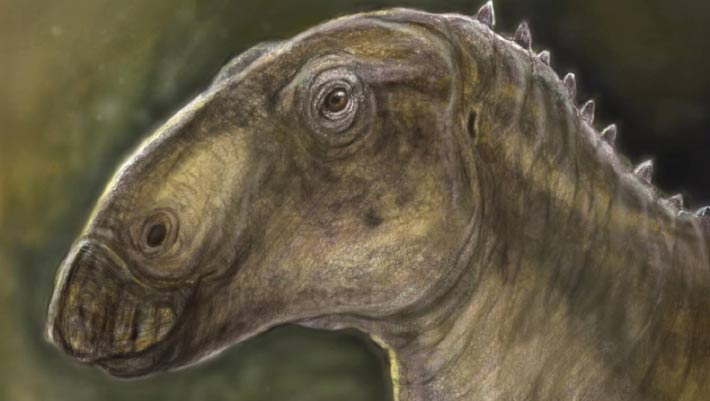
New Duck-Billed Dinosaur Unearthed in Romania

Kryptohadros kallaiae. Image credit: Tibor Pecsics.

An international team of paleontologists from Romania, Hungary and Italy has identified a new genus and species of herbivorous, duck-billed dinosaur from an incomplete skeleton unearthed in the Hațeg Basin, a bowl-shaped depression in the Carpathians of present-day Romania.

The post New Duck-Billed Dinosaur Unearthed in Romania appeared first on Sci.News: Breaking Science News.

  •  

UC Irvine Scientist Awarded Nearly $4 Million NIH Grant to Develop Therapeutic Vaccine Targeting Genital Herpes

University of California, Irvine Innovates Therapeutic Vaccine Strategy to Combat Recurrent Genital Herpes

In a groundbreaking development that could transform the management of genital herpes, UC Irvine immunologist Lbachir BenMohamed has secured nearly $4 million in funding from the National Institutes of Health to advance a novel therapeutic vaccine approach. This ambitious five-year project aims to tackle recurrent genital herpes caused by herpes simplex virus type 2 (HSV-2), a persistent viral infection that affects over 60 million Americans and more than half a billion individuals globally. Despite extensive research efforts historically, no approved therapeutic vaccine exists to date, leaving millions vulnerable to recurrent outbreaks and transmission.

BenMohamed’s research focuses on a next-generation vaccine strategy termed “Prime/Pull/Keep,” designed to establish a robust, localized immune defense precisely at the mucosal sites where HSV-2 resides and reactivates. Conventional vaccines predominantly elicit circulating antibodies, which are insufficient to control HSV-2’s latent reservoirs in the nerve ganglia and mucosal tissues. This innovative approach instead targets tissue-resident memory T cells (TRM), a specialized subset of immune cells critically positioned at the barrier sites to provide immediate defense against viral reactivation.

The Prime/Pull/Keep methodology encompasses a three-step immunization process: initial priming of protective T cells via vaccination, mobilization of these cells to the infected tissue through chemokine signals (pull), and sustained retention and functional maintenance at the site of infection (keep). Together, these steps ensure a sustained population of antiviral T cells, capable of rapid detection and elimination of reactivated virus, potentially curbing recurrent disease manifestations and viral shedding.

Previous investigations by BenMohamed’s team have demonstrated promising results with mRNA-based therapeutic vaccines in preclinical models. These candidates were effective in reducing clinical signs of recurrent genital herpes and enhancing the recruitment of protective T cells within genital mucosal tissues. Additionally, exploring immune-signaling molecules such as chemokines has validated the feasibility of attracting and retaining TRM populations, thereby improving local immune surveillance and long-term antiviral immunity.

The current NIH-funded project intends to rigorously evaluate the safety profile and immunogenic potential of various Prime/Pull/Keep vaccine candidates in preclinical animal models, examining how augmenting the quantity, quality, and durability of TRM cells correlates with protection from HSV-2 reactivation. This represents a critical translational step toward bridging laboratory research and clinical trials, responding to NIH’s strategic priority to develop novel therapeutic interventions for genital herpes.

BenMohamed articulates the significance of this research succinctly: “People living with recurrent genital herpes have long awaited effective therapeutic vaccines. Our innovative immune-based approach not only amplifies protective T cells but directs and maintains them where the virus hides. This could revolutionize prevention strategies for millions affected worldwide.” The team’s vision is to develop a vaccine capable of reducing recurrent outbreaks and viral transmission, substantially improving quality of life for patients.

HSV-2 represents a formidable pathogen due to its ability to establish lifelong latent infection in sensory neurons, periodically reactivating to cause painful genital lesions and facilitating onward transmission. Existing antiviral therapies focus on suppressing viral replication but do not eliminate reservoirs or prevent recurrence. The targeted boosting of tissue-resident immune memory represents a paradigm shift in immunotherapy, promising durable tissue-specific immunity where it is needed most.

The Prime/Pull/Keep vaccination strategy could also circumvent issues faced by traditional systemic vaccines, which often fail to generate sufficient mucosal immunity or induce long-lasting memory T cell populations within genital tissues. By tailoring antigen delivery and immune modulation, this approach aims to enhance the local microenvironment and foster a self-renewing population of sentinel T cells poised to respond immediately to viral reactivation.

As the project advances through preclinical stages, rigorous assessment of immune correlates of protection will inform optimization of vaccine formulations, dosing schedules, and adjuvant combinations. Understanding the mechanisms underpinning TRM cell maintenance and functionality remains an active area of investigation critical to maximizing therapeutic efficacy and durability.

The successful identification of an optimal Prime/Pull/Keep candidate would pave the way for human clinical trials, marking a historic milestone in the fight against genital herpes. Such a vaccine holds the promise not only to alleviate recurrent symptoms but also to significantly curtail viral shedding, thereby decreasing transmission rates and public health burden.

Beyond genital herpes, the conceptual framework underlying Prime/Pull/Keep may inspire novel immunotherapeutic strategies for other persistent viral infections and chronic diseases where localized immune memory is pivotal. Collaborative efforts among immunologists, virologists, and clinical scientists will be essential to translate these findings into effective interventions.

With UC Irvine’s robust infrastructure, cutting-edge facilities, and interdisciplinary expertise, BenMohamed’s laboratory is well-positioned to spearhead this transformative endeavor. The $3.93 million NIH R01 grant underscores the scientific community’s confidence in this pioneering approach and its potential to redefine therapeutic vaccine development for chronic viral infections.

In conclusion, the UC Irvine-led Prime/Pull/Keep vaccine project represents a beacon of hope for millions plagued by recurrent genital herpes, offering a sophisticated and strategic means to harness the immune system’s power at the precise sites of viral latency and reactivation. As research progresses, the scientific world eagerly anticipates the realization of a durable, tissue-targeted therapeutic vaccine capable of changing the landscape of HSV-2 management and prevention.

Subject of Research: Development of a novel therapeutic vaccine to prevent recurrent genital herpes by targeting tissue-resident memory T cells

Article Title: UC Irvine Advances Prime/Pull/Keep Therapeutic Vaccine Strategy to Combat Recurrent Genital Herpes

News Publication Date: June 16, 2026

Web References:
– University of California, Irvine: www.uci.edu
– UC Irvine News: news.uci.edu
– NIH Media Resources: https://news.uci.edu/media-resources/

Keywords: herpes simplex virus type 2, HSV-2, genital herpes, therapeutic vaccine, tissue-resident memory T cells, Prime/Pull/Keep, immunotherapy, mRNA vaccine, viral latency, NIH funding, recurrent infections, mucosal immunity

  •  

Swiss decision to not contribute to Copernicus tests program’s value model

View of the Fagradalsfjall volcano on Iceland's Reykjanes Peninsula, acquired by the Copernicus Sentinel-2 satellite less than 10 hours after its eruption began on Feb. 8, 2024, with the lava flow and smoke plume clearly visible near the city of Grindavík. Credit: European Union, Copernicus Sentinel-2 imagery.

MILAN — Switzerland’s decision not to participate in the European Union’s Copernicus Earth observation program during the 2028–2034 funding cycle has revived a broader debate over the value of contributing […]

The post Swiss decision to not contribute to Copernicus tests program’s value model appeared first on SpaceNews.

  •  
❌