❌

Reading view

Apple patches high-severity eavesdropping vulnerability in Beats Studio Buds

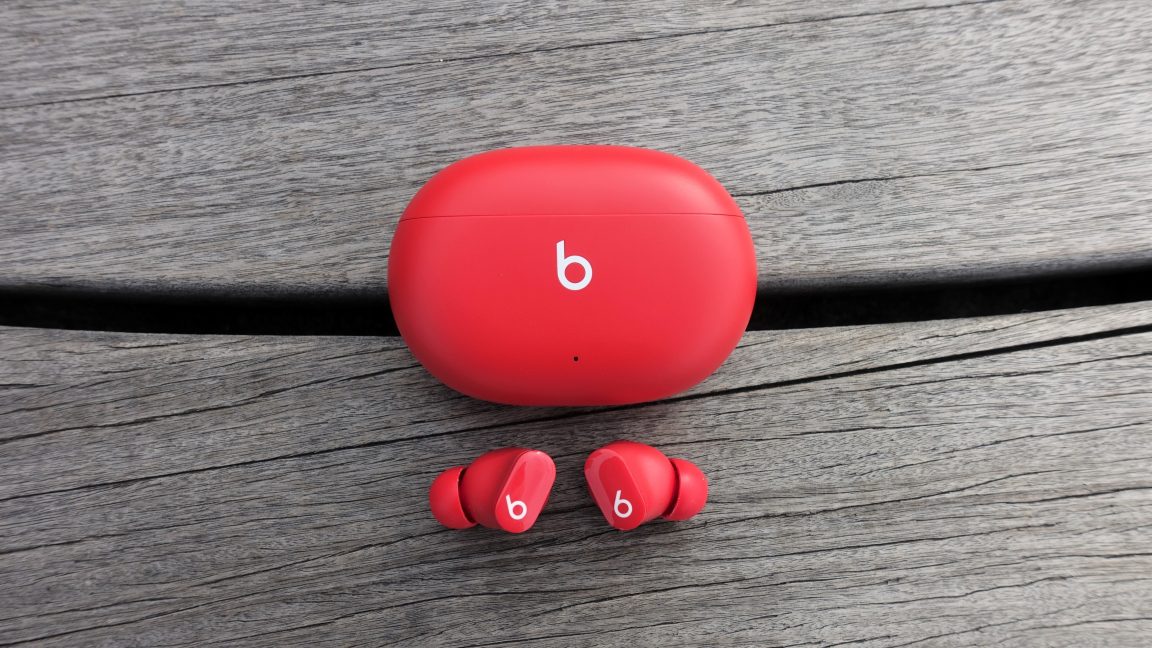
Apple has updated its Beats Studio Buds wireless earbuds to patch a high-severity vulnerability that could be exploited by nearby hackers to eavesdrop on users.

The vulnerability, CVE-2025-20701, allowed improper authentication in the firmware running on the Bluetooth-related chips, enabling people within signal range to impersonate devices that had previously been paired with the earbuds. The researchers demonstrated this in a series of end-to-end attacks that allowed them to eavesdrop on conversations or sounds within earshot of the phone microphone.

Apple joins the patch party

“Impact: An attacker within Bluetooth range may be able to listen through the microphone of a device which is not yet paired and actively seeking pair requests,” Apple said in a Tuesday security advisory. The fix is contained in Beats Firmware Update 1B211, which is delivered automatically while headphones are paired with and within Bluetooth range of a user’s iPhone, iPad, or Mac. Users can check their firmware version by going to Settings on their device, navigating to Bluetooth, and tapping the info button next to the headphones.

Read full article

Comments

© Jeff Dunn

  •  

Apple scrambles to handle component price hikes

Apple execs are now acknowledging the company is going to need to raises prices to cope with higher component costs, particularly memory. Apple has been battling to avoid doing so, but warned this week that those efforts are “unsustainable.”

The price pressure is being felt across the tech industry. Omdia predicts the average selling price (ASP) of smartphones globally will increase by around 20% this year — partly because AI industry demands have pushed up RAM prices and partly because of rapid cost increases in processor production as a direct consequence of war in the Middle East. This impacts anything that uses memory or processors.

Apple must raise prices, CEO warns

“We’re doing our best to mitigate the huge increases that are being passed to us, and we’ve been trying to shield our customers from the increases, but the situation has become unsustainable,” current Apple CEO Tim Cook told the Wall Street Journal.

OK, so prices are going to go up. But how?

If Apple must raise prices, the way it does so matters. Will it increase prices across the board, or choose a subtle, strategic approach that protects margins while also maintaining rapidly accelerating market share growth?

Until now, Apple has been benefiting from the rising tide in memory prices. While competitors have been steadily increasing prices across the board, Apple introduced its first $599 laptop even as it eats into mid-range smartphone sales. 

To grow, or to grow less?

The PC industry is not growing (outside of Cupertino), and Apple and its investors already know that the inordinately high customer satisfaction ratings its platforms enjoy mean that when people switch to them they tend to stick around. That’s why it matters that Cook highlighted record switchers and first-time platform users during the company’s most recent fiscal call. Apple is growing new customers, people who are likely to sign-up for services, accessories, and future upgrades. Winning the customer is an investment in future performance.

When it comes to increasing prices, we’ve seen some gentle experimentation in the Mac mini line, where the entry-level $599 model was effectively replaced by a more expensive $799 SKU. There have been suggestions Apple could do the same with the $599 MacBook Neo, dumping the entry-level build in favor of the (better) $699 model. I’m not certain that’s the best approach. 

A matter of choice

I’d argue that the $599 price point is psychologically the best bit of marketing Apple has ever done as it draws new users to look at its platforms. I also think substantial numbers of people already shift up to the $699 version, if they can, making that entry-level price an incredibly effective marketing tool with which to woo customers. It looks like that approach is working; the MacBook Neo has led the Amazon Laptop Sales chart ever since it was introduced and is selling in huge quantities globally.

Francisco Jeronimo, IDC vice president for data and analytics, sees this, writing: “It will be interesting to see whether Apple raises prices across its entire portfolio or plays strategically by subsidizing its more affordable products to gain market share and grow its installed base.”

If Apple raises prices at the price sensitive, entry-level end of its market, it runs the risk of slowing its own resurgence. Given that a 10% price hike here is only worth around $60, the revenue generated might not justify blunting Apple’s offer to new users.

Pricing and strategy

But Apple isn’t defined by its entry-level markets. Its biggest earning opportunities continue to be generated by the aspirational middle class, who, while feeling the pinch of declining living standards in many markets, can still handle the price of a top-of-the-range iPhone Pro. A 10% price increase at that end of the market will generate a much more significant chunk of revenue – and since rival vendors are raising their prices at this end of the market, Apple can follow suit while still seeming affordable. It’s an approach that maintains growth while optimizing margins.

Apple generates roughly half its revenue from iPhone sales, with the Pro and Pro Max devices accounting for a significant chunk of that money. Consumers looking to buy one of Apple’s high-end devices are likely to be less price-sensitive than those making purchases at the low- and mid-points of the company’s market range. 

With that in mind, it makes more sense for the company to raise prices at the top, while working to maintain the cost of entry at the lower end. It could, of course, raise prices universally, but doing so makes less sense.

What next?

Whatever strategy Apple adopts, company leadership is clear that component pricing is hitting hard. “We definitely need memory pricing and supply to return to reasonable levels for consumer products. That’s the bottom line,” Cook said.

You can follow me on social media! Join me on BlueSky,  LinkedIn, Mastodon and subscribe to The Core for your daily fix of Apple News.

  •  

Trump touts Apple, Intel chip deal

US President Donald Trump (pictured) stated Apple has struck a deal with Intel to produce computer chips inside the US, a move which marked a significant moment in his administration’s push to reshore semiconductor manufacturing.

“I decided to help Intel because we need to design and build our Chips right here in America,” Trump wrote on Truth Social today (18 June).

He added Apple’s agreement was the latest in a series of wins for his domestic chip strategy, following similar commitments from Nvidia and Elon Musk’s TeraFab project with Intel.

The Apple agreement marks another significant win for Intel. CEO Lip-Bu Tan, who spent much of last year shoring up the company’s balance sheet through major external investments, now appears to be delivering on operational improvements which seemed unlikely just a year ago.

For Apple, the partnership offers a chance to diversify a supply chain which currently depends heavily on TSMC to produce the processors powering its iPhones, iPads and Mac computers.

Any agreement will likely be a foundry deal, since Apple already designs its own silicon.

Apple price increases
Apple CEO Tim Cook told the Wall Street Journal price increases for its products are now unavoidable, citing soaring costs for memory and storage chips driven by the AI boom. He stated Apple had absorbed rising costs for as long as possible, but the pressure has become too great to avoid passing increases on to customers.

A domestic chip supply deal from Intel could give Apple more flexibility in an increasingly constrained global market, though analyst Ming-Chi Kuo has previously suggested any production through Intel’s advanced 18A-P process node is unlikely to reach mass scale before late 2027.

Trump’s post also gave him an opportunity to tout the government’s earlier bet on Intel. Last August, his administration converted roughly $8.9 billion in federal funding into an equity stake of around 10% in the company.

He noted in his post Intel was worth around $100 billion when the government made its offer.

“Now they are worth over 600 BILLION DOLLARS! Nine months, and they’ve increased in value over HALF A TRILLION DOLLARS. America’s stake is now over 60 Billion Dollars.”

The post Trump touts Apple, Intel chip deal appeared first on Mobile World Live.

  •  

Il ritorno dell'iPod: la nuova ossessione vintage della Gen Z

Nei primi anni 2000 gli amanti della buona musica facevano gli alternativi preferendo vinili e CD ai lettori MP3. Ora la storia si ripete: la Gen Z sta sostituendo lo smartphone con i vecchi iPod per evitare che fastidiose notifiche e telefonate interrompano l'ascolto dei brani preferiti. Insomma, ogni generazione ha la sua moda: se i giovani di 25 anni fa guardavano agli anni '70 e '80, quelli di oggi hanno scelto l'inizio millennio come nuovo punto di riferimento. Più o meno.

É chiaro che non tutta la Generazione Z preferisca un vecchio iPod al nuovo iPhone (giusto per restare in ambito Apple), ma il trend è questo, come confermano diverse analisi di mercato effettuate negli ultimi mesi al di qua e al di là dell'Oceano Atlantico. Si pensi che su eBay le ricerche per il modello Nano sono aumentate del 20%, per il Classic del 25%. E il 32% degli acquirenti appartiene proprio alla Gen Z.

L'anno scorso un iPod di 1a generazione ancora sigillato nella confezione originale è stato venduto all'asta per più di 40.000 dollari.


Miglior smartphone rapporto qualità prezzo fascia media? Motorola Edge 60 Pro, compralo al miglior prezzo da Price1 a 361 euro.

CLICCA QUI PER CONTINUARE A LEGGERE

  •  

Crisi chip, ecco quanto potrebbe aumentare il prezzo di iPhone 18 Pro

Come abbiamo visto appena qualche ora fa, Tim Cook ha confermato che, causa crisi dei chip di memoria, Apple potrebbe essere costretta ad aumentare i prezzi di listino di dispositivi come iPhone e Mac. Esiste la possibilità concreta che li vedremo già a partire da questo autunno con gli iPhone 18 Pro. Il Wall Street Journal, in collaborazione con la società di analisi di mercato TechInsights, ha provato a fare alcune stime raccogliendo le principali indiscrezioni sulla futura gamma e incrociandola con i trend di mercato attuali.

Si ipotizza che iPhone 12 Pro dovrebbe montare 12 GB di RAM e 256 GB di archiviazione interna. Entrambi i costi di questi componenti sono aumentati in modo drastico: TechInsights calcola che i 12 GB di memoria DRAM, che lo scorso anno costavano ad Apple circa 39 dollari per unità, potrebbero arrivare a costarne 145, cinque volte tanto. Analogamente il modulo di archiviazione da 256 GB avrebbe registrato un forte incremento, passando da circa 13 a oltre 50 dollari, circa quattro volte tanto.

Rimanendo estremamente ottimisti e ipotizzando che tutto il resto non sia aumentato, il costo di produzione di un iPhone 18 Pro salirebbe quindi a 726 dollari contro i 582 della generazione precedente. Per mantenere margini di profitto simili a quelli attuali, Apple dovrebbe quindi posizionare il dispositivo a un prezzo ben superiore, diciamo intorno ai 200 dollari. C’è però da considerare che il nuovo Melafonino potrebbe includere un modulo fotografico molto più sofisticato, con apertura variabile, che inevitabilmente farà lievitare ulteriormente il costo di produzione.


Piccolo prezzo per un ottimo smartphone? Honor 400 Lite, compralo al miglior prezzo da Amazon Marketplace a 130 euro.

CLICCA QUI PER CONTINUARE A LEGGERE

  •  

Apple e Intel, Trump annuncia l’accordo per produrre chip negli Stati Uniti

Apple avrebbe accettato di lavorare con Intel per portare negli Stati Uniti una parte della produzione dei chip progettati internamente. La possibile intesa, non ancora confermata pubblicamente dalle due società, è stata annunciata dal presidente degli Stati Uniti, Donald Trump, con un post pubblicato su Truth Social. Nel suo messaggio, Trump ha collegato l’operazione alla necessità di ricostruire negli USA una filiera nazionale dei semiconduttori, accusando "gli stupidi presidenti precedenti" di aver lasciato che Taiwan e altri Paesi sottraessero agli Stati Uniti una quota decisiva della produzione. "Progettiamo tutto, ma dobbiamo costruirlo qui, ora", ha scritto, sostenendo di aver deciso di aiutare Intel proprio per riportare in America una parte più ampia dell’industria dei chip.

La notizia arriva dopo alcune ricostruzioni secondo cui Apple e Intel avrebbero discusso per oltre un anno di un possibile accordo produttivo, arrivando più di recente a una fase formale. L’ipotesi non riguarda un ritorno dei processori Intel sui Mac: Apple continuerebbe a progettare internamente i propri chip basati su architettura Arm, mentre Intel avrebbe il ruolo di fonderia, producendo componenti disegnati dalla società di Cupertino.

Per Apple, un’intesa di questo tipo servirebbe soprattutto ad ampliare le opzioni produttive in una fase in cui la dipendenza da TSMC resta molto forte e la capacità più avanzata è contesa anche dai grandi produttori di chip per AI, da Nvidia ad AMD. Mancano però i dettagli che permetterebbero di capire la reale portata dell’operazione: quali componenti sarebbero coinvolti, con quali volumi, su quali processi produttivi, con quali tempi e con quali rese.

Trump sta provando da mesi a riportare negli Stati Uniti una parte più ampia della produzione tecnologica, soprattutto sul fronte dei semiconduttori, e l’annuncio su Apple e Intel segue esattamente questa linea. All’inizio del 2025, Apple aveva promesso 500 miliardi di dollari di investimenti nel Paese e poi ha aggiunto altri 100 miliardi, dopo le critiche del presidente sull’assemblaggio degli iPhone all’estero e sul possibile ricorso ai dazi. Intel, da parte sua, è già finita al centro della strategia americana: l’amministrazione ha trasformato quasi 9 miliardi di dollari di fondi federali in una partecipazione vicina al 10% della società e ha sostenuto dazi intorno al 100% sui semiconduttori importati, lasciando però spazio a esenzioni per chi produce, o promette di produrre, negli Stati Uniti.

Questo non rende realistico, almeno nel breve periodo, un iPhone interamente prodotto negli Stati Uniti. L’assemblaggio finale degli smartphone resta molto più difficile da spostare, per costi, tempi e complessità della catena produttiva. I chip seguono una dinamica diversa: se Intel riuscisse a garantire capacità affidabile negli USA, Apple avrebbe un canale produttivo aggiuntivo in un mercato dei semiconduttori avanzati sempre più conteso.


Piccolo prezzo per un ottimo smartphone? Honor 400 Lite, compralo al miglior prezzo da Amazon Marketplace a 130 euro.

CLICCA QUI PER CONTINUARE A LEGGERE

  •  

Tim Cook says RAM expenses are ‘unsustainable’ and Apple is going to raise prices

Blue iPhone 17 Pro in a TechWoven case

Apple is planning to raise prices in response to the ongoing memory shortage. In an interview with The Wall Street Journal, Apple CEO Tim Cook says "price increases are unavoidable:"

We're doing our best to mitigate the huge increases that are being passed to us, and we've been trying to shield our customers from the increases, but the situation has become unsustainable.

Cook doesn't say when Apple plans on raising prices or which products will be affected. The company has already stopped selling the Mac Studio with 512GB of RAM in March and later raised the starting price of the Mac Mini to $799 after dropping the cheaper $599 option f …

Read the full story at The Verge.

  •  

Jamf CEO: ‘AI is happening whether organizations know it or not’

Beth Tschida, who became Jamf CEO in May after serving as CTO and as interim CEO, is the first woman to lead the company in its near 25-year history. I spoke with her this week at the London Jamf Nation event, where the company introduced its new AI Governance solution.

How the transition to CEO is going 

“It’s been a great privilege and an adjustment,” she said. “Jamf has always been a company deeply focused on culture, which is exactly why I love being here. Having the ability to influence and improve that culture from this role is something I feel very supported in doing.”

The last few years have seen a variety of changes at Jamf, which was briefly a public company. “We’ve come through a period of change, not all of it easy,” Tschida said. “But we now have a great partnership with Francisco Partners. We’re private, we’re focused on solving customer problems, and we’re finding ways to lean into what we’re good at.”

Women in tech and mentorship

Tschida is a good choice to lead a software engineering company, as she’s an engineer herself. She originally joined Jamf as vice president for software engineering in 2018, moving up to CTO in 2022. She’s also one of the few women in leadership positions in tech. (To Jamf’s credit, the company also has CIO Linh Lam on its team.)

“I think it’s important for women to stay deep in the tech, build their skills and find their voice confidently,” Tschida said. “You’ll never know all the technology out there. Nobody does. What matters is the ability to keep adapting and evolving.”

Tschida stressed the importance of mentorship. “I feel very honored to have a chance to be a role model for other women,” she said. “I had women who forged a path for me, including a female CIO early in my career who I asked to mentor me and learned an enormous amount from. I’m certainly not the first woman in tech, but I do want to play my part in helping others grow in their careers.

“Ultimately, I want to be respected for what I do, not for my gender. That’s how everyone should be judged.”

AI Governance

Tschida’s product focus means she knows what matters to Jamf. “If you focus on the problems customers have and how your product can help fix them, that’ll take you to where you want to go.”

For many in the enterprise, both in and beyond the Apple space, the next big problem is AI — how to deploy it, how to manage it, and how to regulate it.

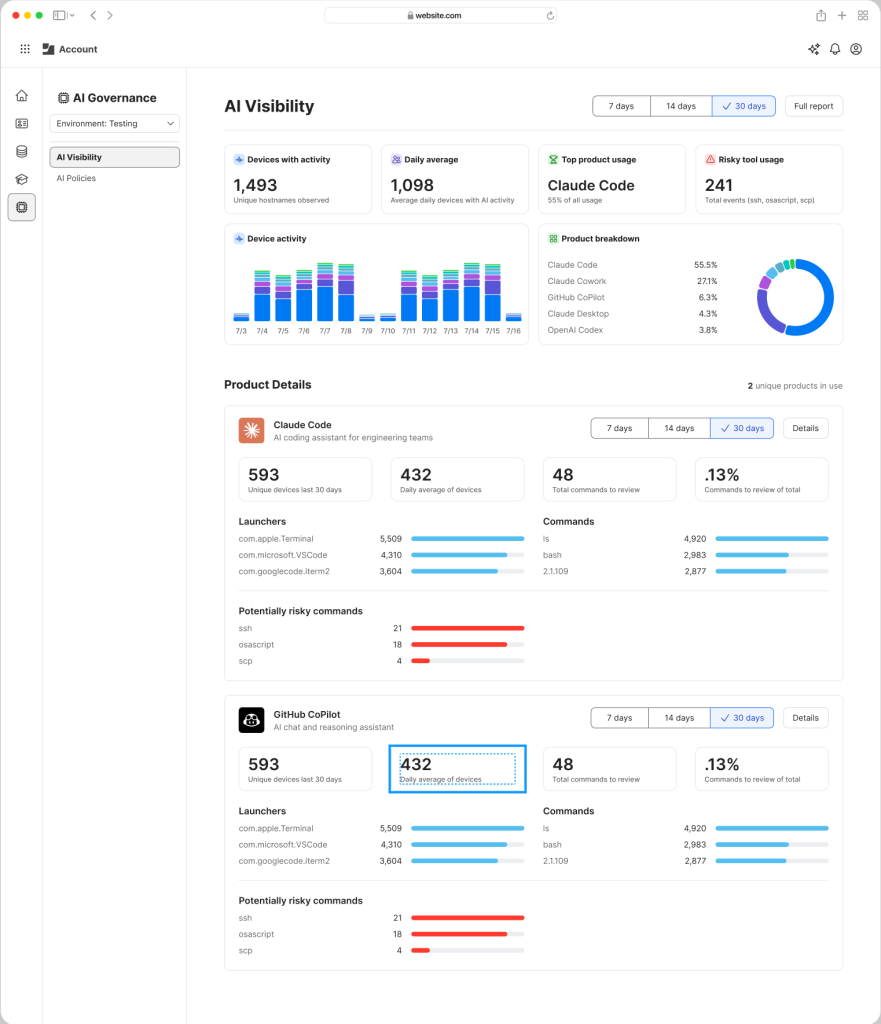
AI Governance is a new Jamf solution that has been developed in response to those pain points. Countless surveys, including Jamf’s own data, show that AI is being widely used across every company, but IT lacks visibility into its use. It’s hard to know what data is being shared with AI tools, which services are being used, and how to report on that use effectively — particularly in regulated industries.

AI Governance is designed to make it possible for anyone managing an Apple fleet to get granular insight into AI use across their Mac, iPhone, and iPad devices. It uses telemetrics to shed light on that use, offers governance and management tools to help IT gain better oversight and control over it, and provides highly comprehensive reporting tools suitable for internal or regulatory review.

“AI is happening whether organizations know it or not,” said Tschida. “That’s the problem. You can try to block it, but that’s very hard to do well. It’s far better to build visibility and governance around it.”

The offering makes it possible for companies to enable the AI use they already know is taking place while protecting corporate interests and enabling fast and accurate reporting. You can find out more details here.

Empowering better AI

Jamf’s approach is focused on endpoint management. AI Governance means IT can see what’s running on a device, categorize it, and understand what AI tools and models are in use. “If you know how people are running AI on your fleet, you can open it up safely. Then all of your customers and employees can find their way to figure out how AI is going to optimize their workforce,” she said.

What does that look like in practice? Think of it as an orchestration layer. IT can define different AI configurations for different teams: HR might use one set of models, engineers another. And admins can apply opinionated postures per group: what models are permitted, what cloud services they connect to, what’s visible to IT versus the CISO versus the CFO. “It’s an extension of what Jamf has always done, it just now applies to AI endpoints too.”

What about regulatory complexity across geographies? “A lot of governance controls are shared across regulations; a good base set is a healthy way to run regardless. But each regulation has its own twists. Our mission is to make sure customers operating in different markets can expand on that base and fit the specific models and regulations they need, getting the right configurations to the right devices.”

Managers must prepare for AI cost challenges

There’s a second dimension beyond management — cost. The industry is developing quickly, with new AI models appearing almost every week. Yesterday’s leading LLM is tomorrow’s fading star, even while the cost of AI infrastructure goes through the roof. As that churn slows, investors will want to start seeing returns on their bets, which is why token costs — the price of running AI services, at least in the cloud — are climbing fast.  

As costs become more realistic, that’s going to change the nature of AI deployment from the laissez-faire, anything goes approach to a more strategic management of such use. “Models keep dropping fast, but token costs are only going to go up,” said Tschida.

“Organizations will need to decide: just because you can build something with AI, should you? What’s the right model for what work? We’re helping customers move from, ‘We’ll just block it’ or ‘We’ll turn it on and hope for the best,’ toward a place where they have a real viewpoint and can manage and change that viewpoint over time.”

The ever-changing AI world is also prompting Jamf to make more of its APIs externally available. “We’re used across every industry and every geography, at every scale,” said Tschida. “There’s no way we can build every workflow every customer needs, we’d never get to all of them.”

Embracing openness also helps build future foundations. “Thinking about where we’re heading next — agentic endpoint management — having platform APIs allows our customers to build things they can imagine, that we can learn from, in a way that solves their specific problems.”

Apple, WWDC, and the enterprise

Tschida’s comments come shortly after WWDC 2026, where Apple introduced a raft of AI advances that formed a strong foundation for its future, improvements that matter to Jamf. “When Apple innovates, Jamf celebrates,” she said.

“Apple is doing great things in their AI ecosystem, revamping Siri, expanding their AI capabilities, making Apple the platform people want to run AI on because those machines simply perform better. Our job is to take what Apple builds and bring it into the enterprise in the way that enterprises actually need it.”

Most of the industry recognizes that Apple’s enterprise story has changed dramatically as its products see accelerating use, and momentum is not slowing. Tschida reflected on how just a few years ago, Apple in the enterprise was an option in employee choice programs. “Now it’s becoming the clear choice,” she said. “We expect that trend to continue. And the more Apple invests in AI running natively on device, the stronger that argument gets.”

Where is Jamf going?

AI Governance is a unique answer to an increasingly important set of questions that are now beginning to affect the IT management of Apple’s platforms. (It’s not clear whether anything as sophisticated exists for other platforms at al, but as the need to manage AI grows, demand for such solutions will grow.)

Ultimately, the company’s latest move reflects Jamf’s inherent strategy under its new CEO. “Focus on customers, listen to them, solve their problems, and don’t throw tech at it. Ask: what’s the problem? Can we solve it? That focus is what takes you where you need to go.

“We’re on a good trajectory, customers stay with us, and the culture has always underpinned us. Now we’re finding ways to lean into it even further,” she said.

You can follow me on social media! Join me on BlueSky,  LinkedIn, Mastodon and subscribe to The Core.

  •  
❌