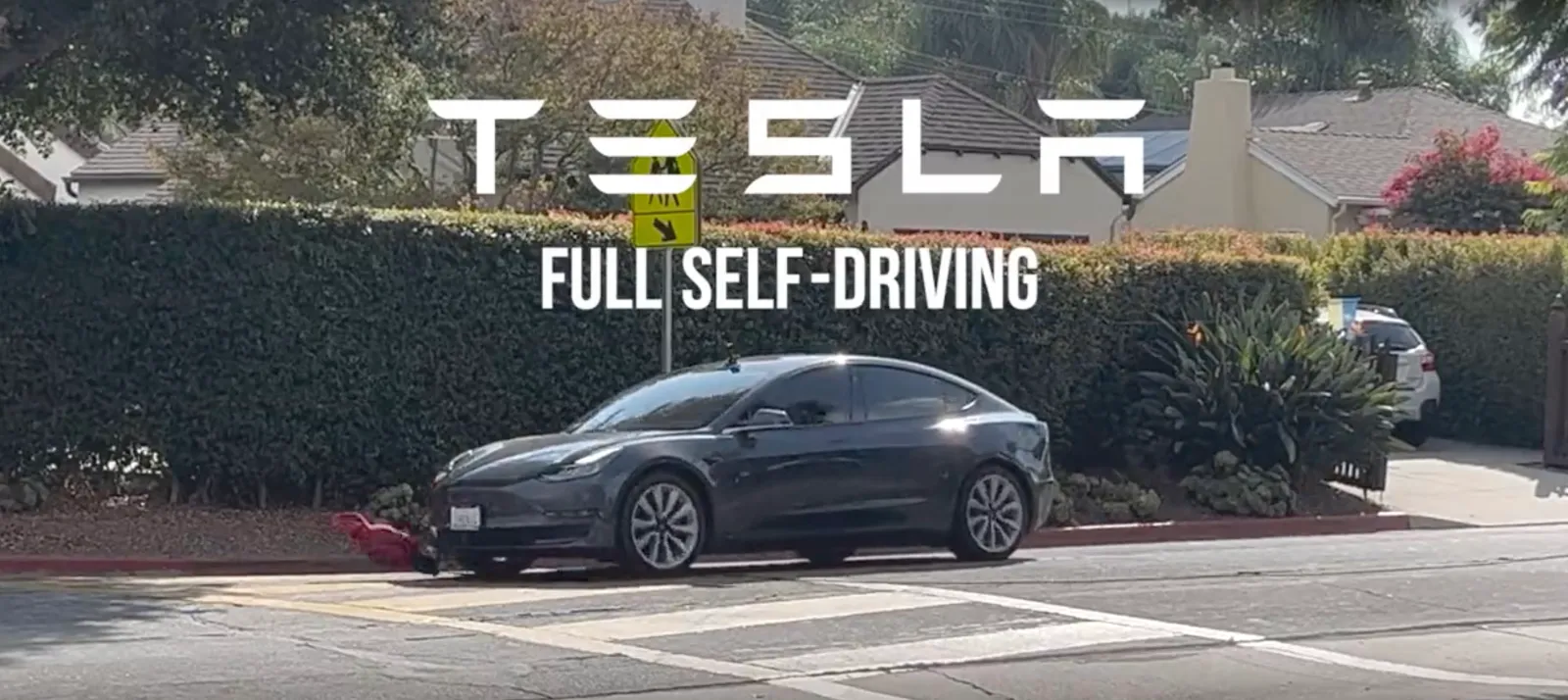
Elon Musk says Tesla’s Full Self-Driving will soon remember your parking preferences and let you talk to it through Grok, like giving directions to an Uber driver.
The features sound useful, and they reflect how genuinely impressive FSD has become — but they also underscore that it remains a supervised driver-assist system, not the unsupervised self-driving Tesla has sold to owners for years.
Welcome to this week’s installment of The Intelligence Brief… in a recent sworn statement, it was revealed that the Pentagon has reportedly leveraged Elon Musk’s xAI to assist in the launch of as many as 2,000 munitions in the recent U.S. war with Iran. In our coverage, we’ll be looking at 1) how the recent revelations were brought to light in a lawsuit focused on possible violations of the Clean Air Act, 2) how a “frontier” AI chatbot became key part of the Pentagon’s military efforts, and 3) why lawmakers are sounding alarms over the potential misuse of AI systems, and the need for ensuring their safe use while restricting major decisions to human operators.
Quote of the Week
“We must act now—not to stifle technological progress, but to establish clear rules of the road that keep humans in charge and keep AI’s use in warfare smart and safe.”
– U.S. Senator Kirsten Gillibrand
If you enjoy the news and perspectives offered by The Debrief, make sure that you aren’t missing our stories by making us one of your “preferred sources” on Google News. You can simply follow this link to add The Debrief to your list of favorites, and you can read more about Google’s preferred sources in our article here.
Get all the latest stories from The Debrief, with more breaking stories at the end of this week’s newsletter.
Musk’s AI Chatbot Helped U.S. Forces Fire Missiles
This week, as an initial deal aiming to end the U.S. war with Iran comes to fruition, it was revealed that thousands of missiles launched by the U.S. were fired by Elon Musk’s Grok chatbot.
The revelation emerged as part of a sworn statement pushing to protect the military’s use of Musk’s AI systems that could be impacted by a lawsuit, which alleges his xAI data centers are contributing to illegal pollution in black communities.
The statement, made by Cameron Stanley, the Pentagon’s chief digital and artificial intelligence officer, states that Musk’s AI chatbot helped to facilitate the deployment of “over 2,000 munitions to 2,000 distinct targets within 96 hours during Operation Epic Fury,” which Stanley called “a testament to the greatly increased operational efficiency made possible by the Grok Gov Model.”
A “Frontier” AI Chatbot
In Stanley’s sworn statement this week, the Pentagon official tasked with overseeing the Department of War’s use of AI wrote that xAI’s Grok is one of just four proprietary AI models “capable of supporting national security applications.”
Stanley wrote that xAI also “remains one of just three enterprise providers equipped to sustain mission-critical operations across Secret and Top-Secret classified networks for the foreseeable future due to the enormous resources required for initial certification.”
“DoW currently relies on derivatives of xAl’s commercial offerings known as the Grok Gov Model,” according to Stanley, who goes on to note in his statement that the AI chatbot has been deployed in systems that include Maven Smart Systems, where it assists in supporting “vital national security missions, including targeting, intelligence, readiness, and recruitment,” and also aids in a range of other military tasks.
“The Grok Gov Model offers features unique to xAI that are found in no other frontier Al model,” Stanley wrote. As an illustration of its capability, Stanley then made the chilling revelation of just how involved in military activities the xAI chatbot has recently become.
Grok Goes to War
“To further illustrate the uses of the Grok Gov Model within DoW, MSS frontier workflows enabled U.S. forces to deploy over 2,000 munitions to 2,000 distinct targets within 96 hours during Operation Epic Fury, a testament to the greatly increased operational efficiency made possible by the Grok Gov Model,” Stanley wrote in his testimony.
As reported by The Independent, the sworn statement provided by Stanley appears to represent the first confirmation by an official within the Trump Administration that Elon Musk’s AI is being used to control U.S. weapons used against Iran.
Since the conflict began in February, the Trump administration has faced scrutiny over U.S.-led attacks that have resulted in civilian deaths, with mounting questions over the military’s use of AI during the conflict.
In an analysis by the Lieber Institute at West Point, Jessica Dorsey and Luke Moffett noted that AI systems “are frequently framed as ushering in an era of unprecedented precision and efficiency in warfare,” but in reality, issues that include recent figures involving as many as 1,700 civilian deaths as of May 2026 “calls that narrative into serious question.”
“CENTCOM claimed it was generating 1,000 targets per hour,” Moffett and Dorsey wrote, adding that while “such capabilities are often framed as enhancing precision… they also introduce new layers of abstraction between decision-makers and the consequences of their actions.”
Pending Court Rulings Could Impact the Pentagon’s AI Use
The U.S. Department of Justice has argued that a pending court ruling could significantly impact the Pentagon’s use of AI if it is prevented from deploying xAI across its systems.
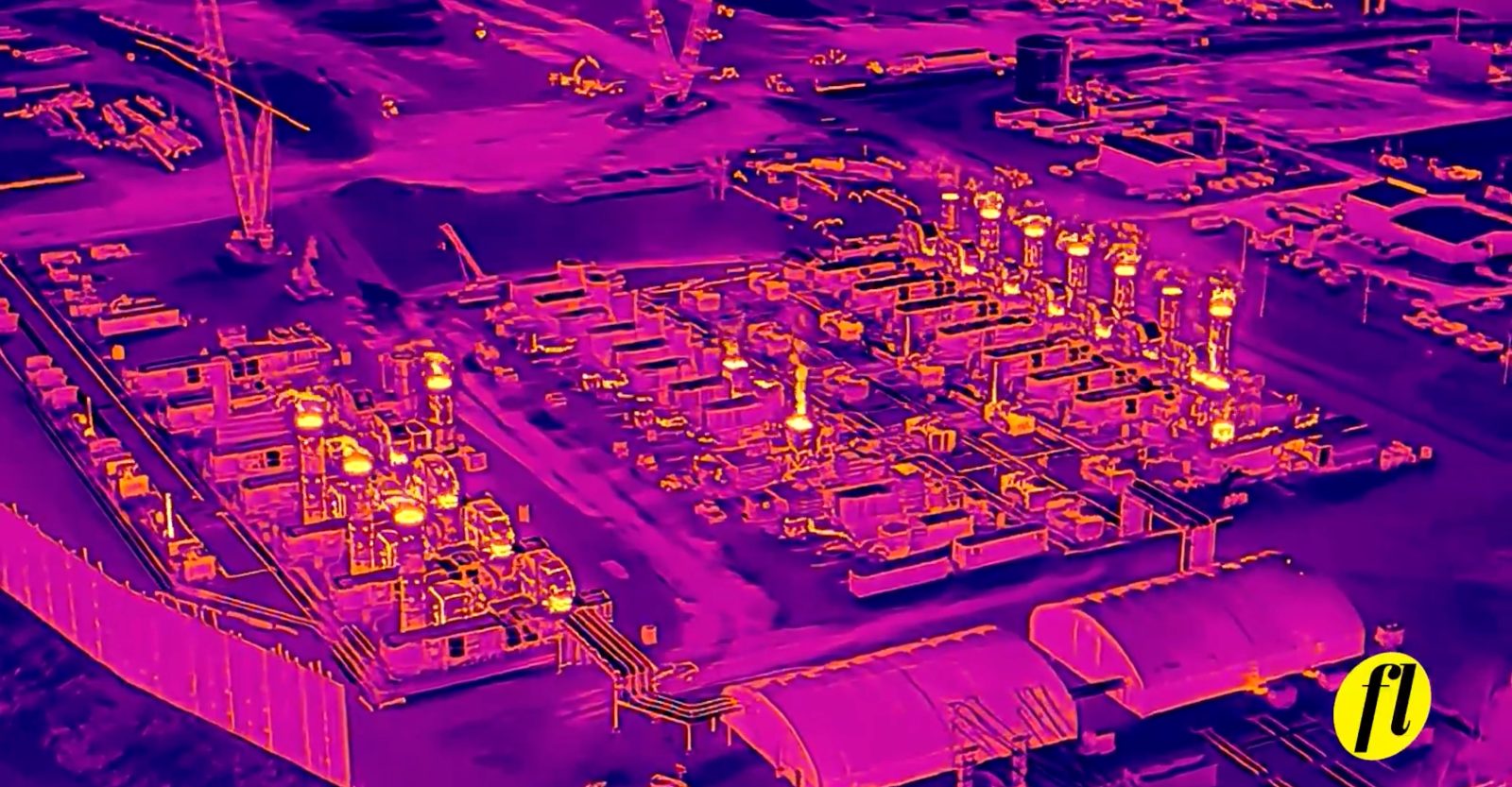
In an effort to prevent such setbacks, the Trump administration has requested that a lawsuit launched by the NAACP be dismissed by a Mississippi-based federal judge. The lawsuit claims that Musk’s xAI Colossus 2 data center, which relies on several dozen gas-powered turbines, is operating in violation of the Clean Air Act. Presently, the turbines are being operated without permits, the lawsuit asserts.
In his sworn statement this week, Stanley called Musk’s xAI systems a “long-term strategic tool vital to maintaining our technological advantage against adversaries.”
However, opponents of such measures in Washington argue that new regulations must help to ensure that crucial military decisions—especially those which impact human lives—must also be made by humans.
“The most critical decisions affecting our national security and the lives of our service members must always be made by human beings, not unaccountable machines,” wrote U.S. Senator Kirsten Gillibrand (D, NY) in a statement earlier in June.
Gillibrand also recently introduced a bill that aims to restrict military decisions that could potentially impact human lives to human operators, and to implement a ban on AI in governing the use of nuclear weapons, as well as autonomous weapons capabilities and domestic surveillance.
In her statement this month, Gillibrand argued that the Pentagon “is moving toward deploying incredibly powerful AI technology without commonsense guardrails in place, which could have catastrophic consequences that make all of us less safe.”
“We must act now—not to stifle technological progress, but to establish clear rules of the road that keep humans in charge and keep AI’s use in warfare smart and safe,” Gillibrand added.
Elon Musk has exercised the entirety of his 2018 Tesla (TSLA) CEO pay package, acquiring 303,960,630 shares for a paper gain of about $116 billion, according to a new SEC filing.
But he didn’t sell a single share to do it — and the stock he received is locked up until 2028.
The US Department of Justice has asked a federal court to throw out a Clean Air Act lawsuit against Elon Musk’s xAI, arguing that the company’s unpermitted gas turbines near Memphis are a matter of “national, economic, and energy security.”
The move puts the Trump administration in court alongside Musk to defend dozens of methane-burning turbines that have been running without air permits in one of the most polluted regions of the country.
A SpaceX confirmou a aquisição da Anysphere, criadora do popular editor de código com IA Cursor, num negócio realizado totalmente em ações. É a concretização de uma opção firmada em abril e que chega quando as ações da empresa dispararam mais de 48% desde o preço de entrada em bolsa.
Last week, we ran a sidebar survey asking if Electrek readers still believed in Elon Musk’s vision of a self-driving, robot-built future on Mars. After receiving more than 3,000 responses, here’s what you told us you think about the world’s first trillionaire.
Hm! | Photo: Kristen Radtke / The Verge; Getty Images
Elon Musk's SpaceX IPO will probably make him the richest person to ever walk the planet. And while his mountain of horrible personal conduct could fill multiple books, one fact in particular stands out: A year ago, Musk's actions directly led to the deaths of hundreds of thousands of people. He did it knowingly. And, worse - gleefully.
This is not a serious person, but his abuse of the world is deadly serious. In the first months of President Donald Trump's second term, the Musk-led Department of Government Efficiency (DOGE) destroyed the US Agency for International Development, whose mission was a boon to public health around the globe. M …
Elon Musk is now officially the world's first trillionaire. That is a colossal amount of wealth (and by proxy, power) for one individual to have. Its scale - a thousand times more than a billion - is difficult to fathom for those of us who aren't among the 3,363 billionaires that currently exist in our world. But let's try to comprehend it anyway.
The most frequently cited comparison is time. If you were to count out a million seconds, it would take you 11 and a half days. A billion seconds would take you 31.7 years. But a trillion seconds would take 31,700 years - to reach that point today, you would have needed to start counting in the Pa …
SpaceX’s IPO on Friday allows the public to buy shares of the combined rocket, AI, and social media company for the first time, and raised enough money to make Elon Musk the first trillionaire.
He has more wealth, on paper at least, than the economies of nations like Ireland, Sweden, or his home country of South Africa (CNN cites the International Monetary Fund saying only 20 countries have economies larger than $1.1 trillion), now linked to the promise of a business based on launching AI datacenters into space.
SpaceX n'a pas toujours été l'empire industriel dirigé par un militant d'extrême-droite mégalo que l'on connaît aujourd'hui. Avant d'atteindre les sommets dans le domaine de l'aérospatial, l'entreprise avait commencé comme beaucoup d'autres.
TechCrunch has followed SpaceX's start, struggles, and successes from the early days. And we're here for what happens next too. This package of SpaceX IPO coverage includes who stands to win (and maybe some who won't), pre-IPO deals, and what's tucked inside its S-1 registration document.
In one of the most highly anticipated and controversial public offerings of all time, the rocket venture helmed by Elon Musk started trading on Nasdaq on June 12th at the take-it-or-leave-it price of $135-per-share - though most retail investors will likely pay far more.
The IPO is historic for many reasons: SpaceX is hoping to raise $75 billion under the ticker symbol SPCX, which would make it the largest public offering in history. The company is controlled by Musk, who also runs Tesla, another trillion-dollar company. The IPO is expected to make Musk, who is set to control 85 percent of the voti …

 Login