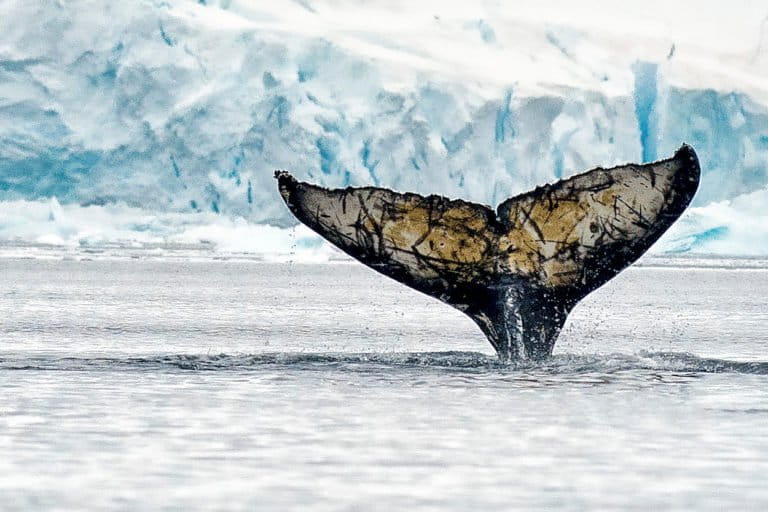
This week, as governments of various coastal states gather in Mombasa, Kenya, for the Our Ocean Conference, Africa must demand an end to industrial krill fishing in the Southern Ocean before irreversible damage is done to Antarctica and the ocean systems upon which our continent depends. A clear call from Africa would bolster international calls for a ban on industrial krill fishing and support positive leadership developments like the European Parliament’s recent call for a moratorium on krill fishing. The Southern Ocean regulates global ocean circulation, absorbs enormous quantities of heat and carbon dioxide, and sustains marine life across the planet. At the center of this system is Antarctic krill (Euphausia superba), the tiny crustacean that feeds whales, penguins, seals and seabirds while helping lock carbon into the deep ocean. Industrial krill fishing has expanded rapidly over the last few years, with the largest share of this extraction controlled by fleets linked to certain European and Asian countries. Most concerningly, fishing is intensifying precisely where Antarctic wildlife is most vulnerable: critical feeding grounds for whales, penguins and seals are actively targeted by the industry. A single adult Antarctic krill (Euphausia superba) is usually just five centimeters long, but the importance of its massive populations to marine food chains, and the millions of people who depend on ocean protein as part of their daily diet, is major. Image courtesy of Uwe Kils via Wikimedia Commons. The damage is already visible. In April, the International Union for Conservation of Nature (IUCN) classified…This article was originally published on Mongabay
In recent weeks, two outbreaks captured international attention: a hantavirus cluster linked to a cruise ship and an escalating outbreak of Bundibugyo ebolavirus in Central and Eastern Africa. How the world reacted to these outbreaks tells us more about inequity than about epidemiology. The Andes hantavirus outbreak aboard a luxury cruise ship generated extensive evacuation footage and widespread public anxiety. The numbers involved were small, and public health authorities clearly emphasized that the broader risk was very low. Meanwhile, the Bundibugyo virus disease (BVD) outbreak, involving a rapidly increasing number of cases and deaths, spreading across fragile border regions, and unfolding without an approved vaccine, or therapeutics, still struggles to command comparable global urgency despite its coverage in the news. This disparity reflects an uncomfortable and common truth: some outbreaks become global emergencies only when wealthy travelers, tourists, or Western borders appear threatened. Others remain regional tragedies, normalized by poverty, and neglect. However, both outbreaks point to the same deeper reality. These events are not isolated biological accidents, but predictable consequences of the ecological, economic, and political systems we have built. In partnership with local governments across Central Africa, WCS set up an early warning system for Ebola, working with traditional hunters, forest communities, and rangers to raise awareness and promote best practices in zoonotic risk reduction, and to monitor wildlife health through sampling and a carcass monitoring, as in this case where a worker surveys a gorilla. Image courtesy of A. Ondzie / WCS. Global health has largely focused…This article was originally published on Mongabay
The countries of the Association of Southeast Asian Nations (ASEAN) have made an important commitment to environmental justice for the 680 million people who call this region home. Now comes the hard part: putting it into practice. Last October, ASEAN member states — Brunei, Cambodia, Indonesia, Laos, Malaysia, Myanmar, the Philippines, Singapore, Thailand, Timor-Leste, and Vietnam — adopted a Declaration on the Right to a Safe, Clean, Healthy and Sustainable Environment. They are currently in the process of drafting a regional plan of action to give it life. The right to a healthy environment as it’s usually called is now globally accepted as a fundamental human right. ASEAN first recognized this right in 2012 in the ASEAN Human Rights Declaration. In 2022, the United Nations General Assembly proclaimed the right in a virtually unanimous vote: 161 governments voted in favor, none against, and only eight abstained. At the national level, more than 100 countries now include it in their constitutions. Southeast Asia enjoys a rich natural heritage, like this coral reef in the Philippines, that supports the lives and livelihoods of millions of people. Image courtesy of Jett Britnell/Coral Reef Image Bank. At the same time, international tribunals and domestic courts have made strides in clarifying what the right requires. In July 2025, the International Court of Justice, also known as the World Court, issued an opinion on climate change in which it said the human right to a healthy environment is inherent and essential for other human rights, including…This article was originally published on Mongabay
In October 2015, Indigenous activists from Indonesia, Malaysia, the Philippines, Cambodia, Brazil, the United States, and Honduras, together with delegates from longhouse communities throughout the Malaysian state of Sarawak, gathered at Tanjung Tepalit, an Indigenous Kenyah village on the Baram River on the island of Borneo. They called the gathering WISER: the World Indigenous Summit on Environment and Rivers. Tanjung Tepalit hosted the gathering because the village, along with more than two dozen others along the river, was scheduled to be drowned. The Baram Dam, a 1,200-megawatt hydroelectric mega project backed by the Sarawak state government and aligned with a regional industrial development scheme called the Sarawak Corridor of Renewable Energy (SCORE), would have flooded an area of more than 400 square kilometers (more than 150 square miles) and displaced an estimated 20,000 Kenyah, Kayan, and Penan people. Muslims, Catholics, Evangelicals, Buddhists, agnostics, and people who followed traditional Indigenous religions were among the attendees. As we gathered, Peter Kallang, the Kenyah founder and chair of the local advocacy group SAVE Rivers, addressed the assembly: “We are people of many faiths,” he said, “but we are united in one mission. To protect our forest homes and our ways of life.” In one sense the WISER gathering was a strategy meeting to coordinate an international coalition against a state-corporate project. In another, and perhaps deeper sense, WISER was rooted in something older. It was an assertion that the values that hold communities to their land across generations — the sanctity of the…This article was originally published on Mongabay
Cities are expanding faster than at any point in human history, and wildlife is adapting in remarkable ways. We often talk about visible changes like animals becoming bolder, shifting their diets, or altering their daily rhythms to avoid people. But there is a deeper transformation happening inside their bodies, one that conservation science has barely begun to address: The reshaping of the gut microbiome. Urban ecosystems expose animals to a completely different set of pressures than their natural habitats. Artificial light, chronic noise, pollution, and human-derived food sources all interact to shape the physiology of wildlife rapidly. These pressures don’t just influence behavior from the outside, they alter the microbial communities that regulate digestion, immunity, stress responses, and even cognition, making key components of how animals evolve and adapt as “pressure cookers,” reducing diversity and decreasing overall health. When the microbiome becomes disrupted, a state known as dysbiosis, animals may become more anxious, more risk-taking, or more susceptible to disease. Urbanization is forcing this rapid adjustment of species not just through habitat loss, but by fundamentally changing their microbiota, and with that, things like foraging patterns and predator avoidance. In other words, urbanization may be shaping wildlife behavior from the inside out. Mule deer in Banff, Alberta. Image by Sharon Hahn Darlin via Wikimedia Commons (CC BY 2.0). Yet conservation strategies rarely consider this internal dimension. We focus on green spaces and habitat restoration, which are essential, but overlook how environmental stressors affect the microbial health of the animals we…This article was originally published on Mongabay
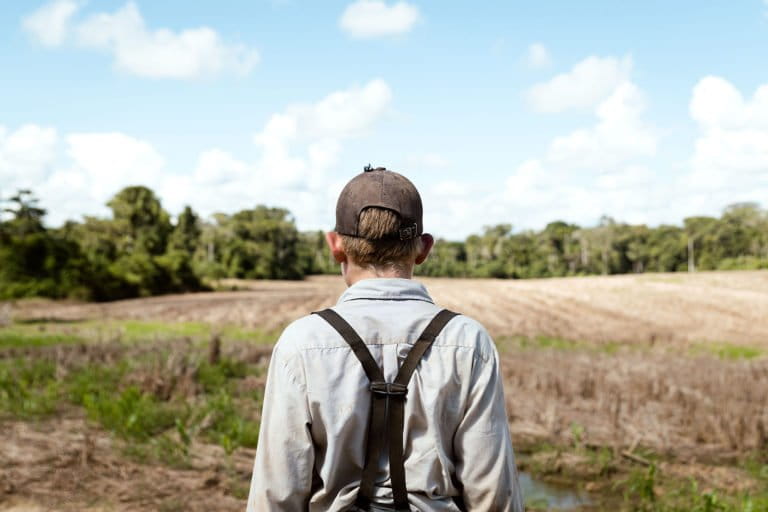
In the global debate over tropical deforestation, the usual cast of villains is well established: agribusiness, global supply chains, cattle ranchers, and governments granting land concessions for political support. One actor rarely appears in this narrative yet has played a consequential role in transforming the South American lowland frontier: The Mennonite agricultural colonist. For more than five decades, Mennonite communities have functioned as systematic agents of agricultural frontier expansion in the Gran Chaco and Andean Amazon, methodically clearing forests, draining wetlands, and catalyzing waves of deforestation that extend far beyond any individual colony. Mennonite communities operate within the law. They purchase land through formal channels, build permanent communities, and transfer agronomic knowledge to surrounding populations. Their values emphasize hard work, communal solidarity, and a theological relationship to land as stewardship. None of this changes the ecological outcome: Wherever a Mennonite colony is established, forests fall. Faith, mobility and colony formation Mennonites are an Anabaptist denomination rooted in the 16-century Reformation, distinguished by pacifism, communal life, and cultural separation from mainstream society. Conservative congregations — whose ancestors moved from Russia to Canada, then to Mexico, Belize and South America — are organized around a local congregation that functions simultaneously as a religious community, governance structure, credit cooperative and social welfare system. When a colony is established, it is an orderly community with collective decision-making, shared infrastructure, and a coherent plan for the future. Forest being cut, burned, and prepared by a Mennonite colony before planting crops. Image courtesy of Mario Silvero.…This article was originally published on Mongabay

 Login