❌

Reading view

Astronomers Trace Elusive High-Energy Neutrino to Star-Forming Galaxy in Early Universe

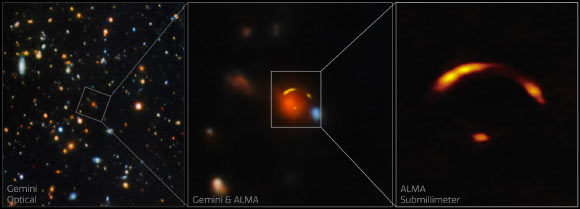
The origin of high-energy astrophysical neutrinos remains unresolved, and secure electromagnetic counterparts to individual events are rare despite rapid follow-up. Dusty star-forming galaxies at cosmic noon (redshift of z ≈ 1-4) are natural cosmic-ray calorimeters, yet observational links between these galaxies and neutrinos have remained unknown. Urata et al. report a compact-core, dusty star-forming galaxy within an IceCube localization, JCMT0402-0424, a quadruply lensed galaxy at z = 2.988 located inside the 90% containment region of the IceCube event IC 210922A. Image credit: International Gemini Observatory / NOIRLab / NSF / AURA / ALMA / ESO / NAOJ / NRAO / T.A. Rector, University of Alaska Anchorage & NSF’s NOIRLab / D. de Martin & M. Zamani, NSF’s NOIRLab / Yuji Urata. MITOS Science Co., LTD.

JCMT0402-0424, a dusty starburst galaxy around 11 billion light-years away, is the strongest candidate yet for the source of the high-energy neutrino event IC 210922A, according to a team of astronomer led by Yuji Urata of MITOS Science Co.

The post Astronomers Trace Elusive High-Energy Neutrino to Star-Forming Galaxy in Early Universe appeared first on Sci.News: Breaking Science News.

  •  

"Dangerous" AI models are coming no matter what

Late last week, Anthropic took its new Claude Fable 5 and Mythos 5 AI models offline following a United States government export-control directive barring “any foreign national” from using the services. The company has been in talks with the White House since Friday but has yet to secure an agreement that would allow it to reinstate the offerings.

Since Mythos debuted in April, Anthropic has claimed—and warned—that the model has advanced capabilities for not only finding software vulnerabilities to help defenders patch them, but also figuring out ways to exploit them that could be used by bad actors. Anthropic itself noted this double-edged sword in its launch of Mythos 5 and Claude Fable 5. “A great deal of advanced usage of AI models is dual use: the same queries that are beneficial in the hands of cybersecurity professionals and biology researchers could be dangerous if available to malicious actors,” the company wrote in a blog post last week.

With this in mind, the company initially released a version called Mythos Preview to a select consortium as part of a working group known as Project Glasswing. Mythos 5 was also privately released to this group last week, while Claude Fable 5, which is a Mythos-grade model, was released to the general public with specific blocks on its ability to give responses to questions about biology and cybersecurity.

Read full article

Comments

© Samuel Axon

  •  

Decoding the Genetic Blueprint Behind Our Three-Dimensional Body

In a groundbreaking series of experiments conducted by researchers at the University of Jena, scientists have revisited and expanded upon a century-old discovery that shapes our understanding of embryonic development. Originally unearthed by Hans Spemann and his student Hilde Mangold in 1924, the concept of the “organiser” is a pivotal developmental mechanism that directs the formation of body axes during the early stages of an embryo’s growth. Spemann and Mangold’s pioneering work involved tissue transplantation between amphibian embryos, revealing the presence of a group of cells within the blastopore that orchestrate the development of a secondary body axis. This discovery earned Spemann a Nobel Prize in 1935 but tragically Mangold passed away young, never witnessing the lasting impact of their findings.

The new research from Jena not only reaffirms these foundational insights but extends them dramatically into the early evolutionary origins of metazoans. Using delicate microsurgical manipulation, the team studied the ribbed comb jelly Mnemiopsis leidyi, a member of the ancient phylum Ctenophora. This lineage diverged from that of other animals approximately 700 million years ago, according to the latest evolutionary models. By transplanting small portions of blastoporal tissue from one comb jelly embryo into another, Jena researchers induced a secondary body axis, effectively recapitulating Spemann and Mangold’s classic findings but now in one of the earliest-diverging animal lineages. The experiment demonstrated that the organiser’s developmental blueprint is deeply conserved across vast evolutionary time frames.

What makes these experiments particularly astounding is the technical difficulty involved. Comb jelly embryos measure only about 120 micrometers in diameter—just a fraction larger than the width of a human hair—while the transplanted tissue samples were barely 20 micrometers in size. Dr. Stanislav Kremnyov, the lead experimentalist, had to master an extraordinary level of manual dexterity to integrate these tiny groups of cells into host embryos without triggering rejection or other developmental derailments. To an outside observer, it appeared as if the researchers were “dissecting clouds,” a vivid metaphor used by Prof. Andreas Hejnol, who leads the research team at Jena.

The functional transplantation of organising tissue between individuals of the same species was spectacular enough. Yet the Jena team dared to push further by performing xenotransplantations, transferring organiser tissue across animal orders into the sea anemone, a cnidarian species that diverged from ctenophores roughly 60 million years later. Remarkably, the transplanted organiser tissue also initiated axis formation in the sea anemone embryos. This unprecedented success underscores the extraordinary evolutionary conservation of developmental mechanisms underpinning animal body plans. Xenotransplantation of organiser tissues across distinct phyla had never before been demonstrated, marking this as a historic advance in developmental biology.

Beyond the cellular choreography, the study also zeroed in on genetic underpinnings. The team identified, for the first time, the specific gene responsible for organiser formation in the sea anemone, bridging molecular mechanisms across species boundaries. This gene appears to regulate the signalling networks critical to early embryonic axis determination, providing a molecular anchor to the organiser’s functional role. Such findings hint that the genetic toolkit necessary for complex body plan organisation was already present in the earliest multicellular ancestors of modern animals.

These discoveries overturn previous assumptions that organiser-driven axis formation was a feature exclusive to more recently evolved animal groups such as bilaterians. Instead, the findings position the organiser as a primordial control system in multicellular organism development, dating back to the dawn of animal evolution itself. It suggests a remarkable evolutionary continuity where the fundamental blueprints for constructing the three-dimensional architecture of multicellular animals remained largely stable across hundreds of millions of years.

The implications of this research extend far beyond ctenophores and sea anemones. Since the organiser guides the spatial coordination of cell fate during development, understanding its origins and conservation sheds light on the evolutionary emergence of animal diversity and complexity. It also offers potential new perspectives for biomedical research, particularly in regenerative medicine and congenital defect studies, where guiding axis formation and tissue patterning is critical.

Technical mastery was central to these findings. The researchers employed advanced microscopy and vital cell staining techniques allowing them to trace transplanted cells dynamically within host embryos. Coupling this with precise microsurgical transplantation provided not only functional but also visual confirmation of organiser activity. This combination of cutting-edge experimental methods enabled insights previously thought unattainable in such fragile and inaccessible embryonic systems.

Prof. Andreas Hejnol reflects on the evolutionary significance with enthusiasm: “Our data demonstrate that this organizer mechanism coordinates the entire body axis and is conserved among one of the earliest-diverging animal lineages, suggesting that complex body plan organisation arose very early in metazoan evolution.” His team’s work bridges developmental biology with evolutionary biology, providing a vivid example of how ancient developmental principles underpin the incredible diversity of life forms on Earth today.

This research, published in the prestigious journal Nature, represents a milestone in understanding early animal evolution and embryogenesis. It dramatically shifts the paradigm surrounding the origins of the organiser and prompts reconsideration of the molecular and cellular processes foundational to animal multicellularity. As scientists continue to explore these ancient mechanisms, further revelations about the building blocks of life’s complexity are eagerly anticipated.

Subject of Research: Animals
Article Title: A blastoporal organiser in a ctenophore
News Publication Date: 17-Jun-2026
Web References: http://dx.doi.org/10.1038/s41586-026-10643-z
Image Credits: Lisa-Marie Barf
Keywords: embryonic development, organiser, blastopore, ctenophore, Mnemiopsis leidyi, evolutionary biology, axis formation, multicellularity, xenotransplantation, sea anemone, cnidaria, developmental genetics

  •  

"Dangerous" AI models are coming no matter what

Late last week, Anthropic took its new Claude Fable 5 and Mythos 5 AI models offline following a United States government export-control directive barring “any foreign national” from using the services. The company has been in talks with the White House since Friday but has yet to secure an agreement that would allow it to reinstate the offerings.

Since Mythos debuted in April, Anthropic has claimed—and warned—that the model has advanced capabilities for not only finding software vulnerabilities to help defenders patch them, but also figuring out ways to exploit them that could be used by bad actors. Anthropic itself noted this double-edged sword in its launch of Mythos 5 and Claude Fable 5. “A great deal of advanced usage of AI models is dual use: the same queries that are beneficial in the hands of cybersecurity professionals and biology researchers could be dangerous if available to malicious actors,” the company wrote in a blog post last week.

With this in mind, the company initially released a version called Mythos Preview to a select consortium as part of a working group known as Project Glasswing. Mythos 5 was also privately released to this group last week, while Claude Fable 5, which is a Mythos-grade model, was released to the general public with specific blocks on its ability to give responses to questions about biology and cybersecurity.

Read full article

Comments

© Samuel Axon

  •  

Há novas burlas a circular em Portugal. Esquemas imitam Ministério da Saúde e bancos para roubar dinheiro

Há novas burlas a circular em Portugal, com alertas deixados pelo Portal da Queixa, assim como pelo Ministério Público. Os esquemas fraudulentos, que incluem táticas de phishing e engenharia social, fazem-se passar pelo Ministério da Saúde e por instituições bancárias.

The post Há novas burlas a circular em Portugal. Esquemas imitam Ministério da Saúde e bancos para roubar dinheiro appeared first on Tek Notícias.

  •  

Lucid Cosmos design revealed in patent filing ahead of 2026 launch

Lucid has registered the design of its upcoming Cosmos with the European Union Intellectual Property Office, giving us the clearest look yet at the sub-$50,000 crossover the automaker is betting its future on.

The filing, published last week, shows the production design of Lucid’s first mass-market EV from every angle, inside and out, months before its expected reveal this summer.

  •  

Consumo de energia dos centros de dados vai triplicar até 2030. China prepara-se para liderar o mercado

Um relatório da Global Data prevê que a China vai ultrapassar os Estados Unidos na corrida dos centros de dados. Segundo os especialistas, a energia vai tornar-se o novo “ouro digital”.

The post Consumo de energia dos centros de dados vai triplicar até 2030. China prepara-se para liderar o mercado appeared first on Tek Notícias.

  •  

Nancy Grace Roman: Telescópio que vê 100 vezes melhor do que o Hubble já tem data de partida

O telescópio espacial Nancy Grace Roman está prestes a partir para investigar os maiores mistérios do Universo profundo. Vai à procura do “invisível”, entre os mil milhões de galáxias que promete observar.

The post Nancy Grace Roman: Telescópio que vê 100 vezes melhor do que o Hubble já tem data de partida appeared first on Tek Notícias.

  •  

Quase 87% das famílias portuguesas usam Internet fixa de alta velocidade. Fibra ótica continua a liderar acessos

A fibra óptica continua a afirmar-se como a principal tecnologia de acesso no que respeita a serviços de alta velocidade. 93,9% dos acessos de banda larga fixa tinham velocidades ultrarrápidas, avança a ANACOM.

The post Quase 87% das famílias portuguesas usam Internet fixa de alta velocidade. Fibra ótica continua a liderar acessos appeared first on Tek Notícias.

  •  

PhysCOS Activities at AAS 248 – 17 June 2026

PhysCOS Activities at AAS 248 – Wednesday, 17 June 2026

16 June 2026

Dear Physics of the Cosmos (PhysCOS) community members-

If you’re attending the American Astronomical Society’s 2026 Summer Meeting (AAS 248) in Pasadena CA, please join us for the following PhysCOS-organized activities (all times Pacific):

Wednesday 17 June

  • 11:40a ‑ 1:10p, Conference Center 212: (XR SIG Special Session)

HEAD: Toward the 2030 Decadal: Science Cases for Potential Future X-ray Mission Concepts

Additionally, the following activities may be of special interest to the PhysCOS community:

Wednesday 17 June

  • 10a ‑ 11:30a, Conference Center 211: Time Domain and Multi-messenger Astrophysics
  • 11a ‑ 12n, Conference Center 204: The NASA Astrophysics ROSES Program
  • 2p ‑ 3:30p, Conference Center 211: Stellar/Compact Objects 2: HMXBs and Pulsar Phenomena
  • 3:40p ‑ 5:10p, Conference Center 212: HEAD: Chandra: Today and Tomorrow

And please drop by the PhysCOS table in the Exhibit Hall!ll!

For more information on PhysCOS throughout the meeting, check out our meeting webpage.

Wishing you the best,

Dr Francesca Civano & Dr Brian Humensky
PhysCOS Chief Scientists, NASA GSFC

Dr Bernard Kelly
PhysCOS Support Scientist, NASA GSFC

American Astronomical Society

The 248th Meeting of the AAS

The 248th AAS meeting (joint with the High Energy Astrophysics and the Laboratory Astrophysics Divisions) will be held 14-18 June 2026 in Pasadena, California.

Learn More
Black line art with letters on a white background
American Astronomical Society (AAS)

News Straight to Your Inbox

Subscribe to your community email news list

We will never share your email address.

Privacy Policy

Sign Up
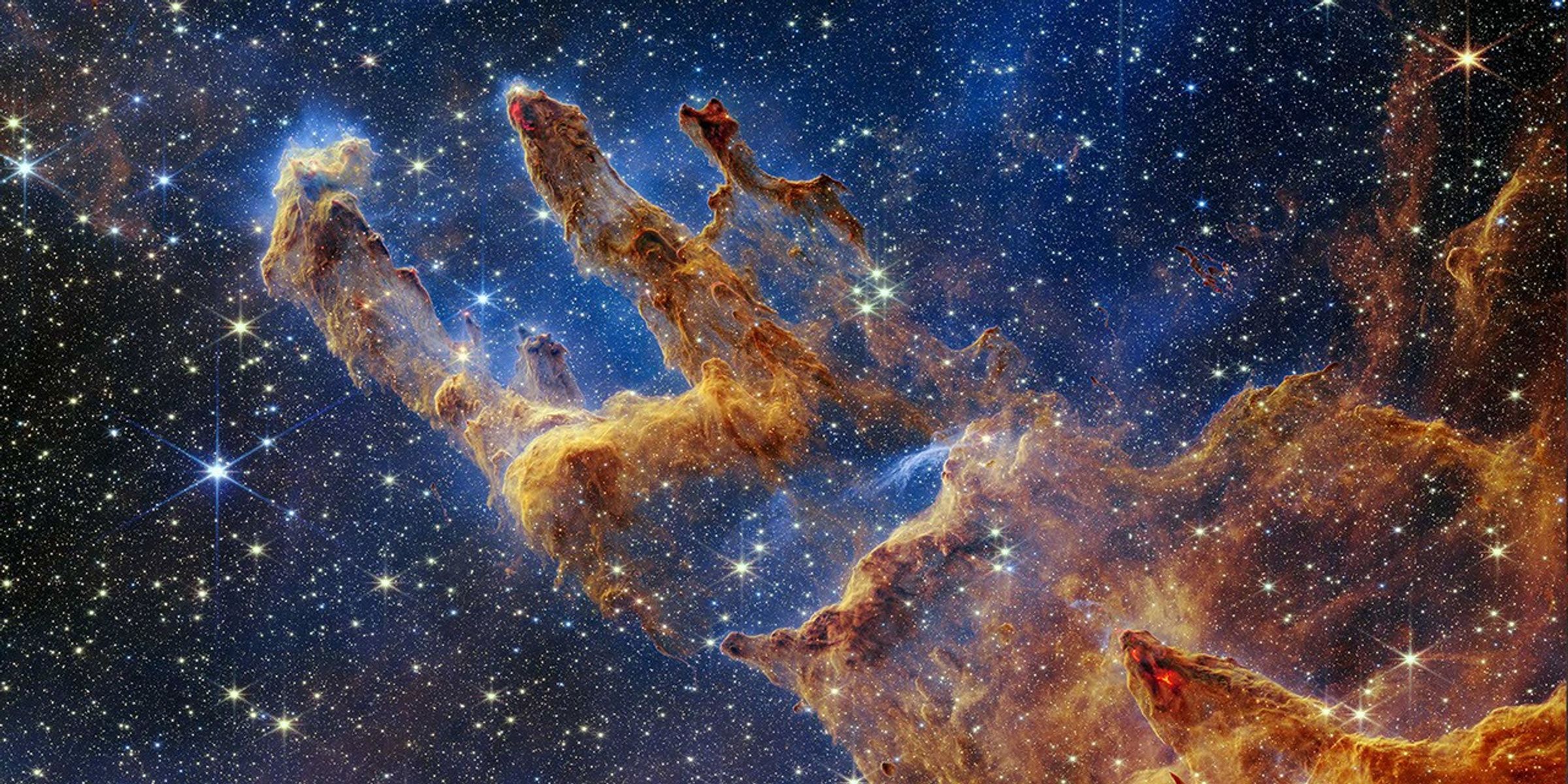
This cropped horizontal image has layers of semi-opaque rusty red colored gas and dust that starts at the bottom right and goes toward the top left. There are three prominent pillars rising toward the top left. The left pillar is the largest and widest. The peaks of the second and third pillars are set off in darker shades of brown and have red outlines.

The post PhysCOS Activities at AAS 248 – 17 June 2026 appeared first on NASA Science.

  •  

SpaceX compra a Cursor por 60 mil milhões de dólares depois de ultrapassar o valor da Amazon em bolsa

A SpaceX confirmou a aquisição da Anysphere, criadora do popular editor de código com IA Cursor, num negócio realizado totalmente em ações. É a concretização de uma opção firmada em abril e que chega quando as ações da empresa dispararam mais de 48% desde o preço de entrada em bolsa.

The post SpaceX compra a Cursor por 60 mil milhões de dólares depois de ultrapassar o valor da Amazon em bolsa appeared first on Tek Notícias.

  •  

Wikipedia Seismograph: Saiba mais sobre os momentos em que os seus temas favoritos foram mais pesquisados

O Wikipedia Seismograph transforma as visualizações de qualquer artigo da Wikipédia num gráfico interativo que revela quando o interesse do público disparou, e permite converter esses picos em pesquisas no Google News.

The post Wikipedia Seismograph: Saiba mais sobre os momentos em que os seus temas favoritos foram mais pesquisados appeared first on Tek Notícias.

  •  

Jeff Bezos, Yann LeCun, Jensen Huang, Arthur Mensch,… : VivaTech 2026 frappe très fort avec une édition exceptionnelle !

Pour ses 10 ans, VivaTech voit grand. Du 17 au 20 juin, Paris accueille une édition XXL dominée par l’intelligence artificielle, le spatial, la souveraineté technologique européenne et la présence des grands patrons de la tech mondiale.

  •  

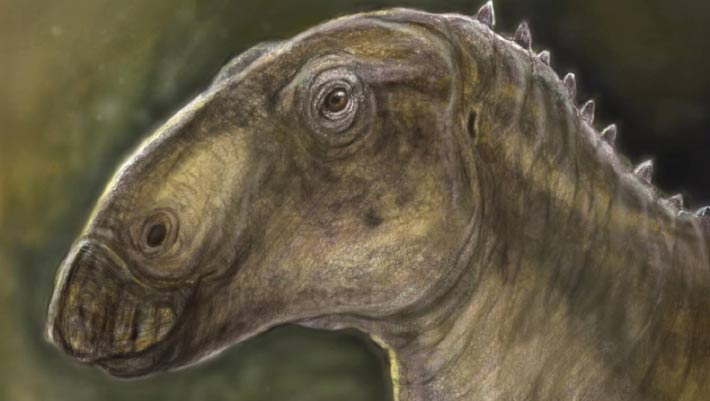
New Duck-Billed Dinosaur Unearthed in Romania

Kryptohadros kallaiae. Image credit: Tibor Pecsics.

An international team of paleontologists from Romania, Hungary and Italy has identified a new genus and species of herbivorous, duck-billed dinosaur from an incomplete skeleton unearthed in the Hațeg Basin, a bowl-shaped depression in the Carpathians of present-day Romania.

The post New Duck-Billed Dinosaur Unearthed in Romania appeared first on Sci.News: Breaking Science News.

  •  
  •  
❌