Login

One of The Ocean’s Deadliest Snails Gave Us a Nonaddictive Painkiller and Scientists Say They Have Barely Scratched The Surface
 They hide a vast chemical arsenal that researchers are mining for pain, diabetes, and brain disease therapies.
 They hide a vast chemical arsenal that researchers are mining for pain, diabetes, and brain disease therapies.
 A new “Doginburgh Inventory” finds most dogs favor one paw, at least weakly.
Corvids, including ravens and crows, have earned a reputation for being some of the smartest birds on Earth. They can recognize human faces, use tools, solve multistep puzzles and even hold funerals.
In recent years, scientists have added another surprising skill to the list: a grasp of numbers. Research suggests that corvids can distinguish between different quantities and, in some cases, even perform statistical analysis.
These discoveries have raised a provocative question: How deep do the roots of mathematical thinking go? While modern humans are the only known species to develop formal mathematics, studies of crows, monkeys and other animals suggest that the cognitive building blocks of math may have evolved hundreds of millions of years before people began doing calculations.
Few researchers have done more to uncover these abilities than Andreas Nieder, a professor of animal physiology and the director of the Institute of Neurobiology at the University of Tübingen in Germany. By examining the neural activity of both monkeys and crows, Nieder has found evidence that very different animal brains can process numerical information in surprisingly similar ways. Live Science spoke with Nieder about how these findings may reveal that the origins of mathematics are far older than our species.
Kenna Hughes-Castleberry: How did you get into researching crows and primates?
Andreas Nieder: After studying the auditory and visual systems for several years as a student, I realized that I wanted to focus on the neuronal foundations of intelligence and cognitive control functions. How does the brain give rise to abstract concepts, working memory, or the ability to follow complex rules deliberately? Of course, to study intelligence, you need intelligence specialists. I therefore began working with primates — more specifically, rhesus monkeys, arguably among the most intelligent mammals. They are closely related to humans, possess relatively similar brains, and share many cognitive abilities with us.
However, as a trained biologist, I was always interested in a broader evolutionary question: Are sophisticated cognitive abilities unique to mammals, or can they emerge in very different brains? Crows provided an ideal comparative species. Birds diverged from mammals more than 360 million years ago — roughly six times longer ago than the extinction of the dinosaurs. Yet despite this immense evolutionary distance, corvids display remarkably flexible behavior; in many ways, they are the feathered primates of the air.
Some are reliable, highly motivated workers that perform consistently day after day. Others are sensitive divas who seem to require special treatment before they are willing to cooperate.
Andreas Nieder
KHC: Are crows difficult to study? Are they fun? Do they have personalities?
AN: Both primates and crows are demanding to study. Because they are highly intelligent, they require special housing and care. Since we investigate cognitive abilities under tightly controlled experimental conditions, they also require extensive behavioral training by skilled personnel. And, of course, the regulations governing research with these species are particularly strict.
At the same time, they are fascinating research subjects. Individual monkeys and crows differ noticeably in temperament and behavior. Some are curious and adventurous, others are cautious and reserved, and some learn new tasks much faster than others.
Their qualities can be quite striking. Some are reliable, highly motivated workers that perform consistently day after day. Others are sensitive divas who seem to require special treatment before they are willing to cooperate. Researchers generally avoid anthropomorphizing, but there is little doubt that individual animals exhibit stable behavioral traits that we would reasonably describe as distinct characters.
KHC: You've found that crows understand the concept of zero. How do we know this?
AN: We trained crows to recognize different numbers — sets containing one, two, three, four objects, and so forth. We then included trials in which no items appeared at all. The remarkable finding was that the birds treated an empty set as a quantity and as part of the numerical continuum. They behaved as though the empty set belonged before "one." Their error patterns were particularly revealing: They confused zero more often with one than with larger numbers, exactly as one would expect if zero were mentally represented as a numerical quantity next to one. In addition, recordings from neurons in the crow brain showed cells that responded selectively to empty sets. This suggests that zero is not merely a behavioral trick but is represented neurally as a meaningful numerical category.
KHC: To play devil's advocate, is the ability to recognize the difference between something and the lack of something really that surprising? Is it akin to the human concept of zero?
AN: That's an important question. Simply recognizing that nothing is present or absent is not surprising. Many animals can distinguish between the presence and absence of objects. The key issue is whether they treat "nothing" as a quantity that can be compared to other quantities.
Our experiments suggest that crows do more than detect absence. They position empty sets within an ordered numerical sequence, at the low end of the number line, and show distance effects similar to those observed with other numbers. For example, they find it easier to distinguish zero from two than zero from one.
That said, we should not claim that crows possess the full human mathematical concept of zero. Humans use symbolic zero in arithmetic, algebra, calculus and formal mathematics. What we have demonstrated is a foundational precursor: a nonsymbolic numerical representation of zero. This may represent an evolutionary building block from which more sophisticated human concepts eventually developed.
KHC: You've also found that crows can perform statistical analysis. Tell me more about these findings and what you showed.
AN: We trained carrion crows [Corvus corone] to associate a series of arbitrary visual signs, colored geometric images displayed on a touch screen, with different reward probabilities. One sign might yield a food reward 90% of the time, another 70%, another 50%, and so on down to 10%. Importantly, the signs themselves carried no inherent meaning; the birds had to learn these probabilities through experience.
Once the birds had learned these sign-probability associations, we presented them with pairs of signs and asked them to choose one. To maximize their rewards, they should select the sign associated with the higher reward probability. The crows did exactly that. Even when confronted with many novel pairings, they reliably chose the statistically more favorable option.
This does not mean that crows perform formal statistics in the human sense. They are not calculating percentages or solving probability equations. However, the results show that they can extract probabilistic regularities from experience, store this information in memory, and use it flexibly to make reward-maximizing decisions under uncertainty. These are fundamental ingredients of statistical reasoning and are highly valuable in natural environments, where animals constantly have to make decisions based on incomplete information.
KHC: Have researchers tried similar tests on babies or young humans, and if so, how do we stack up?
AN: Yes. Developmental psychologists have conducted many related studies with infants and young children. Even before learning language, infants show sensitivity to quantities, numerical differences and simple probabilistic information. By around 4 years of age, children also display an intuitive understanding of empty sets.
What is striking is that the behavioral signatures observed in crows resemble those seen in preverbal human infants and nonhuman primates. Of course, human children eventually develop symbolic mathematics through language, education and culture, which takes them far beyond the abilities observed in animals.
KHC: Can these findings tell us anything about how the human understanding of math evolved?
AN: They suggest that some foundations of mathematics may predate humans by a very long evolutionary timescale. Humans did not invent numerical intuition from scratch. Rather, we appear to have inherited ancient cognitive systems that allow brains to estimate quantities, compare numbers, and represent concepts such as zero approximately.
The fact that crows and primates — two distantly related groups — show similar numerical abilities suggests that these capacities may emerge whenever evolution favors flexible intelligence. Human mathematics likely built upon these ancient cognitive foundations and then expanded dramatically through language, symbols and culture.
What is striking is that the behavioral signatures observed in crows resemble those seen in preverbal human infants and nonhuman primates.
Andreas Nieder
KHC: What's something a general audience might be surprised to learn about crows?
Many people are surprised to learn that crows are songbirds. Most people associate songbirds with melodic singers such as nightingales or blackbirds, not with the harsh cawing of a crow. Yet crows do learn a significant part of their vocal repertoire and are even known as apt imitators, even of human speech sounds — the internet is full of funny videos in which crows imitate human speech.
What makes this particularly interesting is that their vocalizations are not merely reflexive calls. In our experiments, we found that crows can exert volitional control over their vocal behavior. They can learn to produce vocalizations in response to arbitrary cues and withhold them when required, demonstrating a level of cognitive control over vocal output that is considered an important prerequisite for complex communication and, ultimately, language.
More recently, we showed that crows can even use their vocalizations to count. In a recent study published in [the journal] Science, we trained crows to produce a specific number of calls — between one and four — in response to visual or auditory cues. Remarkably, they not only generated the correct number of vocalizations but also appeared to prepare the intended number before they started calling. This suggests that they can represent numerical information and use it to guide a self-generated sequence of vocal actions.
Taken together, these findings show that crow vocalizations are far more sophisticated than most people assume. Their characteristic "caw" is not just a simple call — it can be brought under deliberate cognitive control and even used to express numerical information. For a bird, that is a remarkably advanced ability.
This interview has been edited for length and clarity.
Are you a bird nerd? Find out with our bird quiz!
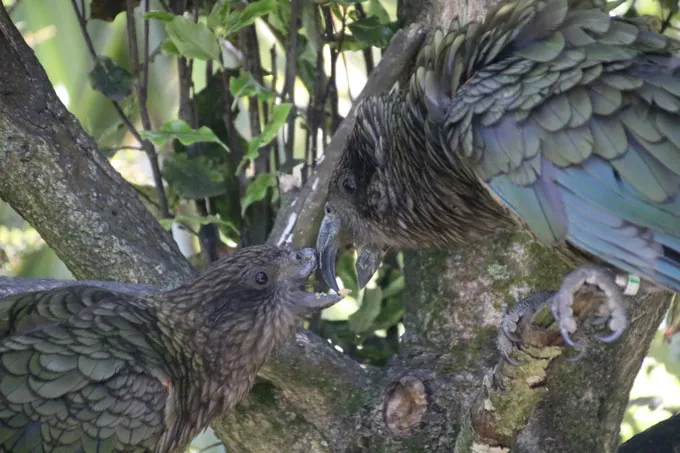
A parrot missing half his beak has become top bird at New Zealand’s Willowbank Wildlife Reserve. Named Bruce, he wins every fight with other kea parrots. He also gets priority access to food.
This observation has made scientists question their ideas about disabilities in animal social groups. Bruce showed that a physical disadvantage doesn’t have to hold an animal back. Sometimes the right moves and a little creativity can make all the difference.
Researchers shared this finding April 20 in Current Biology.
Willowbank’s kea live in a large aviary with trees and a stream. Visitors who stop by often fail to notice the parrots snoozing among the leaves. But when they spot Bruce, they always make the same comment, says behavioral ecologist Alex Grabham: “Look at that poor bird.”
That pity is misguided, says Grabham. He’s part of a team studying kea at the University of Canterbury in Christchurch, New Zealand. That team tracked how Bruce interacted with his flock. (A group of kea is called a circus, reflecting the birds’ playful nature.) Like other parrots, kea have a social hierarchy. This is a ranking system where some birds are in charge; others follow the leader. Birds compete for the top spot by fighting, squawking or puffing up feathers.
Grabham’s team spent four weeks recording 162 physical confrontations between the nine males in Bruce’s circus. Bruce won all 36 of his. Without a doubt, he was the top kea.
What’s more, he’s the first disabled animal to be recorded achieving top status within a group, at least without support from an able-bodied ally. (Faben was a dominant, or “alpha,” male chimpanzee living at Gombe National Park in Tanzania. He lost his top rank after polio paralyzed his arm. Faben’s brother took over his alpha status, but also became his ally. Faben then worked his way back to second place after perfecting a charging technique to bat away rivals.)
Also key to Bruce’s success: an unusual combat technique. Other kea tend to rely solely on kicking to repel other birds. Bruce supplemented his kicks with a unique jousting technique. He jabbed at rivals with his exposed lower beak.
Grabham’s team filmed 109 more confrontations between Bruce and the other birds. During these, Bruce kicked slightly more than he jousted. But jousting proved much more effective. Jousting drove off his opponent 73 percent of the time. When Bruce kicked, he drove them off just 48 percent of the time.
Bruce’s top spot comes with perks. Other male kea will preen Bruce, helping to clean parts of his beak that he cannot reach. This is highly unusual among kea. Normally, they only preen their mates. The lower another male’s rank, the more likely he was to preen Bruce. This behavior mimics hierarchical grooming seen in chimps.
Lower-ranked birds also gave Bruce first dibs on food. The birds’ food was spread mostly between four central feeders. Over the four weeks that Grabham’s team analyzed Bruce, he was the first to dine at those feeders 83 percent of the time. On four days, the other birds gave Bruce 15 minutes of alone time with all four feeders. Later, they ate his leftovers.
In many animal societies, top status comes at a cost. “An animal that is high up in the dominance hierarchy has to defend that position constantly,” says Amalia Bastos. She’s a comparative psychologist at the University of St Andrews in Scotland who used to study Bruce. Alpha male baboons, for instance, show higher levels of stress hormones called glucocorticoids (Glu-ko-KOR-ti-koids).
Grabham’s team measured those hormones in the birds’ droppings. Bruce, it turns out, was the most chill kea in his circus. It isn’t yet clear why. But Grabham thinks that Bruce is so dominant that other kea don’t mount any serious challenges to his throne. “He isn’t going to be followed around and beaten up or bullied or chased,” Grabham says. And Bruce “knows that.”
It’s unclear whether Bruce would have thrived as well in a wild circus as he has at Willowbank. Bastos points out that with his damaged beak, Bruce might struggle with tougher foods during the winter. In the wild, most kea circuses don’t have a fixed hierarchy. Birds join and depart groups throughout the year, constantly changing the rankings. For now, in Willowbank’s strict hierarchy, Bruce is boss.
This isn’t the first study to show Bruce is capable of innovation. In 2021, researchers reported his self-preening technique. He uses pebbles to clean his feathers. “Bruce has now shown twice that being different is not necessarily disadvantageous,” Bastos says.

In a groundbreaking discovery that broadens our understanding of marine life communication, researchers at Oregon State University have identified a novel chemical signaling mechanism among bat rays (Myliobatis californica) that warns conspecifics of looming threats. This chemical disturbance cue, previously documented only in bony fish, now emerges as a key anti-predator strategy in cartilaginous fishes—specifically rays—revealing a layer of behavioral complexity that challenges long-held assumptions about elasmobranch social interactions.
Dr. Joshua Bowman, leading the study from OSU’s Big Fish Lab, devised an elegant experimental setup employing three isolated tanks interconnected through water flow but segregated visually and acoustically to eliminate confounding sensory influences. Each tank housed an individual bat ray, with one designated as the “signaler” and the other two as “receivers.” By simulating predatory pressure through a gentle chase of the signaler ray, the experimenters induced a natural defensive response while ensuring no physical harm.
Strikingly, within mere seconds of the signaler tank’s water being directed towards the receiver tanks, the bat rays in these isolated environments exhibited marked behavioral shifts characterized by increased swimming speed and evasive maneuvers. These responses mimic a flight reaction, confirming the transfer of a chemical alarm cue through the aquatic medium—a sensory pathway previously undocumented in cartilaginous species.
This discovery bears profound implications for understanding elasmobranch ecology and survival strategies. Bat rays, along with sharks and skates, belong to a class of cartilaginous fishes characterized by their distinct evolutionary lineage and physiology. These findings suggest sophisticated intraspecies chemical communication channels functioning as early-warning systems against predation risks, potentially reshaping our perception of their behavioral ecology.
Moreover, the research carries significance beyond bat rays. Whites sharks, apex predators renowned for their fearsome reputation, are known to exhibit avoidance behaviors when orcas, their potential predators, are nearby. Yet, these sharks often do not have direct visual contact with orcas. This study’s insights into chemical alarm signaling hint at unseen communication mechanisms that might underlie such evasive behavior, opening new avenues for exploration into shark sensory biology and their interactions within the marine predator-prey network.
The experiment’s methodological rigor enhances the credibility of these findings. By isolating variables—eliminating acoustic and visual cues—the team conclusively linked behavioral changes to chemical signals. High-resolution overhead video recordings captured nuanced shifts in locomotion dynamics, quantitatively analyzing the rays’ rapid swimming velocity increases immediately following exposure to the alarm chemicals. These data underscore a robust flight response triggered solely by chemical disturbance cues.
While the precise chemical compound or combination responsible for the alarm signaling remains unidentified, the study establishes a foundation for future biochemical and molecular investigations. Identifying the molecular structure of the alarm cue could unlock transformative understandings of elasmobranch chemical ecology, potentially informing conservation strategies and offering biomarkers for monitoring stress responses in marine populations.
Importantly, the research foregrounds broader ecological and ethical considerations. The evolutionary origin of these chemical disturbance cues underscores their critical role in survival and natural behavior modulation. Human interactions—whether through scientific research, fisheries, or recreational activities—may inadvertently trigger stress dissemination across populations via such chemical signals, amplifying disturbance impacts beyond the initially affected individual.
The OSU Big Fish Lab, recognized as a leading shark research facility on the U.S. West Coast, continues to spearhead innovative studies uncovering the intricate lives of marine cartilaginous fishes. This collaboration, involving co-authors Jamie Cornelius and Mauricio Cantor, integrates expertise spanning marine ecology, physiology, and animal behavior, thereby enhancing multidisciplinary perspectives crucial to advancing marine science frontiers.
By employing bat rays as a proxy for studying elusive white shark behavior, the researchers circumvent logistical challenges inherent to large predator studies. Bat rays’ accessibility and manageable size provide an ethical and practical model to dissect communication modalities applicable across related species, ensuring experimental feasibility while preserving ecological validity.
This study, recently published in the Journal of Experimental Zoology Part A: Ecological and Integrative Physiology, represents a significant milestone in marine biology. It not only documents, for the first time, chemically mediated disturbance cues in cartilaginous fishes but also stimulates critical reflection on the sensory worlds of sharks and rays, organisms whose behavioral sophistication may be far richer than previously appreciated.
Collectively, these findings herald a paradigm shift in our understanding of underwater communication networks. They remind us that aquatic ecosystems host complex, often hidden, language systems integral to species survival. As we deepen our inquiry into these chemical dialogues, we unlock new insights essential for protecting marine biodiversity in a rapidly changing ocean environment.
Subject of Research: Animals
Article Title: Behavioral Evidence for a Chemical Disturbance Cue in Bat Rays (Myliobatis californica)
News Publication Date: 10-Jun-2026
Web References: http://dx.doi.org/10.1002/jez.70102
References: Journal of Experimental Zoology Part A: Ecological and Integrative Physiology
Keywords: chemical disturbance cue, bat rays, cartilaginous fish, elasmobranchs, shark behavior, marine communication, anti-predator strategy, predator-prey interactions, aquatic chemical signaling, flight response, marine ecology, behavioral study
An elusive dwarf fox that was feared extinct has been photographed for the first time, after being spotted near a highway in Cozumel, Mexico.
The tiny animal was part of the mysterious Cozumel fox population, a potentially undescribed species that had not been officially sighted in more than 20 years.
Cozumel foxes live only on Cozumel, an island near Cancún. Researchers know very little about these mysterious predators, which are roughly 20% to 40% smaller than their gray fox (Urocyon cinereoargenteus) cousins that live on the mainland.
Park and museum officials spotted and captured the fox in 2023 and, after a health assessment, released it back into the wild. Researchers have now shared the photographs and documented the encounter in a new study published May 4 in the journal Neotropical Biology and Conservation.
Although the rediscovery confirms that Cozumel foxes are still alive, they are likely on the brink of extinction, the study authors noted; the photographs highlight the need for focused research and conservation efforts.
"The biggest challenge facing the Cozumel fox is that we still know almost nothing about it, including its remaining population size, distribution, or ecology," study first author Travis Bayer, executive director of the conservation organization Pathos Wildlife, said in a statement. "That uncertainty alone is dangerous, because it makes effective conservation extremely difficult."
Cozumel foxes are an example of insular dwarfism, an evolutionary process in which larger animals, including fox-sized mammals, evolve to be smaller after colonizing islands, where there are limited resources and less space than on the mainland. The foxes aren't the only mammals that have shrunk on Cozumel over time; other examples include the island's critically endangered pygmy raccoons (Procyon pygmaeus) and dwarf coatis.
Archaeological evidence suggests that Cozumel foxes have lived on the island for at least 5,000 years, likely since before the arrival of the Maya within the past few millennia, and potentially for tens of thousands of years before that. Prior to this rediscovery, the last confirmed sighting of a Cozumel fox was in 2001, according to the study.
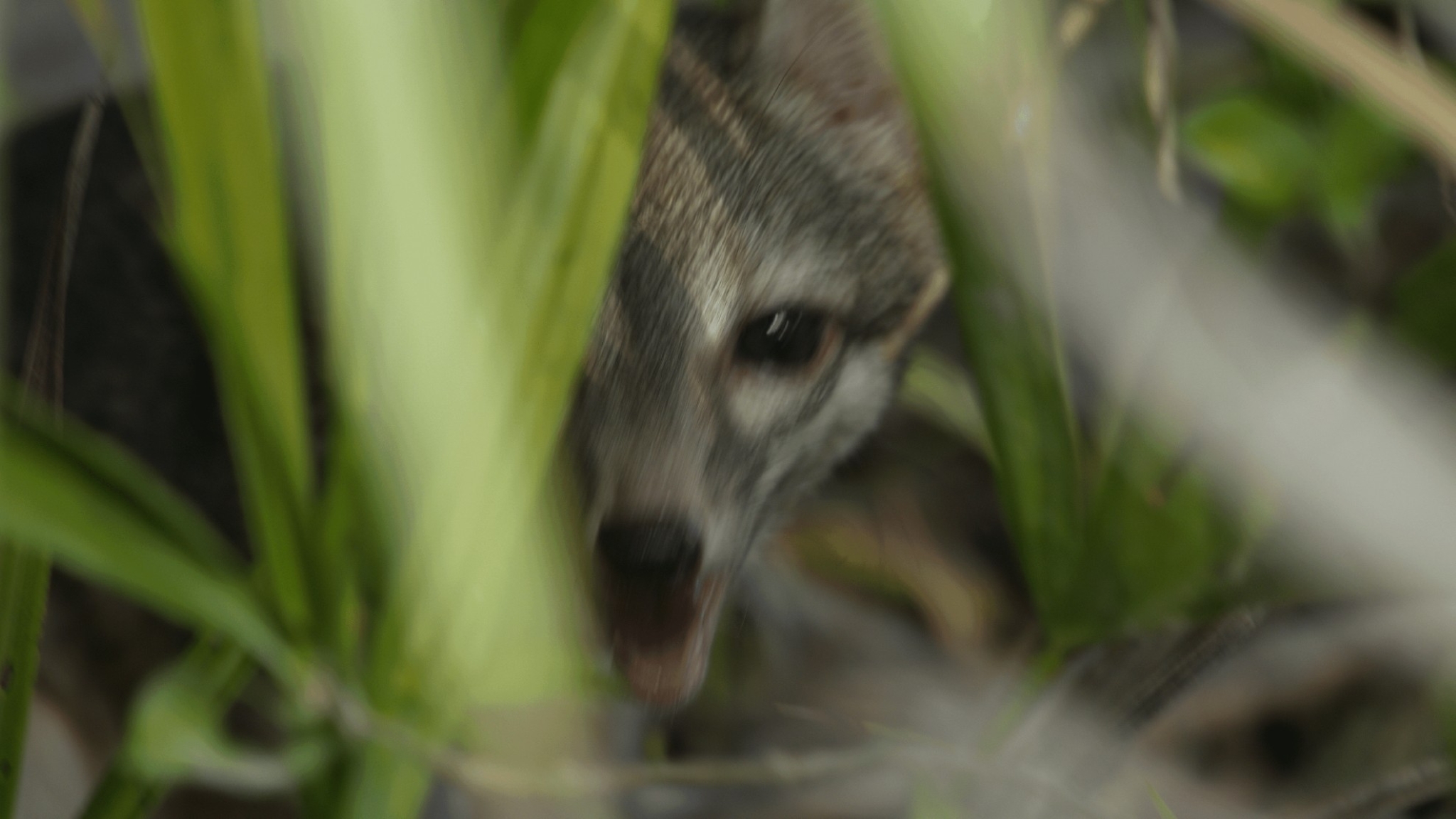
The rediscovery began with reports of a disoriented animal wandering near the highway on the southeastern side of the island. Officials with the Parks and Museums Foundation of Cozumel located and captured the fox, an adult male, on Sep. 14, 2023. They checked its health and later released the fox in the Laguna Colombia State Reserve, a protected area just south of where it was captured.
Recent and historical sightings suggest that Cozumel foxes could have an extremely restricted range in the island's South, where nature is increasingly threatened by development, land-use change, invasive species and natural disasters, the study authors noted.
The researchers recommended surveys to determine the current distribution and size of the Cozumel fox population, along with morphological and genetic assessments to establish its evolutionary status and conservation efforts to protect its assumed habitat in southern Cozumel and minimize human-wildlife conflict.
"Ultimately, we hope this work helps move the Cozumel fox from a little-known, uncertain presence on the island to a better-understood key part of Cozumel's ecosystems," Bayer said. "We also hope it demonstrates that conservation is often most urgent when certainty is lowest and that uncertainty itself can be a call to action."
 Camera traps reveal a hidden predator that depends on intact Amazon forest.
 Stuck between life and death, this foot consumes nutrients, heals itself, and grows, but doesn’t turn into a whole new organism.
 The humble bird may help scientists understand how experts learn to see disease.
 A camera trap confirms a critically endangered species in eastern Nepal.
 These squirrels had no quarrels about what they were eating.
When the weather gets muggy, iridescent bees shift their metallic hue, a new study finds.
The insects are a rich blue-green when the humidity is low. But as moisture levels in the air rise, their color changes: It turns a coppery green.
Many bees have a shimmery exoskeleton. So this reversible mood-ring–like effect might be quite common, scientists now say. The day-to-day color of other bees and insects might similarly change with humidity.
Jorge De La Cruz is a college student at the University of California, Santa Barbara. There, he’s training as an evolutionary biologist. He first noticed the color-change effect while preparing bee specimens for preservation and study. This was at the Cheadle Center for Biodiversity and Ecological Restoration.
Museum scientists often place insect specimens in a moist chamber. It makes them more flexible for mounting and imaging. And under moist conditions, some bees appeared to starkly shift their color. This caught De La Cruz’s attention.
“It can be a bit alarming when you’re not expecting it,” says Madeleine Ostwald. This ecologist works at Queen Mary University of London in England.
De La Cruz and Ostwald teamed up with two other researchers to look into this further. They shared what they learned April 22 in Biology Letters.
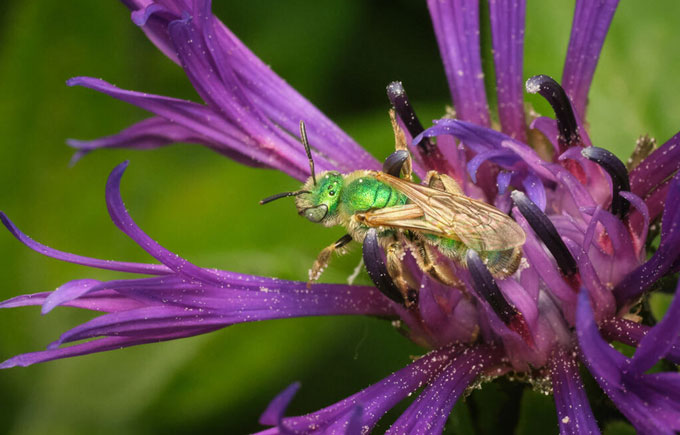
The team studied two dozen museum bee specimens. All were fine-striped sweat bees (Agapostemon subtilior). The bees were exposed to high and low humidity for 55 hours each. After each exposure, the team took photos.
The researchers also reviewed more than 1,000 photos of living sweat bees. These came from the citizen-science app iNaturalist. Here, too, they noted the humidity present when an image had been taken.
In dry conditions (less than 10 percent humidity), the bees were blue-green. But at 95 percent humidity, they turned a light, coppery green.
Humidity may cause layers in the bees’ exoskeletons to swell. That may change how those layers reflect light, creating an iridescence. That layering appears to scatter light at different wavelengths, creating colors. If the layers swelled, the space between them would increase. The extra space would reflect longer, redder light.
“Because we saw redder bees in more humid conditions, this fits with that [scientific explanation],” Ostwald says.
Future work with high-powered microscopes might confirm this. Lots of insects produce color with tiny structures rather than pigments, Ostwald says. So, the phenomenon might be widespread.
Color can be really changeable as something responds to the environment, she says — and “in ways we didn’t expect.” It’s important to study the color of the living organism in its natural environment to know its true hue.