❌

Reading view

Renewed Attention on Freedom House Ambulance Service Following ‘The Pitt’

In an unprecedented exploration of how entertainment media shapes public awareness of critical yet overlooked health care history, researchers from the University of Pittsburgh School of Public Health have unveiled compelling evidence that a single episode of the hit medical drama “The Pitt” catalyzed a surge in public knowledge about the Freedom House Ambulance Service. This pioneering emergency medical service, established in 1967 in Pittsburgh’s Hill District, holds the distinction of being the first EMS system in the United States staffed entirely by African Americans. Despite its foundational contributions to prehospital care, Freedom House’s legacy has languished in obscurity—until now.

The study, published in the American Journal of Health Promotion, marks a first-of-its-kind effort to quantitatively and qualitatively assess the impact of a scripted health-related storyline on public consciousness. Utilizing a multifaceted methodology that combined Google Trends analytics with comprehensive content analysis of Reddit discussions, the research team documented a remarkable 170% spike in online searches for “Freedom House” immediately following the episode’s original broadcast on February 20, 2025. This elevated search interest persisted for approximately one week, highlighting sustained public intrigue ignited by the storyline.

The TV episode in question, “2:00 P.M.” from the inaugural season, centers on Willie Alexander, an octogenarian patient navigating a glitching pacemaker while intermittently regaling the emergency department staff with medically accurate commentary about his case. As the narrative unfolds, viewers discover Willie’s own history as a former member of Freedom House Ambulance Service, affording a rare window into the challenges and triumphs of this groundbreaking group. Founded during a turbulent era marked by systemic racial inequities, Freedom House provided not only emergency medical transport but also vital paramedic training and community employment opportunities to African Americans excluded from many healthcare roles.

Despite its transformative community impact and innovative operational model, Freedom House was ultimately shuttered eight years after its inception when Pittsburgh transitioned EMS management to city authorities, who replaced the predominantly Black cadre with a mostly white workforce. The storyline poignantly underscores how Freedom House’s pioneering efforts were largely erased from mainstream recognition—a fact that elicited profound emotional responses from both the study participants and the viewing audience.

This resurgence of interest was catalyzed in part by the University of Pittsburgh’s public health researchers hosting a special screening event that included a panel discussion featuring six surviving members of Freedom House Ambulance Service. Their firsthand testimonies and reflections resonated deeply with attendees, many of whom expressed astonishment at learning about Freedom House only through the television narrative. According to Dr. Beth L. Hoffman, assistant professor of behavioral and community health sciences at Pitt Public Health and lead author on the study, the audience’s reactions illuminated a significant gap in public knowledge and a hunger for stories that reveal hidden chapters of health equity and systemic racism.

Coauthor Dr. Sylvia Owusu-Ansah, who also acted as medical consultant for “The Pitt,” articulated the personal significance of bringing Freedom House’s story to a broader audience. As an African American physician and emergency medical services director, Dr. Owusu-Ansah highlighted the importance of representation and the pride associated with recognizing historical pioneers who paved the way for greater diversity in healthcare professions. Her expertise ensured that the storyline accurately portrayed medical details while authentically conveying the sociohistorical context of Freedom House.

The research methodology deployed by the University of Pittsburgh team leveraged the power of social media as a digital ethnographic resource. Reddit, a platform where users engage in real-time discourse, served as a vital space to observe public reactions and information dissemination catalyzed by the episode. Analyzing nearly 200 posts, the researchers found a proliferation of content explicating Freedom House’s history, alongside emotional reactions ranging from surprise and admiration to frustration over the service’s historical obscurity. Many Reddit users proactively contributed context, fielded questions, and debated the implications of Freedom House’s narrative within broader conversations about racial equity in American medical history.

This study not only exemplifies the dynamic relationship between entertainment media and public health education but also reinforces the potential of thoughtfully crafted storylines to function as catalysts for social change. Dr. Hoffman emphasized that when narratives are developed collaboratively with subject matter experts ensuring accuracy and cultural sensitivity, even brief on-screen depictions can ignite expansive public engagement with complex health topics.

From a technical standpoint, the analysis underscores the utility of integrating traditional media impact studies with digital data analytics to capture both quantitative spikes in interest and the qualitative nuances of audience interpretation. The 170% increase in Google search volume represents a statistically significant indicator of episodic influence on information-seeking behavior, while the thematic coding of Reddit discourse provides insight into the multidimensional ways stories resonate across diverse audiences.

The resurgence of Freedom House’s legacy via “The Pitt” exemplifies how the intersection of media, medicine, and social justice can advance collective memory and awareness. It invites further exploration into harnessing entertainment platforms to shed light on marginalized histories and catalyze dialogue around systemic disparities in healthcare. Going forward, this case study sets a benchmark for future research on how fictional narratives enriched by authentic lived experiences can elevate public understanding and inspire advocacy.

In conclusion, the University of Pittsburgh’s investigation into the ripple effects of a medical drama’s nod to a historically crucial EMS pioneer reveals the transformative capacity of storytelling as a public health intervention. By rekindling interest in the Freedom House Ambulance Service, the research not only honors the unsung heroes of emergency medicine but also energizes ongoing discussions about health equity, systemic racism, and the power of media to inform and engage society at large.


Subject of Research: Not applicable

Article Title: Public Awareness of Freedom House Ambulance Service After Viewing the Pitt

News Publication Date: 10-Jun-2026

Web References:

References:
Hoffman, B. L., Owusu-Ansah, S., Fawole, O., Leshniowsky, K. (2026). Public Awareness of Freedom House Ambulance Service After Viewing the Pitt. American Journal of Health Promotion. DOI: 10.1177/08901171261460703

Keywords: Social media, Medical specialties, Emergency medicine, Mass media, Television, History of medicine, Health equity, Systemic racism, Prehospital care, Public health education


  •  

Scientists Say We Need to Prepare Astronauts for What They May Encounter Inside the Moon’s Oldest and Largest Crater


Scientists from the Southwest Research Institute’s Center for Lunar Origin and Evolution (CLOE) have revealed new models of the Moon’s oldest and largest impact crater, the South Pole-Aitken (SPA) basin, providing fresh insights into the event and resulting material deposition on the lunar surface.

The SwRI team behind the new models, which is part of NASA’s Solar System Exploration Research Virtual Institute, said such details will help prepare future Artemis astronauts for what they could encounter during their upcoming missions.

Impact Study Reveals Details About Moon’s Oldest and Largest Crater

In a statement announcing the new models, Dr. William Bottke, director of CLOE and executive director of SwRI’s Science Directorate in Boulder, Colorado, said that the basin is an attractive potential target for future Artemis missions since it offers a “rare opportunity” to study an earlier era in the Moon’s history.

“The collision struck the lunar surface with such force that it may have excavated material from deep inside the Moon, including portions of the lunar mantle,” explained the co-author of the impact study detailing the new research.

Although previous studies have modeled impacts that may have caused the Moon’s oldest and largest crater, the team’s new effort has revealed new evidence about the composition of the impacting object and its likely direction and angle.

“Our simulation produces the right shape and nature of the impact basin,” explained the impact study’s lead author, Dr. Shigeru Wakita of Purdue University. “It also tells us about the projectile that created it and the direction of the impact.”

Image shows materials excavated (blue) from the SPA by its forming impact, including mantle-derived rocks (orange and black). Models suggest the proposed landing sites for upcoming Artemis missions to the lunar south pole (white blocks) lie within the region. Image Credit: NASA/JPL-Caltech/Goddard/Gabe Gowman-U. Arizona. Data from NASA’s GRAIL mission and NASA’s Lunar Reconnaissance Orbiter Laser Altimeter.

For example, the new model suggests that the object was not a single, uniform object. Instead, the team found that the impactor was likely a “differentiated” object, such as a protoplanet or asteroid, composed of rock and surrounded by an iron core. The models also found that the object approached from the north “at a low angle” before impacting the Moon’s surface on a southward trajectory.

According to the impact study authors, the impact excavated a deep, “asymmetric” cavity and generated enough energy to melt the rock within the crater’s central basin, resulting in the SPA basin’s elongated, tapered shape. Their models also indicated that the object’s lunar collision “lofted” large amounts of material into the air. Critically, their models also revealed that material from both the lunar crust and mantle was likely ejected before ultimately settling back onto the basin floor.

Exploring Gravity’s Role and the Possibility of ‘Valuable’ Mantle in the Impact Ejecta

To help potential future lunar astronauts, including members of NASA’s Artemis mission, target the most scientifically valuable lunar samples, a second companion study explored the effects of gravity on ejecta distribution beneath and around the impact basin. According to the team behind that effort, their effort involved direct comparisons of high-resolution gravity data with models. Specifically, they wanted to determine if pieces of the Moon’s crust and mantle were included in the ejection.

After comparing the two, the authors of the second study determined that the SPA basin “likely contains substantial amounts of mantle-derived rocks” both within its interior and mixed into the wider ejecta blanket surrounding the basin. Also critical for future missions, the analysis revealed that this material was not all scattered during the initial impact.

Instead, the new models showed that subsequent, smaller impacts appear to have “excavated” these underlying mantle deposits. As a result, the team suggests that there is likely enough material on the surface of the Moon’s oldest and largest crater “where it could be readily sampled by robotic rovers or astronauts during future missions.”

The Studies Provide Future Lunar Missions with a “Powerful Roadmap”

When discussing the significance of the gravity study’s findings, lead author Dr. Gabriel Gowman of the University of Arizona said that before now, the “precise distribution” of lunar mantle material on the Moon’s surface “has been a big unknown.” For example, some previous theories suggested that the deepest ejecta might be found only in parts of the basin that are not currently included in planned Artemis missions.

Now, the team’s new models suggest that the impact that formed the SPA basin “ejected enough deep material to form a significant deposit that should still be accessible today.” More importantly, Dr. Gowman added, some of that scientifically valuable mantle material “at a trace level” may exist in regions currently under consideration for upcoming Artemis landings. Taken together, Bottke said, the two studies can provide a “powerful roadmap” for future lunar scientific missions to the Moon’s oldest and largest crater.

“It tells us not just how SPA formed, but where to look for the rocks that can answer some of our biggest questions about the Moon’s origin and evolution,” the researcher explained.

The Impact study “A southward differentiated impactor forms the tapered shape of the South Pole-Aitken impact basin on the Moon” was published in Science Advances.

The gravity study “Gravity Mapping of Lunar Mantle Material in South Pole-Aitken Basin Ejecta” was published in the Journal of Geophysical Research: Planets.

Christopher Plain is a Science Fiction and Fantasy novelist and Head Science Writer at The Debrief. Follow and connect with him on X, learn about his books at plainfiction.com, or email him directly at christopher@thedebrief.org.

  •  

Negative Heat Flux Under Low-Shear-Wave-Velocity Zones

Deep within our planet lies a critical interface known as the core–mantle boundary (CMB), a region where extreme temperatures and dynamic processes converge to shape Earth’s thermal and magnetic evolution. Recent research has illuminated the intricate behaviors of heat flow at this boundary, revealing how variations here influence the geodynamo—the mechanism responsible for Earth’s magnetic field. A groundbreaking study now explores how distinctive structures in the lowermost mantle can actually reverse the expected direction of heat transfer, fundamentally altering our understanding of how the deep Earth operates.

The core’s heat output and the mantle’s behavior are intimately linked, but spatial and temporal variations in heat flux at the CMB complicate this relationship. Heat flow from the core into the mantle typically fuels convective currents in the liquid outer core, driving the geodynamo process that sustains Earth’s magnetic shield. However, recent sophisticated simulations suggest that beneath certain geological features in the mantle, heat might instead flow back toward the core, a phenomenon previously unconfirmed and challenging conventional geophysical assumptions.

Central to this discovery are large low-shear-wave-velocity provinces (LLSVPs), massive structures located at the base of the mantle. These provinces are identifiable by their diminished seismic wave speeds, which geophysicists interpret as reservoirs of anomalously hot, chemically distinct materials. The new study models these LLSVPs with enhanced thermal conductivity adjustments and accounts for excess internal heating, simulating how these features interact dynamically with heat flow near the CMB.

The simulations reveal a striking phenomenon: heat flux directly beneath LLSVPs can be locally negative. This means, counterintuitively, that heat is being transferred from the mantle back into the core. This unexpected reversal challenges prior models which generally assumed a consistent outward flow of heat from core to mantle. Such negative fluxes have profound implications not only for the thermal balance of the Earth’s interior but also for the longevity and variability of its magnetic field.

Moreover, the research underscores that throughout the base of the mantle piles associated with LLSVPs, the heat flux remains lower than the adiabatic heat flux of the core. This thermal configuration suggests a degree of regional stratification at the top of the core, potentially explaining discrepancies observed in seismic and geomagnetic data. In other words, the topmost layer of the core may be thermally segregated in ways that we had not confirmed previously.

Interestingly, the study also explores the impact of subducted slabs—denser fragments of oceanic lithosphere—that eventually reach the CMB. The arrival of these slabs triggers pronounced spikes in heat flux, dramatically increasing the heterogeneity of lateral heat flow along the core–mantle boundary. This dynamic enhances the complexity of heat exchange patterns and further influences the geodynamo’s behavior, potentially affecting geomagnetic activity on geological timescales.

A significant implication of these findings relates to so-called “superchrons,” intervals lasting tens of millions of years during which Earth’s magnetic field remains stable without reversals. The occurrence of locally negative heat flux beneath the LLSVPs might explain these long periods of geomagnetic quiescence. When heat flows reversely into the core, it can alter convection patterns in ways that suppress the typical polarity flip mechanism, shedding new light on the origin and cessation of superchrons.

The study’s approach involved advanced mantle thermochemical convection modeling that incorporates temperature-dependent thermal conductivity and internal radiogenic heating within dense mantle piles. This methodological innovation provides a more realistic representation of the mantle’s behavior at extreme conditions than previous models, enabling researchers to capture subtle but critical feedbacks influencing heat fluxes at depth.

By reconciling seismic data, which reveals complex structures in the lowermost mantle, with geomagnetic observations that hint at temporal variability in the geodynamo, this research bridges a vital gap in Earth sciences. The correspondence between the spatial extents of LLSVPs and anomalies in the geomagnetic field suggests a coupling mechanism mediated through heat flux variations being directly tied to mantle dynamics.

The nuanced understanding of heat flow gleaned from this work also carries implications for the planet’s thermal evolution over geologic time. How heat migrates across the CMB influences the cooling rate of the core, the crystallization of the solid inner core, and consequently the lifecycle of the geodynamo. The discovery that heat transfer is not unidirectional, but can locally reverse in space and time, necessitates revisiting models of Earth’s deep thermal history and magnetic field generation.

This revelation also lays groundwork for interpreting seismic tomography results with a new lens, appreciating that chemical and thermal heterogeneity in LLSVPs exerts a tangible impact on core processes. The presence of chemically distinct reservoirs affects not only the mantle’s physical properties but also its thermal gradient with direct knock-on effects for core convection patterns and magnetic field intensity.

Such interconnectedness across Earth’s deep interior underscores the planetary-scale complexity of thermal and compositional interactions driving Earth’s long-term stability. The core-mantle boundary emerges not simply as a static physical barrier but as a dynamic interface where thermal regimes, chemical signatures, and fluid motion all coalesce to modulate our planet’s magnetic heartbeat.

Future research building on these findings may sharpen our forecasts for geomagnetic field behavior, including its reversals and excursions, by incorporating the interplay of mantle structures and heat flux heterogeneity shown in this study. Understanding these processes is not merely academic; Earth’s magnetic field shields life on the surface from charged solar particles, making geomagnetic stability crucial for habitability.

In conclusion, the discovery of negative heat flux beneath LLSVPs represents a paradigm shift in understanding Earth’s deep thermal dynamics. It opens fresh avenues into interpreting Earth’s magnetic field history and its deep interior’s energy budget, challenging geoscientists to refine their models of the planet’s evolving mantle and core mechanisms. The study invites a reconsideration of how internal heat governs the interplay between mantle convection and geomagnetic phenomena, securing a pivotal advance in the geophysical sciences.

As our planet continues its ceaseless churn beneath the crust, these findings remind us that Earth’s interior is a realm of profound complexity and subtle interactions. The dance of heat and composition at the core-mantle boundary not only choreographs magnetic field generation but ultimately shapes the environment that sustains life above ground. Unlocking its secrets brings us closer to comprehending the planet’s past, present, and future in extraordinary detail.


Subject of Research: Core–Mantle Boundary Heat Flux Variations and Their Impact on Mantle Dynamics and Geodynamo Behavior

Article Title: Negative core–mantle boundary heat flux beneath low-shear-wave-velocity provinces

Article References:
Deschamps, F., Guerrero, J.M., Amit, H. et al. Negative core–mantle boundary heat flux beneath low-shear-wave-velocity provinces. Nat. Geosci. (2026). https://doi.org/10.1038/s41561-026-02018-w

Image Credits: AI Generated

DOI: https://doi.org/10.1038/s41561-026-02018-w

  •  

Cockroaches scurry around with thousands of pieces of bacterial genomes

Last week, we looked at a new study of the origin of complex cells, one that showed that our ancestors' genomes were pieced together from bits and pieces of multiple species. It put a spotlight on a phenomenon called horizontal gene transfer, in which a gene from one species is incorporated into the genome of a distantly related species. The frequency of horizontal gene transfer means that, in addition to the neatly branching trees that relate species by common descent, there are small threads connecting distant branches of the tree of life.

It's easy to see why horizontal gene transfer would be common among microbes. They often live in complex communities that are likely awash in the DNA of dead and damaged cells. Plus, bacteria and archaea lack a membrane between their DNA and the rest of the cell, making it easier for environmental DNA to find its way to the genome.

However, a new study this week shows that horizontal gene transfers are remarkably common even in multicellular animals. And it does so by examining the genomes of multiple cockroach species, which have had bits of bacterial DNA for millions of years.

Read full article

Comments

© Nugroho Ridho

  •  

Entomologists Reconstruct Evolutionary History of Millipedes

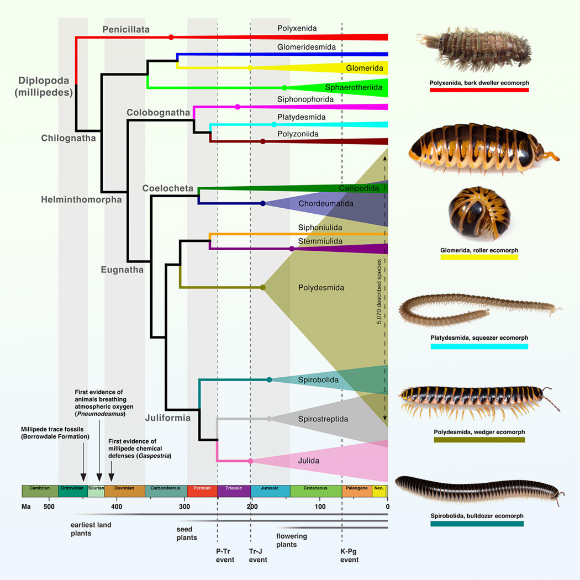
To date, 14,232 millipede species have been described, with at least as many still awaiting discovery. Image credit: Vasquez-Valverde et al., doi: 10.1016/j.cub.2026.05.035.

Two elusive groups of millipedes, Siphoniulida and Siphonocryptida, were the last missing pieces in the evolutionary history of Earth’s oldest land animals, according to a team of entomologists led by Virginia Tech.

The post Entomologists Reconstruct Evolutionary History of Millipedes appeared first on Sci.News: Breaking Science News.

  •  

Why Evolution Stalled for Millions of Years Before Suddenly Exploding

Edicaran Animal CommunityA new study suggests evolution stayed stuck for millions of years until sexual reproduction helped unleash a burst of biodiversity. New research suggests that the earliest animals on Earth may have unintentionally slowed the pace of evolution for millions of years. Scientists have found that their reliance on asexual reproduction limited competition and reduced the [...]
  •  

New Feathered Dinosaur May Have Solved a 120-Million-Year-Old Fossil Mystery

Jian changmaensis Attacks Gansus yumenensis in Ancient ChinaA newly discovered feathered dinosaur from China may help solve a long-standing mystery surrounding a fossil bed filled with ancient bird remains. For years, one fossil site in northwestern China has posed a mystery. The area contains hundreds of fossilized birds, many remarkably well preserved. Mixed among them are strange clusters of shattered bones compressed [...]
  •  

A Remarkable 400,000-Year-Old “Time Capsule” Unsealed in Israel Could Reshape Our Understanding of Early Human Evolution


Archaeologists working with the Israeli Antiquities Authority have announced the discovery and excavation of a cave located just outside the town of Fureidis, which has revealed signs of early human presence dating back to between 250,000 and 400,000 years ago.

The team of researchers behind the ongoing excavation said the fortuitous discovery could represent a “time capsule” that has remained sealed for hundreds of thousands of years, offering researchers an unprecedented glimpse into a critical period in human evolution.

Ancient Cave Contains Evidence of Critical Period in Human Evolution

According to a statement emailed to The Debrief, the ancient cave, which lies south of Haifa, near the Zikhron Ya’akov interchange, likely dates back to sometime between 400,000 and 250,000 years before present. The team notes that the range would mean it was sealed since the time of the Acheulo-Yabrudian culture, a period when ancient human ancestors began to display several complex tool-making skills, including various stone blade designs which were in use by hominins until around 300,000 years ago, marking the end of the Lower Paleolithic period.

Prehistoric handaxes were discovered in the ancient cave. Photo credit: Emil Aladjem, Israel Antiquities Authority.

“The culture we are investigating here was characterized by a variety of advanced methods for producing flint tools, including small sharp handaxes, scrapers, and blades,” explained Dr. Kobi Vardi, head of the Prehistory Branch at the Israel Antiquities Authority and the study’s co-director.

Most archaeologists put the African departure date of the last common ancestor of humans and Neanderthals between 700,000 and 500,000 years ago, and the first genetic interbreeding between the two species around 130,000-1,000,000 years ago. Therefore, finding a sealed cave containing relics from the period between these two critical evolutionary junctures offers the research team an unprecedented opportunity.

human evolution
More prehistoric handaxes were discovered in the ancient cave, which are consistent in style with the Acheulo-Yabrudian culture. Photo credit: Emil Aladjem, Israel Antiquities Authority.

“We have been fortunate to excavate a unique site of global importance that has been protected from the ravages of time thanks to the exceptional conditions that existed here,” said team member Professor Ron Shimelmitz of the Zinman Institute of Archaeology and the School of Archaeology and Maritime Cultures at the University of Haifa.

Dr. Vardi agreed, noting that “It is very rare to find a site in such a state of preservation.”

“Every prehistorian who visits the site is absolutely thrilled,” he added.

ancient cave, human evolution
Excavations conducted by the Israel Antiquities Authority and the University of Haifa in the ancient cave. Photo credit: Emil Aladjem, Israel Antiquities Authority.

“The Seeds That Led to the Development of Our Complex Culture”

In that same statement, Prof. Shimelmitz noted that the end of the Lower Paleolithic was a “unique time period” before Neanderthals and modern humans became the dominant hominids of the era and spread across “many regions.”

“Only a handful of sites from this important phase have been uncovered in Israel, and the wider Levant, and most of them are inaccessible for research,” the professor explained, adding that marked changes in human physiology, technology, and social organization “foreshadowed the traits and complex behavioral patterns that developed later and characterize both Neanderthals and modern humans.”

One component that helped facilitate the development of complex culture, highlighted by Prof. Shimelmitz, is the transition from ancient humans living in larger groups. He also emphasized the advent of human ancestors “spending longer periods at the same sites.”

Early excavations have already uncovered evidence of what the researcher termed “intensive use of fire.” These early forays have also found signs of prolonged human activity. Prof Shimelmitz said these signs suggest a “complex and rich camp life.”

Dr Vardi said that the ongoing excavation is uncovering animal bones, including ancient specimens of fallow deer, gazelle, and an ancient variety of horse.

ancient cave human evolution
Ancient fallow deer tooth. Photo Credit: Emil Aladjem, Israel Antiquities Authority

Dr. Vardi also noted that these finds were discovered “alongside evidence of the presence of water,” which he suggests may have made the ancient cave an attractive location for hunter-gatherer groups inhabiting the region at the time.

High Resolution Studies of How Ancient Humans Lived

When discussing the implications of their findings, Prof. Shimelmitz first expressed the team’s appreciation for the financial support and enthusiasm shown by the project’s sponsor, the Ayalon Highways Company, “in enabling us to undertake the excavation.”

As for the scientific value of their initial discoveries and the potential for further insights into this period in human history, the professor noted that findings to date are typically associated with “the development of social cooperation and the transmission of knowledge, as part of the processes of human evolution.”

Excavations conducted by the Israel Antiquities Authority and the University of Haifa in the ancient cave could fill in some of the blanks in the story of human evolution. Photo credit: Emil Aladjem, Israel Antiquities Authority.

Dr. Vardi echoed those sentiments, while also noting that the ancient cave’s archaeological value “is no less important” than that of the well-known Nahal Me’arot site from the same evolutionarily critical period.

“(This site) will allow us to study in high resolution how humans lived at that time,” the researcher added.

Given the importance the research team put on the site, which included co-leader Amit Gabbay, the Israel Antiquities Authority and the University of Haifa are already putting forth what they describe as a “large-scale research program that seeks to reconstruct how humans lived, adapted to their environment, and developed new lifestyles and technologies over the course of human evolution.”

ancient cave may rewrite human evolution
From right to left: researchers Prof. Ron Shimelmitz of the University of Haifa, Dr. Kobi Vardi, and Amit Gabay of the Israel Antiquities Authority. Photo credit: Emil Aladjem, Israel Antiquities Authority.

Along with heralding the site’s scientific value, the researchers highlighted its cultural importance by declaring their goal to make the site “open and accessible to all: to the residents of Fureidis, students at the nearby school, and anyone interested in the prehistory of the region,” once the formal excavations are completed.

Christopher Plain is a Science Fiction and Fantasy novelist and Head Science Writer at The Debrief. Follow and connect with him on X, learn about his books at plainfiction.com, or email him directly at christopher@thedebrief.org.

  •  

Buried for 1.7 Billion Years: These Ancient Fossils May Rewrite the Story of Complex Life

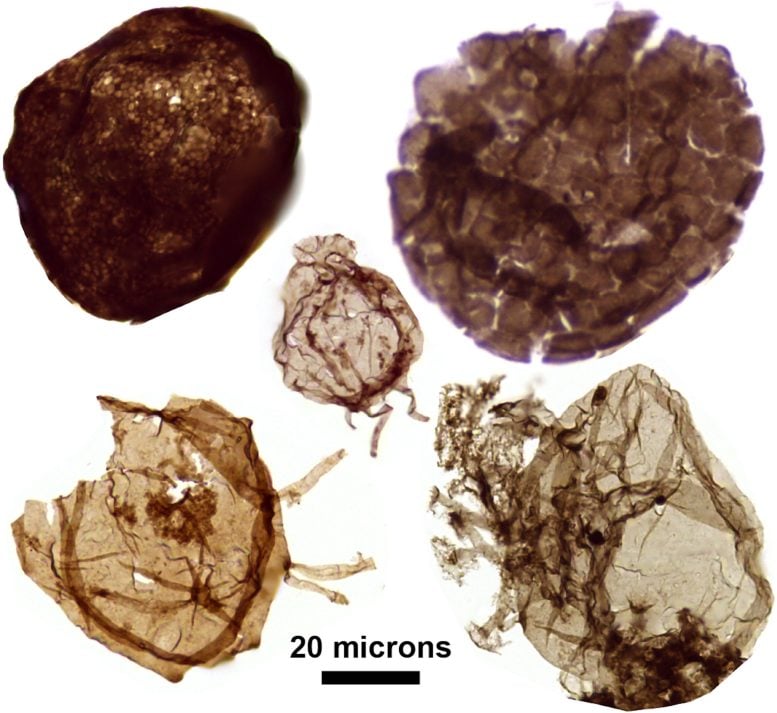
Fossils of Single Celled Eukaryotic OrganismsAncient Australian fossils indicate that the earliest eukaryotes depended on oxygen, providing new evidence that oxygen helped enable the evolution of complex life. Stored in an open-air warehouse in tropical Darwin, Australia, are dozens of trays containing cylindrical cores of rock. They are from drill holes bored hundreds of meters below the surface by mineral [...]
  •  

New Species of Ancient Bear-Dog Identified in Spain

Paludocyon moyasolai. Image credit: Jesús Gamarra.

Paleontologists have identified a previously unknown species of amphicyonid -- the extinct family of carnivorous mammals popularly known as bear-dogs -- from two specimens unearthed at a rich fossil site in the Vallès-Penedès Basin near Barcelona, Spain.

The post New Species of Ancient Bear-Dog Identified in Spain appeared first on Sci.News: Breaking Science News.

  •  

On sait peut-être enfin ce qui a mis un coup d’accélérateur à l’évolution animale il y a 560 millions d'années

Il y a plus de 550 millions d’années, les premiers animaux peuplaient déjà les océans terrestres sous des formes très différentes de celles d’aujourd’hui. Longtemps dominés par des organismes fixés au fond marin et se reproduisant probablement par clonage, ces écosystèmes auraient connu une...

  •  

The first complex cells had genes from a complex mix of species

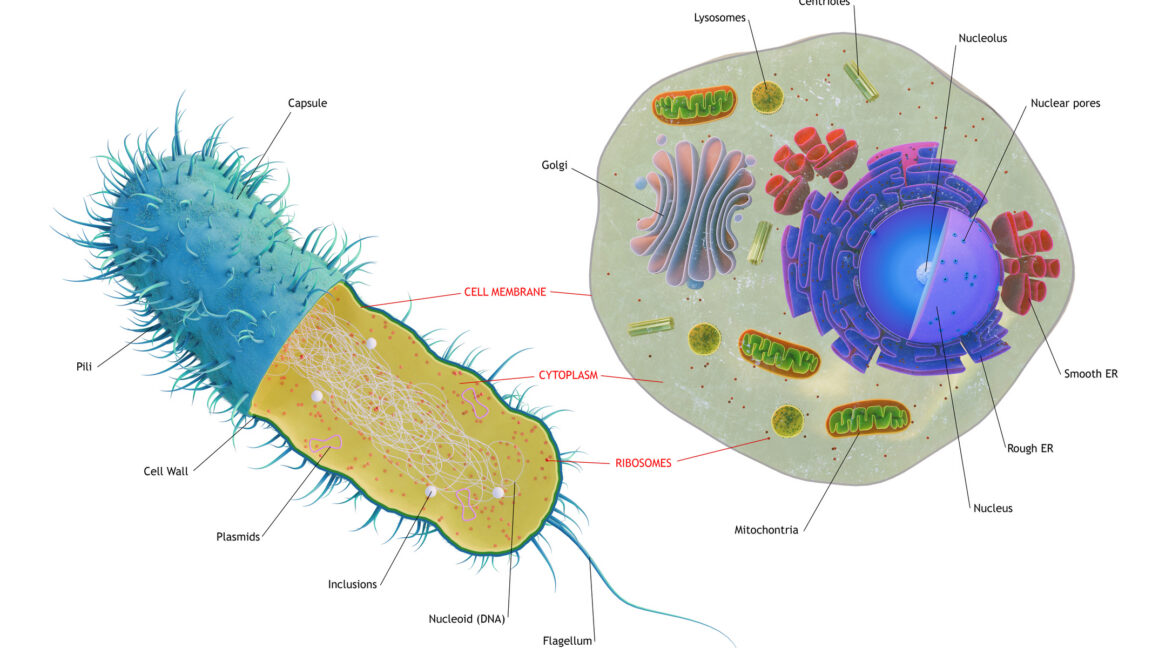
We tend to view ourselves and the complex cells that build us as a distinct branch of the tree of life from the compact, seemingly featureless cells of bacteria and archaea. But we've found that our genome is actually a hybrid, a mish-mash of genes from bacteria and archaea, along with some that have evolved in our own lineage.

Scientists gradually settled on a simple explanation for this: the first complex cells were the product of a fusion between archaeal cells and bacteria, with the bacteria ultimately evolving into the mitochondria, a chemical-power-generating structure that still retains a bit of its own genome. Over time, many of the other bacterial genes were transferred to the nucleus of what was becoming what we now call a eukaryote, intermingling with the archaeal genes there.

But a new study has taken a careful look at some of the genes shared by all eukaryotes and comes to the conclusion that the reality is a little more complicated and that there were several waves of gene transfers from bacteria. The big picture of a merger between bacteria and archaea is still right, but it was only part of a picture where gene transfers among species were commonplace.

Read full article

Comments

© MARK GARLICK/SCIENCE PHOTO LIBRARY

  •  

Earth’s Earliest Animals May Have Thrived Too Easily to Evolve

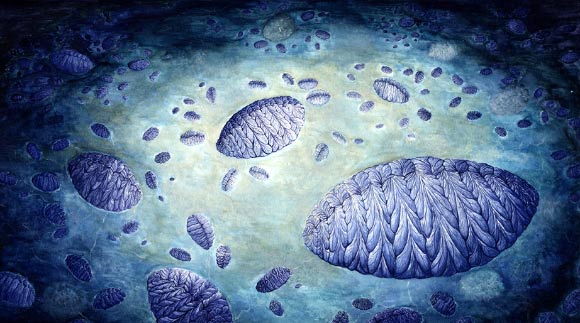
Artist’s reconstruction of the Fractofusus community: the bottom right features a large Fractofusus around which there are 5 to 8 medium specimens clustered; each of the medium specimens also has small specimens clustered around them; the small specimens therefore form an independent double cluster pattern, namely clusters of clusters. Image credit: C.G. Kenchington.

Fossils from some of the oldest-known animals on Earth, dating from 574 million years ago (Ediacaran period), suggest that cloning, not competition, dominated the Ediacaran seas, slowing evolution until environmental stress helped drive the rise of sexual reproduction and a burst of biodiversity.

The post Earth’s Earliest Animals May Have Thrived Too Easily to Evolve appeared first on Sci.News: Breaking Science News.

  •  
  •  

Yale Discovery Overturns Long-Held “Evolutionary Dead End” Theory

DNA Genetics Evolution Concept ArtThe discovery of Typhlichthys styx shows that cave-adapted species can continue evolving and splitting into new species, with underground aquifers playing a crucial role in that process. Researchers at Yale have identified a previously unknown species of eyeless cavefish, a finding that challenges the long-standing view that caves and other underground habitats are evolutionary dead [...]
  •  

Little Red Dots | Primordial Black Holes or Big Bang Failures?

Recent findings from the James Webb Space Telescope (JWST) indicate that Little Red Dots (LRD) could be primordial black holes, challenging the big bang theory. The data suggests these objects formed too soon for typical galaxy evolution, raising questions about cosmological interpretations and the nature of observational evidence.

  •  
❌