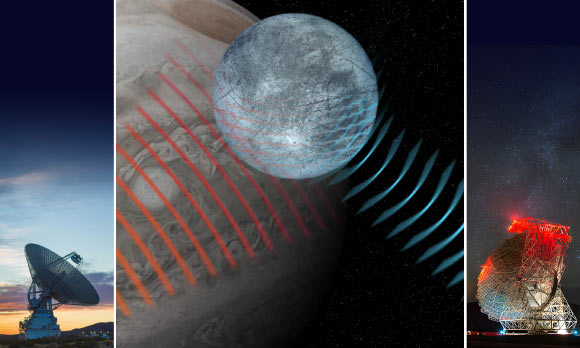
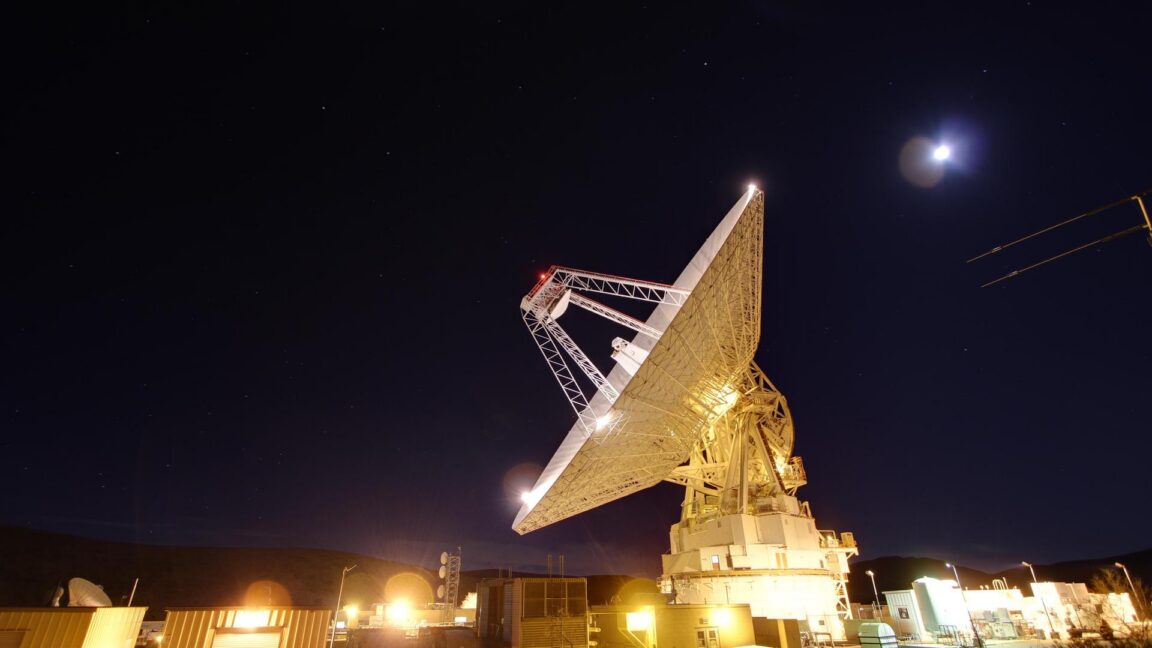
Using NASA’s Goldstone Solar System Radar and NSF’s Green Bank Telescope, astronomers from the University of California, Los Angeles, confirmed that the icy surface of Jupiter’s moon Europa scatters radio energy in an unusually strong and complex way not seen on rocky worlds.
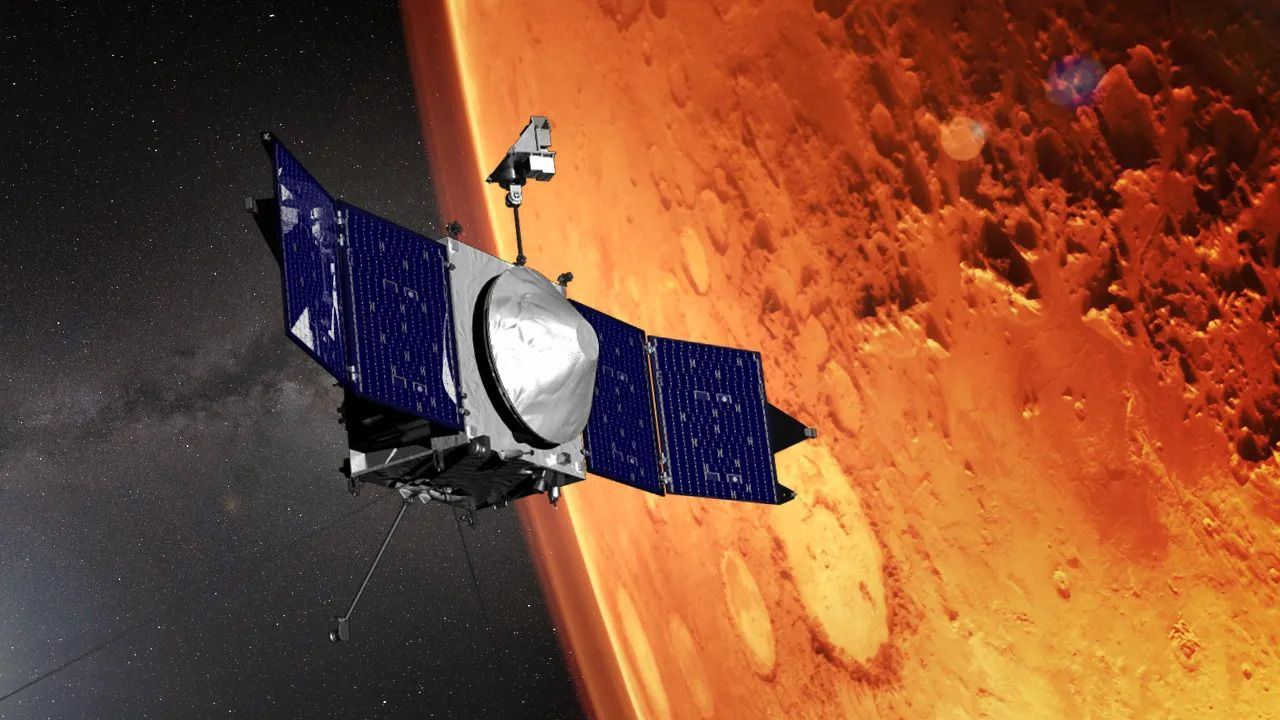
NASA's MAVEN Mars mission ended after 11 years, having revealed how the planet lost its atmosphere and served as a key communications relay for surface missions.
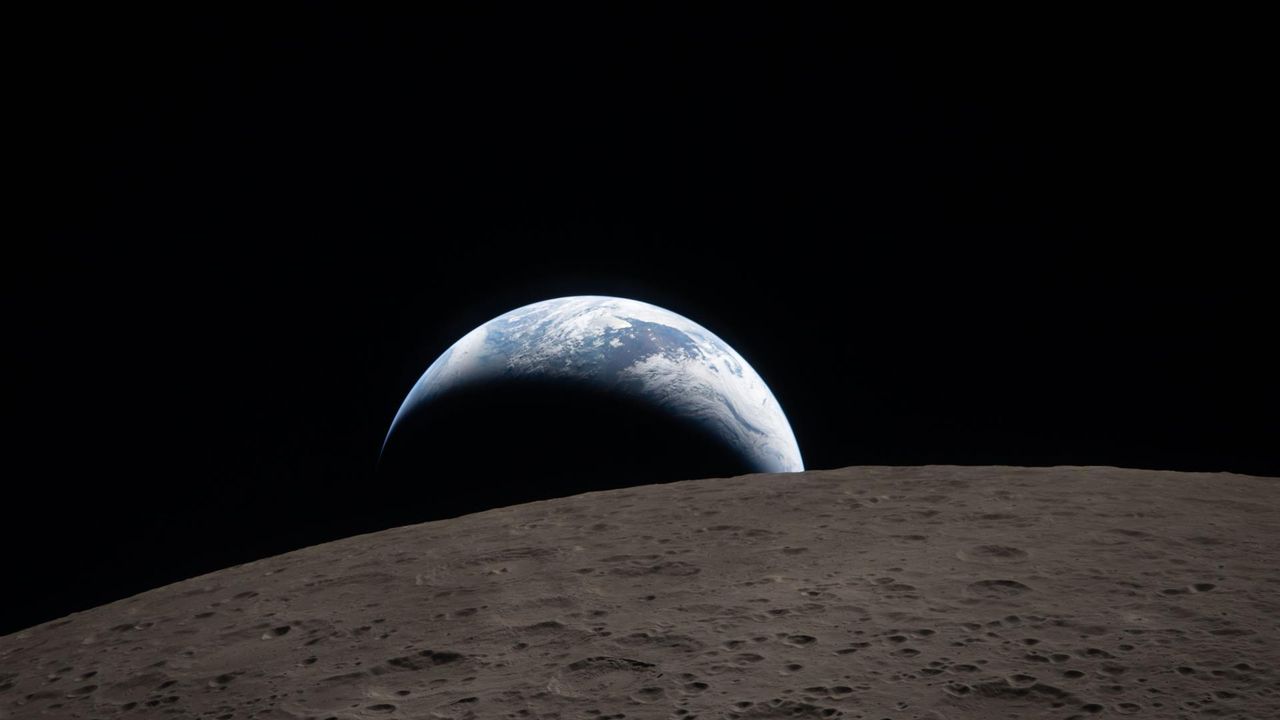
A laser system, previously tested on board the International Space Station, helped to stream video directly from the Artemis 2 mission on its way around the moon.
The hunt for Planet Nine continues as new discoveries make the Solar System’s biggest mystery even harder to solve. Is there a massive undiscovered planet on the outer reaches of the Solar System? The idea has been around since before the discovery of Pluto in the 1930s. Labeled as planet X, prominent astronomers had put [...]
A rare meteorite recovered from the Sahara Desert could be a fragment of a Moon-size body that met a violent end in the earliest days of the solar system.
NASA pushed its Deep Space Network beyond its limits during the Artemis I mission nearly four years ago. The global array of deep space communications antennas couldn't keep up with the routine demands of 40 robotic science missions and the extraordinary surge required by NASA's Orion space capsule as it flew around the Moon.
The experience in late 2022 reduced or delayed downlinks from several high-profile science missions, including the James Webb Space Telescope and Mars rovers, as the data-hungry Artemis I mission took priority on NASA's communications network. And that was before the first Artemis mission with astronauts onboard. When Artemis II launched April 1, NASA called upon the Deep Space Network (DSN) again to connect Mission Control to the Orion capsule as it soared more than a quarter of a million miles from Earth.
With a crew of four flying inside the spacecraft, the agency's appetite for data from Orion on Artemis II was even higher than it was on Artemis I. But at a little more than nine days, the Artemis II mission was shorter than the 25 days Artemis I spent in space, helping alleviate the communications overload. Artemis I also launched 10 small CubeSats into deep space, many of which required tracking and telecom services from the DSN. Artemis II carried fewer CubeSats.
Planetary scientists analyzing a lunar meteorite known as Northwest Africa (NWA) 12593 have uncovered evidence of an asteroid impact that occurred 3.5 billion years ago on the Moon, helping to reconstruct a period of intense bombardment that left lasting marks across the inner Solar System.
Eugene Parker, pioneer of theoretical solar and plasma astrophysics, was born June 10, 1927. Parker revolutionized the field of heliophysics, notably by first proposing the existence of the solar wind — a stream of charged particles ejected from the Sun — in 1958. His theory was confirmed by Mariner II in 1962. Among many otherContinue reading "June 10, 1927: The birth of Eugene Parker"
A rare meteorite found in the Sahara Desert has revealed evidence of a giant ancient world that once existed in our solar system but later disappeared. Scientists believe this lost world formed about 4.5 billion years ago, during the early days of the solar system. It may have been as large as the Moon or […]
Using the SETI Institute’s Allen Telescope Array, a 42-element radio interferometer at Hat Creek Radio Observatory in Hat Creek, California, astronomers probed 3I/ATLAS for artificial radio transmissions but found only human-made interference.
NASA has ended its attempts to reconnect with the Mars Atmosphere and Volatile EvolutioN (MAVEN) spacecraft and begun decommissioning the orbiter, closing the book on a mission that spent over a decade studying how Mars lost its atmosphere. At a June 3 media conference, NASA officials announced that an anomaly review board — which wasContinue reading "NASA fails to reestablish contact, decommissions MAVEN"

 Login