❌

Reading view

Psychologist Laura Carstensen uncovered a surprising upside to growing older: as our sense of the time we have left grows shorter, we invest more in the people and activities that matter most to us

This piece summarises published research on ageing and emotional well-being. We are not psychologists or clinicians, and nothing here is psychological advice. If you’re struggling with mood, isolation, or a life-stage transition of the kind discussed, a licensed psychologist or your GP is the right place to start.

“When we recognize that we don’t have all the time in the world, we see our priorities most clearly. We take less notice of trivial matters.” That is Laura Carstensen, a Stanford psychologist, describing the shift her research traces in how people spend their attention as they age.

And it is probably not the story most of us expect ageing to tell.

The assumption that age means shrinking

The familiar picture of growing older is one of contraction. The social circle thins. Ambition cools. The appetite for new people, new places and new experiences fades, and what remains looks like a managed decline.

Read that way, an older person with fewer friends and narrower routines is a person who has lost something and is making do with the remainder.

That reading treats the narrowing almost as damage. Carstensen’s work, developed through her socioemotional selectivity theory, points somewhere stranger. The narrowing is real, but it is largely chosen rather than imposed.

What Carstensen found

The shift she documents is selective rather than passive. Older adults do not simply lose contacts; they prune the peripheral ones and hold onto the people who matter most. They put less effort into meeting new people and more into the relationships they already have. When time feels limited, the theory holds, people are motivated to pursue emotional satisfaction over information.

That motivation shows up as a particular set of preferences. Carstensen describes older adults as “more likely to invest in sure things, deepen existing relationships, and savor life.” The hedge in her own phrasing matters. This is a tendency the research finds, not a rule every person follows.

One detail makes the pattern hard to dismiss as mere mellowing. In a memory study, Carstensen found that older adults remembered nearly twice as many positive images as negative or neutral ones — a skew toward the good that younger adults did not show. Attention itself appears to reorganise around what feels emotionally worth keeping.

Time horizon, not age, likely does the work

The central claim is that age is not really the cause. One key tenet of the theory, in Carstensen’s words, is that “perceived time horizons, not chronological age, account for age differences in goals and preferences.” What changes behaviour is the sense of how much time remains, and that sense usually shortens with age, though not always for the same reasons.

The contrast with youth is the cleanest test. When time horizons are long, Carstensen says, “people are constantly preparing, trying to soak up all the information they can.” This makes sense when you are building toward an open future, and tends to lose its appeal once the future feels finite.

Carstensen and colleagues found that shortening or expanding a person’s sense of remaining time changed their goal preferences regardless of how old they were. A similar effect surfaced again under unusual conditions: an analysis published in Psychological Science found that the age advantage in emotional well-being held up during the early COVID-19 pandemic, with older adults reporting better emotional experience than younger ones even under a shared acute threat.

The paradox of ageing

If ageing were simply loss, emotional life should worsen with it. Instead, research suggests the opposite.

Her explanation for the paradox is plain. She describes the sequence this way: “we invest in more emotionally important parts of life and life gets better.” It tends to get better, in her reading, because the investment has shifted to the things that reliably pay off in contentment.

What this reframes

Seen through Carstensen’s lens, the older person with a smaller circle and quieter ambitions is not a diminished version of their younger self. They are perhaps simply someone acting on a clearer sense of what their time is for. The same behaviour that looks like withdrawal from the outside can be, from the inside, a deliberate reallocation toward what already matters.

The practical reach of the idea extends well beyond ageing. Because perceived time, not the calendar, sets the priorities, anyone whose horizon suddenly shortens — through illness, upheaval, or simply paying attention to the clock — can find the same reordering arriving early. Later life is simply where it shows up most reliably.

The post Psychologist Laura Carstensen uncovered a surprising upside to growing older: as our sense of the time we have left grows shorter, we invest more in the people and activities that matter most to us appeared first on Space Daily.

  •  

The electric eel can generate a jolt of around 600 volts — several times the shock from a household socket — by stacking thousands of specialised cells together like tiny batteries, and rather than only zapping prey underwater, it has been filmed rearing up out of the water to press its chin directly against a larger attacker

The number that anchors everything is about 600 volts. That is the peak discharge an electric eel can deliver, several times the roughly 120 volts of a North American wall socket. The figure is stranger than it looks: no single part of the eel produces anything close to that. The voltage is assembled, cell by cell, out of thousands of much smaller contributions.

Despite its name, the electric eel is a type of  knifefish, and as much as four-fifths of its roughly two-metre body is given over to one job: making electricity. 

Each of the specialised cells, called electrocytes, produces only a tiny voltage on its own. A single electrocyte fires at around 150 millivolts, about a seventh of a volt. Stack thousands of them in series and fire them at once, and the small jolts sum the way cells in a battery do. The cells are linked in series to build voltage and in parallel to build current, channelling the combined output toward a target.

The comparison to a battery is more than loose metaphor. The arrangement has long been likened to Alessandro Volta’s voltaic pile of 1799, the first synthetic battery, which stacked metal discs to do what the eel does with living tissue.

Researchers have since built the principle back the other way. A team at the University of Fribourg, working with stacked ion-selective hydrogels to mimic the eel’s total of up to 600 volts, assembled an artificial version that generated 110 volts when thousands of its cells were triggered together.

For most of the time we have known about the eel, the assumption was that it shocked prey underwater and left it at that. Then Kenneth Catania filmed something different.

The Vanderbilt biologist documented and filmed eels rising out of the water to press their chin against a partially submerged threat. The contact point matters: the current exits through the chin into the target and returns to the eel’s tail, completing the circuit through the animal it is attacking rather than dissipating into the surrounding water.

The measurements showed both voltage and current to the target rising the higher the eel climbed. Catania read the behaviour as a defensive move, a way to drive a shock home with maximum effect. This, he wrote, lets the eels deliver shocks “with a maximum amount of power to partially submerged land animals that invade their territory”. He also proposed that the manoeuvre could have arisen in steps, with “each stage” providing “a successive advantage, suggesting how it may have evolved.”

The discovery did more than describe new behaviour — it rehabilitated an old story. 

In 1800, the naturalist Alexander von Humboldt described eels in a South American pool attacking horses, with two horses stunned and drowned in the first five minutes of the skirmish. For roughly two centuries afterward, no scientific reports of any such leaping attack appeared, and the tale was treated with skepticism. Catania felt the same pull of disbelief. “The first time I read von Humboldt’s tale, I thought it was completely bizarre,” he said. “Why would the eels attack the horses instead of swimming away?”

The filmed leaps offered an answer. Catania argued that the behaviour, most likely a dry-season defence when crowded eels are cornered in shrinking pools, fit Humboldt’s description closely enough that “it seems reasonable to suggest” the naturalist had watched a similar eel behaviour on 19 March 1800. The hedge is his own, and it stays a careful inference rather than proof. Other researchers found the work persuasive all the same. In the view of James Albert, a University of Louisiana at Lafayette biologist who studies how electric fish evolved their use of electricity, the results “are literally rewriting the book on what we know about electric behaviors of the electric eel.”

The post The electric eel can generate a jolt of around 600 volts — several times the shock from a household socket — by stacking thousands of specialised cells together like tiny batteries, and rather than only zapping prey underwater, it has been filmed rearing up out of the water to press its chin directly against a larger attacker appeared first on Space Daily.

  •  

The Australian superb lyrebird can imitate almost any sound it has ever heard — chainsaws, camera shutters, car alarms, the calls of more than 20 other species — with enough accuracy that the birds being imitated often can’t tell the difference

When researchers at the Australian National University played recordings of superb lyrebird mimicry to grey shrike-thrushes, the shrike-thrushes responded to the fakes much as they would to one of their own. As lead author Anastasia Dalziell put it, “Surprisingly, strike-thrushes approached the speaker broadcasting mimicked songs as well as the shrike-thrushes’ own song.”

The superb lyrebird (Menura novaehollandiae) is a large ground-dwelling songbird of the forests of south-eastern Australia, and most of what it sings is borrowed. The bulk of a male’s song is imitation, drawn overwhelmingly from other forest birds. During the breeding season a male will mimic roughly 20 to 25 species.

Dalziell and Robert Magrath measured how close the copies actually were in a study titled “Fooling the Experts.” The acoustic match for grey shrike-thrush song was tight enough that the model species could not reliably tell the imitation from the real thing. “Grey shrike-thrushes sing a complex and beautiful song, but lyrebirds can accurately mimic them all the same,” Dalziell said.

Two cautions belong here. This was a playback experiment measuring acoustic similarity for one model species, not a blanket finding that every lyrebird copy is indistinguishable. The shrike-thrushes also did better at discriminating when given other contextual cues, so “fooled” sits closer to “often fooled” than to “always fooled.”

The chainsaws and car alarms that made the bird globally famous come with their own footnote. The celebrated imitations of saws and drills trace largely to captive birds, including a male named Chook at Adelaide Zoo who died in 2011. Wild lyrebirds overwhelmingly mimic natural forest sounds. 

Look closely and it get’s more interesting. A male does not simply replay everything he knows at maximum length. In the “Fooling the Experts” analysis, the lyrebirds abridged the songs they copied, trimming repeated notes, which is consistent with a trade-off between showing off accuracy and packing in variety.

Dalziell described it this way: “This mimicry is the accomplishment of years of practice and is probably used to show female lyrebirds the quality of the singer.” Note the “probably.” It is offered as a hypothesis, not a verdict.

A 2021 study added a stranger wrinkle. Dalziell and colleagues found that males create an acoustic illusion of a whole mixed-species mobbing flock at very particular moments. As Dalziell put it, “The male lyrebird recreates that sound when a potential mate tries to leave a displaying male without copulating, or during copulation itself.” The illusion may work as a sensory trap rather than a simple display of extravagance, though the Cornell write-up is careful that it is not clear exactly how males benefit.

The tidy phrase “all in service of winning over a mate” runs into a basic problem: females mimic too. The first systematic study of female superb lyrebird song found they are skilled mimics in their own right, copying at least 19 species. Co-author Justin Welbergen noted that “The females imitated fewer bird calls than males but performed more imitations of hawks.” A trait that existed only to attract a mate would have no obvious reason to appear, in a different form, in the sex that does not display.

The function is plainly more than one thing. Courtship is the best-documented driver, and mimicry does peak in the breeding season. But the same skill turns up in what looks like deception during copulation, and in displays whose structure shifts depending on the moment. Each of these is a working hypothesis backed by an observational or playback study, not a closed case.

What the lyrebird exposes is perhaps a habit of ours, not of the bird’s. The temptation is to attach one clean purpose to a behaviour because one purpose is easy to tell as a story. The animal keeps refusing to cooperate. The most interesting thing about a bird that can imitate almost anything is that we still cannot say, with confidence, exactly why it bothers.

The post The Australian superb lyrebird can imitate almost any sound it has ever heard — chainsaws, camera shutters, car alarms, the calls of more than 20 other species — with enough accuracy that the birds being imitated often can’t tell the difference appeared first on Space Daily.

  •  

In 2021, a team at Nottingham Trent University led by Nadja Heym surveyed almost 1,000 people and found that the dangerous personalities don’t lack empathy — they just use the cognitive half without the affective one

Psychologists at Nottingham Trent split empathy into two systems in 2021 — and found the dangerous personalities don't lack empathy, they just use the cognitive half without the affective one

In 2021, a team at Nottingham Trent University surveyed almost 1,000 people in the UK and found something that broke the standard textbook on dangerous personalities. About 19 percent of the sample scored high on the so-called dark triad — psychopathy, narcissism, Machiavellianism — and also scored above average on empathy. The two were supposed to be mutually exclusive. They weren’t. The research, led by associate professor Nadja Heym, gave this group a name: dark empaths.

The mechanism that makes them possible — and dangerous — is a split inside the word “empathy” itself.

Empathy is two systems, not one

For decades, psychology treated empathy as a single trait: you either had it or you didn’t, and the people who lacked it were the ones to watch. The Heym study used a sharper instrument. It measured two distinct kinds.

Cognitive empathy is the ability to read another person — to model what they are feeling, predict their reactions, take their perspective. It is a thinking skill. Chess players have it. Negotiators have it. Good interviewers have it.

Affective empathy is the part that actually hurts. It is the involuntary catch in the chest when someone else cries, the flinch when you watch a stranger stub their toe. It is what stops most people from being cruel, because cruelty produces an echo inside the person inflicting it.

The two systems sit in different neural circuits. You can have one without the other. And the Nottingham Trent finding was that the dangerous personalities don’t lack empathy across the board — they tend to keep the cognitive half running while the affective half stays quiet.

brain scan empathy

What the 2021 study actually found

Heym’s team assessed participants on statements measuring manipulative attitudes, regret-based threat behaviors, and secretiveness. Those scores were cross-referenced against measures of both empathy types and a scale of indirect aggression — making someone feel guilty, excluding them socially, malicious jokes at their expense.

Four groups fell out of the data. A typical group with average traits, about 34 percent. An empath group, low on dark traits and high on empathy, about 33 percent. A traditional dark triad group, high on dark traits and low on empathy, around 13 percent. And the dark empaths — high on dark traits, but above average on both kinds of empathy — at about 19 to 20 percent.

Both dark groups reported more aggression than the rest. The traditional dark triad edged ahead on that measure in the original 2021 sample. But in follow-up work Heym presented at scientific conferences, with nearly 800 American participants, the dark empaths’ aggression levels came in close to par with the dark triad — while their drive, goal-orientation, and responsiveness to reward ran significantly higher.

Heym described them as go-getters. The label the field has started using is more pointed: successful psychopaths. And that combination — the harm levels of the dark triad with the social fluency of an empath — is what makes the split inside empathy more than a taxonomic curiosity.

Why this combination is harder to spot than a narcissist

A textbook narcissist gives themselves away. The boasting, the cold edge in a conversation that should be warm, the way attention has to keep returning to them — these signals tend to surface within a few interactions. People notice. Friends warn each other.

A dark empath rarely produces that surface signal. They read a room with the precision of a good clinician. They know what you want to hear, which compliment will land, when to ask the soft follow-up question that signals validation. What would normally make them stop short of using that information against you is muted.

The result is a person who appears warm, perceptive, often the most understanding presence in the room, while operating on a calculation the room cannot see. Heym told BBC Science Focus that people around dark empaths are often left with only a vague feeling that something isn’t quite right.

The neuroscience underneath the split

That vague feeling has a physical basis. A 2013 fMRI study of incarcerated individuals with psychopathy, published in Frontiers in Human Neuroscience, asked participants to imagine another person in pain. The expected empathic response — activation in the anterior insula, anterior midcingulate cortex, and inferior frontal gyrus — was reduced compared with controls. The machinery for sharing pain was running quietly. The machinery for recognising it was largely intact.

Other work, summarised in a Psychology Today review of empathy deficits, narcissism, and neurodivergence, points to differences in the amygdala and ventromedial prefrontal cortex — regions that handle the emotional weight assigned to other people’s distress. Gray matter abnormalities have been documented in narcissistic personality disorder.

Crucially, a separate line of research on narcissists found that when participants were explicitly asked to take the perspective of someone describing trauma, their heart rates rose in line with real empathic response. They could feel it. They just didn’t, by default. The capacity exists. The choice is to keep it offline. That last point matters: the split isn’t a hardware failure, it’s a setting — which is why the behaviour can be sustained for years without giving way to a breakdown.

What it looks like in everyday life

That setting produces a fairly specific behavioural fingerprint.

They understand you too well, too quickly — like being known after a single coffee. That speed is the read, not the bond. They use guilt as a regular instrument: knowing what hurts you is the prerequisite for choosing to press there. Their humour carries a cruel edge — Heym’s questionnaire specifically captured malicious jokes at others’ expense, and the dark empath group registered there alongside the dark triad.

They also damage your other relationships. Master manipulators with high social fluency tend to reshape the network around them, quietly, through information control and selective alliance-building. Machiavellianism, Heym notes, is the hardest of the dark traits to identify precisely because it operates through rumour and access rather than overt confrontation.

And you feel different when they’re not around. A persistent low-grade dread that lifts in their absence is one of the more reliable signals — closer to a body’s verdict than a mind’s. People who are genuinely attuned to social safety often register relational threat at the nervous-system level long before they can articulate it.

silhouette conversation two people

The case of Heather

Heather, a 53-year-old who told her story to The i Paper, was married to her husband for 12 years. In public he was magnetic — the kind of person who seemed to know every waiter, every owner, every other diner in a restaurant. He worked at a senior level in education. He talked fluently about emotional intelligence with her children from a previous marriage.

In private he stonewalled her for days at a time. He once moved out of the house for six weeks without explanation or contact. She later learned about pornography addiction and affairs. In a conversation about his ex-girlfriends, he blamed every one of them for their breakups, and the silence she sat in afterwards was the realisation that she wasn’t special — she was the next in a series.

It wasn’t until after the separation in July 2023, talking to a friend with a background in neuropsychology, that she heard the term. She described him as someone who spoke about empathy but showed no genuine emotional connection, treating others instrumentally rather than with care. The cognitive read was flawless. The affective response was absent. Twelve years of marriage is what the social camouflage can sustain when only one half of the system is running.

If you’re curious to go deeper into this phenomenon, there’s a really thoughtful video by Psychology Says that explores the dark empath concept and why this particular combination of traits can be so difficult to detect in real-world interactions.

Why the successful ones are the most dangerous

A traditional psychopath with high drive tends to flame out. Impulsiveness, aggression, lack of moral brake — the failure mode is public, scandalous, and usually fast. People complain. Frauds get uncovered. Bullies get reported.

Dark empaths don’t generate that kind of obvious wreckage. They regulate the surface behaviour. They know when to apologise convincingly, when to send the thoughtful text, when to perform warmth in the meeting that matters. The destruction tends to be slower, more intimate, and harder to point at — a marriage that erodes over a decade, a workplace where talented people keep quietly leaving, a friend group that thins without anyone quite naming why.

Heym’s commentary in The Conversation emphasises that dark empaths are more likely than traditional dark triad individuals to end up in positions of power — CEOs, politicians, senior managers — because the social camouflage holds up under scrutiny. The dangerous ones aren’t the loud ones. They’re the ones whose performance of decency survives the long term.

The introspective edge

One detail from the 2021 study cuts against the easy villain reading. The dark empaths in Heym’s sample reported the harshest self-judgement of any group. They knew what they were capable of. They knew the shape of their own behaviour. And — this is the part that tends to unsettle people who study them — they were largely okay with it.

That introspective awareness is itself a function of cognitive empathy turned inward. You can model yourself the same way you model others. You can see the manipulation clearly and choose to continue. The affective brake that would convert that knowledge into shame, and shame into change, is the part that stays dim.

What to do with the finding

The practical value of the cognitive-affective split is that it gives people a vocabulary for an experience that previously had none. If you grew up being told that bad people are obviously cold, and you encountered someone who was visibly warm and somehow left you smaller every time, the categories didn’t fit. Heym’s framework explains why: warmth that is purely cognitive looks identical to warmth that is affective, until you stop reacting the way the reader expects.

The follow-up signal is behavioural consistency over time. Cognitive empathy is a performance, and performances drift when the audience changes — when you’re tired, when stakes are low, when you stop being useful. Affective empathy doesn’t drift in the same way, because it isn’t being maintained by attention. It’s just on.

This is why splitting empathy into two systems matters beyond academic taxonomy. As long as empathy was treated as a single dial — present or absent — the warm, perceptive person who hurt you didn’t compute, and the only available explanation was that you must have misread them.

The 2021 Nottingham Trent paper has been cited hundreds of times since publication, and Heym’s American replication suggests the four-group structure isn’t a UK artefact. Roughly one in five people carries this profile. Most of them are not Ted Bundy. They are the boss whose praise lands strangely, the partner whose apologies sound rehearsed, the friend who knows your wound too precisely.

The reason they are hard to spot is the same reason they are dangerous: the half of empathy that lets them see you is wide awake, and the half that would stop them from using what they see has been turned down to a whisper. Once you can name those as two separate things, the person finally computes — and so does what they did.

The post In 2021, a team at Nottingham Trent University led by Nadja Heym surveyed almost 1,000 people and found that the dangerous personalities don’t lack empathy — they just use the cognitive half without the affective one appeared first on Space Daily.

  •  

A rogue planet five to ten times the mass of Jupiter, drifting alone through space without a parent star, was observed by European astronomers in 2025 devouring six billion tons of gas and dust every second — eight times faster than just months earlier — in the most powerful accretion event ever recorded for any planetary body, happening 620 light-years from Earth as you read this

Somewhere in the Chamaeleon constellation, six hundred and twenty years ago, a small dark planet about the size of Jupiter began to do something planets are not supposed to be able to do. It started eating. The material — gas and dust from a disc surrounding it, the same kind of debris field that ordinarily surrounds young stars rather than young planets — began falling onto the planet’s surface at increasingly extreme rates. By the time light from the event reached the European Southern Observatory’s Very Large Telescope in Chile in mid-2025, the planet was consuming approximately six billion tonnes of gas and dust per second. The accretion rate had increased by approximately eight times in just a few months. The planet, in astronomical terms, was binge-eating at a rate that had never been observed in any planetary-mass object before. The European astronomers who detected the event published their findings in The Astrophysical Journal Letters in October 2025, and the object they had been observing — Cha 1107-7626 — became the most extreme example yet documented of an emerging class of cosmic objects that blur the boundary between what counts as a planet and what counts as a star.

According to the European Southern Observatory’s official announcement of the discovery, Cha 1107-7626 has a mass between five and ten times that of Jupiter, sits approximately 620 light-years from Earth, and does not orbit any star. It belongs to a category of objects called rogue planets, or free-floating planetary-mass objects, which drift through interstellar space without being gravitationally bound to a parent star. The object is young by astronomical standards — approximately one to two million years old, compared to the 4.6-billion-year age of our own solar system — and still in the active formation phase, surrounded by a disc of gas and dust from which it is continuing to grow. The lead author of the study, Víctor Almendros-Abad of the Astronomical Observatory of Palermo at Italy’s National Institute for Astrophysics, characterised the discovery directly: “People may think of planets as quiet and stable worlds, but with this discovery we see that planetary-mass objects freely floating in space can be exciting places.”

What the accretion event actually was

The technical phenomenon being observed is called accretion — the process by which a young astronomical object increases its mass by pulling in surrounding material from a circumstellar or circumplanetary disc. Accretion is well-characterised in young stars, which routinely accrete material from their surrounding discs at substantial rates during their formation phases. Accretion in young planets is far less well-documented, partly because planets are far harder to observe than stars and partly because conventional planetary-formation models did not predict that planet-sized objects would undergo accretion events of stellar-like magnitude. The Almendros-Abad team’s observations of Cha 1107-7626 represent the most extreme example yet documented of stellar-style accretion behaviour in an object that falls below the mass threshold for being classified as a star.

The X-shooter spectrograph mounted on the VLT detected a marked brightening of the object in mid-2025, accompanied by spectral fingerprints — specific patterns of light emission and absorption — that indicated infalling gas was hitting the planet’s surface and creating a bright hot spot. The team had previously observed Cha 1107-7626 in earlier months of 2025 at substantially lower accretion rates. The dramatic surge between roughly April-May and June-August 2025 took the accretion rate from approximately 750 million tonnes per second to approximately six billion tonnes per second — an eightfold increase over a period of just a few months. As reported by Phys.org’s coverage of the ESO findings, the event also produced detectable changes in the chemistry of the disc surrounding the planet, with water vapour appearing during the accretion episode but not before — a phenomenon that had previously been observed during accretion events in young stars but never in any planetary-mass object.

What the discovery actually means

The implications run substantially beyond the specific case of Cha 1107-7626. The conventional dividing line between planets and stars has been understood in terms of mass: objects below approximately 13 Jupiter masses cannot sustain even the limited form of fusion (deuterium fusion) that defines a brown dwarf, and are therefore classified as planets. Cha 1107-7626 sits comfortably below this threshold. But the accretion behaviour the European team observed — the magnitude of the infalling material, the apparent role of magnetic fields in funneling that material toward the planet’s surface, the formation of a hot spot at the point of infall, and the changing chemistry of the surrounding disc — all of these are features that astronomers had previously associated specifically with young stars, not with planetary-mass objects.

The team’s interpretation, summarised in the ESO announcement, is that planetary-mass objects can possess strong magnetic fields capable of powering stellar-like accretion events. This is a substantive shift in the understanding of how planets and stars relate to each other across the lower-mass end of the stellar-substellar spectrum. As reported by Space.com’s coverage of the discovery, Almendros-Abad described the implications in stark terms: “This is the strongest accretion episode ever recorded for a planetary-mass object.” The boundary between “small star” and “large planet,” in light of the Cha 1107-7626 observations, appears to be less clean than the previous mass-based classification system had suggested.

How rogue planets exist at all

The broader category of rogue planets — free-floating planetary-mass objects without any parent star — has been one of the more striking developments in modern astronomy over the past 25 years. The first confirmed rogue planet was identified in 2000. Since then, multiple surveys have estimated that the Milky Way may contain billions of such objects, with some studies suggesting that rogue planets may actually outnumber the stars in the galaxy. They form in two main ways, depending on which population is being examined. The first formation pathway involves direct gravitational collapse of a small fragment of an interstellar gas cloud — essentially the same process by which stars form, scaled down to substellar masses. The second pathway involves planets that originally formed around stars but were subsequently ejected from their planetary systems by gravitational interactions with other planets, typically during the chaotic early phases of system formation.

Cha 1107-7626 appears to belong to the first category. Its young age (approximately one to two million years), its retention of a surrounding accretion disc, and its location within a known star-forming region in Chamaeleon all suggest that it formed in place rather than being ejected from a parent system. The team’s observations of stellar-style accretion behaviour reinforce this interpretation: the object appears to be forming through a process structurally identical to the way young stars form, just at a substantially lower mass scale. Whether this means rogue planets like Cha 1107-7626 should properly be reclassified as a kind of failed star rather than as a kind of unbound planet is a question that the discovery is now actively reopening in the planetary-formation community.

What comes next

The 2025 observations of Cha 1107-7626 are unlikely to be the last word on the object or its kind. As documented by CBS News’s coverage of the discovery, the European Southern Observatory’s upcoming Extremely Large Telescope, currently under construction in the Atacama Desert of Chile, is expected to substantially improve the ability to detect and characterise rogue planets — which are typically faint, cold, and difficult to observe with current instruments. The combined capabilities of the ELT, the James Webb Space Telescope, and the next generation of ground-based interferometers should allow astronomers to identify additional accreting rogue planets, monitor their behaviour over multi-year periods, and assemble a substantially more complete picture of how planet-scale objects can form, grow, and evolve without ever being attached to a star.

What the Cha 1107-7626 observations have already established is that the universe contains objects that conventional planetary classification did not quite anticipate. A 5-to-10-Jupiter-mass body, drifting alone in interstellar space, eating six billion tonnes of gas and dust per second, exhibiting magnetic fields and accretion behaviour previously associated only with young stars — this is the kind of object that does not fit cleanly into the previous taxonomic categories. The 620 light-years of space between Earth and Cha 1107-7626 mean that the accretion event astronomers detected in 2025 actually happened approximately six centuries ago, around the time the European Renaissance was beginning. Whatever is happening at Cha 1107-7626 right now, in the present tense of the planet itself, will not be observable from Earth for another 620 years. By the time the light arrives, the object — assuming it continues growing at anything like its current rate — may no longer be a planet at all.

The post A rogue planet five to ten times the mass of Jupiter, drifting alone through space without a parent star, was observed by European astronomers in 2025 devouring six billion tons of gas and dust every second — eight times faster than just months earlier — in the most powerful accretion event ever recorded for any planetary body, happening 620 light-years from Earth as you read this appeared first on Space Daily.

  •  

At least two trillion galaxies fill the observable universe — ten times the old estimate — and most are too faint for any telescope today to see, a 2016 study found

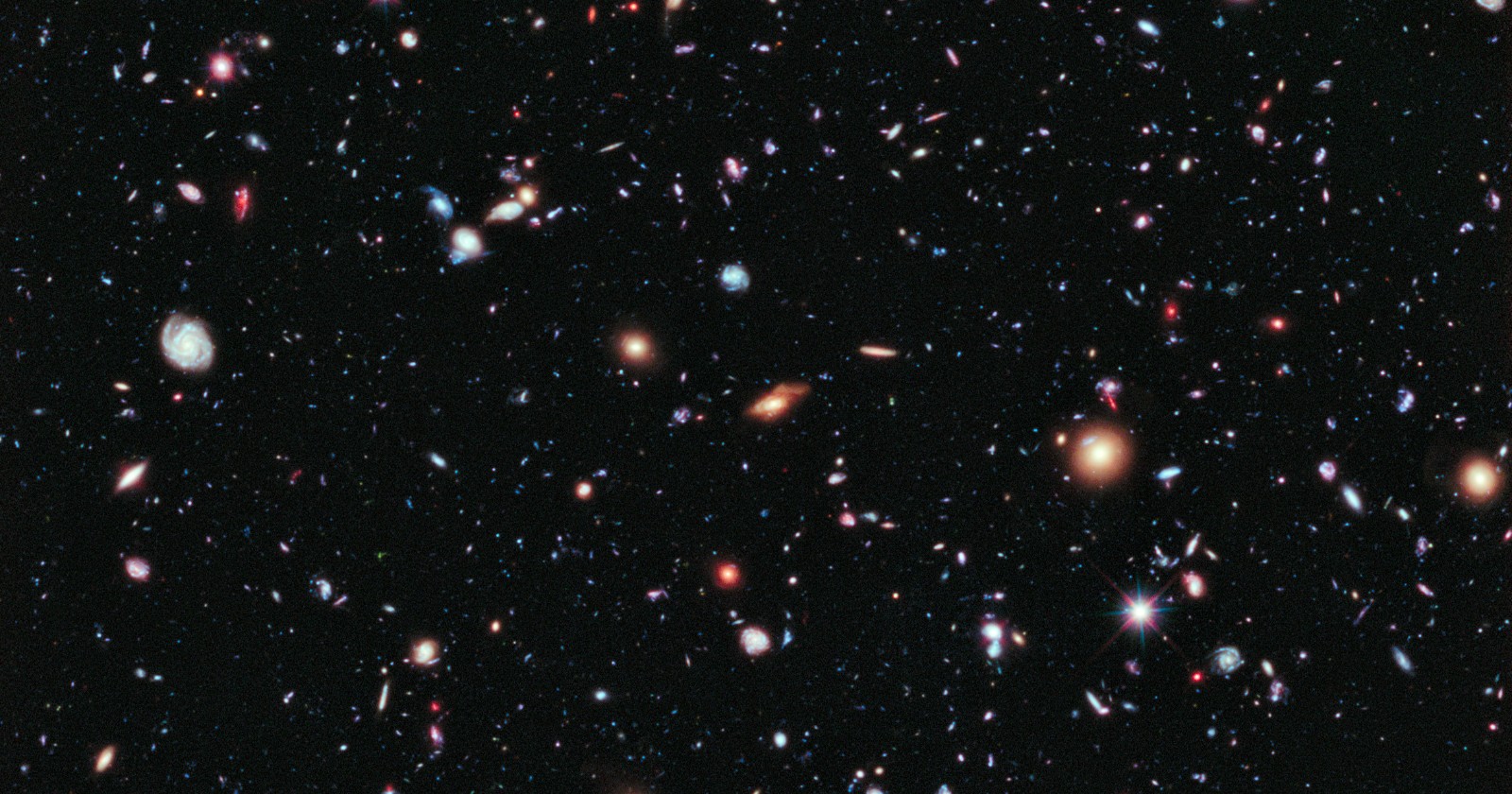
A deep Hubble exposure filled with thousands of faint, distant galaxies of many colors against black sky

Two trillion, and most of them out of sight

In 2016 a team led by Christopher Conselice at the University of Nottingham put the number of galaxies in the observable universe at about two trillion, roughly ten times the figure astronomers had been working with. The twist sits inside the result: the great majority of those galaxies are too faint for any telescope now operating to detect.

The paper states it plainly. There are “at least 2 × 10¹² (two trillion) galaxies in the currently visible universe, the vast majority of which cannot be observed with present day technology as they are too faint.” In other words, the count is less a tally of dots in our images than an estimate of how many dots the images are missing.

How you count galaxies you cannot see

The team did not add up galaxies one by one. Instead they used galaxy stellar mass functions, which describe how many galaxies of each mass exist in a given slice of space. They measured these at many points in cosmic history, reaching back to within roughly 650 million years of the Big Bang. Much of the deep data came from the Hubble Space Telescope, whose narrow, long-exposure images act like core samples drilled through the universe.

Fitting those measurements with a standard mathematical curve, the researchers worked out the density of galaxies at each epoch, then integrated across the whole observable volume and the whole age of the universe. The arithmetic ran down to galaxies as small as a million times the mass of the Sun, faint dwarfs that no survey can see at great distance.

Working with colleagues at Leiden Observatory in the Netherlands and the University of Edinburgh, the team turned narrow, deep images of the sky into three-dimensional maps. From those they measured the volume and the galaxy density of one small slice of space after another. Conselice likened the effort to an intergalactic archaeological dig, a way of estimating how many galaxies had been missed rather than counting the ones already on the photographic plates. The faintest galaxies the model implies would shine at around magnitude 29 on the astronomers’ brightness scale, far below the reach of the unaided eye and beyond all but the deepest exposures ever taken.

Two independent versions of the calculation gave 1.2 trillion and 2.8 trillion. The University of Nottingham reported the averaged figure of two trillion as the headline result, the product of what Conselice described as roughly fifteen years of work.

“We are missing the vast majority of galaxies because they are very faint and far away,” Conselice said when the study appeared. “It boggles the mind that over 90 percent of the galaxies in the universe have yet to be studied.”

The early universe was more crowded

The count is high partly because the young universe was busier than the present one. When the team tracked how galaxy numbers changed over time, the trend ran backward. A given volume of space held about ten times more galaxies when the universe was a few billion years old than it does today.

That sounds backward, since the universe has only grown older and larger. The explanation is that small galaxies have spent billions of years merging into bigger ones, so the population thins even as individual galaxies grow. Most of the missing multitude are low-mass systems, no larger than the dwarf galaxies that orbit the Milky Way, and they are exactly the ones too dim to register at great distance.

Why the number jumped tenfold

Before this work, the count was usually put in the hundreds of billions, with the often-quoted figure around 100 billion. Even careful counts from the deepest direct images, such as the Hubble Ultra Deep Field, reached only a couple of hundred billion galaxies. The 2016 model put the true total at almost ten times that direct-count number, roughly two trillion. That implies about ninety percent of galaxies are fainter than current telescopes can register, below an apparent brightness of about magnitude 29.

That gap is not just bookkeeping. The number of galaxies feeds into the total amount of starlight filling space, and into the centuries-old puzzle known as Olbers’ paradox, which asks why the night sky is dark if the universe is full of stars. A sky packed with two trillion galaxies might seem to make the paradox worse, not better.

The team’s answer is that the light of those distant galaxies never reaches us at full strength. Most of it is absorbed by gas in intergalactic space, and the expansion of the universe stretches the rest toward redder, fainter wavelengths. So the universe can be far more crowded than telescopes show while the night sky stays dark, with most of its contents waiting in the gloom for sharper eyes.

What this does and does not prove

The two-trillion figure is a model-dependent extrapolation, not a head count, and the authors are careful about its limits. The result hinges on two choices: the smallest galaxy mass they counted and the earliest epoch they reached. They note that pushing the mass limit lower would multiply the total by about seven, which is why they frame two trillion as a floor rather than a ceiling.

The bigger caveat arrived later. In 2021 a team used NASA’s New Horizons spacecraft, far enough from the Sun to escape the dust glow that brightens the sky near Earth, to measure the cosmic optical background, the summed light of all galaxies. From out there the sky was about ten times darker than the darkest view Hubble can manage. The researchers argued in public that the faintness of that glow points to a total closer to the hundreds of billions than to trillions. “We simply don’t see the light from two trillion galaxies,” one of them, Marc Postman, told reporters.

So the famous number is one side of an open argument, the high end of a range that newer data has pulled downward. What survives the dispute is the underlying lesson rather than the digit: most of the universe’s galaxies, on any of these estimates, are fainter than we can currently observe.

A number that keeps moving

The galaxy count has climbed and fallen as instruments changed, from a few hundred billion in the 1990s to two trillion in 2016 and back toward the hundreds of billions in the New Horizons reading. Each revision says as much about the reach of the telescope as about the universe itself.

That may be the honest takeaway. The number of galaxies is not a settled fact carved into the sky but a running estimate, one that shifts every time a new instrument sees a little deeper into the dark.

The post At least two trillion galaxies fill the observable universe — ten times the old estimate — and most are too faint for any telescope today to see, a 2016 study found appeared first on Space Daily.

  •  

In May 1961, Alan Shepard became the first American in space, but only after a four-hour hold on the launch pad left him with a full bladder and no collection device, until he finally told the launch team he would have to go inside his sealed pressure suit, briefly short-circuiting his medical sensors

On the morning of May 5, 1961, Alan Shepard lay strapped on his back inside a capsule the size of a phone booth, breathing pure oxygen through a sealed pressure suit, waiting for a Redstone rocket beneath him to stop misbehaving. The countdown had already slipped past three hours. His bladder was full. The hatch was bolted shut. Mission control kept telling him to hold. Eventually, according to National Geographic’s reconstruction of the morning, Shepard told the engineers he was going to urinate inside the suit, and they let him.

The voltage sensors strapped to his chest and legs went briefly haywire. The cotton long johns beneath the silver pressure layer soaked through. The oxygen flow dried him out before liftoff. Fifteen minutes later he was the first American in space.

The episode is funny in the retelling and it almost always gets told as comedy. The serious part is what it exposed: nobody at NASA in the spring of 1961 had thought seriously about what a human body does over a four-hour hold inside a sealed suit wired to live electronics.

A 15-minute flight, a four-hour wait

Freedom 7’s mission was meant to be brief. Suborbital. Up and down. The capsule reached an altitude of 116.5 miles before splashing into the Atlantic, as Astronomy magazine’s day-in-history account records. Total flight time: about fifteen minutes.

The launch prep was a different story. Shepard had been awake since the early hours of the morning. He ate breakfast, suited up, and was sealed inside Freedom 7 in the pre-dawn dark, with the hatch bolted shut roughly two hours before the scheduled 7:20 a.m. launch. That window opened and closed without a liftoff.

Weather rolled in. A small inverter on the booster started acting up. An IBM 7090 computer at Goddard wanted to be checked. Each issue cost twenty minutes, then forty, then an hour. By the time the candle was finally lit at 9:34 a.m., Shepard had been horizontal in the capsule for more than four hours.

The plan was that he wouldn’t need to

There was no urine collection device inside the Mercury suit because the mission, as designed, did not require one. Fifteen minutes is shorter than most car commutes. The Mercury planners assumed the astronaut would empty his bladder before suit-up and be fine until splashdown.

What they did not plan for was the hold.

Shepard asked over the comm loop if he could get out and use the bathroom. The answer came back from the capsule communicator: no. Unstrapping him, opening the hatch, walking him down the gantry, suiting him back up, and resealing Freedom 7 would have cost hours and risked the whole mission. The Soviets had already put Yuri Gagarin in orbit on April 12, just three and a half weeks earlier. Every hour the U.S. delayed was another hour the rest of the world spent watching the Soviet Union look like the future.

Shepard pressed the question. According to the Smithsonian National Air and Space Museum’s account of the flight, no provision had been made for him to relieve himself, and the launch team eventually told him to go in the suit. The flight surgeons worried about the medical telemetry shorting out. The electrical engineers worried about the wires.

Alan Shepard Freedom 7 capsule

What the sensors actually did

The Mercury biomedical harness was not subtle. Shepard had electrodes on his chest reading heart rate, a respirometer at his face mask, and thermistors reading skin temperature at several locations including his lower torso and thighs. The wiring ran through the suit and into a connector at his waist that fed the capsule’s telemetry system.

When the urine pooled, the readings spiked. Heart-rate channels jumped. Skin-temperature numbers swung. The biomedical team at the Cape watched the trace and, briefly, lost confidence in what they were looking at.

The pure oxygen environment inside the suit then did what it does in a closed, ventilated space. It evaporated the moisture. By the time the engines lit, Shepard was uncomfortable but dry, and the sensors had settled back into something readable.

Forty-five million Americans watched the launch on live television, as the WDBJ7 anniversary recap notes. None of them knew. Shepard’s now-famous instruction to the launch team was broadcast in the clear. The other parts of that conversation were not.

The plumbing question, redesigned slowly

The popular telling of this story claims NASA redesigned every subsequent flight’s plumbing from scratch the next week. That overstates what actually happened. The fixes came in stages, and they were never as elegant as the rocket they were attached to.

Gus Grissom’s Liberty Bell 7 flight in July 1961 was the next Mercury launch and it, too, was suborbital and short. Grissom flew without a true urine collection device. By the time John Glenn was preparing to orbit the Earth in early 1962 — a flight that would last several hours — the problem could no longer be ignored. NASA engineers fitted Glenn’s suit with a modified condom catheter draining into a rubber collection bag strapped to his thigh. The design was crude. It leaked. Glenn used it anyway.

By the Gemini program, the urine collection assembly had become a standard suit component, with a one-way valve and a dump line that vented overboard. By Apollo, astronauts had dedicated devices for both liquid and solid waste, the latter being a now-infamous adhesive bag system that nobody on the lunar missions remembered fondly.

The through-line is that Shepard’s four-hour hold made the engineers stop assuming the human body would behave for the duration of the mission. Every long-duration assumption that followed — fluid management, electrolyte balance, the cooling garments under Apollo suits, the way modern spacewalk suits handle waste — traces back to the moment somebody at the Cape realized a flight surgeon’s planning chart did not survive contact with a real bladder on a real launch pad.

The pilot they nearly didn’t fly

The other thing the Shepard story exposes is how close the United States came to not flying him at all. NASA had originally planned a crewed Mercury launch in March 1961. A test flight with the chimpanzee Ham had revealed booster problems that Wernher von Braun insisted be fixed before a human was strapped on top.

That decision pushed the first crewed Mercury launch from March to May. In the gap, on April 12, Yuri Gagarin orbited the Earth. The Soviets had won the race to put a human in space, and they would have won it by a wider margin if von Braun had been less cautious.

Shepard was furious about the delay. He had been told privately in January that he was the choice for the first flight, beating out John Glenn and Gus Grissom. He spent the next several months training for a flight that kept slipping, watching Gagarin take the prize he had been promised.

When NASA finally announced his selection publicly days before the launch, Shepard was the most rehearsed astronaut in the program. He had run the fifteen-minute profile in the simulator more than a hundred times. He had not rehearsed the four-hour wait.

Mercury Redstone launch 1961

What carries down through the family

In December 2021, Shepard’s daughter Laura Shepard Churchley flew to the edge of space herself, on a Blue Origin New Shepard mission named for him. The launch experienced weather delays — delays of the same flavor, if not the same scale, as the ones that left her father stranded on the pad in 1961.

Her flight lasted about ten minutes. She wore a flight suit with modern moisture-wicking layers and the kind of plumbing options her father had been denied. She did not need them. The wait on the pad was short.

Why this story survives

There are more important facts about Alan Shepard’s flight. Freedom 7 proved that the Redstone-Mercury stack could put a human into ballistic flight and bring him home alive. It gave President Kennedy the political cover to commit, three weeks later, to a crewed lunar landing before the decade was out. It set the trajectory of American spaceflight for the next eight years and arguably the next sixty.

The plumbing story survives because it is the part of the morning that nobody planned. The trajectory was calculated to the second. The heat shield was tested to specifications. The retro-rockets were timed against tables. The bladder was not on anyone’s checklist.

That is what holds matter for. They are when the assumptions in the planning documents meet the body of the person inside the suit. Every long-duration mission since — Skylab, Mir, the ISS, the planned transit to Mars — is built on the recognition that a human inside a sealed system will, given enough time, do something the system was not designed for.

The archival footage from the launch shows Freedom 7 climbing on a pale exhaust plume against a Florida sky. The capsule looks impossibly small. The crowd on the beach looks impossibly close. The man inside is dry, just barely, and about to spend fifteen minutes earning the rest of the program’s future.

He landed in the Atlantic 302 miles downrange, was hoisted out of Freedom 7 by a helicopter from the carrier USS Lake Champlain, and reportedly asked for a glass of water.

The post In May 1961, Alan Shepard became the first American in space, but only after a four-hour hold on the launch pad left him with a full bladder and no collection device, until he finally told the launch team he would have to go inside his sealed pressure suit, briefly short-circuiting his medical sensors appeared first on Space Daily.

  •  

A 2025 NYU study found that women who actively worry about aging — particularly those who fear future health problems — measurably age faster at the cellular level than those who do not, in a quiet finding that suggests how a person thinks about getting older may itself be a biological intervention

Worrying about getting old, it turns out, may not be a neutral psychological activity. In November 2025, Mariana Rodrigues, a PhD student at the NYU School of Global Public Health, and colleagues published a paper in the peer-reviewed journal Psychoneuroendocrinology analysing data from 726 adult women across the United States. The participants had completed standardised questionnaires assessing their anxiety about aging — broken into three specific dimensions: fears about declining health, fears about losing physical attractiveness, and fears about reproductive aging. They had also provided blood samples that the research team analysed using two of the most rigorous biological-age measurement tools currently available: DunedinPACE, which measures the current speed at which the body is aging, and GrimAge2, which estimates cumulative biological damage accumulated over a lifetime. The findings, presented as a cross-sectional snapshot rather than a clinical intervention, suggested that subjective fears about getting older may indeed have measurable effects on the underlying biology of aging itself.

According to the NYU School of Global Public Health’s press release on the study, the researchers found that women with higher aging anxiety showed accelerated epigenetic aging on the DunedinPACE clock — meaning their cells were aging measurably faster than would be expected for their chronological age. The effect was specific. Among the three dimensions of aging anxiety the team examined, only one was strongly associated with the biological-age acceleration: fears about declining health. Anxieties about appearance and fertility did not show a comparable association with the epigenetic clocks. The implication, in the researchers’ framing, is that not all aging fears are biologically equivalent. The specific worry that one’s body will fail in the future appears to be the one that does the most to accelerate the failure itself.

How the cellular measurement works

The two epigenetic clocks the NYU team used represent the current state of the art in biological-age measurement. Per PsyPost’s detailed coverage of the study’s methodology, DunedinPACE functions like a speedometer for cellular aging — it measures the rate at which the body is currently aging at the moment the blood sample was taken, expressed as a multiplier of normal aging (a DunedinPACE score of 1.0 indicates normal pace; higher values indicate faster aging). GrimAge2 functions differently, estimating cumulative biological damage accumulated across a lifetime, and has been validated as a strong predictor of mortality risk. Both clocks measure DNA methylation patterns — chemical modifications to the DNA that accumulate over time and that reflect, with substantial precision, the underlying biological state of the cells producing them.

The participants who scored higher on the aging-anxiety scale, particularly on the health-related dimension, showed faster DunedinPACE scores than participants with lower anxiety. The magnitude of the effect, while present, was modest in absolute terms — these are statistical patterns across hundreds of women, not dramatic personal accelerations visible to the individual. But the direction was consistent, the methodology was rigorous, and the use of two independent epigenetic clocks rather than one strengthened the basic finding. Rodrigues, in her summary of the work, described the implication directly: “Our research suggests that subjective experiences may be driving objective measures of aging. Aging-related anxiety is not merely a psychological concern, but may leave a mark on the body with real health consequences.”

Why women specifically

The study examined only women, and the researchers were explicit about why this population was chosen. As reported in the Sentinel Assam coverage of the NYU work, women may be especially vulnerable to aging anxiety because of the specific configuration of social expectations they navigate. Cultural pressures around youth and physical appearance, professional consequences of perceived aging, the timing of reproductive decisions, and midlife caregiving roles that often involve simultaneously watching one’s own parents age and become sick all combine to produce a particular intensity of aging-related psychological stress in women across the lifespan. Rodrigues noted in her commentary on the findings: “Women in midlife may also be juggling multiple roles, including caring for their ageing parents. As they see older family members grow older and become sick, they may worry about whether the same thing will happen to them.”

The decision to study women only also reflects a broader pattern in the aging-and-anxiety literature, where men and women appear to experience and process aging-related fears differently. Whether the basic finding — that fears about future health predict faster cellular aging — generalises to men, and whether the magnitude of the effect is similar across sexes, are questions that the present study cannot answer and that the research group identifies as priority topics for subsequent investigation.

What the study does not establish

The Rodrigues et al. 2025 paper is a cross-sectional observational study, not a randomised intervention. The researchers were careful to acknowledge several limitations that warrant honest framing. The most important is that the study captures a single point in time, which means it cannot determine the direction of causation. It is possible that aging anxiety accelerates cellular aging, as the popular framing of the finding suggests. It is also possible that women whose cells are already aging faster — for reasons unrelated to their anxiety — develop more aging-related health concerns as a result of subtle bodily changes they may not consciously recognise. Both directions are biologically plausible, and a single time-point study cannot distinguish between them. Longitudinal research that follows the same individuals across years and decades will be required to establish causation.

A second important limitation involves behavioural mediators. As reported in ScienceDaily’s coverage of the paper, when the research team adjusted their analysis to account for anxiety-related coping behaviours — particularly smoking and alcohol use — the association between aging anxiety and accelerated epigenetic aging weakened and lost statistical significance. This is a real finding that complicates the simple “fear ages you directly” narrative. It suggests that part of the biological effect of aging anxiety may be mediated through the behaviours people adopt to cope with the anxiety, rather than through a direct neuropsychological pathway. Women who worry intensely about declining health may smoke or drink more as a way of managing the anxiety, and those behaviours may then accelerate cellular aging through well-established mechanisms. The aging anxiety, in this account, is still consequential — but its consequence runs partly through behavioural channels that are themselves more directly addressable than the underlying psychological state.

Where this fits in the broader literature

The NYU finding does not stand alone. The Yale psychologist Becca Levy has been publishing on closely related territory for more than two decades, beginning with a 2002 paper in the Journal of Personality and Social Psychology showing that older adults with positive age stereotypes — those who viewed aging as a generally positive process rather than a feared decline — lived approximately 7.5 years longer on average than those with negative age stereotypes, after controlling for age, sex, socioeconomic status, loneliness, and functional health. Subsequent work in the Levy research programme has documented similar patterns across cardiovascular outcomes, dementia risk, recovery from disability, and a long list of other health indicators. The Rodrigues 2025 paper extends this body of work into the specific domain of epigenetic biological-age measurement, providing the first peer-reviewed evidence that the connection between aging-related psychological orientation and biological aging shows up directly in the molecular clocks researchers can now measure in blood.

What this means for ordinary readers is that the way a person thinks about aging may matter more than it has traditionally been treated as mattering. The implication is not that anyone can simply will themselves to age more slowly by adopting positive thoughts about getting older — the relationship is more complex than that, and the behavioural mediators identified in the NYU study suggest that the practical pathway runs partly through the daily habits that anxiety drives rather than through pure cognitive reframing. But the underlying observation — that subjective fears about the future are now measurable in the cells of the body that holds those fears — represents a substantive shift in how the boundary between psychology and biology can be understood. The mind-body connection, in the specific domain of aging, is no longer a metaphor. It is something that can be quantified in DNA methylation patterns, in a blood sample, in a laboratory in New York.

The post A 2025 NYU study found that women who actively worry about aging — particularly those who fear future health problems — measurably age faster at the cellular level than those who do not, in a quiet finding that suggests how a person thinks about getting older may itself be a biological intervention appeared first on Space Daily.

  •  

When John McFall lost his right leg at 19, no one could have known the former Paralympic sprinter might one day carry the first amputee body into orbit, where two weeks in microgravity could test what six decades of spaceflight medicine never measured

John McFall lost his right leg in a motorcycle accident at 19, won a Paralympic bronze medal in Beijing, became an orthopaedic surgeon, and may now become the first person with a physical disability to live and work in orbit.

The proposed flight is not just a symbolic first. If it happens, McFall’s body and prosthesis will become instruments in a medical experiment that six decades of crewed spaceflight have barely begun to design.

The UK Space Agency has signed a memorandum of understanding with the California company Vast that could send McFall to Haven-1, the company’s planned commercial space station. The UK government says the agreement would have the UK Space Agency support Vast in seeking sponsorship to fund McFall’s flight, with Haven-1 scheduled for launch as early as 2027.

McFall could also fly on a private mission to the International Space Station with Vast. Either way, the science is unusually direct: what happens when a body that has already adapted to limb loss enters an environment where every body must relearn fluid balance, movement, heat transfer and load?

McFall was selected for the European Space Agency’s 2022 astronaut reserve and its Fly! feasibility study, which was created to understand and reduce barriers to spaceflight for astronauts with physical disabilities. ESA’s own profile notes that he was selected in November 2022 and took part in the Fly! study after the amputation of his right leg at age 19.

John McFall astronaut

A physiological experiment with a sample size of one

Almost everything known about the human body in microgravity comes from people who passed astronaut medical selection under able-bodied assumptions. McFall’s possible flight puts pressure on that history.

Kirsty Lindsay, a physiotherapist and physiologist who works in spaceflight research, framed the question in an analysis published in The Conversation: what happens to a body that already moves, balances and bears load differently when gravity is removed?

The honest answer is that no one knows yet. That uncertainty is not a weakness in the story. It is the point of the mission.

Writer Arthur C. Clarke imagined an amputee commanding a space station decades before the first human spaceflight. McFall’s mission would turn that old fiction into measurements taken from a real body in orbit.

The fluid-shift problem

On Earth, gravity helps pull fluids toward the legs. In orbit, that vertical gradient disappears, and body fluids shift toward the chest and head.

That headward movement is one of the suspects in spaceflight-associated neuro-ocular syndrome, or SANS, a cluster of eye and vision changes seen in some astronauts after long-duration missions. NASA-linked summaries of SANS describe optic-disc edema, globe flattening, choroidal folds and hyperopic shifts in long-duration astronauts, while noting that the exact cause is still unresolved.

McFall has less lower-limb tissue for fluid to occupy. His fluid shift, and any knock-on effect on vision, may not match the patterns measured in crewmates with two intact lower limbs.

One person cannot settle the science. But one carefully monitored flight can give researchers a first real datapoint where there is now mostly inference.

A spine already under uneven load

Microgravity changes the spine because the usual axial load of standing and walking disappears. Astronauts can experience back pain in flight, and the relationship between spinal unloading, intervertebral discs and postflight reloading remains a live medical concern.

Research on intervertebral-disc damage and spaceflight has described herniated discs after missions and raised the possibility that astronauts may face increased risk when reloaded by re-entry, landing and gravity. The evidence is not simple, because many astronauts also have histories of high-G aviation exposure, but the risk is serious enough to shape medical monitoring.

Lower-limb amputees often move with asymmetry through the pelvis and trunk. Reviews of amputee gait describe spinal, pelvic and hip movement asymmetries, and clinical work has long connected those adaptations with back-pain concerns.

That makes McFall’s spine medically interesting before launch. The key question is not whether his body is fragile. It is how a body already adapted to uneven loading responds when loading disappears, then returns suddenly during landing.

Heat, sockets and the engineering of the body

Temperature regulation is another open question. In microgravity, buoyancy-driven convection is reduced, so warm air does not rise around the body in the ordinary terrestrial way.

That matters because thermoregulation is partly environmental. Airflow, clothing, body shape and equipment all influence how heat moves away from skin.

Then there is the prosthesis itself. A socket is not a generic attachment. It is an intimate piece of engineering, fitted to a residual limb whose volume can change with activity, fluid balance, heat and time.

Prosthetic-socket research has repeatedly treated fit as a central problem, because pressure, shear and small volume changes at the residual-limb interface can determine whether a limb is usable for hours or painful within minutes. McFall’s socket in orbit will be a biomedical instrument as much as a mobility device.

The UK government says the proposed mission would study human physiology, musculoskeletal adaptation, prosthetics in microgravity, and movement and balance in space. Those findings could feed back into lighter, more adaptable prosthetic designs on Earth.

Certification was an engineering problem, not just a medical one

Much of the work to clear McFall has been mechanical rather than philosophical. Engineers and flight surgeons had to ask whether his prosthesis, seat interface, emergency procedures and body mechanics could work during launch, docking, emergency escape and landing.

ESA selected McFall in 2022 for the astronaut reserve and Fly! study. The UK government says he later became the first person with a physical disability to be medically cleared for a long-duration mission.

That clearance does not mean the proposed Haven-1 flight is guaranteed. It means the old assumption that a lower-limb amputation automatically blocks an astronaut from long-duration orbital work has been tested and did not hold.

Space Daily has previously reported on McFall’s medical clearance and on parallel work testing prosthetic mobility in zero gravity.

What a sample of one can actually prove

A two-week flight by one astronaut will not produce statistically powerful conclusions about amputees in microgravity. It will produce something earlier and more basic: a baseline.

The fluid-shift data, spinal imaging, thermal readings, socket-fit logs and movement recordings would become the first entries in a dataset that does not yet exist.

Future missions could build on that baseline. Groups such as AstroAccess have already run parabolic research flights with disabled crews, and commercial stations may give researchers more chances to test bodies that were historically excluded from astronaut selection.

The Vast agreement was formally announced by the UK government as a partnership in which the UK Space Agency would help Vast seek sponsorship for McFall’s mission. Crew would travel aboard SpaceX’s Crew Dragon capsule on a Falcon 9 rocket.

SpaceNews has reported that the UK is treating the Vast partnership as a way to re-establish a sovereign human-spaceflight presence without building a full national human-spaceflight program. The science and the geopolitics are moving together.

McFall has been careful about the way the mission is described. He has said he wants to do the job well, not be treated as a stunt, and that he is happy to be a pioneer only if the work has value for space exploration and for people on Earth.

Tim Peake, the last British ESA astronaut to live aboard the International Space Station, called the agreement a landmark moment for inclusive human spaceflight. That framing is true, but it understates the harder scientific point.

For more than sixty years, space medicine has studied the orbital body through a narrow physiological template. If McFall flies, the next measurement will not begin with that template. It will begin with a residual limb, a socket, a spine under different history, and a body answering questions spaceflight medicine never had to ask.

The post When John McFall lost his right leg at 19, no one could have known the former Paralympic sprinter might one day carry the first amputee body into orbit, where two weeks in microgravity could test what six decades of spaceflight medicine never measured appeared first on Space Daily.

  •  

Chimpanzees at war for eight years in Uganda’s Kibale National Park have, since 2018, systematically killed at least 28 members of their own former community in coordinated raids, in what a 2026 peer-reviewed paper in Science has described as only the second documented chimpanzee civil war in history, in a community that until 2015 had been the largest cohesive group of wild chimpanzees ever recorded

The Ngogo chimpanzees of Kibale National Park in western Uganda have been continuously studied by primatologists for thirty years. The Ngogo Chimpanzee Project was co-founded in 1995 by John Mitani of the University of Michigan and David Watts of Yale University, and is now co-directed by Aaron Sandel of the University of Texas at Austin. The project has documented approximately 200 individual chimpanzees through their full life cycles, recorded their grooming networks, hunting parties, dominance hierarchies, and reproductive patterns, and produced one of the most detailed long-term datasets on chimpanzee social behaviour ever assembled.

The size of the community was, until quite recently, its most distinctive feature. Most wild chimpanzee communities contain approximately 50 individuals. The Ngogo community at its peak contained approximately 200, including more than 30 adult males, all of whom lived within a shared territory, recognised each other by sight and call, groomed each other, formed alliances and rivalries, mated across the community, and patrolled the boundaries of their shared range together against neighbouring groups.

The community was, on the available evidence, an exceptionally well-functioning chimpanzee society.

It is now in the middle of the second documented chimpanzee civil war in scientific history.

The day the split began

The collapse of the Ngogo community had a precise starting moment, which the long-term observation project happened to have a researcher on hand to witness. On the morning of 24 June 2015, Aaron Sandel was following a sub-group of Ngogo chimpanzees through the forest when the animals fell silent. Several of them began to grimace, a facial expression that in chimpanzees indicates nervousness or threat. Others began touching each other in patterns the researchers recognised as reassurance behaviour. In the distance, more chimpanzees could be heard approaching.

The normal pattern of Ngogo social life would have been for the two sub-groups to merge with each other, exchange the loud screaming, back-patting, and hand-holding greetings that chimpanzees use to reaffirm community membership, and then mingle freely for hours or days before separating again. This was the pattern Mitani and his colleagues had observed thousands of times across thirty years of fieldwork.

The pattern did not hold on the morning of 24 June 2015. As the approaching sub-group came into earshot, the chimpanzees with Sandel ran in the opposite direction. The approaching sub-group did not pursue them as a threat. The two sub-groups had, on the available behavioural evidence, simply decided not to meet.

From that morning, the social cohesion of the Ngogo community began to fray in measurable ways. Researchers tracked the network of grooming and association patterns and watched as individuals shifted into one of two emerging clusters, which the team came to call the Western and the Central groups. By 2017, the two groups had stopped using overlapping territory. By 2018, the deaths had begun.

The first killing

In January 2018, adult males from the Western group attacked and killed an adolescent male from the Central group named Errol. Sandel had watched Errol grow up. The pattern of the attack, in which five to ten adult males held the victim down while others bit, beat, and dragged him, was familiar to the researchers from previous documented cases of inter-community chimpanzee violence, in which Ngogo and other groups had attacked chimpanzees from rival neighbouring communities.

What was different about the killing of Errol was that the victim was not from a rival neighbouring community. He was from the same community that the attackers had been part of two and a half years earlier. The males who killed him had, in some cases, groomed his mother. They had patrolled the Ngogo territorial boundaries with him as members of the same hunting party. They had, on the long-term observational record, treated him as kin until the morning of 24 June 2015.

The killing of Errol established the pattern that has continued since. The 2026 paper in Science by Sandel and colleagues, titled “Lethal conflict after group fission in wild chimpanzees,” documents the period from 2018 to 2024, during which the Western group attacked and killed at least seven adult or adolescent males and seventeen infants from the Central group. An additional 14 Central males disappeared during the same period and were never recovered, although the team notes that some may have died from causes other than direct attack. The total number of killings since the data analysis ended in 2024 has continued to rise, with further attacks documented in 2025 and 2026.

All attacks since 2018 have been by the Western group against the Central group. The Central group, despite having been the larger of the two factions at the time of the split, has not retaliated in any documented case. The Western group, which started with 76 members, has grown to 108. The Central group is in stepwise decline.

Why this kind of event almost never happens

Inter-community violence between separate chimpanzee groups is well-documented in primatology. The Ngogo community itself has been one of the more aggressive communities ever studied, with documented attacks on chimpanzees from neighbouring communities going back to 1999. What is genuinely rare, and what makes the 2026 Sandel paper a significant scientific event, is for a single chimpanzee community to split into two factions and for those factions to then begin killing each other.

The Sandel team estimates, based on the rate at which such splits have been documented across all wild chimpanzee research sites combined, that a community fission of this kind occurs approximately once every 500 years per chimpanzee community. The team’s estimate is based on the only previous documented case, which is the chimpanzee war that Jane Goodall observed at Gombe Stream National Park in Tanzania between 1974 and 1978. In that case, the Kasakela community split into two factions, called Kasakela and Kahama, and over four years the Kasakela males systematically killed every adult male in the Kahama splinter group, eliminating it entirely as a community.

The Gombe War was, at the time, the most contested observation in primatology. Critics noted that Goodall had been provisioning the chimps with bananas at the research site since the 1960s, and argued that the artificial food supply had created unnatural competition that produced the violence. The Gombe War, on this critique, was an artefact of human interference rather than a natural feature of chimpanzee behaviour.

The Ngogo civil war substantially weakens this critique. The Ngogo Chimpanzee Project has never provisioned the chimps with food, and the violence has unfolded entirely without human food interference, as the University of Michigan press release accompanying the Science paper notes. The behaviour Sandel and his colleagues have documented is, on the strongest current reading of the evidence, a natural feature of chimpanzee social biology that emerges under specific conditions, not an artefact of human intervention.

Why did they turn on each other

The 2026 Sandel paper does not identify a single cause for the Ngogo split. The team examined several factors that may have contributed, all of which appear to have operated in combination rather than individually.

The first was the unusual size of the Ngogo community. At approximately 200 individuals and more than 30 adult males, the group was approximately four times the size of a typical wild chimpanzee community. Chimpanzee social cohesion is maintained by individual relationships of grooming, alliance, and recognition, and there appear to be limits to how many such relationships any one chimpanzee can sustain. The Ngogo community had, on the available behavioural evidence, grown beyond the size at which its members could maintain personal bonds with every other member, and had been operating for at least a decade with internal sub-structures that the researchers called clusters.

The second was the deaths of several well-connected adult males in the years immediately before the 2015 split. The Sandel team identifies five adult males who had served as social bridges between the Western and Central clusters and who died of natural causes between approximately 2010 and 2014. The loss of these individuals appears to have weakened the connections that held the two emerging factions together.

The third was a change in the dominance hierarchy. A new alpha male emerged in 2015, an event that in chimpanzee communities typically occurs every six to eight years and produces measurable increases in aggression and social tension during the transition period.

The fourth was a respiratory epidemic in 2017, traced to a human-origin pathogen, which killed approximately 25 Ngogo chimpanzees and removed additional social links between the two emerging clusters.

None of these factors, individually, would have been sufficient to fracture a chimpanzee community. The Sandel team’s central interpretation is that the combination of large group size, the loss of social bridge individuals, the alpha male transition, and the epidemic produced a network of social relationships that became too thin to hold the two clusters together. When the relationships broke down, the underlying behavioural capacity for inter-community violence, which Ngogo chimpanzees had previously directed against rival neighbouring groups, was redirected inward against former members of their own community.

The honest limitations

Several caveats apply to the interpretation above.

The first is that the Ngogo civil war is still in progress. The 2026 Science paper covers data through 2024, but additional killings have been documented in 2025 and 2026, and the long-term outcome of the conflict is not yet settled. The Central group may eventually be eliminated, as the Kahama group was at Gombe, or it may stabilise as a smaller community, or it may recover and re-establish itself. The current trajectory points toward continued decline, but the time horizon is genuinely uncertain.

The second is that the proposed causes of the split are, at this stage, contributing factors rather than established triggers. The Sandel team has documented the conditions under which the split occurred, but the specific reason that the community fractured rather than continuing in its previous arrangement is not yet known. Multiple chimpanzee communities have grown to large sizes, lost social bridge individuals, transitioned to new alpha males, and survived epidemics, without fracturing in this way. What made Ngogo different is genuinely an open scientific question.

The third is that the implications for human conflict, which several commentators on the 2026 paper have drawn, should be treated with caution. Chimpanzees and humans share a common ancestor approximately six million years in the past, and there are clear evolutionary continuities in patterns of aggression, alliance, and intergroup conflict. The specific dynamics of human civil wars, which involve ideology, ethnic identity, political institutions, and material resources at scales that have no chimpanzee equivalent, are not directly modelled by the Ngogo conflict.

What it means

Several things follow from the Ngogo civil war evidence that are worth saying clearly.

The first is that the behavioural capacity for what humans call civil war, in which a previously unified social group fractures into factions that then attempt to destroy each other, is not, on the available evidence, unique to humans. It has now been documented twice in chimpanzees, in two separate national parks, in two separate countries, separated by four decades and the entire breadth of the African continent. The behaviour is rare but it is reliably reproducible under the right conditions, and those conditions appear to be specific features of chimpanzee social biology rather than anything imposed by human contact.

The second is that the underlying mechanism, on the strongest current reading of the evidence, is the breakdown of personal relationships within a social group that has grown beyond the scale at which such relationships can be maintained. The Ngogo community was at approximately four times the size of a typical chimpanzee community. The relationships that held it together were stretched thin even before the deaths and the epidemic that further weakened them. The split occurred along the fault line of the two pre-existing clusters within the community, which had been visible to researchers as internal structures for at least a decade before the rupture.

The third is that the violence, once the social break occurred, was directed by Ngogo chimpanzees against animals they had previously treated as kin. The Western males who killed Errol in January 2018 had groomed his mother. They had patrolled the Ngogo territorial boundaries with him as members of the same hunting party. They had, by every available behavioural measure, considered him a member of their own community until the morning of 24 June 2015. The behavioural capacity to redefine former community members as legitimate targets of lethal aggression appears, on the available chimpanzee evidence, to be substantially older than the evolution of language, ideology, or the human capacity for ethnic identity formation.

The fourth, on the strongest current reading of the peer-reviewed evidence, is that the question Aaron Sandel has been asking since the morning of 24 June 2015, which is what makes a stable social group come apart and what makes its former members turn on each other, is not just a question about chimpanzees.

The Ngogo community had been stable for thirty years.

It came apart on a single morning, in a way that no one was expecting, and the killings began three years later.

The chimpanzees are still attacking each other.

The post Chimpanzees at war for eight years in Uganda’s Kibale National Park have, since 2018, systematically killed at least 28 members of their own former community in coordinated raids, in what a 2026 peer-reviewed paper in Science has described as only the second documented chimpanzee civil war in history, in a community that until 2015 had been the largest cohesive group of wild chimpanzees ever recorded appeared first on Space Daily.

  •  

Across more than 100 countries, researchers have documented a “U-curve” of human happiness — life satisfaction reliably dips through middle age before rising again in late life — and the happiness people report in their late 60s and 70s is often greater than what they felt in their 30s, in a quiet curve almost nobody expects to be on while they are inside the dip

If you are currently in your mid-forties and feeling somewhat worse about your life than you remember feeling in your twenties, the data suggest you are not alone, you are not broken, and the curve you are on bends back upward. The basic finding is one of the more robust patterns in the empirical economics of well-being. In a long series of papers running from approximately 2004 through 2025, the economists David Blanchflower of Dartmouth College and Andrew Oswald of the University of Warwick have analysed survey data on life satisfaction and happiness from millions of individuals across more than 130 countries. The pattern that has consistently emerged is a U-shape — high in youth, declining through early and middle adulthood, reaching a minimum somewhere in the late forties, and then rising again through the late fifties, sixties, and into the seventies. The same shape appears, with minor variations, in advanced economies, developing economies, individual US states, every European country examined, and the great majority of Latin American, African, and Asian countries surveyed.

The most comprehensive single statement of the finding came in 2020, when Blanchflower published a National Bureau of Economic Research working paper analysing life-satisfaction data from 132 countries. Averaging across the country-level estimates, he found the age minimum of well-being at 47.2 years in advanced countries and 48.2 years in developing countries — strikingly similar figures across radically different economic and cultural contexts. “The happiness curve is everywhere,” he concluded. A 2021 follow-up in the Journal of Population Economics extended the analysis to 145 countries and confirmed the same essential pattern, with the U-shape robust to statistical controls for income, education, marital status, and employment.

What the data actually show

The shape of the curve, examined country by country, is not identical everywhere. In some countries the dip is sharper; in others it is more gradual. The recovery phase varies in steepness. The absolute level of happiness at any given age varies enormously across countries — Scandinavian populations report substantially higher life satisfaction at all ages than populations in many lower-income or politically unstable countries. But the basic temporal pattern — that any given country’s well-being levels are lower in midlife than in either young adulthood or old age — replicates across an extraordinary range of national contexts. As reported in the University of Warwick’s press coverage of the original 2008 Blanchflower-Oswald paper, the researchers found the same U-shape in happiness levels and life satisfaction across 72 countries in their initial dataset, including economies as different as Norway, China, Iraq, and Argentina. The pattern is not specific to wealthy industrial democracies or to any particular cultural tradition. It appears to be a feature of being human across the adult lifespan, regardless of where the human in question happens to live.

For people inside the dip, the data carries a specific implication. The years between approximately 40 and 55 are, on average across the surveyed populations, the lowest-satisfaction years of adult life. The recovery is not automatic and not guaranteed for any individual — these are statistical averages across enormous populations, and any given person can defy the curve in either direction. But the general trajectory means that the experience of feeling that life has somehow narrowed or dimmed in midlife is, by the available data, the modal experience for adults in this age range, not a personal failure or a sign that something has specifically gone wrong. The corollary is that the late sixties and seventies, contrary to widely-held assumptions about ageing as a steady downhill, are typically reported by the people living through them as among the higher-satisfaction periods of adult life.

Why the curve might exist

The mechanisms behind the U-shape are not fully settled, and several competing explanations are now under active research. One leading hypothesis comes from the socioemotional selectivity theory developed by the Stanford psychologist Laura Carstensen, which proposes that as people perceive their remaining time as shorter, they progressively prioritise emotionally meaningful experiences over information-seeking or status-seeking ones. Older adults, in this account, are happier in part because they have become better at selecting the activities, relationships, and goals that actually produce contentment, and at letting go of the ones that do not. A second hypothesis emphasises expectation adjustment — by the late forties, most adults have learned what their lives will and will not deliver, and the gap between what they hoped for and what they have can produce acute disappointment; by the late sixties, that gap has often been reconciled. A third hypothesis emphasises the practical reduction of midlife stressors — the children grown, the career trajectory settled, the financial pressure typically eased — which simply removes some of the load that was depressing midlife well-being.

Per a 2022 review and replication of the U-curve in Frontiers in Psychology, neurobiological mechanisms may also play a role. Midlife is the period when adults typically carry the heaviest combination of work, financial, caregiving, and intergenerational responsibilities — the “sandwich generation” effect of being responsible for both children and ageing parents simultaneously. The cumulative allostatic load of chronic stress can suppress subjective well-being for years at a time. As these responsibilities reduce in late life, the stress load reduces, and the underlying capacity for satisfaction reasserts itself.

What the framework does not claim

Intellectual honesty requires noting that the U-curve finding has been actively contested within happiness economics over the past two decades, and the methodological debate remains unresolved on several points. Some critics — notably Paul Frijters and Tony Beatton in 2012, and Sonja Kassenboehmer and John Haisken-DeNew in 2013 — have argued that the U-shape appears in cross-sectional data but weakens substantially or disappears in longitudinal data that follows the same individuals across their lives. Others have suggested that the U-shape may be partly an artifact of cohort effects (different generations having different baseline happiness levels) rather than a pure age effect. The Princeton economist Angus Deaton has argued that the U-shape may depend on specific socioeconomic conditions and may not be as universal as the Blanchflower-Oswald papers suggest.

The Blanchflower group has responded to these critiques with subsequent analyses that they argue confirm the basic pattern across multiple datasets and methodological approaches. The debate continues. What is largely uncontested is that the well-being of younger adults (ages 18-25), particularly young women, has declined substantially in many developed countries since approximately 2014, in ways that complicate the traditional U-curve picture for the most recent cohorts. As documented by the Global Interdependence Center in a 2025 review of the global U-shape literature, the youth-end of the curve has flattened or reversed in some recent samples — meaning that for some current young adults, the typical pattern of starting high and dipping into midlife may not apply to them in the way it did to earlier generations. The midlife dip and the late-life recovery, however, continue to show up consistently in the older portions of the data.

Why the curve is invisible while you are on it

The most disconcerting feature of the U-curve, for people currently inside the dip, is that it tends to be undetectable as a temporary pattern from within. Someone in the middle of midlife dissatisfaction typically experiences the dissatisfaction not as one particular point on a long curve but as the new permanent reality of being themselves. The retrospective view from the seventies — that the forties were, statistically speaking, the lowest-satisfaction years of an otherwise broadly improving life — is not available to the person in their forties, who has no way to see the forthcoming recovery. The curve appears in the aggregate data because researchers can examine millions of lives at different ages simultaneously. Each individual life sees only the slice it is currently in. The empirical contribution of the Blanchflower-Oswald research programme, whatever the eventual outcome of the methodological debates around it, has been to make the broader shape visible at all — to point out, on the basis of survey data from hundreds of millions of human beings, that the dip is a feature rather than a final destination, and that the curve generally bends upward again on the other side.

The post Across more than 100 countries, researchers have documented a “U-curve” of human happiness — life satisfaction reliably dips through middle age before rising again in late life — and the happiness people report in their late 60s and 70s is often greater than what they felt in their 30s, in a quiet curve almost nobody expects to be on while they are inside the dip appeared first on Space Daily.

  •  

In May 2008, months before the global financial crisis tore through commodity markets, Nathan Tinkler cashed out $422 million — one of the best-timed bets in Australian history

In May 2008, a 32-year-old former electrician from the Hunter Valley named Nathan Tinkler sold his stake in Macarthur Coal to global steel giant ArcelorMittal for roughly $422 million in cash — a deal that closed just months before Lehman Brothers collapsed, coal prices cratered, and the commodities supercycle that had minted him a fortune came to a violent halt.

Tinkler had received those Macarthur shares less than a year earlier, as part-payment for a Queensland coal project called Middlemount, a tenement he had secured in late 2006 with a $1 million deposit financed partly by mortgaging his house in Newcastle. By the time the dust settled on the ArcelorMittal cash, his original outlay had multiplied into the hundreds of times its starting size, achieved in about 24 months.

The timing was almost surgical. Thermal coal, which had traded near US$55 a tonne when Tinkler picked up Middlemount in 2006, peaked above US$190 a tonne in mid-2008 and then fell off a cliff. By early 2009 it was back below US$70. Anyone still holding undeveloped Queensland coking-coal acreage at that point was holding an asset worth a fraction of what Macarthur — or anyone else — had been willing to pay.

The $1 million deposit nobody else would put down

Tinkler was not, in any conventional sense, a coal magnate when he made the Middlemount bet. He had grown up in the Hunter Region of New South Wales, trained as an electrician, and worked in the open-cut pits around the Hunter Valley servicing the giant Caterpillar and Komatsu trucks that haul overburden. The detail that became Tinkler folklore in Sydney financial circles is that he remortgaged the family home in Newcastle suburbia to help fund the deposit on Middlemount, an exploration tenement in Queensland’s Bowen Basin that the major miners had passed over.

What he understood — and what most of the analysts in Sydney and Melbourne did not, in 2006 — was that Chinese steel demand was about to vertical-launch coking-coal prices, and that even a marginal Queensland deposit with rail and port access would become strategically valuable to a mid-tier producer trying to bulk up. Macarthur Coal, run by founder Ken Talbot, was exactly that kind of buyer.

A yellow excavator operating in a rocky quarry on an overcast day.

What $422 million looked like in May 2008

The path to that $422 million was a two-step trade. In December 2007, Tinkler sold his Middlemount holding to Macarthur Coal in a transaction structured largely as Macarthur stock plus a cash component, with the total value of the package reported in the high A$200 million range. He walked out of that 2007 deal as Macarthur’s largest individual shareholder. What he then watched happen was that Macarthur itself became a takeover target during the 2008 commodities surge, and its share price ran hard.

In May 2008, with global coal prices near their cyclical peak, he sold those Macarthur shares to ArcelorMittal for roughly A$422 million in cash. Reports at the time described it as one of the largest personal cash exits ever recorded for a single private mining transaction by an Australian under 35.

For context on how lucky the timing was: BHP Billiton’s share price peaked within weeks of the ArcelorMittal transaction closing and then fell more than 60 per cent over the next nine months. Rio Tinto, which had paid US$38 billion for Alcan in 2007, would spend the next two years scrambling to refinance debt that had been priced for a world that no longer existed. Fortescue Metals briefly traded below $2 a share. Tinkler’s cash, by contrast, was already in the bank.

Buying horses, jets and a football team

What he did next is the part that turned the story from a financial-pages curiosity into a tabloid serial. Within a few years of the ArcelorMittal sale, Tinkler had assembled one of the largest thoroughbred racing operations in the southern hemisphere — Patinack Farm, with stud properties in Queensland, New South Wales and Victoria and a stable of more than 1,000 horses. He bought the Newcastle Knights rugby league club. He bought the Newcastle Jets A-League soccer franchise. He acquired a Dassault Falcon corporate jet and a helicopter. He moved his family to a mansion in Singapore.

He also kept betting on coal. Some of the cash from the ArcelorMittal sale was rolled, with leverage, into the Maules Creek coal project in northern New South Wales, which Tinkler acquired from Rio Tinto in 2008 for $480 million. He folded the asset into a new vehicle, Aston Resources, which floated on the ASX in 2010 at a valuation of around $1.2 billion.

By 2011, Tinkler’s paper net worth had ballooned to an estimated $1.13 billion on the BRW Young Rich List — making him, briefly, the youngest Australian billionaire on record. In May 2012, Aston and Tinkler’s other coal vehicle, Boardwalk Resources, were folded into Whitehaven Coal in a merger that valued the combined entity at more than $5 billion.

The leverage that ate everything

The pattern that emerged in the years after 2008 is one that financial behaviour researchers have catalogued exhaustively. Analysis of the investor behaviours that destroy more wealth than any market crash identifies market-timing greed, FOMO and the conviction that a recent win is repeatable as the standard wealth-killers. Tinkler’s Middlemount-to-ArcelorMittal call had been close to perfectly timed. Almost nothing he did afterwards was.

By 2012, coal prices were sliding again, and Tinkler’s holdings — pledged and re-pledged as collateral against loans from Farallon Capital, US hedge funds and Australian banks — began unwinding. His attempt to take Whitehaven private in mid-2012 with a roughly $5.3 billion buyout proposal collapsed when financing fell through. Margin calls cascaded. Patinack Farm was put up for sale. The Knights and the Jets were handed back. By 2015, the Federal Court of Australia had heard him questioned by liquidators over debts in the tens of millions. In February 2016, he was declared bankrupt by the Federal Court, with debts later reported above $540 million.

A detailed close-up of a brown horse standing in a stable, showcasing its mane and halter.

The behavioural pattern hiding inside the win

The ArcelorMittal cash-out, viewed in isolation, looks like genius. Viewed alongside everything that came after, it looks like something the literature on cognitive bias would predict with depressing precision. The confidence-gap between financial literacy and investor overconfidence describes how even investors with strong literacy scores systematically overweight their own skill in explaining a single successful trade — attributing to judgment what was substantially attributable to timing, leverage and the prevailing price of the underlying commodity.

Tinkler had, in 2006, taken a leveraged punt on a single asset class at the exact moment that asset class was about to enter the steepest price ramp in its modern history. He sold at the top. The signal he took from that experience was that he was good at picking coal assets. The signal a more conservative reading would have offered was that he had been astonishingly lucky on entry, astonishingly lucky on exit, and that the conditions producing both were not repeatable.

The shape of what happened next is familiar in executive biographies: a track record becomes a liability the moment it is mistaken for a method. Every subsequent Tinkler deal — Aston, Maules Creek, the abortive Whitehaven privatisation, the Patinack expansion — was financed by pledging the proceeds of the original win against more coal acreage, on the assumption that the Middlemount conditions would, broadly, hold.

Where the money actually went

By the time the Federal Court bankruptcy proceedings closed out, the $422 million in ArcelorMittal cash had effectively been recycled three times: once into Aston Resources, which made him rich on paper; once into the Whitehaven merger, which crystallised that wealth into a single illiquid stockholding at exactly the wrong point in the coal cycle; and once into the racing, sporting and aviation businesses that produced no cash flow and consumed enormous quantities of it.

Patinack Farm alone is estimated to have lost more than $200 million over its operational life. The Newcastle Knights deal required Tinkler to commit to tens of millions in player payments and stadium upgrades that the club’s revenues could not support. The Falcon jet, by 2014, was reportedly being chased by creditors across two jurisdictions.

The fact that lingers

The cleanest way to hold the Tinkler story in your head is this. In May 2008, a former pit electrician converted a tenement he had secured two years earlier on a $1 million deposit, against the family home, into roughly $422 million in cash — and did so within weeks of the price of his underlying commodity collapsing by more than 60 per cent. Almost nobody in the modern history of Australian commodities has called a top that cleanly. And then, having called it, he spent the next eight years demonstrating, in public and at enormous expense, that the call had been the easy part. The hard part — the part the win itself obscured — was knowing when to stop.

The Middlemount tenement, the original $1 million bet, is now operated as a 50/50 joint venture between Peabody Energy and Yancoal in the Bowen Basin, and is still producing coking coal. The Newcastle house Tinkler mortgaged to buy his way in has changed hands more than once. The Falcon jet was sold. The bankruptcy itself was annulled by the Federal Court in 2018 — a rare order under Section 153B of the Bankruptcy Act, after creditors who had refused his initial $1 million settlement offer accepted a revised arrangement two years later. And the figure that began it all — roughly $422 million, banked in May 2008, four months before Lehman — remains one of the most precisely timed personal cash-outs in the country’s corporate record.

Silicon Canals traces what happened after that $422 million exit — the coal pit nobody wanted that Tinkler turned into a billion-dollar empire, the private jet invoice that buried him, and the rarely-granted legal maneuver that let him erase a $540 million bankruptcy two years later as if it never existed.

Watch on YouTube: The Billionaire Who Legally Erased His Bankruptcy
▶ Watch the full breakdown from Silicon Canals on YouTube →

The post In May 2008, months before the global financial crisis tore through commodity markets, Nathan Tinkler cashed out $422 million — one of the best-timed bets in Australian history appeared first on Space Daily.

  •  

The Stoic philosopher Epictetus taught that almost all human suffering comes from confusing the things we can control with the things we cannot — and the simple practice he proposed, of separating those two categories every morning before anything else, has quietly become the foundation of modern cognitive behavioral therapy nearly two thousand years later

If you have ever lain awake at 3 a.m. running through a conversation you cannot rewrite, a decision someone else has already made, or a future event you cannot guarantee, you have arrived at the specific psychological territory that a former Roman slave named Epictetus mapped out approximately 1,900 years before you got there. Epictetus, who lived from roughly 50 to 135 CE, did not write anything down. His teachings were recorded by his student Arrian, who transcribed his lectures and later compiled the most essential ones into a short handbook called the Enchiridion. The handbook, approximately 53 short chapters long, opens with what is probably the single most consequential sentence in the entire Stoic tradition. According to the Stanford Encyclopedia of Philosophy’s entry on Epictetus, the line begins: “Of things that exist, some are in our power and some are not in our power. Those that are in our power are conception, choice, desire, aversion, and in a word, those things that are our own doing. Those that are not under our control are the body, property or possessions, reputation, positions of authority, and in a word, such things that are not our own doing.”

What Epictetus then argued is that almost all human suffering arises from a single, repeated, correctable error: confusing the first category with the second. We try to control things that belong in the not-in-our-power column — other people’s opinions of us, the behaviour of relatives, the outcome of negotiations, the weather, the economy, the past, the future, our own bodies and lifespans — and we neglect the small, genuinely controllable category, which consists of our own judgements, intentions, and responses. The result is chronic frustration about things we were never going to be able to change, accompanied by chronic neglect of the things we actually could change. The Stoic prescription, articulated in chapter 1 of the Enchiridion and elaborated across the much longer Discourses, is to perform this sorting deliberately and continuously, until it becomes second nature.

The dichotomy in practice

The classical Stoic exercises around what modern Stoic-revival writers have called the “dichotomy of control” were not abstract philosophical contemplations. They were daily practices, intended to be performed in the morning before the rest of the day’s events began, and reviewed in the evening after the day was over. The morning practice involved anticipating the day’s likely difficulties — encounters with rude or dishonest people, unexpected setbacks, frustrations of various kinds — and pre-sorting them into the two categories. The encounter with the rude colleague would happen or not happen; that was not in our control. Our response to it was. The traffic on the road would be heavy or light; that was not in our control. Our patience inside that traffic was. The clients we hoped to sign would sign or not sign; that was not in our control. Our preparation, our presentation, and our equanimity in the meeting were.

The same logic applied to the bigger questions of a life. Whether one’s children turn out as one hopes, whether one is loved by the people one loves, whether one’s career succeeds, whether one stays healthy, whether one lives to be old — Epictetus would have placed all of these squarely in the not-in-our-power column. The only things in our power, in his strict reading, are our own judgements and responses. As the modern Stoic writer Donald Robertson summarises the framework, drawing on Epictetus’s own emphasis: maintaining the distinction between what is up to us and what is not is the foundational practice from which all other Stoic exercises follow. Per Philosophy Break’s reference on the dichotomy of control as a Stoic device for a tranquil mind, the point of the practice was not resignation but reallocation of attention — moving one’s effort away from the controllable shape of the world and toward the controllable shape of one’s own response to whatever world arrives.

The route from Greece to the modern clinic

The connection between Epictetus’s teaching and modern cognitive behavioural therapy is not a strained academic parallel. It is direct, documented, and explicitly acknowledged by the founders of the therapeutic tradition themselves. As reported in a 2023 review in Neurological Sciences on the Western origins of mindfulness therapy in ancient Rome, Albert Ellis, the founder of Rational Emotive Behavior Therapy in 1955, explicitly credited Epictetus as the primary philosophical influence on his approach. Ellis quoted the famous line from chapter 5 of the Enchiridion — “Men are disturbed not by things, but by the views which they take of them” — in his foundational 1955 paper introducing the new therapeutic method, and reproduced it in numerous subsequent publications. Aaron Beck, who developed Cognitive Therapy in the 1960s (the broader framework that came to be called Cognitive Behavioural Therapy when combined with behavioural techniques), wrote in his original treatment manual for depression that “the philosophical origins of cognitive therapy can be traced back to the Stoic philosophers, particularly Epictetus.”

The structural parallels are precise. Ellis’s foundational ABC model — Activating event, Belief about the event, Consequence (emotional or behavioural) — maps almost exactly onto Epictetus’s distinction between events themselves and our judgements about events. The CBT technique of “cognitive restructuring,” which involves identifying automatic negative thoughts and examining whether they accurately reflect reality, is structurally identical to the Stoic exercise of examining one’s judgements about external events. The CBT concept of “locus of control” — directing attention toward what one can influence rather than what one cannot — is the dichotomy of control restated in the language of mid-twentieth-century psychology. Even the third-wave therapies like Acceptance and Commitment Therapy (ACT) and Dialectical Behavior Therapy (DBT), which add components of mindfulness and acceptance, draw on Stoic exercises that Ellis and Beck had originally underemphasised. The Serenity Prayer, written by Reinhold Niebuhr in 1932 — “grant me the serenity to accept the things I cannot change, the courage to change the things I can, and the wisdom to know the difference” — is the dichotomy of control rendered in twentieth-century devotional language.

What the evidence base now shows

The descendant of Epictetus’s teaching is now, by a substantial margin, the most empirically supported form of psychotherapy in modern medicine. Cognitive Behavioural Therapy has been tested in literally thousands of randomised controlled trials across the past five decades, covering depression, generalised anxiety disorder, panic disorder, post-traumatic stress disorder, obsessive-compulsive disorder, eating disorders, insomnia, chronic pain, and a long list of other conditions. The aggregate effect sizes from meta-analyses are typically in the moderate to large range, with Cohen’s d values between approximately 0.5 and 1.0 depending on the condition and the specific protocol. CBT is the first-line recommended treatment for several major mental-health conditions in clinical guidelines issued by the National Institute for Health and Care Excellence in the UK, the American Psychiatric Association, the American Psychological Association, and equivalent bodies across most developed countries.

As documented in the Robertson and Codd 2019 paper in The Behavior Therapist, the central therapeutic insight that runs through this entire empirical edifice — that emotional disturbance is mediated by judgements about events rather than by the events themselves, and that the path to reduced disturbance runs through revising the judgements rather than changing the events — is, in essentially its original form, what Epictetus was teaching his students in Nicopolis in the late first and early second centuries CE. The mechanism is the same. The vocabulary has changed. The clinical context has changed. The empirical infrastructure has changed beyond anything anyone in ancient Rome could have imagined. But the basic move at the heart of the intervention — sorting the things that are up to us from the things that are not, and reallocating attention accordingly — is recognisably the same move that opens chapter 1 of the Enchiridion.

What the framework asks

The practical implication for an ordinary person not currently in therapy is not that they should adopt the entire apparatus of clinical CBT. It is that the basic distinction Epictetus drew is available to anyone, costs nothing, and has been validated by approximately seventy years of clinical research and approximately two thousand years of philosophical practice. The exercise itself is straightforward. Whatever is currently troubling you — the conversation, the decision, the rejection, the diagnosis, the news, the relative, the political situation, the future you cannot guarantee — has two components. Some part of it is genuinely within your power to change. Some part of it is not. Sorting the two takes a few minutes of honest attention. Most of the suffering, in Epictetus’s account, comes from skipping that step. Most of the relief, in the modern CBT literature, comes from doing it.

The post The Stoic philosopher Epictetus taught that almost all human suffering comes from confusing the things we can control with the things we cannot — and the simple practice he proposed, of separating those two categories every morning before anything else, has quietly become the foundation of modern cognitive behavioral therapy nearly two thousand years later appeared first on Space Daily.

  •  

Older adults with the highest sense of purpose in life had a 46 percent lower mortality risk over four years compared to those with the lowest scores — according to a 2022 study by Harvard’s Eric Kim and colleagues — making purpose roughly 1.8 times as protective against death as not smoking, meaning what you wake up wanting to do may turn out to matter for how long you live almost as much as anything else you can measure

The question of whether having a reason to get out of bed in the morning affects how long you live turns out to be answerable, and the answer is yes by an unexpectedly large margin. In 2022, Eric S. Kim — formerly at the Harvard T.H. Chan School of Public Health and now at the University of British Columbia — published an outcome-wide analysis of the Health and Retirement Study, a long-running nationally representative survey of US adults aged 50 and older, together with collaborators including Koichiro Shiba, Laura Kubzansky, David Williams, and Tyler VanderWeele. The dataset contained detailed measurements of more than 13,000 participants’ sense of purpose in life, alongside tracking of their mortality outcomes over the subsequent four to eight years. The headline finding was striking. Participants in the highest purpose-in-life category at baseline went on to die at approximately 46 percent the rate of participants in the lowest purpose-in-life category over the four years that followed. In a separate analysis from the same research group, eight-year mortality data showed that the lowest-purpose group had a 36.5 percent mortality rate while the highest-purpose group had a 15.2 percent mortality rate. The gap was not subtle.

Per a Psychology Today review of the Kim 2022 findings, the magnitude of the protective effect compares favourably to the most-established modifiable risk factors in preventive medicine. The Psychology Today framing characterises the purpose effect as roughly 1.8 times as effective as not smoking or engaging in physical activity, though precise head-to-head comparisons are difficult to derive from the primary literature, and the multiplier is best understood as an approximate framing rather than a precise relative-risk calculation. What is well-supported, across multiple independent analyses, is that the purpose-mortality association is in the same broad range of effect sizes as the most-studied behavioural risk factors — large enough that, if purpose in life were a drug or a dietary intervention, it would likely already be the subject of widespread clinical guidelines. The finding is not new in isolation — earlier work by Patrick Hill and Nicholas Turiano in 2014, by Alyssa Alimujiang and colleagues in 2019, and by various other researchers had pointed in the same direction. The 2022 Kim analysis is notable for the rigour of its methodology, the size of the dataset, and the strength of the effect.

What “purpose in life” actually means

The construct measured in these studies is not a vague spiritual notion. It is a specific psychological dimension that researchers have been studying for more than three decades, derived from the Ryff Psychological Well-being Scales developed by Carol Ryff at the University of Wisconsin in 1989. The “purpose in life” subscale asks participants to rate their agreement with statements such as “I have a sense of direction and purpose in my life,” “I am an active person in carrying out the plans I set for myself,” “Some people wander aimlessly through life, but I am not one of them,” and “I sometimes feel as if I’ve done all there is to do in life” (reverse-scored). The scale is short, well-validated, and produces a continuous numerical score that researchers can correlate with health and mortality outcomes.

What the scale captures, in practice, is the degree to which a person experiences their life as having a coherent direction — a sense that what they are doing matters, that they have goals worth pursuing, that their existence connects to something larger than the immediate present. People who score high on the scale are not necessarily religious, not necessarily wealthy, not necessarily highly educated. They are characterised, across multiple studies, by a specific cognitive-emotional orientation toward their own life: they know what they are trying to do, they believe it is worth doing, and they are actively pursuing it. The orientation is not the same as happiness, not the same as life satisfaction, and not the same as optimism — although all of these correlate with purpose to varying degrees. Purpose, in the Ryff framework, is the directional component of well-being. It is about the trajectory, not the current emotional state.

The mechanisms

The biological pathways by which a psychological construct like purpose in life produces measurable reductions in mortality risk have been the subject of substantial research over the past decade, and the current understanding involves several converging mechanisms. As reported in the Boston University School of Public Health summary of the Shiba and Kim 2022 work, the first mechanism is behavioural. People with a strong sense of purpose are more likely to engage in protective health behaviours — physical activity, preventive medical care, regular sleep, healthier eating — and less likely to engage in risk behaviours such as smoking, heavy drinking, and substance use. The Kim research group has documented these specific patterns in detail: people with the highest purpose scores are approximately 24 percent less likely to become physically inactive, 33 percent less likely to develop sleep problems, and 22 percent less likely to develop an unhealthy body mass index over multi-year follow-up periods.

The second mechanism is physiological. Chronic stress activates the hypothalamic-pituitary-adrenal axis, elevating cortisol and inflammatory cytokines that accelerate cardiovascular aging, contribute to insulin resistance, and impair immune function. A strong sense of purpose appears to buffer against chronic stress, reducing the day-to-day cortisol and inflammatory load that purposeless or aimless individuals carry over decades. Independent studies have documented lower levels of interleukin-6 and C-reactive protein — both established biomarkers of systemic inflammation — in adults with higher purpose scores. The third mechanism is cognitive: purposeful people tend to maintain higher levels of cognitive engagement throughout adulthood, which is independently associated with reduced risk of dementia and other neurodegenerative conditions. The fourth is social: purpose tends to be sustained through social connection, and social connection is itself one of the strongest independent predictors of longevity.

What the framework does not establish

The 2022 Kim findings are correlational rather than experimental, and intellectual honesty requires noting what this means. The studies cannot conclusively prove that purpose in life causes reduced mortality. It remains possible that some third factor — better baseline health, higher socioeconomic status, more supportive family relationships, more accessible healthcare — drives both higher purpose scores and lower mortality, with no direct causal connection between them. Per the original peer-reviewed paper published in the American Journal of Health Promotion by Kim and colleagues in 2022, the researchers controlled for an extensive set of demographic, health-behaviour, and psychological covariates, and the effect remained robust across those controls — with E-value sensitivity analyses indicating that an unmeasured confounder would need to be associated with both purpose and mortality at risk ratios of approximately 3.13 to fully explain away the observed association. That is a substantially higher bar than most plausible unmeasured factors could clear, which substantially strengthens the causal interpretation. But causation in observational epidemiology can never be definitively established without randomised intervention trials, and those trials are inherently difficult to conduct for a construct like purpose in life, which is hard to manipulate experimentally in the way that diet or exercise can be.

The findings also do not, by themselves, tell anyone how to acquire a stronger sense of purpose if they feel they currently lack one. The research literature documents that purpose in life is associated with reduced mortality. It does not provide a recipe for how an adult who has been drifting for several decades can deliberately construct a sense of purpose where none currently exists. Some intervention research is now underway on this question — purpose-focused therapies, structured volunteer programmes, narrative-identity interventions — but the evidence base for these interventions remains substantially thinner than the evidence base for the underlying purpose-mortality association itself.

Where this fits in the longevity literature

The 2022 Kim et al. analysis sits within a broader emerging picture in which psychological and social factors turn out to be among the most powerful predictors of physical-health outcomes in older adults. The Harvard Study of Adult Development, running since 1938, has documented across more than eight decades that quality of close relationships predicts late-life health more strongly than any single biological measurement. The Roseto study of the 1960s found that a tightly-bonded Italian-American community in Pennsylvania had cardiovascular mortality rates roughly half of comparable populations, despite eating, smoking, and exercising in ways that conventional risk factors would have predicted to be harmful. The MIDUS longitudinal data have documented similar patterns for sense of mission, optimism, social engagement, and several other psychological dimensions. The purpose-mortality association specifically has been independently replicated outside the Kim research program — most prominently by Aliya Alimujiang and colleagues at the University of Michigan in a 2019 paper in JAMA Network Open, which analysed approximately 7,000 US adults aged over 50 and found that those with the lowest purpose scores had more than twice the mortality risk of those with the highest scores, even after adjusting for sociodemographic factors, health behaviours, and baseline health status.

What the Kim 2022 finding adds to this longer-running picture is methodological rigour and effect-size clarity. The 46 percent mortality reduction figure is one of the cleanest single numbers in the modern psychological-epidemiology literature. The comparison to smoking and physical activity — the two most-studied modifiable risk factors in all of preventive medicine — is striking precisely because purpose in life is not currently treated by clinical medicine as a risk factor at all. Doctors ask patients whether they smoke. They ask whether they exercise. They do not, as a rule, ask whether the person sitting across from them has a sense of direction in their own life. The data suggest that the question may belong in the standard clinical interview.

The post Older adults with the highest sense of purpose in life had a 46 percent lower mortality risk over four years compared to those with the lowest scores — according to a 2022 study by Harvard’s Eric Kim and colleagues — making purpose roughly 1.8 times as protective against death as not smoking, meaning what you wake up wanting to do may turn out to matter for how long you live almost as much as anything else you can measure appeared first on Space Daily.

  •  

Ozempic was found in a 2025 clinical trial to reduce measurable biological age in adults by approximately 3 to 5 years — with improvements in inflammation, cardiovascular health, and kidney function — meaning a drug originally designed to manage blood sugar may turn out to be one of the first medications to formally extend human healthspan

The drug currently sweeping through the world’s prescription markets as a treatment for diabetes and obesity may turn out to do something its manufacturer never quite designed it for. In July 2025, a research team led by Michael J. Corley of UC San Diego, with Varun Dwaraka of the epigenetic-testing company TruDiagnostic as a key collaborator, published a preprint paper on medRxiv reporting the results of a randomized, double-blind, placebo-controlled clinical trial in which 108 adults received either weekly semaglutide injections — the active ingredient in Ozempic and Wegovy — or placebo, for 32 weeks. The work was subsequently published in Nature Communications in 2026. At the end of the trial, the participants who had received semaglutide showed measurable reductions in biological age across multiple validated epigenetic clocks, with an average reduction of approximately 3.1 years on the most-cited indices and up to 5 years on the most sensitive clocks. The placebo group showed no comparable changes. The trial is, by the researchers’ own characterization, the first direct clinical-trial evidence that a GLP-1 receptor agonist can modulate validated biomarkers of human aging.

According to the University of California’s press release on the study, the trial population was specifically people with HIV-associated lipohypertrophy — a condition in which excess fat builds up around the abdomen, and which is known to be accompanied by accelerated biological aging, persistent low-grade inflammation, and elevated cardiovascular risk. The choice of this population was deliberate. People with HIV-associated lipohypertrophy exhibit biological aging patterns substantially in excess of their chronological age, which makes them an unusually sensitive population for detecting any age-slowing effects of a candidate intervention. The 108 participants were randomized to either weekly semaglutide injections or matching placebo, with blood samples collected at baseline and at 32 weeks to enable detailed epigenetic age measurements before and after the intervention.

What the epigenetic clocks measured

The biological-age measurements in the trial were not based on subjective health indicators or simple physical metrics. They were based on DNA methylation patterns in the participants’ blood cells — chemical modifications that accumulate on the DNA over time and that have been validated across multiple independent studies as reliable indicators of biological age, mortality risk, and the rate at which a person’s body is aging. The trial used several different epigenetic clocks in parallel, each capturing slightly different aspects of the aging process. The first-generation clocks (Horvath clock and similar) measure cumulative biological age. The second-generation clocks (PhenoAge, GrimAge, PCGrimAge) are tuned to predict morbidity and mortality outcomes. The third-generation DunedinPACE clock measures the current rate at which aging is occurring, rather than the cumulative damage to date.

Per the original Corley et al. preprint on medRxiv, semaglutide produced the most pronounced effects on second-generation clocks predictive of morbidity and mortality risk, and on the third-generation DunedinPACE measure of biological aging rate, which slowed by approximately 9 percent in the treatment group. The first-generation clocks showed smaller but still measurable effects. The convergence of effects across multiple independent epigenetic measures is what gives the trial result its weight — semaglutide was not modulating a single biomarker that might have been a statistical artifact; it was modulating several at once, including the ones with the strongest established links to disease and mortality outcomes.

What the mechanism might be

The pathways by which semaglutide produces these aging-slowing effects are not yet fully characterized, but several converging hypotheses are now under investigation. The Corley team’s preprint identifies three plausible mechanisms. The first is reduced systemic inflammation — semaglutide treatment is associated with substantial reductions in inflammatory cytokines, and chronic low-grade inflammation is one of the central drivers of accelerated biological aging in the broader geroscience literature. The second is reduced visceral adipose tissue — the deep abdominal fat that secretes inflammatory and metabolically active molecules, and that has been independently linked to accelerated aging trajectories. The third is the modulation of what the authors call “obesogenic epigenetic memory” — the persistent epigenetic marks that obesity leaves on cells even after weight loss has occurred, and that may continue to drive accelerated aging long after the metabolic indicators have normalized.

As reported in Singularity Hub’s coverage of the trial, the magnitude of the semaglutide effect is comparable to the effects observed in the CALERIE trial of caloric restriction — the gold-standard randomized human trial of slowing biological aging through dietary intervention. The CALERIE participants, on approximately 12 percent caloric restriction for two years, showed approximately 2 to 3 percent slowing of biological aging on the DunedinPACE clock. The Corley semaglutide participants, on 32 weeks of weekly injections, showed approximately 9 percent slowing on the same clock. The convergence with the dietary-intervention literature suggests that semaglutide may be operating through some of the same metabolic pathways that caloric restriction does — reduced inflammation, reduced visceral fat, improved insulin sensitivity, modulation of mitochondrial function — but through pharmacological rather than dietary means.

What the trial does not establish

Honest framing requires several caveats. The study population was specifically people with HIV-associated lipohypertrophy, who exhibit elevated baseline biological aging — meaning the magnitude of the effect in a general adult population without accelerated-aging conditions is not yet established and could be smaller. The biological-age measurements are based on epigenetic biomarkers, which are well-validated as predictors of aging-related outcomes but are not themselves clinical outcomes. A 3-year reduction in epigenetic age is meaningful in terms of what it predicts about future mortality and disease risk, but it is not the same as a 3-year extension of measured lifespan, which would require multi-decade follow-up to confirm.

The trial also cannot fully disentangle the question of whether semaglutide is slowing aging directly, slowing aging indirectly through its effects on weight and metabolism, or both. As reported in Pharmaceutical Executive’s coverage of the trial, the participants who showed the largest reductions in biological age also tended to show the largest improvements in visceral fat, inflammatory markers, and metabolic indicators — suggesting that the age-slowing effect may be mediated by the metabolic improvements rather than being independent of them. Whether this distinction matters clinically depends on what one cares about: if the goal is slowing biological aging through any available means, the mechanism is less important than the outcome. If the goal is identifying a “pure” geroscience intervention that targets aging directly rather than indirectly, semaglutide may turn out to be more accurately described as an exceptionally effective metabolic drug whose age-slowing effects are downstream of its primary action.

Where this fits in the broader picture

The Corley trial is one of several recent findings positioning GLP-1 receptor agonists as candidate longevity drugs. The SELECT trial, published in 2024, followed 17,604 overweight people with cardiovascular disease for several years and found that semaglutide reduced major cardiovascular events by approximately 20 percent — an effect substantially larger than would be predicted by weight loss alone. A pilot study published in npj Aging in 2025 found that 42 percent of HIV-positive participants with metabolic dysfunction-associated steatotic liver disease showed reduced DunedinPACE aging rates on semaglutide. Additional trials in non-HIV populations, including the recently launched study at Zhejiang University comparing semaglutide and tirzepatide in obese adults without other conditions, are now underway to address the generalisability question that the 2025 Corley trial cannot answer on its own.

The next several years of GLP-1 research will determine whether semaglutide and similar drugs become routinely prescribed not just for diabetes and obesity but for the underlying biology of aging itself. If the early findings hold up across broader populations, the implications would be substantial: a class of drugs already approved by the FDA, already covered by major health insurers, already taken by an estimated 6 to 12 percent of US adults at last count, may turn out to be among the first medications in human history to formally extend healthspan in addition to treating the specific conditions for which they were originally designed. The 2025 Corley study is one piece of evidence in a longer chain of investigation, and the broader case is still being built. The biological signal, however, is now strong enough that the question is no longer whether to investigate semaglutide as a longevity drug, but how quickly the necessary trials can be designed, funded, and completed.

The post Ozempic was found in a 2025 clinical trial to reduce measurable biological age in adults by approximately 3 to 5 years — with improvements in inflammation, cardiovascular health, and kidney function — meaning a drug originally designed to manage blood sugar may turn out to be one of the first medications to formally extend human healthspan appeared first on Space Daily.

  •  

Novak Djokovic blamed gluten and dairy for the recurring illness wrecking his game, cut both before his 2011 breakthrough, and later won twelve Grand Slam titles after turning 30

Novak Djokovic was struggling with illness during a 2010 Australian Open match against Jo-Wilfried Tsonga when Dr. Igor Cetojevic, a Serbian physician and acupuncturist watching from home, decided the problem was not simply nerves or fitness.

According to The New Yorker’s 2013 profile of Djokovic, Cetojevic saw the breathing trouble on television, later met Djokovic, and suspected an imbalance in his digestive system. Months later, he asked Djokovic to hold a slice of bread against his stomach while resisting downward pressure on his arm.

Djokovic later wrote in Serve to Win that his arm weakened during the test. Cetojevic told him to eliminate gluten, then, after blood work, also advised him to cut dairy and reduce other foods.

What followed became one of the most famous diet stories in modern sport.

The bread test that became tennis folklore

The test itself was unconventional, and it should not be treated as a standard medical diagnostic tool. But Djokovic’s account of what happened afterward is specific: he stopped eating gluten, then dairy, and says he felt lighter, clearer, and better able to breathe.

That matters because Djokovic’s body had been part of the public conversation for years. He had retired from matches. He had struggled in heat. He had been mocked by commentators and rivals as a player whose talent disappeared when matches became physically brutal.

Cetojevic’s explanation gave him a different story about his own body. Whether every part of that explanation would satisfy modern sports science is another question. Djokovic believed he had found a pattern, and in elite sport, belief is not a small variable.

What he actually changed

Gluten went first. Bread, pasta, pizza, and many of the foods he had grown up around became off limits.

Dairy followed. Djokovic has spoken in later interviews about congestion, breathing problems, and the effect he felt after removing gluten, dairy, and refined sugar from his routine. In a 2025 interview with Business Insider, he said the change produced a major shift in energy and recovery.

The adjustment was not just a case of swapping one sandwich for another. It meant rebuilding how he ate on tour: more vegetables, fish, rice, gluten-free pasta, nuts, seeds, fruit, and plant-based milk alternatives.

It also meant giving up the foods most emotionally tied to his childhood. Djokovic grew up in a family that ran restaurants, and gluten was not an abstract ingredient. It was bread, dough, pizza, routine, and memory.

The 2011 season still looks unreal

Then came 2011.

Djokovic won the Australian Open, Wimbledon, and the US Open. He beat Rafael Nadal in six finals. He rose to world No. 1 after Wimbledon and finished the season with a 70-6 record.

The ATP later described that season as historic, noting that he won 10 titles, including three majors and five Masters 1000 crowns. It remains one of the cleanest before-and-after stories in tennis: the player who had looked physically fragile in the biggest moments became the player nobody could outlast.

That does not prove the diet caused the transformation by itself. Djokovic was also entering his physical prime, sharpening his training, maturing mentally, and building a more disciplined recovery routine.

But it does explain why the food story stayed attached to him. The change arrived right before the leap.

Grass tennis court with net at park in Melbourne, Australia. Perfect for leisure and sports enthusiasts.

The twelve-major number belongs to his thirties

The number often gets repeated loosely, so it is worth being precise.

Djokovic did not win only twelve Grand Slam titles after the dietary change. He had one major before 2011, the 2008 Australian Open, and went on to build a record total of 24 men’s singles majors.

The “twelve” figure refers to what he did after turning 30. The Australian Open has noted that twelve of Djokovic’s 24 Grand Slam titles came after his 30th birthday, a remarkable split in a sport where most champions decline long before that point.

That is the more interesting longevity story anyway.

He won the French Open in his thirties. He kept winning Wimbledon in his mid-thirties. He won the Australian Open at 35 and 36. By the time younger players were supposed to have pushed him out of the frame, he was still collecting the trophies that define tennis history.

What the science says, and what it does not

Non-celiac gluten sensitivity is a real but complicated category. A person can feel unwell after eating gluten without having the intestinal damage that defines celiac disease, but the biology is still debated and diagnosis is usually based on excluding other conditions.

Medical News Today’s overview of celiac disease and gluten intolerance describes non-celiac gluten sensitivity as involving symptoms such as fatigue, digestive discomfort, bloating, and brain fog, while also noting that no single specific test can identify it.

That distinction matters. Djokovic’s story is not a universal lesson that every athlete should give up bread.

Research on non-celiac athletes has not shown that a gluten-free diet reliably improves performance. A small controlled study reported by TIME found no short-term athletic advantage in competitive cyclists without celiac disease.

The article’s safest reading is narrower: Djokovic believed gluten and dairy were hurting him, he changed his diet under the guidance of a practitioner, and he says the effect on his body was dramatic.

The dairy question is less famous, but just as central

The gluten story gets most of the attention because the bread test is vivid. The dairy change is quieter, but it became part of the same routine.

Djokovic has linked the removal of dairy to breathing, congestion, sleep, and recovery. In the Business Insider interview, he described respiratory issues that affected his fitness and said removing gluten and dairy improved how he felt on court and off it.

Lactose intolerance is common globally, though it varies widely by population. Dairy sensitivity and allergy are different issues, and they should not be collapsed into one diagnosis.

For Djokovic, the practical result was simple. Cow’s milk, cheese, and standard dairy products largely disappeared from his diet. Almond, hemp, rice, and other alternatives took their place.

Top view of a delicious chicken salad bowl with fresh vegetables and dressing, perfect for a healthy meal.

The skeptics still have a point

There is another possible explanation for the transformation: Djokovic did not just remove gluten and dairy. He became radically more attentive to everything he ate.

He cut refined sugar. He reduced processed food. He ate more whole foods. He timed meals more carefully. He treated food as part of training rather than as background noise.

Any of those changes could help a world-class athlete feel better. Together, they could do even more.

The mental side is also impossible to separate. Djokovic in 2010 looked like a player waiting for his body to betray him. Djokovic in 2011 looked like a player who believed he had solved the problem.

That does not make the effect fake. It makes it human.

The pizzeria kid who gave up bread

The detail that makes the story linger is still the family pizzeria.

Djokovic did not give up a food trend. He gave up part of his childhood. The bread, dough, pasta, and cheese he later blamed for his collapses were also the foods around which his early life had been built.

That is why the story has lasted beyond the usual athlete-diet cycle. It is not just about macros or menu discipline. It is about a player deciding that the thing he came from might also be the thing he had to leave behind.

By his late thirties, Djokovic had not merely extended his career. He had rewritten the age curve of men’s tennis.

Food was not the only reason. But by Djokovic’s own account, it was one of the first doors he opened.

VegOut’s breakdown of Djokovic’s plant-based shift is worth watching for more context on the 2011 turning point, the diet changes he credits, and how that overhaul fits into his unusually long run at the top of men’s tennis.

Watch on YouTube: Building Muscle Without Meat — What Elite Athletes Know
▶ Watch the full breakdown from VegOut on YouTube →

The post Novak Djokovic blamed gluten and dairy for the recurring illness wrecking his game, cut both before his 2011 breakthrough, and later won twelve Grand Slam titles after turning 30 appeared first on Space Daily.

  •  

Lewis Hamilton won seven Formula One World Championships, and he says the best physical decision of his life was the 2017 switch he made after watching a documentary about industrial food

Lewis Hamilton, the only driver in Formula One history to win seven World Championships alongside Michael Schumacher, has said that one of the best physical decisions of his career came in 2017, the year he watched a documentary about industrial meat and dairy production and walked away from animal products the next morning. He was 32, deep into a title fight with Sebastian Vettel, and about to win his fourth championship.

The documentary was What the Health. Hamilton has named it in interviews and in his own social media posts at the time. By the end of the 2017 season he had switched to a plant-based diet. He has not gone back.

What makes the story interesting is not the diet itself. Plenty of athletes have tried plant-based eating and quietly dropped it. Hamilton kept going, kept winning, and turned the switch into one of the most-discussed lifestyle pivots in modern sport.

Ferrari Formula 1 car racing on a track during a Grand Prix event.

The race weekend that changed his kitchen

Hamilton has described the moment in unusually plain terms. He was at home, scrolling, and the documentary started playing. By the time it ended he was, in his words, done with meat.

That sort of overnight conversion is not how nutritionists usually recommend dietary change. It is, however, exactly how documentary-triggered shifts often work: a sudden emotional reframing of a familiar object, in this case the contents of a fridge. The durable pivots tend to come from a moral or emotional jolt, not a spreadsheet.

Hamilton’s jolt was the footage of factory farming. He has said in interviews that he could not unsee it. What followed was the strange part. The decision was impulsive. The execution was not.

The championship he won on the new diet

Hamilton clinched the 2017 title at the Mexican Grand Prix on October 29, finishing ninth after a first-lap collision with Vettel. That season he won nine races and took eleven pole positions. The diet shift happened mid-year, and by the time he stood on the podium in Abu Dhabi he was already eating differently than the driver who had started the season.

Then came 2018. Another title. Then 2019. Another. Then 2020, his seventh, tying Schumacher’s record that many had assumed would stand for years.

Four of Hamilton’s seven championships were won after he stopped eating animal products. That is the number that gets quoted most often, and it is correct.

Why a Formula One driver’s diet is a strange instrument

A modern F1 car can generate forces of around 5G in high-speed corners. Drivers can lose two to three kilograms of water weight in a hot race. Heart rates can reach 170 beats per minute or higher for nearly two hours. The neck muscles have to hold a helmeted head against forces equivalent to a bowling ball pressed sideways against the skull.

This is not a sport where you can afford a fuzzy week. Recovery, inflammation control, and consistent energy across a 24-race calendar are the difference between a championship and fourth place.

Sports nutritionists generally describe recovery and nutrition as inseparable from training itself. Hamilton, in interviews after the switch, has talked about sleeping better, recovering faster between races, and feeling clearer in qualifying sessions. Those are subjective reports, not a clinical trial. But they are the reports of a man who then won four straight titles.

What the documentary actually argued

What the Health, released in 2017 by the filmmakers behind Cowspiracy, made strong and contested claims about meat, dairy, processed foods, and chronic disease. Some of its statistics were disputed by nutrition researchers at the time. The broader argument, though, sat inside a much larger and better-evidenced conversation about industrial food, one that has only sharpened since.

Reporting at AOL on a recent body of research notes effects across the brain, heart, metabolism, gut and muscles. A Tufts study covered by Outlook on ultra-processed food manufacturing argues that industrial processing itself drives disease risk, regardless of the nutrition label. A guide at TODAY ranking ultra-processed foods by harm makes a similar point.

So while the documentary itself was rough at the edges, the broader instinct that drove Hamilton out of the kitchen that night turned out to align with where the science was heading.

Close-up of a colorful mixed vegetable salad garnished with lime in a bowl.

What the switch actually means

The interesting fact about Hamilton’s 2017 decision is not that a vegan diet won him championships. Nutrition is one variable in a sport defined by car performance, team strategy, tyre management and raw talent. The interesting fact is that a 32-year-old at the peak of his career watched a film one evening and changed his daily life the next morning, and then stayed changed for almost a decade while winning more than anyone thought possible.

Most New Year’s resolutions die by February. Most diet pivots last a season. Hamilton’s has lasted nine years and counting. The decision took an hour and a half. The discipline that followed is what made it count.

The night it happened

Seven world championships. Four of them after the documentary. More than 100 race wins, the first driver in history to cross that line. More than 100 pole positions, also a record. The cars have changed. The teams have changed. The diet has not.

But the number to hold on to is not seven, or four, or one hundred. It is one. One evening in 2017. A laptop open on a sofa. A documentary he had not planned to watch. The credits rolling on a film whose statistics nutrition researchers would later argue about. A 32-year-old man in the middle of a championship fight, getting up, walking into his own kitchen, opening the fridge, and throwing the meat away before he could talk himself out of it.

Everything else, the four titles, the Ferrari move, the Sunday afternoons in Montreal and Monza with his heart at 170 and the helmet pressing against his neck, runs on that one decision, made alone, in the dark, before he had any idea whether it would work.

The post Lewis Hamilton won seven Formula One World Championships, and he says the best physical decision of his life was the 2017 switch he made after watching a documentary about industrial food appeared first on Space Daily.

  •  

When a seven-year-old reaches for red paint to show anger, the color wheel is not proving a hidden neural pathway, but turning the expanding language of emotion into something the child can see

Children can name over 30 distinct emotional states by age seven, but neuroscientists find their brains process color and feeling along the same neural pathway

By age seven, a child can understand far more feeling words than most adults use with them in a normal day.

Not just happy, sad, mad and scared. By the early school years, the list has begun to fill with annoyed, ashamed, proud, nervous, lonely, embarrassed, jealous, disappointed, relieved, worried, guilty and bored.

The brain is not discovering those words in a dictionary. It is building them out of faces, voices, stories, corrections, family rituals, classroom talk and the small physical clues children are taught to notice inside their own bodies.

That is why a color wheel works so well at a kitchen table. Red does not prove that anger and color run along the same neural pathway. Blue does not prove that sadness has a fixed place in the visual brain. The color gives a child a handle for something that otherwise has no edges.

child painting emotion wheel

The vocabulary explosion hidden inside childhood

In a developmental survey published in Frontiers in Evolutionary Neuroscience, Simon Baron-Cohen, Ofer Golan, Sally Wheelwright, Yael Granader and Jacqueline Hill tested comprehension of 336 emotion words in children and adolescents from age four to sixteen.

The jump was steep. At least 75 percent of four- to six-year-olds understood 41 of the emotion words. Among seven- to eight-year-olds, that number rose to 88. By ages nine and ten, it reached 180.

That is the real threshold worth building the article around. The finding is not that every seven-year-old can name exactly thirty feelings on command. It is that the emotional lexicon grows quickly across early and middle childhood, doubling in the youngest bands of the study.

Some words arrive early because the body makes them obvious. Angry, scared, sad, happy and bored have faces, tones and situations that children meet again and again.

Other words take longer because they require a child to hold more than one thing in mind at once. Embarrassed means knowing how you feel and imagining how someone else sees you. Jealous means wanting what another person has. Guilty means carrying an action backward in time.

Why red anger and blue sadness still matter

Ask a six-year-old what anger looks like, and red often comes fast. Ask about sadness, and blue is waiting nearby.

Those answers are not pure biology. They are also language, culture, cartoons, warning signs, storybooks, clothes, classroom posters and adult speech. But they are not meaningless either.

Color-emotion associations appear across art, design and psychology research, although the strength of each pairing depends on culture, context and the exact task. Red can signal heat, danger, arousal or anger. Blue can suggest calm, coldness or sadness. Green can carry jealousy in one setting and safety in another.

That makes the color wheel useful only if it is treated as a scaffold, not a diagnosis. A child painting anger red is not revealing a fixed neural truth. They are borrowing the visibility of color to make an invisible state easier to hold.

The educational move is simple. Once anger has a color, it can become a word. Once it has a word, it can become a sentence. Once it becomes a sentence, an adult can respond to it before it becomes a thrown toy, a slammed door or a silence that lasts all afternoon.

The adult voice that builds the child’s map

Emotion vocabulary does not bootstrap itself. Children learn feeling words the same way they learn most powerful words: from people who keep using them in the right moments.

A caregiver saying “you look frustrated because the tower fell” is doing more than calming a child. The sentence links a sensation, an event, a cause and a word. It turns a storm in the body into a category the child can use again.

That kind of talk matters because emotion language is not just descriptive. It is regulatory. A child who can say “I am disappointed” has a different tool from a child who can only shout, hide or hit.

The same logic sits underneath many early-childhood crafts. A worry jar, a feelings thermometer, a scribble release and a color wheel all do the same quiet job. They move an internal state into the shared world, where another person can see it and answer.

For parents wondering how to help children navigate this complex emotional landscape, there is a thoughtful video by The Artful Parent that demonstrates six simple craft activities designed to help young kids process difficult feelings through creative expression.

The bonding channel underneath the words

A 2025 study from Shinshu University, summarized by ScienceDaily and published in Archives of Women’s Mental Health, followed 245 mother-child pairs from Okaya, Japan, into sixth grade.

The team found that 17.1 percent of mothers showed postpartum depressive symptoms. Mother-to-infant bonding mediated 34.6 percent of the effect of postpartum maternal depression on later child difficulties.

That does not prove that bonding alone creates a larger emotion vocabulary. The study measured later emotional and behavioral difficulties, not a child’s feeling-word count.

But it does show why the early channel matters. A baby’s first emotional world is not a poster on a classroom wall. It is another nervous system arriving, leaving, soothing, missing, returning and naming what is happening.

The study also found that boys had higher total difficulty scores than girls, especially in conduct and hyperactivity or inattention. That finding should not be inflated into a claim about boys’ brains being built for fewer feelings.

A safer reading is more practical. Children who receive more precise language for internal states get more chances to practice regulation, and children who receive less of that language may have to build the bridge later.

The catch-up curve around seven

The age-seven window appears again in twin research, but with a different shape.

A 2026 University of York study using data from the Twins Early Development Study compared 851 families and found that twins scored lower than their singleton siblings in language, cognition and social-emotional development at ages two, three and four.

By age seven, the language pattern had changed. The York team reported a reversal in verbal ability, with twins significantly outperforming their singleton siblings in language tests after that age, even while some cognitive and social-emotional gaps persisted.

Lead author Emily Wood, a postgraduate researcher in the Department of Education at the University of York, pointed to the ordinary pressure of twin life: two children of the same age competing for the same attention, toys, food and one-on-one time.

The finding does not mean twins have a special emotional-language advantage. It means early delays can bend, and language can catch up fast when the child’s environment, schooling and cognitive development start working together.

That is why seven feels less like a finish line than a hinge. The child is no longer only learning that anger is red or sadness is blue. They are learning the difference between annoyed and furious, nervous and afraid, lonely and left out.

The paint that becomes a sentence

After seven, the work changes. The child does not stop learning emotion words, but the new task becomes precision.

A younger child may say, “I am mad.” An older child may say, “I am embarrassed because everyone laughed and I did not mean to do it.” The second sentence has time inside it. It has cause, audience, memory and self-control.

Color can still help. A child may say a worry is grey, a good memory is warm, jealousy is green, embarrassment is hot pink, grief is dark blue or anger is bright enough to hurt.

The point is not that the color is scientifically exact. The point is that the feeling has become shareable.

The color wheel pinned to a kitchen wall is doing more than it looks like. It is giving a child a visible way to finish a sentence the body started first. Red, blue, green, grey, warm, dark, bright, and all the other shades that become words before they become memory.

The post When a seven-year-old reaches for red paint to show anger, the color wheel is not proving a hidden neural pathway, but turning the expanding language of emotion into something the child can see appeared first on Space Daily.

  •  

SpaceX Dragon set to depart the space station with bioprinted tissue and cancer-treatment samples, bound for a California splashdown

A SpaceX Dragon cargo spacecraft, its nose cone open to reveal the docking mechanism, approaches the International Space Station on May 17, 2026.

A SpaceX Dragon cargo spacecraft is scheduled to leave the International Space Station on Tuesday, June 16, and head back to Earth carrying research samples and used hardware, with splashdown expected off the coast of California early on Wednesday, June 17.

According to NASA, the capsule will undock from the forward port of the station’s Harmony module at about 12:05 p.m. EDT, after a command from SpaceX ground controllers, then fire its thrusters to back away from the orbiting laboratory. Live undocking coverage begins at 11:45 a.m. EDT on NASA+ and the agency’s YouTube channel. The spacecraft is due to reenter the atmosphere the next day and splash down at about 5:08 a.m. PDT; NASA will not carry the splashdown live but plans to post updates on its space station blog. The flight closes out the 34th SpaceX commercial resupply mission, known as CRS-34.

Dragon is returning thousands of pounds of cargo. The science aboard includes bioprinted organ and cartilage tissue, data on storing cryogenic fuel for future missions, and DNA-inspired materials being developed into cancer treatments. The returning hardware includes an ocular imaging device used to track crew members’ eye health, an absorbent bed that filters trace contaminants from cabin air, and a separator pump from the station’s waste and hygiene compartment.

Several of the experiments target health problems on Earth. One NASA investigation grew blood-forming stem cells in microgravity, where researchers believe the cells better keep their ability to develop into the red and white blood cells used to treat blood diseases and cancers. Another, called MVP Cell-09, sent up lab-grown heart tissue deliberately infected with pneumonia-causing bacteria, which tend to grow more aggressive in orbit, to study a poorly understood link between pneumonia and heart disease. A third returns 3D-printed cartilage; NASA notes that more than 900,000 knee cartilage injuries occur in the United States each year, many requiring surgery, and that printing in microgravity spreads cells more evenly than is possible on the ground.

Partners flew experiments of their own. The European Space Agency’s Green Bone study tested a scaffold made from wood and designed to mimic real bone, work aimed at conditions such as osteoporosis, which weakens the bones of millions of people. Other returning samples include heart, liver, kidney, and brain tissue models dosed with experimental RNA-based drugs, and semiconductor crystals grown in orbit for use in sensors and lasers.

NASA frames these as early-stage investigations. The samples still have to be analyzed back on Earth, and the medical and engineering payoffs the agency describes remain prospective rather than proven.

Dragon arrived at the station on May 17, carrying nearly 6,500 pounds of crew supplies and experiments, two days after launching on a Falcon 9 rocket from Space Launch Complex 40 at Cape Canaveral Space Force Station in Florida. It docked to the Harmony module to deliver cargo to the Expedition 74 crew.

Once the capsule is recovered, its cargo heads to research teams across the United States and Europe, where the slower work of the mission begins: reading what weeks in microgravity did to the samples.

The post SpaceX Dragon set to depart the space station with bioprinted tissue and cancer-treatment samples, bound for a California splashdown appeared first on Space Daily.

  •  

On WASP-121 b, the evening sky runs hot enough to tear water apart, hotter than the morning sky — and James Webb caught the difference by watching the planet turn during a single transit

Artist's impression of the ultrahot Jupiter WASP-121 b glowing beside its bright host star, the planet's dark limb lit along its edge.

On WASP-121 b, a gas giant more than 1.5 times the width of Jupiter, the line where day turns to night is not the same temperature all the way around. The edge of the planet where evening is setting runs hotter than the edge where morning is breaking, and on the hotter side the air is fierce enough to tear water molecules into their separate atoms.

A team of astronomers reported the difference in Nature Astronomy on June 10, and the way they found it is almost as striking as the finding itself. They did not photograph the planet or fly anything near it. They watched WASP-121 b cross the face of its star with the James Webb Space Telescope and noticed that the planet’s shadow changed shape as it slowly rotated during the few hours of the crossing. That change is the first time anyone has measured a planet’s rotation during a single transit and read its weather from it.

How you watch a planet turn from light-years away

WASP-121 b is what astronomers call an ultrahot Jupiter, a gas giant with an equilibrium temperature above roughly 2,000 kelvin, which is hotter than some stars are cool. It hugs its star so tightly that a full year there lasts about 30 hours. At that range the planet is tidally locked, meaning one face is held toward the star permanently, the way the same side of the Moon always faces Earth. One hemisphere bakes in endless daylight; the other never sees the star at all.

The usual way to study such an atmosphere is transmission spectroscopy. When the planet passes in front of its star, a sliver of starlight filters through the ring of atmosphere around the planet’s edge, and different gases absorb different colors of that light. Read the colors that go missing and you can tell what the air is made of around the planet’s rim.

The new twist is timing. Because WASP-121 b is so close to its star, it turns far enough during a single transit that the slice of atmosphere backlit at the start of the crossing no longer overlaps the slice backlit at the end. So as the planet rotates, fresh longitudes swing into view, and the amount of starlight the planet blocks shifts from one moment to the next. The team, led by Cyril Gapp, built a light-curve model that allowed the planet’s apparent size to change during the transit, and tested it against the older assumption that a planet’s silhouette stays fixed. Across two separate Webb observations, the changing-size model won by a wide statistical margin.

The two stares were years apart and used different instruments: one in October 2022 with Webb’s near-infrared spectrograph, another in October 2023 with a separate slitless imager. That spread mattered, because WASP-121 b is an awkward target. It circles a hot, fast-spinning star on a tilted orbit badly misaligned with the star’s spin, close enough that the star’s gravity is slowly pulling the planet apart, and the star itself is brighter at its poles than at its equator. Each of those quirks can smear a transit on its own, so the team had to model them out before trusting that the leftover asymmetry belonged to the planet’s weather rather than to its star.

Why the evening edge runs hotter than the morning edge

The shape of the change told the team which way the temperatures ran. As WASP-121 b rotated, the side rotating into view absorbed more and more carbon monoxide while its water signal stayed flat or dipped slightly. The carbon monoxide feature grew by about 200 parts per million relative to the rest of the spectrum.

That pattern points back to heat. Water survives in cooler air but breaks apart on a scorching dayside, a process called thermal dissociation, while carbon monoxide holds together even when it is roasting. So a stretch of atmosphere rich in carbon monoxide but poor in water is a stretch that is extremely hot. The team found that signature strengthening across the evening terminator, the dividing line where the dayside rotates around toward night.

The reading lines up with a picture other instruments have been sketching for years: WASP-121 b’s dayside is lopsided, with the eastern half hotter than the western half. On planets like this a deep circulation carries heat from the permanently lit dayside toward the night side, and a strong equatorial jet drags that flow eastward, piling heat onto the evening side. Webb has now caught that lopsidedness not as a static map but in motion, by letting the planet’s own spin carry the hot air across the telescope’s line of sight.

What this does and does not prove

The detection is statistically strong, and the team did the unglamorous work of ruling out the boring explanations. They showed the asymmetry was not an instrument artifact, and not just an illusion cast by the host star’s uneven brightness, which can mimic a lopsided planet on its own.

Even so, the result comes with honest caveats, and the paper does not hide them. One of Webb’s two detectors recorded a symmetric transit while the other recorded the asymmetric one; the signal lives at the longer infrared wavelengths, which is consistent with the physics the team proposes but is a reminder that the effect is subtle. The interpretation also leans on a three-dimensional climate simulation of the planet, and that simulation does not reproduce the observed asymmetry unless its morning side is made colder by hand. In other words, the model and the data agree on the direction of the temperature difference but not yet on its size.

There is also a number worth not over-reading. The simulation puts WASP-121 b’s dayside at around 2,800 kelvin, but that is a modeled value, not a thermometer reading, and the study deliberately stops short of quoting a precise temperature gap between dawn and dusk. The honest claim is about which side is hotter and why, not by exactly how many degrees. A faint hint in the data even suggests the planet may be slightly squashed by its star’s gravity, but the team declined to make that measurement, judging the evidence too shaky to stand on.

A new way to read distant weather

What makes the work matter beyond one planet is the method. Until now, the difference between a planet’s morning and evening had to be teased out either from the static shape of its silhouette or from ground-based instruments sensitive enough to catch the Doppler shift of moving air. Using the planet’s rotation during a single transit gives astronomers a third handle, one that works at the lower resolution that space telescopes deliver.

The team points to other planets where the same trick should work, fast-rotating ultrahot worlds such as WASP-33 b and KELT-9 b, though those orbit rapidly spinning stars whose own distortions will have to be untangled first. For now, WASP-121 b stands as the test case: a world where the sky on the evening side and the sky on the morning side are different climates, close enough in the data that a telescope more than a million kilometres from Earth could tell them apart by watching the planet quietly turn.

The post On WASP-121 b, the evening sky runs hot enough to tear water apart, hotter than the morning sky — and James Webb caught the difference by watching the planet turn during a single transit appeared first on Space Daily.

  •  
❌