❌

Reading view

Medical School Researcher Secures $2.2 Million NIH Grant to Investigate Causes and Treatments of Retinal Diseases

In a groundbreaking advancement for ocular science, a multidisciplinary research team from the University of Minnesota Medical School has embarked on a four-year investigative journey funded by a substantial $2.2 million grant from the National Eye Institute. This highly anticipated project aims to elucidate the intricate molecular foundations of retinal diseases, particularly focusing on age-related macular degeneration (AMD) and the uncommon but debilitating Doyne honeycomb retinal dystrophy, also known as Malattia Leventinese (DHRD/ML). By leveraging cutting-edge approaches in molecular biology and ophthalmologic research, the team aspires to pioneer transformative therapies that address the multifaceted challenges posed by these degenerative eye conditions.

Central to this research initiative is the exploration of extracellular matrix proteins, a class of biomolecules that form the structural and functional scaffolding outside cells. Of particular interest within this complex microenvironment is fibulin-3, an extracellular matrix glycoprotein implicated in maintaining the integrity and homeostasis of retinal tissues. Mutations and alterations in the fibroblast-derived fibulin-3 have been identified as key contributors to the pathogenesis of various blinding disorders, positioning this protein at the forefront of retinal disease research. Understanding fibulin-3’s biological role and its dysregulation promises to unlock novel therapeutic avenues for preventing vision loss.

Professor John Hulleman, PhD, an esteemed ophthalmology and visual neurosciences researcher at the University of Minnesota Medical School, emphasizes the significance of this endeavor. He remarks that the project not only intensifies the focus on fibulin-3’s molecular dynamics but also strives to develop sophisticated tools to dissect its functional interactions within the retinal extracellular matrix. This approach underscores a shift towards targeting the extracellular matrix environment itself, rather than solely focusing on intra-cellular pathways, thus broadening the horizon for innovative treatment modalities.

Age-related macular degeneration, a leading cause of irreversible vision loss among the elderly, is characterized by progressive degeneration of the macula, the central region of the retina responsible for sharp, central vision. Current therapies, while somewhat effective in managing symptoms, often fail to halt or reverse the underlying pathology. The research spearheaded by the University of Minnesota seeks to transcend these limitations by identifying molecular targets within the extracellular matrix that mediate AMD progression, which could lead to breakthrough treatments with enhanced efficacy.

Alongside AMD, the project addresses Doyne honeycomb retinal dystrophy, a rare congenital disorder exhibiting clinical and pathological overlap with AMD. DHRD/ML is marked by the deposition of abnormal extracellular materials within the retina, leading to impaired photoreceptor function and progressive vision deterioration. Dissecting the mechanistic pathways governing extracellular matrix remodeling in DHRD/ML through the lens of fibulin-3 aberrations provides a unique opportunity to develop targeted interventions that can ameliorate or even prevent the disease’s progression.

The research team will undertake a comprehensive pharmacological screening of existing FDA-approved drugs with the objective of repurposing them to mitigate AMD symptoms. This strategy leverages the pharmacokinetic profiles and safety data of known medications, potentially accelerating the timeline for clinical application. Simultaneously, the investigation will delve into the biological mechanisms regulating the synthesis, assembly, and degradation of retinal extracellular matrix proteins, aiming to delineate the homeostatic balances integral to healthy retinal function.

A significant aspect of the study involves characterizing the cellular pathways that control fibulin-3 expression and turnover, which are pivotal in maintaining extracellular matrix stability. Disruptions in these processes can lead to pathological accumulation or deficiency of critical matrix components, contributing to disease pathology. By elucidating these control mechanisms, the team aims to identify molecular checkpoints amenable to therapeutic modulation.

To facilitate these objectives, the researchers employ an array of sophisticated methodologies, including advanced imaging techniques, proteomic analyses, and in vitro cellular models that recapitulate retinal architecture and extracellular matrix interactions. These technologies enable high-resolution tracking of protein dynamics and intercellular communication in both normal and diseased states, generating critical insights into retinal degeneration.

Moreover, the initiative recognizes the intricate interplay between genetic predispositions and environmental factors in retinal disease etiology. Investigations into how fibulin-3 mutations influence extracellular matrix composition under various physiological conditions will enhance understanding of disease variability and patient-specific responses. This knowledge is essential for the future development of personalized medicine approaches tailored to individual molecular profiles.

The translational potential of this project is fortified by its dual approach, combining fundamental scientific inquiry with a pragmatic search for viable therapeutics. The anticipated outcomes include the generation of novel diagnostic biomarkers and the formulation of innovative treatment protocols that could significantly improve patients’ quality of life. This work exemplifies the integration of biomedical research with clinical imperatives, embodying a future where vision preservation is attainable.

Currently active under grant number 2R01EY027785-07A1, this endeavor not only epitomizes the University of Minnesota Medical School’s commitment to scientific excellence but also signifies a beacon of hope for millions affected by retinal degenerative diseases worldwide. Through rigorous investigation and cutting-edge technology, the research team is poised to reshape the landscape of vision science and ocular therapeutics.

As the study progresses, continuous updates and detailed findings are expected to stimulate further scientific inquiry and collaborative efforts across the biomedical community. The potential to bridge gaps between molecular understanding and clinical innovation positions this project as a landmark in the quest to combat retinal blindness.

Subject of Research: Molecular mechanisms and therapeutic development targeting extracellular matrix protein fibulin-3 in retinal diseases including age-related macular degeneration and Doyne honeycomb retinal dystrophy.

Article Title: University of Minnesota Researchers Secure $2.2M NIH Grant to Target Fibulin-3 in Retinal Disorders

News Publication Date: June 16, 2026

Web References:
https://med.umn.edu/bio/john-hulleman-phd
https://med.umn.edu/

Keywords:
Retinal diseases, Age-related macular degeneration, Doyne honeycomb retinal dystrophy, Malattia Leventinese, Fibulin-3, Extracellular matrix, Ophthalmology, Visual neuroscience, Drug repurposing, Molecular biology, Retinopathy, Therapeutic development
  •  

Your Diet Could Be Missing the Key Ingredient for Heart Protection

Male Medical Anatomy Human Heart CloseNew research indicates that when it comes to heart health, the types of fruits and vegetables consumed may be just as important as the amount. Most healthy eating advice focuses on quantity: eat more fruits and vegetables, aim for five servings a day, and your heart will benefit. But new research suggests that when it [...]
  •  

Rising Aircraft Emissions Threaten Air Quality, Health

As the world continues to witness unprecedented growth in air travel, a groundbreaking study published in Communications Earth & Environment reveals alarming insights into the global repercussions of accelerating aircraft emissions on air quality and human health. This landmark research meticulously quantifies how expanding aviation activities contribute to deteriorating atmospheric conditions and exacerbate public health crises worldwide, underscoring an urgent need for global policy interventions and technological innovation.

The aviation sector, responsible for a substantial portion of anthropogenic greenhouse gas and pollutant outputs, has long been scrutinized for its environmental footprint. Yet, the intricate dynamics linking aircraft emissions to widespread air quality degradation and subsequent health implications have remained largely underexplored until now. Quadros, Nelen, Snellen, and colleagues harnessed sophisticated atmospheric modeling techniques combined with epidemiological data to elucidate these complex pathways with unprecedented precision.

Aircraft engines emit a cocktail of pollutants, including nitrogen oxides (NOx), particulate matter (PM), volatile organic compounds (VOCs), and carbon dioxide (CO2). These emissions initiate a cascade of atmospheric chemical reactions, creating secondary pollutants such as ozone and fine particulate matter, which profoundly impair air quality. The study’s simulation results reveal that aircraft emissions alone contribute significantly to elevated ground-level ozone concentrations, particularly in densely populated and heavily trafficked air corridors.

One of the study’s pivotal findings focuses on the spatial distribution of pollution burdens. Regions adjacent to major airports and common flight routes exhibit air quality dips notably beyond local vehicular and industrial contributions. The researchers found that the transboundary nature of aircraft emissions facilitates the transport of chemically reactive species across continents, linking aviation activities not only to local but also to regional and global air pollution episodes.

In terms of human health, the implications are disturbing. The researchers applied integrated exposure-response functions to estimate the morbidity and mortality attributable to aviation-induced pollution. Their assessments suggest a substantial increase in respiratory ailments, cardiovascular diseases, and premature deaths attributable to aircraft emissions. Particularly vulnerable populations, such as urban dwellers, children, elderly individuals, and those with preexisting conditions, face disproportionate risks.

Moreover, the study highlights the synergistic effects of aircraft emissions with other urban pollutants, exacerbating harmful synergistic interactions that amplify health risks. For instance, the NOx and VOCs emitted interact under sunlight to generate ozone, a potent respiratory irritant, and exacerbate asthma symptoms. The authors stress the importance of recognizing these nonlinear effects for robust public health policy formulation.

Climate feedback mechanisms linked to aviation emissions emerge as a critical concern in the report. The authors delineate how nitrogen oxides released at high altitudes not only affect surface-level ozone but also perturb the radiative balance of the atmosphere. This creates complex feedback loops that potentially accelerate climate warming, indicating that the environmental cost of aviation extends beyond conventional pollutants to include broader climatic impacts.

Technology advances and mitigation strategies receive thorough evaluation in the study. The authors discuss current emission reduction technologies such as lean-burn engines, sustainable aviation fuels (SAFs), and operational measures like optimized flight paths and altitude adjustments. Despite their promise, the research cautions that without comprehensive adoption and scaling, these technologies alone may fall short of offsetting the forecasted growth in emissions.

The aviation sector is projected to expand considerably over the coming decades, driven by economic growth and increasing globalization. The study’s projections indicate that without stringent regulatory frameworks and aggressive emission reduction commitments, the global burden of aviation-induced air pollution and related health impacts will escalate dramatically, particularly in emerging economies with rapidly growing air traffic.

Policy recommendations form a cornerstone of the researchers’ conclusions. They advocate for coordinated international efforts to tighten emission standards, mandate SAF usage, and invest in next-generation propulsion technologies such as electric and hydrogen-powered aircraft. Furthermore, integrating aviation sector goals into broader air quality management and climate policies is deemed essential to maximize health and environmental benefits.

In addition to technological and regulatory measures, the report emphasizes the role of real-time monitoring networks and data-sharing frameworks. Enhanced surveillance of aircraft emissions and their atmospheric transformations can enable dynamic policy responses, better inform public health advisories, and foster transparency and accountability among stakeholders ranging from airlines to regulators.

The health economics dimension discussed in the study reveals enormous societal costs tied to aviation-related air pollution. Hospitalizations, lost productivity, and long-term healthcare expenditures attributed to pollution-induced diseases impose substantial financial burdens on governments and communities alike, reinforcing the public health imperative for aggressive mitigation.

Further research priorities identified in the report call for improved characterization of ultrafine particles emitted by aircraft engines, nuanced understanding of population exposure patterns near airports, and exploration of co-benefits arising from simultaneous air quality and climate interventions. Interdisciplinary collaboration combining atmospheric science, epidemiology, engineering, and policy studies is championed as the pathway to innovative solutions.

In light of this new research, the aviation industry stands at a crossroads. Balancing the undeniable economic and social advantages of air travel with its adverse environmental and health externalities necessitates transformative thinking and collaborative global action. The study’s revelations provide an indispensable scientific foundation for stakeholders to forge a sustainable aviation future.

This comprehensive investigation serves as a clarion call for urgent recognition of the aviation sector’s hidden consequences, urging policymakers, industry players, and the public to engage in proactive, science-informed strategies that safeguard air quality and human health on a planetary scale.

Subject of Research:
The study focuses on evaluating the global impact of increasing aircraft emissions on air quality and related human health outcomes, analyzing both direct and indirect effects through sophisticated atmospheric and epidemiological modeling.

Article Title:
Global air quality and human health impacts of growing aircraft emissions

Article References:
Quadros, F.D.A., Nelen, R., Snellen, M. et al. Global air quality and human health impacts of growing aircraft emissions. Commun Earth Environ (2026). https://doi.org/10.1038/s43247-026-03732-4

Image Credits: AI Generated

DOI: 10.1038/s43247-026-03732-4

Keywords:
Aircraft emissions, air quality, human health, nitrogen oxides, particulate matter, ozone formation, aviation pollution, atmospheric modeling, public health impact, sustainable aviation fuels

  •  

New Study Reveals Unexpected Way To Destroy Pancreatic Cancer Cells

Biological Cancer Cells RenderingA new study suggests that overstimulating key cancer-growth pathways, rather than shutting them down, could offer a novel way to target pancreatic tumors driven by KRAS mutations. New research points to a possible way to fight pancreatic cancer by turning the disease’s own growth signals against it. The research, published in the journal Aging, focused [...]
  •  

Cardiometabolic Index Links to Older Adults’ Intrinsic Capacity

A groundbreaking new study leveraging the China Health and Retirement Longitudinal Study (CHARLS) data has illuminated the intricate relationship between the cardiometabolic index (CMI) and intrinsic capacity in older adults. As populations worldwide continue to age, understanding the multifaceted determinants of healthy aging becomes paramount. This fresh research, published in BMC Geriatrics in 2026, delivers critical insights that could revolutionize how geriatrics and preventive medicine approach elder care and chronic disease management.

Intrinsic capacity, a concept increasingly central to gerontology, represents the composite of all the physical and mental capacities an individual can draw upon. It encompasses diverse domains such as cognition, locomotion, sensory functions, psychological health, and vitality. Maintaining intrinsic capacity is essential for older adults to preserve functional independence and quality of life. The new investigation specifically examined how cardiometabolic health, a field that reflects the interplay of heart health, metabolism, and vascular function, correlates with intrinsic capacity trajectories among the elderly.

At the heart of this research is the cardiometabolic index, a quantitative marker amalgamating several metabolic risk factorsβ€”including waist circumference, triglyceride levels, and fasting glucoseβ€”as well as blood pressure and lipid profiles. Elevated CMI indicates heightened metabolic dysfunction and cardiovascular risk, which have long been implicated in age-related morbidity and functional decline. Yet, the extent to which CMI corresponds with the multidimensional intrinsic capacity domains has remained understudied until now.

Utilizing an expansive dataset from CHARLS, which tracks a nationally representative sample of Chinese adults aged 45 and older over time, the researchers conducted a rigorous analysis involving thousands of participants. This longitudinal framework provided an unprecedented opportunity to examine baseline cardiometabolic health factors and their dynamic associations with changes in intrinsic capacity across multiple years. Advanced statistical models adjusted for socioeconomic variables, lifestyle factors, comorbidities, and medication usage to isolate the independent effects of CMI.

The findings unveiled a robust inverse association between higher cardiometabolic index values and intrinsic capacity scores. Specifically, elevated CMI was linked to greater declines in locomotion, cognitive function, sensory abilities such as vision and hearing, and psychological well-being domains. This multidimensional impact underscores the pervasive influence of cardiometabolic health on overall physiological resilience and functional aging.

Importantly, the study demonstrated that these relationships persisted even after controlling for age, sex, physical activity levels, smoking status, and educational attainment. This suggests that cardiometabolic mechanisms independently contribute to the deterioration of intrinsic capacity beyond the typical aging process and lifestyle effects. The data imply that subclinical metabolic dysfunction silently erodes physiological reserve, accelerating frailty and disability onset.

Furthermore, disaggregated domain analyses revealed nuanced insights. For instance, cognitive decline exhibited particularly strong correlations with abnormal lipid and glucose regulation metrics, aligning with growing evidence implicating vascular and metabolic risk factors in neurodegeneration and dementia progression. Similarly, locomotor impairments appear linked to systemic inflammation and endothelial dysfunction promoted by metabolic dysregulation.

The practical implications of these results are profound. Cardiometabolic index assessment could serve as a cost-effective, integrative biomarker for early identification of older adults at heightened risk of functional decline, enabling timely interventions. Targeted strategies that optimize cardiometabolic profilesβ€”such as dietary modulation, physical exercise, pharmacotherapy, and chronic disease managementβ€”may help preserve intrinsic capacity, prolong autonomy, and reduce healthcare burdens.

Moreover, the study advocates for a paradigm shift in geriatric evaluation frameworks. Rather than focusing solely on diagnosed diseases or disabilities, incorporating composite indices like CMI offers a proactive method to gauge physiological resilience holistically. This could facilitate personalized medicine approaches tailored to individual risk landscapes, enhancing prevention and rehabilitation outcomes.

From a public health standpoint, these findings spotlight the critical need to address cardiometabolic health across the lifespan to foster healthier aging trajectories. Policies promoting early screening, lifestyle education, and equitable access to metabolic disorder treatments will be essential to mitigate the growing socioeconomic impacts of aging populations globally.

Scientifically, this research opens new avenues for exploring the biological underpinnings linking cardiometabolic dysfunction and intrinsic capacity decline. Potential molecular pathways involve oxidative stress, chronic inflammation, mitochondrial impairment, and vascular remodeling. Subsequent investigations involving biomarkers, imaging, and intervention trials could unravel causal mechanisms and optimize therapeutic targets.

In sum, this seminal study elegantly integrates epidemiological data with gerontological constructs, highlighting the cardiometabolic index as a pivotal nexus impacting intrinsic capacity domains in older adults. By portraying metabolic health as a foundational determinant of multidimensional functional aging, it invites a recalibration of clinical priorities and enriches the conceptual fabric of healthy aging sciences.

As populations age globally, fostering intrinsic capacity preservation through cardiometabolic management offers a promising frontier to enhance longevity and life quality. This research embodies a critical step in unraveling the complex biology of aging and encourages cross-disciplinary endeavors that unify metabolic health and functional gerontology.

The collective insights underscore that aging is not an inexorable march towards decline but a modifiable process intricately linked to physiological homeostasis. Leveraging cardiometabolic indices as tools for early detection and targeted intervention can usher in a new epoch of preventive geriatrics, prolonging vitality and independence for millions worldwide.

The integration of cardiovascular and metabolic markers into geriatric assessments represents a monumental advancement with deep ramifications for clinical practice, research innovation, and public health strategy. Future studies can build upon this foundation to craft comprehensive models forecasting aging trajectories and responsively mitigating decline.

As this field evolves, multidisciplinary collaborations bridging endocrinology, neurology, cardiology, and gerontology will be indispensable. This fosters a holistic understanding indispensable for effectively addressing the challenges and opportunities inherent in extending healthspan alongside lifespan in an aging society.


Subject of Research: The relationship between cardiometabolic index and intrinsic capacity, including its various domains, in older adults.

Article Title: Association between the cardiometabolic index and intrinsic capacity and its domains in older adults: a study based on CHARLS data.

Article References:
Chen, Z., Wu, H., Zhou, J. et al. Association between the cardiometabolic index and intrinsic capacity and its domains in older adults: a study based on CHARLS data. BMC Geriatr (2026). https://doi.org/10.1186/s12877-026-07659-5

Image Credits: AI Generated

  •  

Researchers Warn Widely Prescribed Blood Pressure Drugs Could Be Harming Diabetic Kidneys

Doctor With Stethoscope Holding White Pill MedicineNew research suggests that a common second-line blood pressure treatment may not be as kidney-friendly as previously assumed for some people with diabetic kidney disease. Blood pressure control is one of the most important ways to slow kidney damage in people with type 2 diabetes. But new research suggests that one of the most commonly [...]
  •  

Could eating fewer carbs help your heart? New study suggests moderation may be best

For years, many people have cut back on bread, pasta, rice, and potatoes in the hope of losing weight and improving their heart health. Low-carb diets, including the popular ketogenic diet, have become a huge wellness trend. However, scientists still disagree about whether eating fewer carbohydrates is actually better for the heart. A new study […]

The post Could eating fewer carbs help your heart? New study suggests moderation may be best appeared first on Knowridge Science Report.

  •  

Popular Vape Cooling Additives May Trigger Dangerous Heart Rhythm Problems

Electronic cigarettes, often called e-cigarettes or vapes, have become increasingly popular around the world. Many people believe they are a safer choice than traditional cigarettes because they do not burn tobacco. However, scientists are continuing to discover that vaping products contain many ingredients that may affect health in unexpected ways. One group of ingredients now […]

The post Popular Vape Cooling Additives May Trigger Dangerous Heart Rhythm Problems appeared first on Knowridge Science Report.

  •  

Sugar-Free Diet May Strongly Harm Your Gut Health

Many people trying to improve their health make sugar one of the first things they remove from their diet. Supermarket shelves are filled with sugar-free products, and advice about cutting sugar is everywhere. Because high sugar intake has been linked to obesity and diabetes, it is easy to assume that less sugar is always better. […]

The post Sugar-Free Diet May Strongly Harm Your Gut Health appeared first on Knowridge Science Report.

  •  

Dangerously hot and humid: Rising temperatures in the US make outdoor exercise hazardous

As the World Cup kicks off across the U.S., Canada and Mexico, scientists have predicted that extreme heat could play a decisive role in determining the outcome.

Nearly half of the scheduled matches β€” especially those in more southerly areas of the U.S. and low-lying parts of Mexico β€” have at least a 50% likelihood of "performance-impairing heat." To prepare, many teams have been training intensively in hot conditions, and during the tournament, they will have access to cold-water immersion tubs, ice vests and misting fans to help cool players down if they overheat.

Compared with these major sporting events, which have resources to adapt to extreme heat, community sports participants and recreational exercisers often have fewer options. This lack of adaptability may increasingly affect when, where and how people can safely exercise, especially as climate change makes extreme warming events more frequent and intense.

"The majority of people who play sport for competition or just for fun, recreation and leisure have a fraction of that power [of professional sports organizers] but face greater challenges and harms," Jessica Murfree, an assistant professor in the Department of Exercise and Sport Science at the University of North Carolina at Chapel Hill, told Live Science.

How hot is too hot for exercise?

Sports governing bodies typically use wet-bulb globe temperature (WBGT) to assess heat risk. It measures the combined impacts of temperature, humidity, direct sunlight and wind speed on the human body.

Taking humidity into account is key because, with more water in the air, it's harder for sweat to evaporate off the skin and cool the body. WBGT was developed by the U.S. military in the 1950s to prevent heat-related deaths in training camps. Nowadays, it also shapes safety guidelines for outdoor workers, as well as athletes.

The American College of Sports Medicine divides the U.S. into three regions to account for varying levels of heat acclimatization and defines WBGT ranges that pose a "very high" risk in each region. That threshold is a WBGT of 82.2 degrees Fahrenheit (27.9 degrees Celsius) or higher in Southeastern and Southwestern states, 79.9 F (26.6 C) in Central states, and 76.3 F (24.6 C) in Northern regions.

For unacclimatized individuals and those with poor physical fitness, the health risk jumps at lower thresholds.

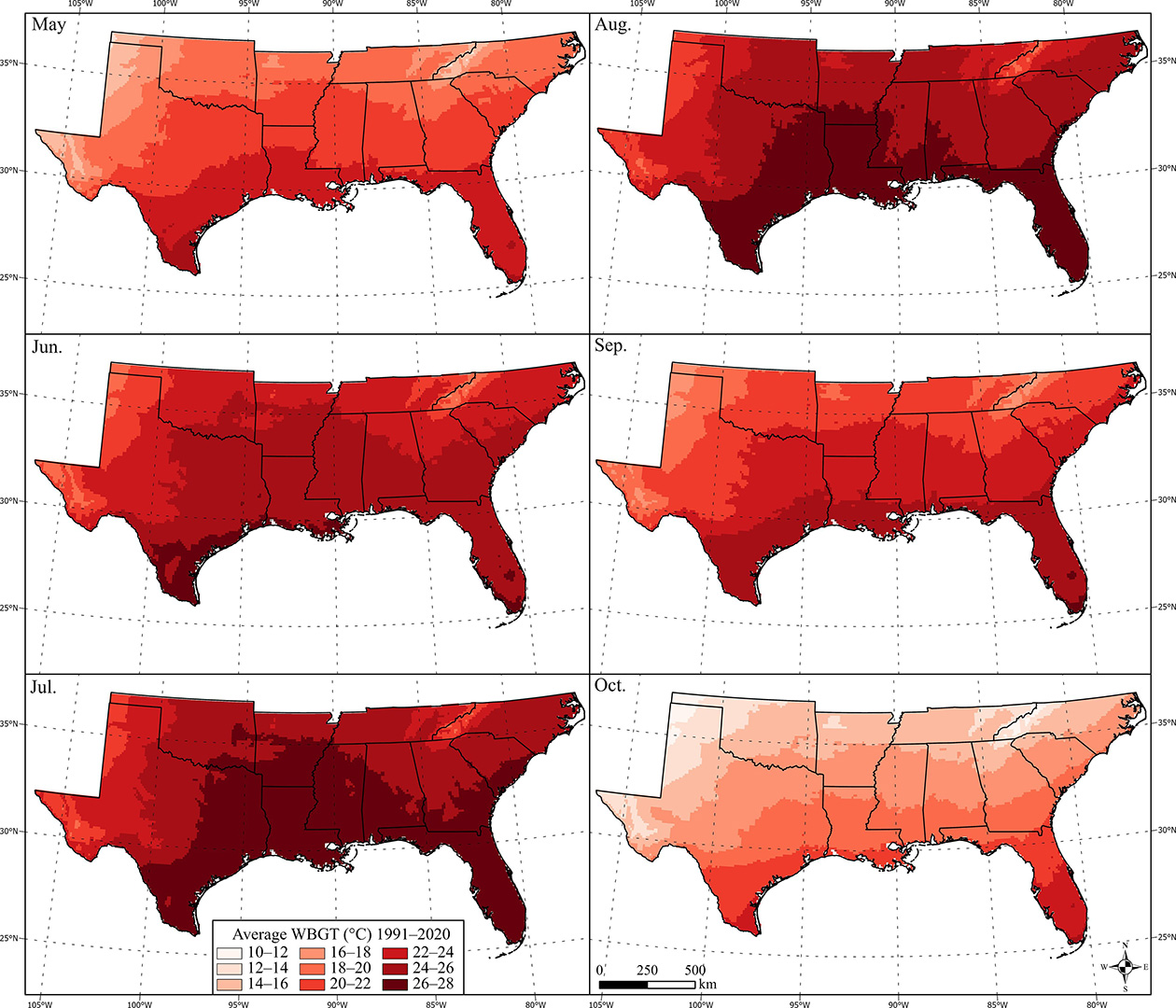
Gulf Coast states β€” particularly Southern Texas, Louisiana, Mississippi, Alabama and Florida β€” tend to experience the highest WBGT values. High-risk conditions begin in May in South Texas and South Florida, before expanding northward and peaking in July and August. Studies suggest the number of extreme humid heat events has more than doubled in most parts of the U.S. since 1980, and that globally, climate change added roughly three weeks' worth of dangerous humid heat in 2024 alone.

A series of six heat maps of the southern U.S., showing dangerous wet-bulb global temperatures peaking in July and August

Average monthly WBGT in the southeastern United States between 1991 and 2020. (Image credit: Thompson, D. (2026). Journal of Applied Meteorology and Climatology 65, 3; 10.1175/JAMC-D-25-0125.1 Β© American Meteorological Society. Used with permission.)

An individual's overall health and fitness, hydration levels and amount of exertion need to be considered, and systemic factors like socioeconomic status also come into play, Murfree said. For instance, lower-income families are more likely to live in hotter urban environments and lack access to air conditioning, meaning they may already be experiencing heat stress at home.

While high humidity and heat make it so sweat can't evaporate easily, the body has other means to cool down. It also sends more blood to the skin, arms and legs, allowing heat to be released through the skin. But physical exertion in extreme heat makes this more difficult.

"We only have a limited amount of blood in our body, and we're simultaneously trying to use it to fuel the reactions in our muscles to be able to facilitate exercise, as well as send it to our skin to help us cool down," said Grant Lynch, a research fellow in the Heat and Health Research Centre at the University of Sydney.

When the body can no longer get rid of extra heat, symptoms of heat exhaustion β€ͺ—‬ including dizziness, nausea, headache and muscle cramps β€ͺ—‬ may set in. If the body continues to overheat, this can progress to heat stroke, a serious and potentially fatal medical emergency where a person's core body temperature rises to 104 F (40 C) or above. Heat stroke can cause central nervous system dysfunction and delirium, convulsions or coma.

In the U.S., exertional heat stroke is a leading cause of preventable death during sport and exercise and is a particular concern for youth athletes. Children, including teens, produce more heat relative to their body weight than adults do while sweating less. Additionally, they may feel less able to advocate for themselves on the playing field if they start to feel ill, Murfree said.

A young girl wearing a white t-shirt puts a hand to her head.

Heat can be especially dangerous for children and teens, compared to adults. (Image credit: Frazao Studio Latino via Getty Images)

Reducing health risk in hot weather

The body can acclimate to extreme heat, to some extent. At the University of Sydney’s thermal ergonomics laboratory, researchers use a climate chamber to test the body’s capacity to adapt by increasing its blood plasma volume and lowering heart rate and resting temperature.

"We would have them come in for anywhere from five to 14 consecutive days of exposure," Lynch said. "They would be cycling or running for between 90 minutes to 2 hours every day, and the conditions would be [95 F to 104 F] 35 C to 40 C in the room for that entire duration."

The benefits achieved through this kind of heat acclimation aren't permanent. Research suggests that, for every two days spent in a cool environment, one day of heat acclimation is lost. For people exercising just a few times a week in hot weather, "it's pretty unlikely you are physiologically adapting as much as you think you are," Lynch said.

While WBGT is considered the "gold standard" for heat safety monitoring, the special device required to measure it may not be accessible to every community sports organization or individual person exercising. The danger, Lynch said, is that many people focus on ambient temperature alone to determine risk, when multiple factors are involved and can compound.

Sports Medicine Australia, the country's national body for sports medicine and sports science, developed a tool to calculate risk and suggest safety precautions. It combines data automatically extracted from weather stations β€” including ambient temperature, humidity, wind speed and solar radiation β€” with sport-specific information, such as typical uniforms and duration of activity.

Generally speaking, the sports body recommends staying hydrated before, during and after physical activity; wearing lightweight and breathable clothing; taking frequent rest breaks using ice towels and misting fans when possible; and delaying or cancelling games when the risk level gets too high. If someone begins to feel overheated, immediate action is important to prevent further heat strain.

"The most important thing to do, without a doubt, is to stop or reduce the intensity of the activity you're performing, seek shade, go into an area where you are not exposed to direct sunlight, and then douse the skin with water," Lynch said.

Heavy sweating, painful muscle cramps, nausea, dizziness, and cool, pale, clammy skin are all signs that someone may be suffering from heat-related illness. Heat stroke symptoms include a very high temperature; hot, dry skin or profuse sweating; confusion; and loss of consciousness. These symptoms should prompt immediate cooling with a cold water bath and emergency medical care.

While rescheduling events to cooler parts of the day is an option, heatwaves are already increasing in most regions and that trajectory is expected to continue as average global temperatures rise. So, some researchers and sports organizations are exploring infrastructure changes that could help: stadiums with shaded and green spaces, schoolyards with grass instead of concrete, and artificial turf with a built-in irrigation system for use in school sports fields.

Murfree said she would like to see heat safety training introduced in schools in areas prone to extreme heat in the U.S., similar to existing fire safety education.

"Sport often asks us to push ourselves harder, be faster and tougher," Murfree said. "It's OK to take breaks, stop, slow down, reschedule and advocate for our bodies and our wellness in the heat."

This article is for informational purposes only and is not meant to offer medical advice.

How much do you know about the greatest athletic feats of all time? Find out with our sports record quiz!

  •  

Follow the Money: Pandemic Fearmongering is a Growth Industry

From Ebola to Nipah, the combined death toll since Covid is under 1,000 worldwide. So why the endless panic? Follow the money – pandemic fearmongering is a growth industry, says Dr David Bell.

The post Follow the Money: Pandemic Fearmongering is a Growth Industry appeared first on The Daily Sceptic.

  •  
❌