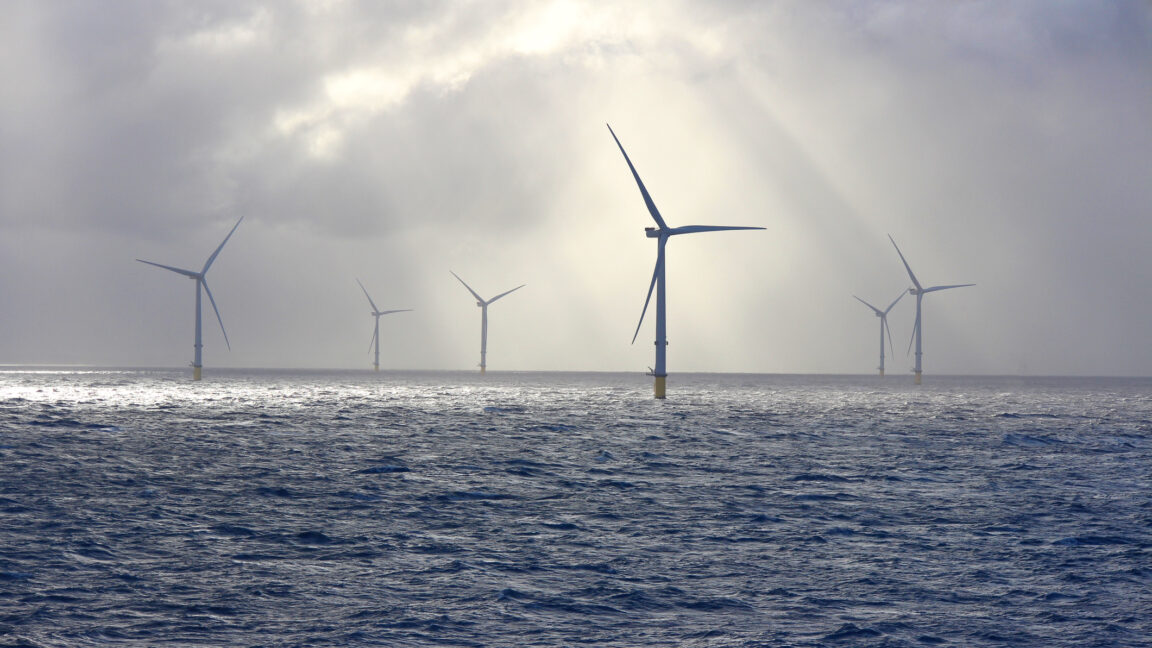
The administration has withdrawn its appeal of a federal court ruling that shot down Trump’s freeze on federal leasing and permitting for wind projects.
The Trump administration has abandoned its effort to halt wind energy projects across the United States and dropped its challenge to the court ruling that tossed President Donald Trump’s order freezing federal permitting and leasing for wind projects. States that challenged the order hailed the development as one of the most significant legal victories against the Trump White House’s campaign against the energy transition.
On Monday, the US Court of Appeals for the First Circuit dismissed the appeal after the Justice Department filed a motion for its voluntary dismissal on June 10.
The case against Trump’s executive order was filed in May 2025 by a coalition of attorneys general from 17 states and Washington, DC, led by New York Attorney General Letitia James.
The global shift toward net-zero emissions has thrust hydrogen into the spotlight as a promising energy vector capable of decarbonizing sectors traditionally reliant on fossil fuels. Yet, as hydrogen technologies surge from concept to commercial reality, a critical question has emerged: can the insurance industry keep pace with the novel risks intrinsic to these systems? A compelling new article published in Engineering unveils the stark challenge facing insurers and innovators alike. It argues that the nascent nature of hydrogen processes and infrastructures presents a complex risk landscape that current insurance frameworks are ill-equipped to navigate, potentially impeding large-scale deployment needed to meet climate goals.
Central to the discourse is the intricate, multifaceted nature of hydrogen technologies, encompassing production, storage, transport, and utilization systems. Unlike mature renewable technologies such as wind and solar, hydrogen operations are fraught with unique hazards—including extreme flammability, material embrittlement due to hydrogen exposure, and elusive leakage risks—that conventional insurance models have yet to thoroughly address. This gap in risk assessment and management means that financial security mechanisms crucial for investment confidence remain underdeveloped, posing a significant barrier to scalable hydrogen adoption.
The article elucidates that hydrogen’s promise as a clean energy carrier depends not only on decarbonized production but also on scaling the entire value chain rapidly and reliably. However, these pioneering engineering systems entail a gamut of evolving operational risks. These span from property damages and equipment failures to worker safety concerns heightened by hydrogen’s explosive potential. Cybersecurity risks also arise given the increasing digitalization of energy assets, while governance challenges manifest through liability exposures of company directors as projects push technical boundaries. Furthermore, these uncertainties extend into supply chain fragility and performance shortfalls during system ramp-up phases, compounding insurers’ difficulties in crafting comprehensive coverage.
Drawing a parallel to renewable energy insurance markets, the authors observe how wind and solar have benefited from years of data accumulation, modeling refinement, and standardization efforts that underpin sophisticated insurance offerings. This data-driven maturation enables parametric insurance and warranties that safeguard against specific performance metrics and supply chain disruptions. Yet, hydrogen insurance remains embryonic, characterized by cautious underwriting and limited products chiefly targeted at niche applications rather than broad industrial deployment. This immaturity translates to cost premiums and coverage limitations that stall financing and project momentum.
To transcend these hurdles, the article emphasizes the critical need for structured data collection and robust risk characterization specific to hydrogen processes. Without granular operational insights and validated risk models, insurers default to conservative stances that restrict underwriting appetite. The authors champion innovative insurance instruments, notably parametric policies calibrated to predefined risk triggers, and performance warranties that hedge against technology underperformance. These solutions can lower uncertainty for investors and catalyze capital flow, but their success hinges on collaborative data-sharing and transparent risk communication between all stakeholders.
Importantly, the narrative draws attention to a strategic opportunity for insurers. Engagement with hydrogen not only mitigates climate-related portfolio risks but also opens access to a burgeoning industrial market driven by global net-zero ambitions. Nonetheless, disconnects persist between technology developers’ needs and insurers’ capabilities, underscoring the urgency for proactive, multi-stakeholder dialogue. Fostering early-stage collaboration among engineers, academia, private sector, and insurance providers is pivotal to co-design risk assessment methodologies, standardize certification regimes, and ultimately align insurance solutions with engineering innovation trails.
Academia is positioned as a critical catalyst in this ecosystem. Researchers can bridge the gap by aggregating operational data, refining risk models via simulations and real-world studies, and facilitating standardization efforts that underpin insurer confidence. Such integrative efforts advance both scientific understanding and commercial viability. Aligning insurance mechanisms with engineering innovation timelines ensures risk management is embedded from technology readiness level milestones onward, thus streamlining the pathway from pilot projects to full-scale industrial rollouts.
The article also highlights the financial repercussions of currently inadequate insurance coverage. High premiums and coverage gaps retard investment flows and engender hesitancy among financiers wary of unquantified risks. As hydrogen projects are capital-intensive with long development horizons, risk mitigation via comprehensive insurance is non-negotiable for unlocking broader investor appetite. Hence, the advancement of hydrogen insurance products is not merely a financial instrument but a keystone for sustainable market adoption and technological acceleration.
Furthermore, the article delves into technical challenges such as hydrogen’s propensity to induce embrittlement in metals, which degrades structural integrity over time and raises maintenance costs. Insurance models must incorporate such materials science insights to accurately price and cover long-term durability risks. Leakage detection and mitigation technologies also play a vital role in controlling operational hazards, with insurance frameworks incentivizing advancements in sensor deployment and safety protocols. These technological synergies between engineering and insurance amplify resilience and facilitate risk reduction.
In conclusion, the article contends that unlocking hydrogen’s potential as a linchpin of a net-zero future demands a paradigm shift in insurance thinking coupled with systemic collaboration. By gathering rigorous data, designing bespoke risk instruments, and fostering cross-sector partnerships, the insurance market can evolve to support hydrogen innovation robustly. This evolution will serve as the linchpin of investor confidence, enabling swift scale-up while safeguarding public and environmental safety. Without such advancements, the hydrogen economy risks stalling, imperiling global decarbonization trajectories.
The implications extend beyond risk transfer to the very architecture of hydrogen energy systems. Insurance integration informs engineering decisions, safety standards, and policy frameworks, creating a virtuous cycle that harmonizes technical innovation with financial viability. The authors’ clarion call is clear: accelerating the hydrogen transition mandates bridging the gap between emergent technology risks and insurance market readiness. Achieving this nexus will be transformative—not only for hydrogen but for the broader energy transition imperative writ large.
Subject of Research: Insurance frameworks and risk management for new hydrogen technologies and adapted hydrogen processes.
Article Title: Insurance for New and Adapted Hydrogen Processes
Researchers at Canada’s Western University designed a foam-backed floating photovoltaic (FPV) system.
It was tested in a stormwater pond in Ontario, Canada. The system generated 7.7 megawatt-hours of electricity over a year, outperforming a standard reference floating system by about 2.7 percent.
“The results of this study established foam-based FPV as a promising and adaptable platform for renewable energy generation,” the team noted in the study paper.
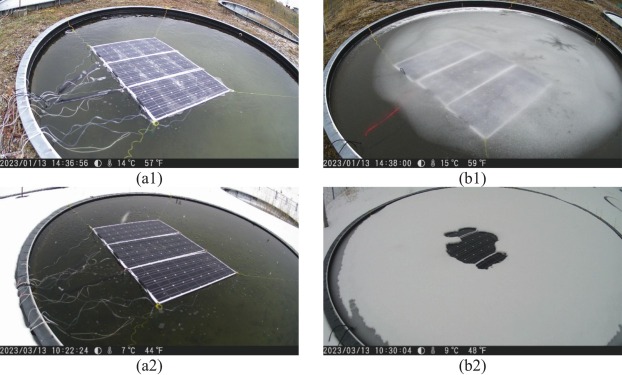
Impact of air bubbling on ice formation in foam-based FPV systems. Credit: Applied Energy
The ice solution
Solar power has long had a geography problem.
To build the massive solar farms required to displace fossil fuels, developers need land. Usually, that means competing with agriculture or cutting into natural conservation areas. The solution in warmer climates has been “floatovoltaics“—placing solar panels on giant plastic pontoons over lakes and reservoirs.
But if you try that in a Canadian winter, thick moving ice will crush the structures like aluminum cans.
Now, researchers have solved the cold-weather problem using a deceptively simple combination of materials: shipping foam and hot tub bubbles. In particular, a monocrystalline foam-backed FPV system was fabricated.
It shows that floating solar can not only survive freezing temperatures but actually thrive in them.
Compared with tilted plastic rafts used in warmer climates, this design attaches flexible solar panels directly to thick, waterproof foam sheets, reducing wind exposure.
To prevent ice damage, an underwater air-bubbler system was installed. A shore-based pump pushes bubbles from the bottom of the pond, carrying warmer deep water to the surface to keep the area around the panels ice-free. It acted like a localized defroster.
The results showed that on days when the rest of the pond was frozen, the water directly surrounding the solar array remained completely clear.
Higher energy yield
Keeping the ice away didn’t break the energy bank, either. Over a year of continuous monitoring, the air-bubbler system consumed as little as 0.02 percent of the total energy the panels generated. At its peak during the worst winter storms, it reduced yield by only 14.5 percent.
“A regression model developed in this study indicated that the foam-based FPV system generated 7.7. MWh/year, representing up to 2.7% more energy than other PV models,” the study noted.
It also pulled double duty as a water conservation tool.
In sitting flat against the water’s surface, the foam-backed array acted as a physical shield, blocking direct sunlight and cutting off the wind that typically drives evaporation. The researchers calculated that the relationship between solar coverage and water savings is linear, meaning that every additional square meter of panel added results in a predictable drop in water loss.
“FPV coverage linearly reduced pond evaporation, aiding agricultural water conservation,” the study stated.
If scaled up to cover just half of the Ontario stormwater pond, this innovative setup would trap and save roughly 927 cubic meters of water annually.
For local communities and farmers, that means keeping hundreds of thousands of gallons of precious water in the reservoir to support agricultural irrigation when it is needed most.
With the concept proven on a small scale, the researchers are looking to take their foam-and-bubble design out of the pond. The next step is testing the technology on a larger scale across harsher, more diverse bodies of water.
Sweden’s Videberg Kraft selected Rolls-Royce SMR to supply three small modular reactors (SMRs) for a planned nuclear power station on the Värö Peninsula near the existing Ringhals nuclear plant. The decision, announced by state-owned energy company Vattenfall, marks a key milestone in what is set to become Sweden’s first new nuclear power project in more than four decades.
The new plant is expected to add about 1.5 gigawatts of electricity to Sweden’s grid, with the first reactor planned to start running in the mid-2030s. By choosing Rolls-Royce SMR, Sweden becomes the third European country to select this technology, after the United Kingdom and the Czech Republic.
Three-year review narrows field to final two contenders
Videberg Kraft, owned by Vattenfall and Industrikraft, made its decision after three years of reviewing 75 possible reactor options. In the end, the decision came down to two technologies: the pressurized water reactor from Rolls-Royce SMR and the BWRX-300 reactor from GE Vernova Hitachi.
The new plant, called the Videberg Project, will be built next to the Ringhals nuclear power station, one of Sweden’s main electricity sources. When finished, the reactors should help secure Sweden’s energy supply and meet rising demand for electricity.
Desirée Comstedt, acting CEO of Videberg Kraft, pointed out the strong network of companies working with the British reactor developer.
“Rolls-Royce SMR offers a robust network of subcontractors, the majority of which are located in our geographical vicinity. By choosing to move forward with Rolls-Royce SMR, Videberg Kraft and its owner companies also become part of a European program, where we can benefit from shared experience.”
Familiar reactor technology seen as key advantage
Company leaders said that the proven track record of the chosen reactor technology was a key reason for their decision.
Anna Borg, Board member of Videberg Kraft and CEO of Vattenfall, said:
“Overall, the board’s assessment is that Rolls-Royce SMR is the supplier that can give Videberg Kraft the best prerequisites for delivering a successful project. The reactor, a pressurized water reactor (PWR), is the same type used at Ringhals today and is a well-proven technology. Moreover, Rolls-Royce SMR has a commercially attractive contractual set-up.”
Tom Erixon, a board member of Videberg Kraft and Industrikraft, also stressed the project’s focus on industrial methods.
“Rolls-Royce SMR offers an efficient and industrialized concept that reduces the risk of delays. Videberg Kraft, together with Rolls-Royce SMR, is now paving the way for a new nuclear power on the Värö peninsula – something that would not have been possible without a historically unique collaboration between Swedish industry and the energy sector.”
Rolls-Royce expands European nuclear footprint
The Swedish decision gives Rolls-Royce SMR even more momentum as it expands in Europe.
Chris Cholerton, CEO of Rolls-Royce SMR, said, “We are delighted to have been selected by Videberg Kraft as its partner to bring new nuclear power to Sweden. This is a strong endorsement of our transformational approach to the delivery of a standardized fleet of SMRs … [and] further demonstrates growing market confidence in our technology.”
The company’s reactor design can generate 470 megawatts of electricity and is built to provide steady power for at least 60 years. Much of the plant will be made in factories and then brought to the site for assembly. This method aims to reduce construction risks and accelerate the project. Nuclear energy is seeing a revival across Sweden.
This news comes as Sweden is working to speed up the development of its nuclear power. In 2022, the new center-right government became more supportive of nuclear energy. The next year, a roadmap was released calling for new nuclear capacity equal to at least two large reactors by 2035 and up to ten by 2045.
Government support programs introduced in August 2025 have already drawn interest from several developers. Videberg Kraft was the first to apply for state aid in December. More recently, Blykalla, a Swedish reactor developer, asked for funding for a six-reactor project in Norrsundet, and Studsvik submitted plans for up to 1,400 megawatts of new nuclear capacity in southern Sweden.
Bosses of some of Britain’s biggest retailers are discussing plans with the government to start selling plug-in solar panels as part of a drive to encourage more UK homes to generate their own electricity.
Executives from brands including Currys, B&Q and Amazon met Martin McCluskey, the minister for energy consumers, on Tuesday to discuss guidelines for selling “balcony solar panels” to the British public.
A major challenge to dark energy, the mysterious force believed to be driving the universe’s accelerating expansion, has been overturned by a new study. Astronomers say a new analysis has reinforced one of the most important discoveries in modern cosmology, finding that the universe is still expanding at an accelerating rate. The result counters a [...]
Thinktank says decoupling electricity from gas prices has also helped shield Spain from hikes caused by Iran war
Spanish households save €10 a month on electricity bills because of wind turbines and solar panels installed in the last five years, a report has found.
Typical energy bills would be 19% more expensive if electricity costs were still as tightly coupled to gas prices as in 2021, according to Ember, a climate thinktank. It found Spain’s “strategic” expansion of renewables since Russia invaded Ukraine in 2022 has shielded Spanish households from the latest rises in fossil fuel prices caused by the Iran war.
A California startup says it has found a cheaper way to turn an overlooked farm waste product into sustainable aviation fuel, potentially opening a new pathway for airlines racing to meet emissions targets.
Circularity Fuels announced it has completed what it describes as the world’s first end-to-end conversion of raw agricultural biogas into sustainable aviation fuel (SAF). The six-month pilot transformed methane-rich gas from a California dairy farm’s manure digester into jet fuel that meets ASTM standards for commercial aviation.
The achievement could reshape the economics of SAF production. The company estimates that commercial plants using its technology would cost roughly one-fifth as much as comparable facilities currently being developed in Europe.
Turning waste into fuel
The demonstration took place at a dairy farm near Madera, California, home to more than 5,000 cattle. Like many operations across the country, the farm produces biogas through manure digesters. Much of that gas often goes unused or gets released into the atmosphere.
Circularity’s system converts that waste stream directly into aviation fuel on-site. According to the company, the pilot operated continuously for thousands of hours using untreated biogas composed of roughly 65 percent methane and 35 percent carbon dioxide. The process produced finished jet fuel that can blend with conventional Jet-A fuel at concentrations of up to 50 percent.
The system combines two modular reactors designed for distributed deployment. An electrified bi-reforming reactor converts the raw gas into synthesis gas, while a compact Fischer-Tropsch reactor transforms it into liquid hydrocarbons suitable for aviation use.
Circularity said its reforming unit achieved methane conversion rates above 98 percent and carbon dioxide conversion rates exceeding 90 percent during testing.
Lower-cost SAF pathway
Sustainable aviation fuel remains in short supply worldwide. Current production satisfies less than one percent of global demand. Most SAF today relies on used cooking oil as feedstock.
Critics argue that supply constraints and import dependence limit its long-term potential. Alternative approaches, such as power-to-liquid e-fuels, also face economic hurdles due to rising electricity costs. Circularity believes agricultural biogas offers a more practical option.
The company projects commercial installations could cost less than $100,000 per barrel per day of installed capacity. Those economics could allow SAF derived from dairy waste to compete directly with fossil-based jet fuel prices. “The hard part of this industry was never designing a theoretical plant that could make SAF,” said Dr. Stephen Beaton, founder and chief executive officer of Circularity Fuels. “It was proving you could do it continuously, from real biogas, at a cost that pencils.” He added that the company has now demonstrated the technology using “real feedstock from a real dairy farm.”
Carbon-negative potential
Circularity’s internal life-cycle analysis suggests the fuel could achieve a carbon intensity score of negative 350.7 grams of CO2 equivalent per megajoule under California’s regulatory framework. That figure stems from capturing methane that would otherwise escape into the atmosphere. Methane traps significantly more heat than carbon dioxide over shorter timescales.
Craig Hartman of Hartman Engineering said dairies have long lacked practical ways to monetize biogas without investing heavily in gas-cleaning infrastructure. “Circularity is the first team I’ve seen take raw biogas straight from a digester and turn it into finished jet fuel on-site,” Hartman said.
Following the successful pilot, Circularity plans to begin construction on its first commercial facility in 2027. The company is targeting dairy and agricultural regions across the United States while also exploring opportunities in Latin America and Europe.
Canadian-based critical minerals company E3 Lithium has commissioned Phase 2 of its Clearwater Project Demonstration Facility in Alberta and confirmed lithium concentrations of 75.8 milligrams per liter in brine produced during ongoing reservoir testing.
The company said the latest results support the consistency of lithium-bearing brine chemistry across the Clearwater Project and the broader Bashaw District, a key factor as it advances plans for commercial lithium production.
The demonstration facility is currently being used to test reservoir performance over an extended period. Brine is pumped from a production well and immediately reinjected into a separate injection well, allowing engineers to evaluate flow behavior and reservoir response under operating conditions.
According to the Alberta-based company, the facility achieved stable production and injection through the well pair. During early operations, an electrical submersible pump maintained the targeted flow rate of 1,400 cubic meters per day.
Brine tests confirm consistency
The company regularly collected brine samples during operations and sent them to an independent third-party laboratory for analysis. Results confirmed lithium concentrations of 75.8 mg/L, matching expectations for the resource.
E3 said the reservoir data generated through the testing campaign will be used to update its reservoir development plan and support a feasibility study for the Clearwater Project.
The next stage of operations will focus on analyzing the relationship between brine and natural gas within the reservoir. The information is expected to support the design of the front end of a future commercial processing plant.
The demonstration facility forms part of E3’s broader effort to reduce technical risks before moving toward large-scale lithium production.
“With Phase 2 operations underway, E3 has begun a series of project-scale de-risking activities for the Clearwater Project,” said Chris Doornbos, CEO and chair of E3 Lithium.
The company added that the current campaign has already processed more brine through the two new wells than all of its previous testing programs combined.
Scaling toward production
Lithium demand continues to grow as automakers and battery manufacturers seek additional supplies of the metal used in electric vehicle batteries and energy storage systems.
For E3, the demonstration facility serves as a bridge between laboratory-scale testing and commercial deployment. Data collected from reservoir operations, brine chemistry studies, and future process testing will be used to refine engineering designs and operating plans.
“We have already moved more brine through these two wells than E3 has handled through all its previous testing combined, and we expect to continue to operate the pump as needed over the coming 24 months,” Doornbos said.
He added that confirmation of reservoir performance and lithium grades at the new wells strengthens confidence in the predictability of the resource.
The company plans to continue operating the demonstration facility while advancing front-end engineering design work and completing a feasibility study for the project. The resulting data will help determine the design of a future commercial facility and support decisions related to full-scale development.
China has launched a new research laboratory dedicated to photonic computing, a technology that uses light instead of electricity to process information and could help address the growing power demands of artificial intelligence and advanced computing.
The Shanghai Key Laboratory of Integrated Photonic Computing Chips and Systems was officially launched this week in Shanghai. According to local reports, it is China’s first industry-academia platform focused specifically on photonic computing research and development.
The facility is based at Shanghai Jiao Tong University and will bring together researchers and industry partners to develop photonic chips, optical components, computing architectures, and software systems needed to support the technology.
The launch comes as countries and technology companies race to secure enough computing power to train and run increasingly sophisticated AI models. As data centers consume more electricity, researchers are looking beyond traditional semiconductor designs for alternatives that can deliver higher performance with lower energy use.
Light over electrons
Unlike conventional chips that move data using electrons through silicon circuits, photonic chips rely on photons, or particles of light, to transmit and process information.
Because photons travel faster than electrons and generate significantly less heat, photonic systems could potentially offer major gains in speed, bandwidth, and energy efficiency. Researchers believe such systems may help overcome some of the physical limitations facing traditional semiconductor technologies.
Zou Weiwen, director of the new laboratory and a professor at Shanghai Jiao Tong University, highlighted the technology’s potential, describing it as “an important pathway for achieving breakthroughs in computing power, offering advantages in bandwidth, latency, and energy efficiency.”
The new laboratory will focus on several areas, including photonic chip architectures, silicon-photonics integration, optical devices, supporting algorithms, and commercial applications.
China has increasingly identified photonic computing as a strategic technology as it seeks alternatives to advanced semiconductor technologies that remain difficult to access because of export restrictions and supply chain challenges.
Building local ecosystem
Shanghai authorities said they have supported research into photonic computing through multiple science and technology programs while also investing in innovation platforms and industrial development.
The push toward photonic computing comes as researchers worldwide explore alternatives to conventional chip designs that are approaching physical and thermal limits. Supporters of the technology argue that light-based processors could help reduce the massive energy consumption associated with AI data centers while enabling faster data movement across computing systems.
The laboratory is a joint initiative between Shanghai Jiao Tong University and Lightelligence, a Shanghai-based startup specializing in photonic computing technologies.
Lightelligence has previously claimed to be the first company to achieve large-scale deployment of hybrid optical-electronic computing systems. The company has emerged as one of China’s leading players in the photonic computing sector.
Despite growing interest in the technology, significant technical hurdles remain before photonic computing can be deployed at scale.
Zou noted that one major challenge is the lack of a mature software and algorithm ecosystem capable of fully utilizing photonic hardware. Researchers must also address fundamental scientific and engineering problems before the technology can achieve its theoretical performance advantages.
Still, the launch of the new laboratory signals China’s intention to accelerate research into light-based computing as demand for high-performance computing and AI infrastructure continues to grow worldwide.
Global car giant BMW and German clean-energy firm Solarwatt have just unveiled a home energy solution that will turn the upcoming Neue Klasse electric vehicles (EVs) into household energy storage units.
The companies presented their joint offering ahead of The smarter E / Intersolar Europe 2026 trade fair, which will take place in Munich München from June 23-25. The new announcement followed the expansion of their partnership in smart energy and home charging solutions, which the firms revealed on May 18.
As part of the effort, BMW intends to integrate its Neue Klasse vehicles and the bidirectional Wallbox Professional DC home charging station into Solarwatt’s home energy management system (HEMS), also called the Solarwatt Manager.
Instead of functioning solely as cars, the Neue Klasse EVs will also serve as mobile energy storage units. They will provide electricity to households through Vehicle-to-Home (V2H) technology.
A smarter energy hub
The system is set to link photovoltaic panels, stationary home batteries, electric vehicles, and household appliances through the Solarwatt Manager platform. The software controls energy production and usage to determine where the available power should be directed.
BMW said the integrated system will coordinate all energy assets simultaneously. This will reportedly allow homeowners to maximize the usage of self-generated solar power and minimize reliance on grid energy.
The PV system, battery, EV, and other consumers are intelligently coordinated and controlled as a whole. Credit: BMW Group
The platform will also incorporate weather and solar forecasts to predict future energy production. During winter and other periods of reduced solar production, the system will take advantage of dynamic electricity tariffs by charging batteries and vehicles when electricity prices are low.
The stored energy could then be utilized later. “This not only increases the self-consumption of solar power but also significantly reduces the energy costs of the entire household – unlike Vehicle-to-Grid (V2G), the electricity is used within the household and not fed back into the public grid,” BMW officials pointed out.
Power when needed
The system requires three essential components, including a Neue Klasse vehicle, BMW’s Wallbox Professional, and the Solarwatt Manager energy management system. Homeowners will be able to configure the settings via the My BMW App. They will have the option to optimize the household energy priorities through the Solarwatt Home app.
“In the Solarwatt Home app, customers can define household priorities – for example, for appliances and storage systems,” BMW representatives continued in a press release. “This ensures that energy is distributed intelligently, reduces the need for manual control, and makes the best possible use of solar power.”
The Vehicle-to-Home package is set to cut household energy costs. Credit: BMW Group
Yet another advantage is that thesystem works with a wide range of third-party components. Existing solar panel systems and home batteries can be connected to the platform. This will enable homeowners to upgrade their current setups instead of simply replacing them from scratch.
“For many homeowners, the prospect of expanding an existing home battery storage system with an electric car is highly attractive,” Peter Bachmann, Solarwatt CEO, concluded in a statement. “This significantly increases the benefits of one’s own PV system, lowers electricity costs, and makes the home even less dependent on purchasing electricity from the grid.”
The two firms plan to launch the system in Germany, Austria, and the Netherlands in late 2026. Customers will also be able to order the BMW Wallbox Professional directly through Solarwatt. The first deliveries are expected to start in the final quarter of the year.
A self-regulating artificial photosynthesis system makes solar fuel without batteries, offering a simpler and potentially cheaper path to clean energy storage. Researchers at Osaka Metropolitan University have created a new artificial photosynthesis system that can produce solar fuel more consistently while eliminating the need for battery-based control systems. The advance comes from incorporating a self-regulating [...]
China’s list of attractions could soon include the ‘Great Wall’ of solar panels after the Asian giant has turned the dunes of the Kubuqi Desert in Inner Mongolia into a 250-mile (400 km) strip of clean-energy infrastructure. Sitting among the panels is a city-sized image of a galloping horse, which is a Guinness World Record for the largest image ever made out of solar panels.
Even as the US struggles to decide on a clear policy to build clean energy infrastructure or burn more fossil fuels in the long run, China has taken an aggressive stance to secure its energy needs by building a mix of nuclear and renewable power plants.
Interesting Engineering has previously reported how China is building nuclear energy facilities at scale and some of the biggest solar power plants in the world.
Now, images from the Operational Land Imager on Landsat 8 and Landsat 9, captured over seven years apart, show how aggressively China has built a large array of solar panels that is not only visible from space but also plans to power the Beijing-Tianjin-Hebei region with 40 billion kiloWatt-hours (kWh) of clean energy by the end of this decade.
100 GW solar power capacity
China’s ambitious plan is to build 100 gigawatts of solar energy capacity in the region through a 250-mile-long solar panel corridor that extends up to three miles wide. As of 2024, only 5.4 GW was considered completed, with 2 GW of power coming online through the Three Gorges Kubuqi base.
While this might seem low, estimates suggest that 7 GW of installed capacity is expected to come online this year. The Three Gorges Kubuqi base alone is designed to deliver 16 GW of output, with a mix of solar and wind installations of 8 GW and 4 GW, respectively.
Interestingly, the remaining 4 GW of capacity comes from coal, which is expected to help keep the grid stable when renewable output is inconsistent.
One of the features of the completed installation so far is the Junma Solar Power Station, which features the galloping horse array. While this has earned the site a Guinness World Record, it does a bigger job of generating 2 billion kWh of energy a year.
Not just for power
While the power generation from the upcoming facility will be massive, the panels are designed to do more than just that. Mounted higher than usual, these solar panels also serve as windbreaks and slow the wind blowing through these areas. The shade of the panels cuts evaporation and gives a chance for grass and crops to grow in the region.
Satellite images have also confirmed greening of the region, where panels have been installed for a while. Science is still figuring out if such greening will also change rainfall patterns in the region, turning the desert into more than a grassland in the future.
However, the main challenge for the project is sending all this generated energy to cities 800 miles (~1300 km) away. While this has been a bottleneck for grid operators in the US as well, the Chinese seem to be better at resolving it as transmission lines have already begun connecting the Inner Mongolia region with cities in the south and the east.
It’s not just a design; the galloping horse is actually a signal of how China is progressing toward meeting its energy security goals while keeping climate goals in mind.
Across the stories today, a common thread emerges around the gap between scientific urgency and practical action — from coral reefs that might survive climate change to political systems struggling to keep pace with environmental reality.
The day’s coverage points to growing momentum around citizen-led conservation, revealing how communities are stepping in where institutions fall short. In Britain, volunteers are using remote cameras to protect red squirrels while citizen scientists help restore bog insect populations through coordinated community efforts. Meanwhile, American homeowners are banding together in group buying programs, saving thousands of dollars on heat pumps while collectively advancing climate solutions one neighborhood at a time.
Yet this grassroots energy exists alongside troubling institutional retreats. The UK government appears ready to scale back electric vehicle targets after industry pushback, while critical monitoring systems for Atlantic ocean currents — which could collapse ten times faster than previously predicted — may lose funding just when we need them most. It’s a reminder that progress and pressure often arrive together, creating political tensions that can undermine long-term environmental goals.
The human cost of these delays becomes starkly visible in places like Delhi, where thermal imaging revealed that 43.5°C air temperatures translated into furnace-like conditions on urban surfaces, or in the Marshall Islands, where researchers race to identify “super reefs” that might survive rising ocean temperatures. Behind the numbers are real communities adapting in real time, from Thai rubber farmers navigating new EU deforestation rules to climate-displaced people facing growing barriers to safety as extreme weather events multiply.
Perhaps most striking is how wildlife serves as both victim and indicator of these broader pressures. Little terns face their most challenging breeding season yet due to dog disturbances, while a single black-headed gull spotted in Australia sends bird enthusiasts flying across the continent — a reminder of how rare the unexpected has become. Meanwhile, Mexican long-tongued bats continue their nightly dance through agave flowers, unknowingly keeping the tequila industry alive through pollination, even as global wildlife trade creates what scientists call “pandemic roulette” by moving billions of animals across unnatural boundaries.
The most promising thread runs through stories of restoration and discovery. A former banker is bringing back Australia’s lost Big Scrub rainforest, while Amazon deforestation drops to nearly decade-low levels, showing environmental progress is possible when political will aligns with practical action. Century-old Antarctic research voyages are revealing early clues to El Niño patterns, and scientists have identified hidden pollutants driving 15 percent of global warming — knowledge that could reshape climate policy.
Indigenous scholar Tyson Yunkaporta’s argument that “false narratives drive environmental destruction” feels particularly relevant amid today’s stories. From conservation groups rejecting shark culling calls in favor of drone technology to the controversy over displaying an African elephant at a political convention, the battle over environmental stories — which ones we tell, which ones we fund, which ones we act upon — shapes outcomes as much as any scientific discovery.
As the week unfolds, all eyes will be on whether these citizen-led conservation efforts can scale fast enough to compensate for institutional hesitation, and whether the gap between scientific understanding and political action will narrow or continue to widen in the face of accelerating environmental change.
Scientists from Goethe University, Frankfurt, studying alternatives to black holes have suggested a mathematically viable formation mechanism for one proposed alternative called a ‘Gravastar.’
Although the team behind the newly proposed gravastar formation mechanism conceded that black holes still represent the simplest and most natural solution to gravitational collapse, they also suggest that the physics behind the alternative, which doesn’t require a single point where spacetime curves infinitely, called a “singularity,” can make them “easier to accept” than black holes.
If correct, and some or all black holes are, in fact, gravastars that mimic their expected properties, the work would establish a valid formation mechanism that could rewrite decades of accepted science and open a new field of research dedicated to understanding this previously misunderstood phenomenon.
Meet Gravastar: The Black Hole Mimicker without a Singularity
According to standard cosmology theories, black holes form when extremely massive stars stop generating energy, allowing the force of gravity to take over and collapse the remaining matter into a single point, or singularity. Unfortunately, the research team behind the new study notes that “the laws of physics break down” within the singularity, making the formation of the resulting black hole a difficult phenomenon to predict.
“How can spacetime be curved infinitely at that point, the singularity?” asks the team’s statement announcing the new approach. They also note that no information escapes a black hole, including light, making studying its inner workings effectively impossible, and opening up the possibility that “black holes are in fact entirely different objects.”
Some options have been proposed, including ‘horizonless’ black hole mimickers. The team notes that these proposed options are “mathematically consistent alternatives” that also address the physics challenges posed by traditional black holes.
Still, how these alternative objects form has remained largely unclear. The research team said this lack of a formation mechanism constitutes “a significant open problem” since understanding how they form is the “first step” to determining if they truly exist.
New Model Creates a ‘Big Bang’ Inside a ‘Mini-Universe’
In the new formation model, theoretical physicists Daniel Jampolski and Theoretical Astrophysics Professor Luciano Rezzolla from Goethe University showed that the collapse of a dying star may not go far enough that it reaches the point of no return, where “the collapse to a black hole is inevitable.”
Instead, the collapse slows down near a point scientists call the Schwarzschild radius, then stops. The result is what the team termed a “miniature universe” within the collapsing matter, which they compared to the dynamics of the Big Bang, which most theorists agree formed the entire universe.
Since the universe’s expansion was driven by dark energy, the new model proposes that the dark energy within the mini-universe establishes an “equilibrium” with the counteracting force of gravity, therefore halting the collapse of the star “before a black hole can form.”
“The Big Bang of the emerging universe can unfold once the star has already collapsed almost to the point of becoming a black hole,” explained Jampolski, who discovered the black hole alternative gravastar solution in his master’s thesis while under the supervision of Professor Rezzolla.
Maintaining an Unbiased Approach Toward “What We Do Not Know”
When discussing the impact of their proposed black hole alternative formation model, Jampolski said that from a mathematical and physics standpoint, it is “easier to imagine that the Big Bang occurs only at a very late stage, when matter has already been compressed to an extreme degree, thereby giving rise to new effects.” The team also notes that the unresolved behavior of matter in this environment “leaves room for new physics.”
Although the team’s model offers a mathematically sound formation for an alternative to black holes, Rezzolla notes that the search for gravastars or other alternatives “should not suggest a skepticism towards black holes,” which, he adds, “still represent the most natural and simplest solution to the fate of gravitational collapse.”
Instead, the Goethe professor explained, his general role as a scientist and his specific discipline as a theoretical physicist make it essential that he and his colleagues “maintain an unbiased approach towards what we do not know and hence explore both the accepted wisdom and the more exotic interpretations.”
“History teaches us that it is not unusual for the latter to become the former,” the professor added.
Christopher Plain is a Science Fiction and Fantasy novelist and Head Science Writer at The Debrief. Follow and connect with him on X, learn about his books at plainfiction.com, or email him directly at christopher@thedebrief.org.
The United Kingdom appears ready to soften its ambitious electric vehicle transition goals following sustained pressure from automotive manufacturers and labor unions. Prime Minister Keir Starmer is reportedly prepared to override Environment Secretary Ed Miliband’s stance on maintaining the current 2030 timeline for electric vehicle adoption.
The government is now planning to launch a public consultation on revised, less stringent targets for the shift to battery-powered vehicles throughout the remainder of this decade. This potential policy reversal comes after car manufacturers and union representatives raised serious concerns about the economic impact of the current mandates.
Industry leaders have argued that the existing 2030 targets could result in financial penalties for manufacturers who struggle to meet the aggressive sales quotas. They warn that such penalties could force companies to reduce operations or relocate production facilities, potentially leading to significant job losses across the automotive sector.
The debate highlights the ongoing tension between environmental policy goals and economic realities in the transition to cleaner transportation. While electric vehicle adoption has been steadily increasing, manufacturers contend that consumer demand and charging infrastructure development have not kept pace with government expectations. The automotive industry employs hundreds of thousands of workers across the UK, making job security a critical consideration in policy decisions.
This development represents a significant test for the government’s climate commitments, as transportation accounts for a substantial portion of the country’s carbon emissions. The final decision on whether to adjust these targets will likely influence the UK’s broader environmental strategy and its ability to meet international climate pledges.
Funded by European and American philanthropists, Tessa Khan uses the courts to impose Net Zero policies voters have rejected at the ballot box. Meet the lawfare entrepreneur waging war on North Sea energy.
A team of researchers at the Osaka Metropolitan University has developed a more practical approach to artificial photosynthesis by creating a device that can regulate itself without relying on a battery-powered control system. By removing the need for this additional component, the design reduces both the cost and complexity of producing solar fuels.
Like the natural process used by plants, artificial photosynthesis harnesses sunlight to convert water and carbon dioxide into energy-rich compounds. In this system, the end product is formic acid, a chemical that can be stored and later used as a clean fuel or industrial feedstock.
The key element is the electrolyzer, which converts the electricity generated by solar cells into chemical energy, making it possible to capture and store solar power in the form of formic acid for future use.
Breakthrough reduces reliance on complex electronics
Maintaining efficient solar fuel production becomes challenging when sunlight intensity changes throughout the day. To address this, many artificial photosynthesis systems rely on a technique known as Maximum Power Point Tracking (MPPT), which continuously adjusts voltage and current to ensure solar cells operate at their highest possible efficiency.
However, conventional MPPT setups usually require batteries or extra electronic control hardware to smooth out fluctuations in energy flow. These additional components add both cost and engineering complexity, making large-scale deployment of artificial photosynthesis systems more difficult.
To deal with this challenge, a research team at Osaka Metropolitan University developed a simpler artificial photosynthesis system by building the control function directly into the electrolyzer. Led by Associate Professor Yasuo Matsubara and Professor Yutaka Amao, and working with Iida Group Holdings Co., Ltd, the researchers integrated a special solid electrolyte into the device.
Instead of depending on batteries and additional electronic controls to keep the solar cells running efficiently, the new electrolyzer can adjust itself automatically. It uses the properties of the solid electrolyte to regulate its electrical behavior, allowing it to perform the Maximum Power Point Tracking (MPPT) function without extra hardware.
Heat-responsive electrolyzer keeps solar fuel production running efficiently
According to Professor Amao, the system automatically responds to changes in sunlight without the need for external controls. As solar intensity rises, the electrolyzer warms up, which lowers its electrical resistance and allows electricity to flow more easily. This built-in response enables the device to adjust its own electrical behavior and maintain efficient operation.
Amao added that the built-in self-regulating mechanism helps maintain more consistent fuel production throughout the day while reducing the need for batteries and other expensive external hardware. By automatically adjusting to changing conditions, the system also simplifies the overall design.
To demonstrate the concept, the researchers tested a prototype equipped with the new technology under real outdoor sunlight. The device was able to continuously convert water and carbon dioxide into formic acid, maintaining stable performance even as sunlight intensity changed.
The researchers further noted that the technology has already demonstrated its practical potential in a real-world setting. According to the team, the system generated enough formic acid to power a miniature diorama displayed at the pavilion, illustrating how an efficient artificial photosynthesis system could one day produce and store clean energy for use in household applications.
A new self-regulating electrolyzer design could help artificial photosynthesis systems produce solar fuels more consistently, even as sunlight intensity changes throughout the day.
 Login










 A major challenge to dark energy, the mysterious force believed to be driving the universe’s accelerating expansion, has been overturned by a new study. Astronomers say a new analysis has reinforced one of the most important discoveries in modern cosmology, finding that the universe is still expanding at an accelerating rate. The result counters a [...]







 A self-regulating artificial photosynthesis system makes solar fuel without batteries, offering a simpler and potentially cheaper path to clean energy storage. Researchers at Osaka Metropolitan University have created a new artificial photosynthesis system that can produce solar fuel more consistently while eliminating the need for battery-based control systems. The advance comes from incorporating a self-regulating [...]