❌

Reading view

Young Frogs Adopt Cautious Behavior in Response to Disease Outbreak

For a diminutive amphibian measuring no larger than a single fingernail, the allocation of energy can mark the fine line between survival and demise. Recent groundbreaking research from the University of Florida delves into the intricate decisions juvenile frogs make regarding energy distribution, especially when confronted with lethal pathogens. By leveraging a blend of empirical data and computational modeling, the study uncovers nuanced strategies these tiny creatures adopt, balancing growth and immune defense — insights that not only illuminate amphibian biology but also shed light on broader ecological and evolutionary dynamics.

Central to this study is the common coqui frog (Eleutherodactylus coqui), an emblematic species native to Puerto Rico known for its direct development, bypassing the traditional tadpole stage. This biological peculiarity means these frogs hatch as fully formed miniature adults, profoundly influencing how energy constraints impact their early life stages. Given their extraordinarily small size, approximately equivalent to a human pinky nail, tracking individual frogs in natural environments is virtually impossible. Consequently, the research team integrated robust field and experimental observations into sophisticated computer models, simulating how these frogs allocate scarce resources across growth and immunity throughout a typical year.

The research focuses poignantly on the interplay between the coqui frogs and a devastating fungal pathogen, Batrachochytrium dendrobatidis (Bd), commonly known as chytrid fungus. This pathogen has wreaked havoc on amphibian populations globally, making it a critical subject for understanding disease ecology. Leveraging data encompassing seasonal fluctuations in food availability and infection risk, the models capture the dynamic energy budgeting decisions these amphibians undertake. Intriguingly, findings reveal a compelling survival strategy: juvenile frogs prioritize rapid growth during early life phases, deferring costly immune investments until infection intensity escalates to dangerous levels.

This strategic delay in immune response is hypothesized to optimize survival probabilities. Small, slow-growing individuals face heightened predation risks, making early growth paramount. By investing in immunity only when faced with a significant pathogenic threat, frogs effectively balance the trade-offs between immediate survival pressures and long-term health. The models demonstrate that this energy allocation strategy maximizes fitness, highlighting the sophistication of amphibian physiological responses to environmental and pathogenic stressors.

Temporal variation emerges as a decisive factor modulating these energy allocation decisions. Seasonal oscillations in temperature and precipitation orchestrate changes in food resources and pathogen prevalence. Frogs hatching during favorable summer conditions, when prey is abundant, can allocate energy more flexibly across growth and immune defense, enhancing their chances for survival and successful maturation. Conversely, cohorts born during cooler and drier periods encounter constrained energy budgets, compelling a more frugal distribution that compromises both growth rates and immune competence, with dire consequences for survival.

This research also illuminates the broader implications of climate change for amphibian populations. Extending or intensifying cool, dry periods could exacerbate energetic limitations faced by juvenile frogs, impeding rapid growth and compromising immune defenses. Such shifts threaten to undermine population resilience against pathogens like chytrid fungus, potentially precipitating more severe declines. Understanding these vulnerabilities is crucial for conservation efforts aiming to buffer amphibian species against accelerating environmental perturbations.

Methodologically, the study exemplifies the power of integrating mechanistic disease models with empirical data sets. By simulating individual-level energy trade-offs in relation to pathogen exposure within fluctuating environments, the researchers transcend traditional population-level disease modeling. This approach unveils heterogeneity in individual responses, a key dimension often masked in aggregate analyses, enabling a more precise understanding of disease dynamics and host resilience.

The study’s lead author, Zuania Colón-Piñeiro Ph.D., emphasizes the importance of dissecting individual heterogeneity in disease ecology: “Not all individuals respond identically to pathogens, and understanding this heterogeneity is vital for predicting population outcomes.” Her collaboration with senior author Ana V. Longo Ph.D. underscores the synergy between empirical natural history and theoretical modeling, with Longo highlighting the unique biology of coqui frogs that facilitates this research and provides broader insights into amphibian developmental strategies.

The implications of these findings extend beyond the realm of wild amphibians. The computational framework developed by the team offers a valuable tool for conservationists managing captive breeding programs. By modeling energy allocation strategies under varying environmental conditions and pathogen pressures, conservationists can optimize rearing protocols to boost survival rates post-release, enhancing the efficacy of reintroduction programs. This translational potential exemplifies the study’s impact, providing a bridge between fundamental ecological theory and practical wildlife management.

Importantly, the research team advocates for the continued integration of fieldwork and modeling. Models, while powerful, rely on accurate and extensive biological data to yield meaningful predictions. Field studies that track environmental variables, pathogen prevalence, and individual growth trajectories remain indispensable. This dual approach ensures that theoretical insights remain grounded in biological reality, ultimately guiding more effective interventions to safeguard vulnerable species.

The study, entitled “Playing it safe at early life stages: Balancing energy allocations to maximize fitness under seasonal pathogen dynamics,” stands as a testament to interdisciplinary collaboration, involving expertise across multiple departments at the University of Florida, the University of Puerto Rico, and partner institutions. By illuminating how minute amphibians navigate the energetic tightrope of survival amidst disease threats and fluctuating environments, it adds a significant chapter to our understanding of life history evolution and disease ecology.

As amphibian declines continue to raise alarms on global biodiversity fronts, insights from such detailed mechanistic studies are invaluable. They remind us that survival strategies are seldom straightforward and that even the tiniest creatures deploy sophisticated physiological tactics honed by evolution. Understanding these strategies underpins efforts to stem biodiversity loss, highlighting the intricate tapestry connecting organismal biology, environmental dynamics, and disease.


Subject of Research: Animals

Article Title: Playing it safe at early life stages: Balancing energy allocations to maximize fitness under seasonal pathogen dynamics

News Publication Date: 15-Jun-2026

Web References: http://dx.doi.org/10.1111/1365-2656.70282

Image Credits: Alberto López

Keywords: Frogs, Amphibians, Developmental biology, Evolutionary developmental biology, Immune system, Adaptive immune system, Immune regulation

  •  

Female Chickadees Select Male Partners Based on Cognitive Abilities

In a groundbreaking study recently published in eLife, researchers have unveiled compelling evidence that female North American mountain chickadees, a species traditionally characterized by socially monogamous mating systems, selectively seek out males exhibiting superior spatial cognitive abilities for extra-pair copulations. This revelation adds a fascinating dimension to our understanding of mating behavior and cognitive evolution in wild avian species, highlighting the intricate interplay between cognitive traits and reproductive strategies.

The study centers on mountain chickadees, non-migratory birds inhabiting temperate environments, renowned for their reliance on sophisticated spatial navigation to store and retrieve food caches. These birds’ survival depends heavily on their capacity for spatial learning and memory, making them an ideal model to investigate the role of cognitive function in mating preferences. By focusing on this species, the research addresses a critical question: do female birds prioritize cognitive skills of potential mates, beyond social pair bonds, to maximize reproductive success?

To quantify spatial cognition, the researchers engineered an innovative experimental setup involving ‘smart’ feeder arrays configured to dispense sunflower seeds at unique locations, individualized for each tagged chickadee. By systematically tracking how many errors each male made in locating their designated food source, the team accurately gauged spatial learning efficiency and memory retention. This mechanistic approach enabled an objective assessment of cognitive performance under naturalistic conditions, bypassing subjective behavioral observations.

Over the course of three breeding seasons, the research team meticulously documented parentage using genetic analyses to detect the prevalence and paternal identity of extra-pair offspring. Their findings revealed that nearly 70% of nests contained offspring sired by males other than the social partner, with approximately one-third of sampled chicks resulting from such extra-pair copulations. Notably, males demonstrating superior spatial cognition sired significantly more extra-pair young, suggesting these cognitive traits confer a conspicuous reproductive advantage.

Importantly, the data showed that males excelling in spatial tasks could sire between six and seven extra-pair offspring annually, dwarfed not by age but by cognitive prowess. This finding disrupts conventional assumptions that reproductive success correlates linearly with age or physical dominance, positioning advanced cognitive abilities as a pivotal determinant in extra-pair mating dynamics. Females appear to leverage these abilities when selecting mates beyond their social partner, potentially securing superior genetic quality for their progeny.

Further analyses indicated that males with higher cognitive scores did not suffer reproductive deficits within their social nests, maintaining comparable clutch sizes and chick mass relative to cuckolded males. Intriguingly, cognitive superiority was associated with heavier offspring overall, which likely translates to increased survival probabilities and long-term fitness benefits. Thus, spatial cognition appears to enhance male reproductive success both directly and indirectly.

Exploring female factors, the study unveiled a compelling pattern: females exhibiting lower spatial cognitive capabilities were more prone to have extra-pair young. This suggests a strategic response where cognitively limited females seek extra-pair copulations as an adaptive mechanism to compensate for their own deficiencies, thereby securing mates with enhanced spatial abilities. This bidirectional cognitive dynamic underscores complex sexual selection pressures governing mate choice.

Crucially, the likelihood of social males being cuckolded did not directly relate to their cognitive performance. Instead, female choice driven by assessing alternative males’ spatial skills determined extra-pair mating outcomes. This decouples social pair bond stability from cognitive prowess, signaling selective pressures favoring cognitive traits beyond social fidelity. It also emphasizes the nuanced cognitive evaluation females employ during mate selection processes.

These findings have profound implications for evolutionary biology, particularly in understanding how cognitive characteristics influence sexual selection. By demonstrating that spatial cognitive abilities contribute to reproductive success and offspring viability, the study offers robust empirical evidence supporting natural selection acting on cognitive traits in natural populations, reinforcing the theory that cognitive evolution is intertwined with reproductive strategies.

Moreover, the research methodology blending fieldwork, engineered cognitive assessments, and genetic parentage analysis exemplifies a cutting-edge interdisciplinary approach. This allows researchers to unravel the subtle yet consequential behavioral and genetic factors shaping population dynamics in wild animals, paving the way for future studies investigating cognition’s role across diverse taxa.

Senior author Vladimir Pravosudov summarizes the significance: “Our results demonstrate that sexual selection extends into cognitive domains, with females preferring males whose spatial skills enhance offspring survival. This contributes to shaping cognitive evolution in species where spatial memory directly influences fitness.” The study thereby enriches our comprehension of how natural and sexual selection jointly sculpt complex traits like cognition.

In conclusion, the evidence presented calls for a paradigm shift in considering cognitive traits as central to mating strategies and reproductive fitness. This research not only deepens insights into mountain chickadee behavior but also broadens the evolutionary narrative, spotlighting cognition’s integral role in survival and reproductive success. Future explorations may unravel similar patterns in other species, expanding our grasp of the cognitive dimensions of sexual selection.

Subject of Research: Animals

Article Title: Male chickadees with better spatial cognition sire more extra-pair young

News Publication Date: 16-Jun-2026

Web References: http://dx.doi.org/10.7554/eLife.110905.1

Image Credits: Vladimir Pravosudov (CC BY 4.0)

Keywords: Ecology, Animals, Birds, Cognition, Spatial memory, Evolutionary biology, Natural selection

  •  

Male bowerbirds prefer to dazzle females with bright human-made items

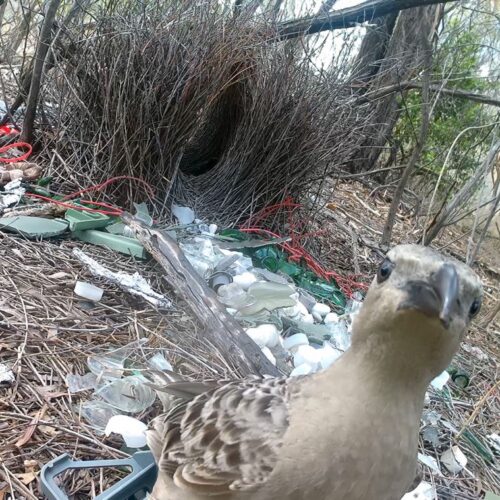
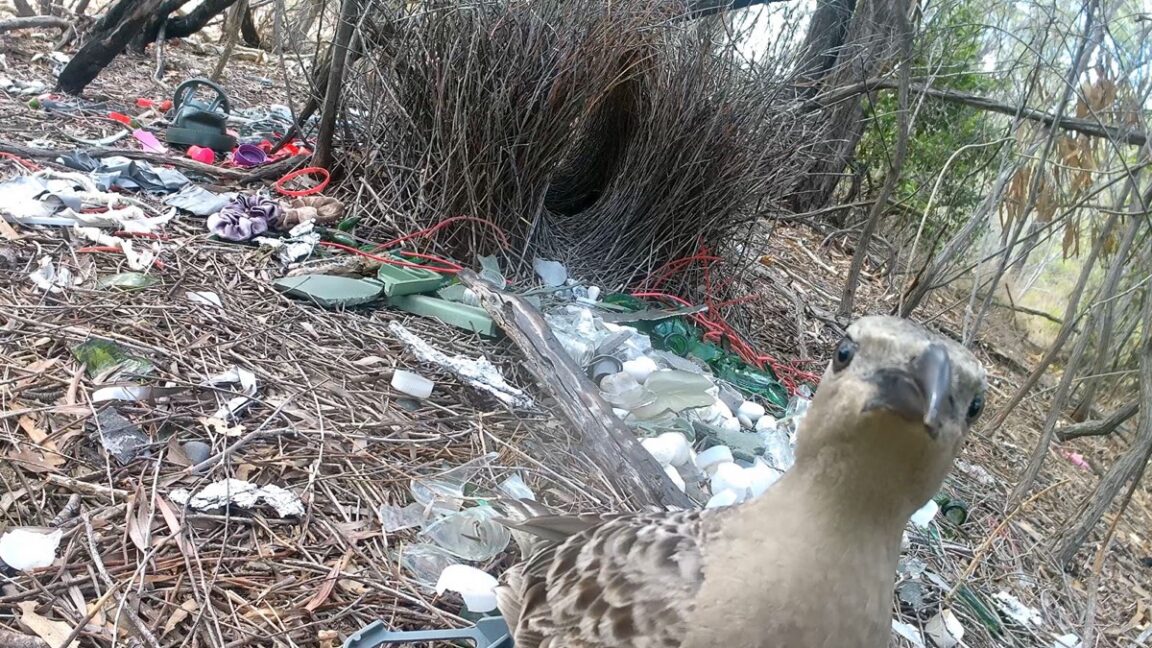
Male bowerbirds are notorious for their complex mating rituals. They build intricate tunnels out of twigs—the bowers from which they get their name—and then decorate them with random colorful items gleaned from the environment. When a female of the species shows up to check out a male's fancy digs, the male tosses his shiniest objects in her direction and shows off his plumage in hopes of impressing her.

According to a new paper published in the journal Royal Society Open Science by University of Exeter scientists, urbanization and the associated growing availability of brightly colored human-made items have had a significant impact on courtship display behavior in Australian male bowerbirds. There are marked differences in the choice of decorations for bowerbirds in urban versus rural environments. This might be because urban birds simply have greater access to the items than their rural counterparts, since birds in both environments show a marked preference for human items.

The University of Exeter researchers monitored the bowers of 61 male great bowerbirds in two sites in Australia's northern Queensland—the rural Dreghorn Cattle Station and the urban Townsville City—during the prime breeding season (September–December 2023). Then they photographed the bower decorations in situ from above in both visible and UV light (bowerbirds can see in the UV range), using an umbrella to create diffuse lighting.

Read full article

Comments

© Caitlin Evans

  •  

How Pigeons Find Their Way Home May Finally Be Solved

Homing Pigeon ReleaseA study suggests pigeons navigate using iron-rich immune cells in their livers that can respond to Earth’s magnetic field. The findings may solve a decades-old mystery about bird navigation and reveal a surprising new sensory role for the immune system. Pigeons are famous for their ability to travel long distances and still find their way [...]
  •  

Wasp Colonies Explode Into Violence After Losing Their Queen

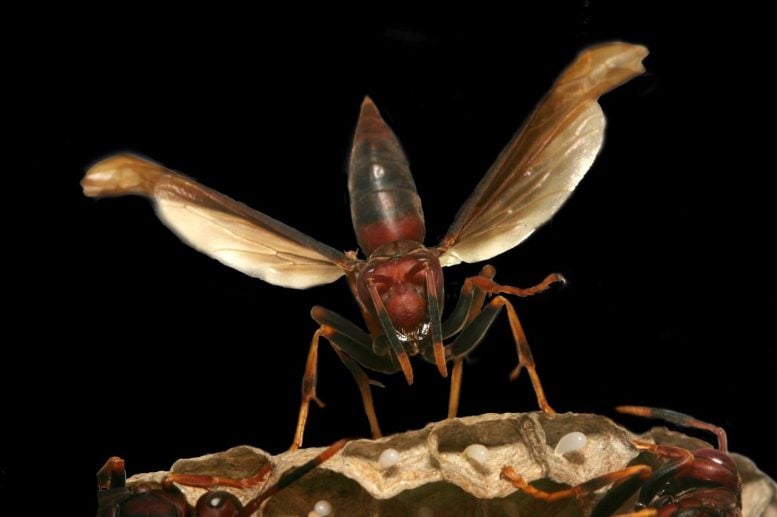
Polistes canadensis CloseThe loss of a queen triggers intense battles for power among female wasps, disrupting the colony’s social structure. Surprisingly, other wasps avoid the fighting and keep the colony functioning by taking care of its most important daily tasks. What happens when a queen suddenly disappears from a wasp colony? According to new research led by [...]
  •  

Streetlights Are Trapping Thousands of Isopods in Mysterious “Death Spirals”

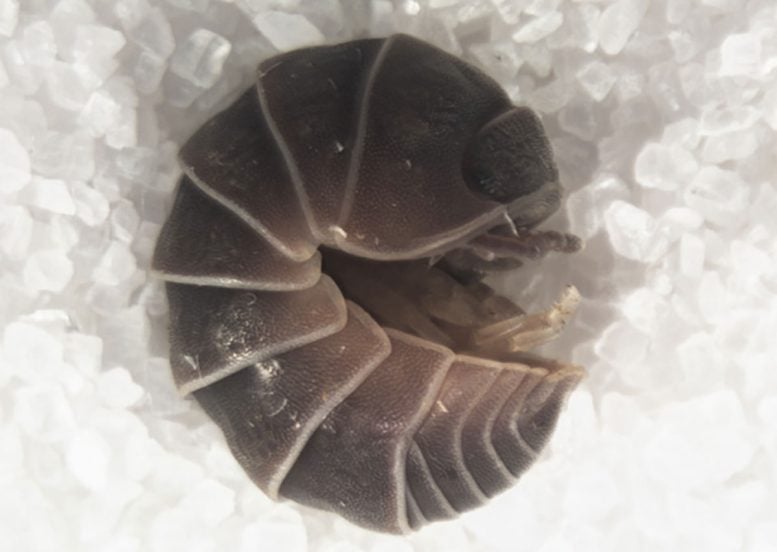
Armadillo sordidus Isopod in AggregationArtificial streetlights can lure isopods into massive circular processions that may leave them vulnerable to predators. Researchers have made a world-first observation of thousands of Israeli isopods leaving their normally solitary shelters and moving together in huge synchronized “death spirals” caused by artificial streetlights. By testing different light arrangements, the team found that vertical beams [...]
  •  

How pigeons exploit magnetic fields for navigation

Scientists have long known that migrating birds and homing pigeons navigate in part by sensing the Earth's magnetic fields, especially at night or in overcast conditions when visual landmarks or sunshine are in short supply. But exactly where this magneto-sensing occurs in the body—and the mechanism that enables it—remains a matter of intense debate. A new paper published in the journal Science suggests that homing pigeons have iron-rich immune cells in their livers that help them detect magnetic fields and transmit that information to the brain.

There are three primary hypotheses for how birds might sense Earth's geomagnetic field. One is a compass-like mechanism, whereby the Earth exerts a pull on magnetic particles in a bird's upper beak that relays directional information via a large nerve in the cranium. A second is that it happens biologically via cellular ion channels sensitive to voltage, enabling birds to sense changes in the magnetic field. And a third suggests that physical effects on retinal pigments enable birds to detect photons and send signals to the brain, although this mechanism is really only viable in the light.

None fully explain how animals can sense magnetic fields. However, “We had some clues that the liver and spleen have magnetic properties, because they break down red blood cells and so store much iron in the body,” said co-author Clivia Lisowski of the University of Bonn and the University Hospital Bonn. This refers to a 2015 paper suggesting that red pulp macrophages in the spleens of mice and humans are intrinsically superparamagnetic and hence more sensitive to magnetic fields. But it wasn't clear if those properties were involved in any kind of magnetoreception.

Read full article

Comments

© Christian Ziegler/ Max Planck Institute of Animal Behavior

  •  
❌