 Login

A Strange Moon Orbiting Neptune May Be The Sole Survivor of an Apocalypse
 One of the most violent events the Solar System has ever witnessed.

One of the most violent events the Solar System has ever witnessed.

It’s 2134, and humanity has finally embraced green technologies while ridding the Earth of harmful fossil-burning technologies, most notably gasoline, wood, coal, and oil. As a result, soot has been rendered obsolete, and all commercial products from soot, including shoes, wires, computer products, and eye products, are now produced from eco-friendly technologies. However, the uber-rich […]
The post JWST finds exoplanets choked by diesel smog appeared first on Knowridge Science Report.

Here’s one of the most unsettling facts in all of science. The universe is not just expanding, it’s expanding faster and faster. Every galaxy is moving away from every other galaxy, and the further away it is, the faster it goes and worse still, that acceleration is speeding up. Whatever is driving it, and we […]
The post The Universe is Still Running Away From Us appeared first on Knowridge Science Report.

How supermassive black holes (SMBH) in the center of galaxies accrete material, how they feedback into the surrounding region, and how they regulate these to influence the evolution of their galaxies are all hot topics in astronomical/astrophysical research. Astronomers are nearly certain that all large galaxies like the Milky Way have a SMBH, and detailed […]
The post This is how supermassive black holes feed themselves appeared first on Knowridge Science Report.
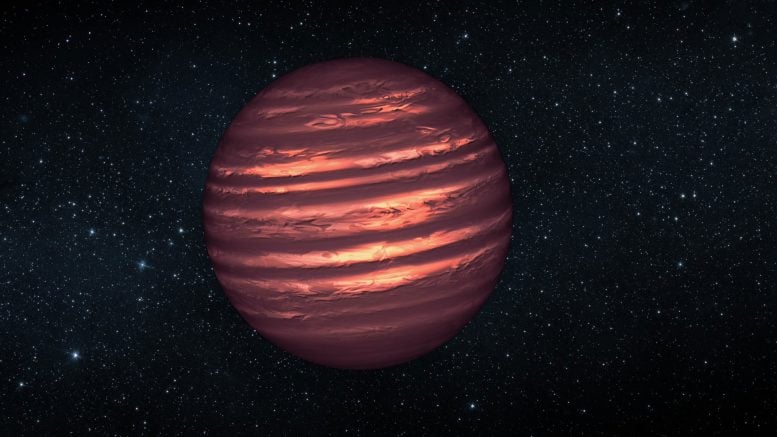 A new Keck Observatory study indicates that giant planets can spin faster than more massive brown dwarfs, revealing important clues about how planetary systems form and evolve. Astronomers have long suspected that a planet’s mass may be linked to how quickly it spins. In our solar system, Jupiter and Saturn rotate especially fast, each completing [...]
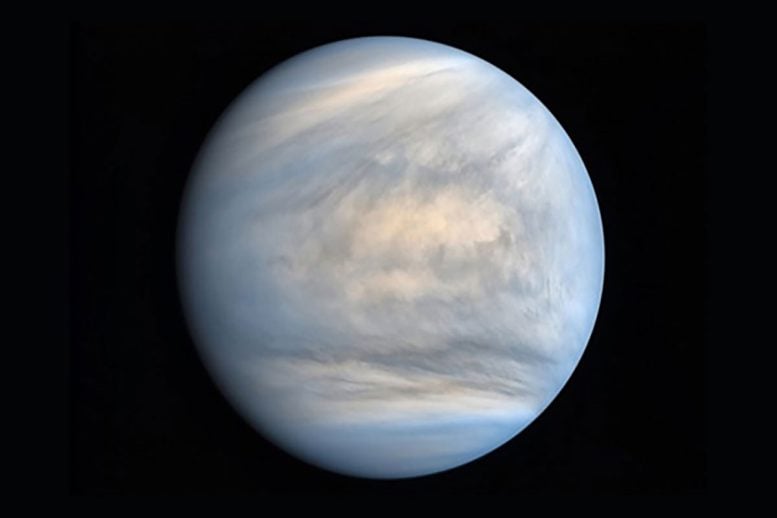 Models suggest that impact-ejected material from Earth could reach Venus’ clouds and potentially survive there briefly. Panspermia is the idea that life, or the ingredients needed for life, can move through space on asteroids, comets, and other objects. If life’s building blocks appear on one planet, a powerful impact could blast material from its surface [...]
