❌

Reading view

San Francisco’s Patchwork Streets

A view of downtown San Francisco from the International Space Station. The city's streets are visible in the daylight, as well as the Golden Gate Bridge to the north and the San Francisco-Oakland Bay Bridge connecting to Oakland to the east.
A period of unsettled weather brought scattered showers and thunderstorms to California’s Bay Area on May 27, 2026. That afternoon, a break in the clouds left downtown San Francisco and nearby communities beneath mostly cloud-free skies, allowing an astronaut aboard the International Space Station to take this photograph.
NASA

An astronaut aboard the International Space Station took this picture of downtown San Francisco and nearby communities on May 27, 2026. The image captures two of the region’s iconic bridges. The Golden Gate Bridge connects the northern San Francisco Peninsula with Marin County to the north, while the San Francisco-Oakland Bay Bridge spans the bay toward Oakland to the east.  

Read more about this photograph on Earth Observatory.

Text credit: Kathryn Hansen

Image credit: NASA
  •  

Black Eye Galaxy

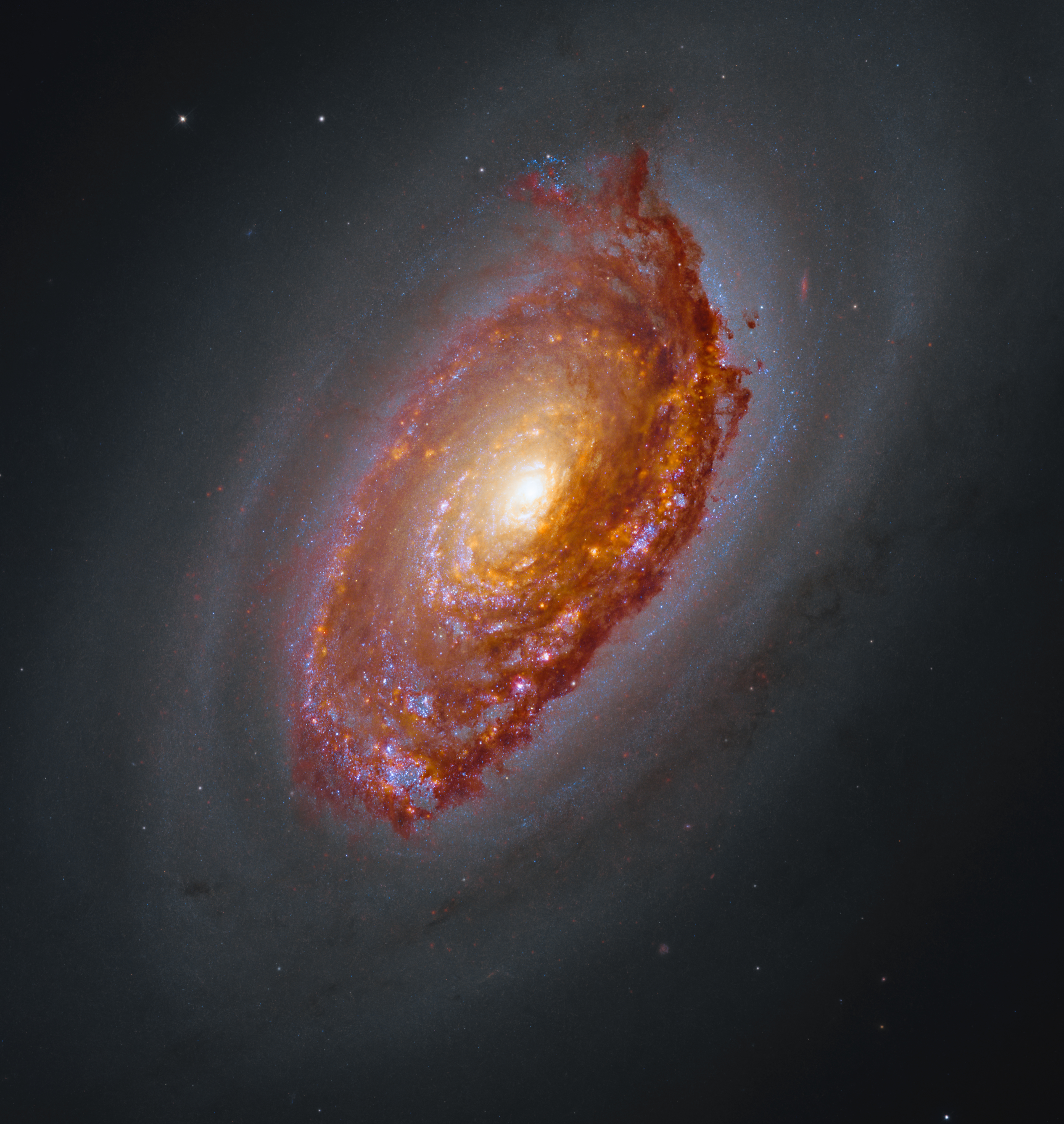
Hubble and Webb image of M64. A massive spiral galaxy glows with a yellow core, surrounded by arms full of orange-brown dust and pink and blue patches of star formation. Framed by a haze of dark dust, the galaxy shines against black space dotted with a few stars.
Easily identified by the spectacular band of dark dust that partially obscures its bright core, Messier 64, or the Black Eye Galaxy, is characterized by its bizarre internal motion.
NASA, CSA, ESA, F. Belfiore (European Southern Observatory – Germany), J. Lee (Space Telescope Science Institute), A. Leroy (The Ohio State University), and D. Thilker (The Johns Hopkins University); Processing: Gladys Kober (NASA/Catholic University of America)

This March 20, 2026, image of Messier 64, or the Black Eye Galaxy, is a composite view from NASA’s Hubble Space Telescope and James Webb Space Telescope. It shows Messier 64 captured at near- and mid-infrared wavelengths by Webb, while Hubble’s image shows the galaxy in ultraviolet, visible, and near-infrared light.

Messier 64 is characterized by its bizarre internal motion. The gas in the outer regions of this spiral galaxy is rotating in the opposite direction from the gas and stars in its inner regions. This strange behavior may be the result of a merger between M64 and a satellite galaxy over a billion years ago.

Image credit: NASA, CSA, ESA, F. Belfiore (European Southern Observatory – Germany), J. Lee (Space Telescope Science Institute), A. Leroy (The Ohio State University), and D. Thilker (The Johns Hopkins University); Processing: Gladys Kober (NASA/Catholic University of America)

  •  

Soccer Meets Space Science

A white, red, blue, and green soccer ball floats inside the International Space Center. The FIFA logo is visible in the blue part of the ball facing the camera. The area in the background is mostly white, with a banner of country flags at the top of the photo.
NASA

A soccer ball floats in microgravity in this March 2, 2026, picture from the International Space Station. The space station crew tested soccer balls to study how internal mass affects motion and stability in microgravity. The findings have improved understanding of how embedded technologies, including match-ball sensors, can influence performance during play.

Through research aboard the International Space Station and technology developed for exploration, NASA continues to demonstrate how discoveries made for space can benefit people on Earth—including athletes and fans participating in the world’s most popular sport.

Image credit: NASA

  •  

Train Ride to NASA Kennedy for Artemis III Booster Segments

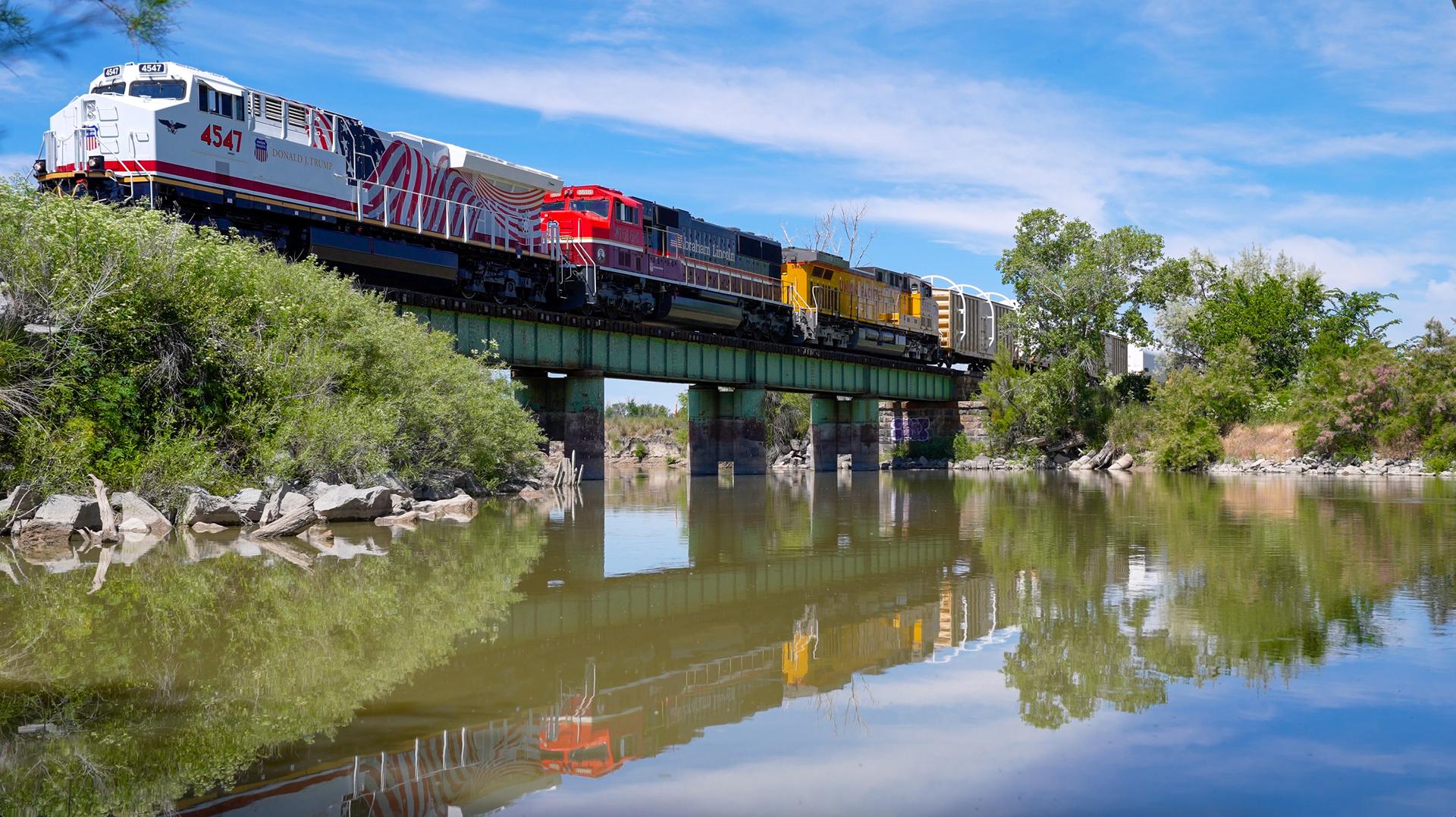
A train with many different colored cars crosses a green bridge over a body of water. There are trees along the shoreline.
NASA/Brandon Hancock

The final booster motor segments for NASA’s SLS (Space Launch System) rocket that will help propel Artemis III astronauts on their journey to space shipped from Northrop Grumman’s Railyard Shipping Facility in Corinne, Utah on June 2. The eight booster motor segments are on their way to NASA’s Kennedy Space Center in Florida where they will form the SLS rocket’s twin, five-segment solid rocket boosters, which produce more than 75% of the total thrust at liftoff.

Follow the Artemis blog for updates on Artemis III and future missions.

Image credit: NASA/Brandon Hancock

  •  

Artemis III Crew Announced

From left to right, NASA astronaut Andre Douglas, ESA (European Space Agency) astronaut Luca Parmitano, and NASA astronauts Randy Bresnik and Frank Rubio take a photo together. Their arms are linked around each other's shoulders. Behind them are the flags of the United States, Texas, NASA, and ESA.
NASA/Robert Markowitz

NASA astronaut Andre Douglas, ESA (European Space Agency) astronaut Luca Parmitano, and NASA astronauts Randy Bresnik and Frank Rubio take a photo together on June 9, 2026. The four were announced as the Artemis III crew.

NASA’s Artemis III mission in low Earth orbit will test integrated operations between the Orion spacecraft and one or both commercial landers from SpaceX and Blue Origin respectively.

Learn more about the next Artemis mission and the crew.

Image credit: NASA/Robert Markowitz

  •  

Supersonic!

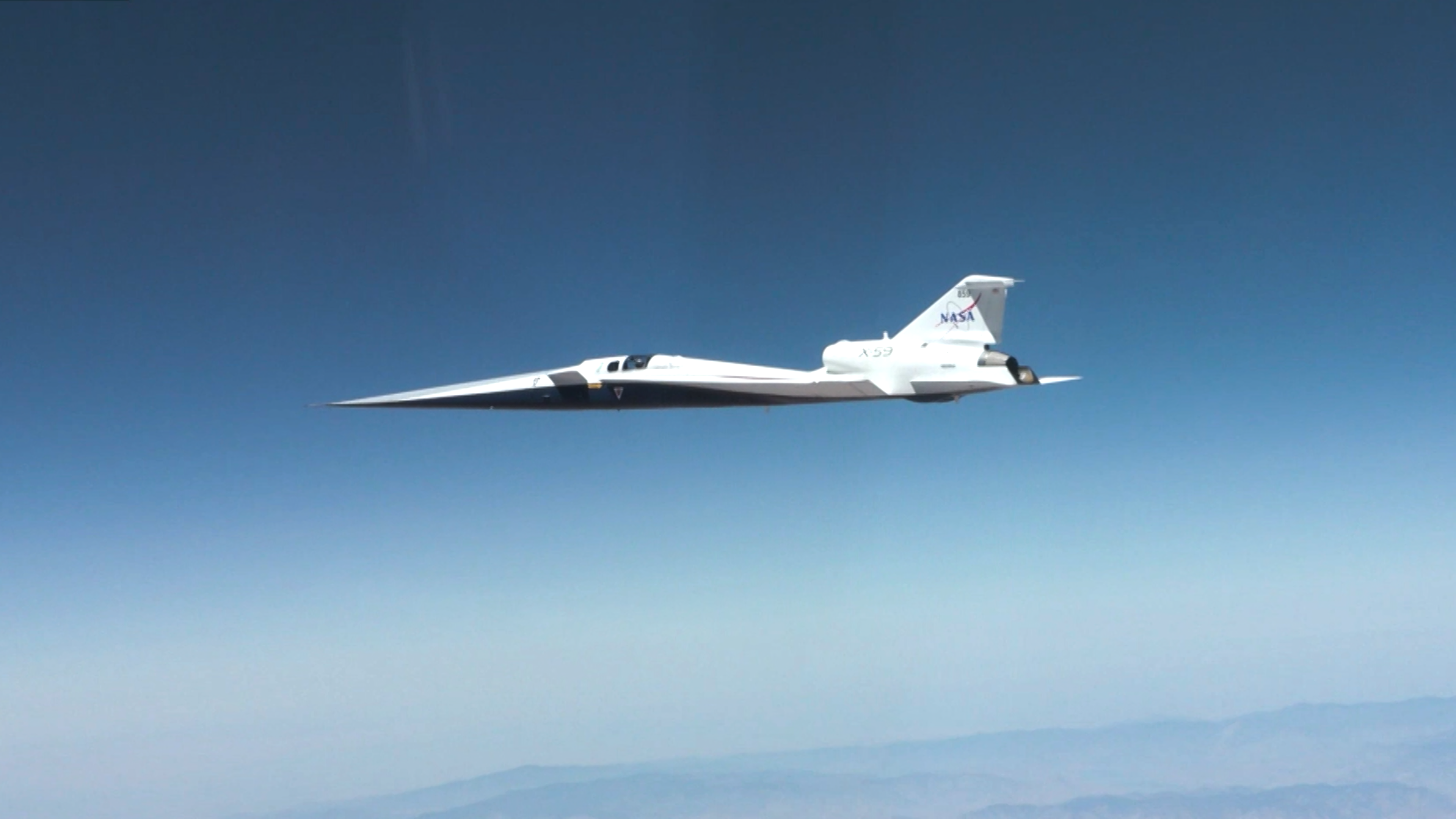
NASA’s X-59 quiet supersonic research aircraft flies through the blue sky. The plane has a distinctive long, sharp nose. There are mountains visible at the bottom of the photo.
NASA/Lori Losey

On June 5, 2026, NASA’s experimental X-59 aircraft flew faster than the speed of sound for the first time, setting the stage for demonstrating its quiet supersonic capabilities later this year. NASA test pilot Jim “Clue” Less took off and landed at Edwards Air Force Base in California, reaching a top speed of approximately Mach 1.1 (713 mph). The flight lasted 81 minutes, with the team focusing on flying qualities at both subsonic and then supersonic speeds.

The X-59 is the centerpiece of NASA’s Quesst mission, which aims to demonstrate quiet supersonic flight and help enable commercial supersonic flight over land worldwide. These advancements will help travelers reach their preferred destinations faster, spending less time in the air.

Learn more about the milestone and Quesst.

Image credit: NASA/Lori Losey

  •  

Colorful, Chaotic Jupiter

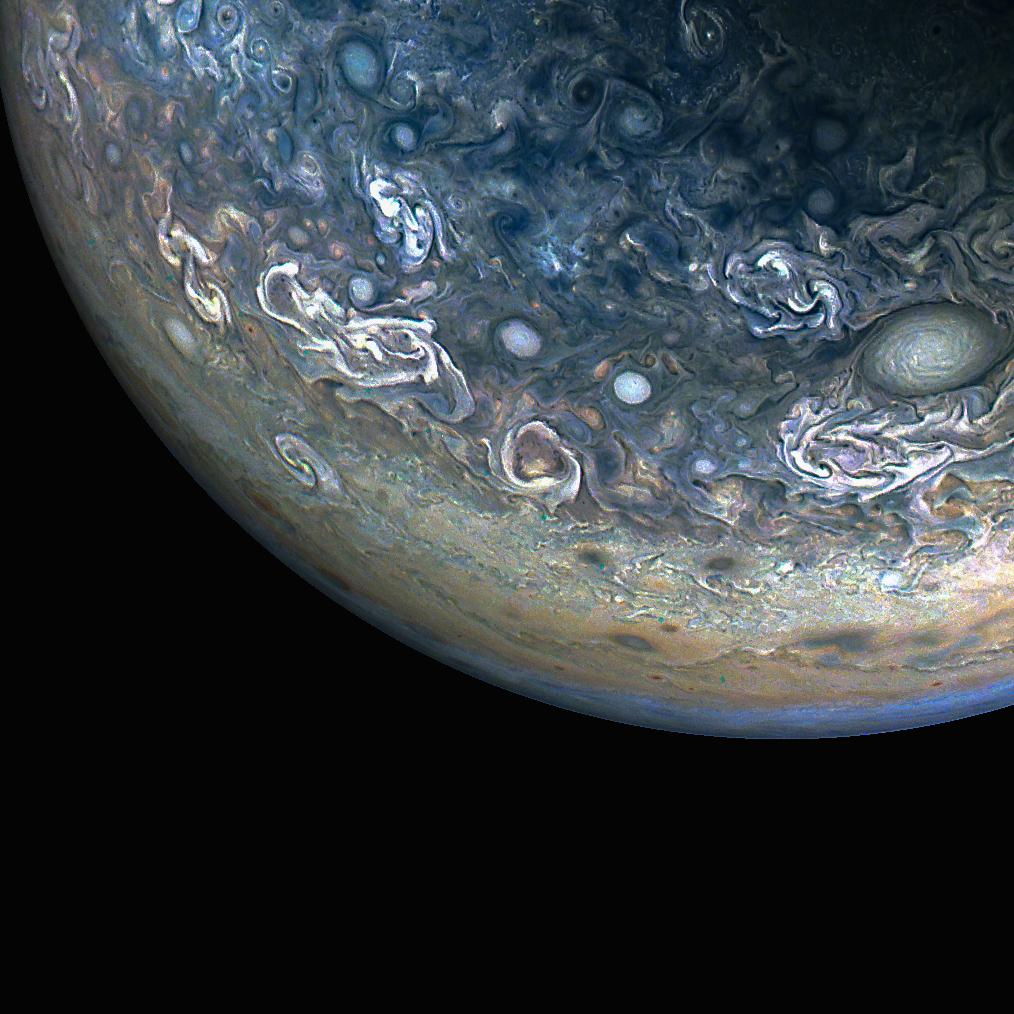
Three quarters of Jupiter can be seen in this photo; the darkness of space covers the bottom of the image. Green and blue swirls cover the planet's surface.
NASA/JPL-Caltech/SwRI/MSSS; Image processing by Gary Eason © CC BY

NASA’s Juno spacecraft captured this color-enhanced view of Jupiter’s northern hemisphere during its 61st close flyby of the giant planet on May 12, 2024.

Citizen scientist Gary Eason made this image using raw data from the JunoCam instrument, applying digital processing techniques to enhance color and clarity. It provides a detailed view of chaotic clouds and cyclonic storms in an area known to scientists as a folded filamentary region. In these regions, the zonal jets that create the familiar banded patterns in Jupiter’s clouds break down, leading to turbulent patterns and cloud structures that rapidly evolve over the course of only a few days.

Learn more about opportunities to do NASA science with citizen science projects.

Image credit: NASA/JPL-Caltech/SwRI/MSSS; Image processing by Gary Eason © CC BY

  •  
❌