❌

Reading view

Au large de la Bretagne, cette découverte sous-marine pourrait bouleverser ce que l’on sait des sociétés du Néolithique

À 9 mètres de fond, au large de l'île de Sein, des plongeurs ont mis au jour une structure de pierre longue de 120 mètres. Elle daterait de 7 000 ans. Une fenêtre ouverte sur un monde englouti que l'on croyait définitivement perdu.

  •  

Les scientifiques alertent sur un changement inquiétant chez les requins : l’Homme serait en train de modifier leur manière de survivre

80 millions : c'est le nombre de requins tués chaque année par la pêche mondiale, selon une étude publiée dans la revue Science. Une pression colossale qui ne reste pas sans réponse de la part de ces prédateurs. Dans le golfe du Mexique, les requins s'adaptent, et pas forcément dans le bon sens.

  •  

Renewable Groups Ask Courts to End Pentagon’s ‘Total Halt’ of Wind Power

More than 100 planned wind farms in 21 states are now stalled indefinitely as the Pentagon delays military reviews once seen as routine.

© Brandon Thibodeaux for The New York Times

The freeze affects 41 wind projects in Texas, which produces more wind power than any other state in the U.S., as well as projects in Colorado, Illinois, Iowa, Kansas, New Mexico, Oregon and Washington.
  •  

Cette découverte révèle le plus grand « cimetière » de baleines connu, vieux de plusieurs millions d'années !

À plusieurs kilomètres sous la surface de l’océan Indien, des chercheurs ont mis au jour un site aussi spectaculaire qu’inattendu. Sur des centaines de kilomètres, des centaines de squelettes de baleines reposent dans les abysses, certains depuis plusieurs millions d’années.

  •  

« Nous ne nous attendions pas du tout à ça » : un grand requin blanc filmé pour la première fois en Méditerranée !

Lors d’une mission menée entre la Sicile et la Tunisie, des plongeurs ont filmé un grand requin blanc adulte dans les profondeurs de la Méditerranée. Une observation exceptionnelle qui pourrait constituer une première historique.

  •  

Cette étrange tache froide s’amplifie dans l’océan, et les chercheurs y voient un signal inquiétant

C’est une certitude, la Planète se réchauffe. Cependant, il y a une zone dans le monde où l’évolution est différente : une région située entre le sud du Groenland et le sud-ouest de l’Islande. Cette zone est essentiellement océanique et c’est la seule connue à avoir subi un refroidissement...

  •  

Un calmar géant nous raconte les abysses, ce monde fragile que les humains découvrent enfin

À des centaines, parfois des milliers de mètres sous la surface, les abysses restent l’un des derniers territoires inexplorés de notre Planète. Avec Mission Neptune, les scientifiques veulent y déployer une flotte de robots et de capteurs pour observer l’océan profond en continu. Une plongée...

  •  

Un ruban brun long comme un continent vient de se former entre l'Afrique et l'Atlantique et inquiète les scientifiques

Depuis quelques années, une présence étrange s’étire en silence à la surface de l’Atlantique. Vue de l’espace, elle dessine un immense ruban brun reliant deux continents. Ce phénomène, quasi inconnu il y a peu, intrigue les scientifiques autant qu’il inquiète les riverains.

  •  

« Une immense perte » : Trump démantèle un programme que les scientifiques jugent essentiel

L’administration de Donald Trump a récemment annoncé son intention de démanteler le vaste réseau océanographique Ocean Observatories Initiative. Ce dispositif, pourtant crucial pour l’étude du climat et des océans, pourrait ainsi perdre l’essentiel de ses instruments de mesure d’ici 2027. Une...

  •  

When Food Runs Short, This Single-Celled Organism Turns into Giant Cannibal to Survive

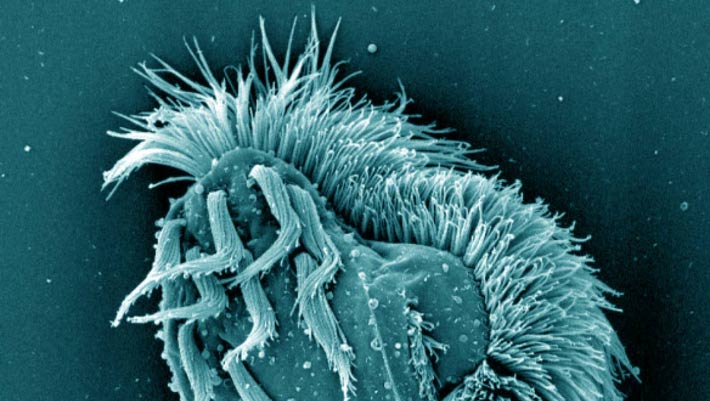
Euplotes gigatrox. Image credit: Ben Larson & Samuel Lord.

Euplotes gigatrox, a new species of ciliate collected from a seawater filtration system on the Caribbean Island of Curaçao, can transform into a cannibalistic ‘supergiant,’ raising new questions about the complexity of life at the microscopic scale.

The post When Food Runs Short, This Single-Celled Organism Turns into Giant Cannibal to Survive appeared first on Sci.News: Breaking Science News.

  •  

Ancient Oceans Began Losing Oxygen Millions of Years before End-Triassic Mass Extinction

Early Earth. Image credit: Peter Sawyer / Smithsonian Institution.

Chemical traces preserved in ancient rocks indicate that marine environments were deteriorating long before the catastrophe that wiped out vast numbers of species at the end of the Triassic period, around 201 million years ago.

The post Ancient Oceans Began Losing Oxygen Millions of Years before End-Triassic Mass Extinction appeared first on Sci.News: Breaking Science News.

  •  

Study: Early Complex Life Forms Were Bottom-Dwellers

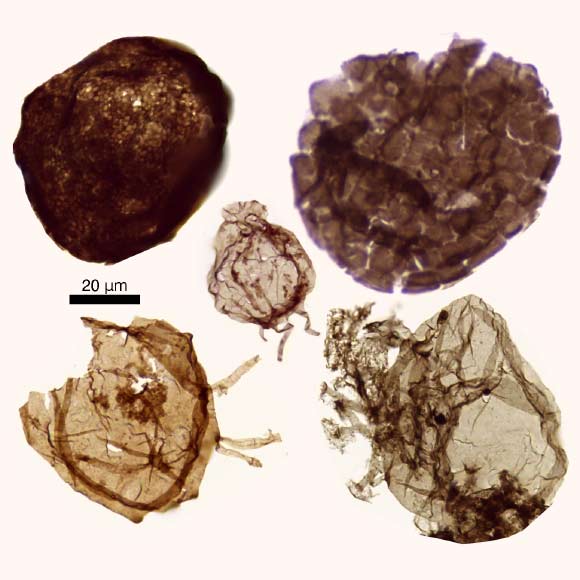
Fossil eukaryotes from Northern Territory, Australia. Image credit: Lechte et al., doi: 10.1038/s41586-026-10533-4.

Analyzing 1.75-billion-year-old microfossils from ancient Australian seabeds, paleontologists say ancient eukaryotes -- the ancestors of every plant, animal and fungus -- huddled in oxygenated seafloor patches for over a billion years before breaking free into open water.

The post Study: Early Complex Life Forms Were Bottom-Dwellers appeared first on Sci.News: Breaking Science News.

  •  

A Powerful El Niño Is Forming. If History Is a Guide, It Could Hit Hard.

The biggest episodes of the past have altered the course of human events, according to researchers. An emerging one is drawing historic comparisons.

© Dea/Biblioteca Ambrosiana, via Getty Images

An illustration published in 1877 depicted a scene in southern India. Millions died from a famine that coincided with an El Niño that year.
  •  

Does the Arctic Ocean regulate or amplify global warming?

Greenhouse gases trap heat within the atmosphere. One such gas that exists beneath the ocean floor is methane. Ice-like substances on the seafloor that contain methane, known as methane hydrates, can break apart or melt, releasing methane gas into the ocean, risking further global warming. Melting permafrost, active tectonics, daily tidal patterns, and changing sea levels can similarly trigger methane’s escape from sediments. However, scientists don’t understand how these triggers will respond to future climate change.

A team of researchers hypothesized that future global warming could actually accelerate methane’s escape into the ocean. To investigate this hypothesis, they focused on an ancient global warming event approximately 56 million years ago, called the Paleocene-Eocene Thermal Maximum or PETM. Arctic Ocean temperatures at times exceeded 20°C (68°F) during this event. These elevated temperatures serve as an analog for today’s rapidly warming conditions. 

Once methane enters seawater, its fate is largely determined by 2 sets of biological processes. Today, 90% of methane released into the ocean from the seafloor is consumed by tiny organisms called microbes via a process known as anaerobic methane oxidation. During this process, microbes consume methane alongside sulfate, producing a solid iron-sulfur mineral, pyrite. Anaerobic methane oxidation prevents methane from escaping into the atmosphere by trapping it in minerals. In this case, the ocean becomes a reservoir, or sink, for methane. 

Despite this, too much methane could overwhelm the sulfate-dependent cycle. If that occurs, a different set of microbes consumes methane alongside oxygen in a process known as aerobic methane oxidation. Aerobic methane oxidation produces carbon dioxide, a potent heat-trapping greenhouse gas that escapes from the ocean. Aerobic oxidation accounts for 10% of methane consumption in oceans today, though this could have been different in the past. 

To determine how much anaerobic versus aerobic methane oxidation occurred during the PETM, the team extracted data from sediments retrieved from the Arctic Ocean floor. As sediment piles up on the seafloor, it compacts. Scientists can drill deep into the seafloor to extract a cylindrical sample, or core, of this compacted sediment. 

The age of sediments in a core increases with depth. Therefore, younger sediments exist at the top of the core, and older sediments exist at the bottom. For this project, the team used a previously extracted core from the Arctic Ocean that contained sediments dating back 100 million years. They found 56-million-year-old sediments from the PETM at a depth of 386 meters, or 1,266 feet, in this core. 

The researchers explained that microbes leave behind unique carbon-based molecules called organic biomarkers when they decompose. These organic biomarkers accumulate in seafloor sediments. The 2 different types of methane-consuming microbes leave behind 2 different biomarkers, one for anaerobic methane oxidation and one for aerobic methane oxidation. This team measured the amount of each biomarker in the sediment core to determine which microbes were dominant during the PETM. 

The biomarker left behind from microbes performing aerobic methane oxidation is called hop(17)21-ene. The researchers noticed that the amount of hop(17)21-ene increased by a factor of 4 during the PETM. At the same time, the biomarker left behind from microbes performing anaerobic methane oxidation, called glycerol dialkyl tetraether, decreased to half. They interpreted these trends to reflect the rise of aerobic methane cycling and the shutdown of anaerobic methane cycling, respectively. They attributed this transition to the release of enough methane to overwhelm the sulfate-dependent methane cycle under warming conditions.

To estimate the amount of carbon dioxide produced by aerobic methane oxidation during the PETM, the researchers located another biomarker in the sediment core, called phytane. Phytane is produced by organisms that consume carbon dioxide during photosynthesis, and its structure preserves clues to the amount of carbon dioxide available at the time. The researchers found that during and well after the PETM, the concentration of carbon dioxide in the Arctic Ocean was 4 times greater than modern levels. They concluded that the Arctic Ocean became a prolonged source of carbon dioxide to the atmosphere, even after the PETM.

The team suggested that the uptick in aerobic methane oxidation during the PETM serves as an analog for the modern Arctic Ocean, which continues to warm rapidly in the face of modern climate change. Their results highlight how the transformation of methane into carbon dioxide poses a threat. More carbon dioxide in the atmosphere warms the air, which heats the oceans, causing more methane to escape from the seafloor and eventually be converted into additional carbon dioxide. When triggered, this feedback would continue to amplify and could become difficult to recover from.  

The post Does the Arctic Ocean regulate or amplify global warming? appeared first on Sciworthy.

  •  

‘Ocean with David Attenborough’ – masterpiece and call to action

Wake-up call, and a call to arms The spectacular feature-length documentary ‘Ocean with David Attenborough’ is his very first partnership with National Geographic, now showing on Disney+ channel in Australia. With the great...

The post ‘Ocean with David Attenborough’ – masterpiece and call to action first appeared on Science Illustrated.

  •  
❌