❌

Reading view

Facebook’s new AI Mode search gets its info from public posts

A screenshot of AI-generated search results in Meta’s AI Mode on Facebook

Your public Facebook posts could help inform AI-generated results in Meta's new AI Mode. When you search on Facebook, the "AI Mode" option will appear alongside the usual search modes like "People" and "Marketplace." It's one of several new AI features Meta is rolling out starting today, including photo presets that swap sports jerseys onto fans and suggestions for collage templates.

A screenshot of AI-generated search results in Meta's AI Mode on Facebook

Instead of "just links," it gives users AI-generated results that pull from publicly-posted content across Meta's platforms, like the AI search feature in its new Reddit-like Forum app. Users can also ask Meta's AI follow-up questions in response to the search …

Read the full story at The Verge.

  •  

A Chinese rocket breaks apart dangerously close to the Starlink constellation

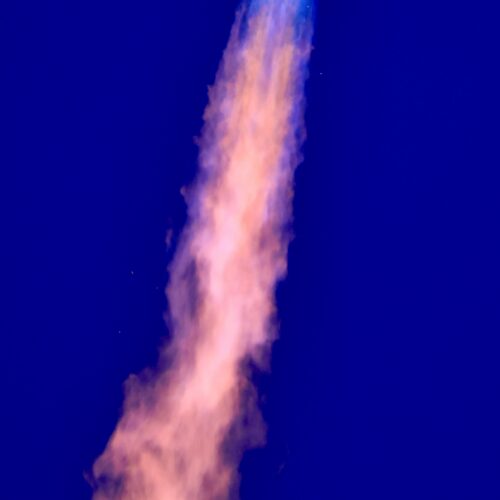
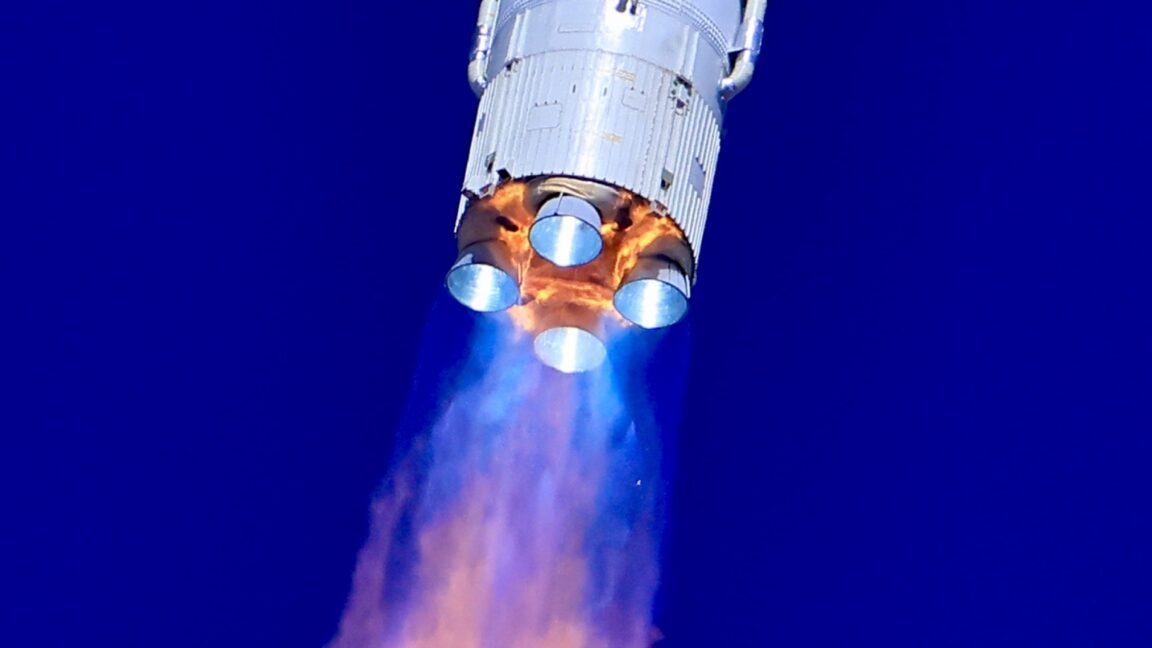
The upper stage from a commercial Chinese rocket that launched last week has broken apart in space, spreading debris in a heavily trafficked part of low-Earth orbit home to the International Space Station and a significant portion of SpaceX's Starlink broadband network.

The breakup occurred shortly after the Zhuque-2E rocket reached orbit on June 9 with two satellites providing direct-to-cell communications, perhaps around the time the upper stage was expected to perform a disposal burn. The US Space Force confirmed the breakup event in a post on space-track.org, a website used by the military to distribute orbit data to the public.

"The tracked pieces are being incorporated into routine conjunction assessment to support spaceflight safety," the Space Force wrote in an advisory. "There are currently no threats to human spaceflight. Analysis is ongoing."

Read full article

Comments

© Wang Heng/Xinhua via Getty Images

  •  

White People Blocked From Jobseeker Schemes

White jobseekers are being shut out of taxpayer-funded employment schemes, with many employment support programmes offered by local authorities to benefits claimants open only to ethnic minorities.

The post White People Blocked From Jobseeker Schemes appeared first on The Daily Sceptic.

  •  

Russia appears set to finally address long-term, serious space station cracks

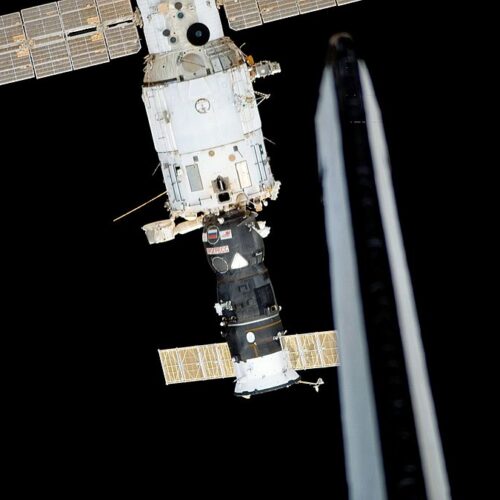
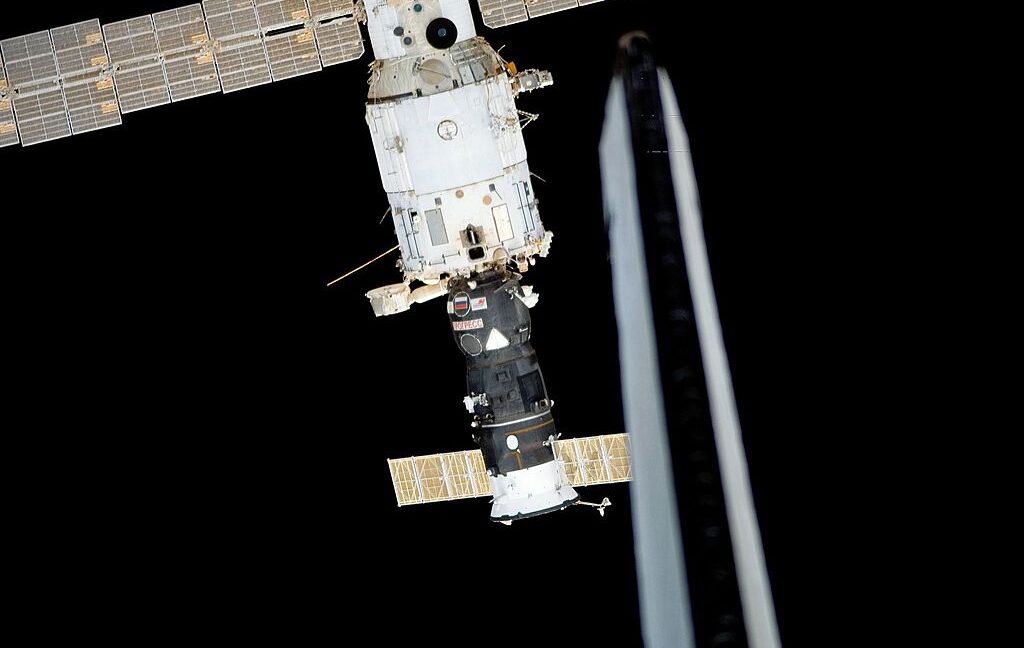
Ten days ago, in a moment of very high drama in orbit, NASA directed its astronauts living on the International Space Station to briefly seek emergency refuge in a Crew Dragon spacecraft.

Since then, neither the US space agency nor Roscosmos has provided additional public information about the situation in orbit. But according to sources who spoke to Ars, following the spectacle in space, the problem has been successfully fixed.

At issue were persistent cracks in a small area of the International Space Station attached to the Russian Zvezda service module, known as the PrK module. The problem has been ongoing since 2019, and Russian astronauts have been attempting various fixes, often using a sealant called Germetall-1.

Read full article

Comments

© NASA via Getty Images

  •  

A Hidden Subterranean Fungal Network is Revealing the Secrets of Earth’s ‘Circulatory System’


Ancient mycorrhizal fungal networks, consisting of a billion astronomical units’ worth of roots, have finally been mapped by scientists, providing insight into their connections, which are essential to climate regulation and plant sustenance.

Mycorrhizal fungi grow in an arbuscular formation, meaning they take on a branching tree-like structure of tubular cells called hyphae, which pull carbon from the atmosphere to aid in climate regulation.

The international team presented their work in a recent paper published in Science, which estimates the distribution and mass of these enormous fungal networks and provides an interactive visualization tool that offers crucial insight into threats to these systems, which are essential to Earth’s health.

Mapping Fungal Networks

The new research brings both encouraging and concerning findings, highlighting regions where fungal networks remain robust while also identifying areas under increasing threat.

Although previous studies have attempted to map the diversity of these fungi across the globe, this is the first effort to predict and visualize their density and biomass on a planetary scale. According to the team’s estimates, the network extends for approximately 110 quadrillion kilometers, with roughly 40% located beneath grasslands.

fungal map
The new map reveals the extent of the mycorrhizal fungal network globally. Credit: Truth & Beauty / Moritz Stefaner Justin Stewart – SPUN

Using more than 16,000 soil cores collected worldwide, researchers assembled a massive fungal dataset. They then employed machine-learning models that combined data from multiple biomes to predict the density of arbuscular mycorrhizal fungal networks in unsampled regions. Robotic imaging of more than 300,000 living, laboratory-grown hyphae allowed the team to calibrate and validate their models.

“It is hard to overstate the importance and enormity of these fungi,” said lead author Dr. Justin Stewart, with the Society for the Protection of Underground Networks (SPUN). “There could be up to 10 meters (32 feet) of mycorrhizal network in just a teaspoon of soil.”

Earth’s Circulatory System

Because it transports carbon, water, and nutrients underground, scientists have likened the network to our planet’s circulatory system, with a flow rate of up to 120 micrometers per second. About 70% of Earth’s plant species thrive on a symbiotic relationship with the arbuscular mycorrhizal fungi network.  The network can provide over 80% of a plant’s phosphorus and increase the root foraging area 100-fold. 

The network subsists on carbon waste produced by plants, while providing them with water and nutrients in return. By pulling in roughly 4 billion tons of CO2 into the ground every year, mycorrhizal fungi mitigate an amount corresponding to roughly 11% of human emissions.

Unfortunately, grasslands, where the network thrives most, are among the least protected environments on Earth and are being rapidly converted to farmland. According to the study team, cropland has only about half the lower network density of regular land, which the researchers worry may negatively affect how soil stores carbon, cycles nutrients, and resists stress.

Continuing Fungal Network Research

“It is important to remember that these maps are living documents. This is a first attempt at building a foundational model of Earth’s fungal networks infrastructure, but it is not complete,” Stewart recently told The Debrief. “There are other types of mycorrhizal fungi that still need to be mapped in more detail, and other fungal structures, such as spores, that are also critical to understanding how these organisms persist, move, and respond to environmental change. Likewise, we need more data in regions that have been poorly sampled.”

The team says the study represents a major advance for climate science, a field in which fungi have often been overlooked in discussions about conservation and resilience. Researchers hope the findings will encourage a more comprehensive understanding of the role fungi play in maintaining healthy ecosystems.

“A major goal now is to make these kinds of data useful for decision makers. Fungi are still rarely included explicitly in climate, biodiversity, and land-use agendas, even though they are central to how ecosystems move carbon and nutrients,” Stewart adds. “We want to help ‘course-correct’ by building a clearer picture of the underground systems that support life aboveground.”

The paper, “Global Density and Biomass of Arbuscular Mycorrhizal Fungal Networks,” appeared in Science on June 11, 2026.

Ryan Whalen covers science and technology for The Debrief. He holds an MA in History and a Master of Library and Information Science with a certificate in Data Science. He can be contacted at ryan@thedebrief.org, and follow him on Twitter @mdntwvlf.

  •  

Administração Trump ordena bloqueio no acesso ao Claude Fable 5 e Mythos 5 para fora dos EUA

Apenas dias após o lançamento, o governo norte-americano emitiu uma diretiva de controlo de exportações que obrigou a Anthropic a desligar globalmente os seus dois modelos mais avançados. A Comissão Europeia reagiu com preocupação e invocou soberania tecnológica.

The post Administração Trump ordena bloqueio no acesso ao Claude Fable 5 e Mythos 5 para fora dos EUA appeared first on Tek Notícias.

  •  

From Lunar Dust to Lunar Cities:  Engineers Turn the Moon’s Harsh Surface into a Blueprint for Settlement


As NASA prepares for humanity’s return to the Moon, researchers at Texas A&M University are exploring how the same material could become a key building block for the first permanent settlements beyond Earth.

The Moon’s surface is surprisingly unlike anything we would consider soil on Earth. Instead, it is covered by a fine powder of pulverized rock and jagged glass that slips into every gap, grinds through seals and gaskets, and exists in a vacuum exposed to intense radiation and extreme temperature swings capable of bending steel. Yet researchers at Texas A&M University see opportunity rather than obstacles in this harsh environment.

Scientists refer to this material as lunar regolith, and it is considered one of the greatest challenges to long-term human habitation beyond Earth.

As NASA advances plans for a permanent human presence on the Moon through its Lunar Innovation Park initiative, Texas A&M researchers are developing technologies designed to transform the lunar surface into a foundation for future settlements.

“We are moving past the era of ‘flags and footprints,’” said Dr. Patrick Suermann, professor of construction science and retired U.S. Air Force lieutenant colonel in a statement. “We have to stop thinking like explorers and start thinking like settlers.”

Money as a Hurdle 

Arguably, the greatest challenge facing lunar construction may not be engineering, but cost. Transporting materials from Earth remains extraordinarily expensive, with estimates ranging from roughly $1 million to $1.3 million per kilogram delivered to the Moon. As a result, researchers are increasingly focused on utilizing resources already available on the lunar surface rather than transporting materials from Earth.

“The future depends on building infrastructure from resources already on the moon,” explained Suermann.

“The high cost of shipping to the moon is the million-dollar problem,” Suermann said. “Every time you can cut the mass of a payload, you save a fortune. That’s why the future depends on building infrastructure from resources already on the moon.”

Helping advance that vision is Dr. Robert Ambrose of the Texas A&M Space Institute, located near NASA’s Johnson Space Center in Houston. The institute has received $200 million in support from the Texas Legislature.

“One of the most exciting features of the 240-acre facility is it’s two-and-a-half acre testing areas: one replicating the surface of the moon, the other Mars,” says Suermann.

These facilities allow researchers to evaluate robotic systems, autonomous vehicles, and construction technologies under conditions similar to those expected during future lunar and Martian missions.

Meanwhile, the university’s Construction Automation, Safety and Education (CASE) Lab is exploring how humans and machines can collaborate in extreme environments. Led by Dr. Gilles Albeaino, the lab focuses on mixed-reality technologies and semi-autonomous robotic systems capable of performing construction tasks on the Moon.

“On the moon, construction operations will depend on semi-autonomous robotic systems,” Suermann said. “The CASE lab is leading research into how humans and machines can work together in environments where humans can’t safely do everything themselves.”

“Every tool matters. Every ounce of material you ship matters,” added Suermann. “So, the question becomes: how do you use the environment itself as your supply chain, and how can you augment machines to become your partner in austere environments?”

Arctic to Afghanistan

Suermann’s experience combines two worlds: military service and construction science. Before joining Texas A&M in 2017, he served in the U.S. Air Force, deploying to remote locations that included Afghanistan, Guam, and Greenland.

Those experiences operating in challenging and isolated environments continue to inform his thinking about future lunar settlements.

“My experiences in serving the U.S. Air Force were formative and transformative,” Suermann said. “It taught me a great deal about construction, and that what can go wrong will go wrong.”

It shows, to me, that lunar regolith isn’t too dissimilar from the terrain we have here on Earth,” Suermann adds. “At the end of the day, construction is construction.”

Should We Develop on the Moon?

The broader question remains whether humanity should be expanding its footprint beyond Earth at all. While plans for lunar settlements continue to advance, critics point out that many environmental, political, and social challenges remain unresolved here at home.

As governments and private companies invest billions into space infrastructure, some argue that humanity must carefully consider how development beyond Earth aligns with priorities on our own planet. Others contend that technologies developed for lunar habitation could ultimately provide benefits back on Earth, helping address challenges ranging from resource management to sustainability.

Chrissy Newton is a PR professional and founder of VOCAB Communications. She hosts the Rebelliously Curious podcast, which can be found on The Debrief’s YouTube Channel. Follow her on X: @ChrissyNewton and at chrissynewton.com.

  •  

Why I’m Glad Publishing Has Destroyed Itself

Sensitivity readers, racist gatekeepers, editing by committee – mainstream publishing has been destroyed by woke gobbledegook. The silver lining? Substack is thriving because publishers have failed to discover good new writers.

The post Why I’m Glad Publishing Has Destroyed Itself appeared first on The Daily Sceptic.

  •  

International Women in Engineering Day : Surfshark protège les profils et données des talents de la tech

À l’occasion de l’International Women in Engineering Day, la place des femmes dans la tech est mise en lumière, ainsi que les enjeux liés à leur présence accrue dans des environnements numériques très exposés. CV en ligne et profils professionnels sont devenus incontournables, mais ils...

  •  

Solid-state batteries still aren’t ready, but gels are

This is The Stepback, a weekly newsletter breaking down one essential story from the tech world. For more on e-bikes, power stations, and how to work anywhere, follow Thomas Ricker. The Stepback arrives in our subscribers' inboxes at 8AM ET. Opt in for The Stepback here.

How it started

Lithium-ion batteries are everywhere as we enter the second quarter of the 21st century, and that's a problem. From exploding e-bikes in stairwells to lithium-ion power banks combusting midflight, the volatile nature of traditional liquid electrolytes has become an undeniable public safety hazard.

In 2025, the US Consumer Product Safety Commission (CPSC) i …

Read the full story at The Verge.

  •  
❌