A laser system, previously tested on board the International Space Station, helped to stream video directly from the Artemis 2 mission on its way around the moon.
Ancient mycorrhizal fungal networks, consisting of a billion astronomical units’ worth of roots, have finally been mapped by scientists, providing insight into their connections, which are essential to climate regulation and plant sustenance.
Mycorrhizal fungi grow in an arbuscular formation, meaning they take on a branching tree-like structure of tubular cells called hyphae, which pull carbon from the atmosphere to aid in climate regulation.
The international team presented their work in a recent paper published in Science, which estimates the distribution and mass of these enormous fungal networks and provides an interactive visualization tool that offers crucial insight into threats to these systems, which are essential to Earth’s health.
Mapping Fungal Networks
The new research brings both encouraging and concerning findings, highlighting regions where fungal networks remain robust while also identifying areas under increasing threat.
Although previous studies have attempted to map the diversity of these fungi across the globe, this is the first effort to predict and visualize their density and biomass on a planetary scale. According to the team’s estimates, the network extends for approximately 110 quadrillion kilometers, with roughly 40% located beneath grasslands.
The new map reveals the extent of the mycorrhizal fungal network globally. Credit: Truth & Beauty / Moritz Stefaner Justin Stewart – SPUN
Using more than 16,000 soil cores collected worldwide, researchers assembled a massive fungal dataset. They then employed machine-learning models that combined data from multiple biomes to predict the density of arbuscular mycorrhizal fungal networks in unsampled regions. Robotic imaging of more than 300,000 living, laboratory-grown hyphae allowed the team to calibrate and validate their models.
“It is hard to overstate the importance and enormity of these fungi,” said lead author Dr. Justin Stewart, with the Society for the Protection of Underground Networks (SPUN). “There could be up to 10 meters (32 feet) of mycorrhizal network in just a teaspoon of soil.”
Earth’s Circulatory System
Because it transports carbon, water, and nutrients underground, scientists have likened the network to our planet’s circulatory system, with a flow rate of up to 120 micrometers per second. About 70% of Earth’s plant species thrive on a symbiotic relationship with the arbuscular mycorrhizal fungi network.The network can provide over 80% of a plant’s phosphorus and increase the root foraging area 100-fold.
The network subsists on carbon waste produced by plants, while providing them with water and nutrients in return. By pulling in roughly 4 billion tons of CO2 into the ground every year, mycorrhizal fungi mitigate an amount corresponding to roughly 11% of human emissions.
Unfortunately, grasslands, where the network thrives most, are among the least protected environments on Earth and are being rapidly converted to farmland. According to the study team, cropland has only about half the lower network density of regular land, which the researchers worry may negatively affect how soil stores carbon, cycles nutrients, and resists stress.
Continuing Fungal Network Research
“It is important to remember that these maps are living documents. This is a first attempt at building a foundational model of Earth’s fungal networks infrastructure, but it is not complete,” Stewart recently told The Debrief. “There are other types of mycorrhizal fungi that still need to be mapped in more detail, and other fungal structures, such as spores, that are also critical to understanding how these organisms persist, move, and respond to environmental change. Likewise, we need more data in regions that have been poorly sampled.”
The team says the study represents a major advance for climate science, a field in which fungi have often been overlooked in discussions about conservation and resilience. Researchers hope the findings will encourage a more comprehensive understanding of the role fungi play in maintaining healthy ecosystems.
“A major goal now is to make these kinds of data useful for decision makers. Fungi are still rarely included explicitly in climate, biodiversity, and land-use agendas, even though they are central to how ecosystems move carbon and nutrients,” Stewart adds. “We want to help ‘course-correct’ by building a clearer picture of the underground systems that support life aboveground.”
Ryan Whalen covers science and technology for The Debrief. He holds an MA in History and a Master of Library and Information Science with a certificate in Data Science. He can be contacted at ryan@thedebrief.org, and follow him on Twitter @mdntwvlf.
The hunt for Planet Nine continues as new discoveries make the Solar System’s biggest mystery even harder to solve. Is there a massive undiscovered planet on the outer reaches of the Solar System? The idea has been around since before the discovery of Pluto in the 1930s. Labeled as planet X, prominent astronomers had put [...]
Scientists discovered that the brain begins preparing for social connection before we even make the first move. Why do we decide to approach other people? According to new research, the answer may start unfolding in the brain several seconds before any movement takes place. A team of scientists from the Hebrew University of Jerusalem has [...]
Rare charcoal fragments from an ancient lakeshore campsite are offering new clues about fire use, resource management, and the environmental knowledge of some of humanity’s earliest fire users. Long before cities, farms, or written language existed, some of humanity’s ancestors had already discovered a resource that would transform the course of human evolution: fire. But [...]
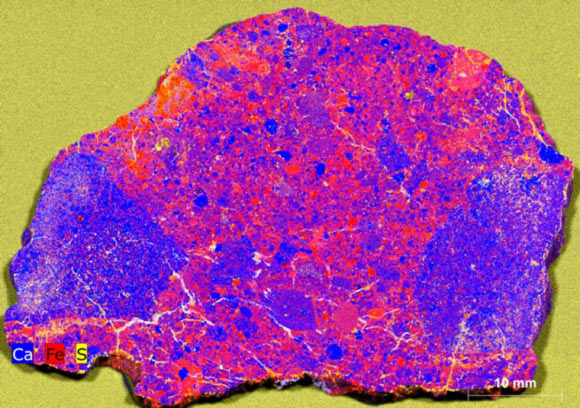
A rare meteorite recovered from the Sahara Desert could be a fragment of a Moon-size body that met a violent end in the earliest days of the solar system.
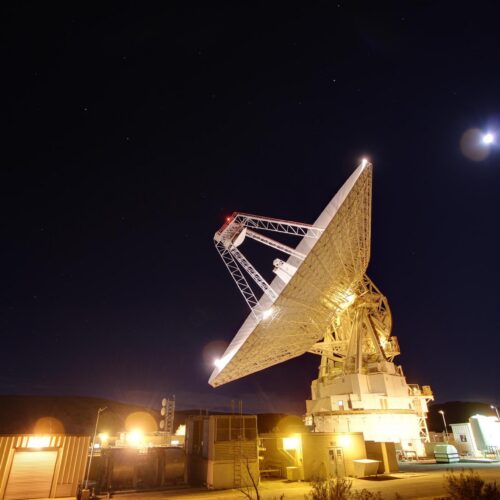
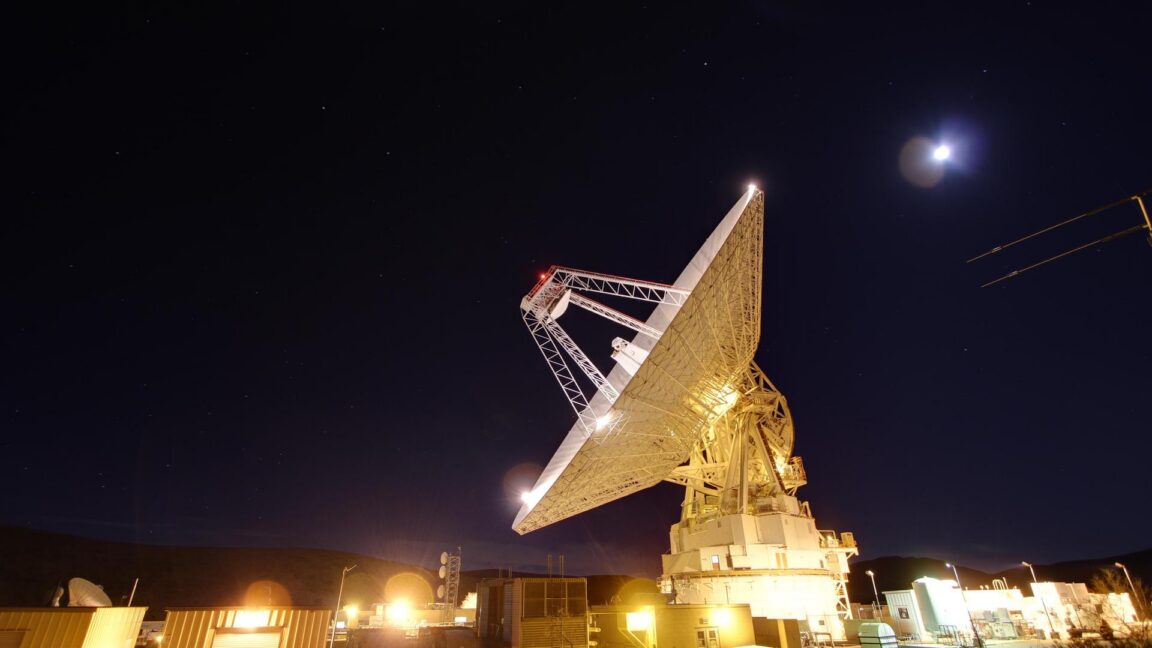
NASA pushed its Deep Space Network beyond its limits during the Artemis I mission nearly four years ago. The global array of deep space communications antennas couldn't keep up with the routine demands of 40 robotic science missions and the extraordinary surge required by NASA's Orion space capsule as it flew around the Moon.
The experience in late 2022 reduced or delayed downlinks from several high-profile science missions, including the James Webb Space Telescope and Mars rovers, as the data-hungry Artemis I mission took priority on NASA's communications network. And that was before the first Artemis mission with astronauts onboard. When Artemis II launched April 1, NASA called upon the Deep Space Network (DSN) again to connect Mission Control to the Orion capsule as it soared more than a quarter of a million miles from Earth.
With a crew of four flying inside the spacecraft, the agency's appetite for data from Orion on Artemis II was even higher than it was on Artemis I. But at a little more than nine days, the Artemis II mission was shorter than the 25 days Artemis I spent in space, helping alleviate the communications overload. Artemis I also launched 10 small CubeSats into deep space, many of which required tracking and telecom services from the DSN. Artemis II carried fewer CubeSats.
O Claude Fable 5 é a primeira versão pública da classe Mythos da Anthropic e supera todos os modelos anteriores em praticamente todos os benchmarks testados. Mas chegou ao mercado com salvaguardas tão conservadoras que perguntas básicas de biologia ativam o sistema de segurança.
A partir de 2 de agosto, deepfakes e textos de IA sobre assuntos públicos terão de ser identificados por lei. Bruxelas disponibiliza os ícones oficiais e gratuitos para facilitar o cumprimento do AI Act.
Planetary scientists analyzing a lunar meteorite known as Northwest Africa (NWA) 12593 have uncovered evidence of an asteroid impact that occurred 3.5 billion years ago on the Moon, helping to reconstruct a period of intense bombardment that left lasting marks across the inner Solar System.
Eugene Parker, pioneer of theoretical solar and plasma astrophysics, was born June 10, 1927. Parker revolutionized the field of heliophysics, notably by first proposing the existence of the solar wind — a stream of charged particles ejected from the Sun — in 1958. His theory was confirmed by Mariner II in 1962. Among many otherContinue reading "June 10, 1927: The birth of Eugene Parker"

 Login