 Login

Ukrainians Attacked a Russian Svetlyak-Class Boat 260 km From the Frontlines
On the night of June 3rd to 4th, Ukrainian drones were visiting the occupied Crimea. They engaged a

 Volcanic minerals may help drones absorb radar, but tests haven't confirmed the claim.
A US Army helicopter gunship was apparently struck by an Iranian Shahed drone before going down near the Strait of Hormuz—but it's unclear whether the one-way attack drone was deliberately aimed or achieved more of a lucky accidental strike.
Axios correspondent Barak Ravid first reported an unnamed US government official’s comments that an Iranian drone had hit the US Army AH-64 Apache helicopter before the latter went down on June 8. The New York Times later confirmed that reporting through more anonymous US officials, including one official who said US military investigators were still evaluating whether the Iranian drone strike on the helicopter was intentional or accidental.
Iran has fired thousands of such Shahed drones against a wide range of military and civilian targets in the Gulf region since February 28, 2026, when the United States and Israel began the war by jointly attacking Iran with a barrage of bombs and missiles. But Shahed drones have mainly struck stationary targets such as Amazon data centers and energy facilities, sometimes hitting slow-moving commercial ships in the Strait of Hormuz.
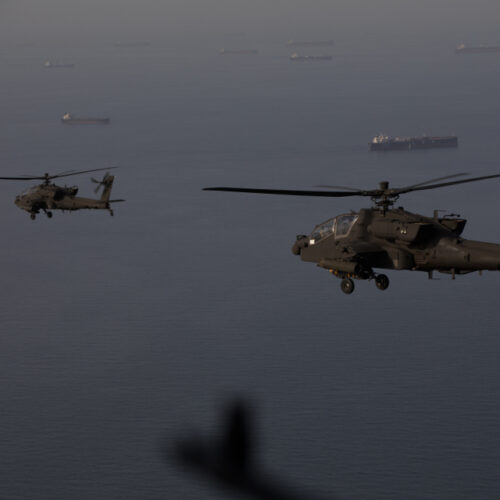
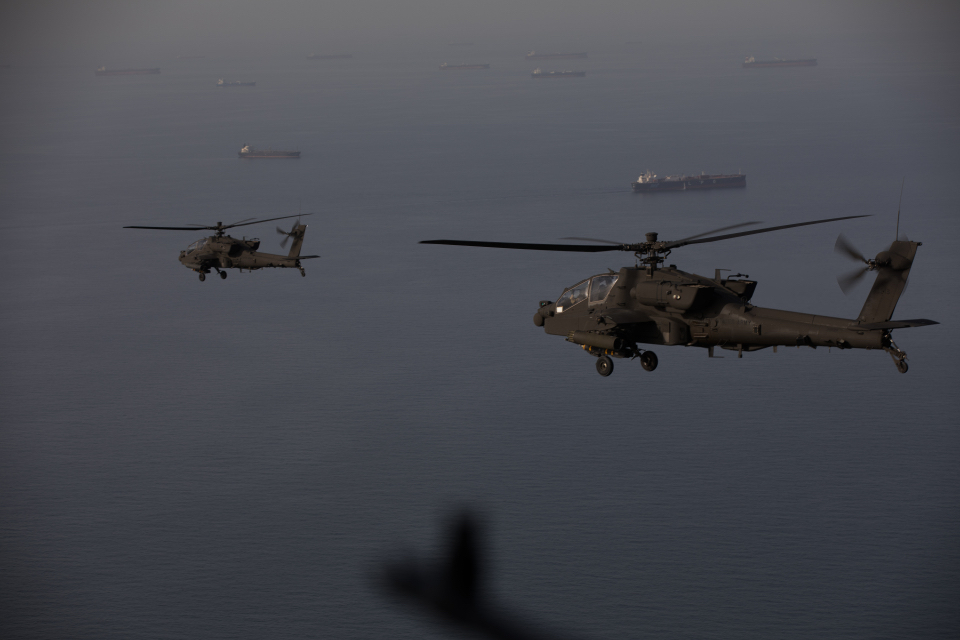
© US Central Command
President Donald Trump’s latest pitch for using taxpayer dollars to secure his White House ballroom featured a militarized building—including a rooftop hardened against drone strikes and a “drone port” that could potentially house military drones.
The remarks came on May 19 as Trump gave reporters a personal tour of the ballroom project that has already involved the demolition of the White House mansion’s East Wing. The president spoke of installing a rooftop drone base “for unlimited numbers of drones” operated by the US military as a “drone port that would protect all of Washington,” according to Reuters. He also highlighted a ballroom roof made from “impenetrable steel” that would supposedly be “drone-proof” against potential drone strikes.
To pay for such measures, Trump has been urging Republican lawmakers in the US Congress to approve $1 billion in taxpayer funding to provide a wide variety of “security adjustments and upgrades” for his ballroom project. The taxpayer-backed security enhancements would be separate from the $400 million construction cost for the ballroom project that has been funded by private donors, including companies such as Amazon, Apple, Coinbase, Comcast, Google, HP Inc., Lockheed Martin, Meta, Micron Technology, Microsoft, Palantir, Ripple, and T-Mobile.
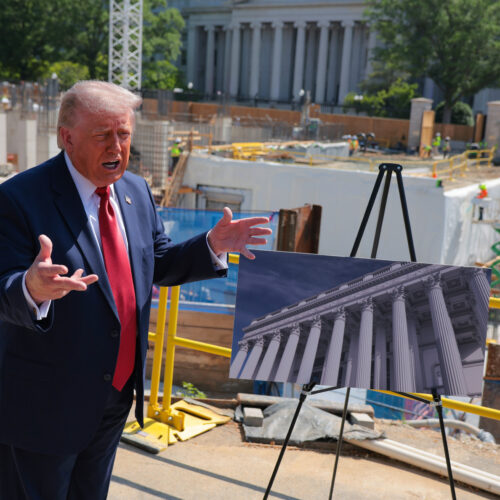
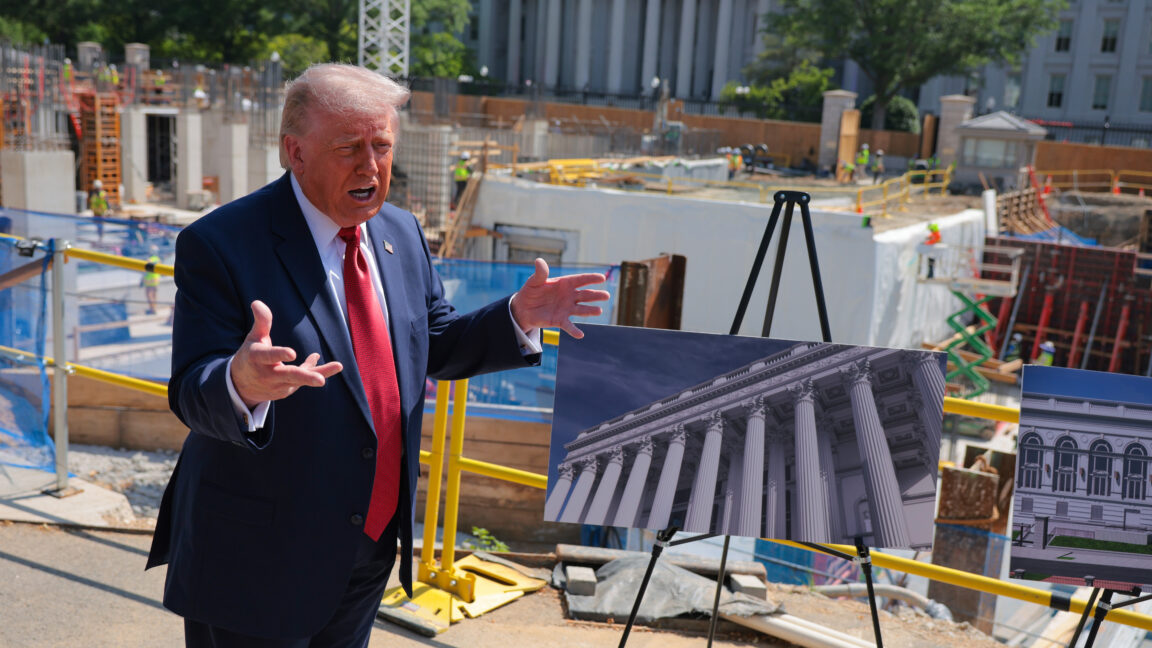
© Chip Somodevilla/Getty Images
