❌

Reading view

US refueling fleet falls below Air Force readiness standards, new watchdog report finds

America’s Government Accountability Office (GAO) watchdog has warned that the US may struggle to sustain a long-term conflict with China should hostilities break out. The issue is not about technical capability (the US military is arguably the world’s most powerful), but rather a matter of logistics.

For combat operations thousands of miles from home, as would be the case in the Indo-Pacific, the GAO argues that the US may struggle to refuel and resupply assets, notably its considerable aircraft fleet.

The issue mainly centers around aging refueling aircraft and issues with spare parts. If tensions over Taiwan were to go hot, these could both conspire to make American efforts in the region trickier than expected.

“The percentage of aerial refuelling tankers that are available and mission capable has remained persistently below the standards that the [US] Air Force established for the fleet,” the report said.

To give you some idea of the problem, imagine an F-35 running a sortie from Hawaii to Taiwan, say. These aircraft have a combat radius of around 700 miles (1,127 km), and the distance between these two islands is about 5,000 miles.

An army marches on its stomach

The fighter wouldn’t be able to make it on its own and would need several midair refueling operations to safely get there and back. After the mission, it may also need repairs, which require a sufficient stock of spare parts lying around.

If enough tankers aren’t available, the fighters couldn’t arrive in meaningful numbers. A bit of a quandary.

Of course, travel distances for fighters can be dramatically reduced by deploying carrier groups closer to Taiwan, but that puts them at risk of being attacked by long-range missiles (including hypersonics), submarines, or Chinese aircraft.

The main weakness, the report argues, is the US reliance on aging aircraft like Boeing KC-135 Stratotankers. Many of the current airframes entered service in the 1950s and 1960s, and are still going strong.

The airframes have been upgraded repeatedly, but old aircraft require more maintenance and suffer more breakdowns. And that leads to the second main issue: a lack of spare parts.

The US military increasingly struggles to obtain parts for older systems. Some suppliers no longer exist, and some components must be specially manufactured. Any break in supply means that assets, like aircraft, can sit grounded while waiting for parts.

Not how much you make, it’s how much you keep

So, even if you have 400 tankers on paper, perhaps only 250 are actually flyable on a given day. Other issues cited include a shortage of skilled personnel and delays in replacement hardware for older tech, like the planned Boeing KC-46 Pegasus.

But the KC-46 program has experienced years of technical problems and delays. The Air Force expected newer tankers to reduce pressure on older aircraft.

When factoring in the fact that China reportedly possesses long-range missiles specifically designed to target US bases and support aircraft, any direct conflict could prove very expensive for the US.

China’s military planners, the South China Morning Post (SCMP) reports, understand that destroying tankers may be more effective than trying to shoot down stealth fighters.

So, would such a conflict mean China could win? Not necessarily, since China has its own issues (like a lack of combat experience), but a “home advantage” would certainly tip the odds in its favor unless the US can cure its growing logistical bottlenecks.

💾

New reports suggest ageing tankers and logistics shortfalls could hinder US operations in a Pacific conflict.
  •  

German firm unveils 4-ton CA-1EA unmanned electronic warfare aircraft, IOC in 2031 

The German defense technology company Helsing has presented an electronic attack variant of the CA-1 autonomous unmanned aircraft at the International Aerospace Exhibition in Berlin. The platform named CA-1EA builds on the company`s existing CA-1 Europa architecture. 

CA-1 Europa is 4 ton class, single engine unmanned combat aircraft employing a low observable design. It has a length of 11 meters and a wingspan of 10 meters. Its autonomy is centered around the Helsing’s Centaur AI pilot stack and advanced mission systems.

The original combat variant, which the company is already producing, will now carry the designation CA-1KA (Kinetic Attack), distinguishing it from the new electronic warfare model. According to the company, the electronic attack variant is intended to provide non-kinetic effects on the battlefield by disrupting and degrading enemy sensors and reconnaissance networks. 

Helsing argues that modern air forces increasingly need a combination of kinetic and electronic attack capabilities to penetrate advanced air defence systems and counter sophisticated surveillance assets, making autonomous electronic warfare platforms a key component of future military operations.

New CA-1EA creates safer corridors through enemy air defences

Modern military operations depend heavily on suppressing enemy radar and surveillance networks before strike aircraft enter contested airspace. Helsing says the CA-1 EA is designed to fill that role by using airborne electronic warfare capabilities to disrupt and jam hostile ground-based radar systems. By interfering with an adversary’s ability to detect and track targets, the autonomous aircraft can help create safer flight paths for other assets operating behind it.

The company notes that the CA-1EA is designed to work alongside autonomous systems such as the CA-1 Europa as well as conventional crewed fighters, including the Eurofighter, extending electronic protection across mixed air fleets.

Both the CA-1KA and the CA-1EA electronic warfare variant are built on a common architecture, using the same airframe, propulsion system, autonomy software stack, and ground control infrastructure. The distinction between the two platforms is primarily defined by their payload configurations, which determine whether the aircraft is optimised for kinetic or electronic effects on the battlefield.

By standardising the core design across both variants, the German company aims to reduce production and lifecycle costs while streamlining manufacturing processes. The shared system architecture also simplifies logistics and maintenance requirements, while making it easier for operators to transition between mission types and train across both configurations within a unified operational framework.

Flexible CA-1 platform aims to meet diverse air force requirements 

As the company further explains, this modular approach enables the CA-1 platform to evolve further, giving it the flexibility to be adapted to the operational needs of European air forces. By maintaining a scalable and shared architecture, the system can be configured for different mission profiles without requiring a complete redesign. 

This design philosophy is intended to support rapid capability expansion while aligning with the varied requirements of modern European defense users.

“Modern air forces cannot do without electronic warfare. Helsing has been working to develop this capability for years. The CA-1EA is the result: an unmanned system that operates alongside the CA-1KA at tactical range, but can also be deployed flexibly as a standalone platform for electronic warfare,” said Stephanie Lingemann, vice president for air domain at Helsing.

The CA-1 platform is still under development, with the first flight of the CA-1 Europa attack variant planned for early 2027. It is being developed and produced in southern Germany by Helsing’s subsidiary Grob Aircraft, positioning the system as a fully European solution for German and allied air forces. The first operational capability is expected in 2029 for the CA-1KA variant, followed by 2031 for the CA-1EA electronic warfare version.

  •  

Turkey’s AKYA heavyweight torpedo destroys target ship in major naval exercise

The Turkish Ministry of Defense reports that it has successfully tested the nation’s first domestically-produced heavyweight torpedo, the AKYA. Launched from the Preveze-class submarine TCG Sakarya, the torpedo acquired, tracked, and hit its target, reportedly breaking the target ship in two.

According to reports, the test was part of the Republic’s Denizkurdu II exercise held in the Eastern Mediterranean earlier this month. During the exercise, the TCG Sokullu Mehmet Paşa (a retired training ship) was deliberately sunk as part of a SINKEX (Sink Exercise).

Such exercises are critical for evaluating the real-world performance of weapons like torpedoes, as only so much can be learned from computer modelling. Actual sinking exercises provide valuable data on structural damage, flooding, shock effects, and sinking behaviour.

Developed by the Ankara-based defense company Roketsan, the AKYA is an impressive piece of kit, at least on paper. It has a diameter of 21 inches (53.3 cm), has a reported range of 27 nautical miles (50 km), and can travel at a speed of around 45 knots (83 kph).

Home-built for home defense

The electrically-propelled torpedo is guided using a combination of active and passive sonar, and can also track targets using wake homing. This latter capability, as the name suggests, enables the torpedo to follow the disturbance made by a ship as it moves through water.

The advantage is that it’s much harder to decoy than a torpedo, simply chasing engine noise. The torpedo doesn’t care where the ship is now; it just follows where the ship has been.

The torpedo also features autonomous or fiber-optic guidance capabilities. The latter enables the submarine to update target information, refine the attack profile, and improve accuracy throughout the engagement.

Apart from the torpedo itself, another major innovation for the Turkish navy was the use of the MÜREN Submarine Combat Management System (CMS). Also domestically developed, this system works as the submarine’s “brain.”

In modern submarines, such systems collect sonar information, track targets, and calculate firing solutions. It also manages the guidance process for wire-guided weapons and integrates navigation and tactical displays.

Previously, Turkish submarines relied heavily on foreign systems, but with MÜREN, Turkey is fast becoming less reliant on third parties for critical operations of this nature.

Made in Turkey, not imported

Apart from field testing the AKYA torpedo, the Denizkurdu II exercise also featured the testing of Turkey’s latest surface-to-surface missile, the ATMACA. Launched from the Ada-class corvette TCG Kınalıada, this domestically-produced guided anti-ship missile hit a retired open-sea tugboat, the TCG Akbaş.

Taken together, both these tests show that Turkey is making concerted efforts to reduce its dependence on foreign suppliers for military hardware. Historically, the nation relied heavily on German and American combat systems and weapons, but is increasingly replacing critical components with domestically developed alternatives.

The goal appears to be to develop an entirely national underwater warfare ecosystem where critical software, weapons, and support are under Turkish control.

For military planners, that can be as important as the weapon itself because it reduces vulnerability to export restrictions, sanctions, spare-part shortages, or political disagreements.

💾

Turkey's indigenous AKYA torpedo sinks a retired warship in a live-fire test, marking a key naval milestone.
  •  

Ukraine’s AI drones entered ‘Terminator mode’ and killed Russian soldiers — no human fired

For years, the idea of a fully autonomous weapon system killing a human being on the battlefield existed as a warning, a thought experiment, and an unconfirmed rumor. It is no longer any of those things.

A Ukrainian drone manufacturer has confirmed to New Scientist that a test involving 10 fully autonomous AI-controlled drones — operating with no human oversight or connection — killed Russian soldiers on the front line of the Ukraine war approximately two years ago.

The disclosure, made at a press event hosted by the Ukrainian embassy, marks what weapons experts are calling a historic threshold in the history of warfare.

“Everything it sees will be killed”

The drone-maker behind the technology, Alexander Kokhanovskyy, described the operation in blunt terms. The drones were launched toward the front line near the cities of Bakhmut and Chasiv Yar during a Ukrainian counteroffensive push, programmed to cover between three kilometers (1.86 miles) and five kilometers (3.10 miles) over approximately 10 minutes, at which point they entered what Kokhanovskyy called “Terminator mode” — a state in which an onboard AI model independently searched for, identified, and attacked targets with no human input.

“We just launch it, and we know everything will be dead — everything that will be found there in this particular area will be dead,” Kokhanovskyy told New Scientist. “There is no connection to the drone at all, you cannot see the video, nothing. Everything it sees will be killed.”

Because the autonomous drones transmitted no live footage during the mission, there was no way to monitor them in real time. After the test concluded, human-piloted drones were sent into the area to manually survey results. What they found: “a couple of soldiers, one truck.”

Kokhanovskyy was not personally present at the test, which was carried out by an unnamed military unit. He was clear that it remained a one-off experiment and was never expanded into wider deployment. “It’s a test. We never implemented it more widely,” he said.

What makes this different from every prior incident

The distinction matters. Traditional armed drones transmit live video to a human operator who makes the decision to fire. A fully autonomous drone detects its target, decides whether it meets the engagement criteria, calculates an attack path, and executes the strike — entirely in software, with no human consulted at any point. In Terminator mode, that decision — whether a person lives or dies — was made by an algorithm.

A UN report in 2021 suggested that a Turkish Kargu-2 quadcopter may have been used to autonomously attack humans in Libya in 2020, but that account contained no confirmed casualties and gave no specific sourcing. The Ukraine disclosure, by a named manufacturer speaking on record at a diplomatic event, is the first confirmed account with stated outcomes.

What Kokhanovskyy wants

Ukraine’s current regulations prohibit fully autonomous lethal operation in the final stage of an engagement, requiring human verification before a strike is executed.

Kokhanovskyy acknowledged this constraint in the same conversation — while noting that his company’s upcoming ALITA counter-drone system, consisting of 16 launch pads and 64 drones, will require just two human operators to manage the entire battery. The system can travel toward incoming threats at 280mph, engaging everything from small drones to helicopters.

Even with humans required in the final step, Kokhanovskyy made his personal view clear: “I would love to operate without that restriction.”

That position is not universal inside Ukraine’s military. Major Danylo Polozhukhno, a senior figure in Ukraine’s 21st Separate Unmanned Systems Regiment who was unaware of the test, told New Scientist that his soldiers use semi-autonomous systems but always maintain a human in the loop.

  •  

New unmanned aircraft with 40-hour endurance, 2,866-lb payload capacity completes assembly

A German company has completed the final assembly of a new unmanned aircraft system.

Called AeroForce X prototype, Aerodata AG’s aircraft has reached an important milestone and is moving on to the next phase as scheduled.

The prototype’s first  flight is scheduled to take place in Germany this year.

Closer to operational reality

“This milestone takes AeroForce X a huge step closer to operational reality,” said Ole Vörsmann, General Manager for Unmanned Systems.

“Now that final assembly has been successfully completed, we look forward to thoroughly testing the prototype during the upcoming test phases.”

The company also revealed that the MALE-class (Medium Altitude Long Endurance) unmanned aircraft system stands out in particular for its long endurance of up to 40 hours and a payload capacity of up to 1,300 kg. Thanks to its modular platform design, AeroForce X can be flexibly configured and deployed in combination with existing manned reconnaissance aircraft for a wide range of missions.

Aerodata AG will be exhibiting at the ILA Berlin from June 10 to 14, according to a press release.

Intended to address a broad range of surveillance

Reports have revealed that AeroForce X is intended to address a broad range of surveillance, reconnaissance, and mission-support requirements. One of its standout features is an endurance capability of up to 40 hours, enabling extended missions without the need for frequent landings or refueling. The platform is also engineered to carry payloads of up to 1,300 kilograms, providing considerable flexibility for various sensor packages and mission equipment.

A defining characteristic of AeroForce X is its modular architecture. The aircraft can be configured for different operational scenarios and integrated alongside manned reconnaissance platforms. This approach allows operators to tailor the system to mission-specific requirements while benefiting from coordinated manned-unmanned operations.

The development reflects the growing demand for advanced unmanned aerial systems capable of delivering long-duration surveillance and intelligence-gathering capabilities. By combining significant endurance, high payload capacity, and adaptable mission configurations, AeroForce X aims to position itself as a versatile solution for both governmental and commercial operators.

With the prototype now assembled and flight testing on the horizon, Aerodata has entered one of the most important phases of the program. The upcoming test campaign will be closely watched as the company seeks to demonstrate the operational potential of AeroForce X and strengthen its position in the rapidly evolving unmanned aviation sector.

Aerodata has emphasized a modular design philosophy for AeroForce X. Rather than being limited to a single role, the platform is intended to support various mission configurations through adaptable payload bays and mission systems. This approach allows operators to customize the aircraft according to evolving operational requirements, potentially reducing lifecycle costs and improving mission effectiveness.

The maiden flight, expected later this year in Germany, will serve as a crucial benchmark for the program. Beyond proving basic flight characteristics, the test campaign will evaluate aircraft handling, endurance, mission systems integration, and overall operational performance.


  •  

Chinese military study outlines strategy to target US warships from 1,800 miles away

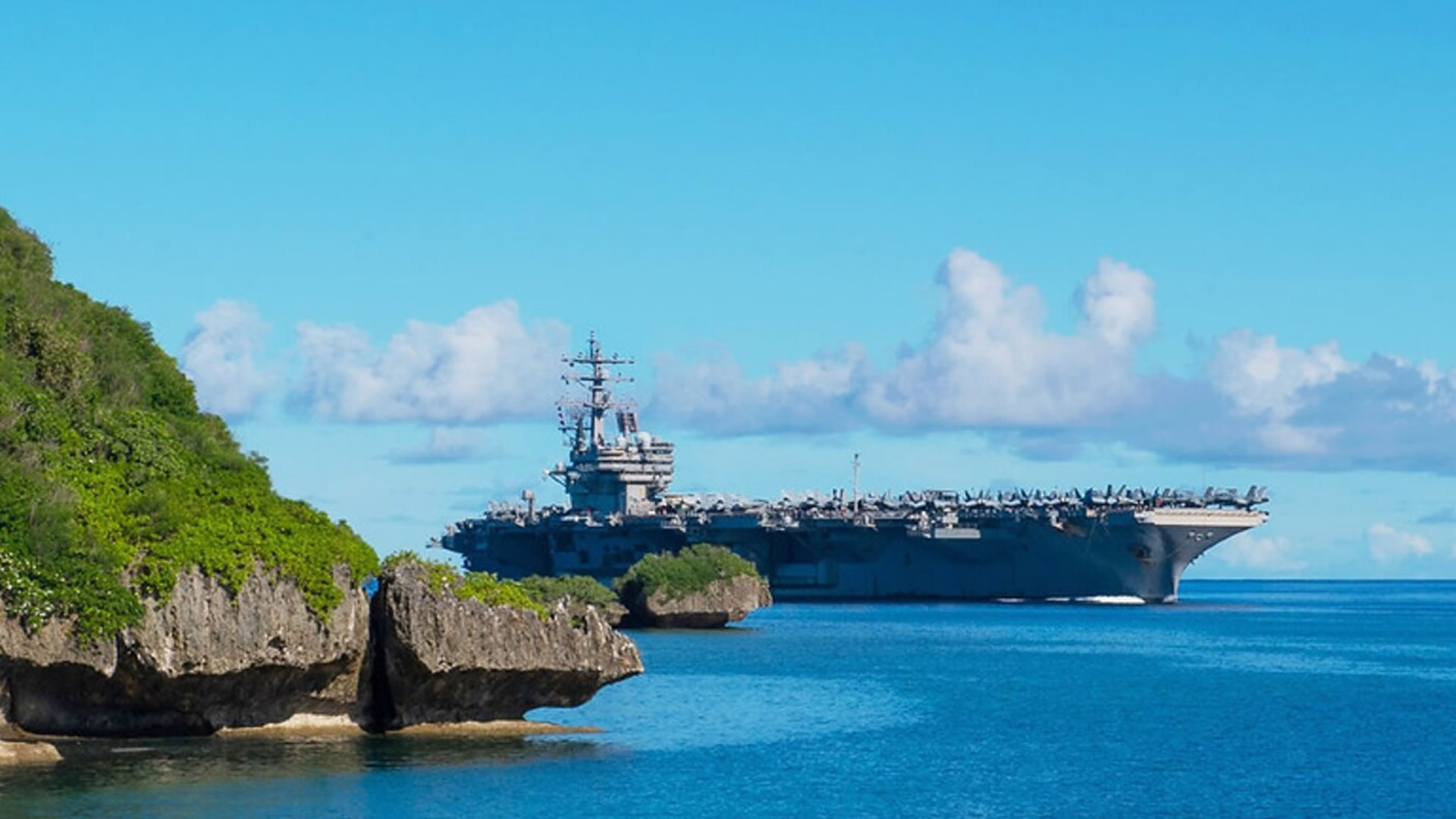
Chinese military planners have reportedly devised a plan to target US carriers in places like Guam. The strategy, published in the Chinese journal Tactical Missile Technology, claims a combination of satellites, AI, and missiles could render carrier groups vulnerable, even at distances of over 1,620 nautical miles (3,000 km).

At present, both the People’s Liberation Army (PLA) and the United States Navy know that the former can threaten critical assets like aircraft carriers close to China. To reduce that threat, the US Navy has increasingly positioned key assets farther from China’s coastline, relying on bases such as Guam and adopting more dispersed operating patterns across the Pacific.

The Navy has also been dispersing deployed ships in the region to make them much harder to find, track, and potentially attack. Not keeping their eggs in one basket, as it were.

However, as the South China Morning Post (SCMP) reports, the PLA has been working on a potential plan to threaten such ships even at great distances. Led by associate professor Gao Tianyun from the College of International Studies at the National University of Defence Technology in Nanjing, the proposal is very interesting indeed.

Dangerous game of hide-and-seek

The study, titled “Research on the effectiveness of anti‑ship missile swarm operation under distributed confrontation,” basically describes an innovative “kill-chain” solution rather than a new wonder weapon.

The idea, in a nutshell, is to first find the group using a mixture of satellites, drones, radar aircraft, ships, submarines, signals intelligence, etc. Once done, the plan would rely on near-constant tracking for long-range missiles to be targeted and launched.

With that achieved, the paper suggests firing many missiles (a mix of hypersonics and “pre-strike firepower packages”) at the target, not one or two.

Once in flight, the plan would rely on the missiles cooperating by sharing target data, sorting real ships from decoys, assigning themselves to different targets, and attacking from different angles.

According to the researchers, such a coordinated attack could overwhelm layers of US naval defense, including Aegis-equipped destroyers, interceptor missiles, electronic warfare systems, decoys, and close-in weapon systems.

So, something of a coordinated, long-range missile swarm attack. The point is to make the US defence system run out of time, interceptors, radar capacity, or correct target choices.

Means and motive

Sounds reasonable on the surface, but the plan comes with one major caveat. That being said, this is just a plan right now, not proof that China can actually do it tomorrow.

Needless to say, hitting a moving carrier group at 1,620 nautical miles distant is not an easy task. Achieving it in reality would be brutally hard because the target moves, hides, jams, uses decoys, and fights back.

The hardest part is not the missile range; it is maintaining accurate targeting data across the whole chain. While effectively just a wargame made public, the release of this information is likely intended to send a warning to the US, rather than actually boast about its technological prowess.

In effect, they are saying that hiding and dispersing your ships won’t necessarily keep you safe. We (China) have the means to get them if we want to.

💾

A new Chinese study reveals a blueprint to defeat US Navy carrier groups using AI and missile swarms.
  •  

US Navy’s nuclear-powered fast-attack submarine returns to fleet

US Navy’s Virginia-class fast-attack submarine has returned to the fleet ahead of schedule. The nuclear-powered USS Colorado (SSN 788) was undergoing scheduled maintenance at the Pearl Harbor Naval Shipyard (PHNSY) and the Intermediate Maintenance Facility (IMF).

The submarine completed its maintenance 29 days ahead of schedule on June 10. It has rejoined the fleet and is now ready to serve in the Submarine Squadron 7 to ensure dominance in the Pacific.

The nuclear-powered vessel is capable of supporting various missions, such as anti-submarine warfare; anti-surface ship warfare; strike warfare; special operations forces support; and intelligence, surveillance, and reconnaissance.

Maintenance of Navy vessels at PHNSY and IMF

The PHNSY and IMF are located in the heart of the Pacific to ensure a comprehensive fleet repair and maintenance facility. It is one of the most comprehensive facilities of its kind between the U.S. West Coast and the Far East. Its mission is to keep the US Navy’s fast-attack submarines and surface ships ‘Fit to Fight’.

Effective and timely maintenance helps keep the Navy vessels lethal, ready to defend the country, and also maximizes their lifespan. The maintenance of the USS Colorado was completed ahead of schedule by the combined efforts of the crew from the shipyard and the vessel.

“Finishing ahead of schedule is not about rushing; it’s about hard work and persistence,” said U.S. Navy Capt. Ryan McCrillis, commander of PHNSY & IMF. “It’s producing first-time, high-quality work and attacking every roadblock with urgency.”

McCrillis further said that the early completion was a result of team effort, “from the newest apprentice to senior shipyard leaders, the ship’s force, the project team, and support from the fleet and headquarters.”

More about the nuclear-powered USS Colorado submarine

USS Colorado was commissioned on March 17, 2018, at Naval Submarine Base New London. It is the 15th Virginia-class fast-attack submarine and fifth Block III submarine of the class.

Displacing approximately 7,800 tons with a length of 370 feet, Virginia is longer but lighter than the previous Seawolf-class submarines. It can sail at speeds exceeding 28.7 miles per hour (25 knots) and can operate at a maximum depth of over 800 feet.  For propulsion, it relies on a S9G reactor, which produces over 40,000 shaft horsepower (SHP).

The nuclear-powered vessel has effectively limitless range and the ability to operate submerged for months. The range is limited only by the food and supplies that the crew needs to carry.

Colorado is a part of the Virginia-class’s third, or Block III, contract, in which the Navy redesigned approximately 20 percent of the ship to reduce acquisition costs.

The submarine features a redesigned bow, which replaces 12 individual Vertical Launch System (VLS) tubes with two large-diameter Virginia Payload Tubes (VPTs), each capable of launching six Tomahawk cruise missiles. There are other design changes that reduced the submarines’ acquisition cost while maintaining their warfighting capabilities.

It also has special features to support Special Forces – which include a reconfigurable torpedo room that can accommodate a large number of personnel and their equipment for prolonged deployments.

  •  

UK trials compact G-size sonobuoy built for autonomous drones hunting submarines

Ultra Maritime has completed the first in-water deployment trial of its next-generation Multistatic Active Receive Sonobuoy, or MSARS, in Scotland, marking a major step in the United Kingdom’s push to modernize anti-submarine warfare.

The trial comes as NATO nations monitor growing submarine activity across the North Atlantic. Military planners increasingly seek tools that can detect quieter submarines and unmanned underwater systems operating over larger maritime areas.

MSARS aims to strengthen those capabilities. The compact sonobuoy is designed to improve the detection and localization of underwater threats while supporting both crewed and uncrewed operations.

Expanding underwater surveillance

Ultra Maritime developed the system with backing from the UK’s Defence Science and Technology Laboratory, known as Dstl. The effort supports the Atlantic Bastion program, which focuses on expanding autonomous anti-submarine warfare capabilities. The initiative seeks to bring uncrewed aircraft into submarine hunting missions while improving coordination with existing crewed assets. Those assets include the Royal Navy’s Merlin Mk2 helicopter fleet.

Unlike traditional approaches that rely heavily on crewed aircraft, Atlantic Bastion emphasizes distributed operations. Multiple platforms can share information and work together to track underwater targets across wider areas. The company said rising submarine activity has increased the urgency for improved detection technologies.

“Enhanced detection and localization of threat submarines and unmanned underwater vehicles are critical to maintaining operational advantage,” Ultra Maritime said. MSARS gives operators flexibility before deployment. Crews can configure mission settings through a built-in digital interface before launching the sonobuoy from an aircraft.

Integration with SeaGuardian

Ultra Maritime is also working with General Atomics to integrate MSARS and other G-size sonobuoys onto the MQ-9B SeaGuardian unmanned aircraft. The pairing could significantly expand anti-submarine warfare coverage.

SeaGuardian’s endurance allows it to remain on station far longer than many traditional platforms. Combined with compact sonobuoys, operators could survey larger sections of ocean without increasing crew requirements.

Ultra Maritime says the integration would extend operational reach, increase sonobuoy carrying capacity, and support distributed multistatic operations in contested environments. The company also noted that it remains the only manufacturer producing G-size sonobuoys. Their smaller form factor makes them particularly suited for unmanned aircraft missions.

Broader sonobuoy push

The Scottish trial arrives as Ultra Maritime expands its sonobuoy business through production contracts and international partnerships. Earlier this year, the company secured a U.S. Navy contract covering low-rate initial production of the AN/SSQ-125B sonobuoy. The system aims to improve the detection of increasingly quiet submarines operating in challenging acoustic conditions.

Ultra Maritime has also expanded its presence in Europe. In 2025, France selected the company to provide active and passive sonobuoys under a contract awarded by Thales on behalf of the country’s defense procurement agency.

For defense planners on both sides of the Atlantic, the latest MSARS milestone represents more than a successful trial. It highlights a broader shift toward networked and increasingly autonomous anti-submarine operations designed for a more contested maritime environment.

  •  

Potato-shaped UFO? Pentagon releases 72 new reports of unexplained objects

The Department of War has released a third batch of declassified records tied to unidentified anomalous phenomena (UAP), adding 72 files that describe unexplained sightings reported by military personnel, federal agents, and foreign observers.

The release is part of the PURSUE program, launched after President Donald Trump directed federal agencies to identify, review, and declassify records related to UFOs, UAPs, and potential extraterrestrial activity.

The newly released documents do not provide evidence of alien life or a government cover-up. Instead, they offer additional details about several unresolved cases that investigators have been unable to conclusively explain.

According to the Department of War, unresolved cases are incidents where available data is insufficient to determine the nature of the observed object or phenomenon.

Strange objects, few answers

One of the most detailed reports involves a February 2022 sighting near Colorado Springs, Colorado. Five US Army personnel at Fort Carson reported seeing an unusual object hovering above Cheyenne Mountain.

“The object was ‘potato’ shaped with distinct edges and appeared to look painted in a creamy/whitish opalescent color,” an FBI document states. Witnesses said the object appeared to consist of “articulating fish scales or panels that were non-symmetrical, non-overlapping and irregular shaped.”

According to the report, the object remained stationary for roughly two minutes before disappearing. No photographs or videos were captured.

Investigators later assessed with “low confidence” that the sighting may have resulted from sunlight reflecting off snow-covered terrain and illuminating clouds. However, witnesses reported clear skies, and investigators found no evidence of balloons, aircraft, or known foreign technology in the area.

Another case involved six federal law enforcement agents who reported repeatedly observing bright orange and red orbs in October 2023. According to the documents, the objects appeared above a ridgeline and, in some instances, seemed to generate additional smaller orbs.

An analysis conducted by the Pentagon’s All-Domain Anomaly Resolution Office reviewed several possible explanations, including military exercises and flare deployments occurring nearby. The report said those explanations were plausible but not conclusive and noted that the observations could involve “unrecognized technology.”

Global reports surface

The latest release also includes an FBI report describing a 2025 sighting in the northeastern United States. A witness reported seeing a bright red sphere near a wooded area.

“Inside the red sphere, at the center, there appeared to be what (redacted) described as a ‘white plasma sun’ about the size of a basketball,” the report states.

The witness said a second sphere appeared before both objects departed silently. The file includes cellphone footage showing two glowing red objects moving across the sky. The White House later shared the video online while referencing the case.

Among the older documents is a CIA report from Zimbabwe dating to 2008. Witnesses near the country’s main airport described a disc-shaped object with rotating lights.

“At one point during observation, ‘beams’ were observed emanating from the object,” the report states.

So far, the Trump administration’s disclosure effort has resulted in the release of roughly 300 UAP-related files dating back to the 1940s. The Department of War said additional records will be released in future tranches as reviews and declassification efforts continue.

  •  

New W-band gallium nitride chip fast-tracked from lab to market in six months

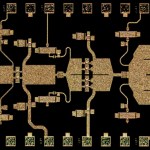
Northrop Grumman has developed a new gallium nitride (GaN) microwave chip that operates in the W-band spectrum, a high-frequency range used for advanced radar, satellite communications, and emerging wireless networks.

The company said the chip was designed, manufactured, and made market-ready in less than six months, an unusually short timeline for a high-frequency semiconductor intended for defense and commercial applications.

Built at Northrop Grumman’s semiconductor facility in Redondo Beach, California, the chip is designed to strengthen wireless signals while operating at frequencies capable of transmitting large amounts of data with low latency.

According to the company, the technology could support secure military communications, next-generation radar systems, satellite links, and future 5G and 6G wireless networks.

Faster signals, smaller hardware

The W-band occupies frequencies between roughly 75 and 110 gigahertz, offering significantly more bandwidth than lower-frequency wireless systems. The added spectrum can help enable faster data transmission, higher-resolution sensing, and more secure communications.

W-band technologies are attracting growing interest because they can handle far larger amounts of data than many conventional wireless systems. The frequencies are increasingly being explored for applications ranging from high-resolution imaging and advanced sensing to satellite communications and future mobile networks.

Microscope photo of the high-frequency GaN microwave chip. Credit – Northrop Grumman

However, operating at such high frequencies requires specialized semiconductor materials and designs capable of maintaining performance while managing power and heat, areas where GaN-based devices have gained increasing attention.

Northrop Grumman said the new chip fully utilizes this portion of the radio spectrum to improve signal performance while reducing the need for larger and more power-intensive equipment.

Gallium nitride has become a key material for advanced radio-frequency electronics because it can operate at higher power levels and frequencies than conventional silicon-based devices. The material is already widely used in military radars, electronic warfare systems, and satellite communications hardware.

The company said the chip can act as a signal amplifier, helping wireless systems transmit and receive data more efficiently. In military applications, that could improve secure communications and data transfer between platforms and satellites. Commercially, the technology could help support future wireless networks as demand for higher data rates continues to grow.

Defense To 6G

The project was developed through the California DREAMS hub of the Microelectronics Commons program, a public-private initiative aimed at accelerating domestic semiconductor innovation.

The program is funded by the Office of the Under Secretary of Defense for Research and Engineering and brings together industry, government, and academic partners to speed the development of advanced microelectronics technologies.

Northrop Grumman said the rapid development cycle demonstrates how collaborative manufacturing and design efforts can shorten the path from concept to deployment.

The company manufactures microelectronics at two US-based facilities and produces millions of semiconductor components annually for defense and commercial customers. Its Microelectronics Center has been involved in semiconductor development for more than seven decades.

As governments and industries seek faster communications, more capable radar systems, and advanced sensing technologies, high-frequency GaN devices are expected to play an increasingly important role in future wireless infrastructure.

  •  

US’ new 180-foot drone ship could launch hypersonic missiles, demo set for 2027

Saronic and Castelion, two defense technology companies, have announced plans to combine an autonomous warship with a hypersonic strike weapon. They said this is the first attempt to put a hypersonic vehicle on an unmanned surface vessel.

Castelion’s Blackbeard hypersonic system will be launched from Saronic’s Marauder medium unmanned surface vessel, with a demonstration at sea planned for 2027.

By combining an unmanned vessel with a hypersonic strike system, the companies hope to give commanders more choices for future naval missions.

Autonomous vessel meets hypersonic firepower

According to the agreement, Saronic’s Marauder unmanned vessel will launch Castelion’s Blackbeard hypersonic vehicle. The companies said this is an important step toward creating strike systems that work without crews on board.

“Launching a Castelion hypersonic from a Marauder MUSV significantly changes the approach for any adversary calculating where and how the U.S. can strike,” Dino Mavrookas, co-founder and CEO of Saronic, said in a statement. “Deterrence is ultimately a function of capability, capacity, and credibility. Saronic and Castelion are working to increase all three by combining autonomous maritime and hypersonic strike capabilities that are more scalable, more affordable, and faster to field.”

The idea is to equip autonomous ships with advanced weapons that can operate across large areas of the ocean. These ships could offer more launch points for weapons and help keep people out of danger.

Castelion is also increasing production of the Blackbeard system and plans to make several thousand missiles each year. Last October, the company said Blackbeard had won several awards to help it work with both Army and Navy platforms.

Blackbeard production ramps up

By producing more Blackbeard missiles, Castelion hopes to deploy the weapon across more branches of the military. The company says using Blackbeard with Marauder could make operations more flexible and easier to deploy.

“Blackbeard and Marauder will give our warfighters more shots, from more places, with fewer constraints,” Bryon Hargis, co-founder and CEO of Castelion, said in a statement.

This partnership comes as defense leaders look for ways to use more precision strike systems without raising costs. Autonomous ships capable of carrying advanced weapons are becoming an important part of this plan.

Marauder advances toward operational testing

The announcement arrives during a busy period for Saronic. The company is currently expanding a shipyard in Louisiana, a project expected to be completed by the end of this year. Once finished, the facility will have the capacity to produce up to 20 Marauder vessels annually.

Late in May, Saronic revealed that the 180-foot-long Marauder had entered on-water trials. The vessel is designed to carry payloads weighing up to 150 metric tons, giving it the capacity to support a range of military missions.

The U.S. Navy is also evaluating the platform. Last month, the service confirmed that Saronic was among seven companies selected for its MUSV marketplace initiative. Participants will conduct at-sea testing this summer, and those who successfully complete the evaluation phase by October will receive $15 million and become eligible for future production contracts.

Growing role for unmanned naval systems

Beyond Marauder, Saronic has developed several autonomous surface vessels, including the Corsair. According to the company, the vessel can transport payloads of up to 1,000 pounds over distances exceeding 1,000 nautical miles.

The Navy’s Task Force 59, which focuses on unmanned maritime operations in Bahrain, began fielding Corsair vessels in March. The platform recently played a role in a real-world rescue mission.

On Monday, U.S. Central Command said Navy units, including Task Force 59, assisted in rescuing two crew members from a US Army AH-64 Apache helicopter that went down near the coast of Oman.

  •  

US Navy drone ship gets its own production line to speed up fleet deliveries

Bayou Metals, a manufacturing partner of defense shipbuilder Huntington Ingalls Industries (HII), has stood up a dedicated production line for the Romulus uncrewed surface vessel (USV), a move intended to compress delivery timelines and increase throughput for the US Navy’s growing unmanned maritime program.

The production line is located in Slidell, Louisiana. Bayou Metals is also serving as a strategic marine-grade aluminum supplier to the HII. 

A purpose-built line for an uncrewed hull

Rather than routing Romulus components through a generalized fabrication workflow, Bayou Metals configured a dedicated manufacturing line specifically for the vessel’s metalwork and structural assemblies. This single-product-line architecture reduces setup changeover time and allows process engineers to optimize fixturing, weld sequencing, and quality inspection around a single repeating geometry—a standard lean-manufacturing approach when volume and schedule pressure justify the capital allocation.

The Romulus family of USVs is designed for a wide range of mission sets, including intelligence, surveillance, and reconnaissance (ISR), mine countermeasures, strike operations, and counter-unmanned systems. It can also serve as a mother-ship to launch and recover unmanned underwater vehicles (UUVs) and unmanned aerial vehicles (UAVs). It is centered on HII’s Odyssey autonomy software suite and open systems architecture.

HII has been developing the platform as part of the broader US Navy push to field autonomous and semi-autonomous surface vessels capable of operating alongside crewed combatants. Romulus is being developed in partnership with Breaux Brothers, Shield AI, Beier Integrated Systems, and Incat Crowther. 

Supply chain structure for unmanned programs

The Bayou Metals arrangement illustrates how prime defense contractors are structuring supply chains for unmanned platforms differently from traditional crewed ships. Because USVs are expected to be procured in larger numbers at lower per-unit cost than destroyers or frigates, the production economics demand a more industrialized approach from tier-one and tier-two suppliers early in the program lifecycle — before the Navy has necessarily committed to a high-rate production contract.

HII’s unmanned systems portfolio

HII has been expanding its unmanned and autonomous systems work through its Mission Technologies division, positioning itself beyond traditional nuclear shipbuilding. The Romulus program sits within that strategic push.

By anchoring a dedicated supplier line, HII is attempting to demonstrate production readiness — a factor the Navy weighs when evaluating whether a program can transition from development and low-rate initial production to full-rate procurement.

Production readiness reviews assess not just the prime contractor’s internal capacity but the depth and reliability of the supplier base. A named, dedicated manufacturing line at a partner facility is a tangible data point in that evaluation criteria. 

What comes next

In addition to the vessel currently under construction, four additional Romulus 151 vessels will be built by Breaux Brothers Enterprises in Louisiana. This effort for HII also supports the expansion of the U.S. shipbuilding industrial base by growing Gulf Coast manufacturing capacity.

  •  

Pokemon Go Data Was Used To Help Train AI Systems Being Developed For Military Drones

Pokemon Go players' optional location scans reportedly helped train Niantic Spatial's visual positioning system, which uses camera imagery and 3D maps to navigate when GPS is unavailable or jammed. According to DroneXL, that technology is now being paired with Vantor's drone navigation software for military and intelligence use, raising questions about whether gamers understood that footage collected for in-game rewards could eventually support defense systems. From the report: The pipeline runs from a mobile game to the battlefield in three steps. Players scanned the physical world. Niantic Spatial turned those scans into a 3D map that lets a machine locate itself by sight when satellite signals fail. And in December 2025, Niantic Spatial announced a partnership with Vantor, the defense and intelligence firm formerly known as Maxar Intelligence, to fuse that ground-level system with Vantor's aerial navigation software for use in GPS-denied operations. I have spent years covering how drones lose their way the moment an electronic warfare unit switches on a jammer, a problem that has spread from the battlefield into civilian airspace, from Ukrainian workshops cycling through navigation generations to American programs scrambling for alternatives. The unsettling part of this story is not the technology. It is where the training data came from, and whether the people who supplied it would have agreed had anyone explained the destination. "Now as part of Scopely (the Saudi-owned company that acquired Niantic last year for $3.5 billion), Pokemon GO data is not shared with Niantic Spatial," a company spokesperson said in a statement to Kotaku. "AR Scans collected through Pokemon GO were submitted voluntarily by players who opted into the feature and were subject to the applicable Terms of Service and Privacy Policy at the time. The discontinuation of AR scanning and the end of data sharing with Niantic Spatial were part of the transition planning associated with Pokemon GO's move to Scopely."

Read more of this story at Slashdot.

  •  

Autonomous aircraft drops 200-pound payload within 50 feet for frontline logistics

Autonomous aircraft are increasingly drawing attention as the U.S. military looks for new ways to sustain operations in contested and hard-to-reach environments. Pyka’s latest demonstration suggests those efforts may be moving beyond theory and closer to operational reality.

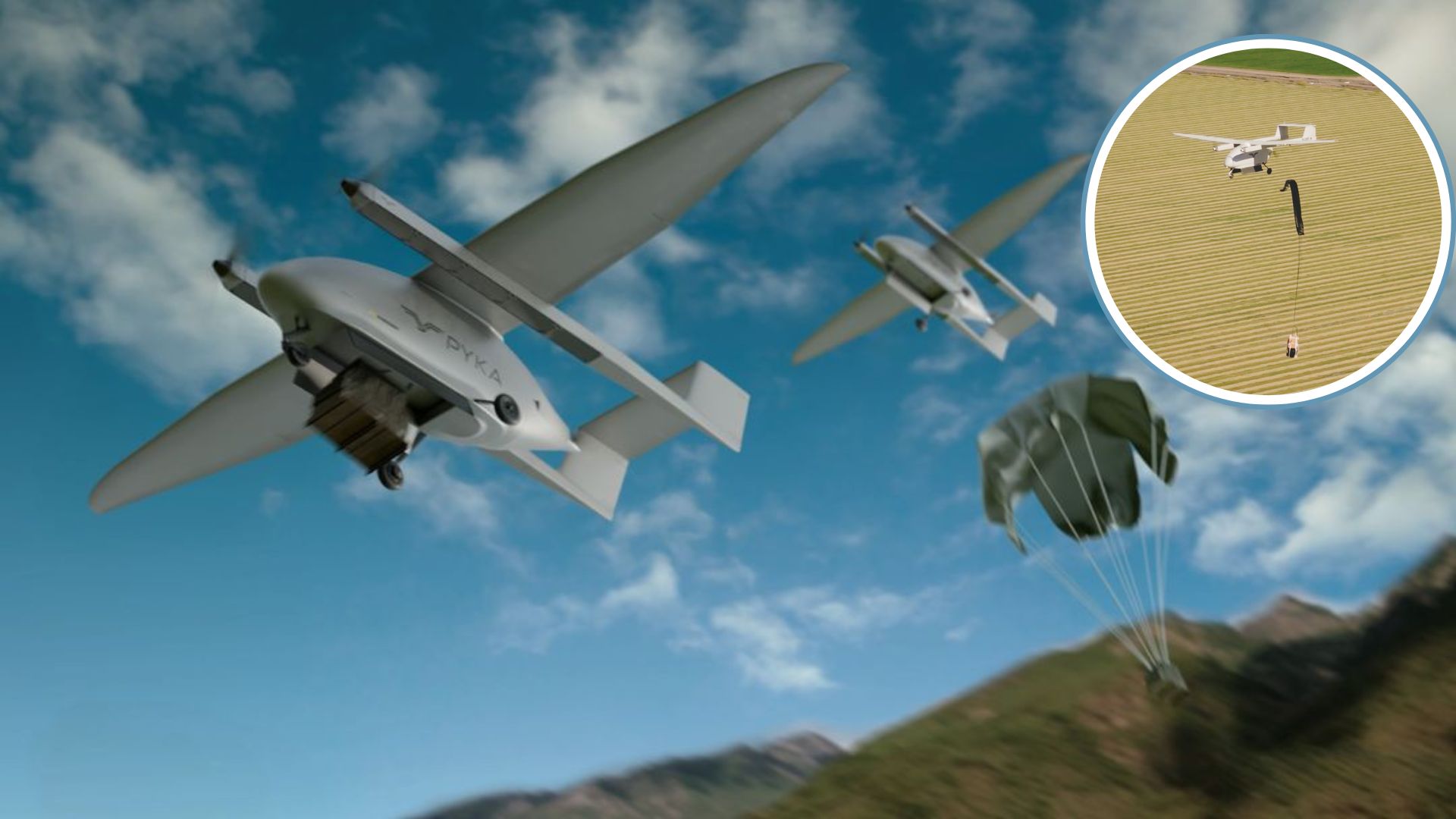
The California-based company has introduced a precision airdrop capability for its DropShip autonomous aircraft, enabling it to deliver critical supplies without a pilot onboard. Pyka says the system could help U.S. and allied forces move mission-essential cargo across long distances when traditional supply routes become disrupted or unavailable.

The demonstration reflects a broader shift in military logistics planning. Defense leaders have warned that future conflicts may challenge access to established transportation networks, creating demand for flexible and autonomous alternatives.

During a recent test flight, DropShip released multiple 200-pound payloads from an altitude of 300 feet. The cargo landed within roughly 50 feet of the intended target area, according to the company.

Built for denied environments

DropShip was designed as a heavy-lift autonomous platform capable of operating where conventional logistics networks cannot. The hybrid-powered aircraft has a maximum takeoff weight of 1,600 pounds and can carry up to 650 pounds of usable payload. It requires only 550 feet of runway to launch with a full payload.

Pyka says the aircraft can support same-day delivery missions across a 2,000-mile operational radius. It offers a ferry range of up to 3,500 miles and can travel more than 1,000 miles while transporting 500 pounds of cargo. The aircraft cruises at 75 knots and can sprint at 90 knots. It can also operate at service ceilings of up to 20,000 feet mean sea level.

Rapid development pace

The precision airdrop test represents another milestone in what has been a compressed development schedule. Pyka said DropShip completed its maiden flight just six months after the program launched. The aircraft progressed from first flight to autonomous precision airdrop capability within eight months.

The company credited that pace to the core technology stack already powering its commercial aircraft. Engineers adapted existing autonomous systems to speed development and testing.

Expanding mission options

Pyka believes the aircraft could play a role in a variety of missions beyond cargo transport. “Until now, there hasn’t been a safe, economical, or practical way to autonomously deliver critical supplies directly to a specific location hundreds or even thousands of miles away,” Michael Norcia, Pyka’s CEO and co-founder, said.

Norcia said operators could use the aircraft to transport fuel, water, medical supplies, repair parts, and other mission-essential cargo exactly where it is needed. He added that the capability could change logistics operations in remote regions, disaster zones, and contested environments where access remains limited.

Beyond cargo delivery, DropShip can support intelligence, surveillance, and reconnaissance missions, communications support, and expeditionary power applications. The aircraft also features a reconfigurable mission computer designed to accommodate evolving operational needs.

Pyka plans to continue expanding the aircraft’s flight envelope ahead of customer evaluations and operational exercises with the U.S. government later this year.

💾

Pyka's autonomous DropShip demonstrated precision airdrops, delivering 200-pound payloads within 50 feet of target.
  •  

Trump cancels planned Iran strikes, says peace agreement could come soon

US President Donald Trump said Thursday that he has canceled planned military strikes against Iran, claiming that negotiations between Washington and Tehran have reached a stage where a broader agreement is close to being finalized.

The announcement marked a dramatic shift after days of escalating tensions that saw both countries exchange strikes and threats, raising fears of a wider conflict in the Middle East.

In a post on Truth Social, Trump said discussions had advanced significantly and received backing from multiple countries involved in the negotiations.

“Based on the fact that discussions with the Islamic Republic of Iran have been brought to the highest level of Iranian leadership and approved, I have, as President of the United States of America, cancelled the scheduled strikes and bombings against Iran this evening,” Trump wrote.

He also claimed that the final elements of the agreement had been approved by several regional and international stakeholders, including Israel, Saudi Arabia, the UAE, Qatar, Turkey, Pakistan, Bahrain, Kuwait, Jordan and Egypt.

From threats to talks

The decision came just hours after Trump issued fresh warnings against Tehran, threatening to hit Iran “very hard tonight” and suggesting the United States could take “total control” of Iran’s oil and gas markets, including the strategic Kharg Island export hub.

Despite calling off the strikes, Trump said US pressure on Iran would continue until a formal agreement is signed.

“The Naval Blockade will remain in full force and effect until this Transaction is finalized – Time and place of the signing to be announced shortly,” he wrote.

The Strait of Hormuz remains one of the world’s most important energy chokepoints, with a significant portion of global oil shipments passing through the waterway. Any disruption there has the potential to impact international energy markets and shipping routes.

Trump later told reporters that a signing ceremony could take place in Europe as early as this weekend. According to reports, Vice President J.D. Vance is expected to attend on behalf of the United States.

Hormuz remains under watch

“The strait (of Hormuz) will officially open as soon as we sign, which could be soon — very soon, maybe over the weekend in Europe,” Trump said. “I won’t be able to be there, but JD will be there.”

Iran has not officially confirmed Trump’s claims that a peace deal is imminent.

However, reports indicate that Qatari officials recently visited Tehran to discuss possible pathways toward a broader agreement aimed at reducing tensions between the two countries.

Trump has for months signaled that a breakthrough with Iran was near. The latest claims come after a week of tit-for-tat strikes that strained an already fragile ceasefire reached in April.

Meanwhile, Iran’s parliamentary speaker Mohammad Bagher Ghalibaf warned that further escalation could have long-term consequences for global energy markets.

He said that “wrong strategies and impulsive decisions” could destabilize energy supplies and “create an endless quagmire that you will be stuck in for years.”

  •  

Senate NDAA backs plan to fold SDA, Space RCO into Space Force

The committee's 2027 defense bill would eliminate separate statutory requirements for the two acquisition organizations while advancing broader Pentagon procurement reforms

The post Senate NDAA backs plan to fold SDA, Space RCO into Space Force appeared first on SpaceNews.

  •  

Cobra 600: Germany’s 620mph jet drone interceptor with IRIS-T and 155-mile range

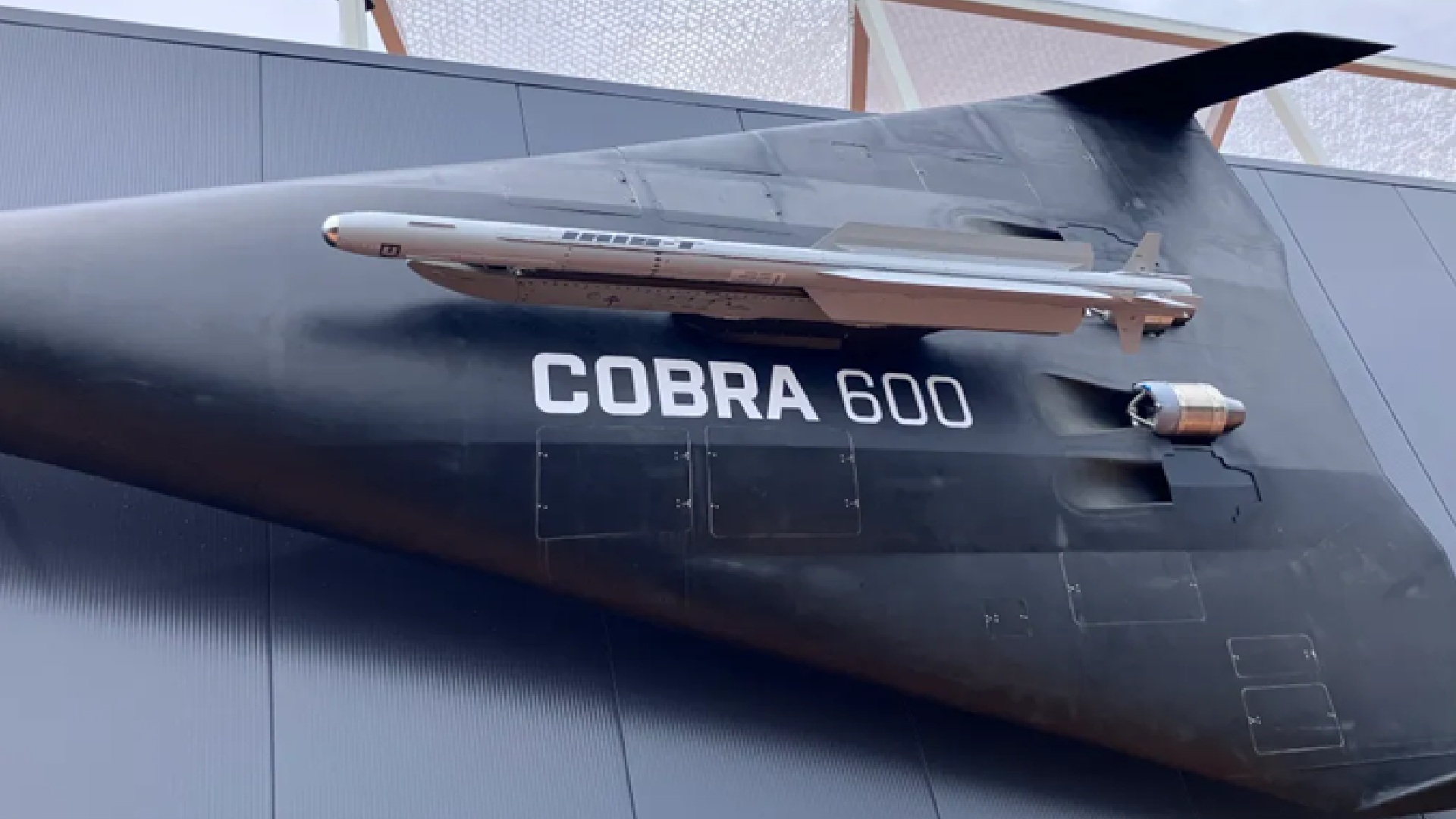
German weapon manufacturer Diehl Defence has developed a jet-powered interceptor drone called the Cobra 600, designed to carry and fire the IRIS-T short-range air-to-air missile against aerial threats including unmanned systems, cruise missiles, and low-altitude manned aircraft.

The system represents a specific response to the growing volume and diversity of airborne threats that conventional ground-based and crewed interceptors may struggle to address cost-effectively at scale.

Airframe and propulsion

The Cobra 600 is a purpose-built unmanned aerial vehicle powered by a small jet engine, giving it the speed and altitude performance needed to pursue fast-moving aerial targets. Its designation references a 600-kilogram class platform, placing it in a weight range that can accommodate meaningful payload capacity while remaining operationally agile.

The jet propulsion distinguishes it from propeller-driven loitering munitions, providing the kinetic energy necessary to reach and intercept time-sensitive targets before they close on defended assets.

The airframe integrates a single IRIS-T missile — a German-developed, infrared-guided weapon with all-aspect engagement capability and a range of several kilometers. The IRIS-T was originally designed for crewed fighter aircraft, so adapting it for autonomous drone carriage required engineering the release and guidance interfaces into a platform without a human pilot onboard.

Autonomous engagement and fire control

One of the more technically demanding aspects of the Cobra 600 concept is the fire control architecture. The drone must receive targeting data, prosecute an intercept geometry, and release the missile — either under remote operator authorization or through a higher degree of autonomous decision-making.

The precise rules of engagement and human-machine teaming protocols for such a system carry legal and ethical weight under international humanitarian law, particularly regarding the degree of human control over lethal force decisions.

The system is intended to operate within a broader integrated air defense network, receiving cueing from ground-based radars or other sensors rather than relying solely on its own onboard detection capability.

This makes the quality of the data link and network integration central to its operational effectiveness — a vulnerability if those links are jammed or spoofed by an adversary using electronic warfare.

Countering drone swarms and low-cost threats

The tactical logic behind fielding an armed interceptor drone, rather than using expensive surface-to-air missiles or diverting crewed fighters, is economic and capacity-driven.

Drone swarms and low-cost one-way attack munitions have repeatedly strained conventional air defense inventories in recent conflicts. A relatively lower-cost interceptor that can be produced and expended at volume offers a more sustainable exchange ratio against cheap threats.

That said, the Cobra 600 itself carries an IRIS-T — a missile that is not inexpensive. The cost calculus improves only if the drone airframe is significantly cheaper than a crewed interceptor sortie, or if it can successfully engage threats that would otherwise require multiple surface-to-air missile shots.

Pairing an IRIS-T with an unmanned platform also raises questions about what happens when the drone misses or the missile fails to guide — issues well understood in crewed aviation but more complex when remote human oversight is limited.

Development status and German defense context

The Cobra 600 emerges at a time when Germany is under sustained pressure to rebuild and modernize its defense industrial base following years of underinvestment. The country is a co-developer and major operator of the IRIS-T missile family, making it a logical choice for domestic integration.

According to reporting by The War Zone, the Cobra 600 concept has been publicly presented as part of Germany’s broader push to field layered air defense solutions capable of handling the evolving threat spectrum seen in contemporary conflicts.

  •  

K2 Space, Rocket Lab win key supplier roles in Space Force satcom program

K2 Space and Rocket Lab will supply spacecraft buses to SES and Viasat for the military's next-generation protected satcom program

The post K2 Space, Rocket Lab win key supplier roles in Space Force satcom program appeared first on SpaceNews.

  •  
❌