 Login

Archaeologists Found 77 Headless Bodies in 7,000-Year-Old Slovakian Village and There’s no Clear Explanation
 A 7,000-year-old village may have practiced a haunting skull ritual that left bodies behind
 A 7,000-year-old village may have practiced a haunting skull ritual that left bodies behind
Free-thinking comedy and political satire are alive and well. Jack Watson reviews Comedy Unleashed’s recent gig in Leeds – banter, 'inappropriate' accents and un-PC jokes that cancel culture will never be able to kill off.
The post Comedy Unleashed Knocks It Out of the Park in Leeds appeared first on The Daily Sceptic.
Early in the 11th century, a young Benedictine monk named Eilmer jumped from the 150-foot tower of his abbey in the small English town of Malmesbury, wearing a pair of crude wings he’d fashioned from willow wood and cloth. Eilmer managed to glide a good 600 feet, passing over the city wall before crash-landing in a small valley near the river Avon. The fall broke both his legs, crippling him. Malmesbury Abbey still boasts a stained-glass window in honor of Brother Eilmer.
This legendary experiment in medieval aviation comes to us via 12th-century historian William of Malmesbury in an account written circa 1125, although William neglected to provide future historians with an exact date for the feat. But William does mention another key episode in Eilmer's life when the monk was "advanced in years": Eilmer witnessed Halley's comet in 1066, commenting, "It is long since I saw you." Some historians have interpreted this to mean that Eilmer saw Halley's comet on an earlier fly-by in 989, when he would have been a young boy.
Assuming Eilmer was at least 5 years old in 989, he would have been born no later than 984. This would make Eilmer in his 80s in 1066, with his attempt at flight—which occurred when he was "in his first youth"—likely falling between 1000 and 1010. However, it's an estimate that is based on a lot of assumptions, according to James Aitcheson of the University of Leicester, who argues in a paper published in the journal Notes and Queries that Eilmer may have seen a different comet altogether in his youth—the comet of 1018. If so, he would have been born much later, and the date of his flight would have occurred between the 1020s and 1040s.


© Andrew Dunn/CC BY-SA 2.0
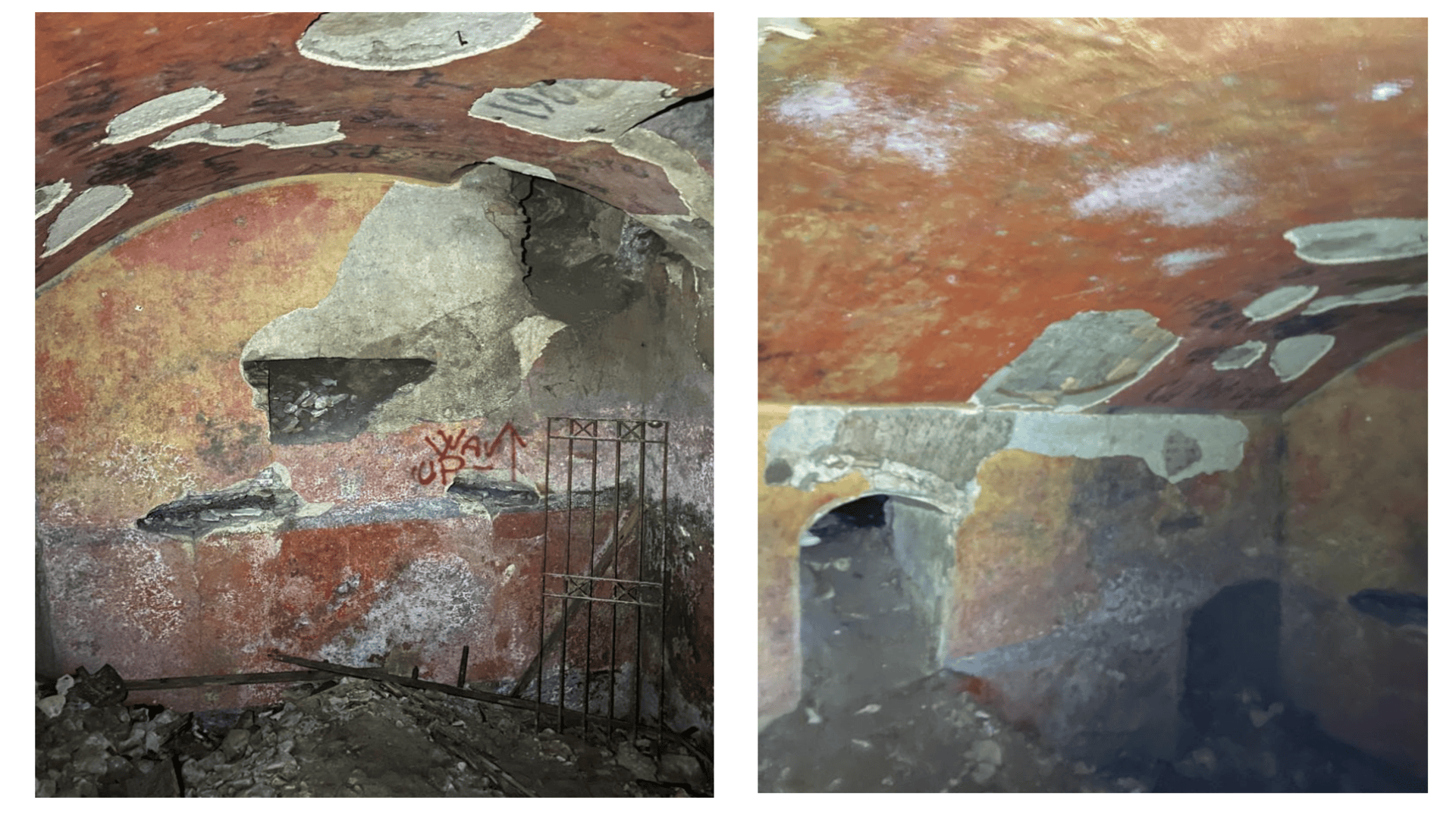
Students at a local high school in Rome had long known of the mysterious underground passages that lay beneath the ground, but finally, a protest stirred the school, authorities were informed, and they discovered an ancient Roman villa.
Cavour Scientific High School is located about a five-minute walk from the Colosseum, and it sits on the site of the recently identified Roman villa. Built in the 19th century as a missionary complex, the school embodies layers of history for which Rome is known.
For years, students quietly shared stories about the rooms, artwork, and passages beneath the gymnasium. As time went on, these tales grew more elaborate, leading the school administration to take them less seriously, according to Popular Mechanics.
The situation escalated when the students staged a protest during COVID. Locking themselves into school, these restless teenagers roamed the premises unsupervised. They explored the underground passageways beneath the gymnasium, seeking to prove the validity of their claims. A curious teacher, Claudia Marino, heard the fervor in their accounts and took a group of adventurous students through an iron door.
They found themselves in an old boiler room, and as they ventured deeper into this unused chamber, they encountered ancient Roman walls. Continuing through a narrow passage, they stumbled upon an intact domus, or villa.
Archaeologists from the Special Superintendency of Rome began excavations a few years later in September 2025.
The ancient residence first came to light in 1895 when Via degli Annibaldi was constructed. At that time, archaeologists uncovered sections of the building as well as a water pipe inscribed with the family name, Umbrius. However, further excavation did not take place, and the ancient villa faded into obscurity.
Graffiti from the 1940s and 1950s, however, indicates that students had long left their mark on someone else’s house, but the secret held among the youth never seeped into adult consciousness until the Romans took to the streets.
Once the protests signaled the villa’s existence, archaeologists were eager to investigate because the school is positioned in an exclusive neighborhood in Rome where ancient prominent figures lived: Cicero, Pompey, Octavian, Emperor Augustus, and more, according to Archaeology News.
Excavation officially began in January 2026, with an announcement made on May 28 confirming that the students had discovered a mid-Imperial domus, which was subsequently named Domus Liceo Cavour. Dating to the mid-second century CE, it indeed belonged to the Umbrius family, originally from south-central Italy.
Archaeologists left the site with 48 crates of artifacts, including wall paintings, decorative elements, and a notable mosaic of large, irregularly shaped tiles—designs that were popular in the second century CE.
The villa’s exceptional preservation prompted the Italian Ministry of Culture to describe the paintings as “spectacular” and in need of full excavation, according to Popular Mechanics. It is likely that the grounds extend into the school’s courtyard, so further exploration is planned.
The project aims to open the site to visitors, with students serving as tour guides—a thoughtful conclusion that honors those who discovered and appreciated this piece of history.

Sensitivity readers, racist gatekeepers, editing by committee – mainstream publishing has been destroyed by woke gobbledegook. The silver lining? Substack is thriving because publishers have failed to discover good new writers.
The post Why I’m Glad Publishing Has Destroyed Itself appeared first on The Daily Sceptic.

Could consciousness exist in alien life forms that look nothing like us? Could it even appear in machines? According to a new paper by philosophers Eric Schwitzgebel of the University of California, Riverside, and Jeremy Pober of the University of Lisbon, the answer may be yes. The researchers argue that consciousness is probably not limited […]
The post Consciousness may exist beyond humans, animals, and even Earth appeared first on Knowridge Science Report.
Já imaginou transformar uma fotografia numa composição feita de milhares de pequenos símbolos coloridos? Esta é a proposta da See in CMYK, uma nova experiência online criada pelo Google Arts & Culture em colaboração com a artista Stefanie Posavec e com o museu Exploratorium, em São Francisco.
The post See in CMYK transforma fotografias em composições artísticas com milhares de símbolos coloridos appeared first on Tek Notícias.

This just in from Hadrian’s Villa: archaeologists uncovered an underground villa dating to the Republican period, the oldest construction ever found to date at the massive, imperial complex.
Archaeologists continue to make groundbreaking discoveries at 300-acre Hadrian’s Villa, under investigation since 2003. From its earliest foundations, the daily operation of its vast workforce, and the lavish palatial residence, there seems to be no end in sight to its former glory.
Between April and May this year, at the Palazzo sector of Hadrian’s Villa in Tivoli, Italy, researchers reached a new milestone, yet again, when they found a structure beneath the Palazzo’s peristyles, a residential area, that revealed an earlier foundation for the site, before Emperor Hadrian took it over to build his splendid, jaw-dropping grounds.
In this newly discovered structure, they identified a hypogeum, an underground storage chamber, according to Archaeology News. From the construction debris and pottery shards, in Hadrian’s day, the structure appeared to archaeologists to have been abandoned. All the same, the artifacts represent the only archaeological finds from the Republican era.
Researchers from the Archaeological Seminar at Pablo de Olavide University (UPO), in collaboration with the Institute of Hadrian’s Villa and Villa d’Este, are spearheading the current archaeological excavation at the UNESCO World Heritage site.
More like a small city, larger than Pompeii, Hadrian’s Palace boasted a sprawling display of 30 monumental buildings, including palaces, libraries, baths, and theaters. It took over a decade to build, about 19 miles from Rome. He chose this location beneath the Tiburtine Hills because it’s a massive, flat valley near ancient aqueducts and the Aniene River, which helped feed and sustain the extensive pools, thermal baths, and elaborate fountains. As Hadrian dabbled in architecture, he even built structures that acted like photographs taken from his favorite locations throughout the empire.
A sight to behold, indeed, Hadrian’s Villa was astounding as a display of wealth, culture, and power. According to researchers, long before Hadrian selected this location in Italy as his grand countryside estate, these remains likely belong to an earlier villa that was incorporated into the foundations of the Palazzo, which has provided archaeologists with a glimpse into its past.
Along with the hypogeum, researchers also uncovered elaborate gardens that once surrounded the Palazzo. From what archaeologists gathered, the Roman villa garden featured a flowerbed enclosed in a courtyard with rows of packed ceramic pots, as per Ancient Origins. The design was called “ingenious,’ allowing for seamless transitions between the seasons, which revealed the sophistication of their landscaping techniques. Additionally, tree pits were identified to plant shrubs and trees, so the gardens reflected a highly organized layout, and an exceptional group of intact ceramic flowerports, according to Archaeology News.
As gardens contributed to the beauty and splendor of Hadrian’s Villa, the latest discoveries offer an unprecedented insight into how these green spaces were organized and maintained. As excavations are ongoing, who knows what archaeologists might find next at Hadrian’s Villa, whose splendor and glory appear to have no end.

For centuries, the Arctic has remained one of the most dangerous places on Earth to explore. Beneath what looks like solid snow can lie hidden pools of icy water capable of swallowing people, vehicles, and scientific equipment without warning.
These risks make collecting data from polar regions slow, expensive, and often dangerous. Now, a small four-legged robot promises to change this.
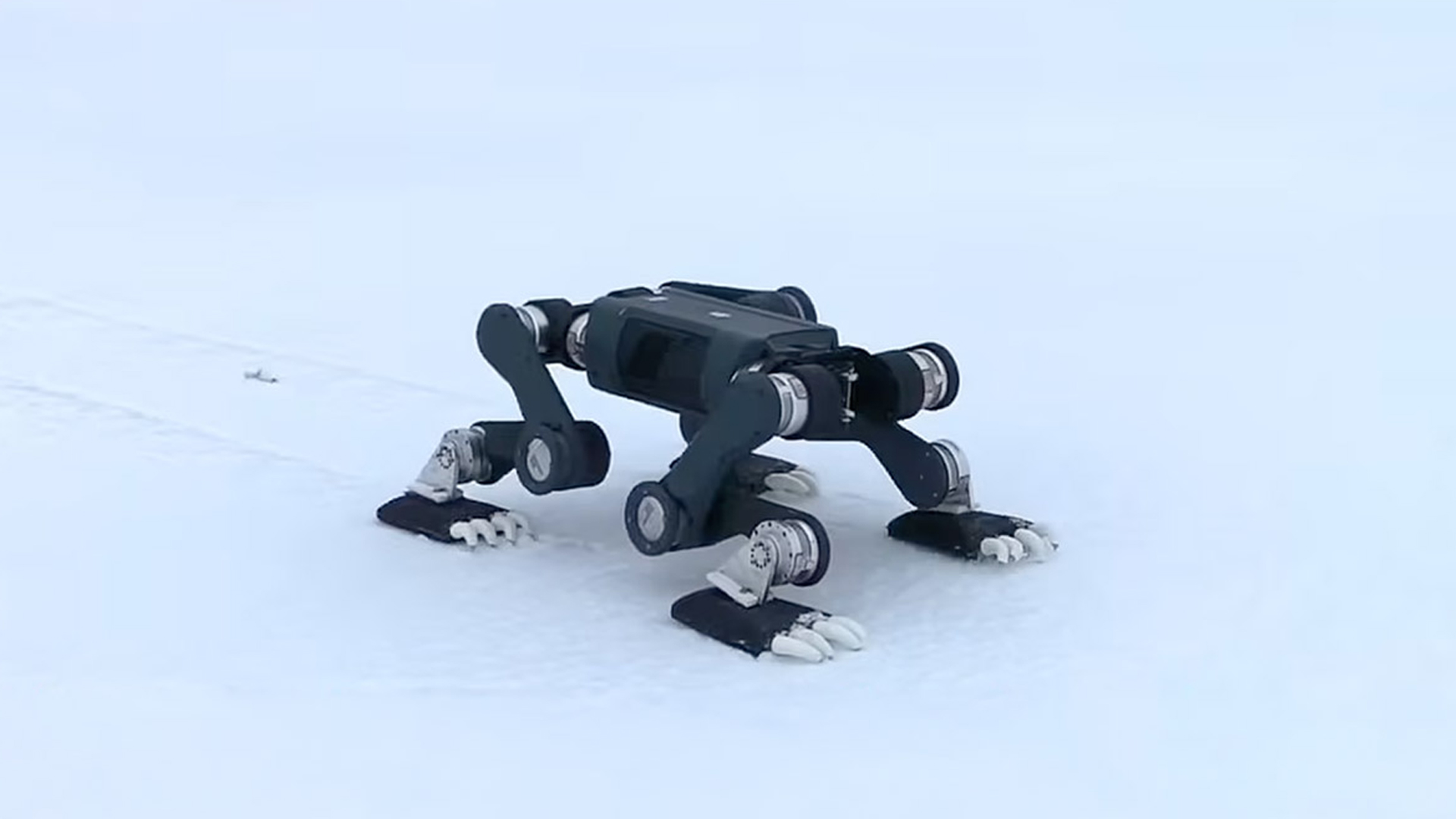
A modified version of Lynx S10, an autonomous robot developed by China-based DEEP Robotics, has become the first quadruped platform to walk on Arctic Ocean ice floes. It successfully demonstrates that autonomous machines may one day perform some of the most hazardous fieldwork in places where human access is limited.
“The Lynx S10 enables autonomous path planning and intelligent obstacle avoidance,” the DEEP Robotics team notes.
The achievement is significant not because a robot survived the cold, but because it showed that compact autonomous systems can navigate unpredictable ice, snow, and water-filled terrain that even experienced researchers approach with extreme caution.
The Arctic expedition was designed as a real-world stress test for the Lynx S10, a compact quadruped robot that weighs less than 20 kilograms even with its battery installed.
Unlike larger robotic platforms that require extensive transport and setup, the machine can be carried and deployed by a single person. “Its compact body allows single-person portability and rapid deployment, enhancing operational mobility,” the DEEP Robotics team claims.
Despite its small size, it is equipped with sixteen precision joints that allow it to bend, twist, and maneuver through spaces that would be inaccessible to bulkier robots.
The standard version of the robot is already highly capable. According to its creators, “Equipped with a next-generation AI motion control and gait algorithm, the Lynx S10 performs a variety of extreme maneuvers.”
For instance, it can travel at speeds of up to 8 m/s on flat ground, climb over obstacles as tall as 50 centimeters, and switch between wheeled and legged movement depending on the terrain.
When necessary, it can even rise into a bipedal stance to gain additional height and visibility.
To operate independently, the robot relies on an advanced perception system.
Four ultra-wide-angle cameras equipped with high-dynamic-range lenses continuously monitor its surroundings, while front and rear LiDAR sensors generate detailed three-dimensional maps. This allows the machine to identify obstacles, plan routes, and navigate without constant human control.
Its rugged design also enables operation in harsh environments. The standard platform is rated IP66 against dust and water intrusion, functions in temperatures from minus 20 to 55 degrees Celsius, carries payloads exceeding 8 kilograms, and can automatically locate and travel to a charging station when battery levels become low.
However, Arctic ice presented challenges that went far beyond the robot’s original design specifications.
Engineers therefore modified the platform before deployment. The standard wheels were replaced with large biomimetic paws inspired by the broad feet of polar bears. These custom feet spread the robot’s weight across a larger surface area, helping prevent it from sinking into soft snow.
Anti-slip textures improved grip on slick surfaces, while integrated crampons provided extra traction on hard ice. The robot’s sealing was also upgraded from IP66 to IP67 for greater protection against water intrusion.
Researchers introduced another unusual modification for environments where ice and water mixed together. By increasing the effective surface area of the limbs, the robot’s legs could function almost like paddles, allowing it to move through slushy conditions that would challenge conventional wheeled systems.
The Arctic tests quickly revealed why such adaptations were necessary. In several locations, snow concealed dangerous meltwater pools beneath the surface. The robot encountered terrain that appeared stable but actually floated above hidden pockets of water.
Thanks to its redesigned feet and traction system, it maintained stability while traversing these deceptive surfaces. In one instance, it successfully glided across an area that looked like solid ice but concealed water underneath.
Later tests pushed the machine into regions where ice and water were intermixed, and the modified limbs enabled it to continue moving through the difficult terrain.
More importantly, this was not a finished commercial product being showcased under controlled conditions. The Arctic vehicle was still an alpha-stage prototype.
The broader significance of the project extends well beyond a single expedition. Environmental researchers and emergency responders often need to operate in locations that are dangerous, remote, or impossible for humans to access safely.
Lynx S10 “confidently handles challenging environments such as dusty sites, heavy rain, and humid/foggy conditions,” the researchers at DEEP Robotics added.
This lightweight autonomous robot is capable of crossing unstable ice and moving through mixed ice-water environments. Therefore, it could help collect environmental data, monitor climate-related changes, and support search-and-rescue operations without exposing people to the same risks.
Researchers are now using the performance data gathered during the mission to further improve the design. Hopefully, future versions will be even more capable of handling unpredictable natural environments.
You can read more about Lynx S10 here.



The Liberal Democrats' intolerance of gender critical campaigners and Christians has rightly landed them in legal hot water and shown that those in charge are no friends of liberty, say David Campanale and Natalie Bird.
The post The Liberal Democrats Are No Friends of Liberty appeared first on The Daily Sceptic.



Researchers from the Université Polytechnique Hauts-de-France have revealed a technique that successfully analyzed several Vincent van Gogh artworks at a microscopic level to correctly identify well-known, previously identified forgeries from recently authenticated ones
The research team behind the pioneering, non-invasive art authentication process said their approach could provide museums, collectors, and art auction houses with a previously unavailable tool with a proven, scientifically based track record for identifying fake or counterfeit art.
According to a press release announcing the successful counterfeit identification tests, art forgery is an increasingly complex problem. However, the traditional approach of expert opinion combined with historical research and invasive pigment analysis has not always proven successful, with the study authors noting that such methods are “often inconclusive,” leaving museums and collectors to shoulder most of the risk for difficult-to-authenticate works.
More recently, collectors and auctioneers have turned to science for answers, including a report showing that AI may have identified as many as 40 counterfeit artworks sold on online marketplaces. Although no counterfeit versions of Van Gogh’s works were found, that same effort identified potentially fake versions of paintings by Monet and Renoir that were indistinguishable from authentic ones.
In 2023, researchers at the University of Sydney announced the development of a cutting-edge microscope capable of surpassing the diffraction limit. In that story, study co-author Professor Boris Kuhlmey noted that the method, which is ideal for identifying microchip irregularities, “could even be used to reveal hidden layers in artwork, perhaps proving useful in uncovering art forgery or hidden works.”
Last month, The Debrief reported the discovery of a mathematical pattern in many famous expressionist artworks, noting that many abstract artists may naturally arrange shapes and patterns in similar ways, even without knowing the mathematics behind them. If correct, this concept could use science and mathematics to separate fake Impressionist works.

Now, the Université Polytechnique Hauts-de-France team says their new approach takes modern technology a step further, resulting in an unprecedented level of accuracy.
Unlike the above techniques, the new approach analyzes the texture of a painting’s surface at the microscopic level by converting high-resolution images into three-dimensional surface ‘maps’ of the painting’s upper layers. According to the study authors, the extracted “texture” of a painting allows them to measure an image’s roughness and detail using fractal math. For example, the team said that the subtle patterns of an artist’s brush stroke are so consistent “that they act like a morphological signature unique to that artist.”
“Fractal analysis gives us a measurable fingerprint of an artist’s brushwork without needing to sample or disturb the painting,” explained Francois Berkmans, the study’s lead researcher.
To test their approach, the researchers scanned several artworks attributed to Renaissance artist Vincent van Gogh. The researchers also used their technique to study the mathematical texture of an artwork called The Plowmen, which the team noted is a “well-documented fake.” Last, they used their method to analyze another Vincent van Gogh work, Sunset at Montmajur, which was authenticated in 2013.

After running their microscopic surface analysis, the team’s new system identified The Plowmen as a “strong outlier” compared to the artist’s other works. Conversely, the new method determined that the two newly authenticated paintings “aligned closely with Van Gogh’s known works.”
When discussing the study’s results, Berkmans said their technique “can clearly point out genuine artists and reliably detect known forgeries.” Along with identifying fakes and authentic works, the team said that the new approach successfully separated Van Gogh’s stylistic signatures from those of 17th‑century painter David Klöcker Ehrenstrahl, an achievement they heralded as demonstrating the technology’s “wider potential.”
Although the new approach had successes, the team said it is not designed to replace current approaches, including complementary analyses such as the chemical examination of materials. Instead, they said their surface-texture approach should be used as a complementary tool to strengthen authentication, resulting in a multifaceted approach that can reduce risk for collectors, museums, and auction houses alike.
“This approach won’t replace traditional expertise, but it significantly strengthens it.”
The study “Preserving Van Gogh’s Painterly Heritage: Topographical and Fractal Insights in Authentication” was published in Surface Topography Metrology and Properties.
Christopher Plain is a Science Fiction and Fantasy novelist and Head Science Writer at The Debrief. Follow and connect with him on X, learn about his books at plainfiction.com, or email him directly at christopher@thedebrief.org.

Archaeologists working with the Israeli Antiquities Authority have announced the discovery and excavation of a cave located just outside the town of Fureidis, which has revealed signs of early human presence dating back to between 250,000 and 400,000 years ago.
The team of researchers behind the ongoing excavation said the fortuitous discovery could represent a “time capsule” that has remained sealed for hundreds of thousands of years, offering researchers an unprecedented glimpse into a critical period in human evolution.
According to a statement emailed to The Debrief, the ancient cave, which lies south of Haifa, near the Zikhron Ya’akov interchange, likely dates back to sometime between 400,000 and 250,000 years before present. The team notes that the range would mean it was sealed since the time of the Acheulo-Yabrudian culture, a period when ancient human ancestors began to display several complex tool-making skills, including various stone blade designs which were in use by hominins until around 300,000 years ago, marking the end of the Lower Paleolithic period.

“The culture we are investigating here was characterized by a variety of advanced methods for producing flint tools, including small sharp handaxes, scrapers, and blades,” explained Dr. Kobi Vardi, head of the Prehistory Branch at the Israel Antiquities Authority and the study’s co-director.
Most archaeologists put the African departure date of the last common ancestor of humans and Neanderthals between 700,000 and 500,000 years ago, and the first genetic interbreeding between the two species around 130,000-1,000,000 years ago. Therefore, finding a sealed cave containing relics from the period between these two critical evolutionary junctures offers the research team an unprecedented opportunity.

“We have been fortunate to excavate a unique site of global importance that has been protected from the ravages of time thanks to the exceptional conditions that existed here,” said team member Professor Ron Shimelmitz of the Zinman Institute of Archaeology and the School of Archaeology and Maritime Cultures at the University of Haifa.
Dr. Vardi agreed, noting that “It is very rare to find a site in such a state of preservation.”
“Every prehistorian who visits the site is absolutely thrilled,” he added.

In that same statement, Prof. Shimelmitz noted that the end of the Lower Paleolithic was a “unique time period” before Neanderthals and modern humans became the dominant hominids of the era and spread across “many regions.”
“Only a handful of sites from this important phase have been uncovered in Israel, and the wider Levant, and most of them are inaccessible for research,” the professor explained, adding that marked changes in human physiology, technology, and social organization “foreshadowed the traits and complex behavioral patterns that developed later and characterize both Neanderthals and modern humans.”
One component that helped facilitate the development of complex culture, highlighted by Prof. Shimelmitz, is the transition from ancient humans living in larger groups. He also emphasized the advent of human ancestors “spending longer periods at the same sites.”
Early excavations have already uncovered evidence of what the researcher termed “intensive use of fire.” These early forays have also found signs of prolonged human activity. Prof Shimelmitz said these signs suggest a “complex and rich camp life.”
Dr Vardi said that the ongoing excavation is uncovering animal bones, including ancient specimens of fallow deer, gazelle, and an ancient variety of horse.

Dr. Vardi also noted that these finds were discovered “alongside evidence of the presence of water,” which he suggests may have made the ancient cave an attractive location for hunter-gatherer groups inhabiting the region at the time.
When discussing the implications of their findings, Prof. Shimelmitz first expressed the team’s appreciation for the financial support and enthusiasm shown by the project’s sponsor, the Ayalon Highways Company, “in enabling us to undertake the excavation.”
As for the scientific value of their initial discoveries and the potential for further insights into this period in human history, the professor noted that findings to date are typically associated with “the development of social cooperation and the transmission of knowledge, as part of the processes of human evolution.”

Dr. Vardi echoed those sentiments, while also noting that the ancient cave’s archaeological value “is no less important” than that of the well-known Nahal Me’arot site from the same evolutionarily critical period.
“(This site) will allow us to study in high resolution how humans lived at that time,” the researcher added.
Given the importance the research team put on the site, which included co-leader Amit Gabbay, the Israel Antiquities Authority and the University of Haifa are already putting forth what they describe as a “large-scale research program that seeks to reconstruct how humans lived, adapted to their environment, and developed new lifestyles and technologies over the course of human evolution.”

Along with heralding the site’s scientific value, the researchers highlighted its cultural importance by declaring their goal to make the site “open and accessible to all: to the residents of Fureidis, students at the nearby school, and anyone interested in the prehistory of the region,” once the formal excavations are completed.
Christopher Plain is a Science Fiction and Fantasy novelist and Head Science Writer at The Debrief. Follow and connect with him on X, learn about his books at plainfiction.com, or email him directly at christopher@thedebrief.org.

Just like snowflakes, no two TikTok For You pages look alike. And that is intentional. The social media site’s highly personalized—and black box-like—recommendation algorithm has long been considered its “secret sauce,” after all. But how much control do the platform’s billion-plus daily users have over the topics that show up on their feed? The social […]
The post TikTok’s ‘Not Interested’ tool beats swiping, but effect may quickly wear off appeared first on Knowridge Science Report.
