 Login

UK may ban social media for children under 16
The U.K. seems to be following Australia's lead in banning a wide swath of social media for teens.


According to a new report from Semafor, the White House's decision to impose export restrictions on Anthropic's Mythos was driven in part by fears that it had been accessed by a group linked to China. If the Chinese government actually had access to Mythos 5 or Fable 5, it would present a serious national security risk. The government could also attempt to reverse engineer the model through distillation, a method in which a "student" AI is trained on a more advanced model to replicate its behavior.
The White House has not confirmed this report, and a post on X by Trump adviser David Sacks did not mention China. Instead, Sacks focused on a r …

According to the The Wall Street Journal, the export control directive that led to Anthropic cutting off access to Fable 5 and Mythos 5 was triggered in part by cybersecurity research from Amazon and conversations between CEO Andy Jassy and the White House. According to the report, the paper from Amazon claims that, through a series of prompts, it was able to get Fable 5 to serve up information that could be used in cyberattacks. Amazon has yet to respond to a request for comment.
Shortly after Jassy shared the company's findings with the government, it made the call to block its use by foreign nationals. Complicating this issue is that man …

**
Across the stories today, a common thread emerges: the tension between revelation and rescue—moments when new understanding drives urgent action, even as time runs short.
Beneath our feet, scientists have mapped fungal networks stretching nearly a billion times the distance to the sun, revealing an underground web of connection that dwarfs anything visible above ground. It’s a reminder that the natural world operates on scales both microscopic and cosmic, with systems we’re only beginning to understand. This same spirit of discovery appears in unexpected places—from the ghostly earthshine illuminating the moon’s dark side to the arrival of a tropical western reef heron in Wales, likely pushed northward by changing climate patterns.
The day’s coverage points to growing momentum around what happens when scientific insight meets conservation urgency. In Mozambique, nine female white rhinos completed their journey to establish the country’s first viable breeding population in generations—a decade-long effort finally bearing fruit. Meanwhile, Australian researchers at PlantBank work like modern-day ark builders, preserving seeds before species disappear forever. On Palau’s Ulong Island, the simple act of removing invasive rats triggered rapid ecological recovery across both land and marine environments, challenging assumptions about how long nature needs to heal.
Yet revelations don’t always bring good news. China’s power sector emissions fell for the first time in a decade, a historic milestone, but a coal surge threatens to reverse that progress. Trees may store less carbon than scientists hoped, according to new research examining growth patterns across 137 forest sites. And Antarctica is missing sea ice equivalent to France’s size, with winter temperatures soaring 20°C above normal—numbers that feel abstract until you consider their global implications.
It’s a reminder that progress and pressure often arrive together. Lake Mead approaches the critical threshold that will slash Hoover Dam’s electricity production, while thousands of marine animals die in fishing nets annually through bycatch. For the 58-year-old Kenyan fisherman Mohamed Mwazigona, returning to shore with just 2 kilograms of fish, these aren’t statistics—they’re the reality of dwindling catches that threaten coastal livelihoods.
Behind the numbers are real communities adapting in real time. Eight volunteers used ropes and pulleys to rescue a 172-pound loggerhead turtle named Bowser from a Florida pier—the kind of hands-on conservation that makes the difference between survival and loss. In Albania, protesters dubbed the “Flamingo Revolution” emerged after bulldozers illegally destroyed protected wetlands for a luxury resort, showing how environmental destruction can galvanize public resistance.
The stories also reveal how legal frameworks struggle to keep pace with environmental challenges. A federal judge ruled the Trump administration’s cancellation of environmental justice grants illegal, while Australia’s climate chief outlined plans to transform the country from fossil fuel exporter to renewable energy leader. Meanwhile, environmental laws were waived to enable border wall construction through Big Bend National Park, illustrating how political priorities can override conservation concerns.
What emerges is a picture of a planet under pressure, but also of human ingenuity rising to meet unprecedented challenges. As commercial satellites threaten the night sky that has guided humanity for millennia, conservationists celebrate osprey chicks hatching in Wales and sengi pups born in captivity. Progress isn’t linear, and solutions often come from unexpected directions—underground fungal networks, community rescue efforts, and the patient work of seed preservation.
As the week unfolds, all eyes will be on how these parallel stories of discovery and rescue continue to intersect, shaping our understanding of what’s possible when knowledge meets action.
The post China’s Coal Surge Threatens Historic Emissions Drop, Hoover Dam Faces Massive Power Cut as Lake Mead Hits Critical Low — Today’s Environmental Briefing for Sat, Jun 13 2026 first appeared on EnviroLink Network.

On Friday evening, the government ordered Anthropic to block access to Fable 5 and Mythos 5 for all foreign nations, both inside and outside the US, due to national security concerns. That order included employees of Anthropic. To meet those demands, the company has completely cut off access to the models for all customers.
In a statement, Anthropic said that while it was complying with the order, the government "did not provide specific details of its national security concern." Instead, it claims that any evidence of potential jailbreak was provided verbally, and that the vulnerabilities discovered were minor and available via other model …
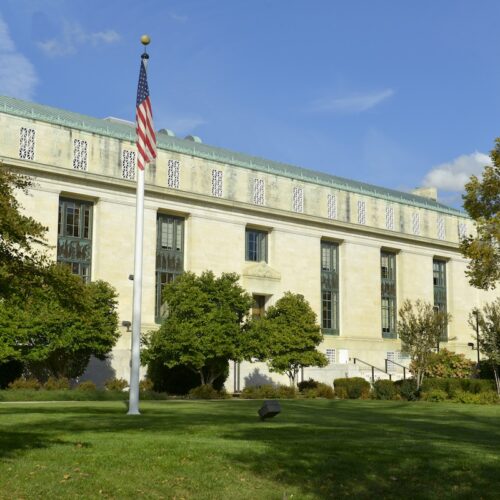
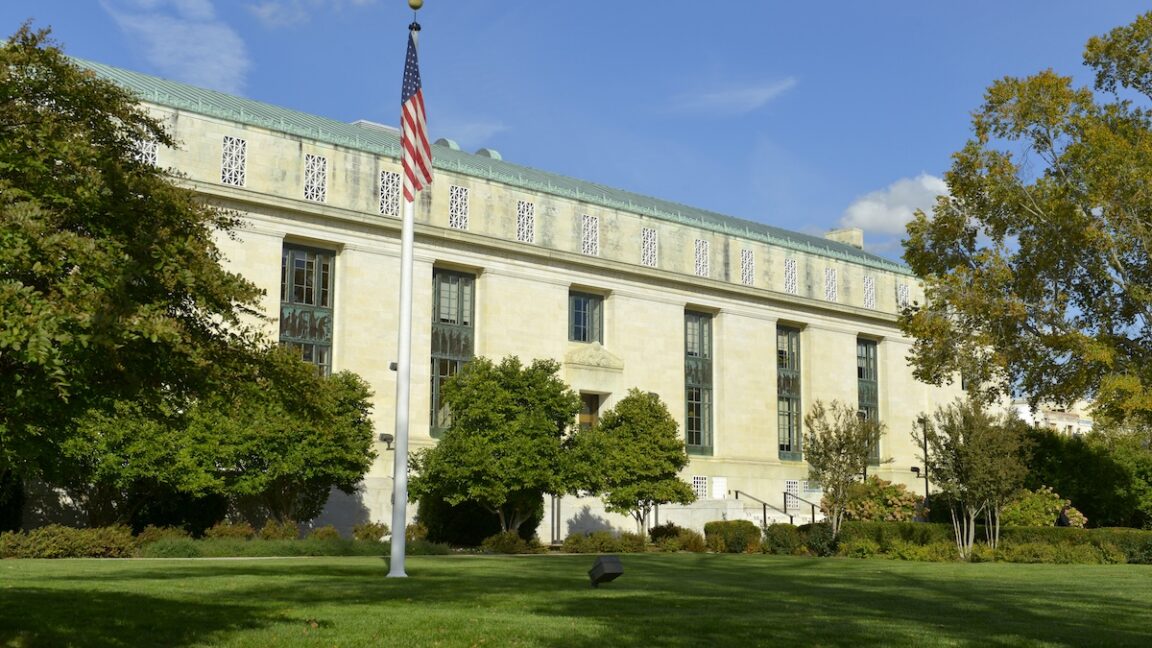
Founded during the US Civil War to provide advice to the government, the National Academies of Science have become one of the most prestigious scientific organizations. Its primary function is to prepare comprehensive reports on scientific and technological issues, aided by its ability to attract top talent from across the country.
Those reports have not been afraid to weigh in on matters of public controversy and risk offending powerful groups, which it has managed to do without losing the respect of the governmental organizations that fund these reports. But this year, there have been increasing signs that the Academies' ability to dodge political firestorms has reached its limit. Yesterday, a deeply reported story from Politico explained the breakdown between the National Academies and Republican politicians.
The National Academies is preparing an expert report on attribution of weather events to human-driven climate change, and fossil fuel companies are worried it will lead to findings of liability in the many cases where those companies are being sued.
© csfotoimages

**
Across the stories today, a common thread emerges: the planet is sending signals, and communities are finally learning to listen—sometimes by choice, sometimes by necessity.
The day’s most prominent signal comes from the Pacific, where scientists have confirmed the arrival of a powerful El Niño that could rank among the century’s strongest climate events. This naturally occurring phenomenon, which emerges every few years to reshape weather patterns globally, arrives at a moment when human communities are already stretching to adapt to climate disruption. For families from Florida to California already spending an extra $400 to $900 annually on climate-related costs—rising to over $1,300 in the hardest-hit areas—the prospect of intensified extreme weather represents more than meteorological curiosity. It’s a reminder that progress and pressure often arrive together.
Yet the day’s coverage also points to growing momentum around solutions that seemed impossible just years ago. Solar power has quietly crossed a historic threshold, generating more electricity than coal in the United States for the first time ever—12.8% versus coal’s 12.2% in May alone. Meanwhile, engineers in Barcelona have finally realized Antoni Gaudí’s sustainable architecture vision at the Sagrada Familia, using modern technology to complete designs that were ahead of their time by more than a century. These breakthroughs suggest that patient innovation can eventually bridge the gap between ambitious vision and practical reality.
The tension between environmental protection and human needs surfaces repeatedly across today’s stories, revealing communities grappling with complex tradeoffs. In Queens, residents debate whether an abandoned railway should become green space or renewed transit infrastructure. Nebraska towns that fiercely rejected wind and solar projects are welcoming nuclear power plants. Even Britain found time to celebrate, with the peacock butterfly claiming the crown in the nation’s first-ever favorite species poll—a small but significant reminder that public engagement with nature remains strong.
Behind the numbers are real communities adapting in real time. In London, new research shows that clean air zones have measurably reduced emergency hospital visits, translating policy into tangible health benefits. But the challenges run deep: in Alabama, a community that lacks basic sanitation infrastructure now faces a proposed data center that would strain resources further, while in Ecuador’s Amazon, an Indigenous community surrounded by two rivers cannot access clean drinking water due to mining pollution.
The natural world continues revealing both its resilience and vulnerability. Scientists captured the first-ever footage of goblin sharks in their deep-sea habitat, while researchers documented how elephant loss triggers immediate dung beetle extinctions in Kenya—the first direct evidence of coextinction in action. Perhaps most remarkably, new research has mapped the underground fungal networks that span 110 quadrillion kilometers worldwide, moving billions of tons of carbon in an invisible web beneath our feet.
These discoveries underscore how much we’re still learning about the systems that sustain life on Earth, even as we’re rapidly changing them. From pharmaceutical pollution in East African waters to the transformation of Miami’s Biscayne Bay into saltier, more acidic habitat threatening endangered sharks, the impacts of human activity continue cascading through ecosystems in ways we’re only beginning to understand.
As these stories unfold, they reveal a world where environmental challenges and solutions are increasingly inseparable from questions of justice, economics, and community resilience. The coming months will test whether the momentum behind renewable energy and conservation can match the scale of changes already underway.
The post El Niño Officially Begins as Solar Power Surpasses Coal, SpaceX Eyes Historic IPO — Today’s Environmental Briefing for Fri, Jun 12 2026 first appeared on EnviroLink Network.

Under a new bipartisan bill, Americans could sue for damages if a government official illegally tries to coerce a social media, AI, or broadcasting company to remove their post - regardless of whether the platform actually does it.
Senate Commerce Committee Chair Ted Cruz (R-TX) and Sen. Ron Wyden (D-OR) introduced the JAWBONE Act on Thursday, which, in addition to letting individuals sue for these kinds of damages, would create new transparency requirements for government communications with social media, AI, and broadcast companies.
That could empower someone like Jimmy Kimmel to sue Federal Communications Commission Chair Brendan Carr …

Congress has failed to pass a three-week extension of Section 702 of the Foreign Intelligence Surveillance Act (FISA), with the House voting 218-198 against reauthorizing the controversial warrantless wiretapping authority through July 2nd. After a short-term extension earlier this year, the spying program now appears set to lapse for at least a week. This is the nightmare scenario FISA's proponents have been warning about - but it doesn't actually mean the US has lost its surveillance capabilities.
Proponents of a clean extension claim a lapse will hinder intelligence agencies' efforts to thwart potential terrorist attacks, with surveillan …

Elon Musk, on the verge of becoming the world's first trillionaire, is whipping up anti-immigration tensions amid ongoing riots in Belfast, Northern Ireland. Following a knife attack in the city on Monday, Musk declared support for Restore Britain, a hard-right populist political party that advocates for large-scale migrant deportation in the UK. He reposted statements from party leader Rupert Lowe calling for "a vast number of people" to be forced out of the country, as well as a promise from Lowe to "prosecute officials and politicians who knowingly placed dangerous third world savages in our communities." "This is the way," Musk added to …

After getting its hands on a Trump phone and tearing it apart, iFixit has confirmed what I first reported back in February: the T1 Phone is an almost exact duplicate of the HTC U24 Pro.
iFixit partnered with NBC to get hold of the network's media sample of the Trump phone, along with a U24 Pro. They ran the phones through a CT scanner, tore them down to parts, and even put them back together into a functional Frankenstein phone with the U24 Pro's board inside the T1 Phone's chassis, confirming along the way that the two phones are functionally identical.
There are minor differences: The flash has been moved slightly, the speaker grille was …

European economy airline Ryanair is under investigation in the UK for charging parents mandatory fees to sit with their children. The Competition and Markets Authority (CMA) said it was looking into whether the seating fees, which may be charging parents for the airline to meet its child safety and disability‑related obligations, are "unfair" under consumer law.
Under Ryanair's terms and conditions, at least one parent or guardian is required to sit with children aged between 2 and 11 when they fly, which the airline calls a "mandatory family seat." This approach to seating imposes a fee - typically £8 (around $10) per flight, according to …

The CFTC is considering its first regulation for prediction markets, as arrests over "insider trading" on everything from military operations to Google Search data continue to stack up. As CoinDesk reports, a notice of proposed rulemaking says "the proposal would establish a structured framework for evaluating whether such contracts involve an activity enumerated in Section 5c(c)(5)(C) of the Commodity Exchange Act -activity that involves terrorism, assassination, war, gaming, or conduct that is unlawful under federal or state law-and, if so, whether that contract is contrary to the public interest."
Separately, Kalshi announced on Wednesda …

Hello and welcome to Regulator, a newsletter for Verge subscribers about tech politics, tech influence, and tech shenanigans in Washington, DC. (If you're not a subscriber, you can get on board here.) We're back after a two-week hiatus, during most of which I was gallivanting in the Netherlands for a family wedding, and a trip to the Heineken Experience, which is, truly, an ~experience~.
Before I left, I asked everyone in Washington to please chill out while I was gone. This clearly did not happen, and I have returned to a political landscape that can be best described as that meme from Community where the room is on fire. Let's get into th …
