
❌

Reading view

Scientists Capture First-Ever Images of Cozumel Dwarf Fox

This image of a dwarf gray fox (Urocyon sp.) was captured on the island of Cozumel, Mexico: an adult male is shown partially concealed behind foliage before capture by the Fundación de Parques y Museos de Cozumel on September 14, 2023; this represents the first photograph ever taken of the species on the island and the first reported sighting since 2001. Image credit: Rafael Chacón.

Researchers have obtained the first-ever photographs of the Cozumel dwarf fox (Urocyon sp.), an elusive dwarf fox living on the Caribbean island of Cozumel, off Mexico’s Yucatán Peninsula. Captured in September 2023, the images provide the first confirmed evidence since 2001 that the elusive animal still survives on the island.

The post Scientists Capture First-Ever Images of Cozumel Dwarf Fox appeared first on Sci.News: Breaking Science News.
  •  

O Mundial FIFA 2026 e a revolução tecnológica no futebol

Desde bolas com sensor de alta precisão a avatares 3D foto realistas gerados por inteligência artificial, conheça as inovações tecnológicas do Mundial de Futebol FIFA 2026, e como é que a tecnologia promete redesenhar o maior evento desportivo da história.

The post O Mundial FIFA 2026 e a revolução tecnológica no futebol appeared first on Tek Notícias.

  •  

New Species of Fossil Axolotl Unearthed in Mexico

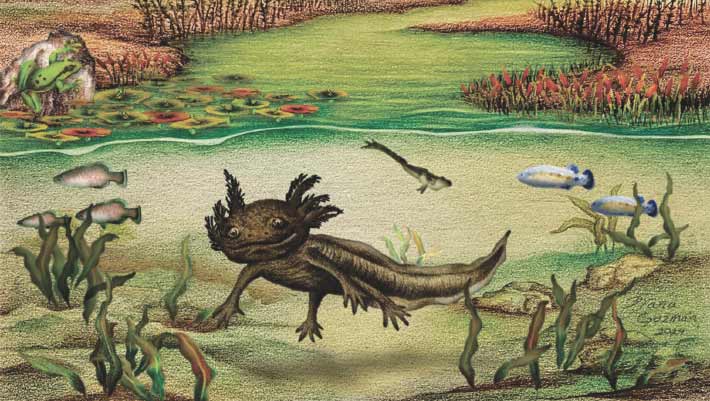
Reconstruction of the Santa María Amajac paleolake during the Late Pliocene; the paleobiodiveristy of the paleolake included microvertebrates such as the ambystomatid salamander Ambystoma quetzalcoatli, Paleocharacodon guzmanae and Goodea-like fishes, anurans and numerous species of terrestrial and aquatic plants such as Nymphaea sp., Scirpus sp., Typha sp. Image credit: Diana Guzmán-Madrid.

Paleontologists have identified a new species of the axolotl genus Ambystoma from several fossilized specimens found deep in the rocky outcrops of the Mexican state of Hidalgo.

The post New Species of Fossil Axolotl Unearthed in Mexico appeared first on Sci.News: Breaking Science News.

  •  

Toothless, Bipedal Crocodile Relative Lived in New Mexico 212 Million Years Ago

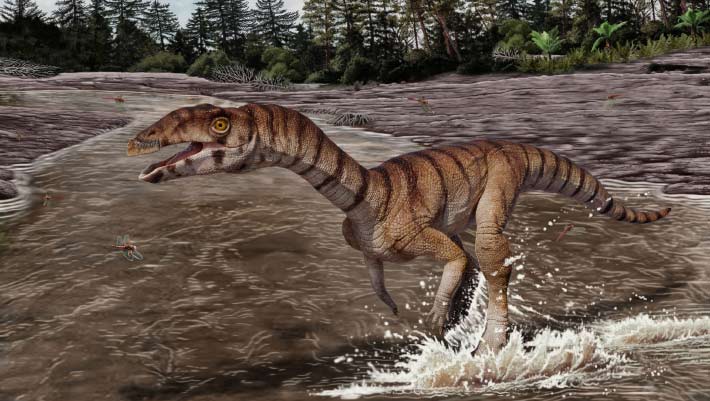
Labrujasuchus expectatus navigated the world on two legs with tiny arms and a toothless mouth tipped in a beak. Image credit: Jorge Gonzalez / NHMLAC Dinosaur Institute.

Paleontologists have described a new species of bipedal shuvosaurid archosaur from New Mexico, shedding light on a group of creatures that roamed North America during the Triassic period, more than 200 million years ago.

The post Toothless, Bipedal Crocodile Relative Lived in New Mexico 212 Million Years Ago appeared first on Sci.News: Breaking Science News.

  •  

U.S. Aims to Give Cold War Plutonium to Start-Ups for Nuclear Fuel

Companies say it’s a better way to dispose of the Cold War-era material — and fix a shortage of nuclear fuel. But the plan has also faced criticism from nonproliferation experts.

© Science Source

Work with radioactive materials at a plutonium facility at the at Los Alamos National Laboratory in 1978.
  •  
❌