The hunt for Planet Nine continues as new discoveries make the Solar System’s biggest mystery even harder to solve. Is there a massive undiscovered planet on the outer reaches of the Solar System? The idea has been around since before the discovery of Pluto in the 1930s. Labeled as planet X, prominent astronomers had put [...]
A disc-like object observed producing “beams” while it hovered above an airport in Zimbabwe in 2008, an object resembling a flying “potato” over the Cheyenne Mountains in 2022, and alleged “orbs” observed by U.S. personnel are all among the sightings included in the Pentagon’s latest release of files related to UAP encounters.
“As the unprecedented levels of interest in both this topic and the Trump administration’s historic transparency effort continue, WAR.GOV/UFO has received over 1.7 billion hits worldwide since the site’s launch on May 8, 2026,” read a statement provided by Assistant to the Secretary of War for Public Affairs and Chief Pentagon Spokesman Sean Parnell that accompanied Friday’s release.
“The Department of War and our agency partners are actively working on the next release of UAP files,” Parnell added.
However, as more videos and documents continue to surface, a fundamental question arises: what, if anything, do they reveal about UAP, and how the United States intelligence community collects and processes information about these objects, whatever their origins may be?
What the Latest PURSUE Release Reveals
Within the latest batch of files from what the Pentagon characterizes as the Presidential Unsealing and Reporting System for UAP Encounters (PURSUE), a previously unreleased file from the U.S. Central Intelligence Agency (CIA) describes an unusual observation of an object that reportedly hovered above the Harare International Airport in Zimbabwe in 2008.
“Individuals debated if the sighting was an advanced reconnaissance device of a foreign government or of extraterrestrial origins,” a short description provided with the document states. Although no video or other supplemental data is provided, the written account that the document contains, which features partial redactions, states that observers described a “disc-like” object possessing a hollow center and “a series of rotating lights on the underside of the airframe.” As the lighting shifted colors, the object reportedly ascended quickly and was soon out of sight.
“Regardless of the origins,” the document states, the incident reportedly “resulted in the decision to place the Zimbabwe [redacted] on high alert.”
Another series of documents describes an observation of an object shaped like a “potato” that was seen near Colorado Springs in 2024.
Witnesses at the time described seeing “distinct edges” on the object, which “appeared to look painted in a creamy/whitish opalescent color.”
A digital rendering of an unresolved UAP Report from Colorado Springs in 2022 (Image Credit: U.S. Department of War).
“It was somewhat translucent with a slight shimmer,” the report states. “The object was made up of what can best be described as articulating fish scales or panels that were non-symmetrical, non-overlapping, and irregular shaped. The object itself was perfectly still but each panel on the object shifted in slow waves starting at different points of origin but at the same time.”
According to an assessment of the sighting by the All-domain Anomaly Resolution Office, which currently leads the Pentagon’s investigations into UAP, “Analysis possibly indicates that the positioning on the sun in relation to Cheyenne Mountain would allow for backscattering of sunlight reflecting off snow-covered ground.”
“This reflection could illuminate low-level clouds in the vicinity,” according to the assessment, which was produced by one of AARO’s intelligence community (IC) partners, adding that such conditions “might account for the visibility of the object followed by its sudden disappearance.”
The report concedes that the analyst had “low confidence in this assessment” based on limited information made available about witnesses at the time, such as their individual field of view, as well as the level of cloud cover over the area at the time.
Another pair of documents describes what sounds like a very intriguing observation of an “intense bright light” seen hovering below the tree line near the observer’s backyard. Emerging from their vehicle, the witness observed a “strange light” that they estimated to be approximately one meter in diameter. The object was described as a “brilliant and beautiful” reddish color the observer had never seen before, adding that “inside the red sphere, at the center, there appeared to be what [redacted] described as a ‘white plasma sun’ about the size of a basketball.”
In this instance, the written accounts were not alone: a supplemental video indeed shows a pair of objects matching the description provided, which look suspiciously like candle balloons, also known as “sky lanterns,” drifting along with the breeze. Additionally, the footage bears a resemblance to a video released by an aviation safety advocacy group last year (and in fact, it may be the same video), which was also quickly assessed to have been sky lanterns, rather than anomalous UAP “orbs.”
In short, the latest Pentagon releases—as with most other recent releases of government data related to UAP—feature some interesting stories, though the majority of the “new” data remains underwhelming, at least at first glance.
Hopeful—but Skeptical—Ufologists
In a posting on his X account, prominent skeptic Mick West noted that in advance of the Pentagon’s second PURSUE release, “ufologists (myself included) were hopeful we’d get some amazing evidence.”
“All 46 videos have been released,” West wrote. “None of them are amazing. Maybe it’s time to consider that this might be the best they have.”
Whether or not the videos we’ve now seen are indeed among the best examples of UAP in the Pentagon’s holdings, West isn’t wrong to point out the obvious: the current examples the Pentagon has provided fail to establish that there is anything truly extraordinary about the objects these videos convey.
West places himself in the commendable position of being among the hopeful “ufologists” that he says are eager to see better data on these phenomena. I can affirm that this author is among those ranks as well, having followed the subject for decades; beyond that, and reporting on the subject for The Debrief, I have also managed an independent UAP sightings reporting website for the last two years, as a self-funded citizen science effort to collect data on possible UAP observations and make it freely available to the public. Unlike a few similar sites and apps that crowd-source data on possible UAP sightings, I also work to assess the data and resolve cases whenever enough information has been provided to make that feasible.
Like West would probably also tell you, I can confirm that the majority of UAP sightings have prosaic explanations, which can often be determined using resources that include weather data, aviation tracking sites, astronomical software, rocket launch data, and other online resources that are generally free to the public. After attempting to resolve UAP sighting reports, there is, however, a residuum of unresolved cases that remain intriguing.
Assessing UAP videos in this way, in order to determine whether they document real anomalous phenomena or simply misidentifications of known objects, often carries a very negative stigma, partially because it has an equally negative term attached to it: “debunking.” The negative association here is unfortunate, since the careful study and interpretation of purported UAP imagery and, when warranted by evidence, its classification as either misidentified known phenomena or genuine unresolved cases, is one of the most beneficial ways we can work toward advancing our understanding of the UAP issue.
Equally unfortunate is the fact that, all too often, what we get instead when it comes to UAP releases is just the opposite: imagery and other data (sometimes including official U.S. government materials released through unauthorized channels) that have undergone virtually no assessment, and which feature scant accompanying details required to help contextualize the sightings.
What we are left with are usually blurry videos and images of objects that end up seeing wide circulation, often with the help of the most ardent promoters of UAP (many of whom also happen to be equally skilled at self-promotion). Beyond making a poor case for the legitimate study of UAP, such instances invite criticism—although not so much from the hopeful, skeptically-minded “ufologists” genuinely interested in viewing quality UAP data. Rather, the most frequent attacks originate from ideological, self-branded “skeptics” whose real focus appears to be aimed at superficially undermining the topic and its proponents using rhetoric heavily dipped in ad hominem, all as a means of driving engagement through their social media accounts.
Who can really blame them? Such high-traffic social media engagement can reportedly be quite profitable these days, and let’s face it: few among the most active voices in the online UAP fracas these days appear to be above engaging in a bit of good old-fashioned grifting—including the ones who often complain the loudest when they see others doing it.
Fundamentally, though, none of this helps to advance our knowledge about UAP. Answers to questions about what these objects are, as well as what they aren’t, and whether any good evidence exists for truly “anomalous” behaviors often associated with these objects by those who witness them, remain void from such contentious prattling—just as it apparently remains absent from the vast majority of the new records released by the Pentagon.
However, that isn’t to say there aren’t at least a few intriguing data points that have emerged from the recent releases.
An Intriguing UAP Case from the Second PURSUE Release
In the second batch of videos released by the Department of War, one potentially intriguing example of an unidentified flying object seems to have gone mostly overlooked.
The case involves imagery from the holdings of the All-domain Anomaly Resolution Office that was originally captured on April 12, 2021. Labeled “Spherical UAP [CALLSIGN] 2021/04/12 vid 0,” the footage, according to details provided at the time of its release, “is likely derived from a full-motion video camera and an infrared sensor aboard a U.S. military platform operating within the United States Central Command area of responsibility in 2021. A user uploaded this video to a classified network in June 2024.”
According to a short description provided by the Department of War, “An area of contrast enters the sensor field-of-view from the upper right corner of the frame, exiting in the bottom right corner of the screen. The sensor pans to track the area of contrast, centering it within the sensor field-of-view.”
“The sensor changes modes as the area of contrast becomes indistinct against the background,” the summary concludes.
However, viewing the footage reveals something slightly more intriguing than this description alone conveys. The footage appears to show a small, light-colored object moving above a rugged desert terrain, presumably somewhere in the Middle East. As the object is being filmed using the electro-optical system on board a United States military drone, at one point, the object can be seen as it begins to descend in altitude, an elevation change made apparent by the shadow the object casts against the terrain below it (as can be seen in the still frame from the footage featured below). At this point, the object engages in a sudden change in direction and appears to enter a shadowed area of the landscape, at which time its brightness (seemingly due to reflectivity of its surface) is significantly diminished by the surrounding shadow, and the object becomes indiscernible.
Screen capture from the Pentagon UAP video titled DOW-UAP-PR061, “Spherical UAP [CALLSIGN] 2021/04/12 vid 0”, where the object’s shadow can be discerned against the nearby landscape (to the left of the small white object, seen just above and to the right of the center of the frame (Image Credit: U.S. Department of War).
The most intriguing aspect of this behavior is the object’s apparent movement into what we might interpret as a position of concealment. In doing so, the object not only appears to “hide,” but it also demonstrates an obvious change in direction that is suggestive of controlled motion. This is significant for a few reasons: one is that in many purported UAP videos, a phenomenon known as the parallax effect can (and often does) lead to an optical illusion where a slow-moving or even stationary object can have the appearance of moving. This illusion is caused by differences in relative speed between objects closer to the camera and those further distant, causing any closer objects to appear to be moving faster than those in the background (a good explainer on parallax effect and its relationship to UAP sightings can be read here, made available at the website of the All-domain Anomaly Resolution Office).
In the case of the “Spherical UAP” featured in the video from the second PURSUE release, perhaps some degree of motion parallax cannot be ruled out. However, the object’s descent just before changing direction and entering the rugged portion of terrain cast in shadow appears to clearly demonstrate in this case that the object is engaged in movement, which equally appears to convey intelligent control. Finally, an interpretation that the object may be taking a position of concealment, if correct, may indicate that the object and/or its operators had been aware that it was being observed.
Does anything conveyed in this video offer proof of extraterrestrial technology? Absolutely not. Are there any obvious signs of extraordinary capabilities being demonstrated by this object? No, there aren’t. What this video does demonstrate, however, is footage of an object that appears to be engaged in behaviors that clearly show movement beyond the capabilities of most simple balloons, and one that may fit the general description of objects the Pentagon’s All-domain Anomaly Resolution Office has characterized as its general “target” description for UAP it investigates (more on that in a moment).
In the case of the DOW-UAP-PR061, “Spherical UAP [CALLSIGN] 2021/04/12 vid 0” footage, the object not only demonstrates changes in its direction of motion, but also appears to conceal itself. Obviously, a better interpretation than “balloon” in this instance might be some kind of unmanned aerial system, although what limited information the footage conveys is simply too indistinct to be able to tell. Altogether, it simply remains “unidentified” in the purest sense: some kind of object engaging in what appears to be controlled flight, while not exhibiting any otherwise extraordinary capabilities.
However, all of this raises another important question about UAP reports: why do we always have to assume that an object must display “otherworldly” or otherwise extraordinary capabilities for it to qualify as a “genuine” UAP?
The Problem of Conditioning
Another intriguing phenomenon related to the recent release of UAP information by the Pentagon involves the similarity in responses to these releases from both UAP advocates and UAP skeptics.
Some proponents of genuine anomalous UAP have expressed frustration over the Department of War’s release of several dozens of videos, all of which fail to reveal any “classic” UFO shapes like flying saucers or giant black triangles, nor any confirmation of extraterrestrial technologies detailed in the troves of formerly classified documents included with the releases.
Meanwhile, skeptics essentially argue the same thing: so far, these videos show nothing particularly remarkable, and clearly fail to prove that extraterrestrials have visited Earth.
In short, the fundamental premise of most “believers” and “skeptics” appears to be the same: “UAPs either must represent evidence of extraterrestrials, or else they are unimportant.”
This premise fails to acknowledge several important issues, such as 1) that many ideas about how UAP are supposed to look and behave are based on presumptions about how we expect any technologies produced by extraterrestrials advanced enough to traverse interstellar distances would appear to us, 2) that UAP could still represent a genuine mystery, even if they aren’t evidence of extraterrestrial technologies, and 3) that even if most UAP turned out to be technologies of earthly origin, they could still represent a security concern, and hence warrant U.S. government investigation.
Clearly, it should be acknowledged that there is also witness testimony—some of it quite compelling—that describes unusual characteristics associated with UAP, such as extreme acceleration, erratic movement, exceptional agility/maneuverability, environmental effects, and other capabilities which could only be characterized as “anomalous.” Such descriptions are also part of what informs many of our expectations about how UAPs are supposed to behave. However, it is important to recognize that just because such eyewitness descriptions exist, it does not necessarily mean that we can—or should—attribute such capabilities to all UAP observations, and thereby use such presumptions as a gauge for their credibility on a case-by-case basis.
How the All-domain Anomaly Resolution Office Characterizes UAP
A careful review of resources made available by the Pentagon’s All-domain Anomaly Resolution Office (AARO) helps to shed further light on the attributes of what it characterizes as UAP.
A page dedicated to education and resources at AARO’s website lists a small collection of studies detailing current state-of-the-art technologies related to spherical drones, novel propulsion systems, and other technologies, which it says represent “advanced propulsion systems that are consistent with UAP observations.” The obvious implication of providing such resources involves the consideration that at least some UAP appear to operate in ways consistent with known earthly technologies, albeit ones that are still in their emergent stages.
AARO also gives us the following definition of UAP, according to an AARO Mission Brief featured at its website: “Unidentified Anomalous Phenomena (UAP) are sources of anomalous detections in one or more domains (i.e., airborne, seaborne, spaceborne, and/or transmedium) that are not yet attributable to known actors and that demonstrate behaviors that are not readily understood by sensors or observers.”
The brief goes on to define “anomalous detections” as “phenomena appearing to demonstrate capabilities or material properties exceeding the known state-of-the-art,” adding that UAP “may consist of one or more objects and may persist over an extended period,” are mainly “attributable to domain-awareness gaps, and in at least some cases “may represent advanced capabilities operating in domain awareness gaps.”
The AARO Mission Brief also separates the misidentification of known objects such as balloons and drones, as well as developmental or experimental platforms, from “genuine” UAP, which it clearly defines as AARO’s designated mission area.
According to past information produced by AARO under the tenure of its inaugural director, Dr. Sean Kirkpatrick, typically reported UAP characteristics include appearances of generally round objects roughly 1-4 meters in size, possessing white, silver, or translucent coloration. Performance altitudes, on average, fall within 10,000 to 30,000 feet, and velocities of the objects range from hovering in a stationary position to movement at speeds of up to Mach 2 (1534.54 miles per hour).
Above: Table featuring commonly attributed UAP characteristics based on AARO data available in 2023 (Image Credit: U.S. Department of War/All-domain Anomaly Resolution Office).
Despite such capabilities, no kind of thermal exhaust has been associated with these objects, and their propulsion systems remain unknown. Additional signatures associated with such genuinely anomalous UAP, according to AARO, include “intermittent, X-Band (8-12 GHz)” radar, as well as radio frequency emissions in the 1-3 GHz and 8-12 GHZ ranges. While no thermal exhaust evidencing propulsion is evident, intermittent shortwave infrared and medium-wave infrared thermal signatures are occasionally detectable.
“That’s what we’re looking for and trying to understand what that is,” Kirkpatrick told U.S. Senators during an April 2023 hearing that first revealed the AARO technical data described above.
Given the specificity of such technical information (all of which, as cited above, relates to AARO materials produced in 2023 during its early period in operation), one must wonder how such details could be derived from any of the videos or other materials the Department of War has released under the recent PURSUE initiative.
The obvious implication is that the data described above must have other, better-quality sources, which have not yet been released by AARO or the Department of War.
What This All Means, for Now
Of course, AARO also maintains that it has found no evidence of extraterrestrial technologies in its UAP investigations. All this taken together, a few things can be concluded based on the totality of AARO’s findings since its investigations began: 1) some objects appear to be genuinely anomalous, which AARO calls UAP, 2) AARO takes its investigations of these objects seriously, 3) studies involving breakthrough or disruptive technologies available at its website imply that AARO may suspect some UAP of being related to such developments, and are therefore not currently misidentifications of well-known objects or technologies, but possible “breakthrough” technologies whose origins remain unattributed, and 4) specific details about appearance and operational characteristics of AARO’s UAP “target package” strongly suggest the existence of higher quality UAP data that likely remains classified.
If it ends up being true that additional, higher-quality UAP data exists in U.S. government holdings—data from which AARO’s own technical attributes for genuinely “anomalous” UAP are derived—it therefore stands to reason that the recent batches of imagery fall significantly short of being the “best data” that has been obtained about these objects. Still, some of the videos, such as DOW-UAP-PR061 (described earlier in this article), nonetheless appear to match the so-called “target package” for genuine UAP first characterized by Kirkpatrick in 2023, even if they aren’t the most astonishing UAP videos in existence. Again, we should consider the conditioning outlined earlier, which has helped to encourage the public’s never-ending expectation for “extraordinary” revelations, most of which end up falling flat once they do finally come to light.
The bigger questions, for now, are whether such examples of higher-quality UAP data do indeed exist, and if so, whether they will be made public in any future releases.
“We are collecting as much data as possible, following the data where it leads, and sharing our findings whenever possible,” AARO states on its website. “We will not rush to conclusions in our analysis. In many cases, observed phenomena are classified as ‘unidentified’ simply because sensors were not able to collect enough information to make a positive attribution.”
Arguably, if there are better quality UAP materials in AARO’s holdings, there are probably very reasonable considerations for why that information has not yet been released, which may include uncertainty about whether some data could involve potentially sensitive information about experimental U.S. technologies or those of foreign adversaries, the release of which could have implications that, for now, may warrant secrecy.
In conclusion, although most of the videos in the recent Pentagon UAP releases provide too little data to draw any firm conclusions, arguably, some of the most important considerations are made evident by what the recent releases don’t contain—especially when compared to the information AARO uses as the basis for what it calls “genuine” UAP.
To borrow that overused X-Files quip once again, “the truth is out there.” Whether we’ll be seeing the best data that supports that truth any time soon is another question entirely.
Micah Hanks is the Editor-in-Chief and Co-Founder of The Debrief. A longtime reporter on science, defense, and technology with a focus on space and astronomy, he can be reached atmicah@thedebrief.org. Follow him on X @MicahHanks, and at micahhanks.com.
As NASA prepares for humanity’s return to the Moon, researchers at Texas A&M University are exploring how the same material could become a key building block for the first permanent settlements beyond Earth.
The Moon’s surface is surprisingly unlike anything we would consider soil on Earth. Instead, it is covered by a fine powder of pulverized rock and jagged glass that slips into every gap, grinds through seals and gaskets, and exists in a vacuum exposed to intense radiation and extreme temperature swings capable of bending steel. Yet researchers at Texas A&M University see opportunity rather than obstacles in this harsh environment.
Scientists refer to this material as lunar regolith, and it is considered one of the greatest challenges to long-term human habitation beyond Earth.
As NASA advances plans for a permanent human presence on the Moon through its Lunar Innovation Park initiative, Texas A&M researchers are developing technologies designed to transform the lunar surface into a foundation for future settlements.
“We are moving past the era of ‘flags and footprints,’” said Dr. Patrick Suermann, professor of construction science and retired U.S. Air Force lieutenant colonel in a statement. “We have to stop thinking like explorers and start thinking like settlers.”
Money as a Hurdle
Arguably, the greatest challenge facing lunar construction may not be engineering, but cost. Transporting materials from Earth remains extraordinarily expensive, with estimates ranging from roughly $1 million to $1.3 million per kilogram delivered to the Moon. As a result, researchers are increasingly focused on utilizing resources already available on the lunar surface rather than transporting materials from Earth.
“The future depends on building infrastructure from resources already on the moon,” explained Suermann.
“The high cost of shipping to the moon is the million-dollar problem,” Suermann said. “Every time you can cut the mass of a payload, you save a fortune. That’s why the future depends on building infrastructure from resources already on the moon.”
Helping advance that vision is Dr. Robert Ambrose of the Texas A&M Space Institute, located near NASA’s Johnson Space Center in Houston. The institute has received $200 million in support from the Texas Legislature.
“One of the most exciting features of the 240-acre facility is it’s two-and-a-half acre testing areas: one replicating the surface of the moon, the other Mars,” says Suermann.
These facilities allow researchers to evaluate robotic systems, autonomous vehicles, and construction technologies under conditions similar to those expected during future lunar and Martian missions.
Meanwhile, the university’s Construction Automation, Safety and Education (CASE) Lab is exploring how humans and machines can collaborate in extreme environments. Led by Dr. Gilles Albeaino, the lab focuses on mixed-reality technologies and semi-autonomous robotic systems capable of performing construction tasks on the Moon.
“On the moon, construction operations will depend on semi-autonomous robotic systems,” Suermann said. “The CASE lab is leading research into how humans and machines can work together in environments where humans can’t safely do everything themselves.”
“Every tool matters. Every ounce of material you ship matters,” added Suermann. “So, the question becomes: how do you use the environment itself as your supply chain, and how can you augment machines to become your partner in austere environments?”
Arctic to Afghanistan
Suermann’s experience combines two worlds: military service and construction science. Before joining Texas A&M in 2017, he served in the U.S. Air Force, deploying to remote locations that included Afghanistan, Guam, and Greenland.
Those experiences operating in challenging and isolated environments continue to inform his thinking about future lunar settlements.
“My experiences in serving the U.S. Air Force were formative and transformative,” Suermann said. “It taught me a great deal about construction, and that what can go wrong will go wrong.”
It shows, to me, that lunar regolith isn’t too dissimilar from the terrain we have here on Earth,” Suermann adds. “At the end of the day, construction is construction.”
Should We Develop on the Moon?
The broader question remains whether humanity should be expanding its footprint beyond Earth at all. While plans for lunar settlements continue to advance, critics point out that many environmental, political, and social challenges remain unresolved here at home.
As governments and private companies invest billions into space infrastructure, some argue that humanity must carefully consider how development beyond Earth aligns with priorities on our own planet. Others contend that technologies developed for lunar habitation could ultimately provide benefits back on Earth, helping address challenges ranging from resource management to sustainability.
At the heart of the patented technology is a baseline imaging approach that creates a visual reference of the vehicle’s underside. When the car is switched off and in a stable state, the system captures and stores an image of the underbody, establishing a snapshot of what the area should normally look like.
Later, when the vehicle is preparing to move or performing a safety check, new real-time images are taken and compared with the stored reference. Rather than processing the entire underbody scene every time, the software focuses only on areas where it detects a change from the baseline image.
These altered sections are isolated as target images and sent for more detailed analysis, allowing the system to reduce computing demands while quickly identifying anything unusual beneath the vehicle.
AI safety technology could help prevent underbody accidents
Rather than repeatedly processing every component beneath the car, the patented system is designed to ignore elements that remain unchanged from one scan to the next. Fixed structures such as the battery pack housing, suspension components, aerodynamic covers, and other underbody hardware are treated as part of the reference environment, allowing the software to concentrate on anything that appears or moves after the baseline image has been recorded.
Once a new or altered area has been identified, the technology performs a more detailed examination of that specific section. It extracts visual features from the target image, analyses them using its detection algorithms, and determines whether the object is a living organism. The system can then assess the detected subject’s condition or status before deciding whether further action or a safety warning is required, CarNewsChinareported.
Unlike in-cabin monitoring technologies, identifying living organisms beneath a vehicle presents a far more complex computer-vision challenge. The space underneath a parked car is highly unpredictable, with constantly changing environmental conditions that can interfere with accurate detection.
Shifting shadows, uneven lighting, road debris, accumulated dirt, and different ground textures all create visual noise that makes reliable recognition difficult. Conventional motion-detection systems can also generate false positives, often failing to distinguish between ordinary environmental changes and the presence or movement of a person or animal beneath the vehicle.
Two-stage detection system could make parked cars safer
Instead of depending exclusively on object-recognition software, BYD’s patented technology first builds a unique visual reference of the area beneath each parked vehicle. By comparing new images against this stored baseline, the system can quickly identify anything that has changed in the underbody environment before carrying out a more advanced analysis.
Only after these differences have been isolated does the software apply its recognition algorithms to determine whether the detected object is a person, an animal, or another living organism. This layered, two-step process is designed to improve the accuracy of the detection system while cutting down on false alarms triggered by fixed structures or other non-threatening objects that remain stationary beneath the vehicle.
The patent also aligns with BYD’s broader push into advanced vehicle safety systems. The company recently unveiled another invention designed to detect forgotten occupants inside a car using radar-based sensing and signal analysis.
Together, the two technologies monitor opposite sides of the vehicle – one focusing on the cabin and the other on the space underneath. The approach suggests BYD is building a wider sensing ecosystem that combines computer vision, radar, and intelligent monitoring to improve overall vehicle awareness.
Across the stories today, a common thread emerges: the gap between what we know and what we’re able to protect is narrowing, but not fast enough. From hidden pollutants driving 15 percent of global warming to fungal networks stretching nearly a billion times the distance to the sun, science continues revealing the intricate systems that sustain life on Earth—even as political and economic forces test our commitment to preserving them.
The day’s coverage points to growing momentum around conservation breakthroughs. In the Marshall Islands, researchers hunt for “super reefs” that could survive rising ocean temperatures, while Brazil celebrates Amazon deforestation dropping to nearly decade-low levels. Young Stanley the giraffe joins breeding programs in Wiltshire, osprey chicks hatch successfully in North Wales, and Australia’s PlantBank emerges as a global leader in seed conservation. These aren’t just feel-good stories—they represent systematic efforts to build resilience into ecosystems under unprecedented pressure.
Yet the challenges are accelerating too. A century of Antarctic research data now helps scientists track El Niño patterns, but current observations show Antarctica missing a France-sized area of sea ice while winter temperatures soar 20 degrees above normal. The Hoover Dam faces massive power cuts as Lake Mead approaches critical lows, and millions of climate-displaced people find virtually no legal pathway to safety in the United States. It’s a reminder that progress and pressure often arrive together.
Perhaps most striking is how these environmental shifts intersect with human communities. Behind the numbers are real communities adapting in real time—from families near the massive illegal waste dump behind a UK primary school that’s become an election flashpoint, to Florida volunteers mounting dramatic rescue operations for endangered sea turtles. When botanist Beronda Montgomery explores connections between trees and Black American history in her new memoir, she’s mapping how environmental and social justice have always been intertwined.
The global wildlife trade, operating like “pandemic roulette” as it moves billions of animals across continents, exemplifies how our interconnected world amplifies both risks and opportunities. Commercial satellite launches threaten the night sky that has guided humanity for millennia, while SpaceX prepares for a massive public offering. Each technological leap forward carries environmental trade-offs that ripple across systems we’re still learning to understand.
China’s story encapsulates these tensions perfectly: achieving a historic drop in power sector emissions for the first time in a decade, yet simultaneously surging coal power that threatens to reverse those gains. Australia faces a similar paradox, preparing to lead international climate negotiations even as climate denial gains political ground domestically.
What emerges from today’s reporting is a picture of accelerating change on multiple fronts. Scientists are racing to identify heat-resistant corals and document rare butterfly discoveries in Surrey, while bird enthusiasts fly across Australia for a single gull sighting—small acts of attention that collectively map our changing world.
As the week unfolds, all eyes will be on how these parallel tracks—scientific discovery, conservation innovation, political resistance, and community adaptation—continue to intersect. The federal judge ruling against the Trump administration’s cancellation of environmental justice grants signals that legal frameworks remain crucial battlegrounds. But the deeper story may be in the fungal networks beneath our feet: vast, interconnected systems working largely unseen to sustain life, reminding us that resilience often operates at scales both smaller and larger than we imagine.
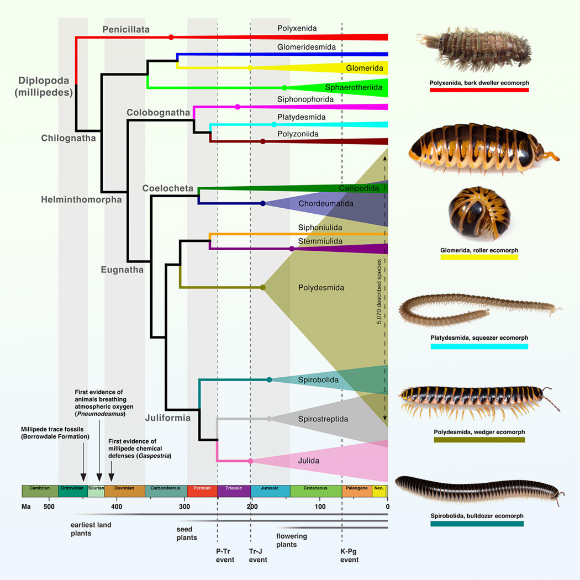
Two elusive groups of millipedes, Siphoniulida and Siphonocryptida, were the last missing pieces in the evolutionary history of Earth’s oldest land animals, according to a team of entomologists led by Virginia Tech.
Explorer le monde, s'émerveiller devant le vivant, remonter le fil de l'histoire : telle est l'ambition d'Escales. Depuis son lancement sur Futura, cette collection s'enrichit de nouveaux récits, de photographies signées par des auteurs de renommée internationale et de nombreux échanges avec ses...
A covert Home Office unit founded by an ex-MI6 spy has been secretly advising police on 'controlling the narrative' during Britain’s race riots, i.e., manipulating and suppressing speech. Is this thought policing?
This isThe Stepback, a weekly newsletter breaking down one essential story from the tech world. For more on e-bikes, power stations, and how to work anywhere, follow Thomas Ricker. The Stepback arrives in our subscribers' inboxes at 8AM ET. Opt in for The Stepback here.
How it started
Lithium-ion batteries are everywhere as we enter the second quarter of the 21st century, and that's a problem. From exploding e-bikes in stairwells to lithium-ion power banks combusting midflight, the volatile nature of traditional liquid electrolytes has become an undeniable public safety hazard.
In 2025, the US Consumer Product Safety Commission (CPSC) i …
Vous entendez des sons que personne d’autre ne perçoit ? Derrière ces acouphènes parfois anodins se cache peut-être le début d’un déclin auditif. Mieux vaut les repérer tôt pour préserver son audition… et sa qualité de vie.
Depression is often described as persistent sadness, but for many people the illness goes much deeper than feeling unhappy. One of the most painful symptoms is the loss of motivation, enjoyment, and interest in life. Activities that once brought happiness may suddenly feel empty. Hobbies become difficult to enjoy, social gatherings lose their appeal, and […]
Carbohydrates have become one of the most controversial topics in nutrition. For decades, diet trends have encouraged people to avoid foods such as bread, pasta, rice, and potatoes. Many popular weight-loss programs claim that reducing carbohydrates is the key to losing weight and improving overall health. As a result, low-carb and ketogenic diets have become […]
An African elephant named Paige became the center of controversy after being brought into a Houston convention center as entertainment for a political gathering, highlighting ongoing concerns about using wild animals in inappropriate settings.
The four-ton elephant was presented as a “larger-than-life surprise” to convention attendees at the George R. Brown Convention Center on Friday. However, the spectacle quickly drew criticism from animal welfare advocates who questioned the ethics and safety of bringing such a large wild animal into an indoor venue filled with crowds.
The situation became particularly problematic when Paige urinated on the convention floor, demonstrating the stress and unsuitability of the environment for the animal. Elephants are highly intelligent, social creatures that require vast amounts of space and specific environmental conditions to thrive. Convention centers, with their loud noises, bright lights, and crowds of people, create stressful conditions that can negatively impact animal welfare.
This incident raises broader questions about the use of exotic animals for entertainment purposes, particularly in venues not designed for wildlife. Animal welfare experts consistently advocate for keeping wild animals in appropriate habitats where their physical and psychological needs can be properly met, rather than subjecting them to potentially harmful situations for human entertainment.
Two Scottish schoolgirls were assaulted, then smeared as racists. Now their attackers have been convicted. The real story is what the media’s rush to condemn them reveals about elite contempt for the working class in Britain.
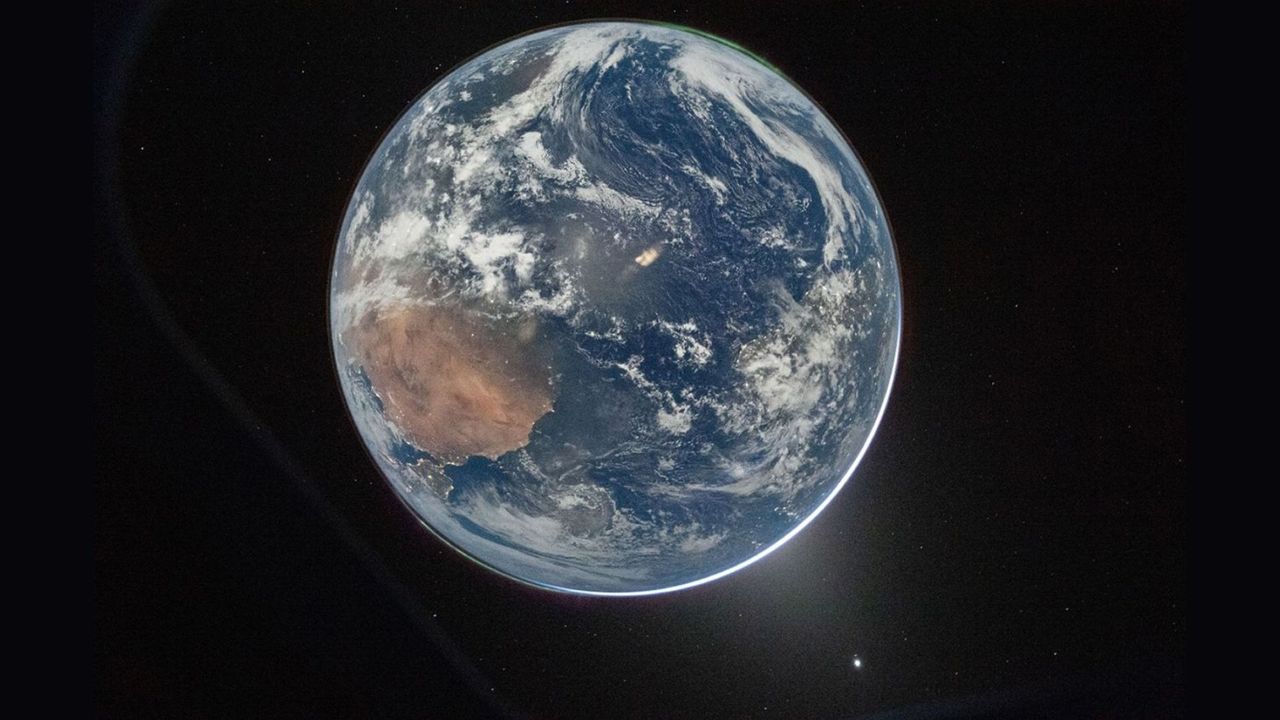
The four astronauts on NASA’s Artemis II mission captured more than they bargained for when they photographed the nightside of Earth, right after starting their historic journey to the moon.
As people grow older, many aspects of everyday life begin to change. Sleep patterns may become different, energy levels can fluctuate, and daily routines often shift. Eating habits also tend to evolve with age. Some people lose interest in certain foods, while others develop new preferences. Scientists have long studied what older adults eat and […]

 Login

 The hunt for Planet Nine continues as new discoveries make the Solar System’s biggest mystery even harder to solve. Is there a massive undiscovered planet on the outer reaches of the Solar System? The idea has been around since before the discovery of Pluto in the 1930s. Labeled as planet X, prominent astronomers had put [...]