The economic shock of the closure of the Strait of Hormuz has sparked calls to abandon fossil fuels faster. But that's the wrong lesson, says Richard Lyon – and Net Zero obsessed Britain will learn this the hard way.
Welcome to this edition of The Intelligence Brief… This week, the ongoing conflict between the United States and Iran appears to be edging closer to a broader regional crisis, as both nations exchange new rounds of military strikes amid fading hopes for diplomacy. In our analysis, we’ll be looking at 1) the latest U.S. and Iranian attacks near the Strait of Hormuz and across the Gulf region, 2) President Trump’s escalating rhetoric and warnings of additional military action targeting Iran’s oil infrastructure, 3) the growing humanitarian and economic consequences of the conflict, including disruptions to shipping and concerns over civilian infrastructure, and 4) why analysts increasingly fear that continued escalation could draw the region closer to a wider war with global repercussions.
Quote of the Week
“The strikes are in response to Iran’s unwarranted and continued aggression. U.S. forces remain vigilant, lethal, and ready.”
– U.S. Central Command, June 10, 2026
If you enjoy the news and perspectives offered by The Debrief, make sure that you aren’t missing our stories by making us one of your “preferred sources” on Google News. You can simply follow this link to add The Debrief to your list of favorites, and you can read more about Google’s preferred sources in our article here.
Get all the latest stories from The Debrief, with more breaking stories at the end of this week’s newsletter.
Ongoing U.S. Conflict with Iran Could Signal a Broader War
This week, a clear end to the ongoing U.S. conflict with Iran still seems remote, as the United States and Iran engaged in another round of military strikes.
Early this morning, strikes exchanged between the nations’ military forces signaled the potential that a dangerous new phase of the conflict may be approaching, after an initial several months of efforts aiming to avoid escalation to a broader regional war.
Among the most recent attacks, several locations near the Strait of Hormuz were targeted, as ongoing warnings by President Trump urged Iranian officials to heed U.S. warnings and bring the conflict to an end.
Latest Attacks in the U.S.-Iran War
In response to the attacks, Iran also launched several strikes on targets linked to U.S. assets that include military facilities in Kuwait and Bahrain. The Iranian strikes prompted air-defense activity throughout the region, along with airspace restrictions that have been temporarily elevated in the Gulf.
Amid the strikes, Iranian officials claimed that all maritime traffic had been closed off from passage through the Strait of Hormuz. However, U.S. officials disputed the claims on Thursday.
The renewed violence follows several strikes confirmed by U.S. Central Command late on Wednesday.
“CENTCOM forces launched strikes on Iranian military surveillance capabilities, communication systems, and air defense sites across Iran. U.S. Marine Corps, Air Force, and Navy assets fired precision munitions on Iranian targets that posed a threat to U.S. forces and international commercial ships transiting regional waters,” read a posting on the official U.S. Central Command X account.
Trump: U.S. Will “Assume Total Control”
Early on Thursday, President Trump also warned about further military action by the United States against Iran.
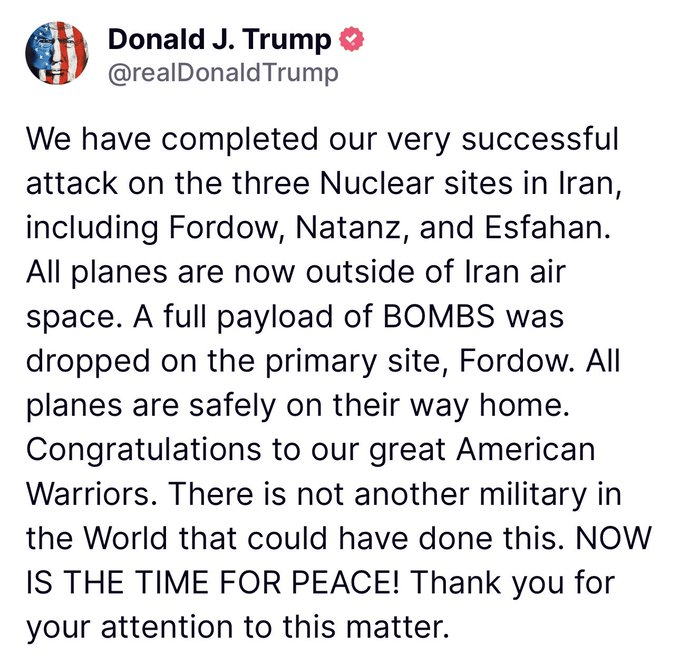
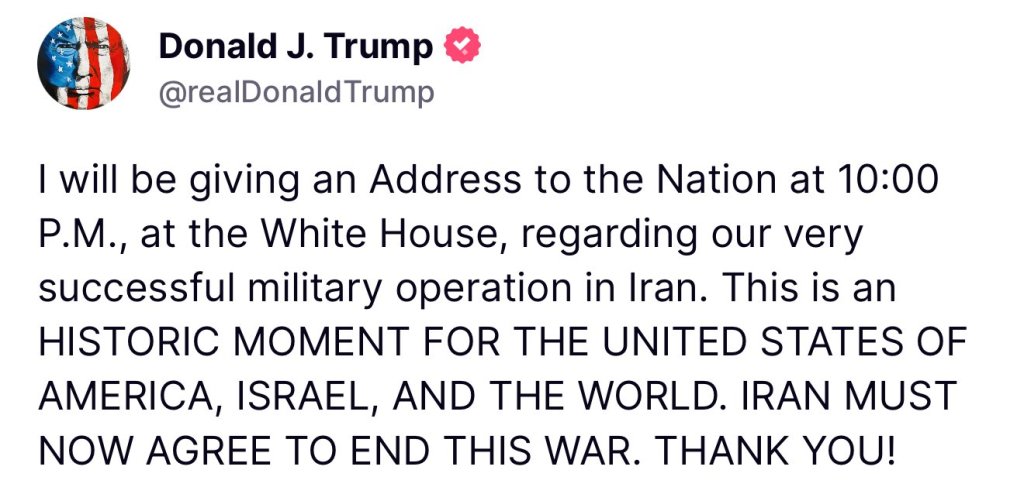
“The United States will be hitting Iran (Whose Navy, Air Force, Radar, Anti Aircraft, and all other forms of Defense, together with most of its offensive capability, are GONE!), VERY HARD TONIGHT,” President Trump wrote in one of his characteristically bombastic social media postings on Thursday.
Trump also claimed that in “the not too distant future” the U.S. would be capturing Kharg Island, along with other locations that play a key role in the oil infrastructure of the region, with the broader plan to “assume total control of their Oil and Gas Markets, much like we have with Venezuela, which is working out brilliantly for both Venezuela and the United States of America.”
Beyond the typical hyperbolic phrasing, the President’s post on Thursday appeared to indicate locations that could become future targets, although similar ongoing threats have repeatedly been made by Mr. Trump in recent weeks, in an effort to encourage Iranian officials to agree to U.S. demands that aim to curb the country’s nuclear ambitions—a significant goalpost the U.S. has maintained in efforts to end the war.
As Escalations Continue, Broader Problems Emerge
Efforts to bring about a cease-fire agreement have been in the works since April, although Iran’s foreign ministry now says such efforts have been rendered “meaningless” by the continued American strikes.
Firing back, U.S. officials, including Secretary of War Pete Hegseth, have characterized the attacks as being “part of an effort to pressure Tehran into accepting negotiations over its nuclear program” amid broader security concerns the U.S. is attempting to reconcile.
However, more broadly, the conflict is also having a far wider economic and humanitarian impact. Recent U.S. military operations that have targeted vessels suspected of transporting Iranian oil have reportedly struck multiple commercial ships in recent days, with India confirming that three of its citizens were killed aboard one tanker.
“CENTCOM forces have disabled nine non-compliant vessels, redirected 135 ships that complied, and allowed 42 vessels supporting humanitarian aid to pass since initiating the blockade on April 13,” U.S. Central Command wrote in an update on Thursday.
“The blockade is being enforced impartially against vessels of all nations entering or departing Iranian ports and coastal areas, including all Iranian ports on the Arabian Gulf and Gulf of Oman,” the posting added.
Humanitarian and Economic Concerns
Based on satellite imagery reviewed by analysts, the potential that some of the recent strikes may have damaged drinking-water infrastructure in southern Iran has also been raised, increasing humanitarian concerns.
Financial markets are also reacting to the growing instability. The European Central Bank cited war-related inflation pressures as it raised interest rates, while the World Bank warned that rising energy costs linked to the conflict are slowing global economic growth to its weakest pace since the COVID-19 pandemic.
Overall, as the ongoing military operations by both nations continue, and with few signs of diplomacy on the immediate horizon, concerns continue to mount over whether a broader regional crisis—one the U.S. has hoped to avoid—could now loom nearer than at any time before.
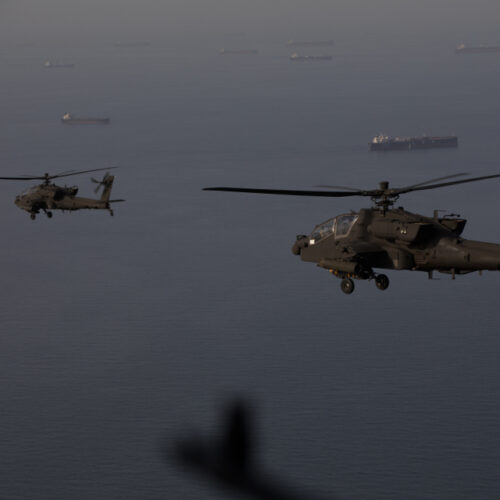
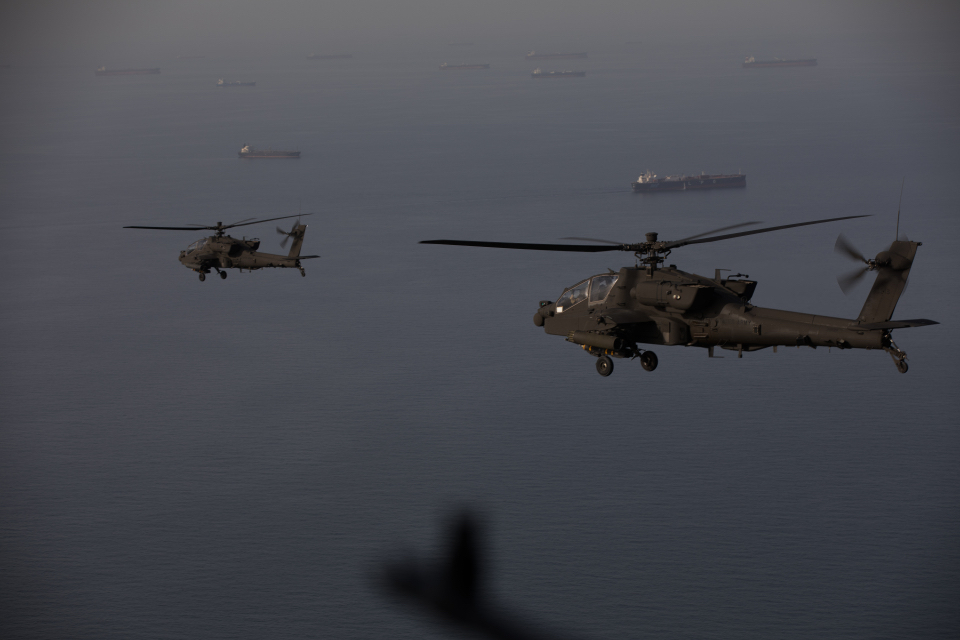
A US Army helicopter gunship was apparently struck by an Iranian Shahed drone before going down near the Strait of Hormuz—but it's unclear whether the one-way attack drone was deliberately aimed or achieved more of a lucky accidental strike.
Axios correspondent Barak Ravid first reported an unnamed US government official’s comments that an Iranian drone had hit the US Army AH-64 Apache helicopter before the latter went down on June 8. The New York Times later confirmed that reporting through more anonymous US officials, including one official who said US military investigators were still evaluating whether the Iranian drone strike on the helicopter was intentional or accidental.
Iran has fired thousands of such Shahed drones against a wide range of military and civilian targets in the Gulf region since February 28, 2026, when the United States and Israel began the war by jointly attacking Iran with a barrage of bombs and missiles. But Shahed drones have mainly struck stationary targets such as Amazon data centers and energy facilities, sometimes hitting slow-moving commercial ships in the Strait of Hormuz.
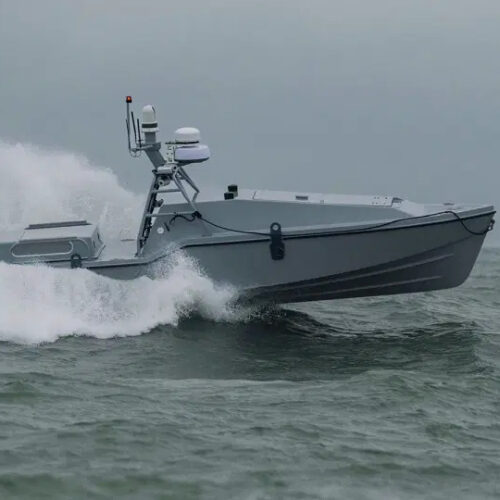
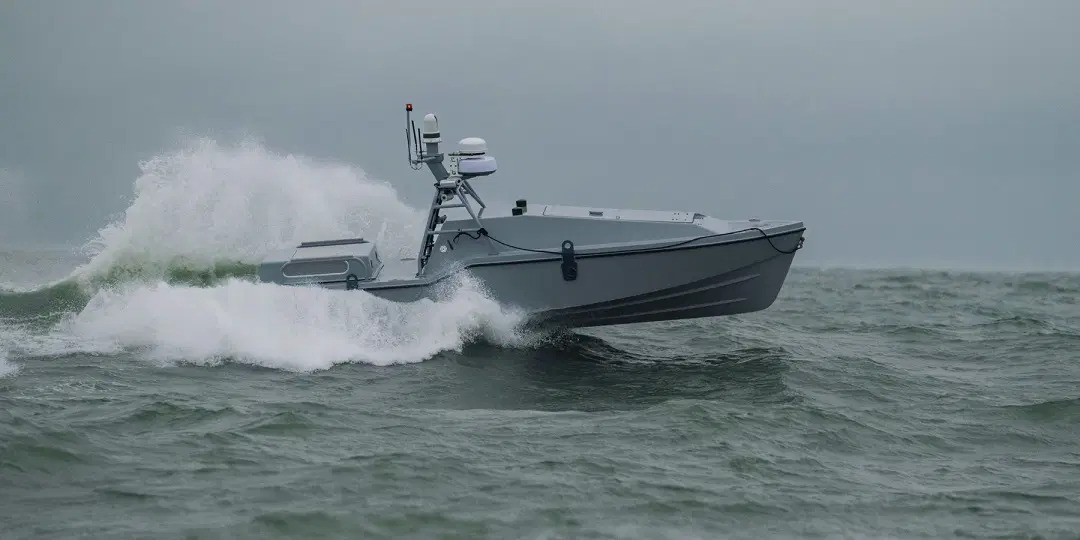
A drone boat picked up two US Army pilots from waters near the Strait of Hormuz after their helicopter gunship went down, US military officials said. The incident apparently represents the first time the US military has used a drone for such a rescue mission at sea.
The two crew members from the US Army AH-64 Apache were “rescued by American forces” at 7:33 pm US Eastern Time after their helicopter went down off the coast of Oman on June 8, according to a US Central Command press release. That press release mentioned support from US Navy units including the US 5th Fleet’s Task Force 59, which is charged with integrating uncrewed aerial, surface, and underwater vehicles, alongside AI, into 5th Fleet maritime operations.
Anonymous US military officials initially told CBS News that the Apache air crew was rescued by an uncrewed surface drone operated by Task Force 59 from the US Fifth Fleet in Bahrain. The officials also described the incident as the first time the military had used a drone to rescue people from the water.
Experts say increased use of crops for fuel is ‘dangerous game’ that could send food price inflation soaring
Demand for biofuels is likely to leap by nearly a third this year, which could send food price inflation soaring further and push the world closer to a global food crisis.
More countries are opting to increase biofuel use as the price of oil has jumped to nearly $100 a barrel after the US-Israeli attacks on Iran and the closure of the strait of Hormuz.
Rabbi Elhanan Beck is a Jerusalem-born anti Zionist Jew who discusses with a Muslim reporter why he says that Netanyahu is Amalek. It is a discussion on Muslims and Jews peacefully coexisting in Palestine, the politics of the Zionist state and the religious beliefs of Torah Jews in regards to Israel.
US President Trump's bombing of Iranian nuclear sites has escalated tensions, risking a regional war and potentially a global conflict. His actions have drawn criticism, with claims of betrayal from his supporters and warnings of dire consequences.
Israel, a non-NPT signatory, may possess 200-400 nuclear warheads. Its minister's bomb remarks hint at this arsenal. The NPT encourages nonproliferation but excludes Israel, highlighting global nuclear hypocrisy and tension.
Some analysts said the main international oil price, which was up 6 percent on Monday, could climb much higher in the coming weeks if the Strait of Hormuz doesn’t reopen.
An oil refinery in Carson, Calif. The possibility of continued fighting has raised concerns about how long the world’s stockpiles of oil and fuels will last if the Strait of Hormuz does not reopen.
With early tests suggesting the presence of crude oil, the Caribbean island has begun to debate whether it could justify becoming a producer
Jamaica is closer than ever to drilling for oil. Tests on samples from the seabed off the Caribbean island’s south coast earlier this year identified hydrocarbons, which suggest the presence of crude oil below ground.
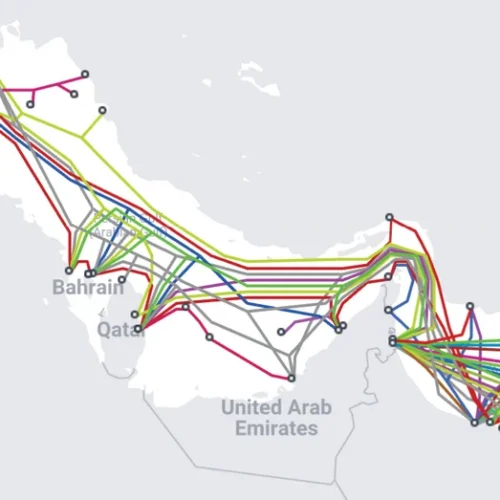
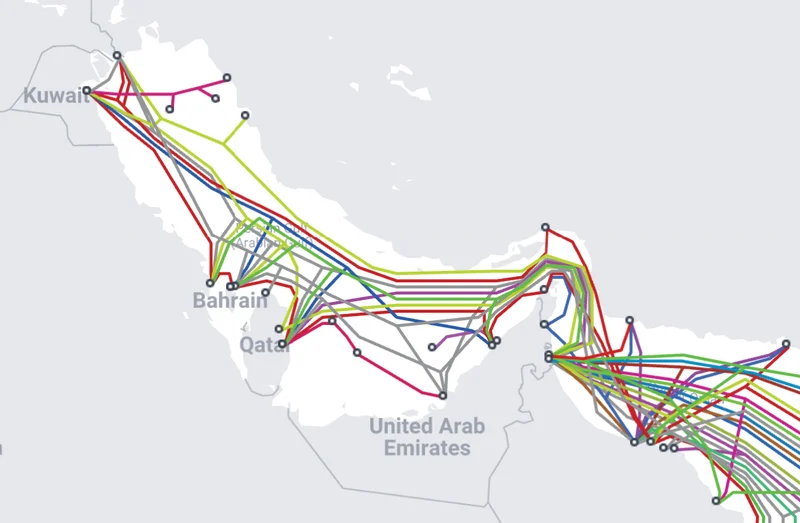
Iran claims it will charge US tech companies fees for using undersea Internet cables that run beneath the contested Strait of Hormuz shipping lanes. The war has already halted multiple projects and led to the suspension of cable repairs in the region—and the latest Iranian threats may accelerate efforts by Big Tech and Gulf countries to find alternative routes for bypassing the Strait of Hormuz’s digital chokepoint.
The latest assertions of Iranian authority over the Strait of Hormuz were announced in a brief statement by Ebrahim Zolfaghari, a spokesperson for Iran’s military and the Islamic Revolutionary Guard Corps. “We will impose fees on internet cables” Zolfaghari wrote in a May 9 post. It was not immediately clear how Iran might implement such fees or impose its rules on cable projects, given that the majority of routes pass through Oman-controlled waters.
But Tasnim and Fars, both Iranian state-linked media channels, laid out more detailed proposals on how Iran could charge license fees to US tech giants for the use and maintenance of undersea cables carrying regional Internet traffic, according to The Guardian. For example, the Tasnim plan described charging tech companies—specifically naming Meta, Google, Amazon, and Microsoft—license fees for cable usage while also claiming that Iran alone has the right to repair and maintain the subsea cables.

 Login