❌

Reading view

This Unusual Artifact Resembling a TV Remote Could Reveal the Oldest Evidence of Numerical Calculation in Mesoamerica

Archaeologists have discovered an unusual artifact they say could represent the earliest known use of written numbers ever discovered in Mesoamerica.

The curious clay figurine features eleven small dots carved into its surface, appearing in three columns. Although its exact purpose remains unclear, researchers who report the discovery in Latin American Antiquity believe it could be one of the oldest examples of graphic notation that may have been used for rudimentary calculation or some similar purpose, dating to as far back as around 750 B.C.

Significantly, the researchers behind the recent study argue that this earliest known evidence of numerical writing could offer clues to “the relationship between numeration, bodies, and identity in ancient Mesoamerican worldviews.”

The Enigma of the Tab Figurines

The figurine, roughly the size and shape of a small television remote, was unearthed at an ancient Mesoamerican site located along Guatemala’s Pacific coast, known as La Blanca. It is among a group of similar artifacts archaeologists call tab figurines, and hundreds of these mysterious relics are known from past discoveries at the site.

Named for their unusual slab-like appearance, these figurines also bear anthropomorphic qualities, which include depictions of jewelry and other ornamentation, although the tab figurines do not directly resemble human heads beyond the presence of such ornaments.

A Remarkable Discovery at Ancient La Blanca

While similar past discoveries recognized as tab figurines have been made at La Blanca, the presence of dots appearing in columns makes this one very unique and presents a novel possibility: that the impressions on the statuette may not have been purely decorative.

“The ordered dots on the La Blanca tab figurine’s headdress, of course, raise more questions than they answer,” write authors Julia Guernsey, Stephanie M. Strauss, and Michael Love in their recent study. “This is often the case with unique examples such as this, which cannot be better contextualized within a larger grouping of like objects from La Blanca or elsewhere.”

tab figurine
The ceramic “tab” figurine with headdress band and potential dot numeration from the Joyas Group at the archaeological site of La Blanca, Guatemala, alongside an artistic rendering of the artifact by Julia Guernsey (Image Credit: J. Guernsey/South American Antiquity)

“Although one might be inclined to dismiss the La Blanca figurine as a curiosity or an isolated addendum to the complicated history of first writing in Mesoamerica,” the authors go on to note, “we believe that it merits this thorough discussion.”

Clues to Unraveling a Mesoamerican Mystery

A clue to the artifact’s purpose may arise from the association between tab figurines and the human head, a region of the body that is traditionally associated with individual identity. This is significant, since archaeologists recognize a potential link between numbers and individual identity in the world of ancient Mesoamerica.

Based on existing archaeological knowledge from the region, it is known that experimentation with numbers had already begun around the time the artifact is believed to have been made. One well-characterized numerical system is known as the dot-and-bar system, which, as the name implies, relies on dots and bars to convey figures of one and five units, respectively.

“In the Mixtec and Aztec codices, one easily becomes accustomed to reading even long strings of single dots and quickly approximating their quantity, a visuo-summation process known as subitizing,” the authors write.

“And no matter what form Mesoamerican numerals took, the vigesimal system was rooted in metaphors/mnemonics of the body: specifically, 10 fingers and 10 toes and concepts of personhood anchored to the number 20,” they add.

Also of significance is the K’iche’ word for person, winik, which is the same word used for the number 20, and for a simple reason: it refers to the ten fingers and ten toes of the human body.

Connections to Mesoamerican Personhood Concepts

Although the connections between the unique figurine unearthed at La Blanca and existing knowledge of Mesoamerican number systems are compelling, the researchers caution against interpreting the artifact solely through the lens of later Mesoamerican writing systems. One main reason why is that scholars think there probably wasn’t ever any single method for recording numbers across the region.

Still, the artifact nonetheless joins a growing body of evidence that could point to the fact that the inhabitants of La Blanca were experimenting with symbolic communication, and at a time centuries before fully developed writing systems emerged in the region.

While the exact meaning of the dots on the statuette remains unknown, the researchers behind the study make a compelling case for why the markings may have represented a name, a date, or another personal identifier. If correct, the placement of the dots may hint at an early connection between numeration, identity, and social expression during a period when some of Mesoamerica’s first urban communities were taking shape.

“Yet a question remains as to whether the identity expressed by the La Blanca tab figurine with its 11 dots was human, supernatural, or a combination thereof,” the authors concede, although concluding that their assessment of the artifact strongly points to the known associations between time, numbers, and the concept of personhood as envisioned in the minds of ancient Mesoamericans.

“Early Mesoamerican conceptualizations of time and the nature of being, perhaps, were not so very different from those of Aristotle for whom Paul Ricoeur noted, ‘Being in time [meant] more than existing when time exists. It [meant] ‘being in number.’”

The study, “Numbers and Bodies: Potential Early Numeration on a Middle Preclassic Figurine from La Blanca, Guatemala,” was published in Latin American Antiquity.

Micah Hanks is the Editor-in-Chief and Co-Founder of The Debrief. A longtime reporter on science, defense, and technology with a focus on space and astronomy, he can be reached at micah@thedebrief.org. Follow him on X @MicahHanks, and at micahhanks.com.

  •  

“Her Brain Had Been Intentionally Removed”: An Unsettling Iron Age Burial Practice Has Been Uncovered in Scotland 


Archaeologists say bones unearthed from an Iron Age burial in Scotland are revealing new insights into how human remains were interred in ancient Europe, in a region with scant evidence for mortuary practices in the archeological record.

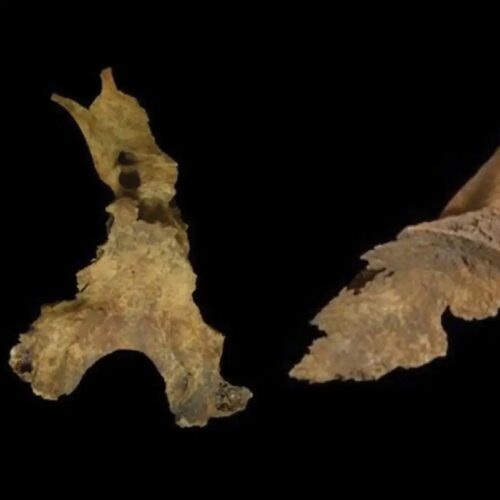
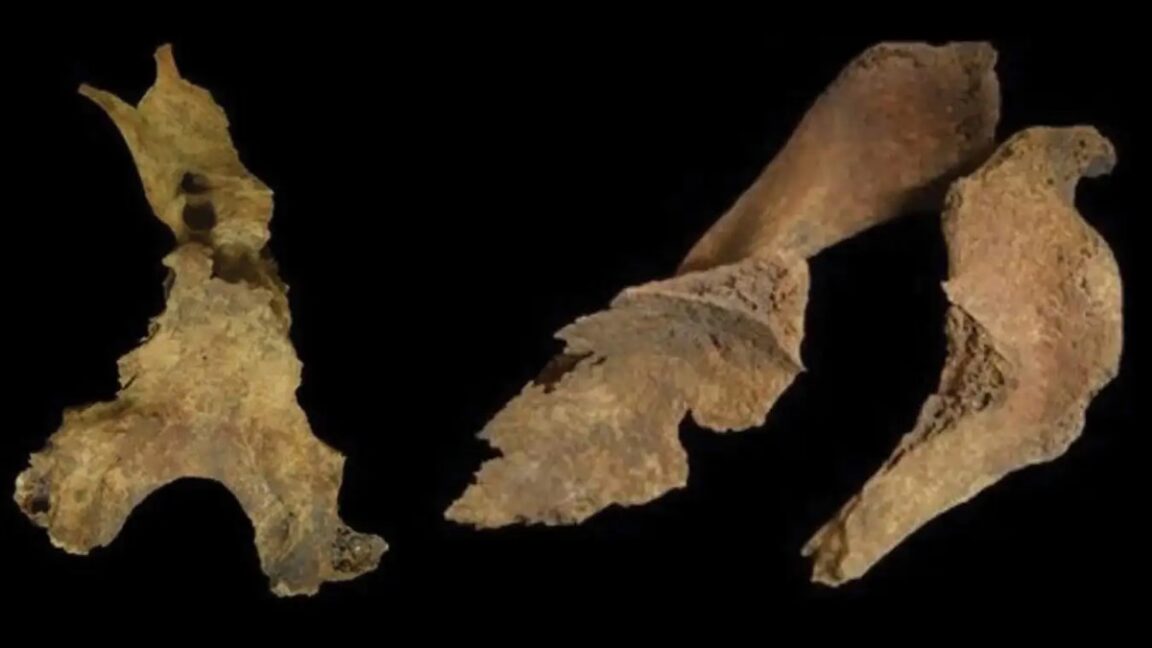
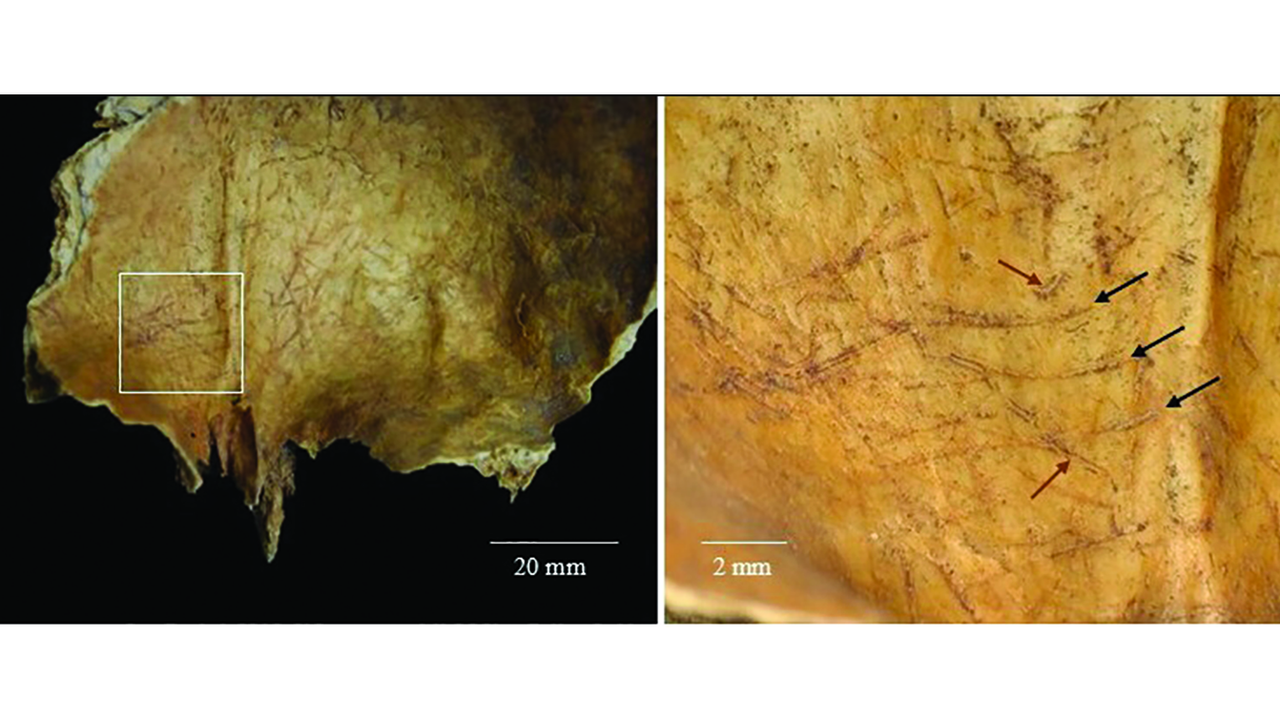
Among the new findings, cuts within the skull of a woman’s 2,000-year-old Iron Age remains suggest the removal of her brain prior to burial, along with other evidence of mortuary processing. 

“Manipulation of one skeleton, including the possible removal of the brain, fashioning of long bones into ‘tools’ and reassembly for burial, suggests complex mortuary processing,” write the authors of a new study published in the journal Antiquity. 

Iron Age Remains

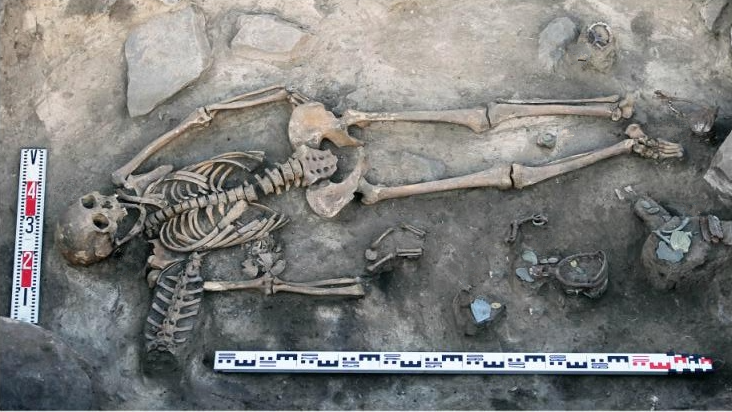
The study’s authors report that the woman’s remains, and those believed to have belonged to a teenage boy buried nearby, both had distant origins, adding to the intrigue. Archaeologists discovered the pair buried in a cairn in Sutherland’s Loch Borralie in northwest Scotland, a rare find in such well-preserved condition. 

Due to Britain’s acidic peat soil, few Iron Age human remains have been recovered, leaving many questions about the inhabitants’ funerary practices. This particular corner of Scotland is an exception, with an environment better suited to preserving bone, offering a rare window into this mysterious period.

“To find bodies of this age so well preserved is rare, but to discover evidence of a funeral ritual we previously knew nothing about was such a surprise and very exciting,” said lead author Dr. Laura Castells Navarro.

Unusual Mortuary Practices

“The adult female displayed incisions on the inside of her cranium, suggesting her brain had been intentionally removed after death,” Castells Navarro continued. “We have no other comparison of this type of practice, but we know that the dead were curated and treated carefully in Iron Age Britain, so our understanding is that this bone modification is within that same tradition of care.”

The sharpened bones, which the archeologists suspected were used as tools, included humeri, ulna, and femur. Why Iron Age Britons would have engaged in such elaborate and unusual manipulation of skeletal remains eludes archaeologists, although they note that the care evident in reassembling her skeleton for burial suggests she commanded the respect and reverence of those who laid her to rest.

Analysis techniques used on the bones include isotope testing and DNA mapping, revealing a close kinship suspected to be that of maternal second cousins.

Iron Age Connections

More intriguing than their relationship is the evidence of the distance they had traveled, as isotopic analysis revealed that the pair had grown up 50 miles to the southeast. Genetics pushed this even further, revealing family connections beyond the mainland, spreading out in opposite directions. To the northeast, they had relatives 108 miles away on the Orkney Islands, while to the southwest, they had kin 140 miles away at Applecross.

Archaeologists interpret this to mean that Iron Age Britons were extremely mobile, traversing water in family groups.

“Our research shows that prehistoric maritime communities periodically moved around the north coast and Northern Isles of Scotland, possibly in small groups,” Dr. Castells Navarro said. “This movement allowed for the spread and maintenance of cultural practices and traditions.”

With individuals of shared kinship spread so far, researchers suggest these complex mortuary practices were likely shared across Iron Age Britain, adding an intriguing new wrinkle to our assessment of these ancient people.

“I think we can assume that the Iron Age dead were not forgotten,” Dr. Castells Navarro concluded, “and still had meaning to the living, with a continued interaction between the living and the dead across time and distance.”

The paper, “Reconnecting the Dead in Iron Age Britain: Funerary Processing and Long-Distance Connectivity at Loch Borralie, Scotland,” appeared in Antiquity on June 10, 2026.

Ryan Whalen covers science and technology for The Debrief. He holds an MA in History and a Master of Library and Information Science with a certificate in Data Science. He can be contacted at ryan@thedebrief.org, and follow him on Twitter @mdntwvlf.

  •  

Archaeologists Uncover 4,000-Year-Old Evidence of a Deadly Event in Ancient Mesopotamia


Archaeologists believe a site in present-day northern Iraq may preserve the remains of an ancient city whose fall was recorded in texts from ancient Mesopotamia.

While ancient texts described the event, the physical traces were not discovered until recently. Excavations at Kurd Qaburstan in the Kurdistan region have now revealed the clearest archaeological record of Middle Bronze Age siege warfare found in the area.

During the 2024 and 2025 excavation seasons, a team led by Tiffany Earley-Spadoni, associate professor of history at the University of Central Florida and director of the Kurd Qaburstan Project, recovered 20 cuneiform tablets and more than 100 administrative sealings from destruction layers inside the Lower Town East Palace.

A Lost Archive

This collection represents the first substantial group of cuneiform texts found on the Erbil Plain, and their dating is unusually precise. Scribes wrote several tablets within days of one another, clustering around the period recorded as the city’s fall, which allows researchers to closely align the archaeological and historical records.

Epigraphers Paul Delnero and Parker Zane, from Johns Hopkins University and Yale University, are leading the translation effort with art historian Marian Feldman. The texts include palace administrative records and at least one letter that may mention a senior official from the ancient city of Qabra.

Some inscriptions may also correspond to destructions recorded on the Victory Stele of Dadusha, a monument that documents military campaigns in the region from the same period.

Burned Layers

The physical signs of the attack are clear. Collapsed buildings, burned layers, and numerous broken pottery pieces all show signs of a coordinated and sustained assault. The team found two layers of destruction, one above the other, which match the recorded events of Qabra’s conquest.

Within these layers of destruction, bioarchaeologist Andrea Zurek-Ost of Michigan State University identified the remains of 17 people. Several seem to have died where they fell, possibly including palace workers. Archaeologists found one individual face down over a stone basin. Researchers are now using isotopic and ancient DNA analyses to learn more about who these people were, where they came from, and how they might have been related.

Mapping The City Before It Fell

The destruction layers tell the story of the city’s final chapter. A magnetometer survey covering over 80 hectares provides a picture of what the city looked like before its fall.

Led by Andrew Creekmore III at the University of Northern Colorado, the survey detects buried structures by measuring changes in the Earth’s magnetic field. It revealed a monumental wall with bastions surrounding the site, fortifications that match those shown on the Victory Stele of Dadusha and support the identification of Kurd Qaburstan as ancient Qabra.

Researchers also found a preserved street with a drainage system, along with areas used for food processing and textile production. These features indicate that the city was more complex than researchers usually expect in northern Mesopotamia.

Mesopotamian history has often focused on southern cities such as Uruk, viewing the south as the birthplace of urban civilization. The evidence from Kurd Qaburstan challenges that view.

“The evidence from Kurd Qaburstan shows that northern cities could be large, complex, and politically significant, with administrative systems, fortifications, and infrastructure comparable to those of the best-known southern sites,” Earley-Spadoni says.

Findings from the Kurd Qaburstan Project were announced as part of a reports and proceedings release supported by the University of Central Florida and the U.S. National Science Foundation.

Austin Burgess is a writer and researcher with a background in sales, marketing, and data analytics. He holds an MBA, a Bachelor of Science in Business Administration, and a data analytics certification. His work focuses on breaking scientific developments, with an emphasis on emerging biology, cognitive neuroscience, and archaeological discoveries.

  •  

Mysterious Artificial Islands in Scotland Have Long Perplexed Archaeologists—A New Discovery Reveals Clues to Their Ancient Origins

Thousands of years ago, Scotland’s early inhabitants were building mysterious artificial islands in lakes throughout the region—and now archaeologists have uncovered evidence that reveals these curious aquatic features to be far older than once thought.

Scattered throughout Scotland’s ancient lochs, these curious structures—known as crannogs—have long intrigued archaeologists and historians, partially due to the questions about their age.

Now, artifacts recovered from these human-built islands are pushing back the timescales on their construction, causing researchers to have to reconsider the origins of one of the most enigmatic lacustrine features in the British Isles.

The Crannog Enigma

Crannogs have been known to archaeologists for some time, with some of the earliest extensive explorations of these features undertaken beginning more than a century ago by Odo Blundell, a monk at Fort Augustus Abbey.

crannog
Historical photo of the crannog at Loch an Dùin, on the Inner Hebridean island of Coll (Public Domain).

Constructed mostly from stone and timber, speculations about their creation extend to as early as the Bronze Age, although most scholars believe these curious features were likely to have been an invention of the Iron Age.

However, a surprising recent discovery is now challenging that presumption, revealing that some of these artificial islands date back to more than 5,000 years ago, having been built during Scotland’s Neolithic era.

Older Than Previously Thought

The story began to unfold in 2012 when local diver Chris Murray was exploring a crannog near the Isle of Lewis in Scotland’s Outer Hebrides. There, he discovered fragments of ancient pottery that experts at the National Museum of Scotland later examined, revealing an astonishing discovery: the remains of artifacts unequivocally associated with the Neolithic period.

The implication was obvious: for Neolithic pottery to have been found on this crannog would indicate it must have been constructed thousands of years earlier than the past dating of these artificial islands.

crannog
A crannog at the Loch of Wasdale (Image Credit: Derek Mayes/CC 2.0)

The discovery prompted a deeper look at the region’s ancient artificial islands, which soon revealed additional evidence of their Neolithic provenance. During the research, Stephanie Blankshein, a maritime archaeologist at the University of Southampton, and colleagues discovered that organic materials and artifacts from several sites across Scotland’s Outer Hebrides indicated these crannogs were likely built sometime between 4,000 and 2,500 BCE.

At least 11 crannogs in the region, Blankshein and her colleagues say, were created during the Neolithic period, pushing back the date of their construction to as far back as six thousand years ago.

Rethinking the Lives of the Ancient Scots

One of the most intriguing aspects of the team’s findings involves what it reveals about the ingenuity of the early farming communities in the British Isles, since the new dating of these prehistoric artificial islands indicates that they must have been constructed within just a few centuries of when their ancient builders arrived in the region.

Such findings align well with past genetic studies, which indicate that the region’s Neolithic populations likely descended from farmers who made their way from the Near East through Europe, and eventually settled in the British Isles, where they made their new homes by the sea.

It remains unclear, however, whether the construction of crannogs had been an innovation that occurred after they arrived in Britain, or if this had been a much earlier practice these people brought with them.

Discoveries at the Loch Bhorgastail Crannog

Among the most remarkable crannog sites is one found at Loch Bhorgastail on the Isle of Lewis. This artificial island was initially believed to have been primarily built from stone, with some evidence of timber used as reinforcement.

However, underwater excavations by Blankshein and her colleagues soon uncovered something very surprising hidden below the crannog: a massive timber platform supporting the entire structure.

Crannog at Loch Bhorgastail
Loch Bhorgastail’s crannog (Image Credit: Wikimedia/CC 4.0)

“As excavation advanced, it quickly became apparent that the terrestrial and underwater components formed a single continuous structure spanning both environments and could not be treated separately,” Blankshein and her colleagues write in a recent study detailing their research at the site.

During their underwater surveys, the team discovered that the wooden foundation extended beneath the entire island and dated to between 3500 and 3300 BCE. Measuring approximately 75 feet (23 meters) across, the platform may have originally sat in shallow water or even remained dry during parts of the year.

“Loch Bhorgastail provided a rare opportunity to develop, test, and refine a workflow capable of achieving terrestrial-grade accuracy underwater,” the research team writes. “The site demonstrates the potential of shallow-water archaeology to bridge the land–water interface while elevating the precision and reliability of underwater recording.”

Lingering Questions

A fundamental question that remains about these curious Neolithic constructions has to do with what their purpose was.

One clue may arrive in the form of residues found on the recent pottery discoveries at several of these sites, which indicate they were used to transport food. This may suggest the crannogs were locations where ancient people prepared and consumed meals, possibly during ceremonial gatherings.

However, it is also possible that these ancient structures served multiple purposes, ranging from sites for communal feasting to possible locations for meetings.

Despite the lingering questions about their use by Scotland’s ancient inhabitants, Blankshein and her colleagues saw these marvelous Neolithic structures as an ideal target for high-resolution shallow-water photogrammetry, which became the focus of her team’s recent research.

“Coastal, riverine, and lacustrine environments have played a central role in the development of human societies, yet locating and documenting this record of activity in littoral environments has proven difficult,” the team writes.

As a result of their research, the team’s findings, combined with recent archaeological discoveries from over the last decade or more, help to shed new light on Britain’s ancient past, while advancing the development of new archaeological approaches. This includes groundbreaking methods for creating 3D models of shallow underwater sites, which the team achieved by using paired action cameras.

As investigations continue, Blankshein and her colleagues suspect many more Neolithic crannogs remain hidden beneath the waters of Scotland and Ireland, and with their discovery and investigation, the potential for further advancements in understanding Europe’s earliest farming societies.

The team’s recent paper, “At the Water’s Edge: Photogrammetry in Extreme Shallow-Water Environments,” appeared in Advances in Archaeological Science.

Micah Hanks is the Editor-in-Chief and Co-Founder of The Debrief. A longtime reporter on science, defense, and technology with a focus on space and astronomy, he can be reached at micah@thedebrief.org. Follow him on X @MicahHanks, and at micahhanks.com.

  •  

Scientists Uncover What Kept Humanity’s First Campfires Burning 780,000 Years Ago

Gesher Benot Ya’aqov Excavation SiteRare charcoal fragments from an ancient lakeshore campsite are offering new clues about fire use, resource management, and the environmental knowledge of some of humanity’s earliest fire users. Long before cities, farms, or written language existed, some of humanity’s ancestors had already discovered a resource that would transform the course of human evolution: fire. But [...]
  •  

A Remarkable 400,000-Year-Old “Time Capsule” Unsealed in Israel Could Reshape Our Understanding of Early Human Evolution


Archaeologists working with the Israeli Antiquities Authority have announced the discovery and excavation of a cave located just outside the town of Fureidis, which has revealed signs of early human presence dating back to between 250,000 and 400,000 years ago.

The team of researchers behind the ongoing excavation said the fortuitous discovery could represent a “time capsule” that has remained sealed for hundreds of thousands of years, offering researchers an unprecedented glimpse into a critical period in human evolution.

Ancient Cave Contains Evidence of Critical Period in Human Evolution

According to a statement emailed to The Debrief, the ancient cave, which lies south of Haifa, near the Zikhron Ya’akov interchange, likely dates back to sometime between 400,000 and 250,000 years before present. The team notes that the range would mean it was sealed since the time of the Acheulo-Yabrudian culture, a period when ancient human ancestors began to display several complex tool-making skills, including various stone blade designs which were in use by hominins until around 300,000 years ago, marking the end of the Lower Paleolithic period.

Prehistoric handaxes were discovered in the ancient cave. Photo credit: Emil Aladjem, Israel Antiquities Authority.

“The culture we are investigating here was characterized by a variety of advanced methods for producing flint tools, including small sharp handaxes, scrapers, and blades,” explained Dr. Kobi Vardi, head of the Prehistory Branch at the Israel Antiquities Authority and the study’s co-director.

Most archaeologists put the African departure date of the last common ancestor of humans and Neanderthals between 700,000 and 500,000 years ago, and the first genetic interbreeding between the two species around 130,000-1,000,000 years ago. Therefore, finding a sealed cave containing relics from the period between these two critical evolutionary junctures offers the research team an unprecedented opportunity.

human evolution
More prehistoric handaxes were discovered in the ancient cave, which are consistent in style with the Acheulo-Yabrudian culture. Photo credit: Emil Aladjem, Israel Antiquities Authority.

“We have been fortunate to excavate a unique site of global importance that has been protected from the ravages of time thanks to the exceptional conditions that existed here,” said team member Professor Ron Shimelmitz of the Zinman Institute of Archaeology and the School of Archaeology and Maritime Cultures at the University of Haifa.

Dr. Vardi agreed, noting that “It is very rare to find a site in such a state of preservation.”

“Every prehistorian who visits the site is absolutely thrilled,” he added.

ancient cave, human evolution
Excavations conducted by the Israel Antiquities Authority and the University of Haifa in the ancient cave. Photo credit: Emil Aladjem, Israel Antiquities Authority.

“The Seeds That Led to the Development of Our Complex Culture”

In that same statement, Prof. Shimelmitz noted that the end of the Lower Paleolithic was a “unique time period” before Neanderthals and modern humans became the dominant hominids of the era and spread across “many regions.”

“Only a handful of sites from this important phase have been uncovered in Israel, and the wider Levant, and most of them are inaccessible for research,” the professor explained, adding that marked changes in human physiology, technology, and social organization “foreshadowed the traits and complex behavioral patterns that developed later and characterize both Neanderthals and modern humans.”

One component that helped facilitate the development of complex culture, highlighted by Prof. Shimelmitz, is the transition from ancient humans living in larger groups. He also emphasized the advent of human ancestors “spending longer periods at the same sites.”

Early excavations have already uncovered evidence of what the researcher termed “intensive use of fire.” These early forays have also found signs of prolonged human activity. Prof Shimelmitz said these signs suggest a “complex and rich camp life.”

Dr Vardi said that the ongoing excavation is uncovering animal bones, including ancient specimens of fallow deer, gazelle, and an ancient variety of horse.

ancient cave human evolution
Ancient fallow deer tooth. Photo Credit: Emil Aladjem, Israel Antiquities Authority

Dr. Vardi also noted that these finds were discovered “alongside evidence of the presence of water,” which he suggests may have made the ancient cave an attractive location for hunter-gatherer groups inhabiting the region at the time.

High Resolution Studies of How Ancient Humans Lived

When discussing the implications of their findings, Prof. Shimelmitz first expressed the team’s appreciation for the financial support and enthusiasm shown by the project’s sponsor, the Ayalon Highways Company, “in enabling us to undertake the excavation.”

As for the scientific value of their initial discoveries and the potential for further insights into this period in human history, the professor noted that findings to date are typically associated with “the development of social cooperation and the transmission of knowledge, as part of the processes of human evolution.”

Excavations conducted by the Israel Antiquities Authority and the University of Haifa in the ancient cave could fill in some of the blanks in the story of human evolution. Photo credit: Emil Aladjem, Israel Antiquities Authority.

Dr. Vardi echoed those sentiments, while also noting that the ancient cave’s archaeological value “is no less important” than that of the well-known Nahal Me’arot site from the same evolutionarily critical period.

“(This site) will allow us to study in high resolution how humans lived at that time,” the researcher added.

Given the importance the research team put on the site, which included co-leader Amit Gabbay, the Israel Antiquities Authority and the University of Haifa are already putting forth what they describe as a “large-scale research program that seeks to reconstruct how humans lived, adapted to their environment, and developed new lifestyles and technologies over the course of human evolution.”

ancient cave may rewrite human evolution
From right to left: researchers Prof. Ron Shimelmitz of the University of Haifa, Dr. Kobi Vardi, and Amit Gabay of the Israel Antiquities Authority. Photo credit: Emil Aladjem, Israel Antiquities Authority.

Along with heralding the site’s scientific value, the researchers highlighted its cultural importance by declaring their goal to make the site “open and accessible to all: to the residents of Fureidis, students at the nearby school, and anyone interested in the prehistory of the region,” once the formal excavations are completed.

Christopher Plain is a Science Fiction and Fantasy novelist and Head Science Writer at The Debrief. Follow and connect with him on X, learn about his books at plainfiction.com, or email him directly at christopher@thedebrief.org.

  •  

Did Iron Age Britons remove brains of the dead?

Very little is known about funerary practices in Iron Age Britain, since few human remains have survived. However, the environment in northwest Scotland is more conducive to preserving bone from that period. Archaeologists have previously noted evidence of postmortem manipulation of human remains, such as mummification, and of modifying human bones into tools or decorative artifacts. Now a new paper published in the journal Antiquity describes evidence of postmortem brain removal in remains from that region, as well as sharpened limb bones, possibly for use as tools.

The remains in question were found in 2000 at a burial cairn in Loch Borralie, near the most northwest tip of the Scottish mainland, after erosion revealed a human cranium. The excavated remains belonged to two individuals: one an adult female and the other a juvenile of (at the time) indeterminate sex; the cranium belonged to the latter. The authors of the new paper conducted a fresh osteoarchaeological analysis as well as multi-isotope and ancient DNA analysis. Radiocarbon dating of molar teeth from both sets of remains placed their deaths as occurring between 50 BCE and 70 CE.

In the case of the female individual, the authors noted an unusual break at the base of the cranium that likely occurred near the time of death. It's the kind of fracture that one gets from high-velocity impacts, including vehicular collisions, sporting accidents, falls, assaults, or even long-drop hanging. But the known forensic patterns observed in the aforementioned scenarios don't exactly match the pattern of the Iron Age cranium, leading the authors to conclude that it likely resulted from a targeted impact. They also noted perimortem fractures on both scapulae.

Read full article

Comments

© Rebecca Ellis-Haken

  •  

Archaeologists uncover 4,000-year-old evidence of siege warfare in ancient Mesopotamia

At Kurd Qaburstan, an ancient site in the Kurdistan region of Iraq, archaeologists have uncovered the first substantial group of cuneiform administrative tablets found in the Erbil region, along with evidence of large-scale destruction, mass graves and citywide fortifications. Together, the discoveries are providing one of the clearest archaeological records yet uncovered of siege warfare and urban life during the Middle Bronze Age.

  •  

Archaeologists discover 77 headless skeletons in a 7,000-year-old farming village

A remarkable archaeological discovery in Slovakia is changing what scientists thought they knew about life and death in some of Europe’s earliest farming communities. Since 2022, researchers have been excavating a 7,000-year-old settlement near the modern town of Vráble. What they found was startling: dozens of human skeletons piled together in and around a ditch, […]

The post Archaeologists discover 77 headless skeletons in a 7,000-year-old farming village appeared first on Knowridge Science Report.

  •  

2,600-Year-Old Underground Discovery Reveals a Mysterious Ancient Structure Hidden Below Egypt’s Nile Delta

A curious recent discovery has revealed a promising new underground archaeological find at the ancient site of Buto in Egypt’s Nile Delta.

Researchers who were testing a remote sensing technology designed to locate buried structures and other below-ground features reported the unique find earlier this year, which could be a previously undiscovered tomb or temple now believed to date as far back as 2,600 years.

The discovery was made at the Tell el-Fara’in site, more commonly known as Buto, which comprises the remains of an ancient city that thrived around 5,600 years ago during Egypt’s Predynastic period.

Origins of a Mystery

Buto underwent several periods of destruction and reassembly throughout its history, making it a significant focus of past archaeological work.

Some of the city’s oldest portions are currently entombed beneath several centuries’ worth of accumulated mud and soil, a factor that significantly complicates traditional excavations. To help them locate an ideal location for future excavation, the team employed an approach that combined SAR (Sentinel-1 GRD) satellite imagery with electrical resistivity tomography (ERT) measurements, which helped them pinpoint an ideal location to dig that would best enable an investigation of Buto’s settlement phases.

“Sentinel-1 (C-band) satellite imagery captured on May 5, 2018, was processed using SNAP software (version 9.0.0) to identify large-scale anomalies indicative of buried structures,” the team reports in a paper detailing their findings, which appeared in Applied Geophysics in March.

“Based on these detected anomalies, the locations for ERT profiles were strategically selected to maximize the likelihood of indicating significant subsurface features,” the team explained.

ERT technology is ideal for such carefully targeted excavation, since it relies on electrical currents placed into the ground, which researchers then use to collect data that helps them assemble a three-dimensional model of the buried structures. This imagery is generated based on differences in the way various materials either display electrical conductivity or resistance.

Buried Discoveries Emerge

Based on the team’s scans, the top three meters of the area revealed a distinctive layer of material, which the team judged to be broken pottery and debris—likely associated with Roman periods of occupation.

However, going further down in their scans, descending to a depth of approximately six meters, the team discovered something more intriguing: what appeared to be some kind of large buried structure.

Based on its depth, the team believes this unique structure is likely associated with the Saite period, which dates it to around 2,600 years ago. Although it remains unknown precisely what the structure is, or what its exact purpose may have been, one possibility is that it could be a large shrine, or even a tomb.

Uncovering Religious Artifacts

Following the initial discovery, the team undertook preliminary excavations of a small 10 x 10-meter area. This revealed walls constructed of mudbrick, as well as religious artifacts in locations that aligned with the team’s scans.

“The presence of a small offering basin along with numerous religious amulets depicting Egyptian deities such as Isis, Horus, Taweret, and Wadjet further supports the temple hypothesis,” the team writes in their study.

Buto site
Above: According to the recent paper’s authors, the figure above shows a “3D map for the Kom C area, the full surveyed region by ERT, the successive layers of a vertical section for the excavated area, and some of the artefacts found in the excavated square.” (Image Credit: Abouarab, Elfadaly, et al./Applied Geophysics).

Also among the religious artifacts uncovered at the site were a “remarkable bronze amulet with a suspension hole, representing Horus the child” as well as amulets featuring a crouching lion, an amulet of Anubis, and the remains of limestone statues “in sexual positions” along with “a faience plaque with relief carvings of Hathor on both sides.”

However, the team reports that one of the most significant artifacts recovered from this area of the excavation was a steatite scarab bearing the name of King Thutmose III, which the team believes “may have functioned as an amulet or seal.”

“Collectively, these artefacts indicate the presence of a religious site with strong cultic and ceremonial associations, further reinforcing the interpretation of the structure as a temple from the 26th Dynasty,” the team says.

Ongoing Excavations

While still in the early phases, the team’s discoveries so far help to validate the geophysical and remote sensing techniques that made the discovery possible. “The results of this study demonstrate the effectiveness of combining geophysical measurements and remote sensing data,” the team writes, adding that they provided “a very accurate vision in detecting buried settlements in a complex region.”

“3D inversion algorithms were particularly effective in delineating buried mudbrick walls and architectural structures, significantly enhancing our understanding of site formation processes,” the researchers add.

Going forward, the team recommends further ERT surveys, which may help to reveal additional information about the site’s deepest occupation levels. For the time being, the team believes the evidence in hand points to the interpretation of the site and its features as an ancient temple, and that evidence points to the possibility that another may be located nearby.

“Our findings suggest that, in addition to the known temple, another temple may remain buried under a thick clay layer, which will be investigated through extensive measurements in forthcoming studies,” the team writes.

The recent paper, “Multi-scale detection of buried archaeological elements across different occupation phases: an integrated approach using radar satellite imagery and electric resistivity tomography at Buto, northwestern Nile Delta of Egypt,” appeared in Applied Geophysics on March 10, 2026.

Micah Hanks is the Editor-in-Chief and Co-Founder of The Debrief. A longtime reporter on science, defense, and technology with a focus on space and astronomy, he can be reached at micah@thedebrief.org. Follow him on X @MicahHanks, and at micahhanks.com.

  •  

An ancient Amazonian world revealed from the sky

From the air, you see it only through the constant jolt, tilt, and shudder of the low-flying Cessna aircraft. The landscape of the Llanos de Moxos, northern Bolivia, appears as a disconnected patchwork of open grassland savannahs, forest islands, and lakes. It feels random, almost unreadable. Only gradually does the pattern resolve itself: raised causeways […]

The post An ancient Amazonian world revealed from the sky appeared first on Knowridge Science Report.

  •  

Scientists Uncover Surprising Secrets of a Mysterious Man Buried in Finland 400 Years Ago

Historical Sámi BurialA multidisciplinary study has uncovered new details about a centuries-old burial in northern Finland, revealing genetic links to Sámi populations and evidence of a remarkably mobile life. A new study by the University of Turku and its partners has revealed new details about a man buried near Lake Kitka in Kuusamo, Finland, around the turn [...]
  •  

Brain removal in Iron Age Scotland burial reveals far-reaching family ties

It is difficult to identify funerary practices in Iron Age (c. 800 BC–AD 43) Britain, as human remains rarely survive. However, evidence is particularly prominent in north-west Scotland, because environmental conditions support the preservation of bone. To take advantage of this, a team of researchers from the U.K. and U.S. examined two individuals (one adult female and one juvenile male) buried in a low stone cairn at Loch Borralie in Sutherland, close to the north-west extremity of the Scottish mainland.

  •  
❌