 Login

Renewable Groups Ask Courts to End Pentagon’s ‘Total Halt’ of Wind Power
More than 100 planned wind farms in 21 states are now stalled indefinitely as the Pentagon delays military reviews once seen as routine.


© Brandon Thibodeaux for The New York Times

**
Across the stories today, a common thread emerges: the planet is sending signals, and communities are finally learning to listen—sometimes by choice, sometimes by necessity.
The day’s most prominent signal comes from the Pacific, where scientists have confirmed the arrival of a powerful El Niño that could rank among the century’s strongest climate events. This naturally occurring phenomenon, which emerges every few years to reshape weather patterns globally, arrives at a moment when human communities are already stretching to adapt to climate disruption. For families from Florida to California already spending an extra $400 to $900 annually on climate-related costs—rising to over $1,300 in the hardest-hit areas—the prospect of intensified extreme weather represents more than meteorological curiosity. It’s a reminder that progress and pressure often arrive together.
Yet the day’s coverage also points to growing momentum around solutions that seemed impossible just years ago. Solar power has quietly crossed a historic threshold, generating more electricity than coal in the United States for the first time ever—12.8% versus coal’s 12.2% in May alone. Meanwhile, engineers in Barcelona have finally realized Antoni Gaudí’s sustainable architecture vision at the Sagrada Familia, using modern technology to complete designs that were ahead of their time by more than a century. These breakthroughs suggest that patient innovation can eventually bridge the gap between ambitious vision and practical reality.
The tension between environmental protection and human needs surfaces repeatedly across today’s stories, revealing communities grappling with complex tradeoffs. In Queens, residents debate whether an abandoned railway should become green space or renewed transit infrastructure. Nebraska towns that fiercely rejected wind and solar projects are welcoming nuclear power plants. Even Britain found time to celebrate, with the peacock butterfly claiming the crown in the nation’s first-ever favorite species poll—a small but significant reminder that public engagement with nature remains strong.
Behind the numbers are real communities adapting in real time. In London, new research shows that clean air zones have measurably reduced emergency hospital visits, translating policy into tangible health benefits. But the challenges run deep: in Alabama, a community that lacks basic sanitation infrastructure now faces a proposed data center that would strain resources further, while in Ecuador’s Amazon, an Indigenous community surrounded by two rivers cannot access clean drinking water due to mining pollution.
The natural world continues revealing both its resilience and vulnerability. Scientists captured the first-ever footage of goblin sharks in their deep-sea habitat, while researchers documented how elephant loss triggers immediate dung beetle extinctions in Kenya—the first direct evidence of coextinction in action. Perhaps most remarkably, new research has mapped the underground fungal networks that span 110 quadrillion kilometers worldwide, moving billions of tons of carbon in an invisible web beneath our feet.
These discoveries underscore how much we’re still learning about the systems that sustain life on Earth, even as we’re rapidly changing them. From pharmaceutical pollution in East African waters to the transformation of Miami’s Biscayne Bay into saltier, more acidic habitat threatening endangered sharks, the impacts of human activity continue cascading through ecosystems in ways we’re only beginning to understand.
As these stories unfold, they reveal a world where environmental challenges and solutions are increasingly inseparable from questions of justice, economics, and community resilience. The coming months will test whether the momentum behind renewable energy and conservation can match the scale of changes already underway.
The post El Niño Officially Begins as Solar Power Surpasses Coal, SpaceX Eyes Historic IPO — Today’s Environmental Briefing for Fri, Jun 12 2026 first appeared on EnviroLink Network.

In a landmark moment for renewable energy, solar power generated more electricity than coal in the United States for the first time ever during May 2024. Solar supplied 12.8% of the nation’s electricity, edging out coal at 12.2% – marking coal’s fourth-lowest monthly share on record.
This historic milestone represents the continuation of a dramatic energy transformation happening across America. Despite federal policies favoring traditional fossil fuels, solar energy has maintained its position as the leading source of new power capacity in the country. The shift reflects broader market forces driving the transition to cleaner energy sources, including declining costs of solar technology and increasing investor confidence in renewable infrastructure.
The milestone comes from data released by global energy think tank Ember, alongside supporting analysis from the Solar Energy Industries Association and Wood Mackenzie. These figures underscore how solar power has evolved from a niche alternative energy source to a mainstream electricity provider capable of competing directly with traditional fossil fuel generation.
The achievement highlights the resilience of the renewable energy sector and suggests that market dynamics may be more influential than policy directives in shaping America’s energy future. As solar installations continue expanding nationwide and costs continue declining, this May milestone may represent just the beginning of solar’s dominance over coal in the US electricity mix.
The post Solar Power Surpasses Coal in US Electricity Generation for First Time in History first appeared on EnviroLink Network.

Environmental advocates in Pennsylvania are calling for urgent action to address skyrocketing electricity costs that are burdening consumers across the state. The activists have proposed a three-pronged approach to tackle the crisis: requiring energy-intensive facilities like data centers to generate their own power instead of drawing from the public grid, reducing utility company profit margins, and accelerating the connection of new renewable energy projects to the electrical system.
The push comes amid growing concerns about the environmental and economic impact of the state’s rapidly expanding data center industry. These massive facilities, which house thousands of computer servers to support cloud computing and digital services, consume enormous amounts of electricity around the clock. Despite this surge in demand placing additional strain on Pennsylvania’s power infrastructure, industry representatives maintain that data centers are not responsible for the rising costs faced by residential and business customers.
The advocacy coalition, which includes major environmental organizations, argues that current policies unfairly burden ordinary consumers with the costs of supporting large-scale industrial electricity users. By requiring these high-demand facilities to develop their own power sources, advocates believe the pressure on the existing grid would be reduced, potentially leading to lower rates for households and small businesses. Additionally, streamlining the approval process for solar, wind, and other clean energy projects could help diversify the state’s energy portfolio while creating more competitive pricing options for consumers.
The post Pennsylvania Activists Push for Solutions to Rising Electric Bills as Data Centers Strain Power Grid first appeared on EnviroLink Network.

Across the stories today, a common thread emerges: conservation is working, but the planet isn’t waiting for us to catch up. From Kent’s butterfly meadows to Cambodia’s tiger corridors, dedicated efforts are bringing species back from the brink — yet climate disasters are simultaneously accelerating faster than anyone predicted.
The Duke of Burgundy butterfly’s 90-fold population surge in Kent represents the kind of conservation victory that reminds us what’s possible with focused effort and patience. Similarly, Kyrgyzstan’s massive wildlife corridor for snow leopards and Cambodia’s ambitious tiger reintroduction program signal that countries are thinking beyond traditional protected areas toward landscape-scale solutions. These aren’t just feel-good stories — they’re blueprints for how targeted conservation can reverse seemingly impossible odds.
But the day’s coverage points to growing momentum around an uncomfortable truth: even our biggest successes are racing against accelerating climate impacts. In Indonesia, extreme rainfall killed 58 of the world’s rarest orangutans in just four days — a 7% population loss that no conservation program can quickly replace. Meanwhile, Antarctica recorded winter temperatures above 15°C, shattering records and leaving scientists describing conditions as “very strange.”
Behind the numbers are real communities adapting in real time. Indonesian fishers are turning to mangrove restoration and crab farming as traditional catches dwindle. Coffee farmers worldwide are rediscovering forgotten species as familiar varieties fail under changing conditions. In the Cotswolds, citizen scientists are filling gaps left by overstretched agencies, uncovering “worrying” pollution levels in rivers that official monitoring might have missed.
The tension between protection and development threads through multiple stories today. Property developers argue that new environmental regulations will drive up housing costs, while environmental groups fight to prevent SpaceX from acquiring wildlife refuge land in Texas. In Ethiopia, successful conservation efforts are preserving nature but may be undermining local food security — a reminder that progress and pressure often arrive together.
Perhaps most revealing is how different institutions are responding to crisis. While the U.S. weakens marine protections domestically, it’s actively policing illegal fishing internationally. Kenya becomes the first African nation to receive UN climate disaster compensation, while proposed federal budget cuts threaten to eliminate Great Lakes monitoring programs. China’s Belt and Road Initiative generates massive emissions through steel-heavy construction, even as solar power surpasses coal in the U.S. for the first time in history.
The enforcement stories offer a different kind of hope. South Africa sentenced two pangolin traffickers to eight years in prison — a serious consequence in a field often marked by weak penalties. Durham’s chemical company faces state lawsuits for decades of toxic contamination, while an 80-year-old Texas shrimper traveled 8,000 miles to Taiwan to confront a petrochemical giant at their shareholder meeting.
What emerges is a picture of environmental action happening at every scale — from butterfly meadows to international courts — but also of systems under unprecedented stress. As extreme weather kills endangered species faster than breeding programs can replace them, and as climate displacement intensifies while immigration laws offer no protection, the question isn’t whether we can solve individual problems. It’s whether we can solve them fast enough, and at the scale the planet now demands.
The post Environmental News Roundup: Rare Duke of Burgundy Butterfly Population Soars 90-Fold in Kent Conservation Success first appeared on EnviroLink Network.

A battle is brewing over who has undue influence on America’s federal judiciary as climate litigation intensifies across the country. Cities and states are pursuing billions of dollars in damages from major oil companies, alleging these corporations deliberately concealed the environmental dangers of their products for decades.
In response to this wave of lawsuits, conservative organizations have launched accusations that environmental lawyers are working with legal education nonprofits to bias federal judges against the fossil fuel industry. However, climate attorneys are firing back with evidence that the opposite is true – that oil and gas companies are the ones actively trying to sway judicial opinion in their favor.
The most compelling evidence centers on judicial education seminars hosted by fossil fuel-backed organizations. These events have featured prominent pro-industry speakers, including current Energy Secretary Chris Wright, who participated when he was still serving as a fracking industry executive. Such seminars raise questions about whether judges are receiving balanced information about climate science and the environmental impacts of fossil fuel extraction.
This controversy highlights the high stakes surrounding climate litigation, as courts increasingly become battlegrounds for determining corporate responsibility for environmental damage. With billions of dollars and the future of climate policy hanging in the balance, both sides are fighting not just legal cases, but for the hearts and minds of the judges who will ultimately decide them.
The post Fossil Fuel Industry Accused of Influencing Federal Judges Through Educational Seminars first appeared on EnviroLink Network.
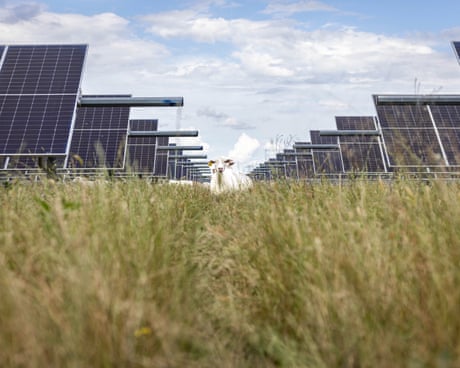
Solar supplied 12.8% of US electricity in May even as Trump boosts coal over clean energy
Even as Donald Trump boosts coal over clean energy, solar power is hitting new milestones in the US and remains the leading source of new power.
Data released on Wednesday by the global energy thinktank Ember, along with a report by the Solar Energy Industries Association (Seia) and analytics firm Wood Mackenzie, show the continued growth of solar and decline of coal in the United States despite federal policy. In May, for the first time, solar supplied more of the nation’s electricity than coal, or 12.8%, Ember said. Coal supplied 12.2%, its fourth-lowest monthly share ever.
Continue reading...
© Photograph: Angela Piazza/The Dallas Morning News via Getty Images
© Photograph: Angela Piazza/The Dallas Morning News via Getty Images
© Photograph: Angela Piazza/The Dallas Morning News via Getty Images

© Anna Moneymaker/Getty Images
Assistant minister agrees concerns over resource usage are legitimate but argues Australia cannot ignore ‘consequential’ economic wave
Get our breaking news email, free app or daily news podcast
Australia should learn from the mistakes of the resources boom and set the terms for the AI and datacentres boom, the assistant minister for the digital economy, Andrew Charlton says.
Growth in datacentres has exploded in the past two years, Charlton told the Sydney Institute on Wednesday night, with 44 projects in the pipeline in New South Wales alone seeking 11GW of capacity on the electricity grid.
Continue reading...
© Photograph: Bloomberg/Getty Images

© Photograph: Bloomberg/Getty Images

© Photograph: Bloomberg/Getty Images
 Solar provides more than twice the share of electricity it did five years ago.

Across the stories today, a common thread emerges: the growing gap between urgent environmental realities and the systems—political, economic, and social—struggling to keep pace with change.
This tension plays out most starkly in the realm of climate health impacts. New research warns that heat-related hospitalizations could double by 2040, while a super El Niño threatens to deepen global economic inequality through cascading climate disruptions. Behind the numbers are real communities adapting in real time. In Pacoima, a working-class Los Angeles neighborhood sandwiched between highways and heavy industry, residents like Jose Luis Salas are mounting their own defense against air pollution, installing shoebox-sized monitoring devices that track what they breathe daily.
Yet the day’s coverage also points to growing momentum around practical solutions gaining real traction. Solar energy quietly surpassed coal in U.S. electricity generation for the first time this May—a milestone that arrived not through grand announcements but through the steady accumulation of rooftop panels and utility-scale installations. Britain cleared a major bottleneck by offering grid connections to over 700 clean energy projects, while new data reveals the country’s green economy now employs over one million workers across a £100 billion sector.
The stories reveal how environmental challenges are increasingly driving innovation at the community level. In Guatemala’s Western Highlands, approximately 60 communities are reviving ancient Maya agricultural wisdom, creating homemade biopesticides from aromatic plants to replace expensive chemical alternatives. Similarly, 120 women farmers in Malawi’s Chiradzulu district have transformed traditional maize cultivation by adding organic fruits and vegetables now in high demand from urban buyers—though their success is shadowed by a troubling reality: their bees, crucial pollinators for food security, are mysteriously disappearing.
It’s a reminder that progress and pressure often arrive together. Colombia enacted groundbreaking legislation requiring detailed cattle tracking to prevent deforestation-linked beef from reaching markets, while Indonesia’s magnificent hornbills face accelerating threats from both habitat loss and an illegal online pet trade. The contrast illustrates how conservation gains in one area can be undermined by emerging threats in another.
Perhaps most telling is how wealth continues to complicate climate action. New research from Greenpeace reveals that the ultra-rich drive a quarter of global emissions not through private jets—their visible symbols of excess—but through their investment portfolios and asset ownership. Meanwhile, chemical companies are quietly pushing “immunity laws” across 15 states to shield themselves from health-related lawsuits, even as communities bear the costs of environmental damage.
The space program offers its own metaphor for these broader tensions. NASA’s latest astronaut selections for Artemis missions reflect both ambition and limitation—crews training for missions that won’t reach the Moon, while hundreds of women gathered at the AeroWomen conference to prepare for space careers in an industry still taking shape.
As the week unfolds, all eyes will be on whether these parallel tracks—accelerating environmental pressures and emerging solutions—can converge into the systemic changes scientists say are necessary. Today’s stories suggest we’re living through a period when local innovation and global challenges are both intensifying, creating opportunities for breakthrough and breakdown in equal measure.
The post Rare African Bird Makes Historic UK Debut While Communities Transform Lawns Into Wildlife Havens — Today’s Environmental Briefing for Wed, Jun 10 2026 first appeared on EnviroLink Network.
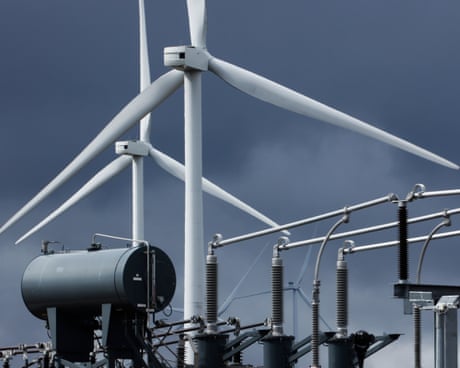
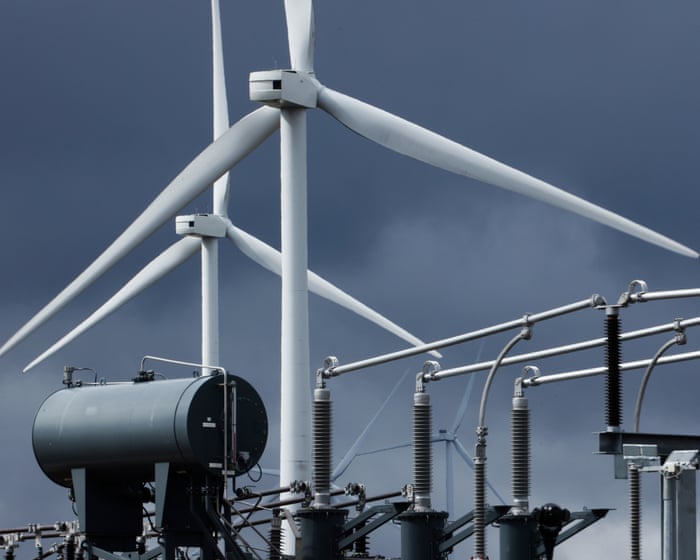
The 700 projects include wind and solar farms, battery storage, gas and hydro plans
More than half the renewable energy projects needed to meet the government’s clean power targets by 2030 are now able to plug into the electricity grid after years of delay, according to the system operator.
The National Energy System Operator (Neso) has offered more than 700 clean energy projects in Great Britain a grid connection date since the start of the year, after a two-year process to unblock a bottleneck that threatened to delay projects into the 2030s.
Continue reading...
© Photograph: Murdo MacLeod/The Guardian
© Photograph: Murdo MacLeod/The Guardian
© Photograph: Murdo MacLeod/The Guardian

Across the stories today, a common thread emerges: the growing tension between our rapidly expanding digital world and the natural systems struggling to sustain it. From AI data centers planned for drought-stricken regions to coal plants getting emergency extensions, we’re witnessing the collision between technological acceleration and environmental limits.
The numbers tell a stark story. Two-thirds of new AI data centers are slated for areas already grappling with water scarcity, while these facilities demand massive amounts of both electricity and cooling water. Meanwhile, Florida’s coal plant—scheduled for retirement as part of a clean energy transition—gets an emergency lifeline to keep the lights on. It’s a reminder that progress and pressure often arrive together, forcing difficult choices between immediate needs and long-term sustainability.
The day’s coverage points to growing momentum around accountability, particularly in how we fund and regulate resource-intensive industries. Australian lawmakers are pushing for fair taxation of AI infrastructure, determined not to repeat what they see as mistakes with gas exports. North Carolina legislators face their own paradox, crafting bills that simultaneously curb data center expansion while boosting fossil fuel development. These policy tensions reflect a broader reckoning: how do we harness technological progress without overwhelming the ecosystems that support us?
Yet signs of genuine environmental recovery punctuate today’s more challenging headlines. Water voles have returned to an English nature reserve after four decades, while marine protected areas now cover 10% of the world’s oceans—a significant milestone toward the 30% goal by 2030. In Sumatra’s hills, coffee farmers like Sri Atmiatun are proving that conservation and community prosperity can grow together, restoring forests while securing livelihoods through innovative social forestry programs.
Behind the numbers are real communities adapting in real time. Alaska’s fishing industry faces uncertainty as critical ocean monitoring systems face budget cuts, while Arizona’s San Carlos Lake sits closed indefinitely after drought and dam releases killed all fish life. These aren’t abstract environmental statistics—they’re disruptions to ways of life, forcing entire communities to reimagine their relationships with changing landscapes.
The financial flows reveal where power and priorities truly lie. The world’s largest banks poured a record $906 billion into fossil fuels despite climate commitments, an 8% increase that environmental researchers call “unfathomable.” Meanwhile, China launched the world’s first wind-powered underwater data center, signaling that sustainable technology infrastructure is possible when political will aligns with innovation.
Perhaps most troubling is what we’re losing while focused on these larger battles. Wildfire smoke has erased four years of air quality progress across the United States, while sea levels are now rising at twice the rate recorded just a decade ago. Scientists are racing to record forest sounds before wild spaces fall silent—a poignant reminder that some losses can’t be reversed.
The day’s stories also illuminate the gap between good intentions and effective action. Louisiana legislators unanimously approved expanding their wood pellet industry despite the bill’s sponsor admitting he knows little about the sector. FIFA appears unprepared for wildfire smoke threats at upcoming World Cup venues. These moments reveal how quickly environmental challenges can outpace institutional readiness.
As the week unfolds, all eyes will be on whether emerging solutions—from underwater data centers to marine protection expansions—can scale fast enough to match the magnitude of the challenges. The central question remains: can we innovate our way toward sustainability, or will the pace of environmental change force more fundamental reckonings with how we live and build in a resource-constrained world?
The post Florida Coal Plant Keeps Running Past 2025 Closure, Decade of Wildfires Erases US Air Quality Gains — Today’s Environmental Briefing for Tue, Jun 9 2026 first appeared on EnviroLink Network.

A Florida coal-fired power plant scheduled for closure in 2025 will continue operating under a federal emergency order, disrupting the Orlando Utilities Commission’s transition to renewable energy. The utility had planned to retire the facility as part of its commitment to achieve net zero emissions by 2050, replacing coal generation with solar and other clean energy sources.
The emergency directive cites energy supply concerns linked to a shortage of power generation facilities and the rapid expansion of data centers throughout the region. This growing digital infrastructure has significantly increased electricity demand, creating strain on the existing power grid. Data centers, which house the servers powering cloud computing and internet services, require massive amounts of continuous electricity for both operations and cooling systems.
The decision represents a setback for Florida’s clean energy goals and highlights the tension between immediate energy security needs and long-term climate commitments. The Orlando Utilities Commission ranks as the state’s second-largest municipal utility, making this coal plant extension particularly significant for regional emissions targets.
The emergency order reflects broader challenges facing the energy sector as electricity demand surges due to technological growth while utilities simultaneously work to phase out fossil fuel generation. This situation underscores the complex balancing act between maintaining reliable power supplies and meeting environmental objectives, particularly as data center development continues accelerating across the Southeast.
The post Emergency Order Extends Florida Coal Plant Operations Despite Planned 2025 Retirement first appeared on EnviroLink Network.
Third of world’s energy needs should come from electricity by 2035, says Murat Kurum, as priorities set out for this year’s UN climate summit
The world should aim to meet a third of its energy needs from electricity within a decade to cut greenhouse gas emissions, the host of the next UN climate summit has said.
While about a third of global electricity generation already comes from renewable sources, other energy-intensive sectors – chiefly transport, heating and industries – have lagged behind. Close to four-fifths of final energy still comes from fossil fuels, as a result.
Continue reading...
© Photograph: Images By Tang Ming Tung/Getty Images

© Photograph: Images By Tang Ming Tung/Getty Images

© Photograph: Images By Tang Ming Tung/Getty Images

A growing grassroots movement in Australia is demanding that technology companies pay their fair share of taxes if they plan to establish energy-intensive AI data centers across the country. The campaign draws parallels to Australia’s experience with gas exports, where critics argue the nation failed to capture adequate revenue from companies extracting and exporting natural resources.
Over recent months, tens of thousands of Australians have contacted their representatives advocating for a 25% tax on gas exports, with more than 2,200 citizens funding billboard campaigns to promote the initiative. This momentum reflects broader concerns about ensuring foreign corporations contribute appropriately to public coffers when utilizing Australia’s natural resources and infrastructure.
The debate now extends to artificial intelligence infrastructure, as tech giants eye Australia for data center expansion. These facilities require enormous amounts of electricity, water for cooling systems, and land – all drawing heavily on public resources and utilities. Environmental advocates worry that without proper taxation frameworks, Australia could repeat past mistakes where resource extraction generated substantial corporate profits while providing minimal returns to taxpayers.
Proponents argue that fair taxation of AI data centers would not only generate revenue for public services and infrastructure but also ensure that the environmental costs of these energy-intensive operations are properly accounted for. As the AI industry continues rapid expansion globally, Australia faces a critical decision about how to balance economic opportunities with fair compensation for the use of national resources.
The post Australian Lawmakers Push for Fair Taxation of AI Data Centers to Avoid Repeating Gas Industry Mistakes first appeared on EnviroLink Network.
 The prototype could bring steady power to remote sites and AI data centers.
Australia leads world in residential solar per capita with 22GW installed but commercial and industrial sector has deployed only a quarter of that
Get our breaking news email, free app or daily news podcast
Australia’s revolution in rooftop solar has left behind commercial and industrial buildings, where installations have lagged far behind homes, according to new analysis.
Australia leads the world in residential solar on per capita terms, with 22GW installed as of last December. But businesses have only installed about a quarter of that – 5.6GW – despite consuming more electricity than households, a report from the Institute for Energy Economics and Financial Analysis (IEEFA) has found.
Continue reading...
© Photograph: Bloomberg/Getty Images

© Photograph: Bloomberg/Getty Images

© Photograph: Bloomberg/Getty Images
