 Login

Alan Hale, Sky Watcher Who Created a Comet Sensation, Dies at 68
In 1995, he and Thomas Bopp spotted, from different states, the same mysterious object in the sky. What turned out to be a comet was named after them: Hale-Bopp.

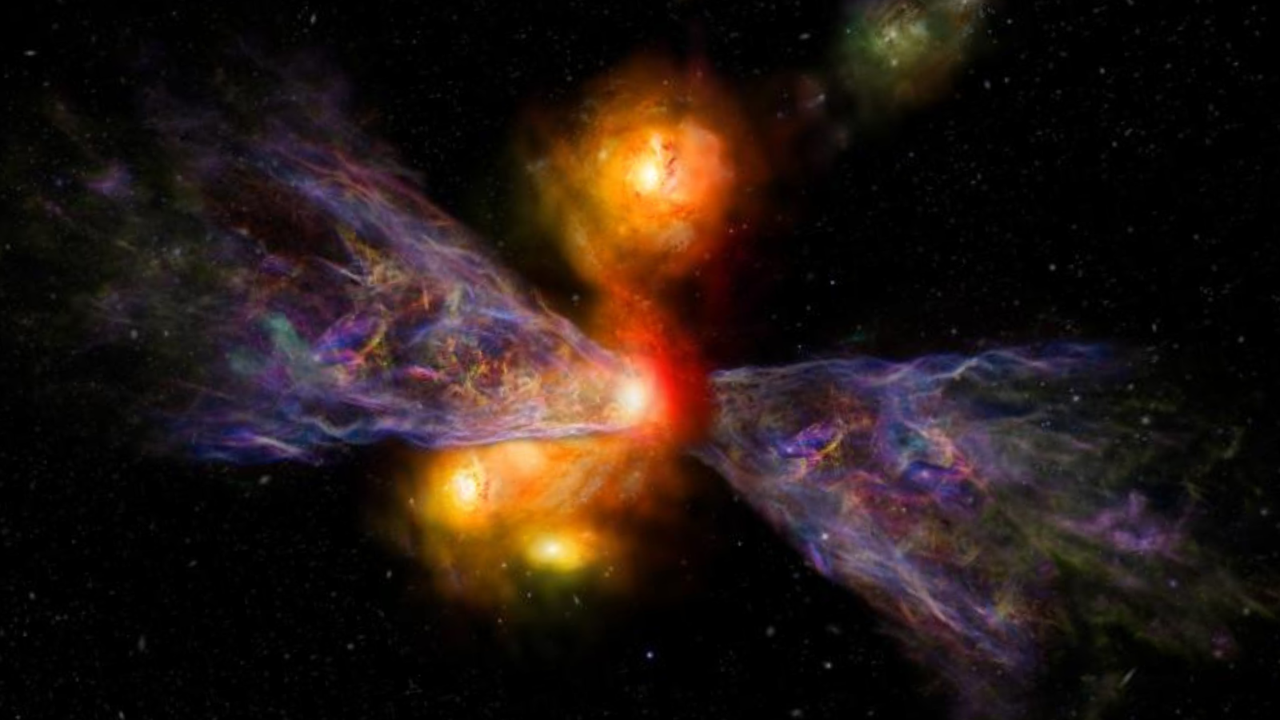
A new study has taken a fresh look at a late 2025 Yonsei University study claiming the universe’s expansion is stalling out and instead has found that the universe is still expanding as previously believed.
Led by researchers from the University of Southampton, the team behind the new analysis acknowledged the scientific value of the 2025 team’s work, noting that their calculations were not wrong but lacked the additional data needed to confirm the universe’s expansion rather than refute it.
The lead author of the 2025 study, Dr. Chul Chung, told The Debrief that he and his colleagues “have already submitted our response to Wiseman, Riess et al. 2026 on May 14,” adding that the paper, “Still accelerating: age bias correction in supernova cosmology is robust to host-progenitor age mapping,” has also been posted on arXiv.
“The abstract summarizes the two main issues we identify in Wiseman et al., so I think it provides a concise overview of our position,” Chung told The Debrief.
According to a statement announcing the findings, scientists first confirmed the universe’s expansion was accelerating in 2011, a discovery that won astrophysicists Professor Adam Riess and Professor Brian Schmidt the Nobel Prize in Physics. Since that discovery, cosmological models have incorporated this accelerating expansion, with experiments on dark matter and dark energy attempting to explain it.
Then last year, a separate team of astronomers announced that a new analysis of stellar phenomena indicated that the universe was no longer expanding. Adding to the controversy was the team’s claim that dark energy may not exist, citing the lack of concrete evidence for a universe undergoing accelerating expansion.
According to the Southampton-led team behind the new study, the 2025 study suggested that previous methods used to measure the universe’s expansion, such as measuring supernovae, “were fundamentally flawed.”
“This points to a time-varying dark energy and a universe that is no longer accelerating, representing a potential paradigm shift in cosmology if confirmed,” explained Professor Chul Chung, co-lead author on the study, in a 2025 email to The Debrief.
The claims sent shockwaves through the scientific community, a result that the researchers note could have dismantled the Nobel Prize-winning team’s historic findings, and “nearly three decades of astronomical progress.”
When discussing the 2025 team’s work, the lead author of the new study, Dr Phil Wiseman, said the team’s findings and the resulting debate were not necessarily incorrect. Instead, the Southampton researcher said it was primarily a result of a scientific understanding.
“The previous and well-accepted measurements were, in fact, fine and our current understanding of the fate of the universe remains robust.”
In their reanalysis, the Southampton-led team recalibrated the original data to account for variables not in the original study. According to Wiseman, these included “different host environments and populations.”
For example, the research team looked at Type 1a supernovae, which are violet, extremely bright explosions of white dwarf stars. The authors of the 2025 study claimed that this class of supernova had “different maximum brightness,” which had tricked astronomers into thinking the cosmos was accelerating, when their analysis said it was actually slowing down.
When they took a fresh look at the data, the Southampton team found that they had incorrectly estimated the age of these stars. The new study also says the 2025 team didn’t account for the mass of the galaxies hosting these cosmological phenomena, which they described as “a standard correction used in modern cosmology to prove accuracy.”
When his team factored those data points in, Wiseman said the evidence for a stalling expansion was not supported. Instead, the researcher observed that “the evidence for cosmic acceleration remains remarkably consistent.”
In their reply on ArXiv, the Yonsei University team said the new research failed to factor in two variables of their own, adding that “when these two effects are consistently combined in computing the redshift-dependent magnitude correction, the final correction, and hence the resulting cosmological impact, remain largely unchanged,” from the original 2025 calculations.
When discussing the new study’s findings, Southampton Professor Mark Sullivan highlighted the benefits of scientific review, noting that “this is how progress is made.”
“Although this idea did not turn out correct, it has opened up new ways of thinking about how supernovae explode and how we can measure dark energy more accurately,” the researcher added.
Paper co-author, Dr Brodie Popovic agreed, noting that the 2025 study provided astronomers a good opportunity to “go back over all of our assumptions,” adding that “it turns out, yes, we do understand this stuff, and we’re accounting for it in our cosmology measurement.”
In a salute to the Sagan Standard established by astronomer Carl Sagan, which says “extraordinary claims require extraordinary evidence,” Reiss seemed to celebrate the new findings that reestablish his original work by quipping that “extraordinary claims require especially careful testing.”
With the accelerating expansion of the universe seemingly reestablished, at least for now, Dr Wiseman said: “we can get back to trying to understand what dark energy actually is, rather than wondering if it exists at all.”
“Thankfully we have averted this crisis, but the mystery about why the universe is still accelerating in size remains,” he added.
The study “Still Accelerating: Type Ia supernova cosmology is robust to host galaxy age evolution” was published in Monthly Notices of the Royal Astronomical Society.
Christopher Plain is a Science Fiction and Fantasy novelist and Head Science Writer at The Debrief. Follow and connect with him on X, learn about his books at plainfiction.com, or email him directly at christopher@thedebrief.org.
Born in 1888, artist and illustrator Chesley Bonestell became famous for his realistic paintings of space. His work spanned decades and many formats and publications; perhaps most influential was his collaboration with Wernher von Brain on the 1952–54 Collier’s series, “Man Will Conquer Space Soon!” By making the stuff of science fiction seem achievable, his artwork helpedContinue reading "June 11, 1986: Chesley Bonestell dies"
The post June 11, 1986: Chesley Bonestell dies appeared first on Astronomy Magazine.
From high-speed battering rams to gravity tractors, the technology exists to protect the planet. The question is whether humanity will act in time—and in concert.
The post How to Stop a Killer Asteroid appeared first on Nautilus.



Eugene Parker, pioneer of theoretical solar and plasma astrophysics, was born June 10, 1927. Parker revolutionized the field of heliophysics, notably by first proposing the existence of the solar wind — a stream of charged particles ejected from the Sun — in 1958. His theory was confirmed by Mariner II in 1962. Among many otherContinue reading "June 10, 1927: The birth of Eugene Parker"
The post June 10, 1927: The birth of Eugene Parker appeared first on Astronomy Magazine.
The ancient history of our planet’s impact events is coming into focus, thanks to researchers who have triangulated similarly aged impacts on Earth, the Moon, and the asteroid 4 Vesta in a new study.
The lunar meteorite NWA 12593 correlates not only with impact events observed across three locations in our solar system but also contains evidence of three separate impact events that occurred at different times.
The findings, revealed in a recent paper published in Geology, show that scientists are using this new impact data to fill in the volatile early-Earth period when life began.
The Archean period, roughly 4 to 2.5 billion years ago, was a consequential time from which our earliest fossil records date, corresponding to around 3.5 billion years ago. Researchers believe that life likely first arose at this time, yet it may have faced adversity from bombardment by space rocks between 3.2 and 3.5 billion years ago, although scientists disagree on how intense this impact activity was.
Our planet’s geological activity eventually destroys evidence of the ancient past through erosion, subduction, and burial, continually reshaping the surface. Yet those early years are essential to understanding the origins of water, atmospheres, and life on Earth.
“On Earth, the first fossil evidence of life shows up around 3.5 billion years ago, meaning that life is emerging and evolving before then. The question that we often have, even going back further, is what was the impact record when life was emerging?” said lead author Carolyn Crow, a planetary scientist at the University of Colorado Boulder.
“It is important for understanding how life is taking hold, how life is emerging,” Crow added. “The cadence of these catastrophic events is an important part of the equation.”
While Earth’s surface is constantly renewed by geological processes, our nearest significant neighbor, the Moon, is much more stable, retaining its geological record for longer periods. Because of this, lunar meteorites provide a resource for scientists to understand the impact of Earth and the inner solar system by matching them to known impacts on our planet and in the asteroid belt.
For the recent study, the team focused on a lunar meteorite discovered in northwest Africa, designated NWA 12593, and identified three separate impact events in a single sample.
Radiometric dating traced the oldest to 3.5 million years ago, intriguingly close to the time of the earliest known fossils. Extraordinary in power, this impact produced the mineral zirconia by melting the lunar surface into a lava-like flow. Without the precise laboratory conditions required to produce stable cubic zirconia, only traces of mineral remained in the sample.
According to the team, the first impact aligns with previously known impact events on Earth, and the fourth-largest object in the asteroid belt, 4 Vesta. It’s extremely rare to find such corresponding evidence between three bodies, providing important data on this time of frequent collisions.
“It’s not very common, which is why we’re very excited about it,” says Crow. “It’s pretty rare to have all three records line up like this.”
Evidence of later impacts included breccia composed of large, angular, broken mineral fragments cemented together. The team believes the breccia resulted from a second impact that struck the melt sheet formed by the first.
“Breccias are similar to what you would see if you went and chipped out a chunk of concrete. You would see all these little rocks, and then it’s fused together by the cement,” says Crow. “But the meteorite is fused together by the impact process. You get all these chunks of different kinds of rocks that the impact hit into. These all get mixed up, and then it gets fused together like your concrete sidewalk.”
As for the third impact, the evidence for this is the meteorite’s mere presence on Earth; an event that occurred some time after the first would have ejected the lunar breccia, the researchers say, allowing it to eventually land on our planet.
In total, the sample reveals an intriguing impact history, preserving a record of bombardment that provides solid evidence for a flurry of activity in the inner solar system during a violent chapter in the early history of our Solar System.
The paper, “Three-Body Evidence of Ca. 3.7 Ga to 3.2 Ga Bombardment Across the Inner Solar System,” appeared in Geology on May 12, 2026.
Ryan Whalen covers science and technology for The Debrief. He holds an MA in History and a Master of Library and Information Science with a certificate in Data Science. He can be contacted at ryan@thedebrief.org, and follow him on Twitter @mdntwvlf.

