❌

Reading view

The Iran War is Forcing Energy-Importing Countries to Turn Inward

The Iran war is pushing countries to prioritize domestic energy in order to protect themselves from volatile oil and natural gas markets.

Β© Jes Aznar for The New York Times

The president of Solaric, a rooftop-solar installer based near Manila, said people were now seeing the technology as β€œa way to survive this new age.”
  •  

How One Company Plans to Mine the Bottom of the Sea

A look at the quest to mine the bottom of the ocean for valuable minerals, the connection between light pollution and allergies and more climate news.

Β© The New York Times

  •  

Israel’s Nuclear Arsenal: A Controversial Reality

Israel, a non-NPT signatory, may possess 200-400 nuclear warheads. Its minister's bomb remarks hint at this arsenal. The NPT encourages nonproliferation but excludes Israel, highlighting global nuclear hypocrisy and tension.

  •  

I.R.A. Rebates for Appliance Swaps Could Be Phased Out

New guidance from the Energy Department would prevent people from receiving rebates after making such swaps.

Β© Bing Guan for The New York Times

The new guidance would also end rebates for the replacement of gas-powered dryers, heat pumps and water heaters.
  •  

Oil Prices Jump as Middle East Tensions Build

Some analysts said the main international oil price, which was up 6 percent on Monday, could climb much higher in the coming weeks if the Strait of Hormuz doesn’t reopen.

Β© Damian Dovarganes/Associated Press

An oil refinery in Carson, Calif. The possibility of continued fighting has raised concerns about how long the world’s stockpiles of oil and fuels will last if the Strait of Hormuz does not reopen.
  •  
  •  

Fungi Bloomed Twice around End-Cretaceous Mass Extinction

The end-Cretaceous mass extinction was marked by both the Chicxulub asteroid impact and the ongoing eruptions of the Deccan Traps volcanoes.

By studying fungal microfossils in 66-million-year-old rock samples from the Denver Basin in Colorado, Johns Hopkins University microbiologists have confirmed that the dinosaur-killing asteroid impact triggered a worldwide fungal takeover, and uncovered a second, previously unknown ecological crisis just before it.

The post Fungi Bloomed Twice around End-Cretaceous Mass Extinction appeared first on Sci.News: Breaking Science News.
  •  

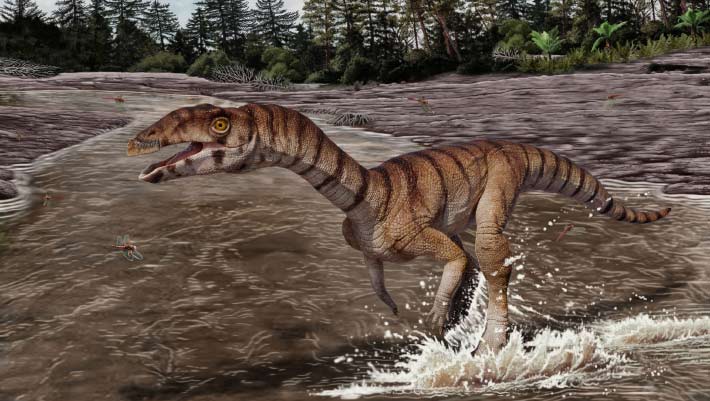
Toothless, Bipedal Crocodile Relative Lived in New Mexico 212 Million Years Ago

Labrujasuchus expectatus navigated the world on two legs with tiny arms and a toothless mouth tipped in a beak. Image credit: Jorge Gonzalez / NHMLAC Dinosaur Institute.

Paleontologists have described a new species of bipedal shuvosaurid archosaur from New Mexico, shedding light on a group of creatures that roamed North America during the Triassic period, more than 200 million years ago.

The post Toothless, Bipedal Crocodile Relative Lived in New Mexico 212 Million Years Ago appeared first on Sci.News: Breaking Science News.

  •  
❌