
❌

Reading view

Airbus unveils Ravenstorm drone wingman for combat mission alongside other UAVs

European aerospace firm Airbus will unveil its latest drone wingman, the U760 Ravenstorm, at the International Aerospace Exhibition (ILA) 2026 in Berlin. The wingman drone for fighter jets has been unveiled alongside a comprehensive suite of uncrewed aerial systems (UAS).

The full suite unveiled by Airbus at the event includes the new autonomous aircraft, named U145, based on its popular H145 helicopter platform. U740 Valkyrie, developed in cooperation with Kratos, is another uncrewed collaborative combat aircraft (UCCA) announced by the company for the German Air Force.

The company is showcasing other cargo drones ranging from 55 pounds (25 kilograms) to 264 pounds (120 kilograms) to provide customers with cutting-edge capabilities for surveillance, intelligence, and operational flexibility.

Another offering is the U680 Bird of Prey, an uncrewed drone interceptor which is designed to counter mass aerial threats at once. The company says it can down multiple one-way attack drones per mission.

Airbus’ U760 Ravenstorm

The U760 Ravenstorm drone from Airbus is designed to operate alongside cutting-edge crewed fighter jets. The missions it can carry out include air-to-air operations, air-to-ground strikes, and electronic warfare.

The company will be displaying a 1:1 model of the uncrewed collaborative combat aircraft at the Berlin exhibition. The model on display has a 32-foot (10-meter) wingspan and a length of 42 feet (13 meters).

According to a press release, the drone wingman is optimized for multi-domain missions, and it will carry precision-guided munitions for surface strikes, as well as anti-aircraft missiles for taking out enemy jets and other uncrewed aircraft. Moreover, the electronic warfare suite has the capability to suppress enemy air defenses and offensive counter-air using non-kinetic jamming.

Airbus believes that Ravenstorm will be available in the early 2030s. It will be powered by MARS – the company’s sovereign mission system, which integrates an AI-supported software core to enable platform autonomy.

The system builds on the Barracuda demonstrator that flew for the first time 20 years ago.

Eurodrone and the new ‘U’ prefix

The company stated that, going forward, all its unmanned systems will be designated with the ‘U’ prefix. It should be noted that Airbus uses the ‘A’ prefix for all its crewed fixed-wing aircraft, while ‘H’ precedes all crewed helicopter systems.

“Whatever uncrewed or ‘drone’ capability our customers need to strengthen sovereign air power, we deliver,” said Mike Schoellhorn, CEO of Airbus Defense and Space. “Our portfolio ranges from rapid-response drone interceptors and various tactical drones, autonomous cargo helicopters, to uncrewed fighter aircraft, UCCAs, operating co-operatively with crewed fighter jets.”

He also commented on the U950 Eurodrone, a high-payload and very-long-endurance ISTAR (Intelligence, Surveillance, Target Acquisition, and Reconnaissance) platform. Schoellhorn added that all of the company’s systems come with open architecture and a “mission system compatible with the wider European and international defense ecosystem.”

The Eurodrone, a Medium-Altitude Long-Endurance (MALE) platform, is designed to provide independent, strategic ISTAR capabilities, early warning, and anti-submarine warfare. The program is progressing steadily toward its scheduled first flight in 2029, according to the press release.
  •  

China’s nuclear arsenal expands to 620, ‘growing faster than any other country’: Report

China is expanding its nuclear weapon arsenal faster than any other country, according to a report by a Swedish think tank. The Stockholm International Peace Research Institute’s (SIPRI) latest yearbook states that Beijing now has around 620 nuclear warheads.

In what could be a major cause of concern for the US and its allies, the report goes on to state that it is continuing to develop new nuclear systems. It states that China could “potentially have at least as many ICBMs as either Russia or the USA by the turn of the decade.”

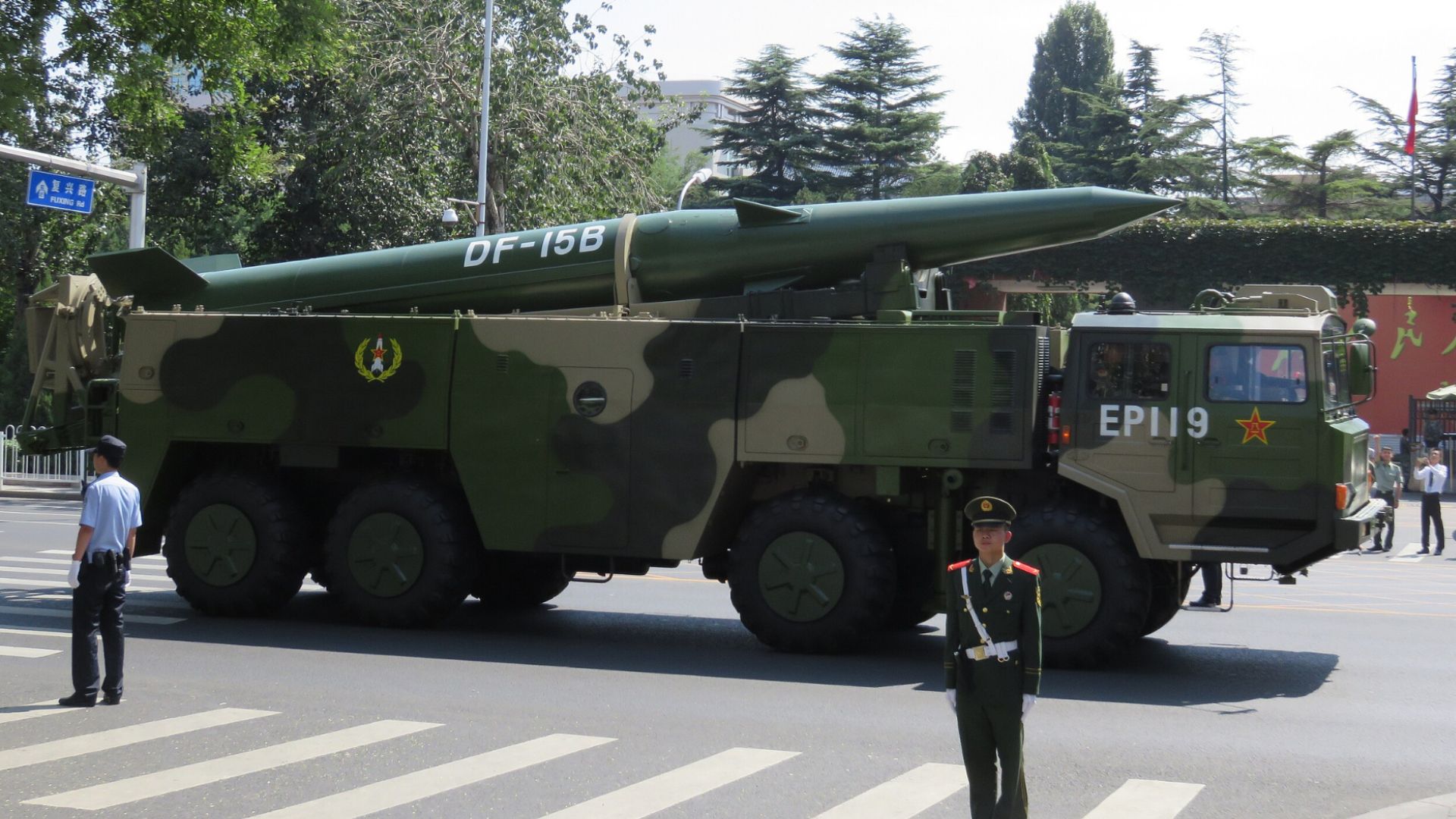
Beijing displayed some of the new missile systems during its 2025 military parade.

China’s nuclear warhead stockpile

The SIPRI report says that by January 2026, “China had loaded hundreds of missiles into three large missile silo fields in the north of the country, while working to complete 30 silos in three mountainous areas in the east.”

Moreover, the country now has 34 deployed warheads, up from 24 in 2025. The number of stored warheads has also risen from 576 in 2025 to 586 in 2026, leading to an overall number of 620 nuclear warheads in the stockpile.

It is important to note that the US and Russia still have the highest number of nuclear warheads in their stockpile. While the US has 3,700 warheads, Russia has an estimated 4,400 nuclear warheads in its military stockpile.

Even if China surpasses 1000 warheads by 2030, that will still amount to only about one quarter of each of the current Russian and US nuclear stockpiles, according to the report. However, China has shown the highest percentage growth in the production of these tools of destruction, and recent trends indicate it is not looking to stop.

The global inventory stands at an estimated 12,187 warheads – and of this, around 9,745 are in military stockpiles for use in case of a conflict. Of the total warheads in military stockpiles, roughly 4,012 are deployed with missiles and aircraft, while the rest are in storage.

There haven’t been many additions to the stockpiles of other nuclear-armed nations, such as the United Kingdom, France, and Pakistan, since 2025. India seems to have added 10 warheads, 12 of which are deployed, bringing its total count to 190.

Lack of dialogue among nuclear-armed nations

The report goes on to add that the growth of nuclear programs will very likely be pursued by all countries in the years to come in the post-New START world. It highlights that there is a lack of strategic dialogue or direct communication among certain nuclear-armed states.

SIPRI Director Karim Haggag states that world leaders advocating nuclear weapons as a guarantee against attack by a hostile state could ‘significantly increase nuclear risks.’

“The dangers associated with nuclear weapons are growing due to advances in weapon technology, the breakdown of nuclear arms control and heightened geopolitical tensions, among a range of other factors,” Haggag said.

“Along with the reduction in transparency and the loss of diplomatic channels for crisis management, the drift towards authoritarianism in some nuclear-armed states is contributing to even greater unpredictability,” said Matt Korda, Associate Senior Researcher with SIPRI’s Weapons of Mass Destruction Program and Associate Director for the Nuclear Information Project at FAS.

The report also predicts that for the first time since the end of the Cold War, the pace of gradual dismantlement of retired nuclear warheads by Russia and the USA could slow down, leading to a situation in which the global inventory keeps rising.

There hasn’t been a significant increase in the inventories of Russia and the USA, but the modernization programs being pursued by both countries lead SIPRI to believe that they will likely “increase the size and diversity of their arsenals in the future.”

  •  
❌